








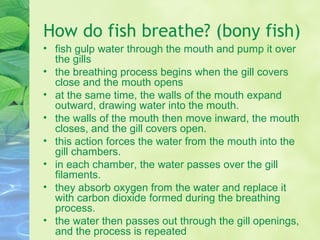
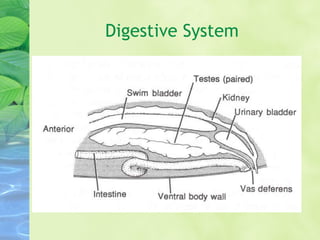

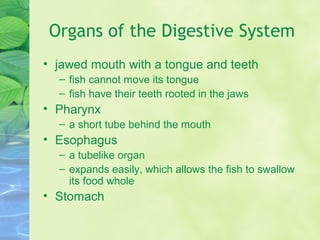


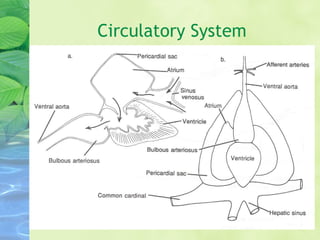



The internal anatomy of fish includes several key systems. The skeletal system provides structure and support, consisting of bones like the skull, backbone, ribs, and fins. The muscular system allows movement through skeletal muscles. The respiratory system uses gills to extract oxygen from water. The digestive system intakes and breaks down food through organs like the mouth, esophagus, stomach, and intestines. The circulatory system circulates blood through the heart, vessels, and gills. The nervous system controls the body and senses using a brain, spinal cord, and nerves. The reproductive system produces eggs and sperm. Some fish have special organs like a swim bladder for buoyancy or light-producing organs to attract mates or prey.


