● Prepare variety of pastry products according to standard mixing
procedures, formulation, recipes and desired product
characteristics.
● Use appropriate equipment according to required pastry products
and standard operating procedures.
● Bake pastry products according to techniques and appropriate
conditions, and enterprise requirement and standards.
● Select required oven temperature to bake goods in accordance
with the desired characteristics, standards recipe specifications
and enterprise practices.
Learning Objectives:
01 Pies and Pastries
Table of Contents
02 Kinds of pastry
03
04
Baking
Temperatures
Mixing Techniques
01
Pies and Pastries
Pies and Pastries
Pies and pastries, like cakes, are
delightful to eat especially when they
are baked properly. A well-prepared
pastry may be determined by the
quantity of its pie crust.
Pies and Pastries
Pastry is a delicate baked product which consists of crust
and filling. It contains high percentage fat, which
contributes to a flaky or crumbly texture. A good pastry is
light and airy and fatty, but firm enough to support the
weight of the filling. When making a short crust pastry,
care must be taken to blend the fat and flour thoroughly
before adding any liquid. This ensures that the flour
granules are adequately coated with fat and less likely to
develop gluten.
You can enter a subtitle
here if you need it
Types of
Pastry
02
Cream puffs – a type of light pastry that is
filled with whipped cream or a
sweetened cream filling and often
topped with chocolate
1. Cream puffs
Puff pastry- a light, flaky, rich pastry
made by rolling dough with butter and
folding it to form layers: used for tarts,
napoleon
2. Puff pastry
Danish pastry – a pastry made of
sweetened yeast dough with toppings
such as fruit, nuts, or cheese.
3. Danish pastry
French pastries - a rich pastry, filled with
custard or fruit.
4. French pastries
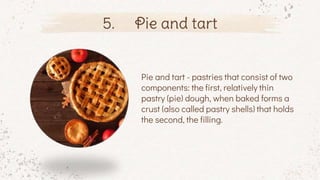
Pie and tart - pastries that consist of two
components: the first, relatively thin
pastry (pie) dough, when baked forms a
crust (also called pastry shells) that holds
the second, the filling.
5. Pie and tart
Croissants - a flaky raised dough. It is like
a sweetened cross between a simple
yeast-raised dough and puff pastry. The
dough is rolled with butter to create
layers and is then left to rise, creating a
very light texture. The downside is that it
is technically involved and requires a
great deal of work
6. Croissants
Pastry Ingredients
type of flour used in baking
pastries. The gluten content
of this flour provides
framework or substance of
baked pastries.
Flour
fats frequently used
to make pastry. Butter
and margarine
produce a less tender
crust.
an important
ingredient in pastry
because it provides
the moisture needed
to develop gluten.
Water
Lard
contributes to the
flavor of pastry and
has no influence on
flakiness or
tenderness.
Salt
Mixing
Techniques
03
Applied for Pies and
Pastries
Stirring - mixing all ingredients together usually with a spoon in a
circular motion.
Stirring
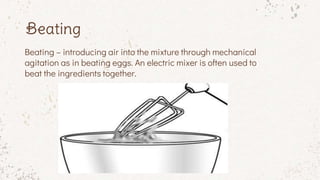
Beating – introducing air into the mixture through mechanical
agitation as in beating eggs. An electric mixer is often used to
beat the ingredients together.
Beating
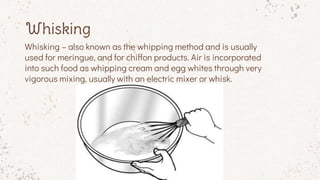
Whisking – also known as the whipping method and is usually
used for meringue, and for chiffon products. Air is incorporated
into such food as whipping cream and egg whites through very
vigorous mixing, usually with an electric mixer or whisk.
Whisking
Rolling - to flatten dough out into a sheet in preparation to
shaping to various forms.
Rolling
Laminating - fat is repeatedly folded into the dough.
Laminating
Creaming – fat and sugar are beaten together until light airy
texture.
Creaming
Kneading - working with the dough using the heel of hands,
accompanied by pressing, stretching and folding in order to
develop its gluten
Kneading
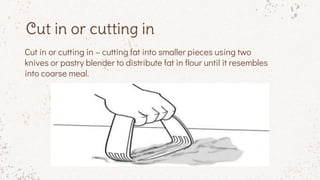
Cut in or cutting in – cutting fat into smaller pieces using two
knives or pastry blender to distribute fat in flour until it resembles
into coarse meal.
Cut in or cutting in
How to Bake Egg Pie
https://www.youtube.com/watch?v=yajLyDKCk7s
Pies and Pastries
Baking
Temperatures
04
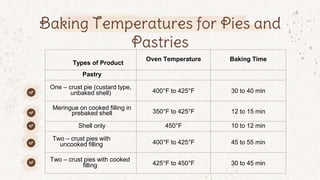
Baking Temperatures for Pies and
Pastries
Not all ovens are of the same
kind and type. Check on the
quality of oven to be used to
ensure its capacity to
produce quality pastry
products. Heat should be
evenly distributed throughout
the compartment. Use the
Baking Temperatures for Pies and
Pastries
Types of Product
Oven Temperature Baking Time
Pastry
One – crust pie (custard type,
unbaked shell) 400°F to 425°F 30 to 40 min
Meringue on cooked filling in
prebaked shell 350°F to 425°F 12 to 15 min
Shell only 450°F 10 to 12 min
Two – crust pies with
uncooked filling 400°F to 425°F 45 to 55 min
Two – crust pies with cooked
filling 425°F to 450°F 30 to 45 min
Password
PIE
Thank
you

PREPARE PASTRY PRODUCTS

  • 2.
    ● Prepare varietyof pastry products according to standard mixing procedures, formulation, recipes and desired product characteristics. ● Use appropriate equipment according to required pastry products and standard operating procedures. ● Bake pastry products according to techniques and appropriate conditions, and enterprise requirement and standards. ● Select required oven temperature to bake goods in accordance with the desired characteristics, standards recipe specifications and enterprise practices. Learning Objectives:
  • 3.
    01 Pies andPastries Table of Contents 02 Kinds of pastry 03 04 Baking Temperatures Mixing Techniques
  • 4.
  • 5.
    Pies and Pastries Piesand pastries, like cakes, are delightful to eat especially when they are baked properly. A well-prepared pastry may be determined by the quantity of its pie crust.
  • 6.
    Pies and Pastries Pastryis a delicate baked product which consists of crust and filling. It contains high percentage fat, which contributes to a flaky or crumbly texture. A good pastry is light and airy and fatty, but firm enough to support the weight of the filling. When making a short crust pastry, care must be taken to blend the fat and flour thoroughly before adding any liquid. This ensures that the flour granules are adequately coated with fat and less likely to develop gluten.
  • 7.
    You can entera subtitle here if you need it Types of Pastry 02
  • 8.
    Cream puffs –a type of light pastry that is filled with whipped cream or a sweetened cream filling and often topped with chocolate 1. Cream puffs
  • 9.
    Puff pastry- alight, flaky, rich pastry made by rolling dough with butter and folding it to form layers: used for tarts, napoleon 2. Puff pastry
  • 10.
    Danish pastry –a pastry made of sweetened yeast dough with toppings such as fruit, nuts, or cheese. 3. Danish pastry
  • 11.
    French pastries -a rich pastry, filled with custard or fruit. 4. French pastries
  • 12.
    Pie and tart- pastries that consist of two components: the first, relatively thin pastry (pie) dough, when baked forms a crust (also called pastry shells) that holds the second, the filling. 5. Pie and tart
  • 13.
    Croissants - aflaky raised dough. It is like a sweetened cross between a simple yeast-raised dough and puff pastry. The dough is rolled with butter to create layers and is then left to rise, creating a very light texture. The downside is that it is technically involved and requires a great deal of work 6. Croissants
  • 14.
    Pastry Ingredients type offlour used in baking pastries. The gluten content of this flour provides framework or substance of baked pastries. Flour fats frequently used to make pastry. Butter and margarine produce a less tender crust. an important ingredient in pastry because it provides the moisture needed to develop gluten. Water Lard contributes to the flavor of pastry and has no influence on flakiness or tenderness. Salt
  • 15.
  • 16.
    Stirring - mixingall ingredients together usually with a spoon in a circular motion. Stirring
  • 17.
    Beating – introducingair into the mixture through mechanical agitation as in beating eggs. An electric mixer is often used to beat the ingredients together. Beating
  • 18.
    Whisking – alsoknown as the whipping method and is usually used for meringue, and for chiffon products. Air is incorporated into such food as whipping cream and egg whites through very vigorous mixing, usually with an electric mixer or whisk. Whisking
  • 19.
    Rolling - toflatten dough out into a sheet in preparation to shaping to various forms. Rolling
  • 20.
    Laminating - fatis repeatedly folded into the dough. Laminating
  • 21.
    Creaming – fatand sugar are beaten together until light airy texture. Creaming
  • 22.
    Kneading - workingwith the dough using the heel of hands, accompanied by pressing, stretching and folding in order to develop its gluten Kneading
  • 23.
    Cut in orcutting in – cutting fat into smaller pieces using two knives or pastry blender to distribute fat in flour until it resembles into coarse meal. Cut in or cutting in
  • 24.
    How to BakeEgg Pie https://www.youtube.com/watch?v=yajLyDKCk7s
  • 25.
  • 26.
    Baking Temperatures forPies and Pastries Not all ovens are of the same kind and type. Check on the quality of oven to be used to ensure its capacity to produce quality pastry products. Heat should be evenly distributed throughout the compartment. Use the
  • 27.
    Baking Temperatures forPies and Pastries Types of Product Oven Temperature Baking Time Pastry One – crust pie (custard type, unbaked shell) 400°F to 425°F 30 to 40 min Meringue on cooked filling in prebaked shell 350°F to 425°F 12 to 15 min Shell only 450°F 10 to 12 min Two – crust pies with uncooked filling 400°F to 425°F 45 to 55 min Two – crust pies with cooked filling 425°F to 450°F 30 to 45 min
  • 28.
  • 29.