APEEJAY SCHOOL
MAHAVIR MARG
JALANDHAR
SUBMITTED TO:- SUBMITTED BY:-
MRS. ANJU UPPAL HARSHA AGGARWAL
CLASS – IX
ROLL NO. - 07
Cells specializing in one function are often
grouped together in the body. This means
that a particular function is carried out by a
cluster if cell at a definite place in body. This
cluster of cell, is known as Tissue, so as to
give the highest possible efficiency of
function example:- blood, muscles etc.
Or in other words Tissue is a group of cells
that are similar in structure and/or work
together to achieve a particular functions.
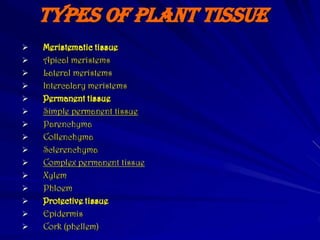
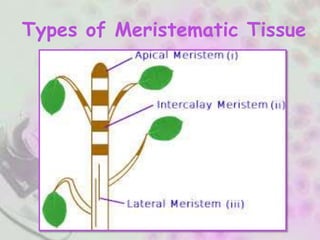
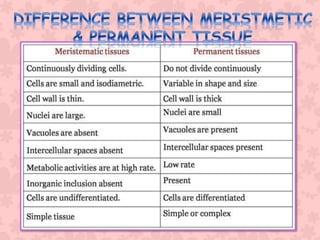
Types of Meristematic Tissue
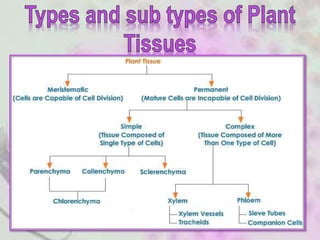
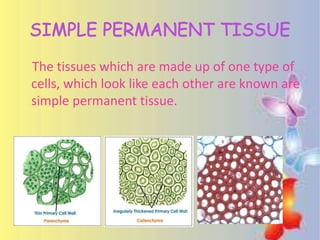
The tissues which are made up of one type of
cells, which look like each other are known are
simple permanent tissue.
The flexibility in plants is due to another
permanent tissue, collenchyma. It allows easy
bending in various parts of plants without
breaking it. It also provide mechanical support
to the plants. The cells of this tissue are living
elongated and irregularly thickened at the
corners. There is very little intercellular
spaces.
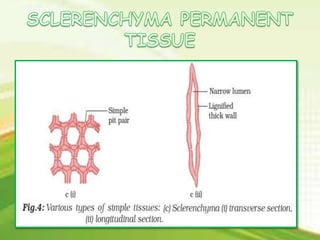
It is the tissue which makes the plant hard and
stiff. We have seen the husk of coconut. It is
made of this tissue. The cells of this tissue are
dead. They are long and narrow as the walls are
thickened due to lignin (a chemical substance
which act as cement and hardens them). There
are no internal spaces between the cells. It is
present in stems around vascular bundles, in the
veins of leaves and in hard covering of seeds. It
provides strength to plant cell.
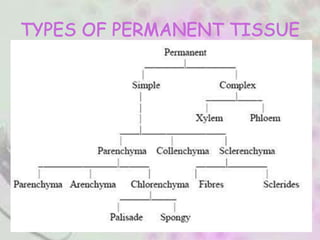
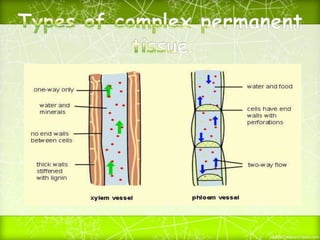
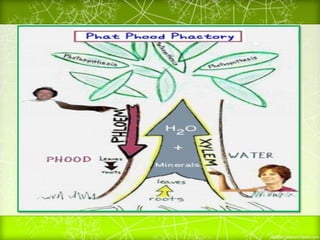
Complex permanent tissue are made of more
than one type of cells. All these cell coordinate
to perform a common function. Xylem and
phloem are examples of such cells.
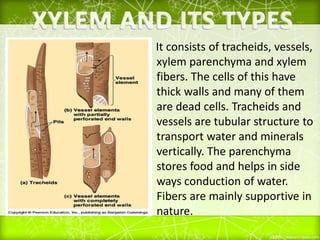
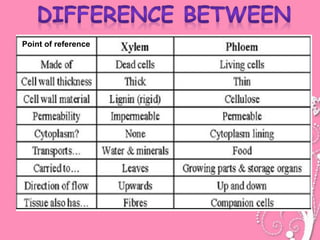
It consists of tracheids, vessels,
xylem parenchyma and xylem
fibers. The cells of this have
thick walls and many of them
are dead cells. Tracheids and
vessels are tubular structure to
transport water and minerals
vertically. The parenchyma
stores food and helps in side
ways conduction of water.
Fibers are mainly supportive in
nature.
Point of reference
tissues

tissues

  • 1.
    APEEJAY SCHOOL MAHAVIR MARG JALANDHAR SUBMITTEDTO:- SUBMITTED BY:- MRS. ANJU UPPAL HARSHA AGGARWAL CLASS – IX ROLL NO. - 07
  • 3.
    Cells specializing inone function are often grouped together in the body. This means that a particular function is carried out by a cluster if cell at a definite place in body. This cluster of cell, is known as Tissue, so as to give the highest possible efficiency of function example:- blood, muscles etc. Or in other words Tissue is a group of cells that are similar in structure and/or work together to achieve a particular functions.
  • 9.
  • 11.
  • 12.
  • 15.
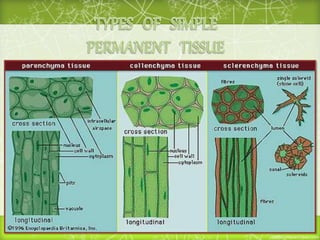
    The tissues whichare made up of one type of cells, which look like each other are known are simple permanent tissue.
  • 20.
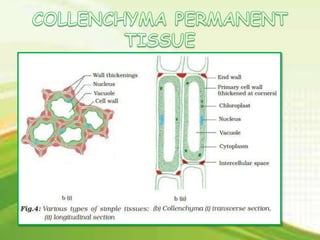
    The flexibility inplants is due to another permanent tissue, collenchyma. It allows easy bending in various parts of plants without breaking it. It also provide mechanical support to the plants. The cells of this tissue are living elongated and irregularly thickened at the corners. There is very little intercellular spaces.
  • 22.
    It is thetissue which makes the plant hard and stiff. We have seen the husk of coconut. It is made of this tissue. The cells of this tissue are dead. They are long and narrow as the walls are thickened due to lignin (a chemical substance which act as cement and hardens them). There are no internal spaces between the cells. It is present in stems around vascular bundles, in the veins of leaves and in hard covering of seeds. It provides strength to plant cell.
  • 23.
    Complex permanent tissueare made of more than one type of cells. All these cell coordinate to perform a common function. Xylem and phloem are examples of such cells.
  • 27.
    It consists oftracheids, vessels, xylem parenchyma and xylem fibers. The cells of this have thick walls and many of them are dead cells. Tracheids and vessels are tubular structure to transport water and minerals vertically. The parenchyma stores food and helps in side ways conduction of water. Fibers are mainly supportive in nature.
  • 29.