Tissue Bank and It’s Status in
Bangladesh
What is Tissue Bank?
 A tissue bank is an establishment that collects and
recovers human cadaver tissue for the purposes of
medical research and education. A tissue bank may also
refer to a location where biomedical tissue is stored
under cryogenic conditions, and is generally used in a
more clinical sense.
History of Tissue Bank
Tissue Banking activities in Bangladesh was initiated in late 1985
at Bangladesh Atomic Energy Commission in cooperation with the
International Atomic Energy Agency (IAEA) under CRP 4158/RB.
Bangladesh Atomic Energy Commission has upgraded the Tissue
Banking division as an independent unit named “ Tissue Banking
and Biomaterial Research Unit” of Atomic Energy Research
Establishment in 2003 .
A grant of Taka 440.98 lakhs (0.8 million US Dollar) received from
the Government of People’s Republic of Bangladesh for
strengthening of Tissue Banking Laboratory under ADP.
Tissue Banking: Standards
 Process required for Safe Tissue Transplantation
Donor’s medical and social history – next of kin,
physicians, hospital records
Donor blood microbiological testing
Serologic
PCR
 Physical examination of cadavers
tattoos
needle marks
 other indications of risky lifestyle
Tissue Banking: Standards
 Requirements For Donor Selection
 National Blood Service require:
 HIV 1 & 2
 Hepatitis B & C
 serologic testing for syphilis
 Non-mandatory tests: CMV, Hepatitis G, and HTLV I & II
 Various Testing Methods Used to Detect Viruses
 Hepatitis B testing for surface antigens
 HIV and Hepatitis C detect presence of antibodies to virus
 ELISA used for HIV, may not detect donors in
seroconversion.
Procedures: ABO, Rh
 ABO & Rh Typing
 Major ABO mismatching can cause rapid graft rejection
due to damage by ABO antibodies, causing endothelial
damage and thrombosis
 ABO matching is important to the success of all vascular
tissue grafts – liver, kidneys, heart, lungs, and pancreas
 ABO/Rh Typing Not Needed For Non-Vascular Tissue Grafts
 Fascia
 Bone
 Heart Valves
 Skin
 Corneas
Procedures: HLA
 HLA A, B, and Dr Loci are Matched For:
 Kidneys and other soft organs when time permits
 Bone marrow
 Peripheral blood stem cells
 Second cornea grafts
 HLA Matching Not Needed For Non-Viable Tissue
 Bone
 Tendon
 Cartilage
 Epidermal Dressing
Procedures: Bone Collection
 Collection Procedures
 Fresh, autologous bone taken from illiac crest, reduces
risk of disease transmission
 Can be frozen or freeze-dried, and stored at room
temperature for five years
 Freeze dried bone is processed to remove marrow and
blood, treated with alcohol, and irradiated, resulting in
decreased risk of disease transmission
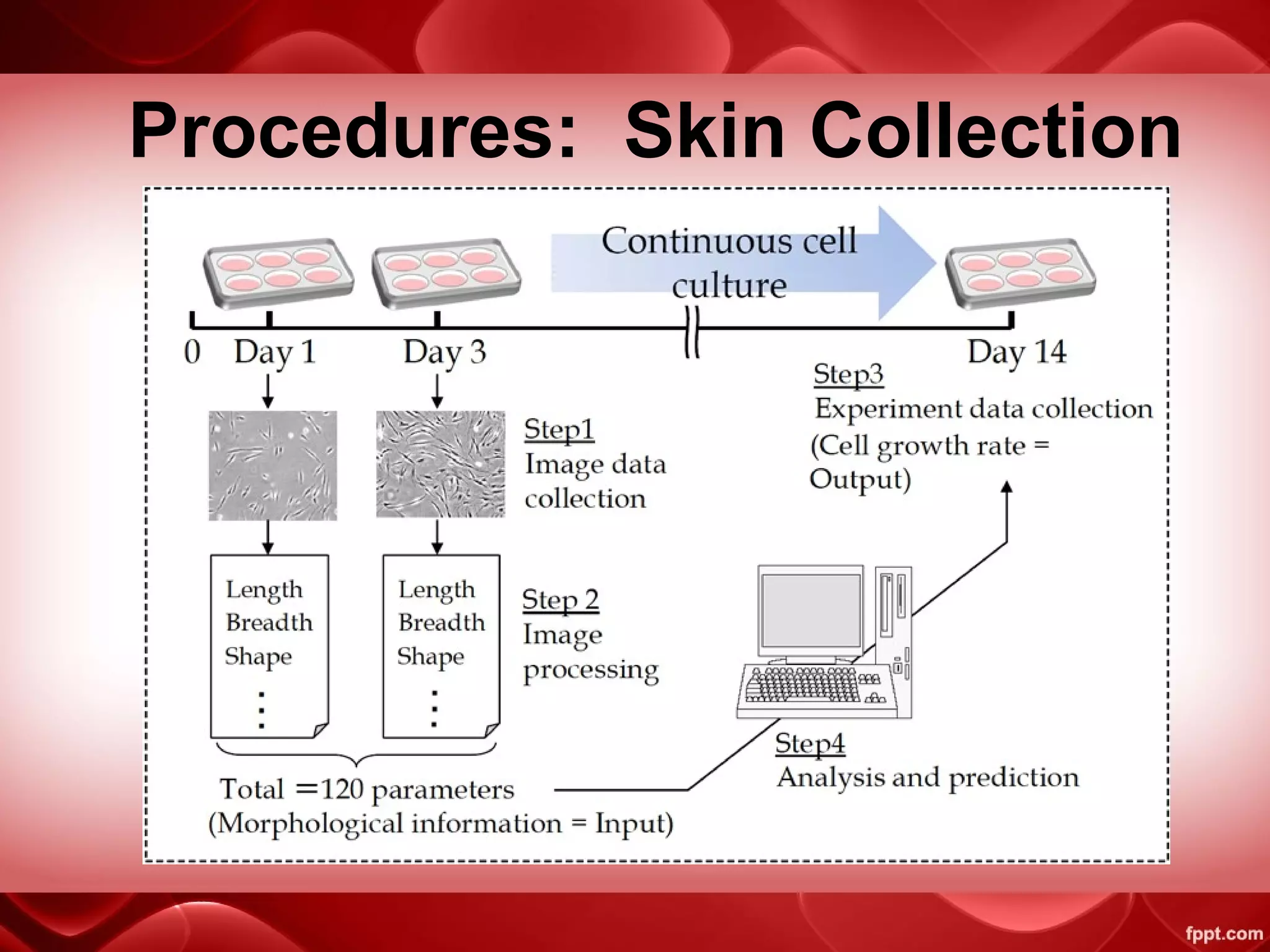
Procedures: Skin Collection
Procedures: Heart Valve Collection
 Collection Procedures
 Allografts do not require anticoagulation therapy like
mechanical grafts.
 Whole Heart aseptically collected in Operating Room or at
autopsy.
 Aortic and pulmonary valves removed.
 Placed in DMSO, frozen in liquid nitrogen for storage
Procedures: Infection Control
 Diseases Transmitted By Transplants:
 HIV transmitted by bone and solid organ transplants
 Hepatitis transmitted by bone, bone marrow, and other
organs
 Tuberculosis transmitted by bone and heart valves
 Prion diseases transmitted by corneas and dura mater
 Incidence of Fungal and Bacterial Diseases
 Occasionally of donor origin
 More commonly, acquired during tissue procurement,
processing, or storage
Tissue Banking: Applications
Bone Allografts
Use for Spinal Fusion Surgery
Use for Dental Repairs
Use for Knee Ligament Replacement
Tendon Allografts
Powdered Bones
Tissue Banking: Applications
Skin Dressing
Use for Burn Patient Use for Congenital Heart Defects
Heart Valves
Tissue Banking: Applications
Use for HIV-resistant Cell Replacement
Hematopoietic Stem Cells (HSC)
Burn & Plastic Surgery
Eye Surgery
Electric Burn
Acid Burn
Superficial Mixed Burn
Chemical Burn Corneal Ulcer
 Scope of Application
Orthopedic & Spinal Surgery
Oral & Maxillofacial Surgery
Bone Fracture
TB Spine
Traumatic Bone Loss
Traumatic Facial Defects
Tumor
 Scope of Application
THR
Periodontal Defects
Thank You

Tissue bank & it's status in bangladesh

  • 1.
    Tissue Bank andIt’s Status in Bangladesh
  • 2.
    What is TissueBank?  A tissue bank is an establishment that collects and recovers human cadaver tissue for the purposes of medical research and education. A tissue bank may also refer to a location where biomedical tissue is stored under cryogenic conditions, and is generally used in a more clinical sense.
  • 3.
    History of TissueBank Tissue Banking activities in Bangladesh was initiated in late 1985 at Bangladesh Atomic Energy Commission in cooperation with the International Atomic Energy Agency (IAEA) under CRP 4158/RB. Bangladesh Atomic Energy Commission has upgraded the Tissue Banking division as an independent unit named “ Tissue Banking and Biomaterial Research Unit” of Atomic Energy Research Establishment in 2003 . A grant of Taka 440.98 lakhs (0.8 million US Dollar) received from the Government of People’s Republic of Bangladesh for strengthening of Tissue Banking Laboratory under ADP.
  • 4.
    Tissue Banking: Standards Process required for Safe Tissue Transplantation Donor’s medical and social history – next of kin, physicians, hospital records Donor blood microbiological testing Serologic PCR  Physical examination of cadavers tattoos needle marks  other indications of risky lifestyle
  • 5.
    Tissue Banking: Standards Requirements For Donor Selection  National Blood Service require:  HIV 1 & 2  Hepatitis B & C  serologic testing for syphilis  Non-mandatory tests: CMV, Hepatitis G, and HTLV I & II  Various Testing Methods Used to Detect Viruses  Hepatitis B testing for surface antigens  HIV and Hepatitis C detect presence of antibodies to virus  ELISA used for HIV, may not detect donors in seroconversion.
  • 6.
    Procedures: ABO, Rh ABO & Rh Typing  Major ABO mismatching can cause rapid graft rejection due to damage by ABO antibodies, causing endothelial damage and thrombosis  ABO matching is important to the success of all vascular tissue grafts – liver, kidneys, heart, lungs, and pancreas  ABO/Rh Typing Not Needed For Non-Vascular Tissue Grafts  Fascia  Bone  Heart Valves  Skin  Corneas
  • 7.
    Procedures: HLA  HLAA, B, and Dr Loci are Matched For:  Kidneys and other soft organs when time permits  Bone marrow  Peripheral blood stem cells  Second cornea grafts  HLA Matching Not Needed For Non-Viable Tissue  Bone  Tendon  Cartilage  Epidermal Dressing
  • 8.
    Procedures: Bone Collection Collection Procedures  Fresh, autologous bone taken from illiac crest, reduces risk of disease transmission  Can be frozen or freeze-dried, and stored at room temperature for five years  Freeze dried bone is processed to remove marrow and blood, treated with alcohol, and irradiated, resulting in decreased risk of disease transmission
  • 9.
  • 10.
    Procedures: Heart ValveCollection  Collection Procedures  Allografts do not require anticoagulation therapy like mechanical grafts.  Whole Heart aseptically collected in Operating Room or at autopsy.  Aortic and pulmonary valves removed.  Placed in DMSO, frozen in liquid nitrogen for storage
  • 11.
    Procedures: Infection Control Diseases Transmitted By Transplants:  HIV transmitted by bone and solid organ transplants  Hepatitis transmitted by bone, bone marrow, and other organs  Tuberculosis transmitted by bone and heart valves  Prion diseases transmitted by corneas and dura mater  Incidence of Fungal and Bacterial Diseases  Occasionally of donor origin  More commonly, acquired during tissue procurement, processing, or storage
  • 12.
    Tissue Banking: Applications BoneAllografts Use for Spinal Fusion Surgery Use for Dental Repairs Use for Knee Ligament Replacement Tendon Allografts Powdered Bones
  • 13.
    Tissue Banking: Applications SkinDressing Use for Burn Patient Use for Congenital Heart Defects Heart Valves
  • 14.
    Tissue Banking: Applications Usefor HIV-resistant Cell Replacement Hematopoietic Stem Cells (HSC)
  • 15.
    Burn & PlasticSurgery Eye Surgery Electric Burn Acid Burn Superficial Mixed Burn Chemical Burn Corneal Ulcer  Scope of Application
  • 16.
    Orthopedic & SpinalSurgery Oral & Maxillofacial Surgery Bone Fracture TB Spine Traumatic Bone Loss Traumatic Facial Defects Tumor  Scope of Application THR Periodontal Defects
  • 17.