By
ZeeShan Ahmad
M.S Biotechnology
ORGAN TRANSPLANTATION
1
 Introduction
 History of transplant
 Types of transplants
1. Autograft
2. Allograft
3. Isograft
4. Xenograft
5. Split transplant
 Major organs and tissues transplanted
 Types of donors
 Timeline of successful transplants
 Transplant rejection
 Immunosuppressive drugs
 Conclusion
2
DEFINITION :
• An organ transplant is a surgical operation in which a
failure or damaged organ in human body is removed and
replaced with a functioning one. The donated organ may be
from a deceased donor, a living donor or an animal.
• Organs that can be transplanted are the heart, kidneys, liver,
lungs, pancreas, intestine and thymus.
• Tissues include bones, tendons, cornea, skin, heart valves,
nerves and veins.
• Worldwide, the kidneys are the most commonly transplanted
organs, followed by the liver and then the heart.
3
HISTORY
4
SIR PETER MEDAWAR: Father of transplantation worked on graft
rejection and acquired immune tolerance in 1944 showed that skin
allograft between two mice are rejected.
ALEXIS CARREL: The noble prize in physiology or medicine 1912
was awarded to Alexis carrel in recognition of his work on vascular
suture and the transplantation of blood vessels and organs.
BRUCE REITZ: On march 9th 1981 the first successful heart lung
transplant took place
DR.EDUARD ZIRM: The first successful human Corneal transplant
in Austria 1905.
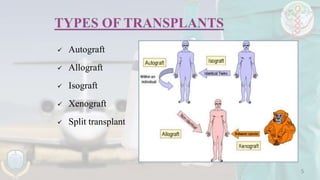
 Autograft
 Allograft
 Isograft
 Xenograft
 Split transplant
5
 Autograft is a transplant of tissue from one to
oneself. (examples include skin grafts, for CABG,
etc.) sometimes this is done to remove the tissue and
then treat it or the person before returning it.
6
 An allograft is transplant of an organ or tissue
between two genetically non identical
members of the same species. Most human
tissue and organ transplants are allografts.
7
 A sub set of allografts in which organs or tissues are
transplanted from a donor to a genetically identical
recipient(such as an identical twin). Isografts are
differentiated from other types of transplants
because while they are anatomically identical to
allografts, they do not trigger an immune
response.
8
 A transplant of organs or tissue from one species to
another. Xenograft is often an extremely dangerous type
of transplant because of increased risk of non-
compatibility, rejection, and disease carried in the tissue.
o Examples include porcine heart valves, which are quite
common and successful.
9
 Sometimes, a deceased-donor organ, usually a liver,
may be divided between two recipients, especially an
adult and a child. This is not usually a preferred option
because the transplantation of a whole organ is more
successful.
10
CHEST:
 Heart (deceased-donor only)
 Lung (deceased-donor and living-donor)
 Heart/Lung (deceased-donor and domino transplant)
ABDOMEN:
 Kidney (deceased-donor and living-donor)
 Liver (deceased-donor and living-donor)
 Pancreas (deceased-donor only)
 Intestine (deceased-donor and living-donor)
 Stomach (deceased-donor only)
 Testis (deceased-donor and living-donor) 11
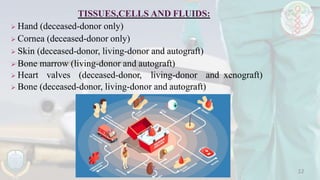
TISSUES,CELLS AND FLUIDS:
 Hand (deceased-donor only)
 Cornea (deceased-donor only)
 Skin (deceased-donor, living-donor and autograft)
 Bone marrow (living-donor and autograft)
 Heart valves (deceased-donor, living-donor and xenograft)
 Bone (deceased-donor, living-donor and autograft)
12
LIVING DONOR:
In living donors, the donor remains alive and donates a
renewable tissue, cell or fluid(Exp: skin, blood) or donates an
organ(Exp: single kidney donation, partial donation of liver, lung
lobe).
DECEASED DONOR:
Deceased donors are people who have been declared brain-
dead and whose organs are kept viable by ventilators or other
mechanical mechanism until they can be excised for
transplantation.
13
 1908- First transplant of a knee
 1909- First recorded kidney transplant, animal to human
 1936- First human-to-human kidney transplant
 1953- First successful surgery using heart-lung bypass
 1954- First successful kidney transplant
 1963- First successful lung transplant
 1967- First successful liver transplant
 1968- First successful heart transplant in the U.S
 1973- First successful bone marrow transplant
 1998- First successful hand transplant
14
TRANSPLANT REJECTION
 Hyperacute
Occurs minutes to hours after
transplantation
No treatment (organ must be removed)
 Acute
Occurs days (one week) to month after
transplantation
T- cytotoxic lymphocytes attack to the
transplanted organ
 Chronic
Occurs over months to years
Most common in lung transplants
SOME COMMON
SIGNS AND SYMPTOMS
Pain at the site of the transplant
Feeling ill
Flu-like symptoms
Fever
Weight change
Swelling
Decreased urine output
15
Corticosteroids
Prednisolone
Hydrocortisone
Calcineurin inhibitors
Cyclosporin
Tacrolimus
Anti-proliferative
Azathioprine
Mycophenolic acid
mTOR inhibitors
Sirolimus
Everolimus
16
Organ transplant is a successive therapeutic option for
treatment of end stage organ disease. Success depends
on improved surgical techniques, immunosuppression,
organ preservation and follow-up.
17
18

Organs transplantation

  • 1.
  • 2.
     Introduction  Historyof transplant  Types of transplants 1. Autograft 2. Allograft 3. Isograft 4. Xenograft 5. Split transplant  Major organs and tissues transplanted  Types of donors  Timeline of successful transplants  Transplant rejection  Immunosuppressive drugs  Conclusion 2
  • 3.
    DEFINITION : • Anorgan transplant is a surgical operation in which a failure or damaged organ in human body is removed and replaced with a functioning one. The donated organ may be from a deceased donor, a living donor or an animal. • Organs that can be transplanted are the heart, kidneys, liver, lungs, pancreas, intestine and thymus. • Tissues include bones, tendons, cornea, skin, heart valves, nerves and veins. • Worldwide, the kidneys are the most commonly transplanted organs, followed by the liver and then the heart. 3
  • 4.
    HISTORY 4 SIR PETER MEDAWAR:Father of transplantation worked on graft rejection and acquired immune tolerance in 1944 showed that skin allograft between two mice are rejected. ALEXIS CARREL: The noble prize in physiology or medicine 1912 was awarded to Alexis carrel in recognition of his work on vascular suture and the transplantation of blood vessels and organs. BRUCE REITZ: On march 9th 1981 the first successful heart lung transplant took place DR.EDUARD ZIRM: The first successful human Corneal transplant in Austria 1905.
  • 5.
     Autograft  Allograft Isograft  Xenograft  Split transplant 5
  • 6.
     Autograft isa transplant of tissue from one to oneself. (examples include skin grafts, for CABG, etc.) sometimes this is done to remove the tissue and then treat it or the person before returning it. 6
  • 7.
     An allograftis transplant of an organ or tissue between two genetically non identical members of the same species. Most human tissue and organ transplants are allografts. 7
  • 8.
     A subset of allografts in which organs or tissues are transplanted from a donor to a genetically identical recipient(such as an identical twin). Isografts are differentiated from other types of transplants because while they are anatomically identical to allografts, they do not trigger an immune response. 8
  • 9.
     A transplantof organs or tissue from one species to another. Xenograft is often an extremely dangerous type of transplant because of increased risk of non- compatibility, rejection, and disease carried in the tissue. o Examples include porcine heart valves, which are quite common and successful. 9
  • 10.
     Sometimes, adeceased-donor organ, usually a liver, may be divided between two recipients, especially an adult and a child. This is not usually a preferred option because the transplantation of a whole organ is more successful. 10
  • 11.
    CHEST:  Heart (deceased-donoronly)  Lung (deceased-donor and living-donor)  Heart/Lung (deceased-donor and domino transplant) ABDOMEN:  Kidney (deceased-donor and living-donor)  Liver (deceased-donor and living-donor)  Pancreas (deceased-donor only)  Intestine (deceased-donor and living-donor)  Stomach (deceased-donor only)  Testis (deceased-donor and living-donor) 11
  • 12.
    TISSUES,CELLS AND FLUIDS: Hand (deceased-donor only)  Cornea (deceased-donor only)  Skin (deceased-donor, living-donor and autograft)  Bone marrow (living-donor and autograft)  Heart valves (deceased-donor, living-donor and xenograft)  Bone (deceased-donor, living-donor and autograft) 12
  • 13.
    LIVING DONOR: In livingdonors, the donor remains alive and donates a renewable tissue, cell or fluid(Exp: skin, blood) or donates an organ(Exp: single kidney donation, partial donation of liver, lung lobe). DECEASED DONOR: Deceased donors are people who have been declared brain- dead and whose organs are kept viable by ventilators or other mechanical mechanism until they can be excised for transplantation. 13
  • 14.
     1908- Firsttransplant of a knee  1909- First recorded kidney transplant, animal to human  1936- First human-to-human kidney transplant  1953- First successful surgery using heart-lung bypass  1954- First successful kidney transplant  1963- First successful lung transplant  1967- First successful liver transplant  1968- First successful heart transplant in the U.S  1973- First successful bone marrow transplant  1998- First successful hand transplant 14
  • 15.
    TRANSPLANT REJECTION  Hyperacute Occursminutes to hours after transplantation No treatment (organ must be removed)  Acute Occurs days (one week) to month after transplantation T- cytotoxic lymphocytes attack to the transplanted organ  Chronic Occurs over months to years Most common in lung transplants SOME COMMON SIGNS AND SYMPTOMS Pain at the site of the transplant Feeling ill Flu-like symptoms Fever Weight change Swelling Decreased urine output 15
  • 16.
  • 17.
    Organ transplant isa successive therapeutic option for treatment of end stage organ disease. Success depends on improved surgical techniques, immunosuppression, organ preservation and follow-up. 17
  • 18.