Download to read offline


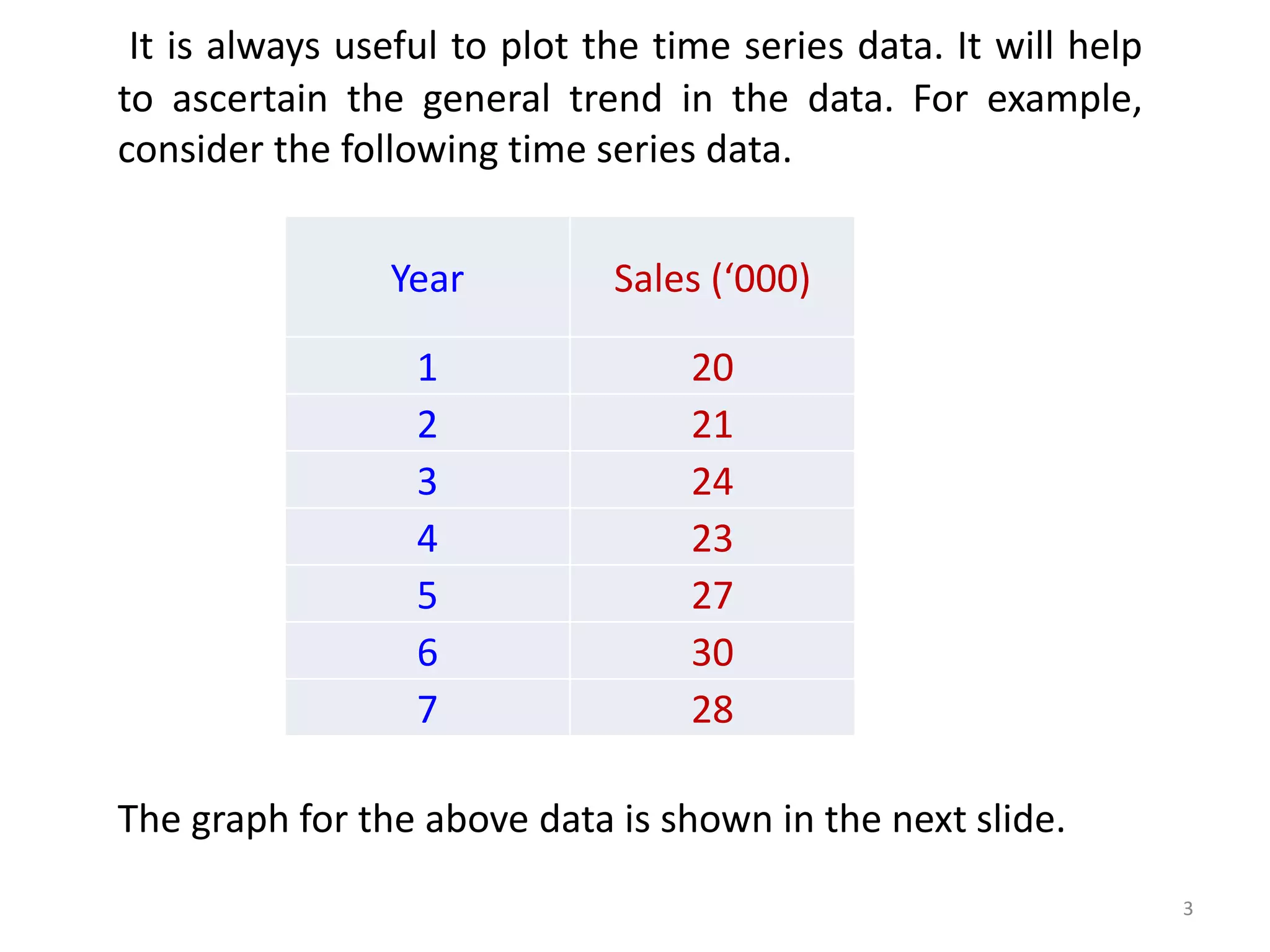


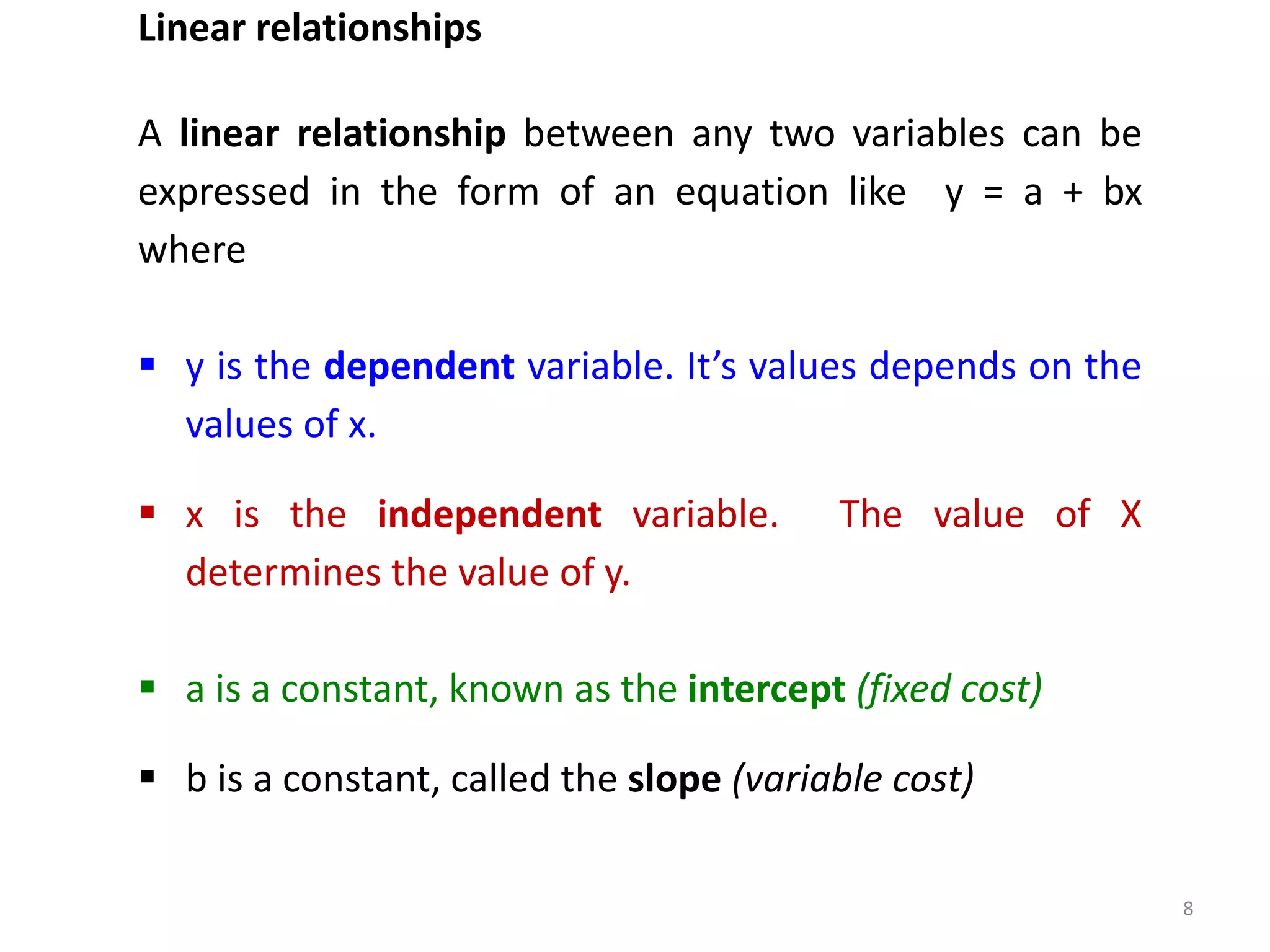


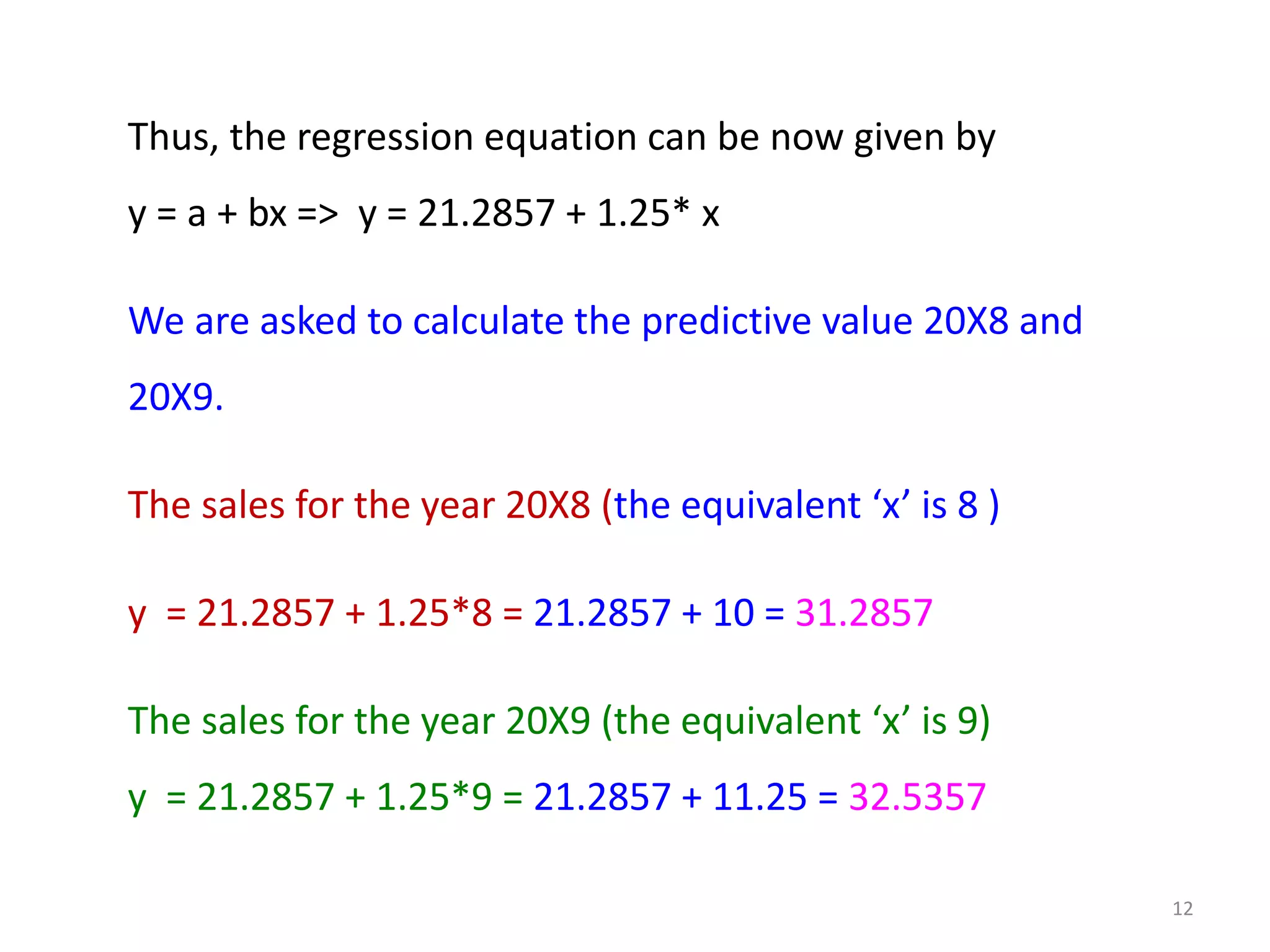

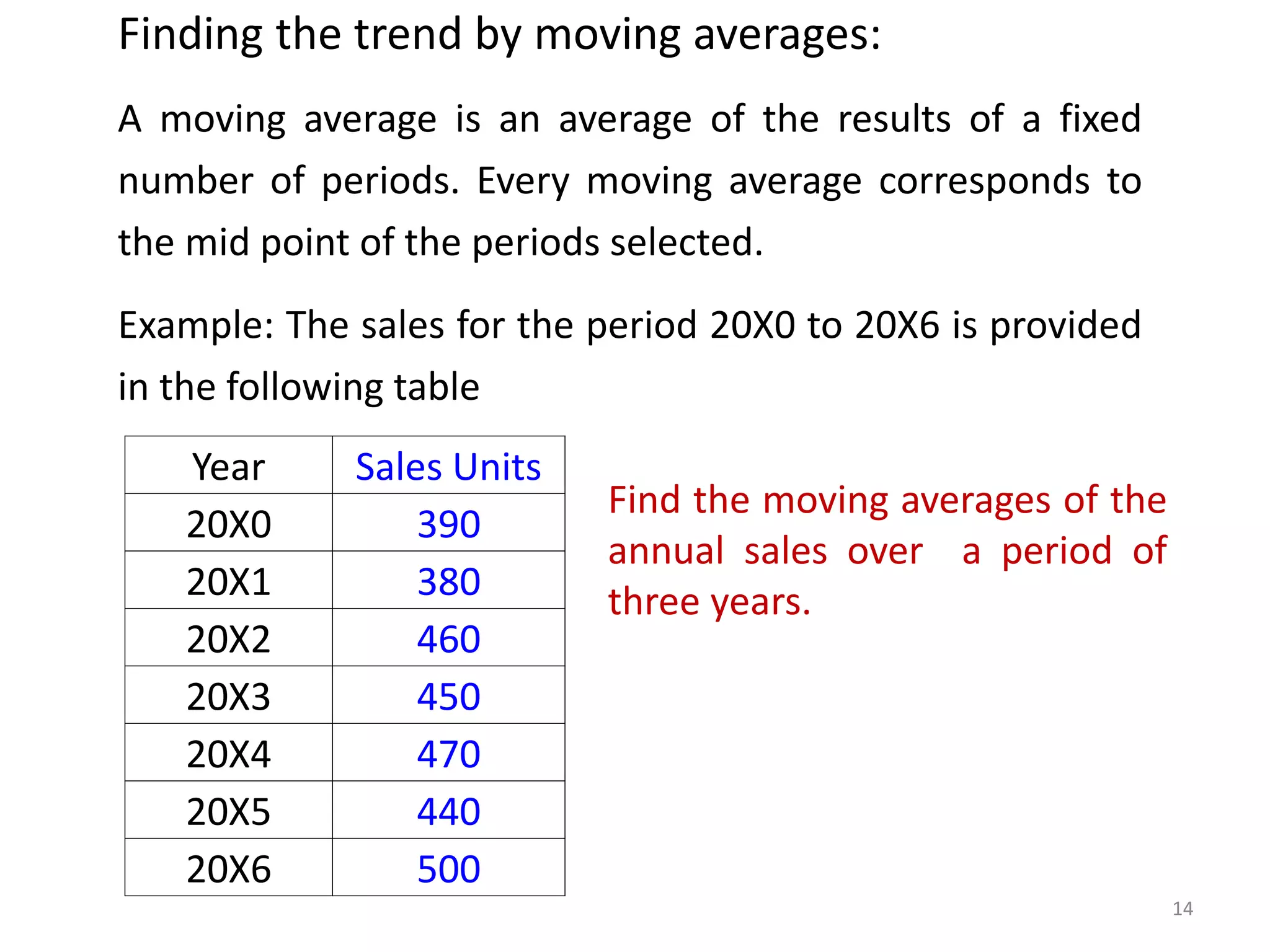
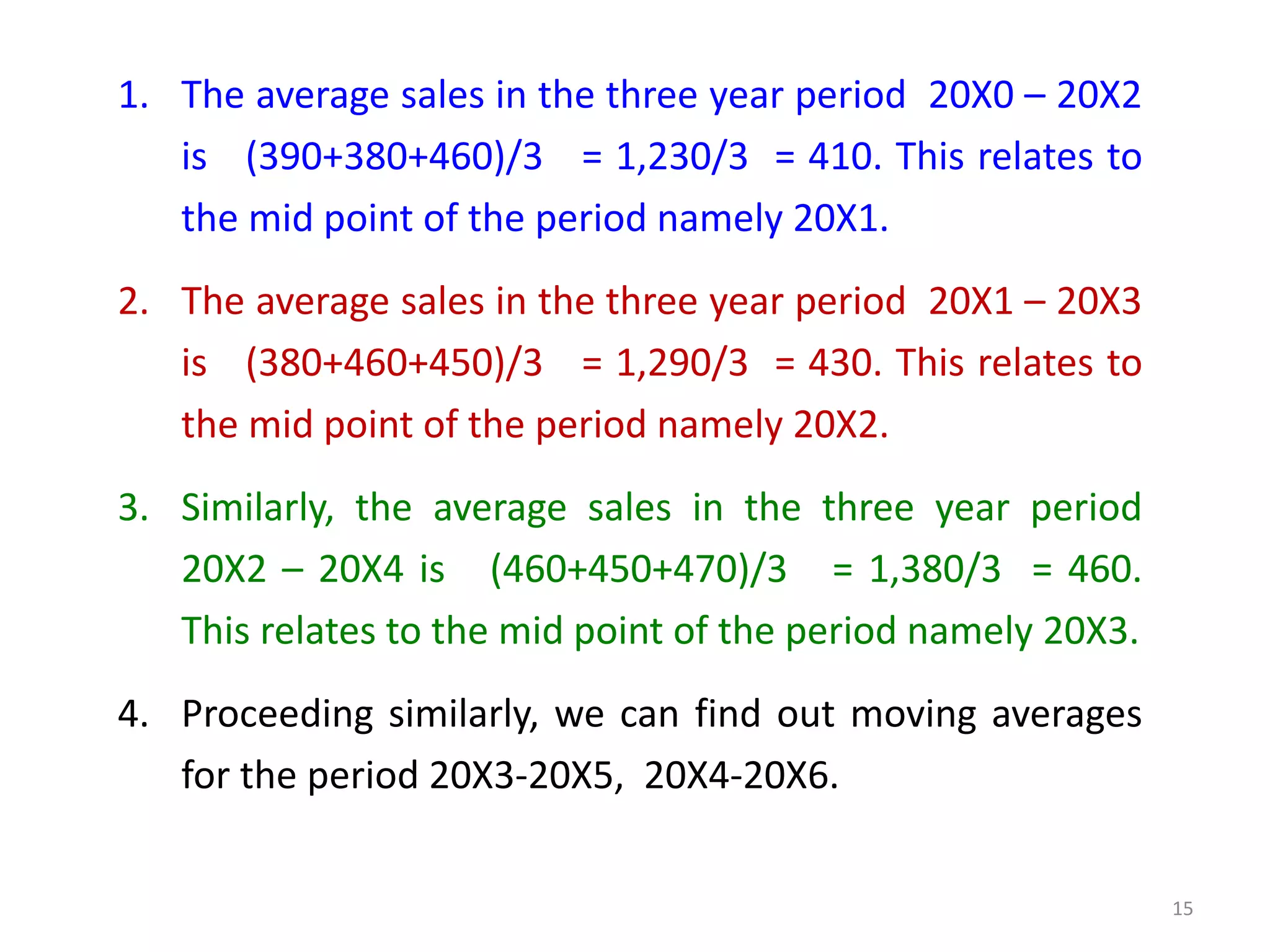


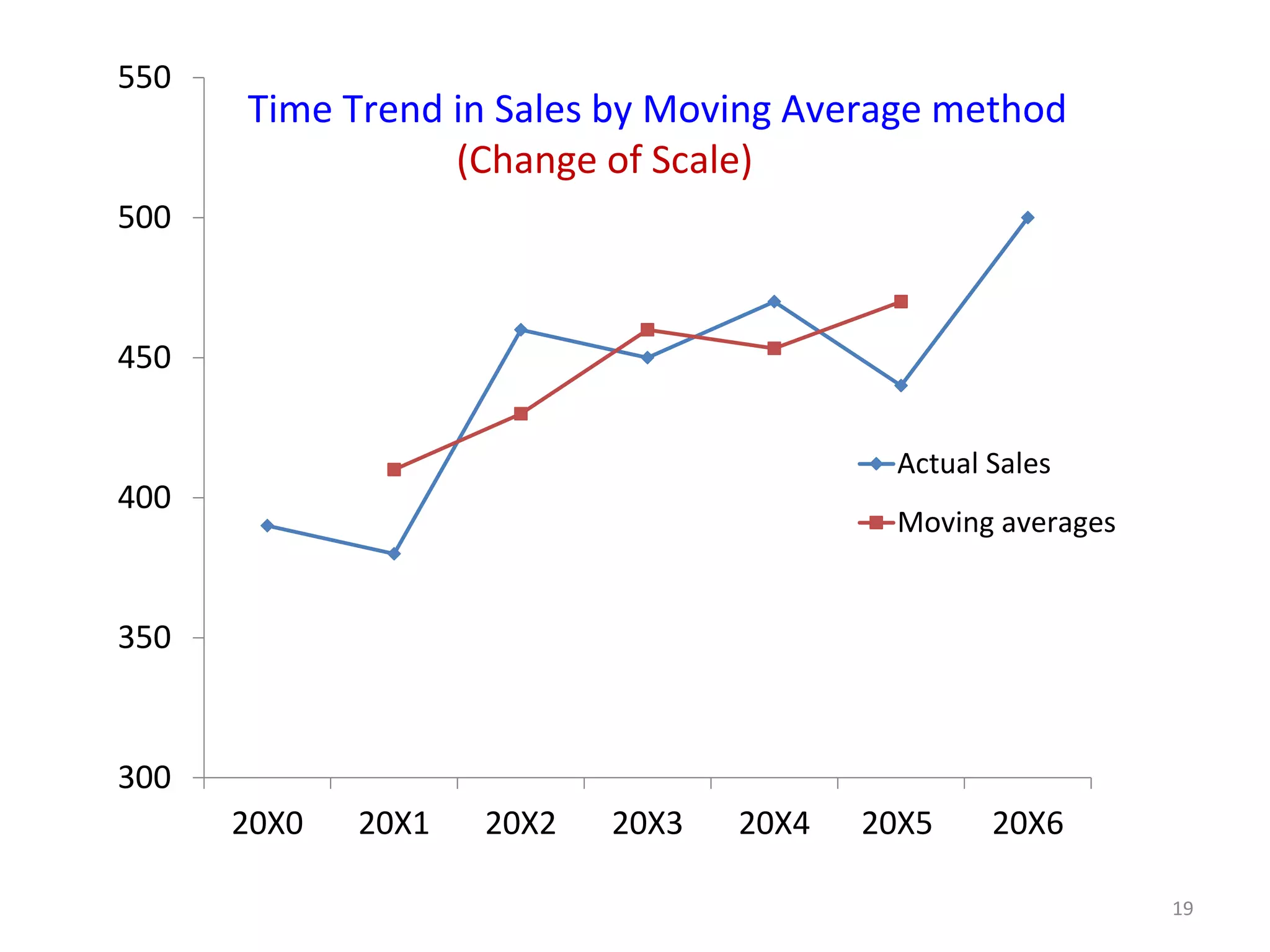


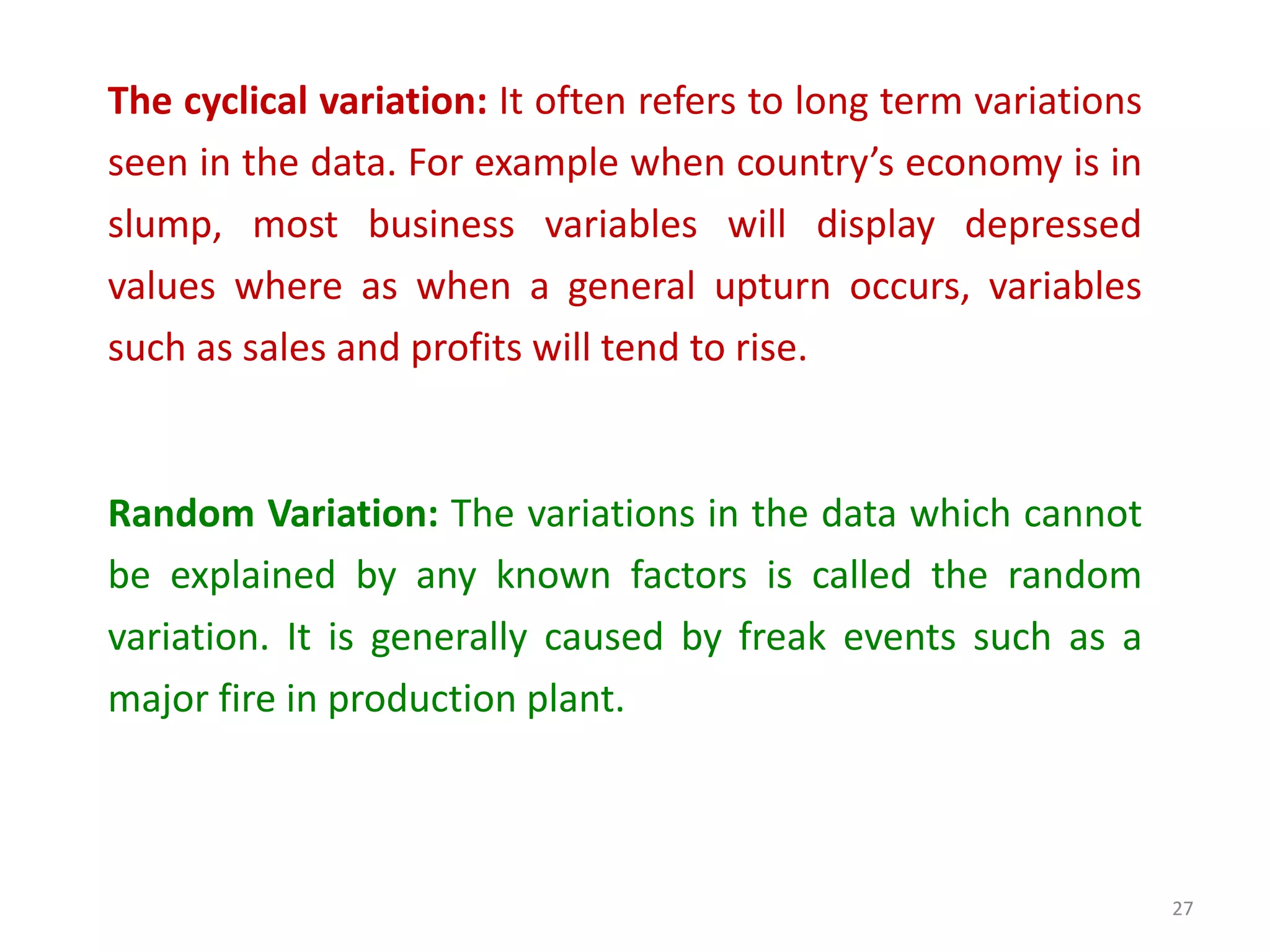


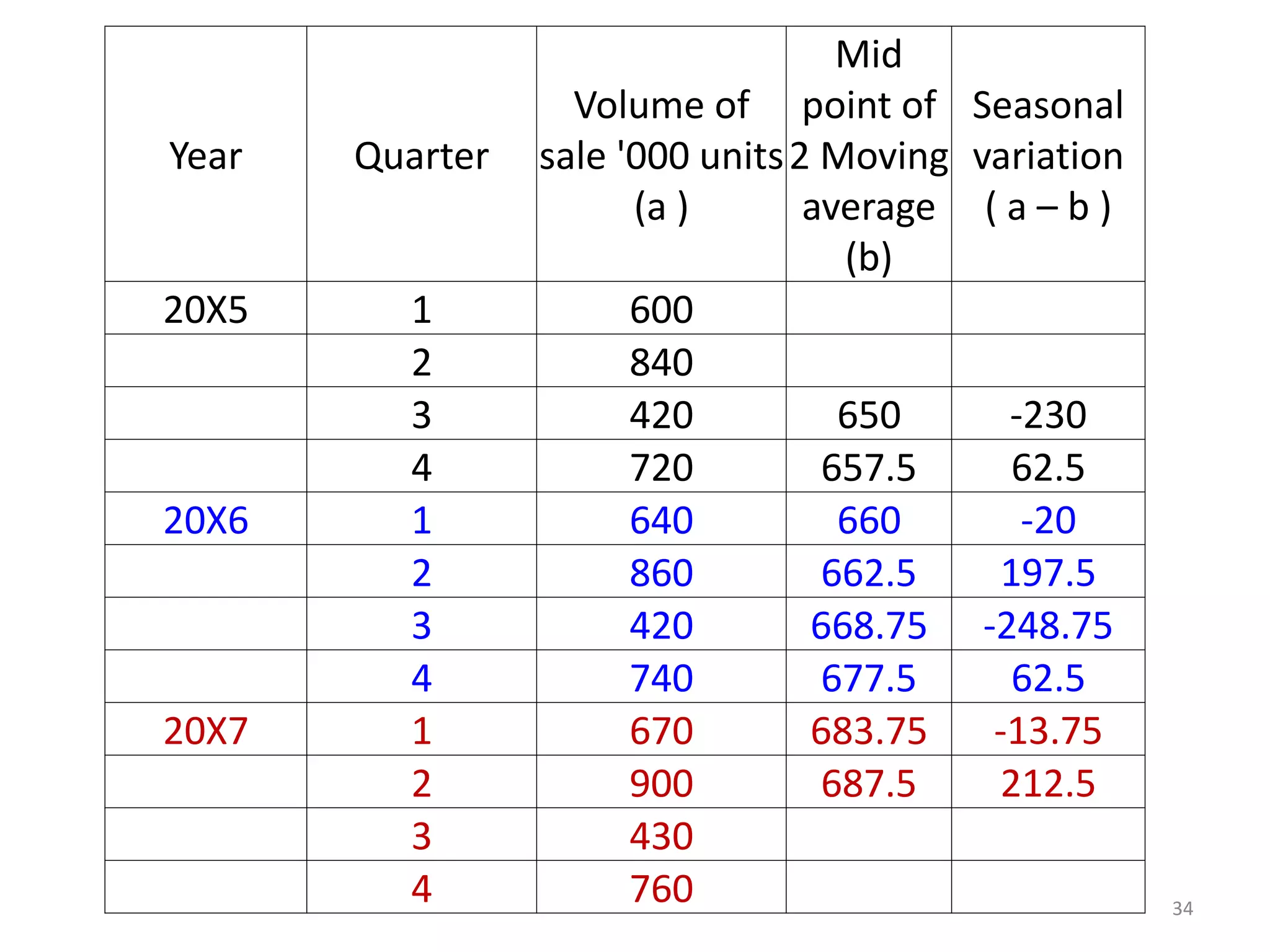

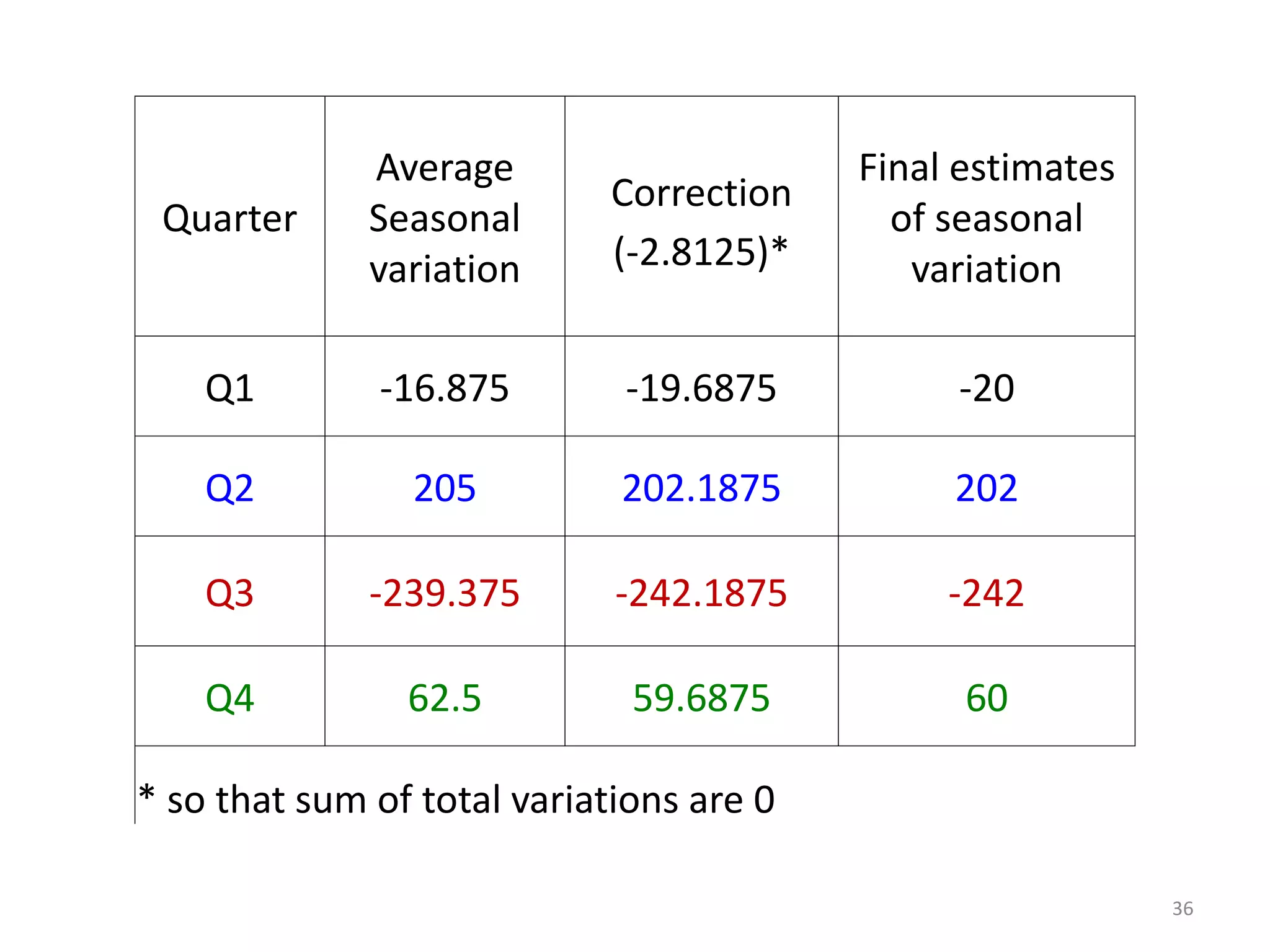

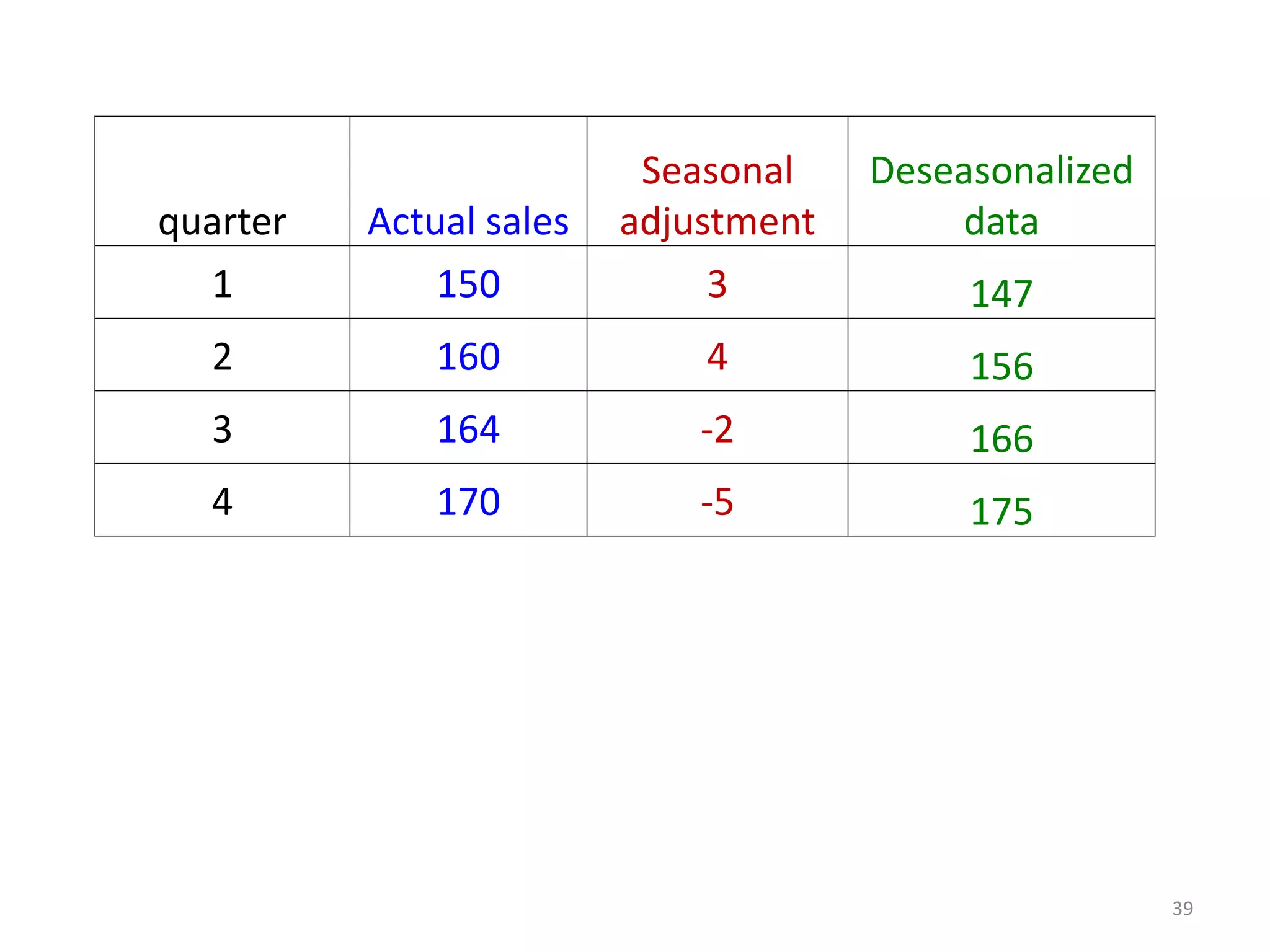

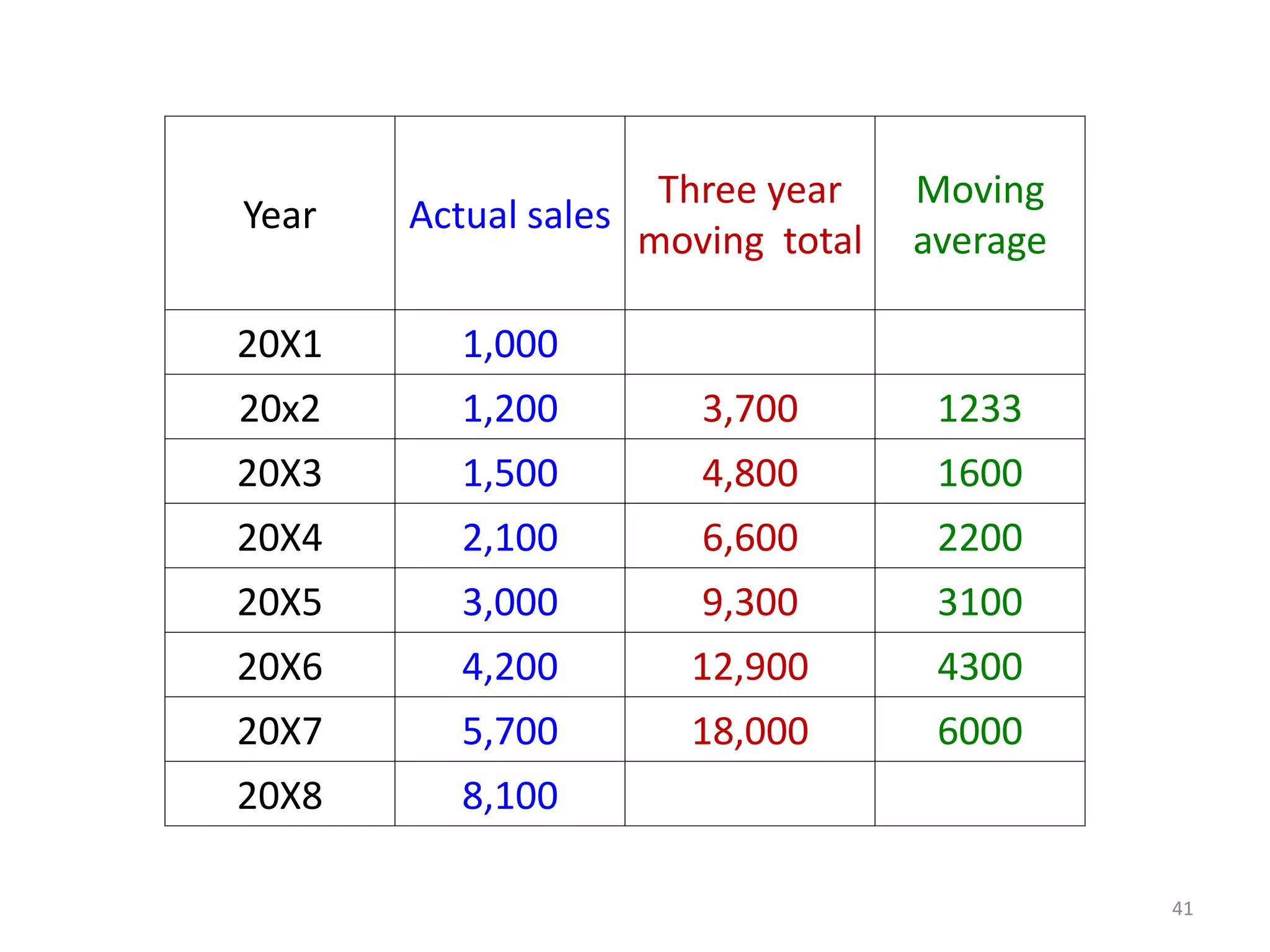

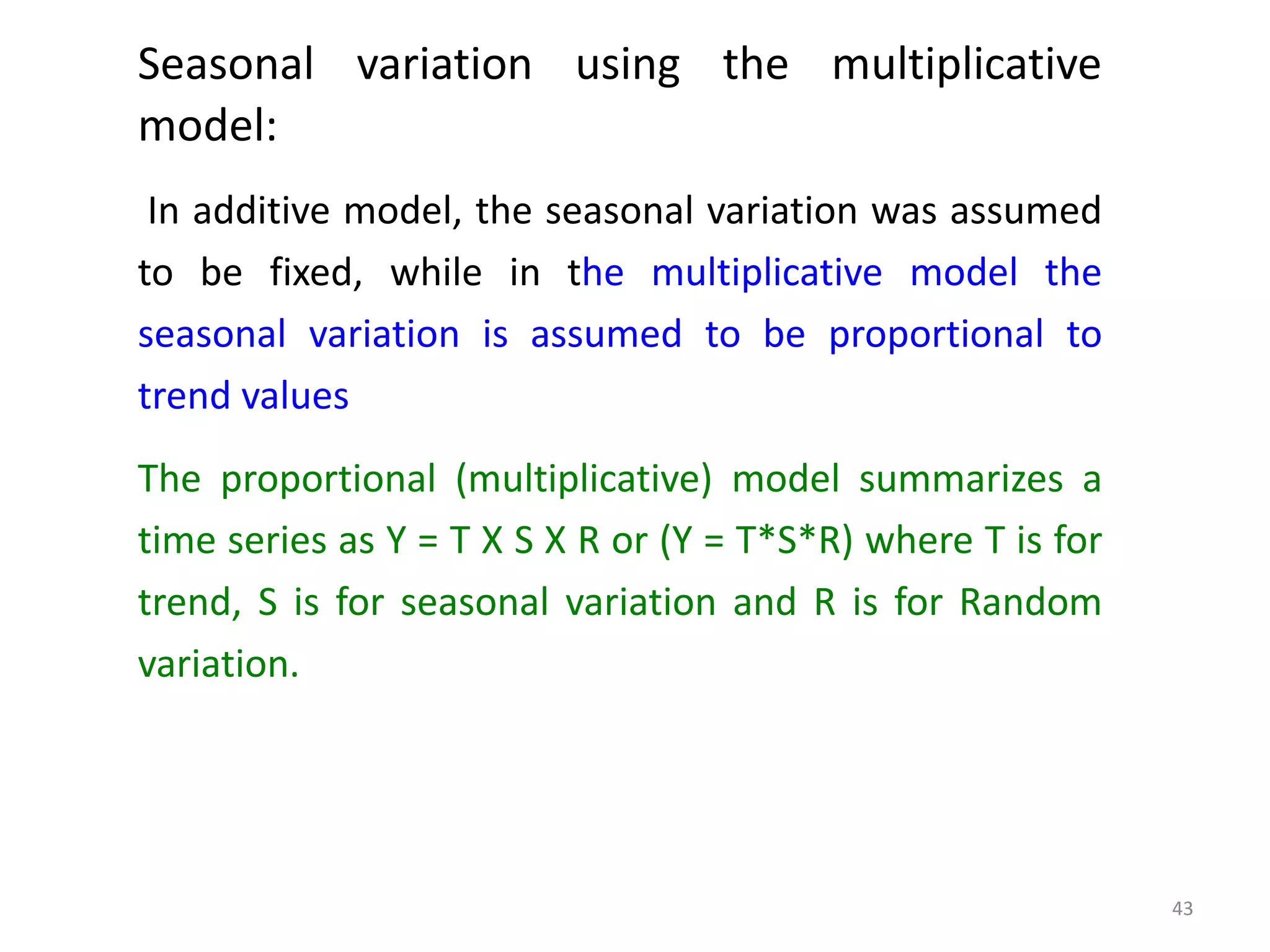
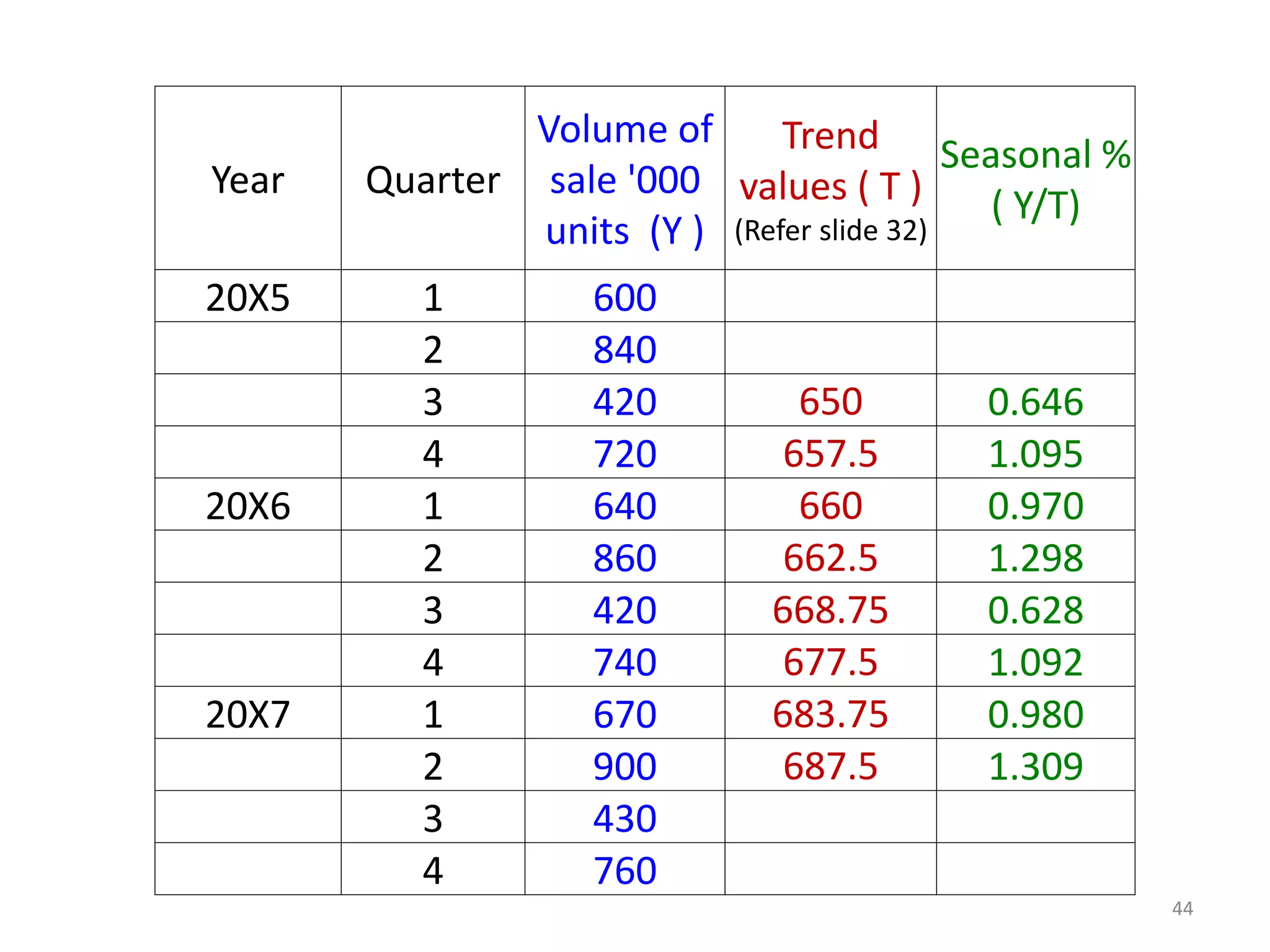


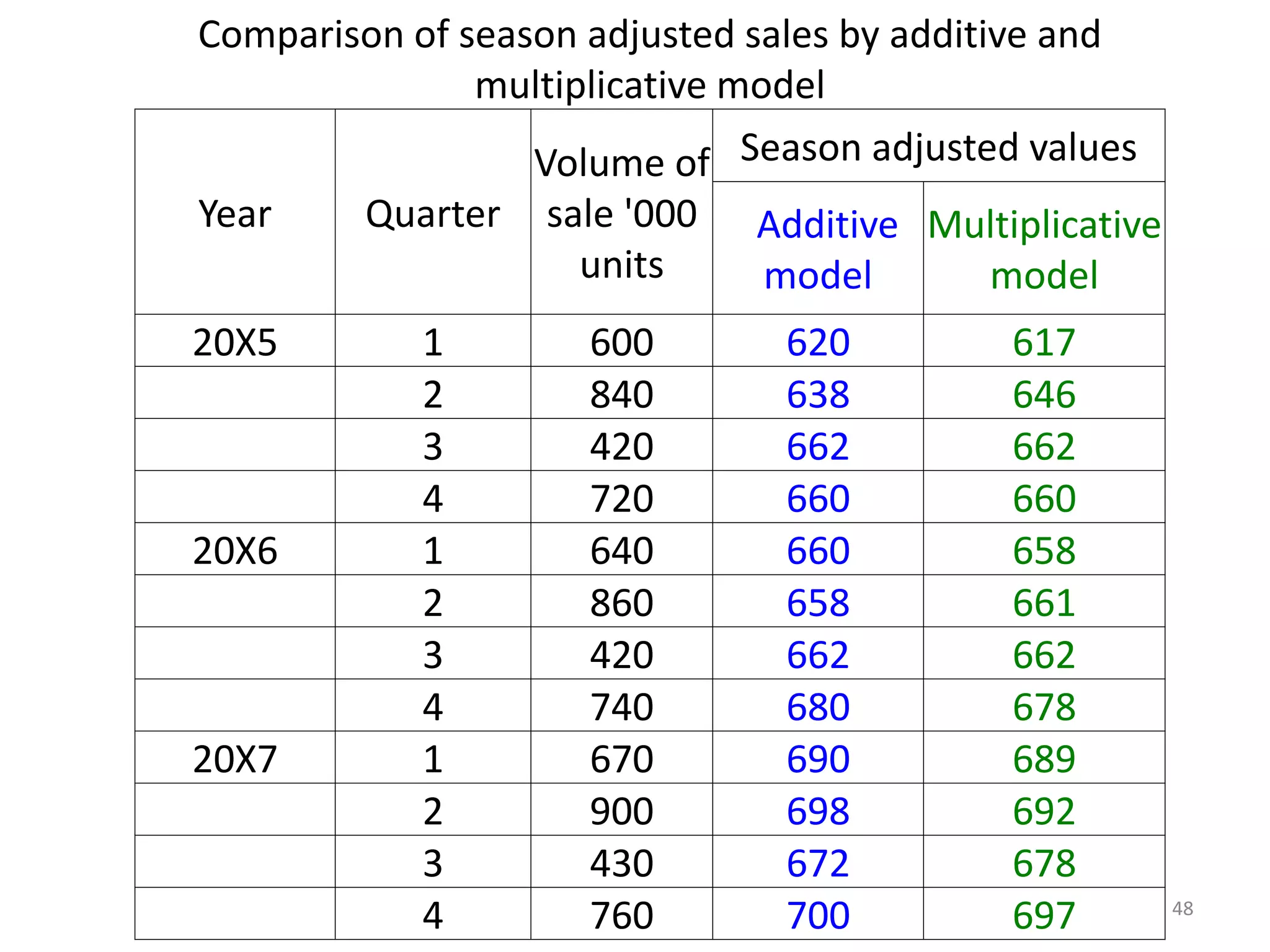
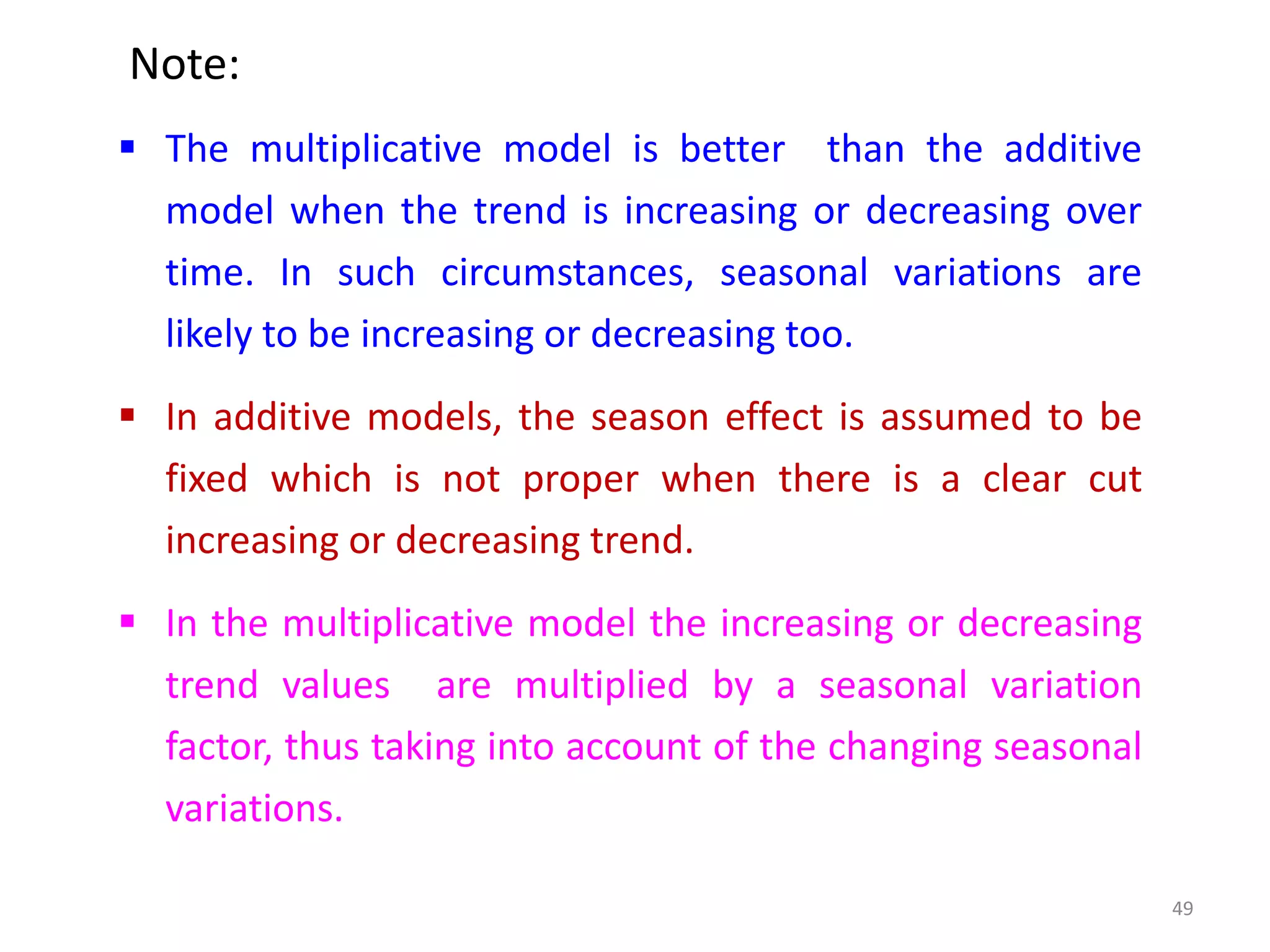
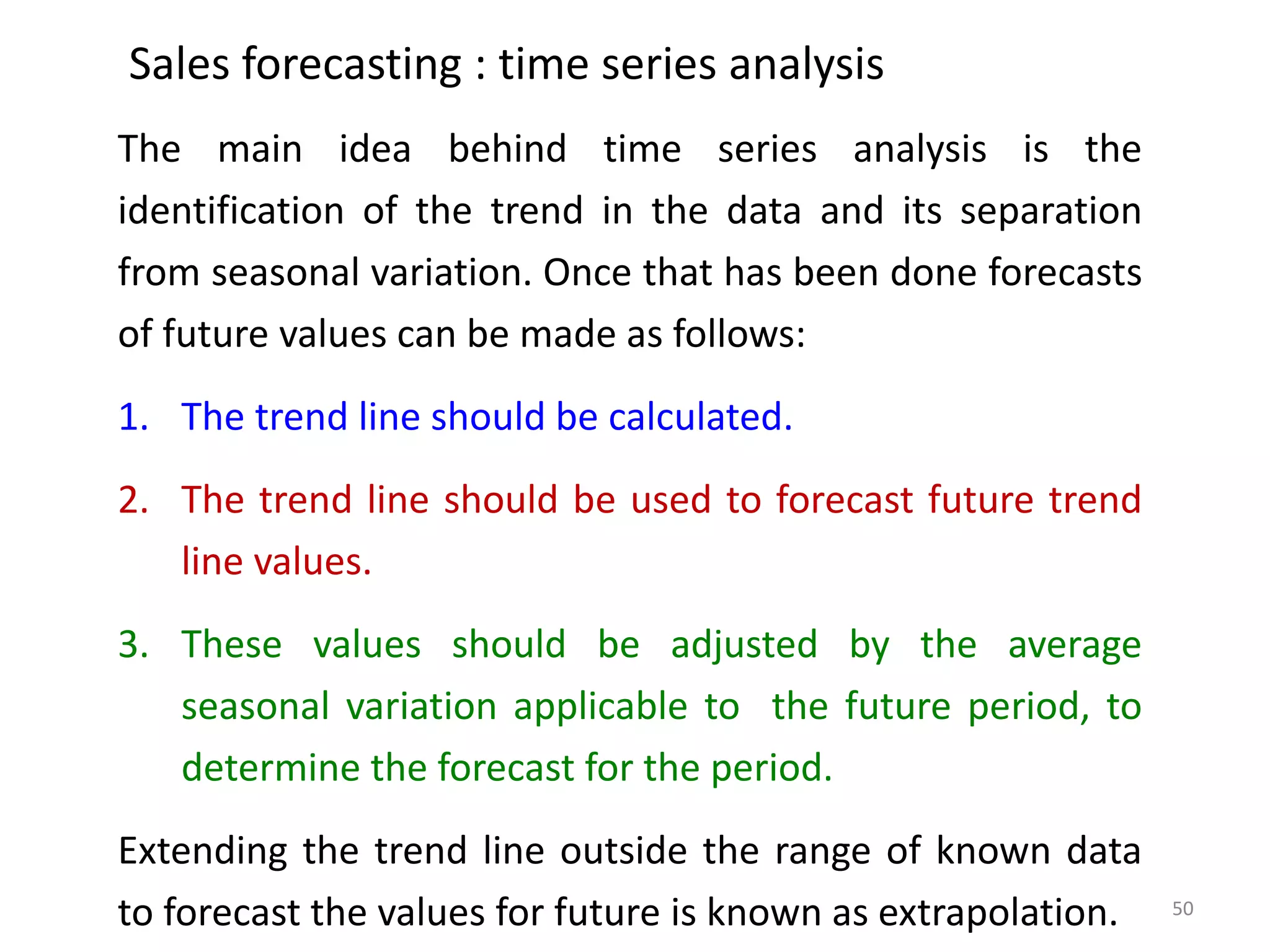

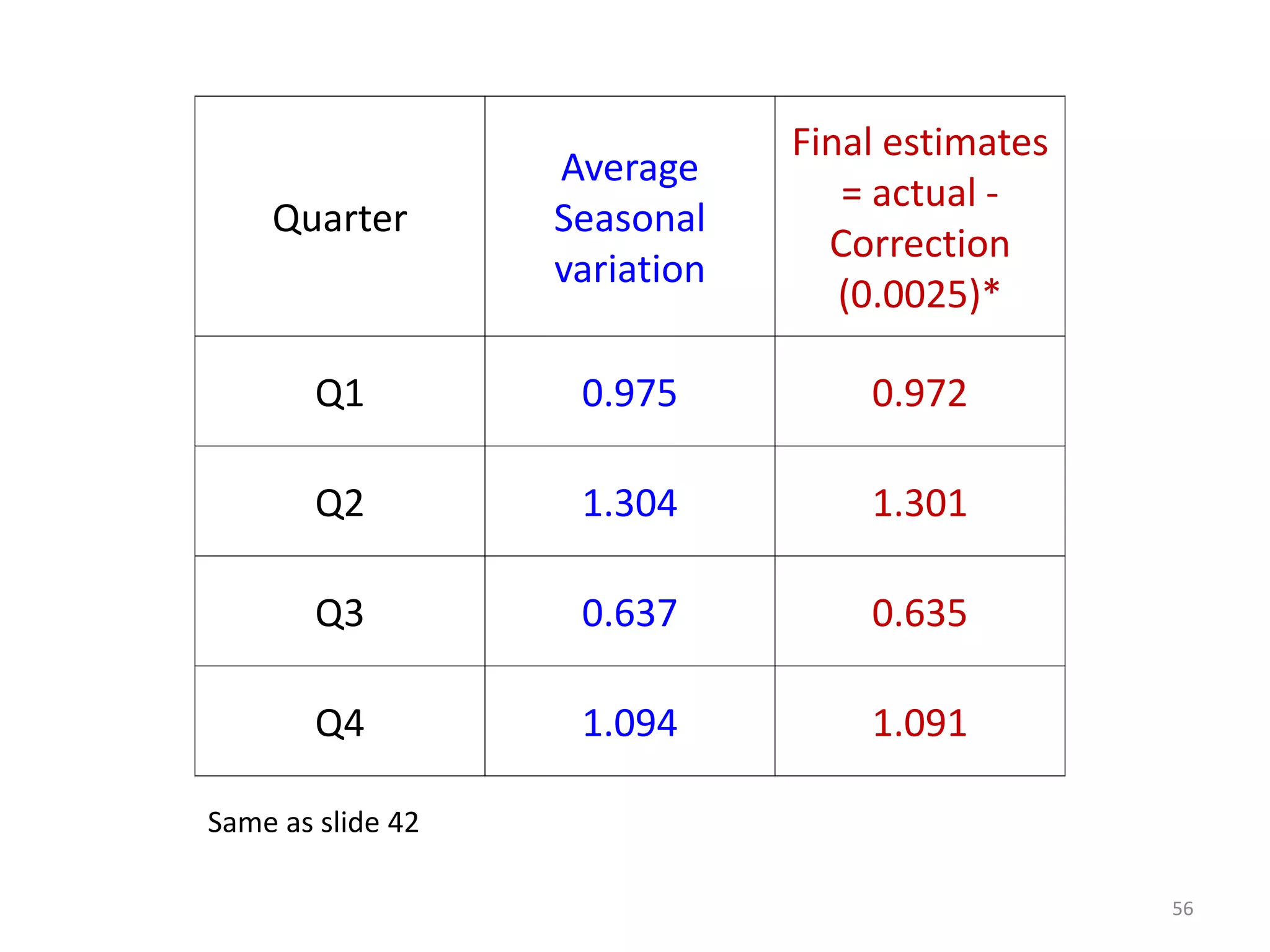
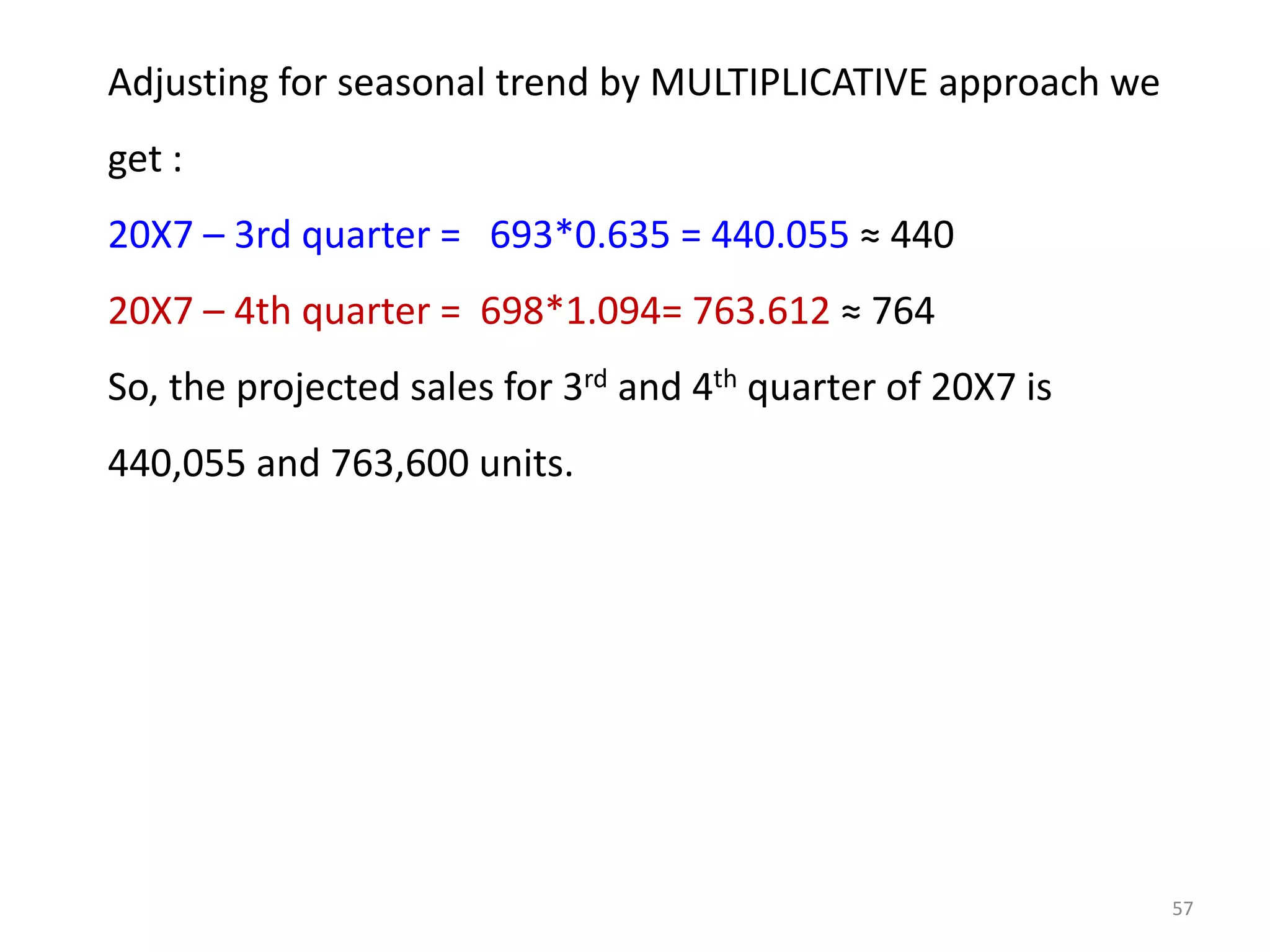




This document provides an overview of time series forecasting. It discusses key concepts such as: - Time series data that records values over time can be used for forecasting future values. Examples include factory output per day and monthly sales. - Plotting time series data helps identify trends like increasing, decreasing, or no trend over time. Regression analysis can also be used to identify linear trends and make predictions. - Moving averages smooth out fluctuations by taking the average of values over a fixed time period, like 3 years. This helps identify trends more clearly. - Components of a time series include trends, seasonal variations, cycles, and random variations. Additive and multiplicative models explain how these components combine


