Time ManagementTime Management
SkillsSkills
Done by,
Stephin Abraham Sabu
M.Tech IEM
RIT , Kottayam
Time Management
• Time Management is more than just managing time
• Controlling the use of the most valuable - and undervalued –
resource
• Managing oneself in relation to time
• Setting priorities and taking charge of the situation and time
utilization
• Changing those habits or activities that cause waste of time
• Willing to adopt habits and methods to make maximum use of
time
Managing time efficiently
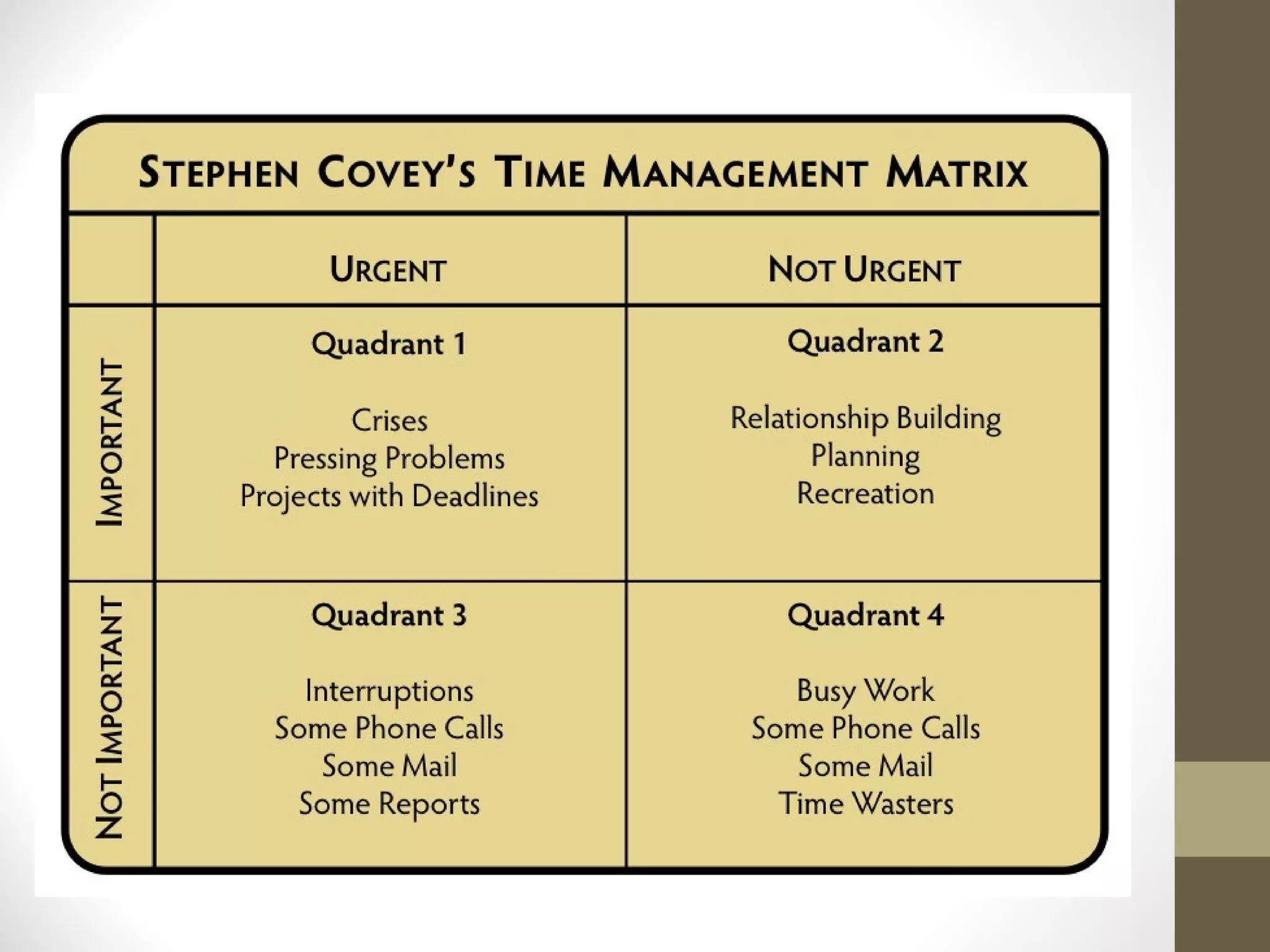
• Urgent tasks
Urgent tasks demand your immediate attention, but whether you
actually give them that attention may or may not matter.
• Important tasks
'Important' tasks matter, and not doing them may have serious
consequences for you or others.
Time Management Skills
• Goal Setting
• Prioritisation
• Self-awareness
• Focus
• Self - motivation
• Planning
• Communication Skills
• Delegation/outsourcing
• Stress Management
• Patience
Goal Setting
• We can only manage how we use our time
• The most fundamental of time management skills is the ability
to use your time in a manner which serves your goals.
• Each actions should make us closer to the goals
Prioritisation
• Prioritising should not begin with a focus on getting more
work done.
• Avoiding/eliminating the tasks which should not be
performing.
• Make a to-do-list.
• Schedule time for to-do-list
• Make deadlines realistic
• Check off items as soon as you finish
• Saying "No" is sometimes justified
Self-awareness
• No two people like to work the same way.
• All have their own preferences for how they like to work
e.g. some people work best in the mornings while others prefer
to work late.
• You need to have a good understanding of your own likes,
dislikes and needs.
• When you have a high level of self- awareness, you are able to
take the very best time management advice and tailor it to fit
your own style.
Focus
• Motivate ourselves to take actions
• Lack of motivation actually results in large amounts of
pressure and stress
Self-motivation
• Multi-tasking causes many problems
• Avoid multi-tasking
• Focus on one task at a time and block out all distractions
Planning
• Tasks will overlap and be dependent on each other.
• There will often be times when one task cannot be started
until another task is finished.
• The schedule will also be impacted by the schedules of others.
These factors need to be considered at the beginning of each
project and, monitored throughout.
• Failure leads to delays and missed deadlines.
• Planning foresee all the tasks which will be required to
complete a project and, how they will best fit together.
• A well made plan will save you a great deal of time.
Communication Skills
• Have to work with others on a daily basis.
• Strong communication skills will enable us to build supportive
relationships with those whom we work with.
• When we require another person to do some work for us; we
wants to communicate in a manner which will enable them to
perform the work to the desired standard, in the fastest time.
• If any errors occur, we will want to raise the issue quickly and
explain clearly about the adjustments that need to be made.
• Quality of your communication directly impacts the quality of
the work that gets done.
Delegation/outsourcing
• Delegate work to others.
• One of the greatest time management skills is knowing the
right person to perform the task.
• When delegating, it is important that you provide all of the
necessary information
• Also ensure that the person who will perform the task is clear
about what is expected of them.
• Stress is not a good thing
• With work comes pressure. Pressure in itself is usually a good
thing. It motivates you to take action and to do a good job.
• When you experience stress, your body and mind begin to
suffer.
• Large arrays of mental and physical problems have been linked
to prolonged exposure to stress.
• Stress begins to have a negative impact on your performance
and your time management.
• It delays all the tasks
Stress Management
Record Keeping
• Record keeping helps in further references
• Could find the necessary information at the moment we need
it.
• You must determine what information you need to have and
put systems in place to ensure that it is collected and stored
Patience
• Patience is a skill.
• It is something which you have to practice
• Do not rush things.
More tips to manage timeMore tips to manage time
• Managing team conflicts
• Effective delegation
• Stay motivated
• Stay healthy
• Avoid distractions
• Avoid multitasking
• Adequate and timely information
Conclusion
• Time Management – Managing oneself in relation to time
• Stephen Covey’s Time management matrix
• Essential time management skills
THANKTHANK YOUYOU

Time management skills

  • 1.
    Time ManagementTime Management SkillsSkills Doneby, Stephin Abraham Sabu M.Tech IEM RIT , Kottayam
  • 2.
    Time Management • TimeManagement is more than just managing time • Controlling the use of the most valuable - and undervalued – resource • Managing oneself in relation to time • Setting priorities and taking charge of the situation and time utilization • Changing those habits or activities that cause waste of time • Willing to adopt habits and methods to make maximum use of time
  • 3.
    Managing time efficiently •Urgent tasks Urgent tasks demand your immediate attention, but whether you actually give them that attention may or may not matter. • Important tasks 'Important' tasks matter, and not doing them may have serious consequences for you or others.
  • 5.
    Time Management Skills •Goal Setting • Prioritisation • Self-awareness • Focus • Self - motivation • Planning • Communication Skills • Delegation/outsourcing • Stress Management • Patience
  • 6.
    Goal Setting • Wecan only manage how we use our time • The most fundamental of time management skills is the ability to use your time in a manner which serves your goals. • Each actions should make us closer to the goals
  • 7.
    Prioritisation • Prioritising shouldnot begin with a focus on getting more work done. • Avoiding/eliminating the tasks which should not be performing. • Make a to-do-list. • Schedule time for to-do-list • Make deadlines realistic • Check off items as soon as you finish • Saying "No" is sometimes justified
  • 8.
    Self-awareness • No twopeople like to work the same way. • All have their own preferences for how they like to work e.g. some people work best in the mornings while others prefer to work late. • You need to have a good understanding of your own likes, dislikes and needs. • When you have a high level of self- awareness, you are able to take the very best time management advice and tailor it to fit your own style.
  • 9.
    Focus • Motivate ourselvesto take actions • Lack of motivation actually results in large amounts of pressure and stress Self-motivation • Multi-tasking causes many problems • Avoid multi-tasking • Focus on one task at a time and block out all distractions
  • 10.
    Planning • Tasks willoverlap and be dependent on each other. • There will often be times when one task cannot be started until another task is finished. • The schedule will also be impacted by the schedules of others. These factors need to be considered at the beginning of each project and, monitored throughout. • Failure leads to delays and missed deadlines. • Planning foresee all the tasks which will be required to complete a project and, how they will best fit together. • A well made plan will save you a great deal of time.
  • 11.
    Communication Skills • Haveto work with others on a daily basis. • Strong communication skills will enable us to build supportive relationships with those whom we work with. • When we require another person to do some work for us; we wants to communicate in a manner which will enable them to perform the work to the desired standard, in the fastest time. • If any errors occur, we will want to raise the issue quickly and explain clearly about the adjustments that need to be made. • Quality of your communication directly impacts the quality of the work that gets done.
  • 12.
    Delegation/outsourcing • Delegate workto others. • One of the greatest time management skills is knowing the right person to perform the task. • When delegating, it is important that you provide all of the necessary information • Also ensure that the person who will perform the task is clear about what is expected of them.
  • 13.
    • Stress isnot a good thing • With work comes pressure. Pressure in itself is usually a good thing. It motivates you to take action and to do a good job. • When you experience stress, your body and mind begin to suffer. • Large arrays of mental and physical problems have been linked to prolonged exposure to stress. • Stress begins to have a negative impact on your performance and your time management. • It delays all the tasks Stress Management
  • 14.
    Record Keeping • Recordkeeping helps in further references • Could find the necessary information at the moment we need it. • You must determine what information you need to have and put systems in place to ensure that it is collected and stored Patience • Patience is a skill. • It is something which you have to practice • Do not rush things.
  • 15.
    More tips tomanage timeMore tips to manage time • Managing team conflicts • Effective delegation • Stay motivated • Stay healthy • Avoid distractions • Avoid multitasking • Adequate and timely information
  • 16.
    Conclusion • Time Management– Managing oneself in relation to time • Stephen Covey’s Time management matrix • Essential time management skills
  • 17.