 The Art of Arranging ,
Organizing ,
Scheduling and
budgeting one’s time
for the purpose of
generating more
effective work and
productivity is known
as Time Management
 To Save Time
 To Reduce Stress
 To Function
Effectively
 To increase Work
Output
 To have More control
over Job
Responsibilities
 Effective Planning
 Setting Goals and
Objectives
 Setting Deadlines
 Spending The right
activity on right job
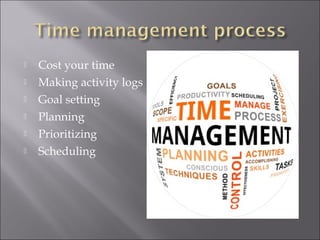
 Cost your time
 Making activity logs
 Goal setting
 Planning
 Prioritizing
 Scheduling
 Understand the true
value by Calculating
your cost per year
 Cost per
year=( Salary+ Taxes
+ Office space + office
equipment + Profit
you generate
… Knows Where you
Stand
 Make a realistic
estimate of time
spend on job orders
 Pinpoint the critical
areas
 Finding the high
yielding time of your
day
 Setting lifetime goals
helps you to chart
your life course and
your career path
 Breakup your life time
goals in smaller goals
 Draw an action plan- A list of thing that need
to be done to achieve goals
 Prioritize your task-
The most important jobs should be
completed first and followed by other jobs
 Make a realistic estimate of how much you can
do.
 Be Your Own Judge and your own motivator,
make Time Management your tool for success
Time management For Students

Time management For Students

  • 2.
     The Artof Arranging , Organizing , Scheduling and budgeting one’s time for the purpose of generating more effective work and productivity is known as Time Management
  • 3.
     To SaveTime  To Reduce Stress  To Function Effectively  To increase Work Output  To have More control over Job Responsibilities
  • 4.
     Effective Planning Setting Goals and Objectives  Setting Deadlines  Spending The right activity on right job
  • 5.
     Cost yourtime  Making activity logs  Goal setting  Planning  Prioritizing  Scheduling
  • 6.
     Understand thetrue value by Calculating your cost per year  Cost per year=( Salary+ Taxes + Office space + office equipment + Profit you generate … Knows Where you Stand
  • 7.
     Make arealistic estimate of time spend on job orders  Pinpoint the critical areas  Finding the high yielding time of your day
  • 8.
     Setting lifetimegoals helps you to chart your life course and your career path  Breakup your life time goals in smaller goals
  • 9.
     Draw anaction plan- A list of thing that need to be done to achieve goals
  • 10.
     Prioritize yourtask- The most important jobs should be completed first and followed by other jobs
  • 11.
     Make arealistic estimate of how much you can do.
  • 12.
     Be YourOwn Judge and your own motivator, make Time Management your tool for success