ORGANIZATIONAL
ETHICS
Organizational ethics is the application of
these morality related choices as influenced
and guided by values, standards, rules,
principles, and strategies associated with
organizational activities and business
situations.
If ethics deals with the choices (the morality of
right vs wrong) that individuals make in their
personal and professional lives, then…
They are at ease
interacting with diverse
internal and external
stakeholder groups.
How do we describe an ethical organization?
They are obsessed with
fairness.
Responsibility is individual
rather than collective, with
individuals assuming
personal responsibility for
actions of the organization.
They see their activities in
terms of purpose.
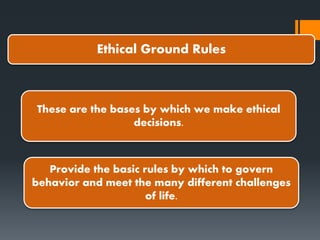
Ethical Ground Rules
These are the bases by which we make ethical
decisions.
Provide the basic rules by which to govern
behavior and meet the many different challenges
of life.
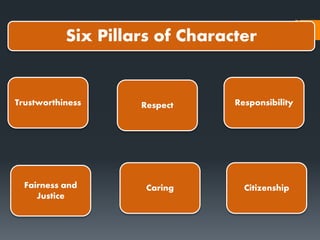
Six Pillars of Character
Trustworthiness
Caring
Respect
Fairness and
Justice
Citizenship
Responsibility
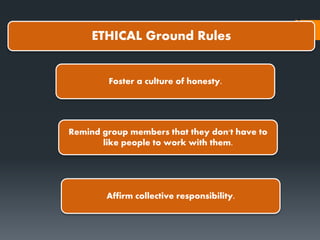
ETHICAL Ground Rules
Foster a culture of honesty.
Remind group members that they don't have to
like people to work with them.
Affirm collective responsibility.
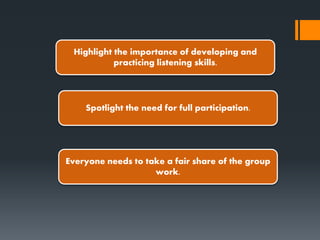
Spotlight the need for full participation.
Everyone needs to take a fair share of the group
work.
Highlight the importance of developing and
practicing listening skills.
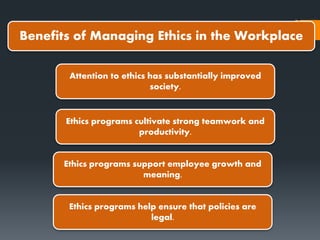
Benefits of Managing Ethics in the Workplace
Attention to ethics has substantially improved
society.
Ethics programs cultivate strong teamwork and
productivity.
Ethics programs support employee growth and
meaning.
Ethics programs help ensure that policies are
legal.
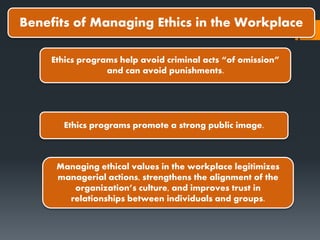
Benefits of Managing Ethics in the Workplace
Ethics programs help avoid criminal acts “of omission”
and can avoid punishments.
Ethics programs promote a strong public image.
Managing ethical values in the workplace legitimizes
managerial actions, strengthens the alignment of the
organization’s culture, and improves trust in
relationships between individuals and groups.
Who is responsible for creating Ethics in an
Organization?
The creation of an ethical organization resides with
leaders and followers;
leadership by nature demands that leaders be the front runners
in establishing an ethical organization.
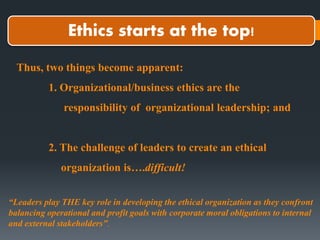
Ethics starts at the top!
Thus, two things become apparent:
1. Organizational/business ethics are the
responsibility of organizational leadership; and
2. The challenge of leaders to create an ethical
organization is….difficult!
“Leaders play THE key role in developing the ethical organization as they confront
balancing operational and profit goals with corporate moral obligations to internal
and external stakeholders”.
Ethics starts at the top!
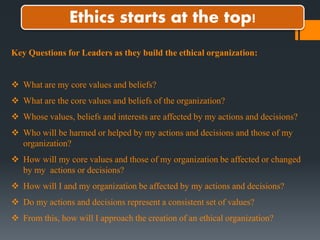
Key Questions for Leaders as they build the ethical organization:
 What are my core values and beliefs?
 What are the core values and beliefs of the organization?
 Whose values, beliefs and interests are affected by my actions and decisions?
 Who will be harmed or helped by my actions and decisions and those of my
organization?
 How will my core values and those of my organization be affected or changed
by my actions or decisions?
 How will I and my organization be affected by my actions and decisions?
 Do my actions and decisions represent a consistent set of values?
 From this, how will I approach the creation of an ethical organization?
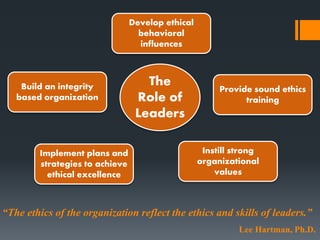
“The ethics of the organization reflect the ethics and skills of leaders.”
Lee Hartman, Ph.D.
Develop ethical
behavioral
influences
Build an integrity
based organization
Provide sound ethics
training
Instill strong
organizational
values
Implement plans and
strategies to achieve
ethical excellence
The
Role of
Leaders
“The ethics of the organization
reflect the ethics and skills of
leaders.”
Lee Hartman, Ph.D.
Jessa I. Cerbito
Discussant

Organizational Ethics

  • 1.
  • 2.
    Organizational ethics isthe application of these morality related choices as influenced and guided by values, standards, rules, principles, and strategies associated with organizational activities and business situations. If ethics deals with the choices (the morality of right vs wrong) that individuals make in their personal and professional lives, then…
  • 3.
    They are atease interacting with diverse internal and external stakeholder groups. How do we describe an ethical organization? They are obsessed with fairness. Responsibility is individual rather than collective, with individuals assuming personal responsibility for actions of the organization. They see their activities in terms of purpose.
  • 4.
    Ethical Ground Rules Theseare the bases by which we make ethical decisions. Provide the basic rules by which to govern behavior and meet the many different challenges of life.
  • 5.
    Six Pillars ofCharacter Trustworthiness Caring Respect Fairness and Justice Citizenship Responsibility
  • 6.
    ETHICAL Ground Rules Fostera culture of honesty. Remind group members that they don't have to like people to work with them. Affirm collective responsibility.
  • 7.
    Spotlight the needfor full participation. Everyone needs to take a fair share of the group work. Highlight the importance of developing and practicing listening skills.
  • 8.
    Benefits of ManagingEthics in the Workplace Attention to ethics has substantially improved society. Ethics programs cultivate strong teamwork and productivity. Ethics programs support employee growth and meaning. Ethics programs help ensure that policies are legal.
  • 9.
    Benefits of ManagingEthics in the Workplace Ethics programs help avoid criminal acts “of omission” and can avoid punishments. Ethics programs promote a strong public image. Managing ethical values in the workplace legitimizes managerial actions, strengthens the alignment of the organization’s culture, and improves trust in relationships between individuals and groups.
  • 10.
    Who is responsiblefor creating Ethics in an Organization? The creation of an ethical organization resides with leaders and followers; leadership by nature demands that leaders be the front runners in establishing an ethical organization.
  • 11.
    Ethics starts atthe top! Thus, two things become apparent: 1. Organizational/business ethics are the responsibility of organizational leadership; and 2. The challenge of leaders to create an ethical organization is….difficult! “Leaders play THE key role in developing the ethical organization as they confront balancing operational and profit goals with corporate moral obligations to internal and external stakeholders”.
  • 12.
    Ethics starts atthe top! Key Questions for Leaders as they build the ethical organization:  What are my core values and beliefs?  What are the core values and beliefs of the organization?  Whose values, beliefs and interests are affected by my actions and decisions?  Who will be harmed or helped by my actions and decisions and those of my organization?  How will my core values and those of my organization be affected or changed by my actions or decisions?  How will I and my organization be affected by my actions and decisions?  Do my actions and decisions represent a consistent set of values?  From this, how will I approach the creation of an ethical organization?
  • 13.
    “The ethics ofthe organization reflect the ethics and skills of leaders.” Lee Hartman, Ph.D. Develop ethical behavioral influences Build an integrity based organization Provide sound ethics training Instill strong organizational values Implement plans and strategies to achieve ethical excellence The Role of Leaders
  • 14.
    “The ethics ofthe organization reflect the ethics and skills of leaders.” Lee Hartman, Ph.D.
  • 15.