Time and Stress Management
What Is Stress?
 Stress
– Psychological, Emotional, Physiological
Response
 Stressors
– Threatening Environmental Conditions
Why Is Stress
Management Important?
 Organizational Costs
 Individual Costs
– Health Impairment
– Job Burnout
– Performance Decline
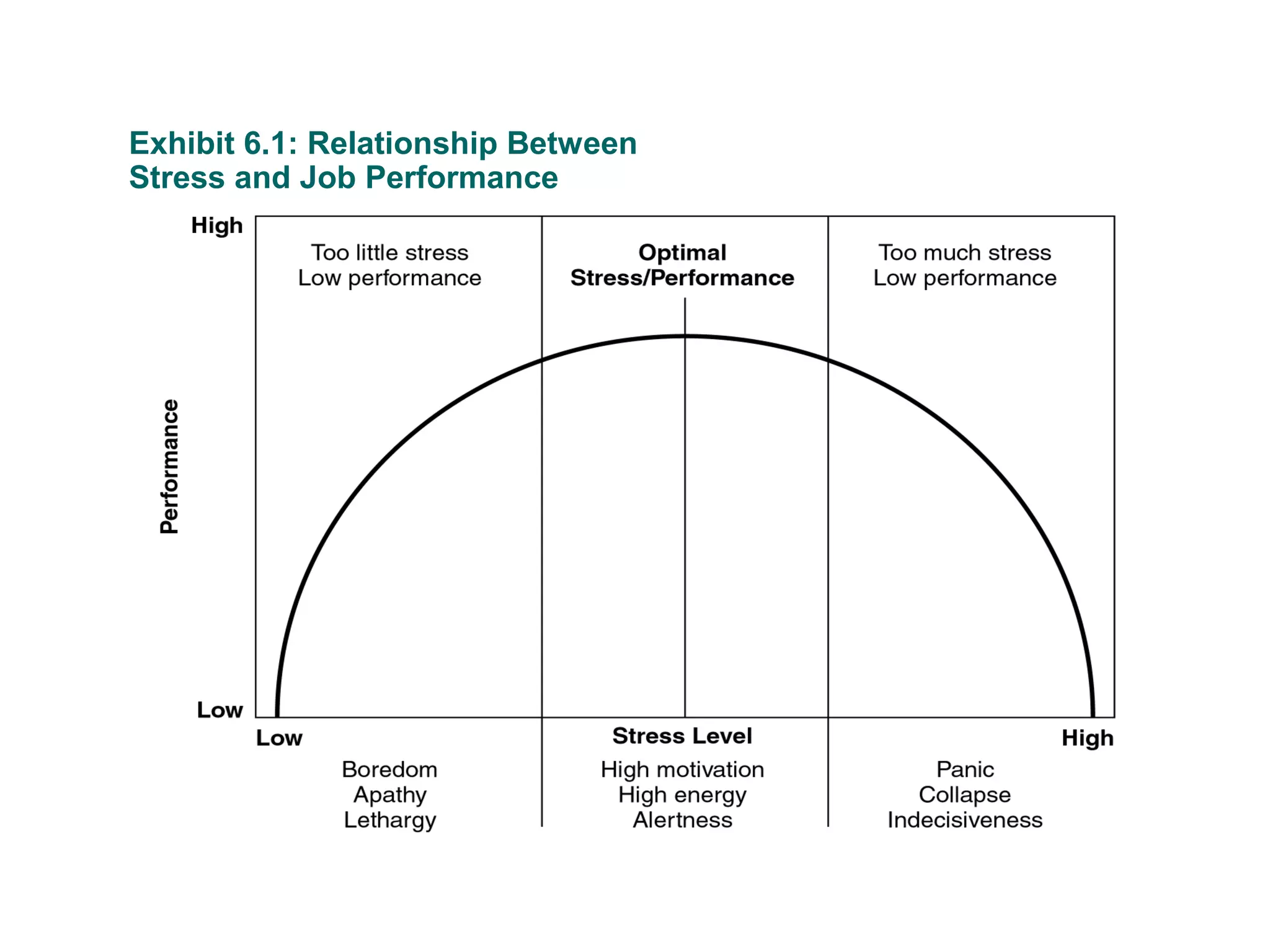
Exhibit 6.1: Relationship Between
Stress and Job Performance
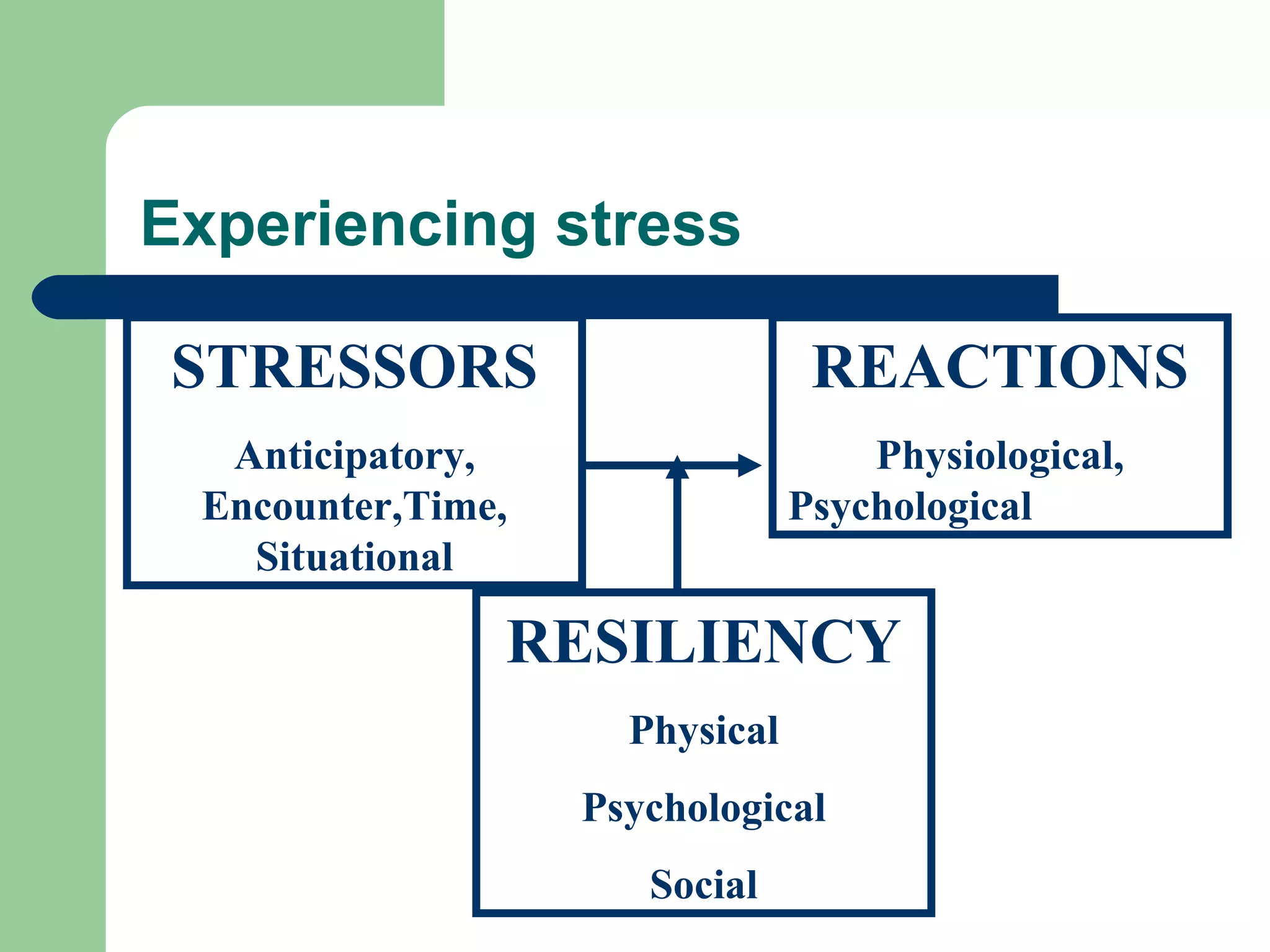
Experiencing stress
STRESSORS
Anticipatory,
Encounter,Time,
Situational
REACTIONS
Physiological,
Psychological
RESILIENCY
Physical
Psychological
Social
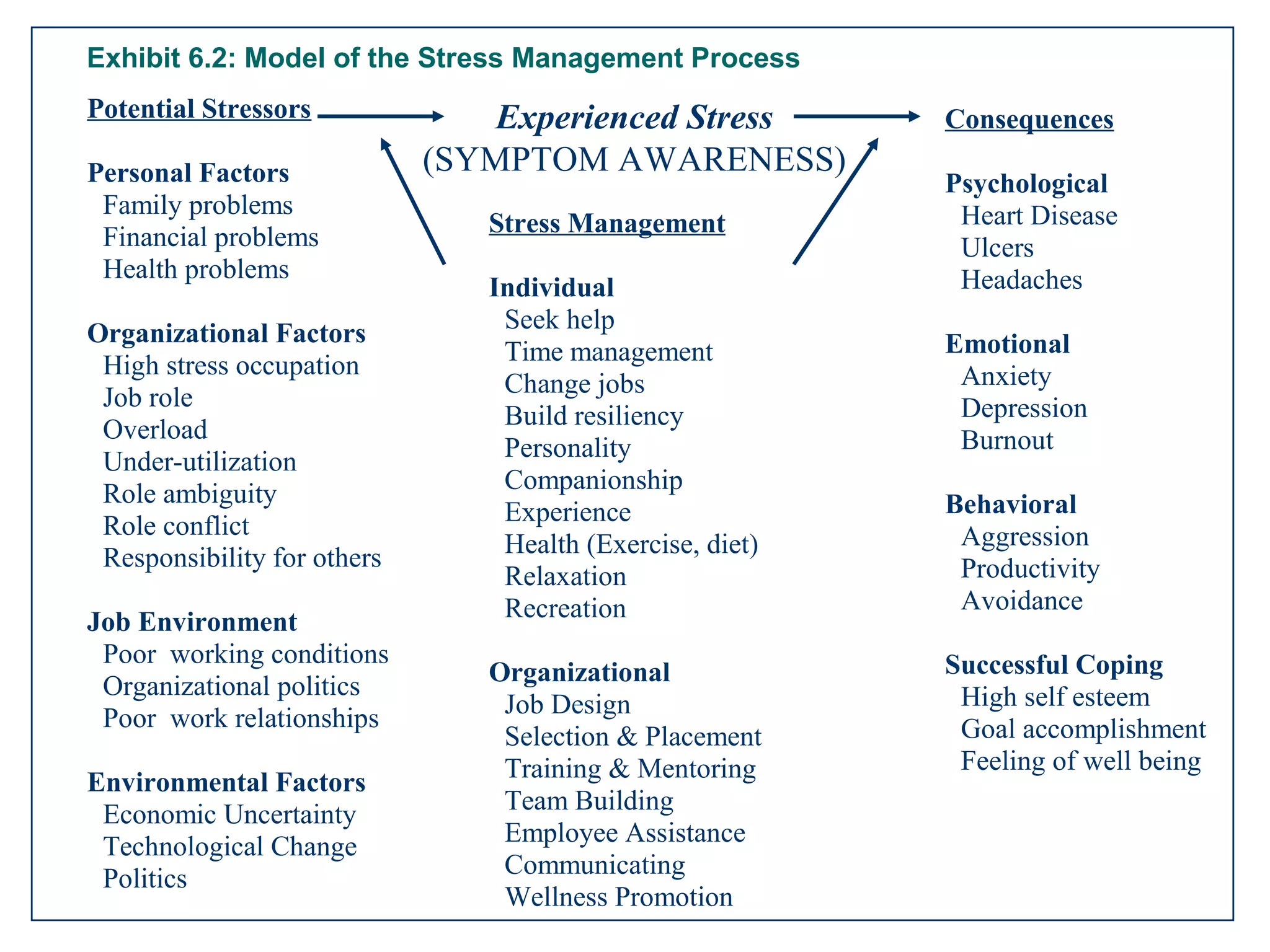
Exhibit 6.2: Model of the Stress Management Process
Potential Stressors
Personal Factors
Family problems
Financial problems
Health problems
Organizational Factors
High stress occupation
Job role
Overload
Under-utilization
Role ambiguity
Role conflict
Responsibility for others
Job Environment
Poor working conditions
Organizational politics
Poor work relationships
Environmental Factors
Economic Uncertainty
Technological Change
Politics
Consequences
Psychological
Heart Disease
Ulcers
Headaches
Emotional
Anxiety
Depression
Burnout
Behavioral
Aggression
Productivity
Avoidance
Successful Coping
High self esteem
Goal accomplishment
Feeling of well being
Stress Management
Individual
Seek help
Time management
Change jobs
Build resiliency
Personality
Companionship
Experience
Health (Exercise, diet)
Relaxation
Recreation
Organizational
Job Design
Selection & Placement
Training & Mentoring
Team Building
Employee Assistance
Communicating
Wellness Promotion
Experienced Stress
(SYMPTOM AWARENESS)
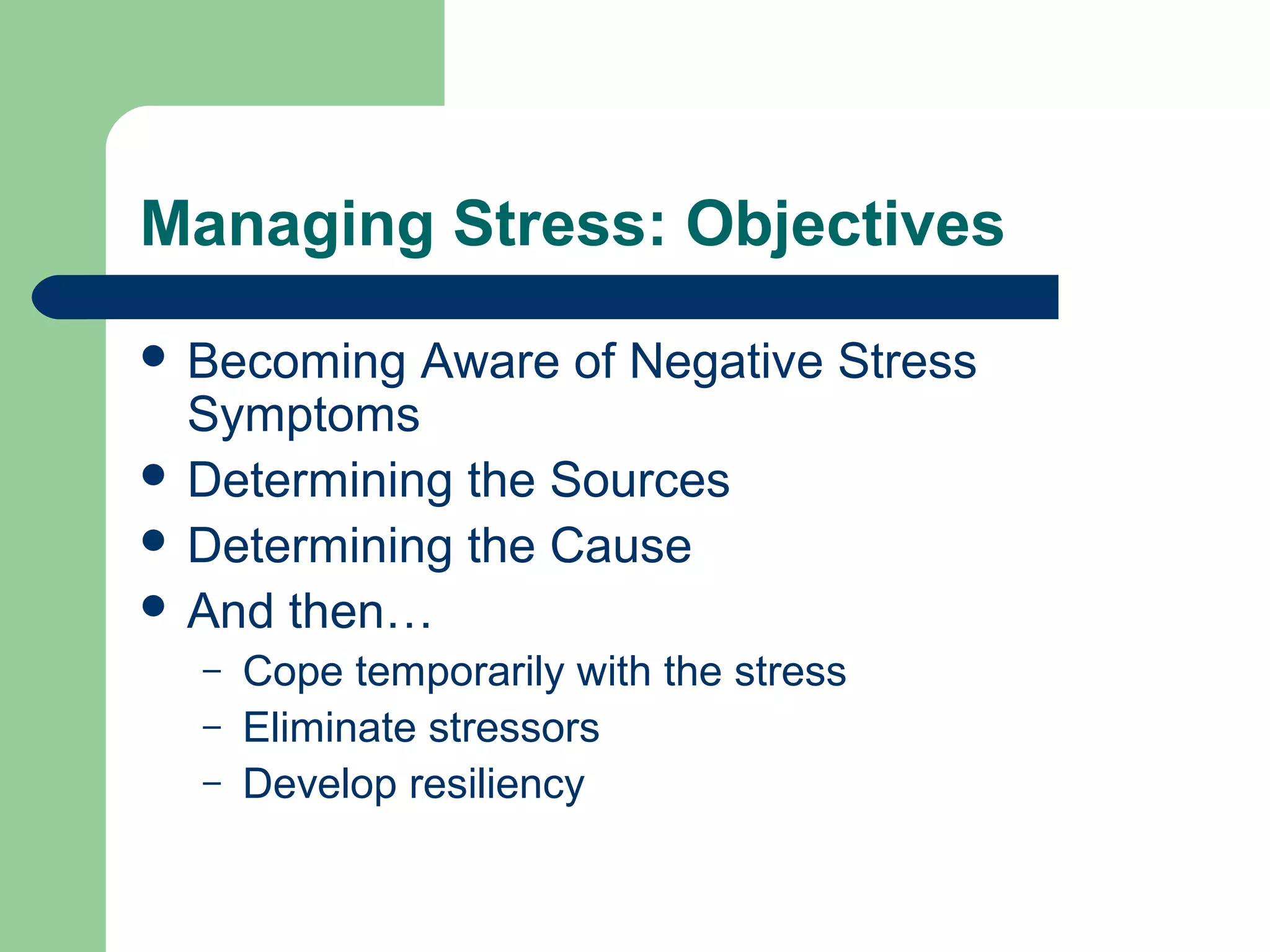
Managing Stress: Objectives
 Becoming Aware of Negative Stress
Symptoms
 Determining the Sources
 Determining the Cause
 And then…
– Cope temporarily with the stress
– Eliminate stressors
– Develop resiliency
How Can Awareness of Stress
Symptoms Be Enhanced?
 Physical Symptoms
 Psychological Substitutes
Never Rarely Sometimes Often Always
Constant fatigue [] [] [] [] []
Low energy level [] [] [] [] []
Recurring headaches [] [] [] [] []
Gastrointestinal disorders [] [] [] [] []
Bad breath [] [] [] [] []
Sweaty hands or feet [] [] [] [] []
Dizziness [] [] [] [] []
High blood pressure [] [] [] [] []
Pounding heart [] [] [] [] []
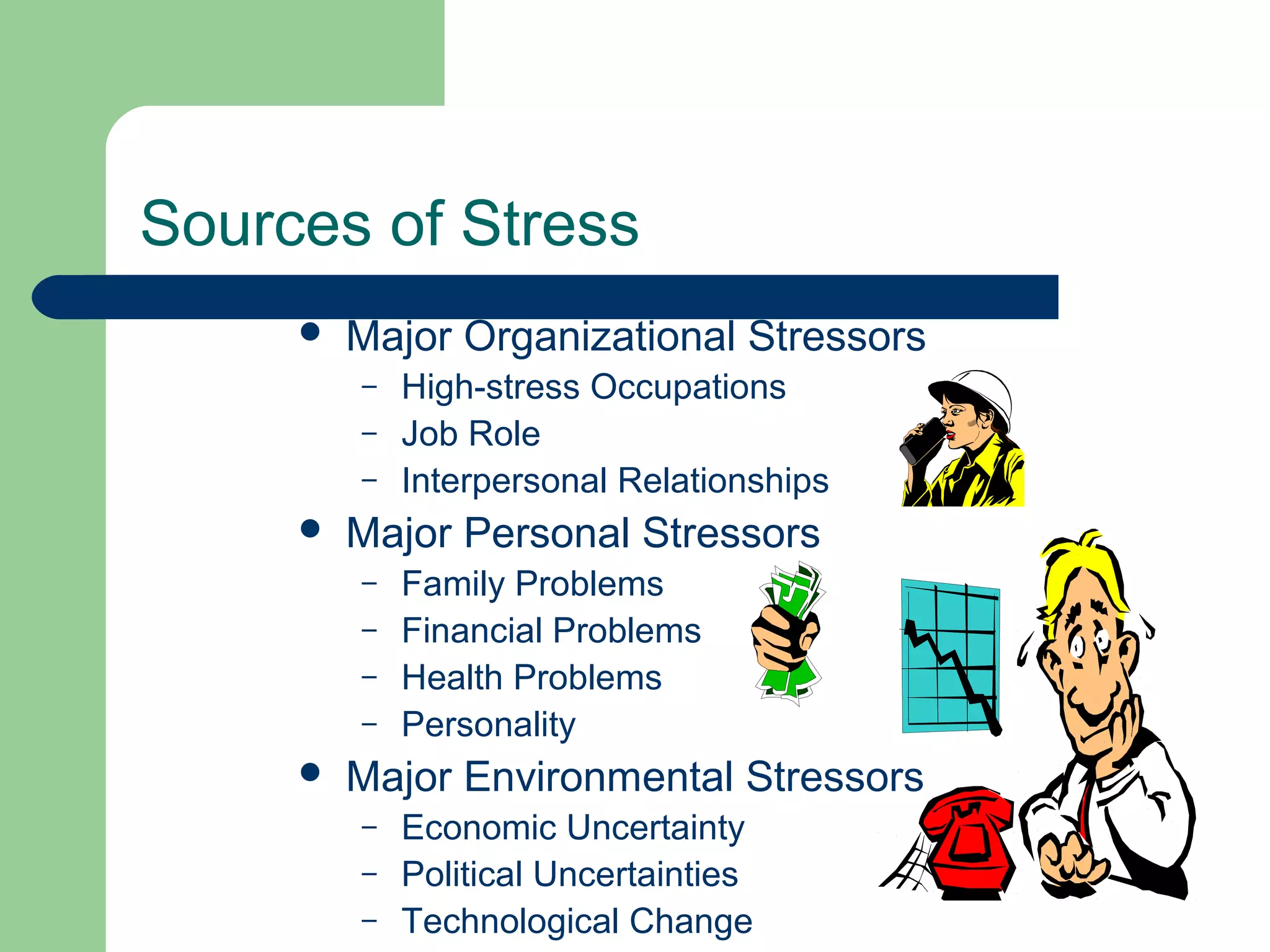
Sources of Stress
 Major Organizational Stressors
– High-stress Occupations
– Job Role
– Interpersonal Relationships
 Major Personal Stressors
– Family Problems
– Financial Problems
– Health Problems
– Personality
 Major Environmental Stressors
– Economic Uncertainty
– Political Uncertainties
– Technological Change
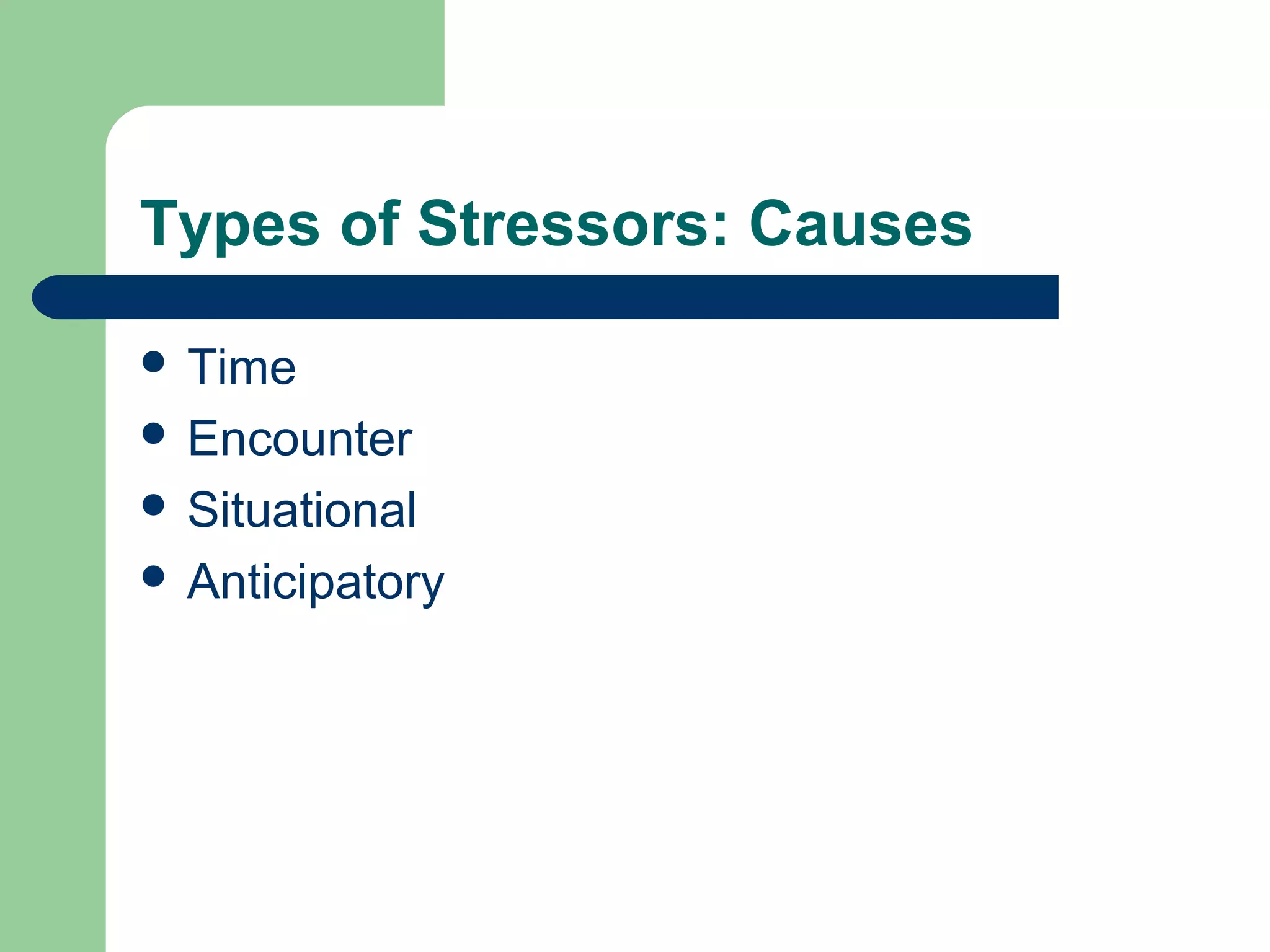
Types of Stressors: Causes
 Time
 Encounter
 Situational
 Anticipatory
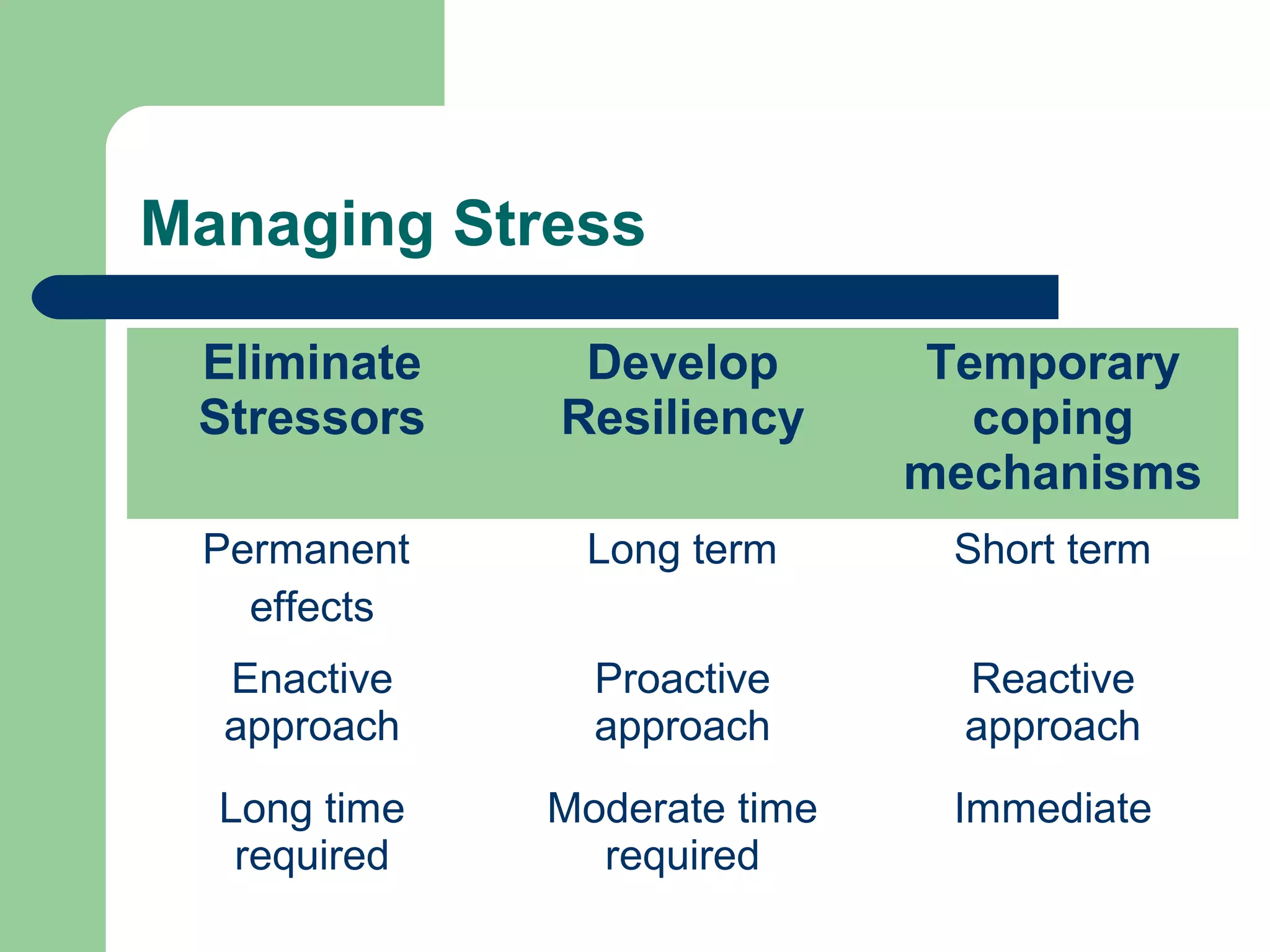
Managing Stress
Eliminate
Stressors
Develop
Resiliency
Temporary
coping
mechanisms
Permanent
effects
Long term Short term
Enactive
approach
Proactive
approach
Reactive
approach
Long time
required
Moderate time
required
Immediate
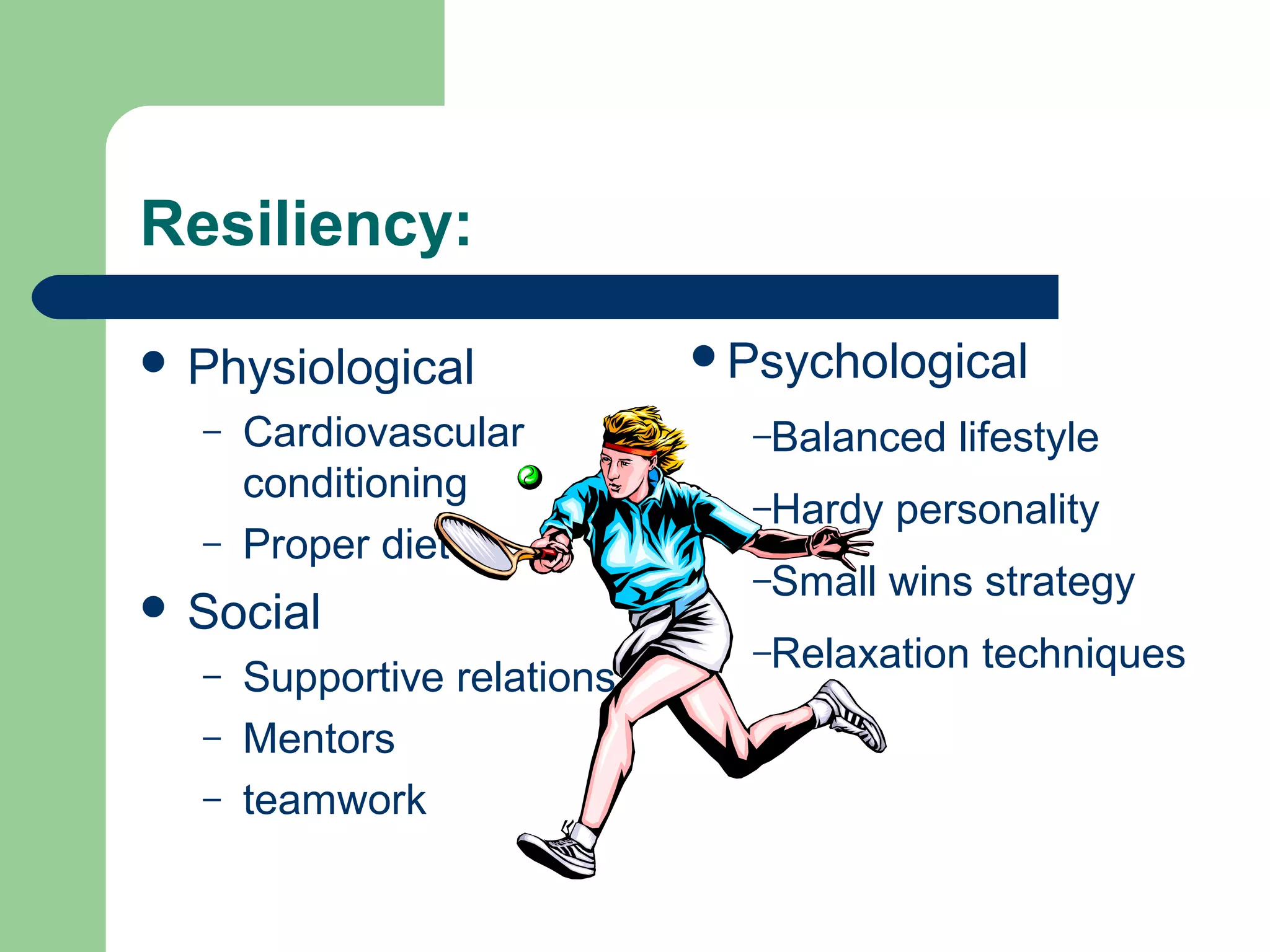
Resiliency:
 Physiological
– Cardiovascular
conditioning
– Proper diet
 Social
– Supportive relations
– Mentors
– teamwork
Psychological
–Balanced lifestyle
–Hardy personality
–Small wins strategy
–Relaxation techniques
Short term strategies
 Reframing
 Imagery
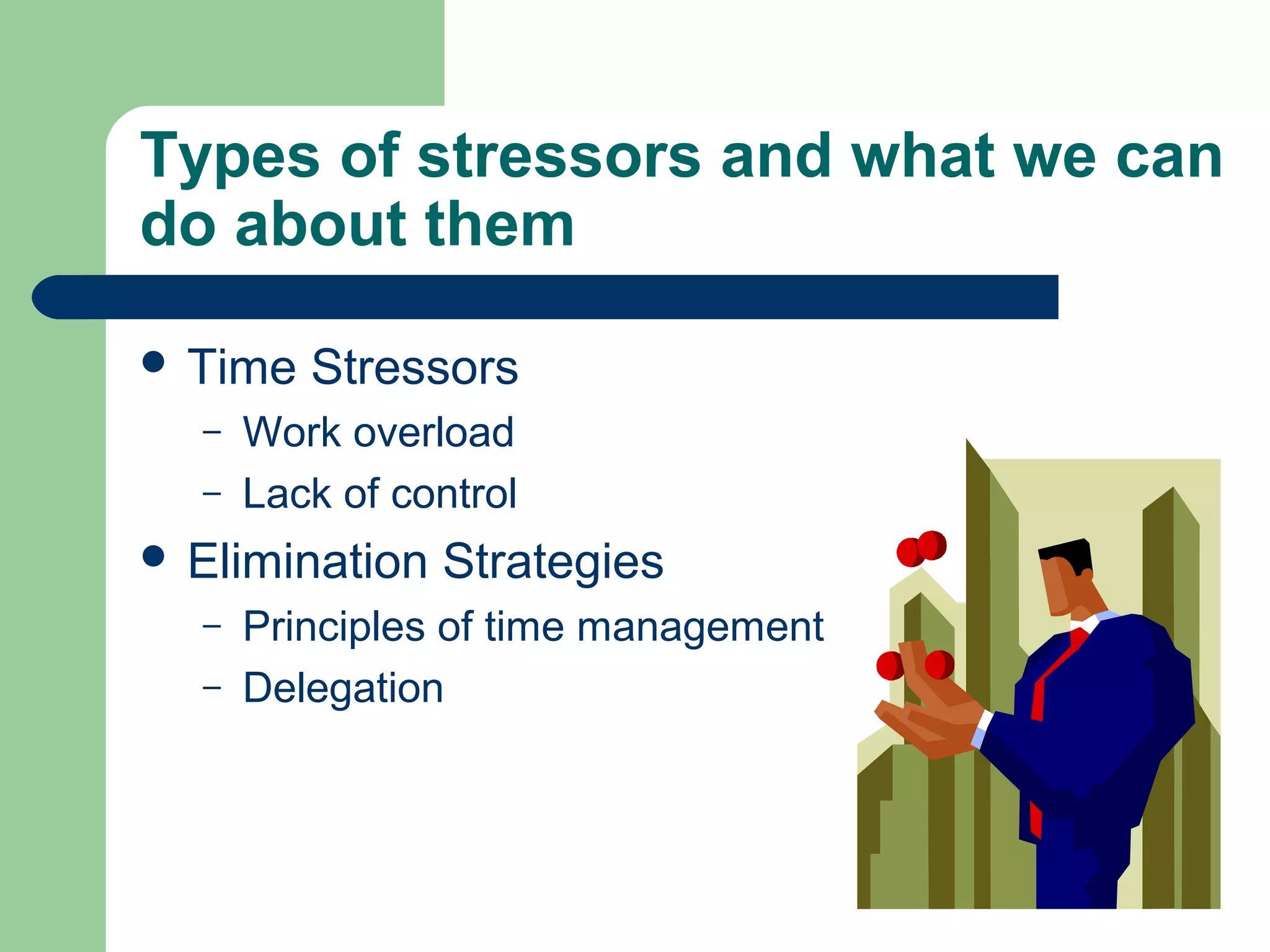
Types of stressors and what we can
do about them
 Time Stressors
– Work overload
– Lack of control
 Elimination Strategies
– Principles of time management
– Delegation
Eliminating time stressors:
Time management
 “Effective time management can enable
managers to gain control over their time and
organize their fragmented, chaotic
environment.”
Effective time management
means…
 Spending time on important, not just urgent
matters
 Distinguishing clearly between importance and
urgency
 Focusing on results not methods
 Not feeling guilty when saying no
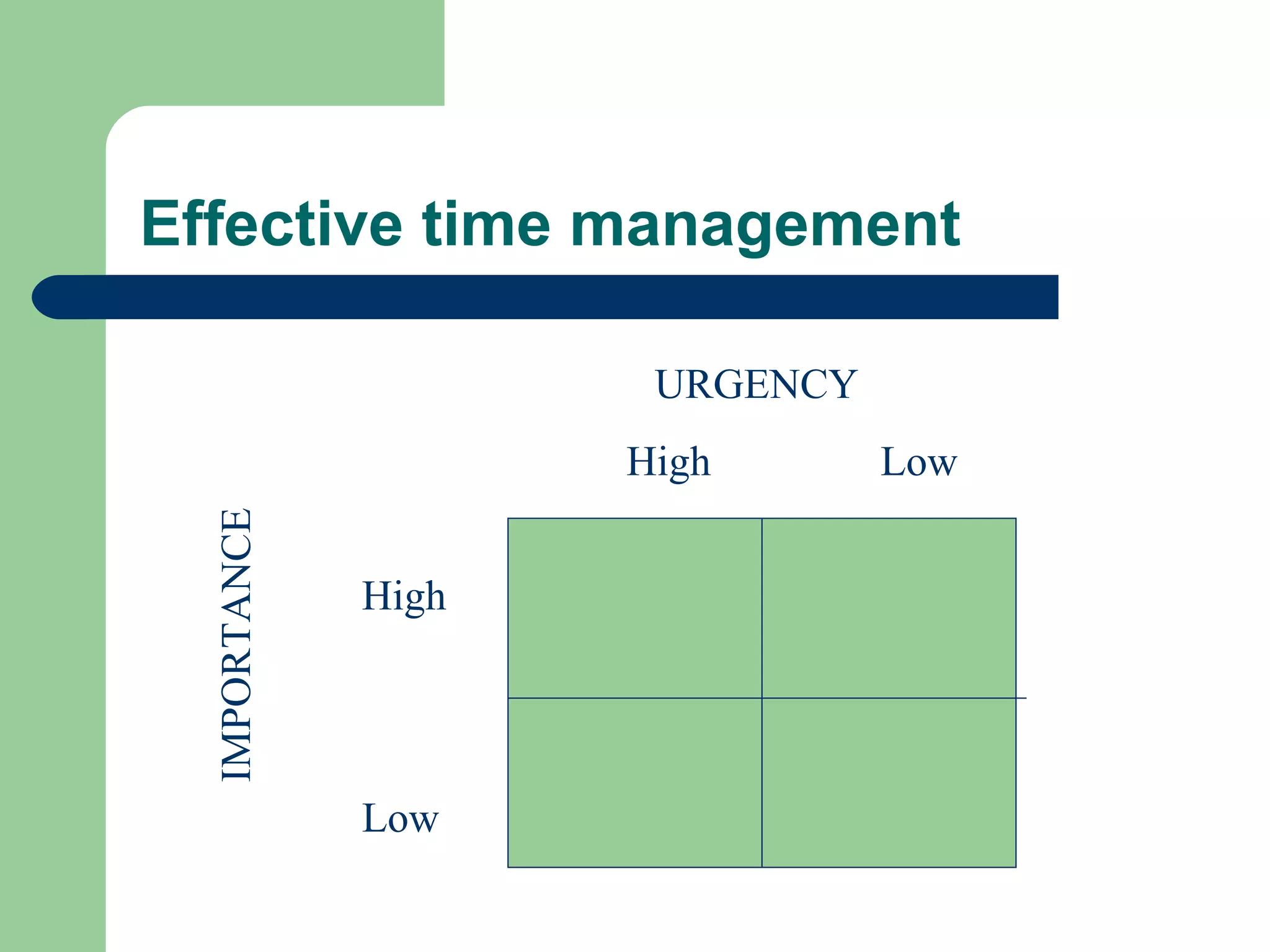
Effective time management
URGENCY
High Low
IMPORTANCE
Low
High
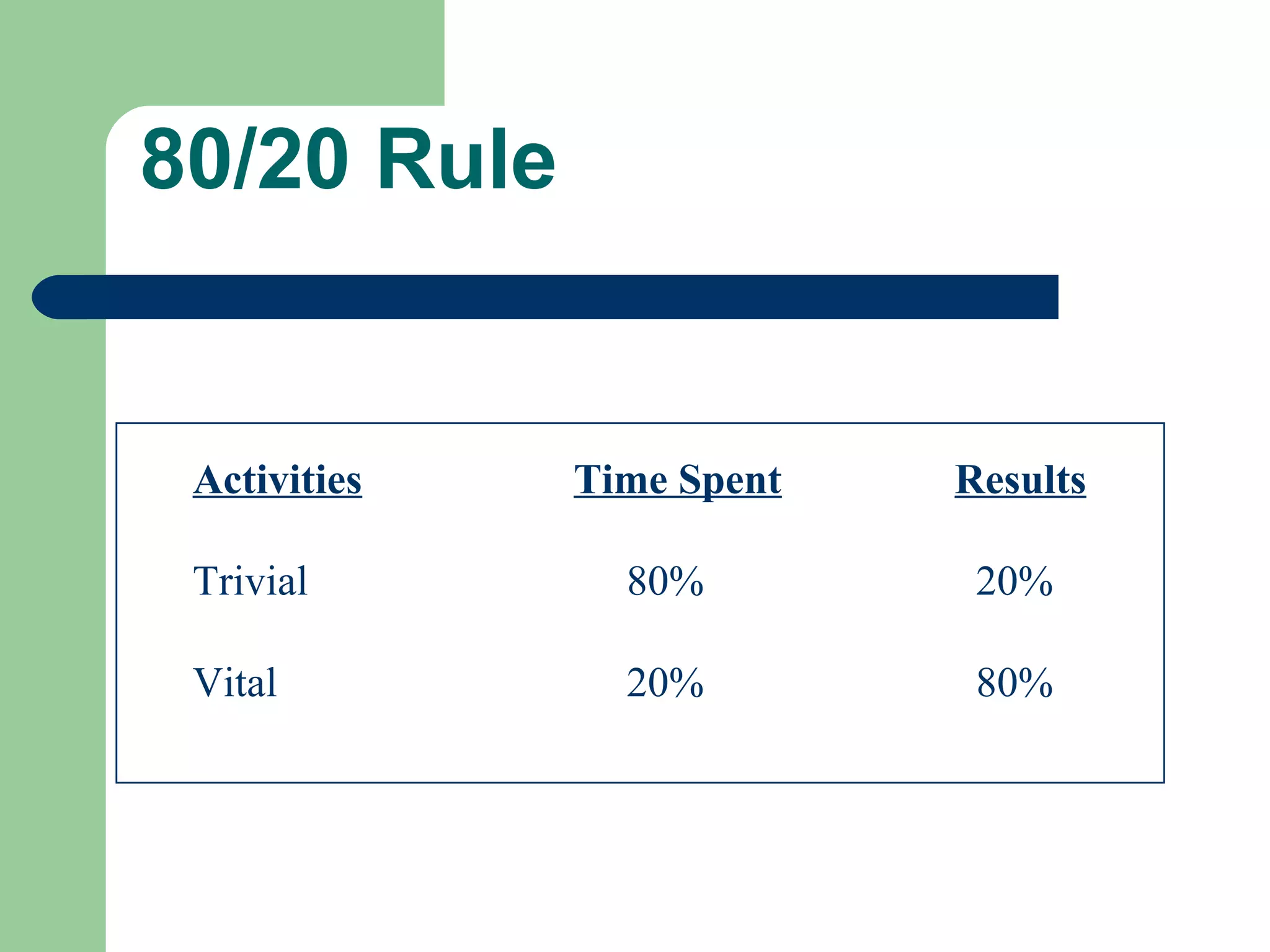
80/20 Rule
Activities Time Spent Results
Trivial 80% 20%
Vital 20% 80%
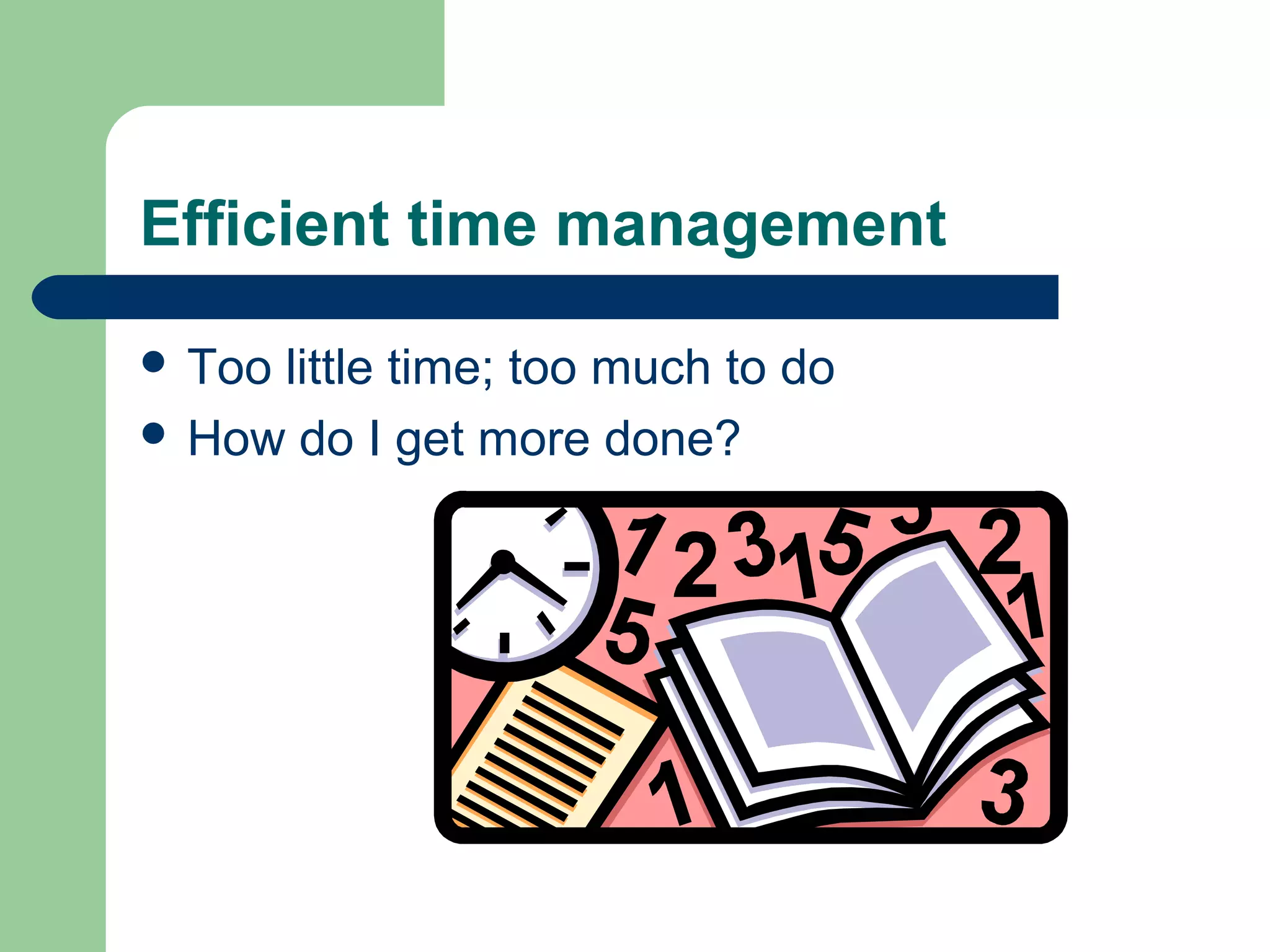
Efficient time management
 Too little time; too much to do
 How do I get more done?
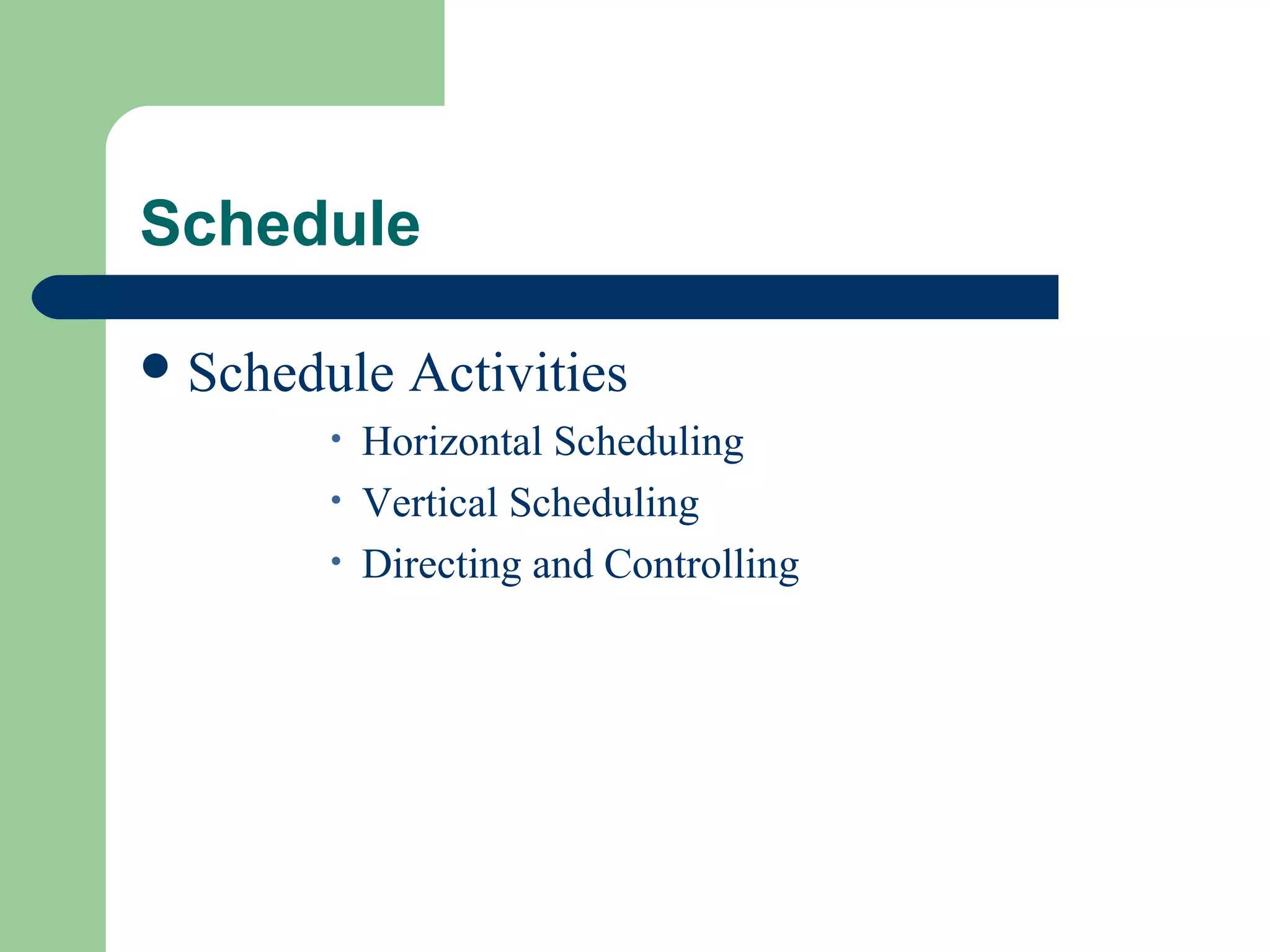
Schedule
Schedule Activities
• Horizontal Scheduling
• Vertical Scheduling
• Directing and Controlling
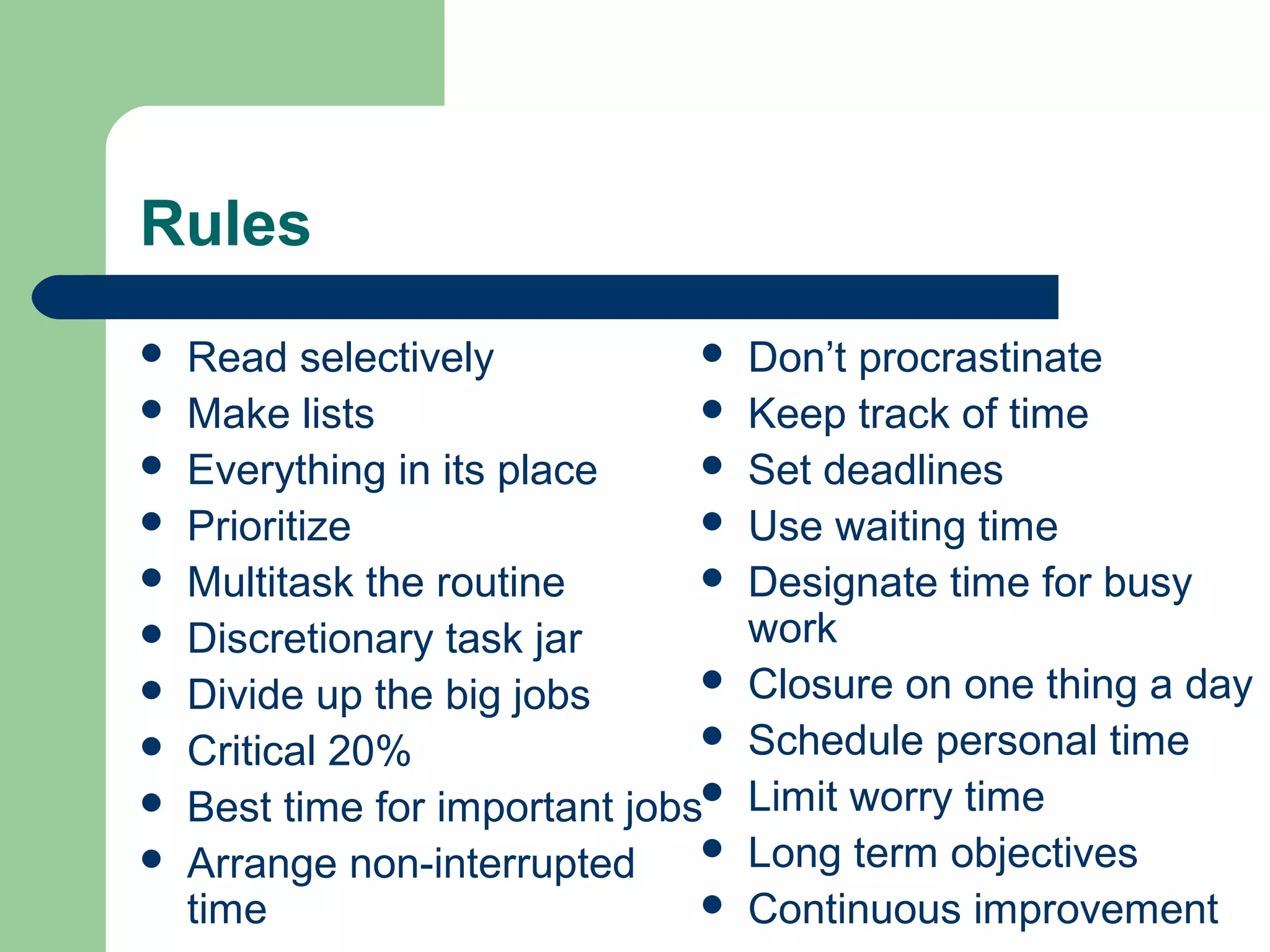
Rules
 Read selectively
 Make lists
 Everything in its place
 Prioritize
 Multitask the routine
 Discretionary task jar
 Divide up the big jobs
 Critical 20%
 Best time for important jobs
 Arrange non-interrupted
time
 Don’t procrastinate
 Keep track of time
 Set deadlines
 Use waiting time
 Designate time for busy
work
 Closure on one thing a day
 Schedule personal time
 Limit worry time
 Long term objectives
 Continuous improvement
Tips for managers
 Hold routine meetings at end of day
 Set time limit
 Hold meetings only if needed
 Agendas, minutes
 Start on time
 Paper work decisions
 Organize
 Limit interruptions
 Delegate
 Empowerment: allow for initiative
 Give credit to those who deserve it
Types of stressors and what we can
do about them
 Encounter Stressors:
– Role Conflicts
– Issue
– Interaction
 Elimination Strategies:
– Delegation
– Interpersonal skills
 Conflict resolution
 Resilience
– Social support; Collaboration
 Self awareness
 EQ
Types of stressors and what we can
do about them
 Situational Stressors:
– Unfavourable working conditions
– Rapid change
 Elimination Strategies:
– Work redesign
– Changing jobs
 Short term Strategies
 resiliency
Work redesign
 Level of task demand
 Level of autonomy (individual control &
discretion)
 Level of interest
 Feedback
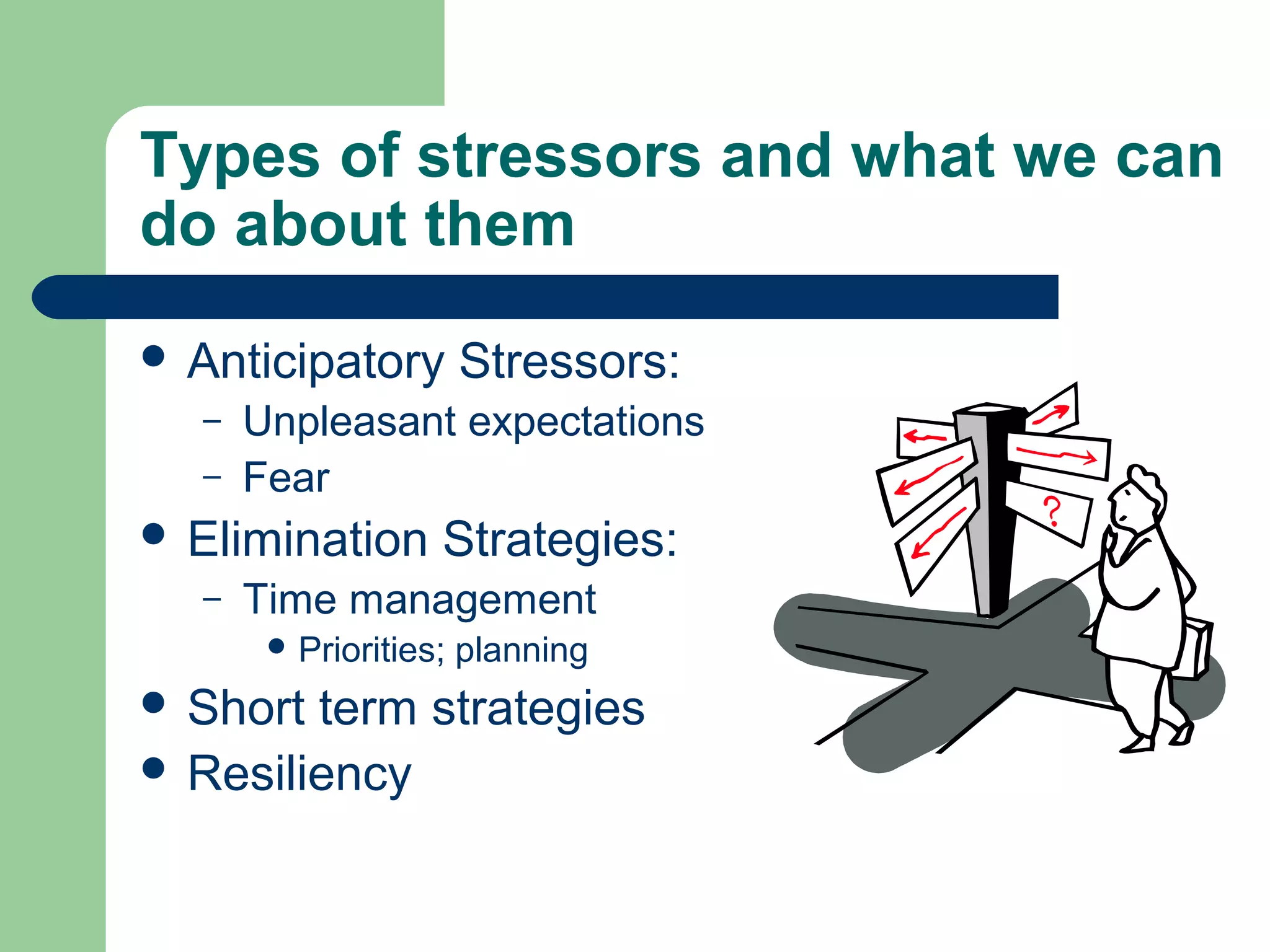
Types of stressors and what we can
do about them
 Anticipatory Stressors:
– Unpleasant expectations
– Fear
 Elimination Strategies:
– Time management
 Priorities; planning
 Short term strategies
 Resiliency
Stress and Self awareness
 Values
 Attitude towards change
 Cognitive style
 Interpersonal orientation
“There is more to life than
increasing its speed.”
Mahatma Gandhi

Time and stress management skills

  • 1.
    Time and StressManagement
  • 2.
    What Is Stress? Stress – Psychological, Emotional, Physiological Response  Stressors – Threatening Environmental Conditions
  • 3.
    Why Is Stress ManagementImportant?  Organizational Costs  Individual Costs – Health Impairment – Job Burnout – Performance Decline
  • 4.
    Exhibit 6.1: RelationshipBetween Stress and Job Performance
  • 5.
  • 6.
    Exhibit 6.2: Modelof the Stress Management Process Potential Stressors Personal Factors Family problems Financial problems Health problems Organizational Factors High stress occupation Job role Overload Under-utilization Role ambiguity Role conflict Responsibility for others Job Environment Poor working conditions Organizational politics Poor work relationships Environmental Factors Economic Uncertainty Technological Change Politics Consequences Psychological Heart Disease Ulcers Headaches Emotional Anxiety Depression Burnout Behavioral Aggression Productivity Avoidance Successful Coping High self esteem Goal accomplishment Feeling of well being Stress Management Individual Seek help Time management Change jobs Build resiliency Personality Companionship Experience Health (Exercise, diet) Relaxation Recreation Organizational Job Design Selection & Placement Training & Mentoring Team Building Employee Assistance Communicating Wellness Promotion Experienced Stress (SYMPTOM AWARENESS)
  • 7.
    Managing Stress: Objectives Becoming Aware of Negative Stress Symptoms  Determining the Sources  Determining the Cause  And then… – Cope temporarily with the stress – Eliminate stressors – Develop resiliency
  • 8.
    How Can Awarenessof Stress Symptoms Be Enhanced?  Physical Symptoms  Psychological Substitutes Never Rarely Sometimes Often Always Constant fatigue [] [] [] [] [] Low energy level [] [] [] [] [] Recurring headaches [] [] [] [] [] Gastrointestinal disorders [] [] [] [] [] Bad breath [] [] [] [] [] Sweaty hands or feet [] [] [] [] [] Dizziness [] [] [] [] [] High blood pressure [] [] [] [] [] Pounding heart [] [] [] [] []
  • 9.
    Sources of Stress Major Organizational Stressors – High-stress Occupations – Job Role – Interpersonal Relationships  Major Personal Stressors – Family Problems – Financial Problems – Health Problems – Personality  Major Environmental Stressors – Economic Uncertainty – Political Uncertainties – Technological Change
  • 10.
    Types of Stressors:Causes  Time  Encounter  Situational  Anticipatory
  • 11.
    Managing Stress Eliminate Stressors Develop Resiliency Temporary coping mechanisms Permanent effects Long termShort term Enactive approach Proactive approach Reactive approach Long time required Moderate time required Immediate
  • 12.
    Resiliency:  Physiological – Cardiovascular conditioning –Proper diet  Social – Supportive relations – Mentors – teamwork Psychological –Balanced lifestyle –Hardy personality –Small wins strategy –Relaxation techniques
  • 13.
    Short term strategies Reframing  Imagery
  • 14.
    Types of stressorsand what we can do about them  Time Stressors – Work overload – Lack of control  Elimination Strategies – Principles of time management – Delegation
  • 15.
    Eliminating time stressors: Timemanagement  “Effective time management can enable managers to gain control over their time and organize their fragmented, chaotic environment.”
  • 16.
    Effective time management means… Spending time on important, not just urgent matters  Distinguishing clearly between importance and urgency  Focusing on results not methods  Not feeling guilty when saying no
  • 17.
  • 18.
    80/20 Rule Activities TimeSpent Results Trivial 80% 20% Vital 20% 80%
  • 19.
    Efficient time management Too little time; too much to do  How do I get more done?
  • 20.
    Schedule Schedule Activities • HorizontalScheduling • Vertical Scheduling • Directing and Controlling
  • 21.
    Rules  Read selectively Make lists  Everything in its place  Prioritize  Multitask the routine  Discretionary task jar  Divide up the big jobs  Critical 20%  Best time for important jobs  Arrange non-interrupted time  Don’t procrastinate  Keep track of time  Set deadlines  Use waiting time  Designate time for busy work  Closure on one thing a day  Schedule personal time  Limit worry time  Long term objectives  Continuous improvement
  • 22.
    Tips for managers Hold routine meetings at end of day  Set time limit  Hold meetings only if needed  Agendas, minutes  Start on time  Paper work decisions  Organize  Limit interruptions
  • 23.
     Delegate  Empowerment:allow for initiative  Give credit to those who deserve it
  • 24.
    Types of stressorsand what we can do about them  Encounter Stressors: – Role Conflicts – Issue – Interaction  Elimination Strategies: – Delegation – Interpersonal skills  Conflict resolution  Resilience – Social support; Collaboration  Self awareness  EQ
  • 25.
    Types of stressorsand what we can do about them  Situational Stressors: – Unfavourable working conditions – Rapid change  Elimination Strategies: – Work redesign – Changing jobs  Short term Strategies  resiliency
  • 26.
    Work redesign  Levelof task demand  Level of autonomy (individual control & discretion)  Level of interest  Feedback
  • 27.
    Types of stressorsand what we can do about them  Anticipatory Stressors: – Unpleasant expectations – Fear  Elimination Strategies: – Time management  Priorities; planning  Short term strategies  Resiliency
  • 28.
    Stress and Selfawareness  Values  Attitude towards change  Cognitive style  Interpersonal orientation
  • 29.
    “There is moreto life than increasing its speed.” Mahatma Gandhi