Identify Ways to
Maintain a Positive
Attitude
Learning Objectives
 Analyze traits of a positive attitude.
 Evaluate how to build a positive
attitude.
 Analyze student attitudes in case
studies.
Terms
 actions
 attitude
 common sense
 communication
 courtesy
 energy
 enthusiasm
 enthusiastic
 friendliness
 open-mindedness
 optimistic
 self-control
 self-esteem
 sense of humor
 tact
 thinking
 voice control
In a group. . .
 Discuss and list what traits a person with a
positive attitude must have.
What traits help develop
a positive attitude?
 Common sense
 Courtesy
 Enthusiasm
 Friendliness
 Open-mindedness
 Self-control
 Sense of humor
 Tact
 Voice control
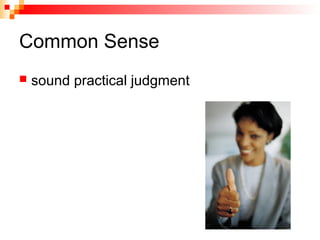
Common Sense
 sound practical judgment
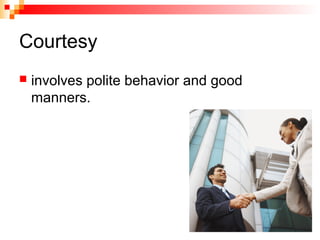
Courtesy
 involves polite behavior and good
manners.
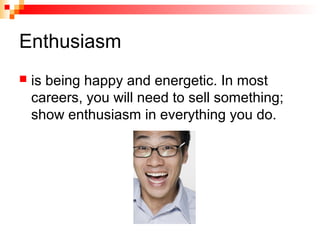
Enthusiasm
 is being happy and energetic. In most
careers, you will need to sell something;
show enthusiasm in everything you do.
Friendliness
 being kind and helpful.
Open-mindedness
 means you are open to new ideas and you
are free from prejudice ideas
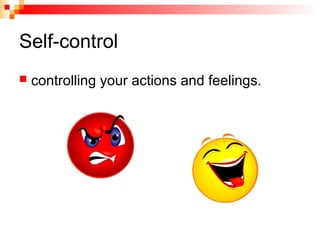
Self-control
 controlling your actions and feelings.
Sense of Humor
 the ability to laugh with others.
Tact
 a keen sense of what to say or do to avoid
offending someone.
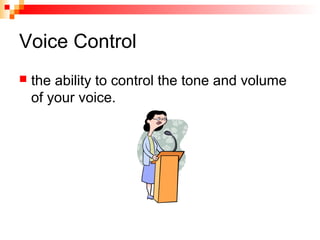
Voice Control
 the ability to control the tone and volume
of your voice.
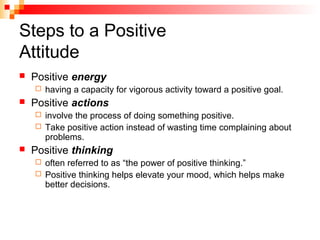
Steps to a Positive
Attitude
 Positive energy
 having a capacity for vigorous activity toward a positive goal.
 Positive actions
 involve the process of doing something positive.
 Take positive action instead of wasting time complaining about
problems.
 Positive thinking
 often referred to as “the power of positive thinking.”
 Positive thinking helps elevate your mood, which helps make
better decisions.
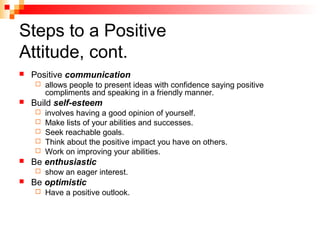
Steps to a Positive
Attitude, cont.
 Positive communication
 allows people to present ideas with confidence saying positive
compliments and speaking in a friendly manner.
 Build self-esteem
 involves having a good opinion of yourself.
 Make lists of your abilities and successes.
 Seek reachable goals.
 Think about the positive impact you have on others.
 Work on improving your abilities.
 Be enthusiastic
 show an eager interest.
 Be optimistic
 Have a positive outlook.
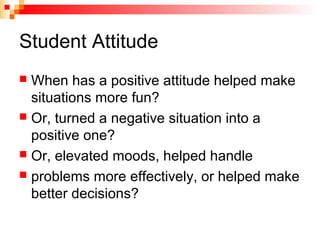
Student Attitude
 When has a positive attitude helped make
situations more fun?
 Or, turned a negative situation into a
positive one?
 Or, elevated moods, helped handle
 problems more effectively, or helped make
better decisions?

Identify ways to maintain a positive attitude

  • 1.
    Identify Ways to Maintaina Positive Attitude
  • 2.
    Learning Objectives  Analyzetraits of a positive attitude.  Evaluate how to build a positive attitude.  Analyze student attitudes in case studies.
  • 3.
    Terms  actions  attitude common sense  communication  courtesy  energy  enthusiasm  enthusiastic  friendliness  open-mindedness  optimistic  self-control  self-esteem  sense of humor  tact  thinking  voice control
  • 4.
    In a group.. .  Discuss and list what traits a person with a positive attitude must have.
  • 5.
    What traits helpdevelop a positive attitude?  Common sense  Courtesy  Enthusiasm  Friendliness  Open-mindedness  Self-control  Sense of humor  Tact  Voice control
  • 6.
    Common Sense  soundpractical judgment
  • 7.
    Courtesy  involves politebehavior and good manners.
  • 8.
    Enthusiasm  is beinghappy and energetic. In most careers, you will need to sell something; show enthusiasm in everything you do.
  • 9.
  • 10.
    Open-mindedness  means youare open to new ideas and you are free from prejudice ideas
  • 11.
    Self-control  controlling youractions and feelings.
  • 12.
    Sense of Humor the ability to laugh with others.
  • 13.
    Tact  a keensense of what to say or do to avoid offending someone.
  • 14.
    Voice Control  theability to control the tone and volume of your voice.
  • 15.
    Steps to aPositive Attitude  Positive energy  having a capacity for vigorous activity toward a positive goal.  Positive actions  involve the process of doing something positive.  Take positive action instead of wasting time complaining about problems.  Positive thinking  often referred to as “the power of positive thinking.”  Positive thinking helps elevate your mood, which helps make better decisions.
  • 16.
    Steps to aPositive Attitude, cont.  Positive communication  allows people to present ideas with confidence saying positive compliments and speaking in a friendly manner.  Build self-esteem  involves having a good opinion of yourself.  Make lists of your abilities and successes.  Seek reachable goals.  Think about the positive impact you have on others.  Work on improving your abilities.  Be enthusiastic  show an eager interest.  Be optimistic  Have a positive outlook.
  • 17.
    Student Attitude  Whenhas a positive attitude helped make situations more fun?  Or, turned a negative situation into a positive one?  Or, elevated moods, helped handle  problems more effectively, or helped make better decisions?