PRP
CONSERVATION
TILLAGE
Conservation-tillage farming: method of soil cultivation that
leaves the previous year's crop residue on fields before &
after planting the next crop
• No-till: involve planting crops directly into residue that either
hasn't been tilled at all
• Minimum tillage: some residue has been removed, but at
least 30 to 70% remains
NO TILL & MINIMUM
TILLAGE
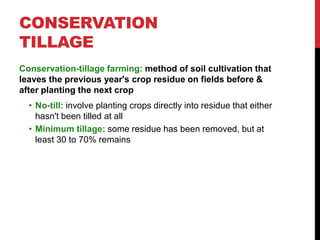
Planting into corn
residue (no till)
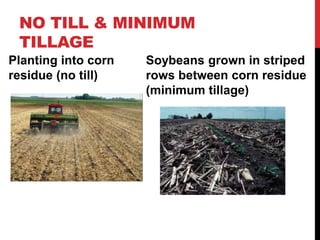
Soybeans grown in striped
rows between corn residue
(minimum tillage)
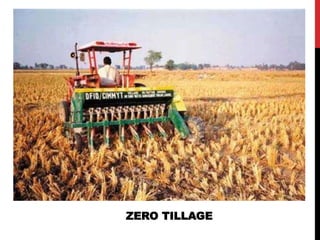
ZERO TILLAGE
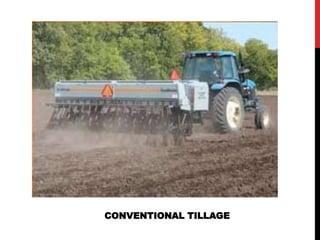
CONVENTIONAL TILLAGE
BENEFITS OF
CONSERVATION TILLAGE
Environmental benefits
• Reduces soil erosion by 60%-90% from rain & wind
• Improves soil and water quality by adding organic matter as
crop residue decomposes
• Conserves water by reducing evaporation
• Conserves energy due to fewer tractor trips
• Reduces air pollution from dust and diesel
• Crop residue provides food and cover for wildlife
BENEFITS OF
CONSERVATION TILLAGE
Practical benefits
• Fewer trips across the fields saves time and money (lowers
fuel, labor and machinery maintenance costs) and reduces
soil compaction that can reduce yields
• Optimizes soil moisture, enhancing crop growth in dry periods
or on droughty soils
TILLAGE AND  TILLAGE PRACTICES

TILLAGE AND TILLAGE PRACTICES

  • 1.
  • 26.
    CONSERVATION TILLAGE Conservation-tillage farming: methodof soil cultivation that leaves the previous year's crop residue on fields before & after planting the next crop • No-till: involve planting crops directly into residue that either hasn't been tilled at all • Minimum tillage: some residue has been removed, but at least 30 to 70% remains
  • 27.
    NO TILL &MINIMUM TILLAGE Planting into corn residue (no till) Soybeans grown in striped rows between corn residue (minimum tillage)
  • 28.
  • 29.
  • 30.
    BENEFITS OF CONSERVATION TILLAGE Environmentalbenefits • Reduces soil erosion by 60%-90% from rain & wind • Improves soil and water quality by adding organic matter as crop residue decomposes • Conserves water by reducing evaporation • Conserves energy due to fewer tractor trips • Reduces air pollution from dust and diesel • Crop residue provides food and cover for wildlife
  • 31.
    BENEFITS OF CONSERVATION TILLAGE Practicalbenefits • Fewer trips across the fields saves time and money (lowers fuel, labor and machinery maintenance costs) and reduces soil compaction that can reduce yields • Optimizes soil moisture, enhancing crop growth in dry periods or on droughty soils