
Proximity based Protocol 
Development for Ticket 
Booking 
By: 
Amol Khedkar 
Ameet Khedkar 
Krishna Sisodia 
Kshitij Gorde 
Project Guide: 
Prof. S.A Joshi 
1
Motivation 
22 million people travel regularly and commute by trains over varying 
distances ranging from 10-60 kms per day. It becomes very difficult to 
get hold of ticketless travelers and the Railways lose a big chunk of 
income due to this. 
This project is aimed at increasing customer participation in buying 
tickets and facilitating ticket purchase process. 
2
Objective 
• Elimination of Manual Intervention during 
ticketing process by cashless transaction. 
• Convenience of secure access using prevalent 
mobile technologies. 
• Easy verification of passenger tickets during 
travel. 
• User friendly mobile application for entering 
details 
Goal 
• User will be notified via SMS after a successful 
transaction of bank payment. 
• Verification of ticket will be done by matching 
customer’s ticket number and list available with 
TC. 
3
Project Scope 
 A smartphone application for booking tickets using proximity 
technology. 
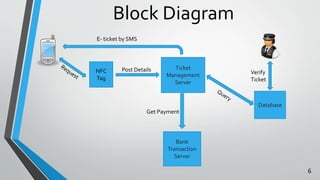
Ticket booking information will be sent through the application to 
the ticket management server which in turn sends transaction id 
back to the device. 
 An e-ticket by SMS will be sent after successful payment and the T.C 
will be notified for the same. 
 Error and failure handling between ticket management server and 
bank transaction server in case of link failure. 
 Facility to resend e-ticket SMS on the basis of acknowledgement 
timeout. 
4
Tools and Platform 
Programming 
languages used: 
• JAVA 
• SQL Lite 
Platform: 
• Android 
 Environment 
• Android SmartPhone 
• Android Emulator 
5
Block Diagram 
NFC 
Tag 
Ticket 
Post Details Verify 
Management 
Server 
Database 
Bank 
Transaction 
Server 
E- ticket by SMS 
Get Payment 
Ticket 
6
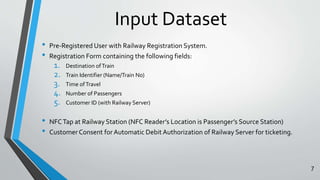
Input Dataset 
• Pre-Registered User with Railway Registration System. 
• Registration Form containing the following fields: 
1. Destination of Train 
2. Train Identifier (Name/Train No) 
3. Time of Travel 
4. Number of Passengers 
5. Customer ID (with Railway Server) 
• NFC Tap at Railway Station (NFC Reader’s Location is Passenger’s Source Station) 
• Customer Consent for Automatic Debit Authorization of Railway Server for ticketing. 
7
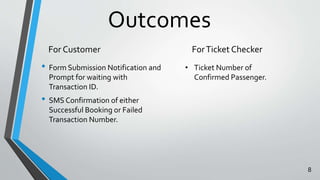
Outcomes 
For Customer For Ticket Checker 
• Form Submission Notification and 
Prompt for waiting with 
Transaction ID. 
• SMS Confirmation of either 
Successful Booking or Failed 
Transaction Number. 
• Ticket Number of 
Confirmed Passenger. 
8
References 
1. Arnau Vives-Guasch, Magdalena Payeras-Capella, Macia Mut-Puigserver, Jordi Castella- 
Roca, Josep Lluis Ferrer-Gomila, “A Secure E-ticketing For Mobile Devices with Near Field 
Communication (NFC) that includes exculpability and reusability”,2010 
2. J.M Leon-Coca, D.G Reina, S.L Toral, F.Barrero, N. Bessis, “Authentication Systems using 
ID cards over NFC links”,2013 
3. Mahdi Asadpour, Mohammad Torabi Dashti, ETH Zurich, Switzerland, “A Privacy Friendly 
RFID Protocol using Reusable Anonymous Tickets”,2011 
4. Vedat Coskun, Kerem Ok, Busra Ozdenizci, “Near Field Communication- From theory to 
practice” ,2008 
5. The MD5 Message Digest Algorithm,R.L.Rivest, RFC 13 21 april 1998 
9

Ticketing Protocol

  • 1.
    Proximity based Protocol Development for Ticket Booking By: Amol Khedkar Ameet Khedkar Krishna Sisodia Kshitij Gorde Project Guide: Prof. S.A Joshi 1
  • 2.
    Motivation 22 millionpeople travel regularly and commute by trains over varying distances ranging from 10-60 kms per day. It becomes very difficult to get hold of ticketless travelers and the Railways lose a big chunk of income due to this. This project is aimed at increasing customer participation in buying tickets and facilitating ticket purchase process. 2
  • 3.
    Objective • Eliminationof Manual Intervention during ticketing process by cashless transaction. • Convenience of secure access using prevalent mobile technologies. • Easy verification of passenger tickets during travel. • User friendly mobile application for entering details Goal • User will be notified via SMS after a successful transaction of bank payment. • Verification of ticket will be done by matching customer’s ticket number and list available with TC. 3
  • 4.
    Project Scope A smartphone application for booking tickets using proximity technology. Ticket booking information will be sent through the application to the ticket management server which in turn sends transaction id back to the device.  An e-ticket by SMS will be sent after successful payment and the T.C will be notified for the same.  Error and failure handling between ticket management server and bank transaction server in case of link failure.  Facility to resend e-ticket SMS on the basis of acknowledgement timeout. 4
  • 5.
    Tools and Platform Programming languages used: • JAVA • SQL Lite Platform: • Android  Environment • Android SmartPhone • Android Emulator 5
  • 6.
    Block Diagram NFC Tag Ticket Post Details Verify Management Server Database Bank Transaction Server E- ticket by SMS Get Payment Ticket 6
  • 7.
    Input Dataset •Pre-Registered User with Railway Registration System. • Registration Form containing the following fields: 1. Destination of Train 2. Train Identifier (Name/Train No) 3. Time of Travel 4. Number of Passengers 5. Customer ID (with Railway Server) • NFC Tap at Railway Station (NFC Reader’s Location is Passenger’s Source Station) • Customer Consent for Automatic Debit Authorization of Railway Server for ticketing. 7
  • 8.
    Outcomes For CustomerFor Ticket Checker • Form Submission Notification and Prompt for waiting with Transaction ID. • SMS Confirmation of either Successful Booking or Failed Transaction Number. • Ticket Number of Confirmed Passenger. 8
  • 9.
    References 1. ArnauVives-Guasch, Magdalena Payeras-Capella, Macia Mut-Puigserver, Jordi Castella- Roca, Josep Lluis Ferrer-Gomila, “A Secure E-ticketing For Mobile Devices with Near Field Communication (NFC) that includes exculpability and reusability”,2010 2. J.M Leon-Coca, D.G Reina, S.L Toral, F.Barrero, N. Bessis, “Authentication Systems using ID cards over NFC links”,2013 3. Mahdi Asadpour, Mohammad Torabi Dashti, ETH Zurich, Switzerland, “A Privacy Friendly RFID Protocol using Reusable Anonymous Tickets”,2011 4. Vedat Coskun, Kerem Ok, Busra Ozdenizci, “Near Field Communication- From theory to practice” ,2008 5. The MD5 Message Digest Algorithm,R.L.Rivest, RFC 13 21 april 1998 9