Through the eyes of the editor:
Nursing reseach
Roger Watson PhD, FRCP Edin, FAAN
Editor-in-Chief, JAN
Editor, Nursing Open
Professionalism in nursing and
Nursing management
2nd
National Nursing
Management Conference
Istanbul, Turkey
8-10 December 2016
Quality assurance in the publication process:
authors, editors, reviewers, publishers
Submission
Peer review
Editorial decision and input
Revision
Production
Publication
• submission requirements
based on international
standards (e.g. ICMJE) re
content, ethics, authorship etc
• peer review (blind or open)
• reasons for rejection include
plagiarism, redundancy, sub-
standard research, faulty or
incomplete analysis, poor or
incomplete reporting
• revision (minor or major) aims
to improve quality
• further checks at production
• post-publication scrutiny
(internal and external)
Understand the publishing
process
Write first for:
•Editors
•Reviewers
•Your audience
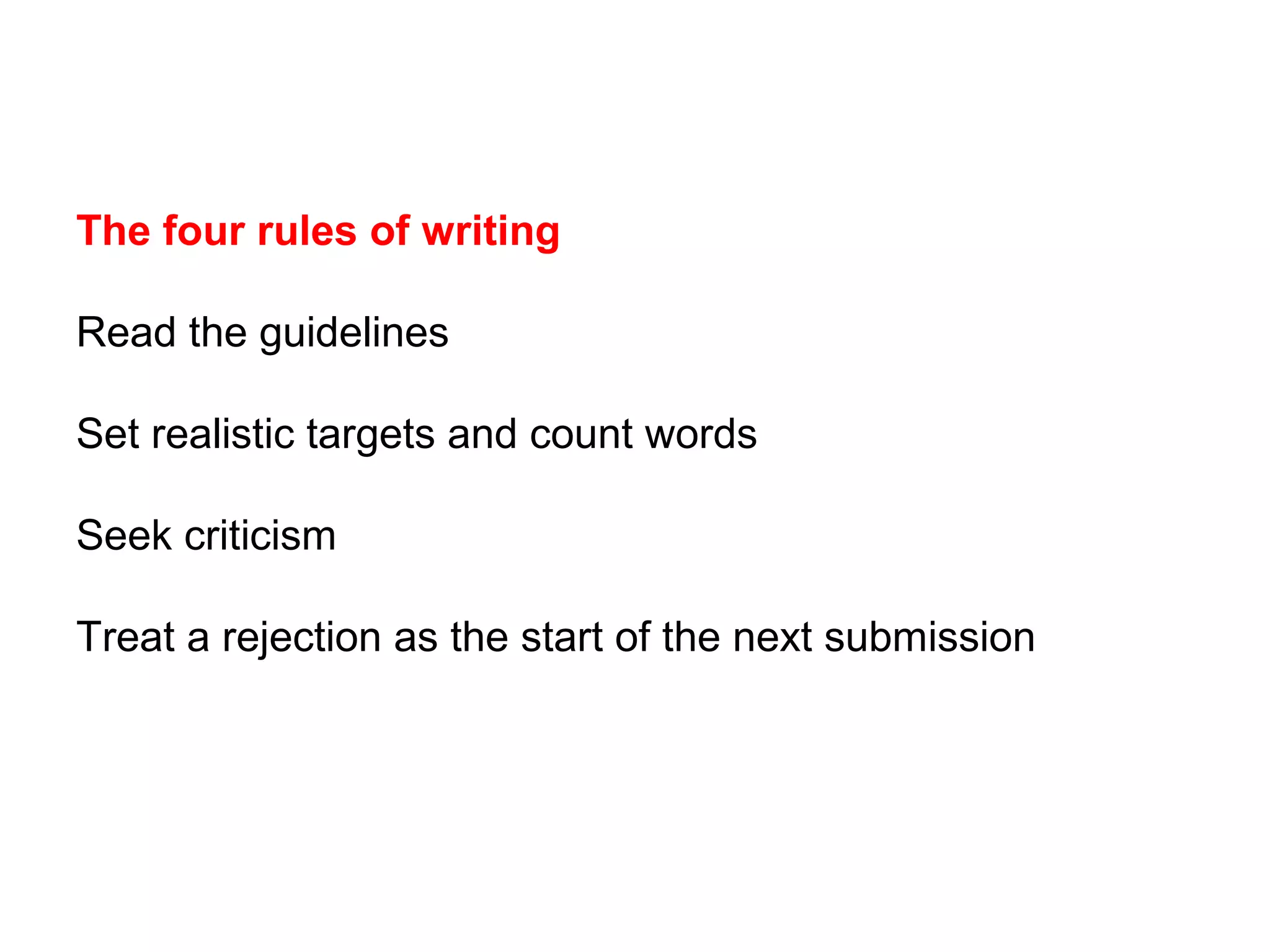
The four rules of writing
Read the guidelines
Set realistic targets and count words
Seek criticism
Treat a rejection as the start of the next submission
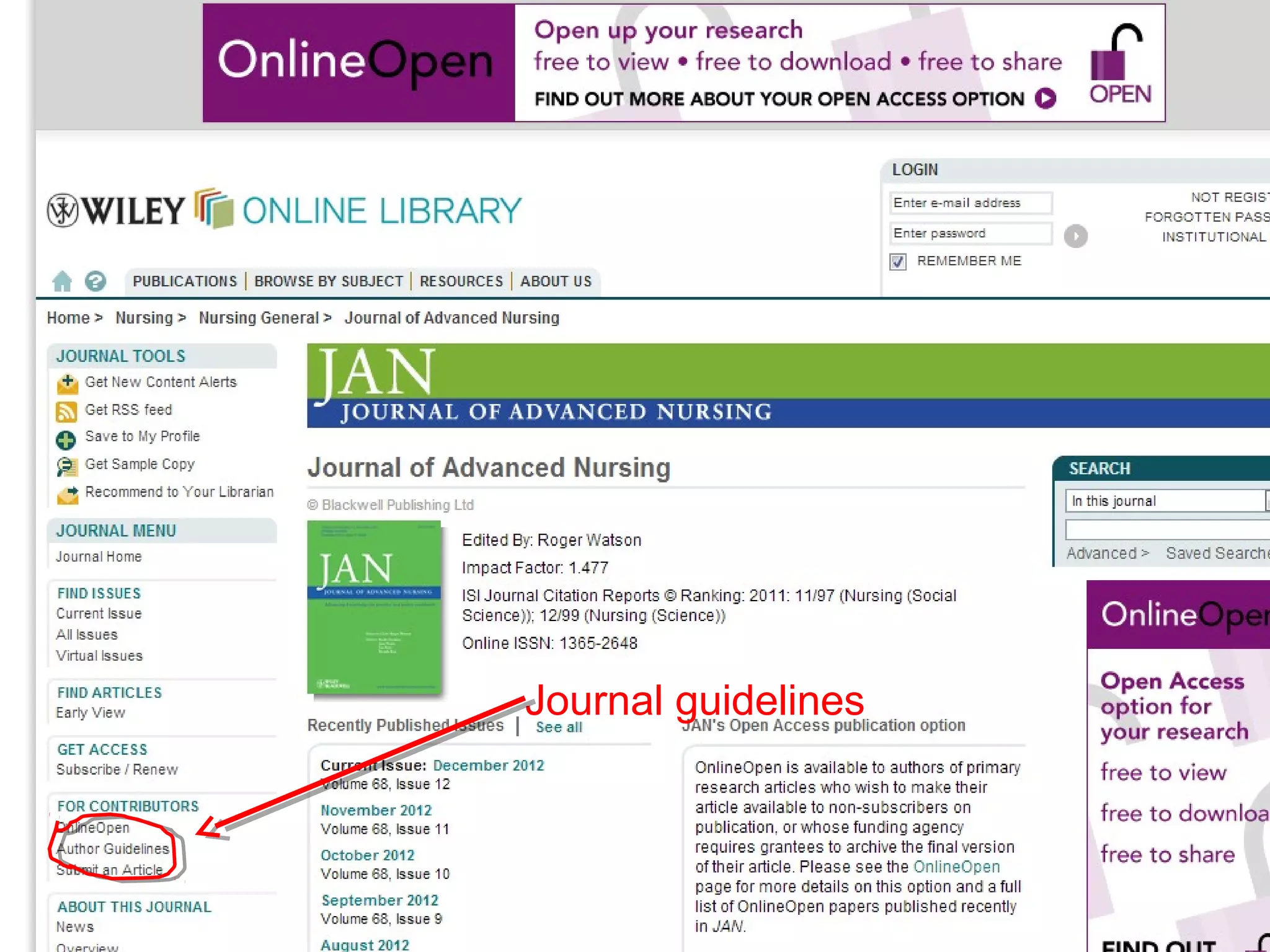
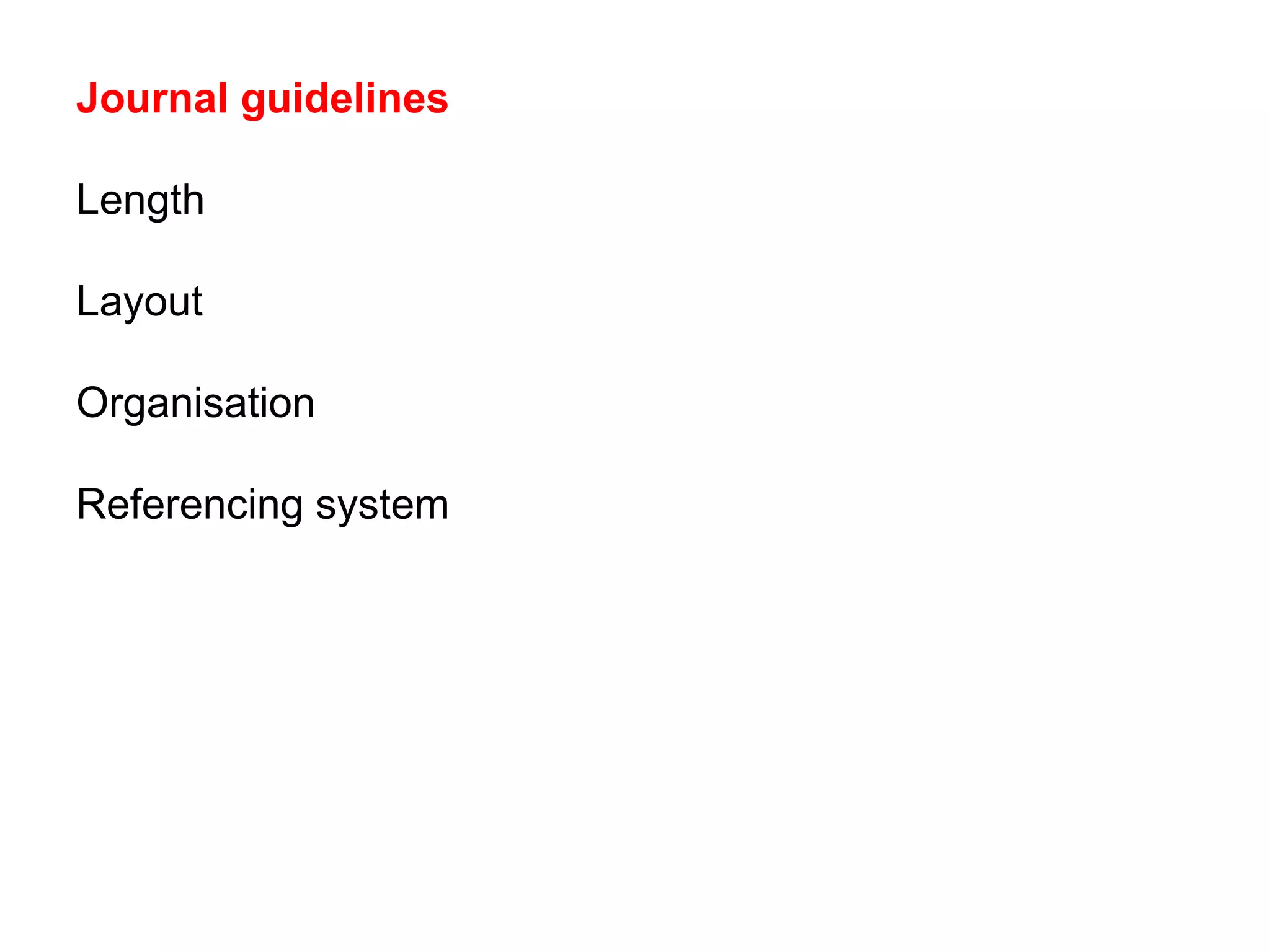
Journal guidelines
Journal guidelines
Journal guidelines
Length
Layout
Organisation
Referencing system
Seeking criticism
Find a ‘critical friend’
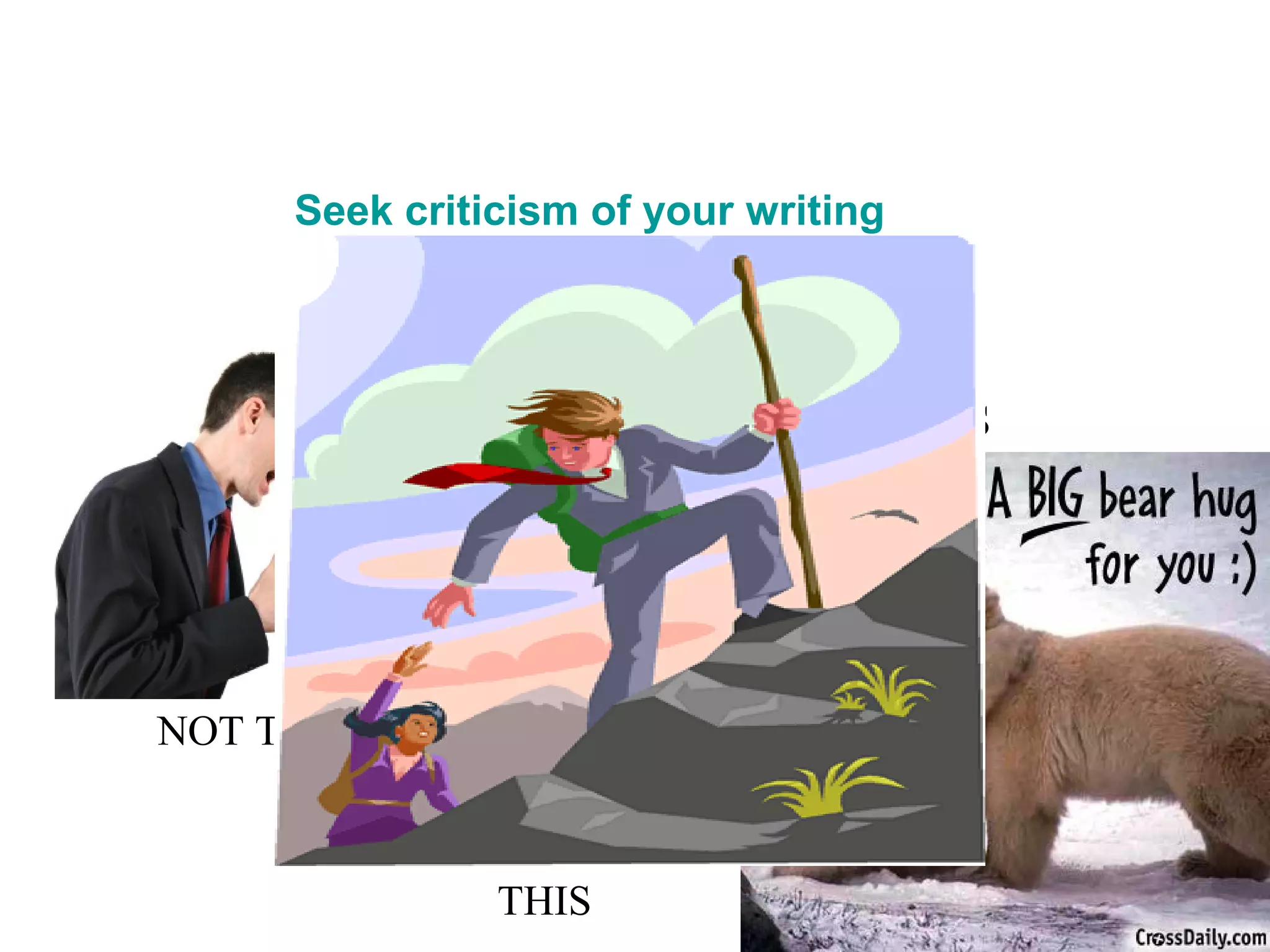
Seek criticism of your writing
NOT THIS
OR THIS
THIS
Enhancing the QUAlity and
Transparency Of health Research
Enhancing the QUAlity and
Transparency Of health Research
CONSORT http://www.consort-statement.org/
Enhancing the QUAlity and
Transparency Of health Research
CONSORT http://www.consort-statement.org/
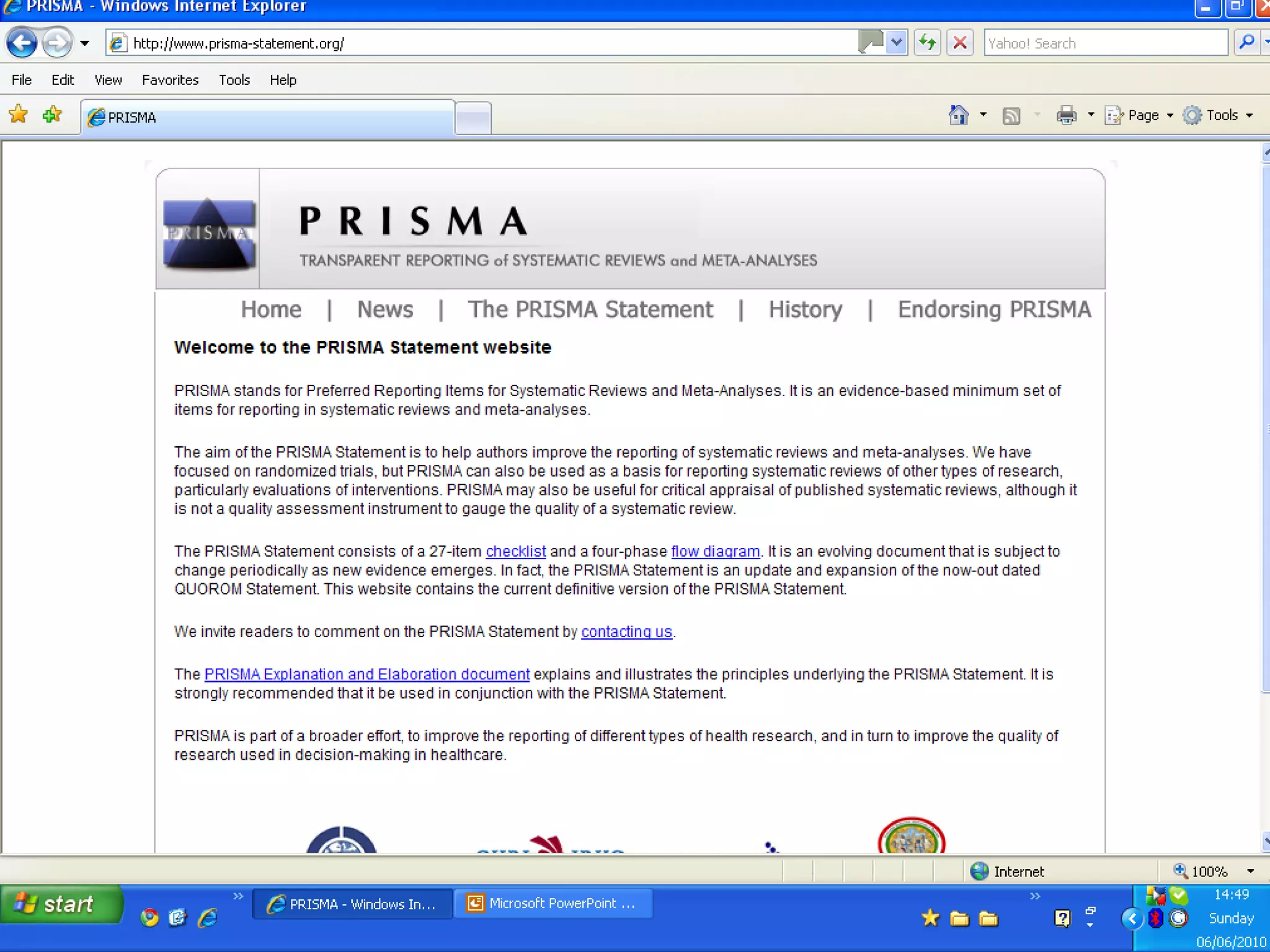
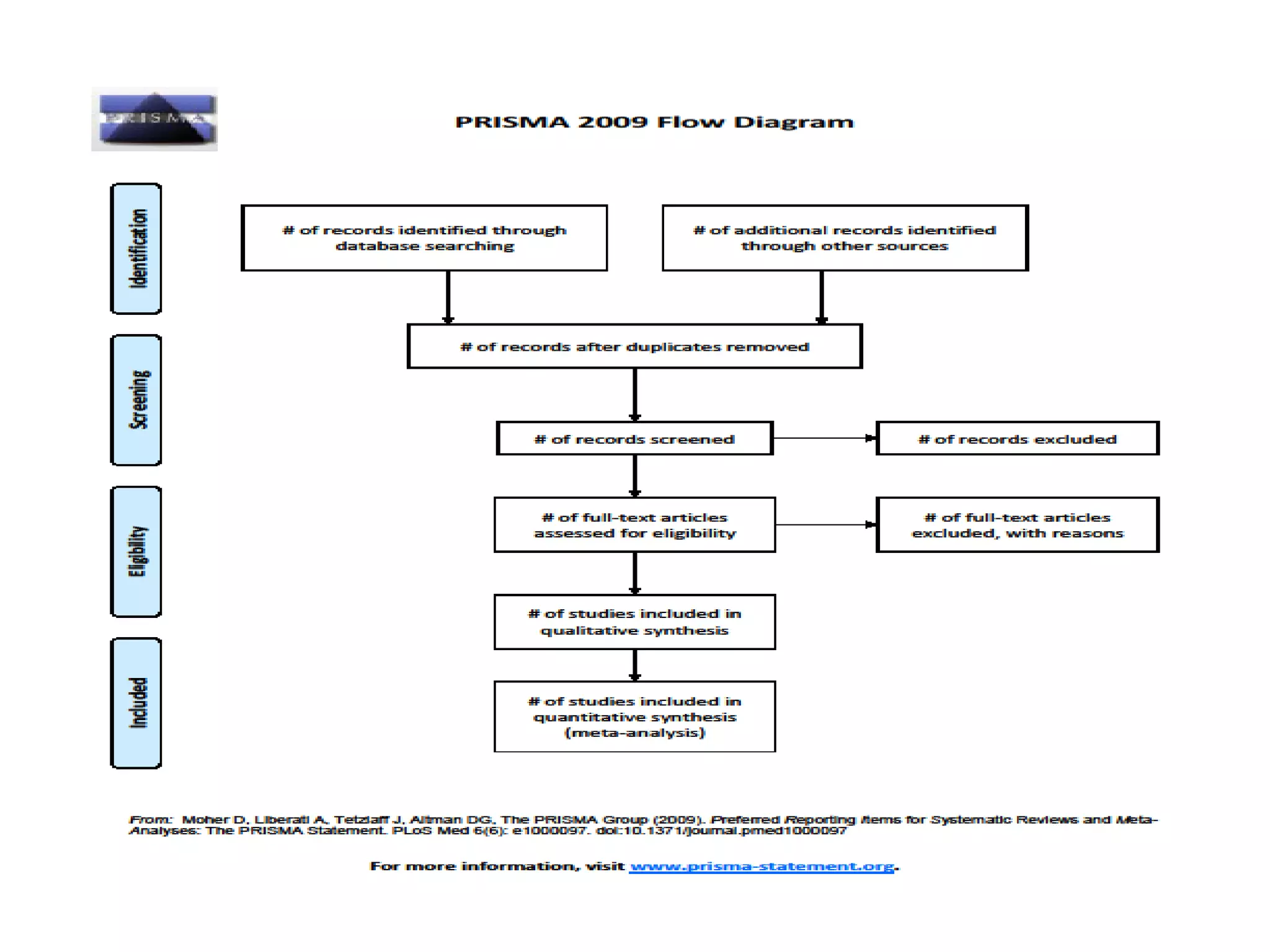
PRISMA http://www.prisma-statement.org/
Promoting integrity in research
publication
COPE http://publicationethics.org/
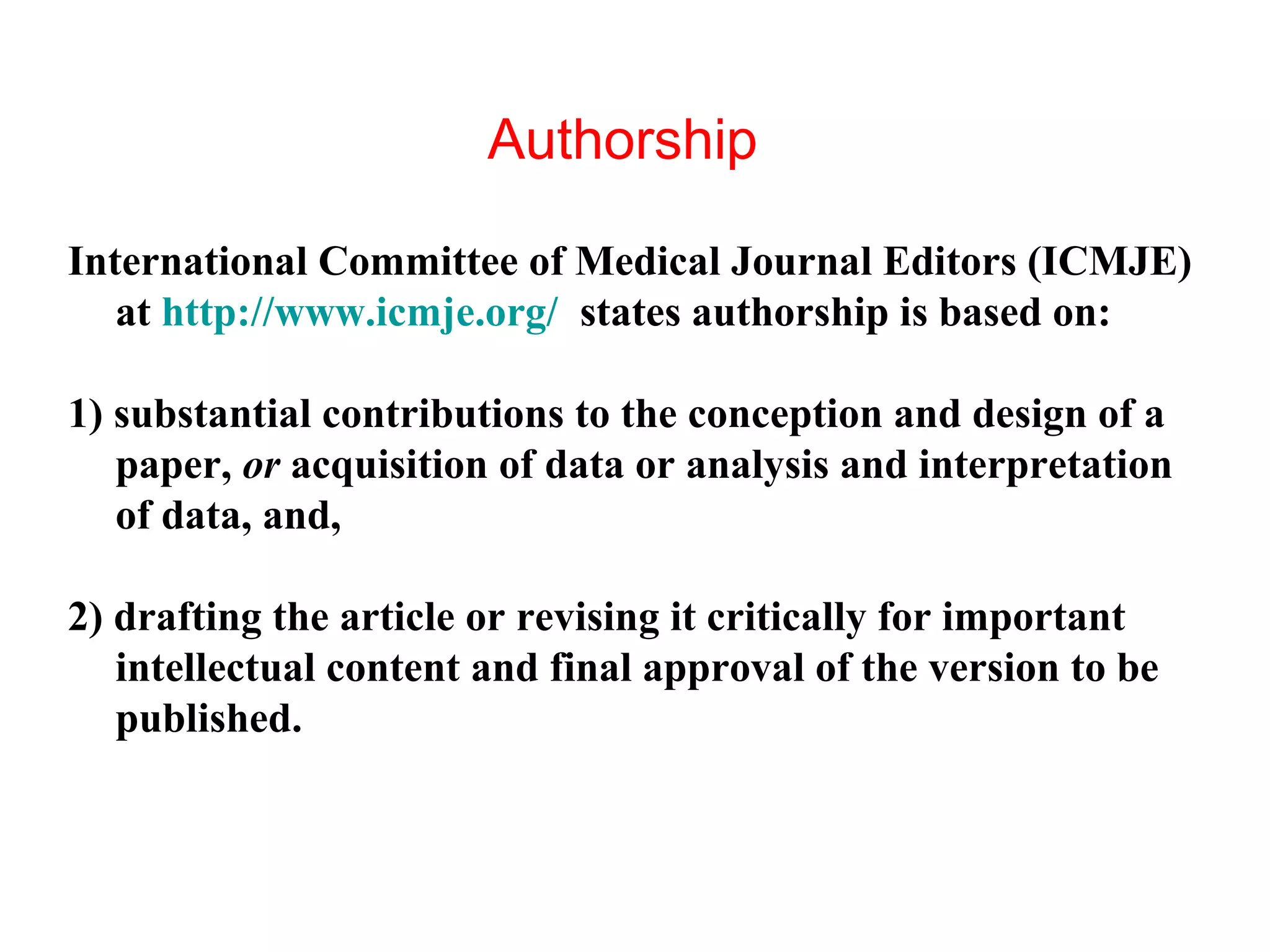
Authorship
International Committee of Medical Journal Editors (ICMJE)
at http://www.icmje.org/ states authorship is based on:
1) substantial contributions to the conception and design of a
paper, or acquisition of data or analysis and interpretation
of data, and,
2) drafting the article or revising it critically for important
intellectual content and final approval of the version to be
published.
Preventing Plagiarism in Published Works
International relevance
Keep asking yourself whether a reader in a region or
country very different from your own will be able to make
sense of everything in your paper
Abstract
•refer in the aims and/or background to the global
relevance of the topic
•include name/s of country/ies in which the work was
undertaken
•emphasise the international relevance of the conclusions
Expect to have several revisions
…I’m one of the world’s greatest rewriters
James Mitchener
Learn when to let go
Dealing with reviewer’s comments
Apply the ‘golden rules’ (Williams 2004)
Rule 1. Answer completely
Rule 2. Answer politely
Rule 3. Answer with evidence
Answer completely
Deal with every point, even if you don’t agree or
can’t change it
Make a list of points – even if not presented with a
list
Answer politely
Don’t start with:
‘We completely disagree with the comments of the
reviewer’
‘Who on earth are your reviewers?’
…etc!
Answer with evidence
If you disagree with the reviewer then provide
evidence: facts and references
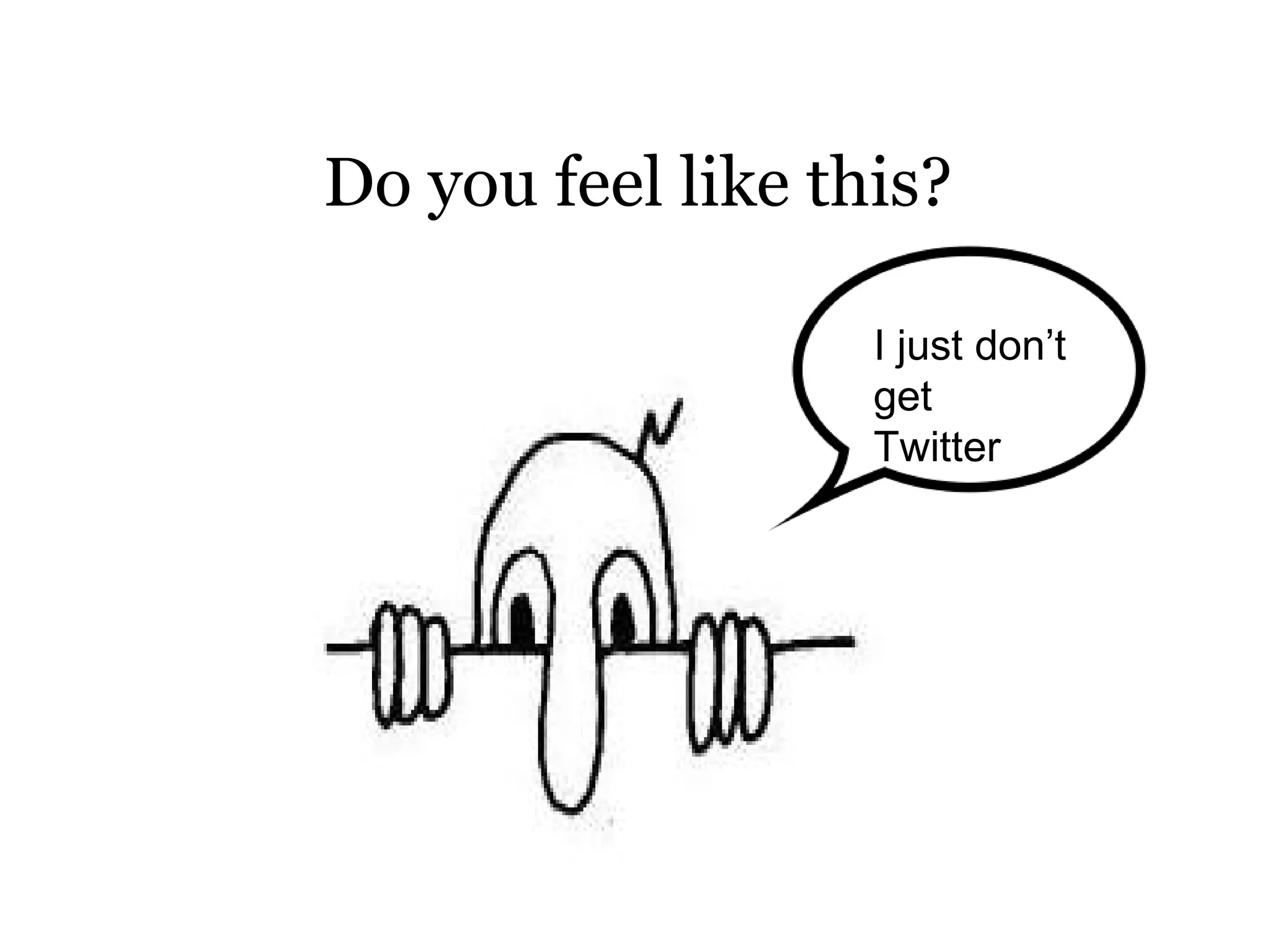
Do you feel like this?
I just don’t
get
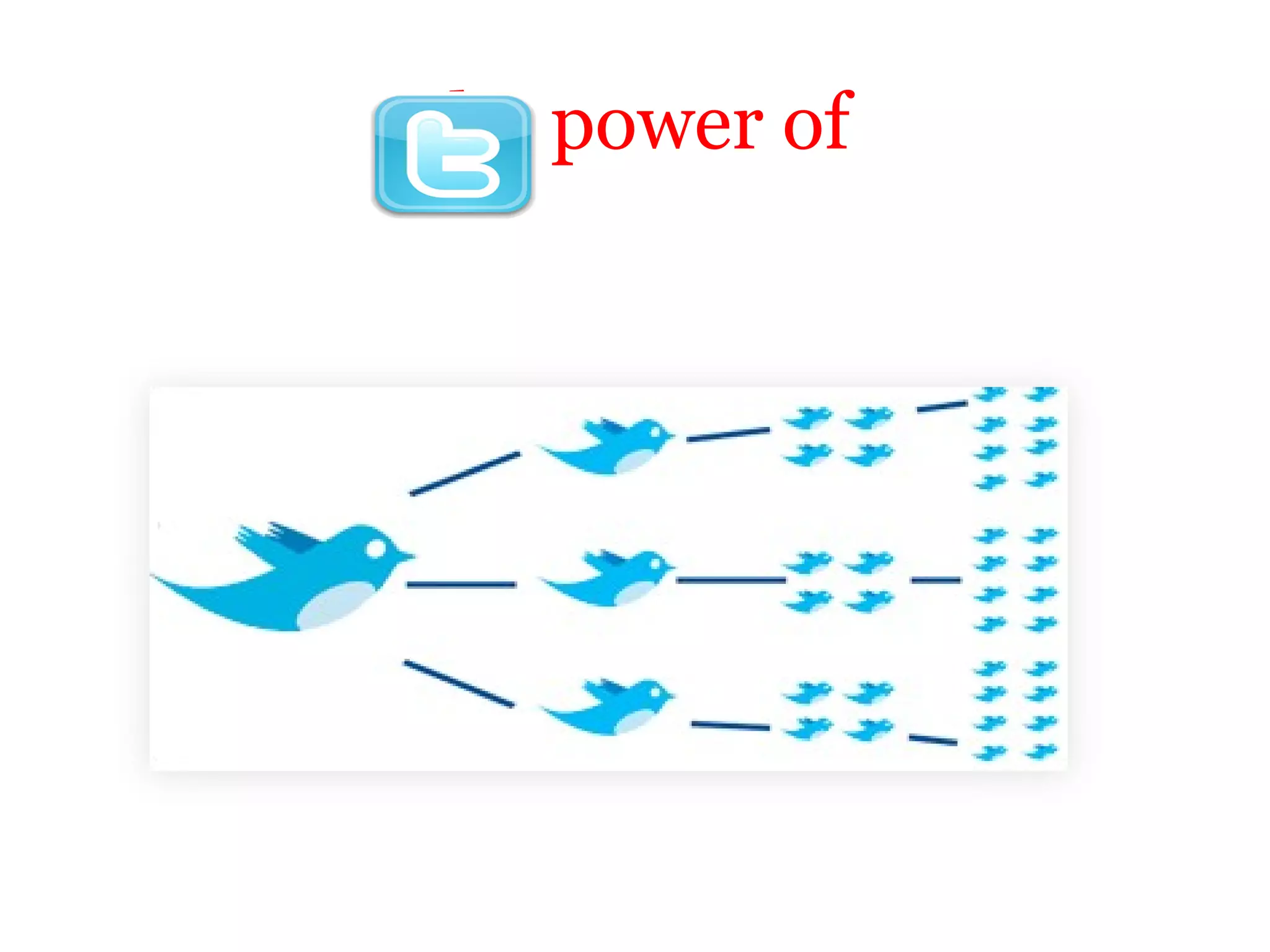
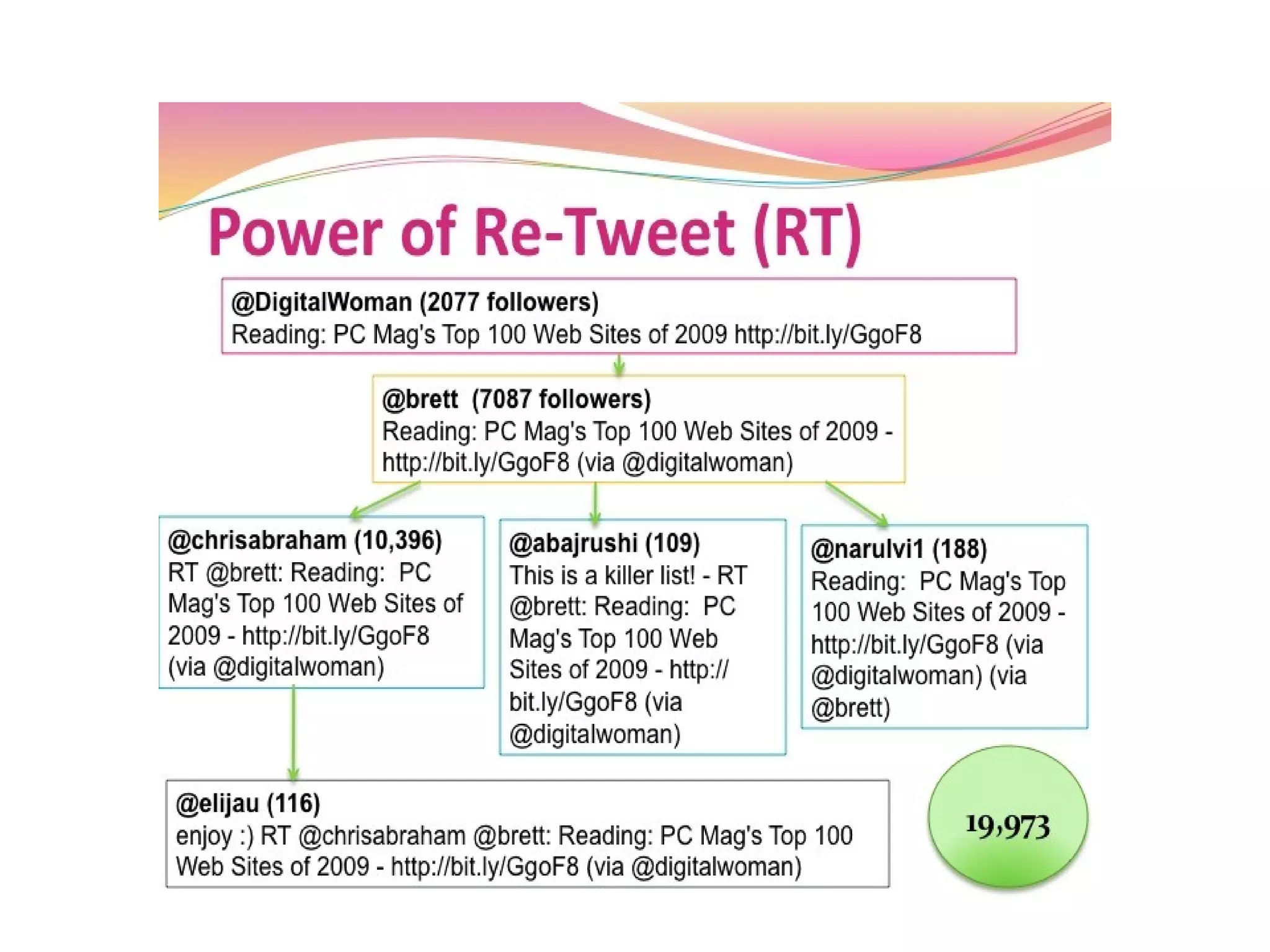
Twitter
The power of
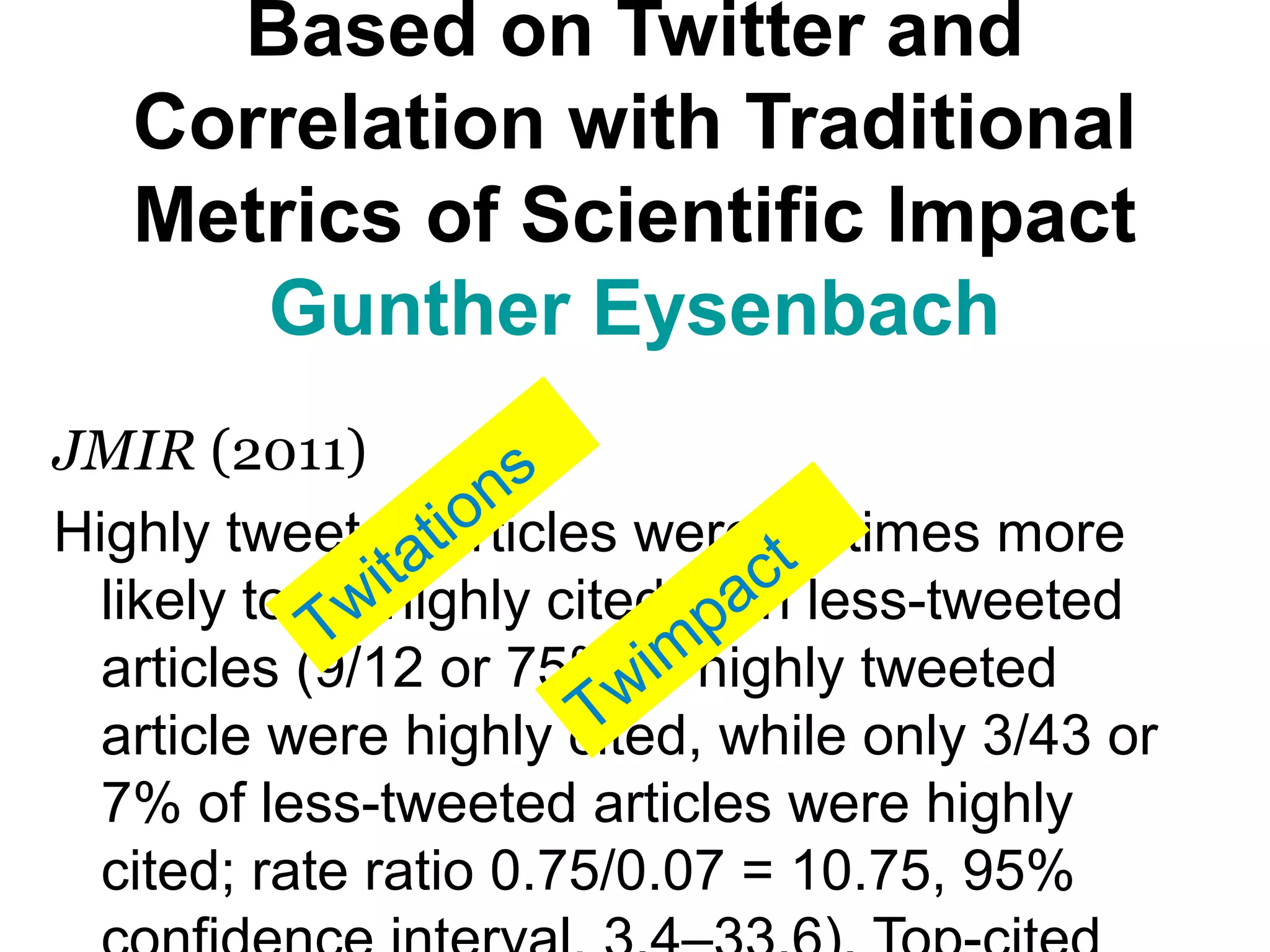
Based on Twitter and
Correlation with Traditional
Metrics of Scientific Impact
Gunther Eysenbach
JMIR (2011)
Highly tweeted articles were 11 times more
likely to be highly cited than less-tweeted
articles (9/12 or 75% of highly tweeted
article were highly cited, while only 3/43 or
7% of less-tweeted articles were highly
cited; rate ratio 0.75/0.07 = 10.75, 95%
Twitations
Twim
pact
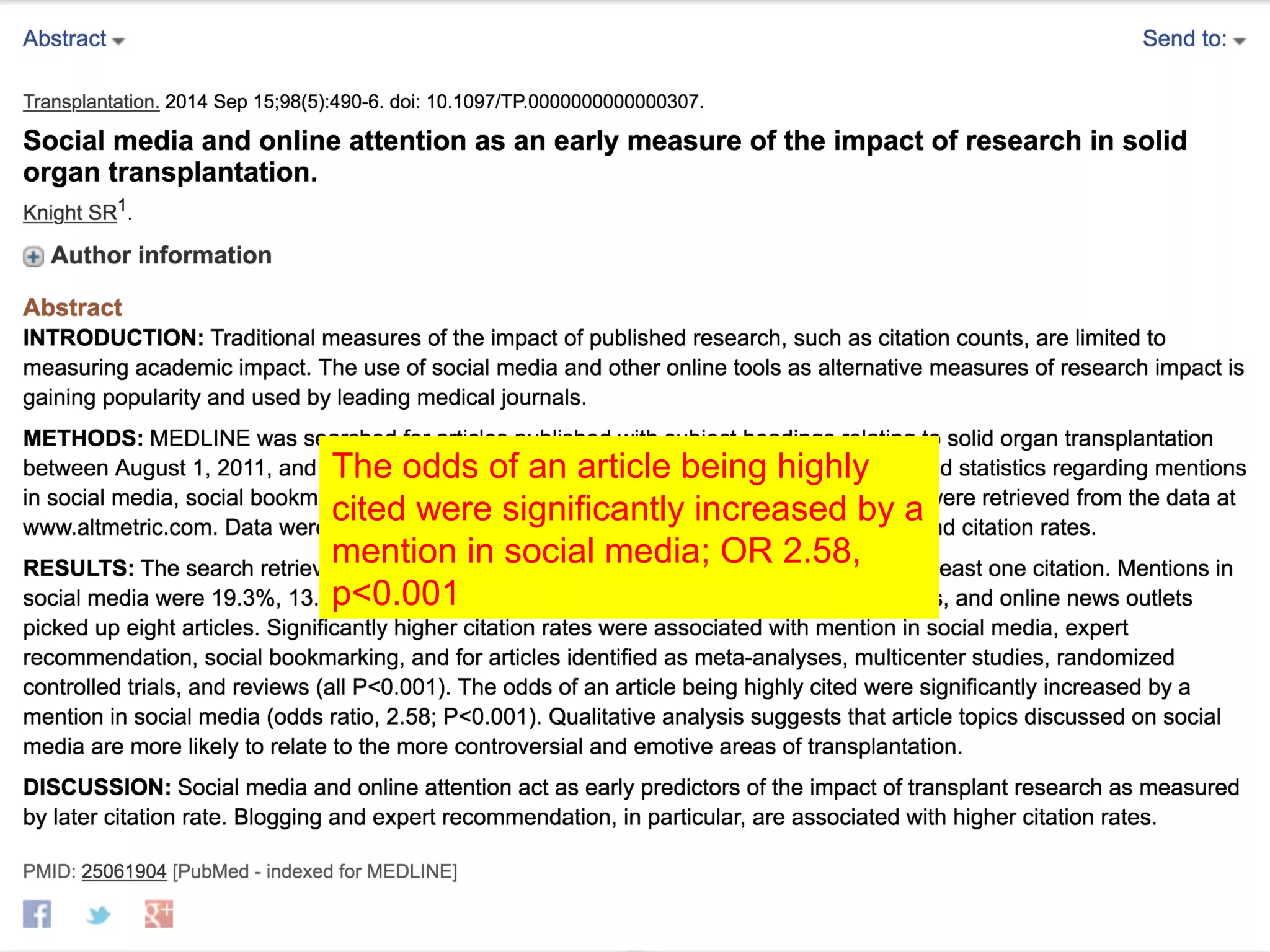
The odds of an article being highly
cited were significantly increased by a
mention in social media; OR 2.58,
p<0.001
09/12/16
Altmetrics
In scholarly and scientific
publishing, Altmetrics are new metrics
proposed as an alternative to the widely
used journal impact factor and personal
citation indices like the h-index.
(Wikipedia)
Beware of predatory journals
Edited by Karen Holland and Roger Watson
An invaluable guide on writing for publication,
enabling
the reader to develop skills in writing articles,
book reviews and other forms
of publications, written by experts in the field.
September 2012, 288 pages
ISBN:
9780470657829
£19.99 / €25.90 / $32.95
Order online at www.wiley.com
Prefer digital? Visit your e-book retailer to order
Writing for Publication in Nursing and
Healthcare:
Getting It Right
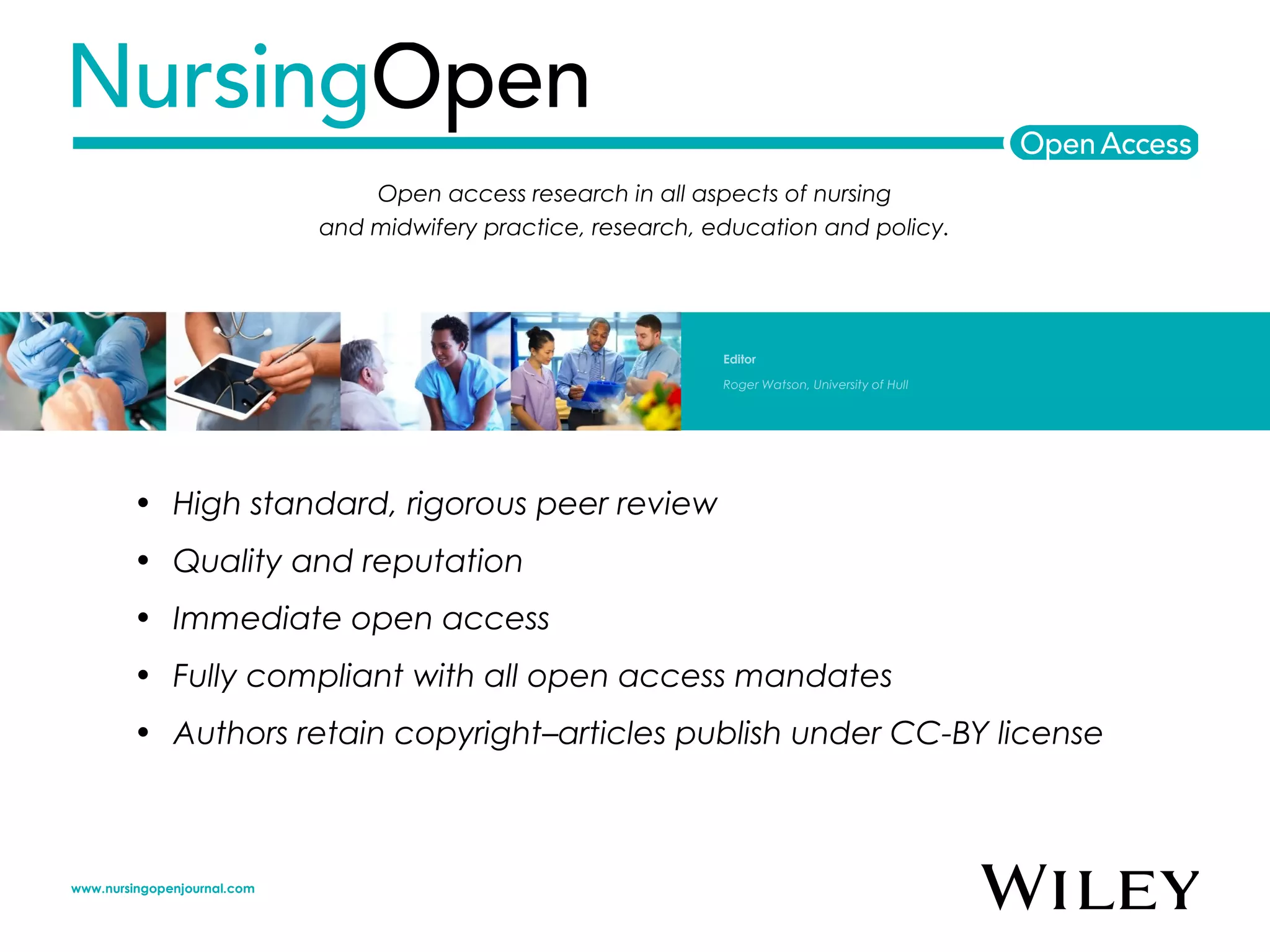
• High standard, rigorous peer review
• Quality and reputation
• Immediate open access
• Fully compliant with all open access mandates
• Authors retain copyright–articles publish under CC-BY license
Open access research in all aspects of nursing
and midwifery practice, research, education and policy.
Editor
Roger Watson, University of Hull
www.nursingopenjournal.com
r.watson@hull.ac.uk
0000-0001-8040-7625
@rwatson1955

Through the eyes of the editor: nursing research

  • 1.
    Through the eyesof the editor: Nursing reseach Roger Watson PhD, FRCP Edin, FAAN Editor-in-Chief, JAN Editor, Nursing Open Professionalism in nursing and Nursing management 2nd National Nursing Management Conference Istanbul, Turkey 8-10 December 2016
  • 4.
    Quality assurance inthe publication process: authors, editors, reviewers, publishers Submission Peer review Editorial decision and input Revision Production Publication • submission requirements based on international standards (e.g. ICMJE) re content, ethics, authorship etc • peer review (blind or open) • reasons for rejection include plagiarism, redundancy, sub- standard research, faulty or incomplete analysis, poor or incomplete reporting • revision (minor or major) aims to improve quality • further checks at production • post-publication scrutiny (internal and external)
  • 6.
    Understand the publishing process Writefirst for: •Editors •Reviewers •Your audience
  • 7.
    The four rulesof writing Read the guidelines Set realistic targets and count words Seek criticism Treat a rejection as the start of the next submission
  • 8.
  • 9.
  • 10.
    Seeking criticism Find a‘critical friend’
  • 11.
    Seek criticism ofyour writing NOT THIS OR THIS THIS
  • 12.
    Enhancing the QUAlityand Transparency Of health Research
  • 13.
    Enhancing the QUAlityand Transparency Of health Research CONSORT http://www.consort-statement.org/
  • 16.
    Enhancing the QUAlityand Transparency Of health Research CONSORT http://www.consort-statement.org/ PRISMA http://www.prisma-statement.org/
  • 19.
    Promoting integrity inresearch publication COPE http://publicationethics.org/
  • 22.
    Authorship International Committee ofMedical Journal Editors (ICMJE) at http://www.icmje.org/ states authorship is based on: 1) substantial contributions to the conception and design of a paper, or acquisition of data or analysis and interpretation of data, and, 2) drafting the article or revising it critically for important intellectual content and final approval of the version to be published.
  • 23.
    Preventing Plagiarism inPublished Works
  • 24.
    International relevance Keep askingyourself whether a reader in a region or country very different from your own will be able to make sense of everything in your paper Abstract •refer in the aims and/or background to the global relevance of the topic •include name/s of country/ies in which the work was undertaken •emphasise the international relevance of the conclusions
  • 25.
    Expect to haveseveral revisions …I’m one of the world’s greatest rewriters James Mitchener
  • 26.
  • 27.
    Dealing with reviewer’scomments Apply the ‘golden rules’ (Williams 2004) Rule 1. Answer completely Rule 2. Answer politely Rule 3. Answer with evidence
  • 28.
    Answer completely Deal withevery point, even if you don’t agree or can’t change it Make a list of points – even if not presented with a list
  • 29.
    Answer politely Don’t startwith: ‘We completely disagree with the comments of the reviewer’ ‘Who on earth are your reviewers?’ …etc!
  • 30.
    Answer with evidence Ifyou disagree with the reviewer then provide evidence: facts and references
  • 32.
    Do you feellike this? I just don’t get Twitter
  • 34.
  • 36.
    Based on Twitterand Correlation with Traditional Metrics of Scientific Impact Gunther Eysenbach JMIR (2011) Highly tweeted articles were 11 times more likely to be highly cited than less-tweeted articles (9/12 or 75% of highly tweeted article were highly cited, while only 3/43 or 7% of less-tweeted articles were highly cited; rate ratio 0.75/0.07 = 10.75, 95% Twitations Twim pact
  • 37.
    The odds ofan article being highly cited were significantly increased by a mention in social media; OR 2.58, p<0.001
  • 38.
    09/12/16 Altmetrics In scholarly andscientific publishing, Altmetrics are new metrics proposed as an alternative to the widely used journal impact factor and personal citation indices like the h-index. (Wikipedia)
  • 41.
  • 45.
    Edited by KarenHolland and Roger Watson An invaluable guide on writing for publication, enabling the reader to develop skills in writing articles, book reviews and other forms of publications, written by experts in the field. September 2012, 288 pages ISBN: 9780470657829 £19.99 / €25.90 / $32.95 Order online at www.wiley.com Prefer digital? Visit your e-book retailer to order Writing for Publication in Nursing and Healthcare: Getting It Right
  • 46.
    • High standard,rigorous peer review • Quality and reputation • Immediate open access • Fully compliant with all open access mandates • Authors retain copyright–articles publish under CC-BY license Open access research in all aspects of nursing and midwifery practice, research, education and policy. Editor Roger Watson, University of Hull www.nursingopenjournal.com
  • 47.