How to be a good supervisor
Roger Watson
CRITERIA FOR GOOD SUPERVISORY PRACTICE
• Recruitment and selection.
• Supervisory relationships with candidates.
• Supervisory relationships with co-supervisors.
• Supporting candidates’ research projects.
• Encouraging candidates to write and giving appropriate feedback.
• Keeping the research on track and monitoring progress.
• Supporting candidates’ personal, professional and career development.
• Supporting candidates through completion and final examination.
• Supporting candidates to disseminate their research.
• Reflecting upon and enhancing practice.
Recruitment and selection.
• Supervisors can be involved in recruitment activities in a number of ways,
including publicising the areas within which they can offer.
• Supervisors should be involved in the selection of candidates from
supporting intending applicants to develop their applications through to
making final decisions and giving feedback.
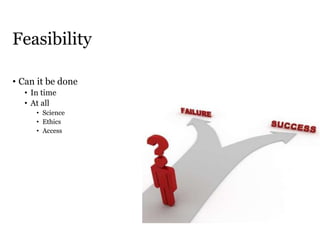
Feasibility
• Can it be done
• In time
• At all
• Science
• Ethics
• Access
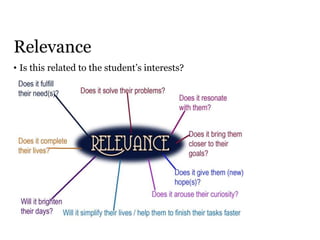
Relevance
• Is this related to the student’s interests?
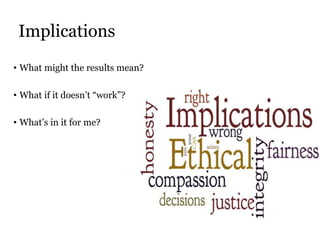
Implications
• What might the results mean?
• What if it doesn’t “work”?
• What’s in it for me?
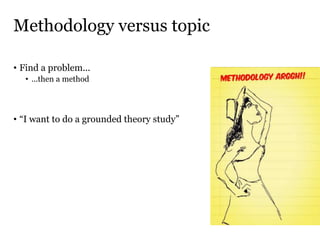
Methodology versus topic
• Find a problem...
• ...then a method
• “I want to do a grounded theory study”
Supervisory relationships
with candidates.
Supervisory relationships with candidates.
• There is a need right from the start for supervisors and doctoral candidates
to have clear expectations of each other and the first task is to discuss
these and, where appropriate, negotiate how they are going to be met.
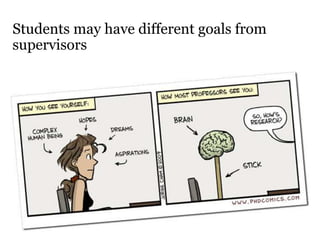
Students may have different goals from
supervisors
Your are not a surrogate parent, friend or
partner
You cannot read 5000 words while they sit
there!
Supervisory relationships
with co-supervisors.
Supervisory relationships with co-supervisors.
• The involvement of more supervisors in the process can create a potential
for disagreement and divergence within the team and leave the candidate
trying to navigate different perspectives or advice, to the detriment of their
experience.
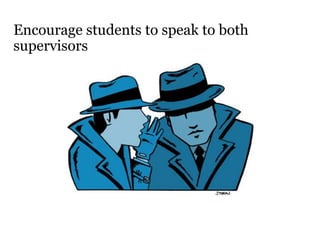
Encourage students to speak to both
supervisors
Supporting candidates’
research projects.
Supporting candidates’ research projects.
• New doctoral candidates may have little or no experience of research, and
hence little or no idea of what they are letting themselves in for.
Supervisors may then need to induct them into research, including the
nature of research itself, the key concepts, what it involves, and of good
practice in undertaking it.
• If, in these ways, candidates can be started down the slipway, sooner or
later they are almost bound to encounter academic problems of one kind
or another. It is important that, if and when this happens, supervisors are
aware and lend support.
Encouraging candidates to
write and giving
appropriate feedback.
Encouraging candidates to write and giving appropriate
feedback.
• Candidates need to produce written work throughout their studies to
articulate what they are thinking, to reflect upon their findings, and to gain
feedback. But candidates may prove reluctant to write particularly in the
early stages and need encouragement and support from their supervisors
to do so.
• Once they have produced written work, supervisors have to give feedback.
It is important that feedback is high-quality and that it enables candidates
to progress their research projects.
Keeping the research on
track and monitoring
progress.
Record keeping
• Have a system (records and periodic reviews of progress)
• Use it
• File it
• Refer to it
Supporting candidates’
personal, professional and
career development.
Supporting candidates’ personal, professional and
career development.
• Doctoral candidates are, of course, people and as such subject to ups and
downs in their personal lives. Supervisors need at least to be aware of such
issues and help candidates to be aware of the relevant professional
services. They also need to recognise that they may be role model for their
candidates, including in achieving a work-life balance.
• Supervisors also have a responsibility to support the professional
development of doctoral candidates in terms of socialization within their
disciplinary community and, where appropriate, in undertaking teaching
duties in the subject.
Supporting candidates
through completion and
final examination.
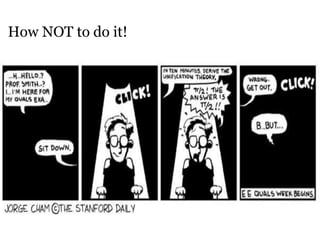
How NOT to do it!
How NOT to do it!
What is a thesis?
• Students need to be clear about expectations
• Is there a handbook or detailed guidance?
• Are examples of excellent theses/dissertations available?
Supporting candidates to
disseminate their research.
Supporting candidates to disseminate their research.
• Setting expectations at the start of the candidacy.
• Modelling the process of publication.
• Encouraging candidates to publish as they go.
• Co-publishing.
• Establishing a post-doctoral publications plan.
Intellectual property
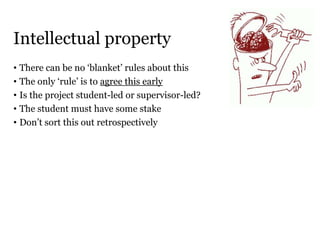
• There can be no ‘blanket’ rules about this
• The only ‘rule’ is to agree this early
• Is the project student-led or supervisor-led?
• The student must have some stake
• Don’t sort this out retrospectively
Reflecting upon and
enhancing practice.
Reflecting upon and enhancing practice.
• If supervisors are to improve their practice, they need to evaluate it, reflect
upon it, determine their strengths and weaknesses, build upon the former
and address the latter.
• As with other areas of academic practice, supervisors should undertake
appropriate professional development to enhance their practice, which
may include workshops and programmes as well as familiarity with the
scholarly literature and its implications for practice.
• Where supervisors identify good practice, then wherever possible they
should disseminate it for the benefit of others.
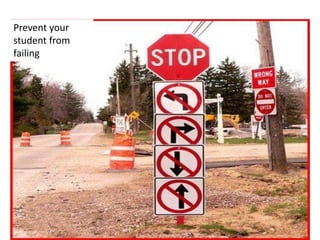
Prevent your
student from
failing
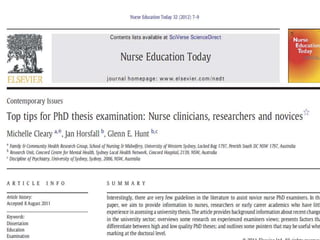
Five ways to fail your PhD
1. Don’t talk to your supervisor about who you think should examine your
thesis
2. Send your thesis to someone who has never examined a thesis before
3. Write your introduction first
4. Write a bad literature review
5. Don’t let anyone else do your copy editing
rwatson1955@gmail.com
0000-0001-8040-7625
@rwatson1955

How to be a good supervisor

  • 1.
    How to bea good supervisor Roger Watson
  • 3.
    CRITERIA FOR GOODSUPERVISORY PRACTICE • Recruitment and selection. • Supervisory relationships with candidates. • Supervisory relationships with co-supervisors. • Supporting candidates’ research projects. • Encouraging candidates to write and giving appropriate feedback. • Keeping the research on track and monitoring progress. • Supporting candidates’ personal, professional and career development. • Supporting candidates through completion and final examination. • Supporting candidates to disseminate their research. • Reflecting upon and enhancing practice.
  • 4.
  • 5.
    Recruitment and selection. •Supervisors can be involved in recruitment activities in a number of ways, including publicising the areas within which they can offer. • Supervisors should be involved in the selection of candidates from supporting intending applicants to develop their applications through to making final decisions and giving feedback.
  • 6.
    Feasibility • Can itbe done • In time • At all • Science • Ethics • Access
  • 7.
    Relevance • Is thisrelated to the student’s interests?
  • 8.
    Implications • What mightthe results mean? • What if it doesn’t “work”? • What’s in it for me?
  • 9.
    Methodology versus topic •Find a problem... • ...then a method • “I want to do a grounded theory study”
  • 10.
  • 11.
    Supervisory relationships withcandidates. • There is a need right from the start for supervisors and doctoral candidates to have clear expectations of each other and the first task is to discuss these and, where appropriate, negotiate how they are going to be met.
  • 12.
    Students may havedifferent goals from supervisors
  • 13.
    Your are nota surrogate parent, friend or partner
  • 14.
    You cannot read5000 words while they sit there!
  • 15.
  • 16.
    Supervisory relationships withco-supervisors. • The involvement of more supervisors in the process can create a potential for disagreement and divergence within the team and leave the candidate trying to navigate different perspectives or advice, to the detriment of their experience.
  • 17.
    Encourage students tospeak to both supervisors
  • 18.
  • 19.
    Supporting candidates’ researchprojects. • New doctoral candidates may have little or no experience of research, and hence little or no idea of what they are letting themselves in for. Supervisors may then need to induct them into research, including the nature of research itself, the key concepts, what it involves, and of good practice in undertaking it. • If, in these ways, candidates can be started down the slipway, sooner or later they are almost bound to encounter academic problems of one kind or another. It is important that, if and when this happens, supervisors are aware and lend support.
  • 20.
    Encouraging candidates to writeand giving appropriate feedback.
  • 22.
    Encouraging candidates towrite and giving appropriate feedback. • Candidates need to produce written work throughout their studies to articulate what they are thinking, to reflect upon their findings, and to gain feedback. But candidates may prove reluctant to write particularly in the early stages and need encouragement and support from their supervisors to do so. • Once they have produced written work, supervisors have to give feedback. It is important that feedback is high-quality and that it enables candidates to progress their research projects.
  • 23.
    Keeping the researchon track and monitoring progress.
  • 24.
    Record keeping • Havea system (records and periodic reviews of progress) • Use it • File it • Refer to it
  • 25.
  • 26.
    Supporting candidates’ personal,professional and career development. • Doctoral candidates are, of course, people and as such subject to ups and downs in their personal lives. Supervisors need at least to be aware of such issues and help candidates to be aware of the relevant professional services. They also need to recognise that they may be role model for their candidates, including in achieving a work-life balance. • Supervisors also have a responsibility to support the professional development of doctoral candidates in terms of socialization within their disciplinary community and, where appropriate, in undertaking teaching duties in the subject.
  • 27.
  • 28.
    How NOT todo it!
  • 29.
    How NOT todo it!
  • 30.
    What is athesis? • Students need to be clear about expectations • Is there a handbook or detailed guidance? • Are examples of excellent theses/dissertations available?
  • 31.
  • 32.
    Supporting candidates todisseminate their research. • Setting expectations at the start of the candidacy. • Modelling the process of publication. • Encouraging candidates to publish as they go. • Co-publishing. • Establishing a post-doctoral publications plan.
  • 33.
    Intellectual property • Therecan be no ‘blanket’ rules about this • The only ‘rule’ is to agree this early • Is the project student-led or supervisor-led? • The student must have some stake • Don’t sort this out retrospectively
  • 34.
  • 35.
    Reflecting upon andenhancing practice. • If supervisors are to improve their practice, they need to evaluate it, reflect upon it, determine their strengths and weaknesses, build upon the former and address the latter. • As with other areas of academic practice, supervisors should undertake appropriate professional development to enhance their practice, which may include workshops and programmes as well as familiarity with the scholarly literature and its implications for practice. • Where supervisors identify good practice, then wherever possible they should disseminate it for the benefit of others.
  • 36.
  • 37.
    Five ways tofail your PhD 1. Don’t talk to your supervisor about who you think should examine your thesis 2. Send your thesis to someone who has never examined a thesis before 3. Write your introduction first 4. Write a bad literature review 5. Don’t let anyone else do your copy editing
  • 39.