Thermocouple 
sensor. 
Shamanth.S
What is a thermocouple ? 
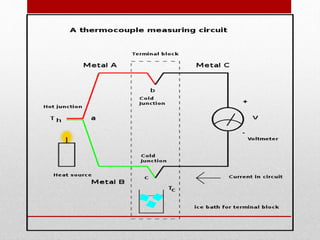
• A thermocouple is a temperature-measuring device consisting of 
two dissimilar conductors that contact each other at one or more 
spots. 
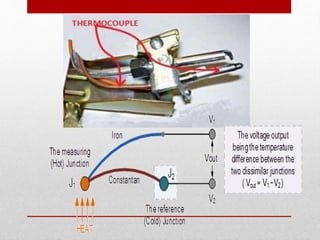
• A thermocouple comprises of at least two metals joined together 
to form two junctions. One is connected to the body whose 
temperature is to be measured-this is the hot or measuring 
junction. 
• The other junction is connected to a body of known temperature; 
this is the cold or reference junction. Therefore the thermocouple 
measures unknown temperature of the body with reference to the 
known temperature of the other body.
Where are they used ? 
• Thermocouples are a widely used as temperature sensors 
for measurement, control and can also convert a 
temperature into electricity. 
• Thermocouples are widely used in research and industry; 
applications include temperature measurement for 
furnaces, gas turbine exhaust, diesel engines, and other 
industrial processes. 
• Thermocouples are also used in homes & offices as 
temperature sensors in thermostats and also in flame 
sensors for fire detection.
Working principle. 
• The working principle of thermocouple is based on three 
effects discovered by Seebeck, Peltier and Thomson. They 
are as follows: 
• 1) Seebeck effect: The Seebeck effect states that when two 
different or unlike metals are joined together at two 
junctions, an electromotive force (emf) is generated at the 
two junctions. The amount of emf generated is different for 
different combinations of the metals. 
• 2) Peltier effect: when two dissimilar metals are joined 
together to form two junctions, emf is generated within the 
circuit due to the different temperatures of the two 
junctions of the circuit.
• 3) Thomson effect: when two unlike metals are joined 
together forming two junctions, the potential exists 
within the circuit due to temperature gradient along 
the entire length of the conductors within the circuit. 
• In most of the cases the emf suggested by the 
Thomson effect is very small and it can be neglected 
by making proper selection of the metals. The Peltier 
effect plays a prominent role in the working principle 
of the thermocouple.
How does it work ? 
• when any conductor is subjected to temperature, it will 
generate a voltage. This is now known as the 
thermoelectric effect or Seebeck effect. 
• Any attempt to measure this voltage necessarily involves 
connecting another conductor to the "hot" end. This 
additional conductor experiences the same temperature 
gradient and also develops a voltage. 
• The magnitude of the effect depends on the metal in use, 
and so a nonzero voltage will be measured if two dissimilar 
metals are used. After carefully calibrating the 
temperature-voltage dependence for a given pair of metals, 
these metals can be used as a thermometer.
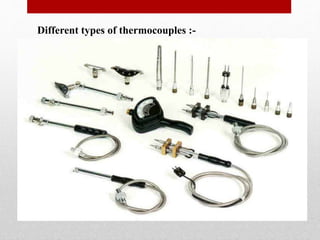
Different types of thermocouples :-

Thermocouple sensor

  • 1.
  • 2.
    What is athermocouple ? • A thermocouple is a temperature-measuring device consisting of two dissimilar conductors that contact each other at one or more spots. • A thermocouple comprises of at least two metals joined together to form two junctions. One is connected to the body whose temperature is to be measured-this is the hot or measuring junction. • The other junction is connected to a body of known temperature; this is the cold or reference junction. Therefore the thermocouple measures unknown temperature of the body with reference to the known temperature of the other body.
  • 4.
    Where are theyused ? • Thermocouples are a widely used as temperature sensors for measurement, control and can also convert a temperature into electricity. • Thermocouples are widely used in research and industry; applications include temperature measurement for furnaces, gas turbine exhaust, diesel engines, and other industrial processes. • Thermocouples are also used in homes & offices as temperature sensors in thermostats and also in flame sensors for fire detection.
  • 5.
    Working principle. •The working principle of thermocouple is based on three effects discovered by Seebeck, Peltier and Thomson. They are as follows: • 1) Seebeck effect: The Seebeck effect states that when two different or unlike metals are joined together at two junctions, an electromotive force (emf) is generated at the two junctions. The amount of emf generated is different for different combinations of the metals. • 2) Peltier effect: when two dissimilar metals are joined together to form two junctions, emf is generated within the circuit due to the different temperatures of the two junctions of the circuit.
  • 6.
    • 3) Thomsoneffect: when two unlike metals are joined together forming two junctions, the potential exists within the circuit due to temperature gradient along the entire length of the conductors within the circuit. • In most of the cases the emf suggested by the Thomson effect is very small and it can be neglected by making proper selection of the metals. The Peltier effect plays a prominent role in the working principle of the thermocouple.
  • 7.
    How does itwork ? • when any conductor is subjected to temperature, it will generate a voltage. This is now known as the thermoelectric effect or Seebeck effect. • Any attempt to measure this voltage necessarily involves connecting another conductor to the "hot" end. This additional conductor experiences the same temperature gradient and also develops a voltage. • The magnitude of the effect depends on the metal in use, and so a nonzero voltage will be measured if two dissimilar metals are used. After carefully calibrating the temperature-voltage dependence for a given pair of metals, these metals can be used as a thermometer.
  • 9.
    Different types ofthermocouples :-