Malaviya National Institute
of Technology
Department of Chemical Engineering
Process Instrumentation CH209
Session: 2018-19
PIRANI GAUGE
Content:
 Definition
 Define Thermal conductivity
 History
 Principle
 Description
 Working
 Application
 Advantages
 Limitations
 Alternative
 References
Definition:
• The Pirani gauge is a robust thermal
conductivity gauge used for the
measurement of the pressures in vacuum
systems or in very low pressure region.
What is Thermal Conductivity
Gauge?
 Thermal conductivity gauges measure pressure by
measuring the change in ability of a gas to
conduct heat.
• The ability of a material to carry heat by
conduction is called Thermal Conductivity.
History:
• It was invented in 1906 by Marcello Pirani.
• In 1906 he described his “Directly Indicating Vacuum
Gauge" that used a heated wire to measure vacuum by
monitoring the heat transfer from the wire by the
vacuum environment.
Principle:
• A conducting wire gets heated when electric
current flows through it.
The rate at which heat is dissipated from this
wire depends on the conductivity of the
surrounding media.
The conductivity of the surrounding media in
turn depends on the density of the surrounding
media
If the density of the surrounding media is low,
its conductivity also will be low causing the
wire to become hotter for a given current flow,
and vice versa.
Description:
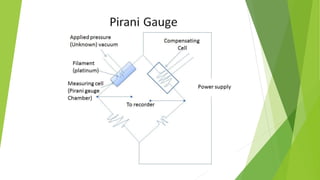
The main parts of the arrangement are:
• A pirani gauge chamber which encloses a platinum
filament.
• A compensating cell to minimize variation caused
due to ambient temperature changes.
• The pirani gauge chamber and the compensating cell
is housed on a wheat stone bridge circuit as shown in
diagram.
Working:
• A constant current is passed through the filament in
the pirani gauge chamber. Due to this current, the
filament gets heated and assumes a resistance which
is measured using the bridge.
• Now the pressure to be measured (applied pressure)
is connected to the pirani gauge chamber. Due to the
applied pressure the density of the surrounding of the
pirani gauge filament changes.
• Due to this change in density of the surrounding
of the filament its conductivity changes causing
the temperature of the filament to change.
• When the temperature of the filament changes,
the resistance of the filament also changes.
• Now the change in resistance of the filament is
determined using the bridge.
• This change in resistance of the pirani gauge
filament becomes a measure of the applied pressure
when calibrated.
Note: higher pressure – higher density – higher
conductivity – reduced filament temperature –
less resistance of filament & vise versa
• The gauge may be used for pressures between 0.5
Torr to 10−4 Torr.
• The thermal conductivity and heat capacity of the
gas may affect the readout from the meter, and
therefore the apparatus may need calibrating
before accurate readings are obtainable.
• For lower pressure measurement other
instruments such as a Penning gauge are used.
Applications:
 Used to measure low vacuum and ultra high
vacuum pressures.
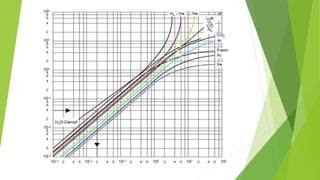
 Used to Plot graph on basis of data obtained.
 Curve to convert Air reading into other Gases.
Advantages:
• They are rugged and inexpensive
• Give accurate results
• Good response to pressure changes.
• Relation between pressure and resistance is linear
for the range of use.
• Readings can be taken from a distance.
Limitations:
• Pirani gauge must be checked frequently.
• Pirani gauge must be calibrated from different
Gases
• Electric power is a must for its operation.
Alternative:
 An alternative to the Pirani gauge is
the thermocouple gauge, which works on the
same principle of detecting thermal conductivity
of the gas by a change in temperature.
 In the thermocouple gauge, the temperature is
sensed by a thermocouple rather than by the
change in resistance of the heated wire.
References:
 https://en.wikipedia.org/wiki/Pirani_gauge
 https://www.explainthatstuff.com/pirani+gauge
 https://www.practicalclinicalskill/pirani_gauge
 https://www.slideshare.com/pirani+gauge
Pirani gauge

Pirani gauge

  • 1.
    Malaviya National Institute ofTechnology Department of Chemical Engineering Process Instrumentation CH209 Session: 2018-19
  • 2.
  • 3.
    Content:  Definition  DefineThermal conductivity  History  Principle  Description  Working  Application  Advantages  Limitations  Alternative  References
  • 4.
    Definition: • The Piranigauge is a robust thermal conductivity gauge used for the measurement of the pressures in vacuum systems or in very low pressure region.
  • 5.
    What is ThermalConductivity Gauge?  Thermal conductivity gauges measure pressure by measuring the change in ability of a gas to conduct heat. • The ability of a material to carry heat by conduction is called Thermal Conductivity.
  • 6.
    History: • It wasinvented in 1906 by Marcello Pirani. • In 1906 he described his “Directly Indicating Vacuum Gauge" that used a heated wire to measure vacuum by monitoring the heat transfer from the wire by the vacuum environment.
  • 7.
    Principle: • A conductingwire gets heated when electric current flows through it. The rate at which heat is dissipated from this wire depends on the conductivity of the surrounding media. The conductivity of the surrounding media in turn depends on the density of the surrounding media If the density of the surrounding media is low, its conductivity also will be low causing the wire to become hotter for a given current flow, and vice versa.
  • 8.
    Description: The main partsof the arrangement are: • A pirani gauge chamber which encloses a platinum filament. • A compensating cell to minimize variation caused due to ambient temperature changes. • The pirani gauge chamber and the compensating cell is housed on a wheat stone bridge circuit as shown in diagram.
  • 10.
    Working: • A constantcurrent is passed through the filament in the pirani gauge chamber. Due to this current, the filament gets heated and assumes a resistance which is measured using the bridge. • Now the pressure to be measured (applied pressure) is connected to the pirani gauge chamber. Due to the applied pressure the density of the surrounding of the pirani gauge filament changes.
  • 11.
    • Due tothis change in density of the surrounding of the filament its conductivity changes causing the temperature of the filament to change. • When the temperature of the filament changes, the resistance of the filament also changes.
  • 12.
    • Now thechange in resistance of the filament is determined using the bridge. • This change in resistance of the pirani gauge filament becomes a measure of the applied pressure when calibrated. Note: higher pressure – higher density – higher conductivity – reduced filament temperature – less resistance of filament & vise versa
  • 14.
    • The gaugemay be used for pressures between 0.5 Torr to 10−4 Torr. • The thermal conductivity and heat capacity of the gas may affect the readout from the meter, and therefore the apparatus may need calibrating before accurate readings are obtainable. • For lower pressure measurement other instruments such as a Penning gauge are used.
  • 15.
    Applications:  Used tomeasure low vacuum and ultra high vacuum pressures.  Used to Plot graph on basis of data obtained.  Curve to convert Air reading into other Gases.
  • 17.
    Advantages: • They arerugged and inexpensive • Give accurate results • Good response to pressure changes. • Relation between pressure and resistance is linear for the range of use. • Readings can be taken from a distance.
  • 18.
    Limitations: • Pirani gaugemust be checked frequently. • Pirani gauge must be calibrated from different Gases • Electric power is a must for its operation.
  • 19.
    Alternative:  An alternativeto the Pirani gauge is the thermocouple gauge, which works on the same principle of detecting thermal conductivity of the gas by a change in temperature.  In the thermocouple gauge, the temperature is sensed by a thermocouple rather than by the change in resistance of the heated wire.
  • 20.
    References:  https://en.wikipedia.org/wiki/Pirani_gauge  https://www.explainthatstuff.com/pirani+gauge https://www.practicalclinicalskill/pirani_gauge  https://www.slideshare.com/pirani+gauge