The Power of Teamwork
Discover how effective teamwork can propel organizations to success,
foster innovation, and create a positive work environment.
X
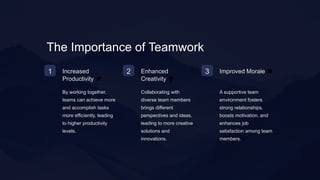
The Importance of Teamwork
1 Increased
Productivity 🚀
By working together,
teams can achieve more
and accomplish tasks
more efficiently, leading
to higher productivity
levels.
2 Enhanced
Creativity 💡
Collaborating with
diverse team members
brings different
perspectives and ideas,
leading to more creative
solutions and
innovations.
3 Improved Morale 🌟
A supportive team
environment fosters
strong relationships,
boosts motivation, and
enhances job
satisfaction among team
members.
Characteristics of Successful Teams
Clear Goals 🎯
Successful teams set specific, measurable,
achievable, relevant, and time-bound goals to
guide their efforts.
Effective Communication 🗣️
Open and transparent communication
promotes trust, facilitates collaboration, and
ensures everyone is on the same page.
Shared Accountability ⚖️
Team members take ownership of their
actions and outcomes, supporting each other
and holding themselves mutually
accountable.
Adaptability 🔄
Successful teams embrace change, adapt to
new circumstances, and continuously seek
opportunities for growth and improvement.
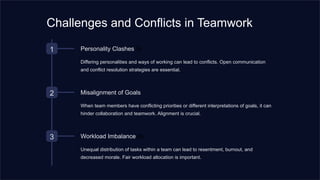
Challenges and Conflicts in Teamwork
1 Personality Clashes 😠
Differing personalities and ways of working can lead to conflicts. Open communication
and conflict resolution strategies are essential.
2 Misalignment of Goals ️
When team members have conflicting priorities or different interpretations of goals, it can
hinder collaboration and teamwork. Alignment is crucial.
3 Workload Imbalance ⚖️
Unequal distribution of tasks within a team can lead to resentment, burnout, and
decreased morale. Fair workload allocation is important.
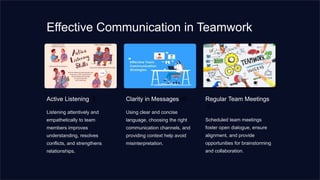
Effective Communication in Teamwork
Active Listening 👂
Listening attentively and
empathetically to team
members improves
understanding, resolves
conflicts, and strengthens
relationships.
Clarity in Messages ✉️
Using clear and concise
language, choosing the right
communication channels, and
providing context help avoid
misinterpretation.
Regular Team Meetings
🗓️
Scheduled team meetings
foster open dialogue, ensure
alignment, and provide
opportunities for brainstorming
and collaboration.
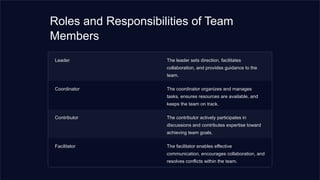
Roles and Responsibilities of Team
Members
Leader The leader sets direction, facilitates
collaboration, and provides guidance to the
team.
Coordinator The coordinator organizes and manages
tasks, ensures resources are available, and
keeps the team on track.
Contributor The contributor actively participates in
discussions and contributes expertise toward
achieving team goals.
Facilitator The facilitator enables effective
communication, encourages collaboration, and
resolves conflicts within the team.
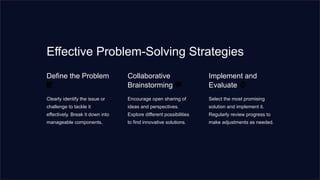
Effective Problem-Solving Strategies
Define the Problem
📝
Clearly identify the issue or
challenge to tackle it
effectively. Break it down into
manageable components.
Collaborative
Brainstorming 💭
Encourage open sharing of
ideas and perspectives.
Explore different possibilities
to find innovative solutions.
Implement and
Evaluate 🔄
Select the most promising
solution and implement it.
Regularly review progress to
make adjustments as needed.
Building a Positive Team
Culture
1 Encourage Trust ️
Foster an environment
where team members feel
safe to express themselves
and trust each other's
capabilities.
2 Celebrate
Achievements 🎉
Recognize and appreciate
individual and team
accomplishments to boost
morale and promote a
positive atmosphere.
3 Promote Work-Life Balance ⚖️
Encourage a healthy balance between work and personal life,
leading to happier and more motivated team members.

The-Power-of-Teamwork.pptx

  • 1.
    The Power ofTeamwork Discover how effective teamwork can propel organizations to success, foster innovation, and create a positive work environment. X
  • 3.
    The Importance ofTeamwork 1 Increased Productivity 🚀 By working together, teams can achieve more and accomplish tasks more efficiently, leading to higher productivity levels. 2 Enhanced Creativity 💡 Collaborating with diverse team members brings different perspectives and ideas, leading to more creative solutions and innovations. 3 Improved Morale 🌟 A supportive team environment fosters strong relationships, boosts motivation, and enhances job satisfaction among team members.
  • 4.
    Characteristics of SuccessfulTeams Clear Goals 🎯 Successful teams set specific, measurable, achievable, relevant, and time-bound goals to guide their efforts. Effective Communication 🗣️ Open and transparent communication promotes trust, facilitates collaboration, and ensures everyone is on the same page. Shared Accountability ⚖️ Team members take ownership of their actions and outcomes, supporting each other and holding themselves mutually accountable. Adaptability 🔄 Successful teams embrace change, adapt to new circumstances, and continuously seek opportunities for growth and improvement.
  • 5.
    Challenges and Conflictsin Teamwork 1 Personality Clashes 😠 Differing personalities and ways of working can lead to conflicts. Open communication and conflict resolution strategies are essential. 2 Misalignment of Goals ️ When team members have conflicting priorities or different interpretations of goals, it can hinder collaboration and teamwork. Alignment is crucial. 3 Workload Imbalance ⚖️ Unequal distribution of tasks within a team can lead to resentment, burnout, and decreased morale. Fair workload allocation is important.
  • 6.
    Effective Communication inTeamwork Active Listening 👂 Listening attentively and empathetically to team members improves understanding, resolves conflicts, and strengthens relationships. Clarity in Messages ✉️ Using clear and concise language, choosing the right communication channels, and providing context help avoid misinterpretation. Regular Team Meetings 🗓️ Scheduled team meetings foster open dialogue, ensure alignment, and provide opportunities for brainstorming and collaboration.
  • 7.
    Roles and Responsibilitiesof Team Members Leader The leader sets direction, facilitates collaboration, and provides guidance to the team. Coordinator The coordinator organizes and manages tasks, ensures resources are available, and keeps the team on track. Contributor The contributor actively participates in discussions and contributes expertise toward achieving team goals. Facilitator The facilitator enables effective communication, encourages collaboration, and resolves conflicts within the team.
  • 8.
    Effective Problem-Solving Strategies Definethe Problem 📝 Clearly identify the issue or challenge to tackle it effectively. Break it down into manageable components. Collaborative Brainstorming 💭 Encourage open sharing of ideas and perspectives. Explore different possibilities to find innovative solutions. Implement and Evaluate 🔄 Select the most promising solution and implement it. Regularly review progress to make adjustments as needed.
  • 9.
    Building a PositiveTeam Culture 1 Encourage Trust ️ Foster an environment where team members feel safe to express themselves and trust each other's capabilities. 2 Celebrate Achievements 🎉 Recognize and appreciate individual and team accomplishments to boost morale and promote a positive atmosphere. 3 Promote Work-Life Balance ⚖️ Encourage a healthy balance between work and personal life, leading to happier and more motivated team members.