Introduction to
Teamwork
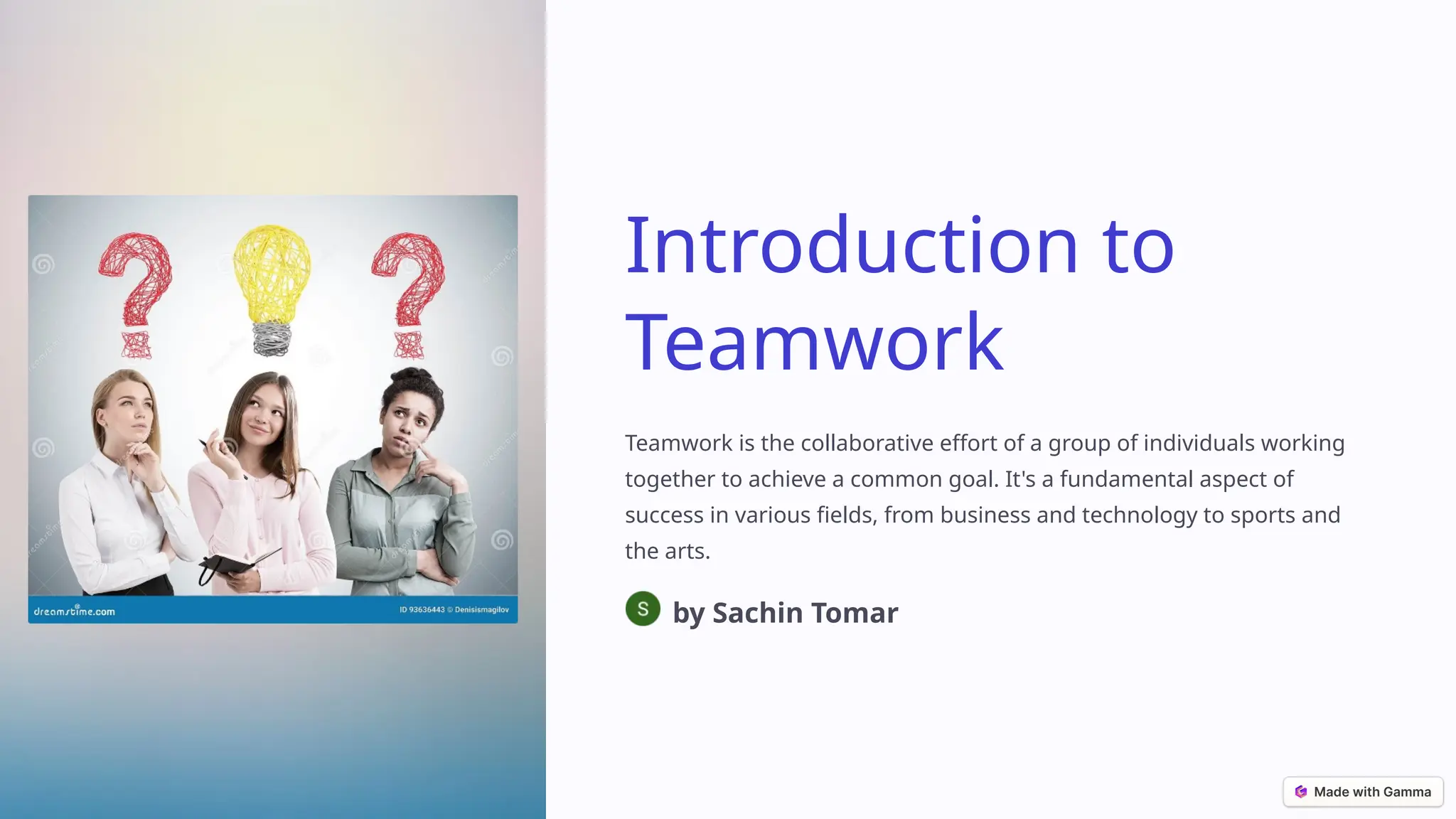
Teamwork is the collaborative effort of a group of individuals working
together to achieve a common goal. It's a fundamental aspect of
success in various fields, from business and technology to sports and
the arts.
by Sachin Tomar
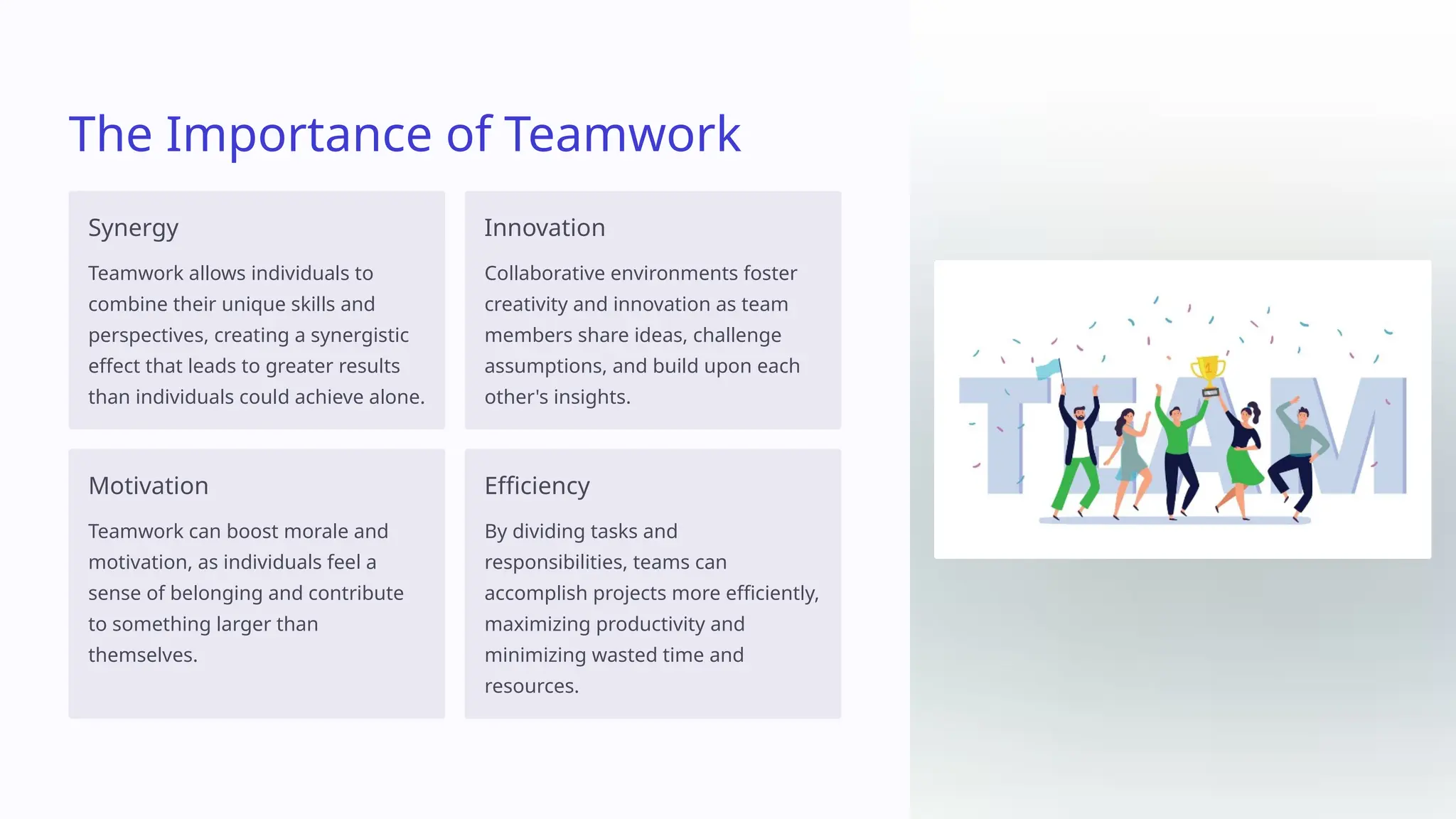
The Importance of Teamwork
Synergy
Teamwork allows individuals to
combine their unique skills and
perspectives, creating a synergistic
effect that leads to greater results
than individuals could achieve alone.
Innovation
Collaborative environments foster
creativity and innovation as team
members share ideas, challenge
assumptions, and build upon each
other's insights.
Motivation
Teamwork can boost morale and
motivation, as individuals feel a
sense of belonging and contribute
to something larger than
themselves.
Efficiency
By dividing tasks and
responsibilities, teams can
accomplish projects more efficiently,
maximizing productivity and
minimizing wasted time and
resources.
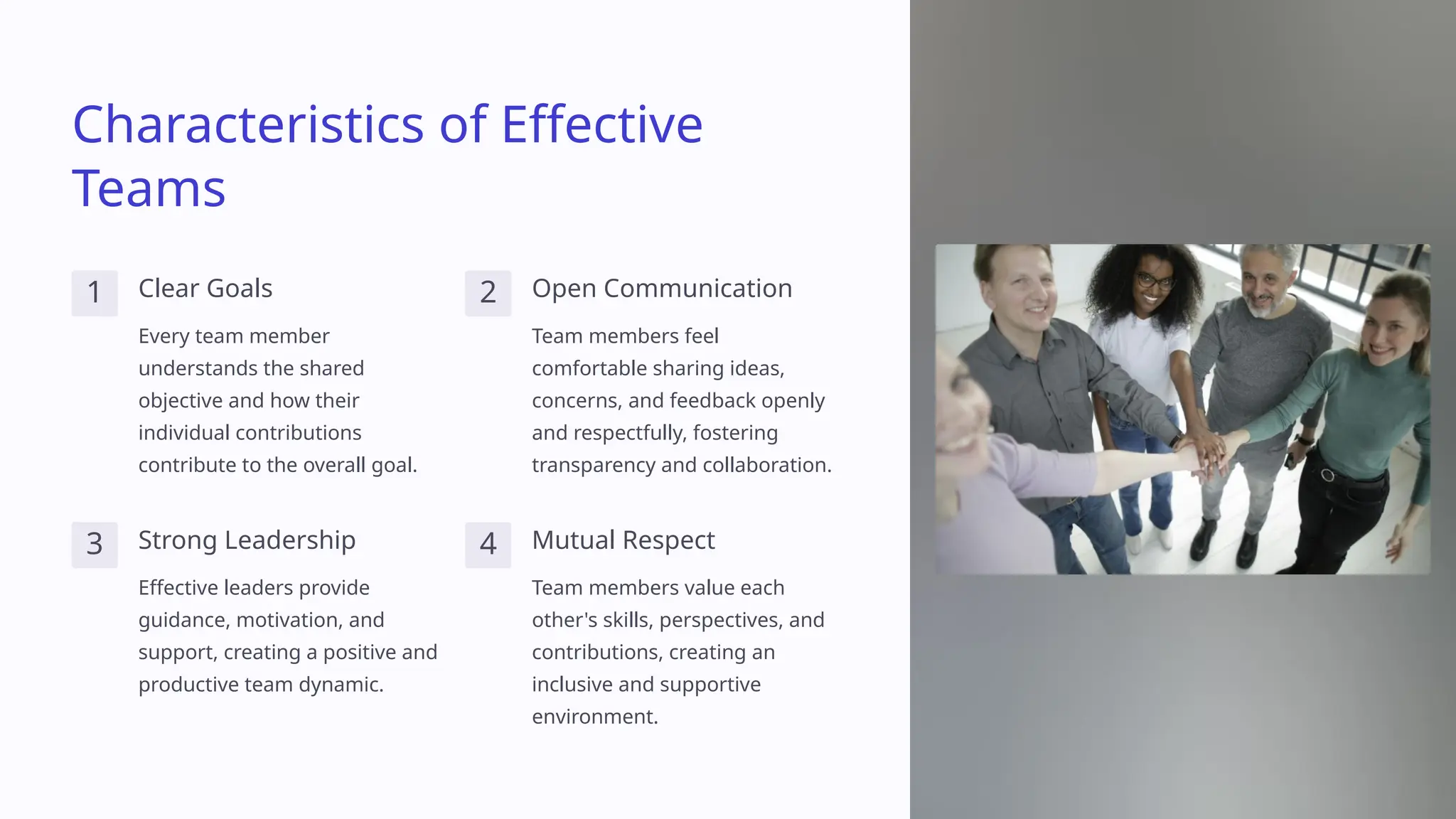
Characteristics of Effective
Teams
1 Clear Goals
Every team member
understands the shared
objective and how their
individual contributions
contribute to the overall goal.
2 Open Communication
Team members feel
comfortable sharing ideas,
concerns, and feedback openly
and respectfully, fostering
transparency and collaboration.
3 Strong Leadership
Effective leaders provide
guidance, motivation, and
support, creating a positive and
productive team dynamic.
4 Mutual Respect
Team members value each
other's skills, perspectives, and
contributions, creating an
inclusive and supportive
environment.
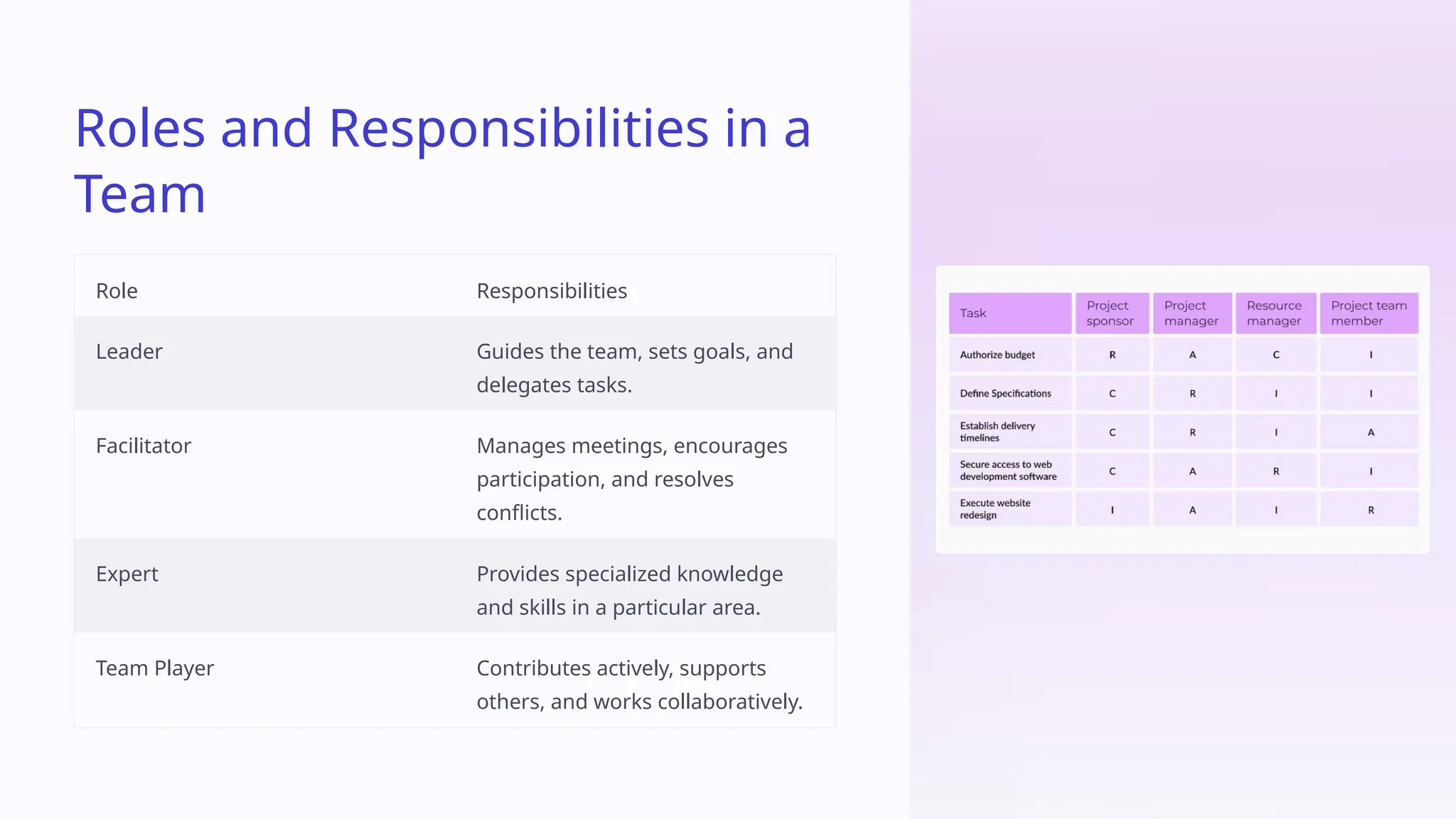
Roles and Responsibilities in a
Team
Role Responsibilities
Leader Guides the team, sets goals, and
delegates tasks.
Facilitator Manages meetings, encourages
participation, and resolves
conflicts.
Expert Provides specialized knowledge
and skills in a particular area.
Team Player Contributes actively, supports
others, and works collaboratively.
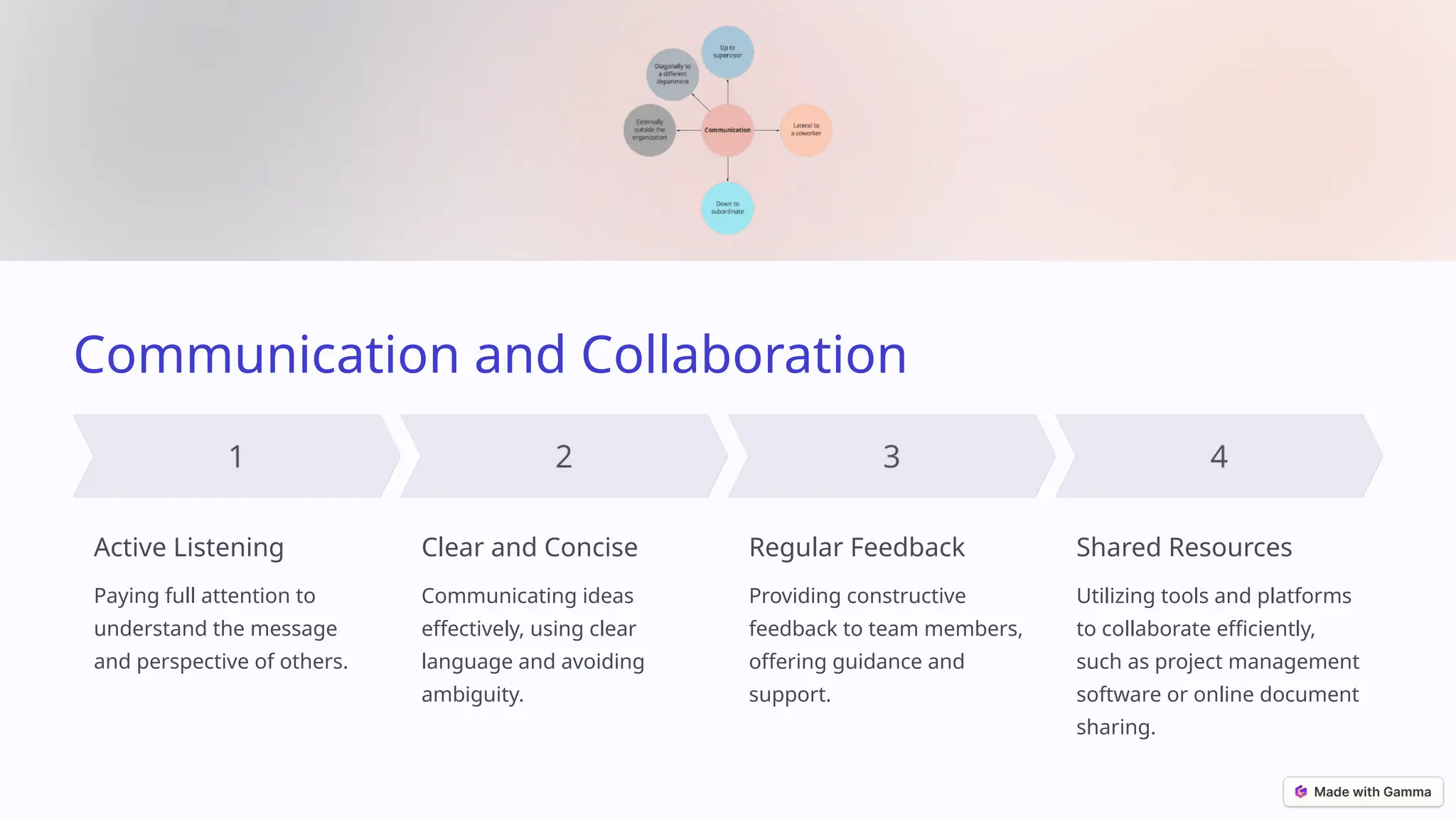
Communication and Collaboration
Active Listening
Paying full attention to
understand the message
and perspective of others.
Clear and Concise
Communicating ideas
effectively, using clear
language and avoiding
ambiguity.
Regular Feedback
Providing constructive
feedback to team members,
offering guidance and
support.
Shared Resources
Utilizing tools and platforms
to collaborate efficiently,
such as project management
software or online document
sharing.
Conflict Resolution in Teams
Identify the Issue
Clearly define the source of conflict
and understand the perspectives of
all involved parties.
Open Communication
Encourage open and respectful
dialogue, allowing each team
member to express their concerns
and ideas.
Find a Solution
Work collaboratively to find a solution
that addresses the concerns of all
parties involved, while promoting
fairness and compromise.
Building Trust and Cohesion
Openness
Encourage transparency and
vulnerability among team members,
fostering a sense of trust and
understanding.
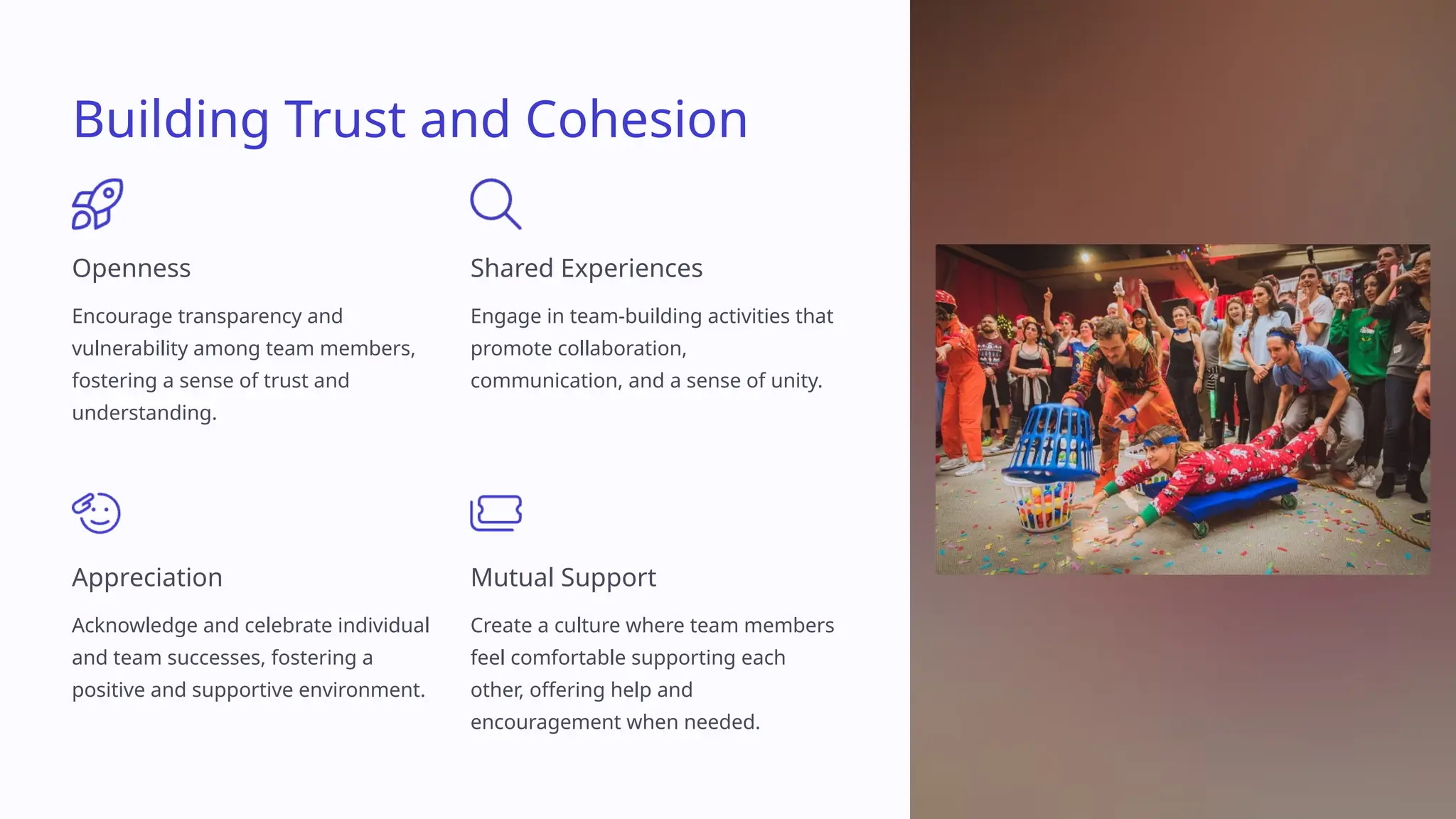
Shared Experiences
Engage in team-building activities that
promote collaboration,
communication, and a sense of unity.
Appreciation
Acknowledge and celebrate individual
and team successes, fostering a
positive and supportive environment.
Mutual Support
Create a culture where team members
feel comfortable supporting each
other, offering help and
encouragement when needed.
Strategies for Effective Teamwork
1 Clear Roles
Define roles and responsibilities to ensure each team member understands
their contribution and accountability.
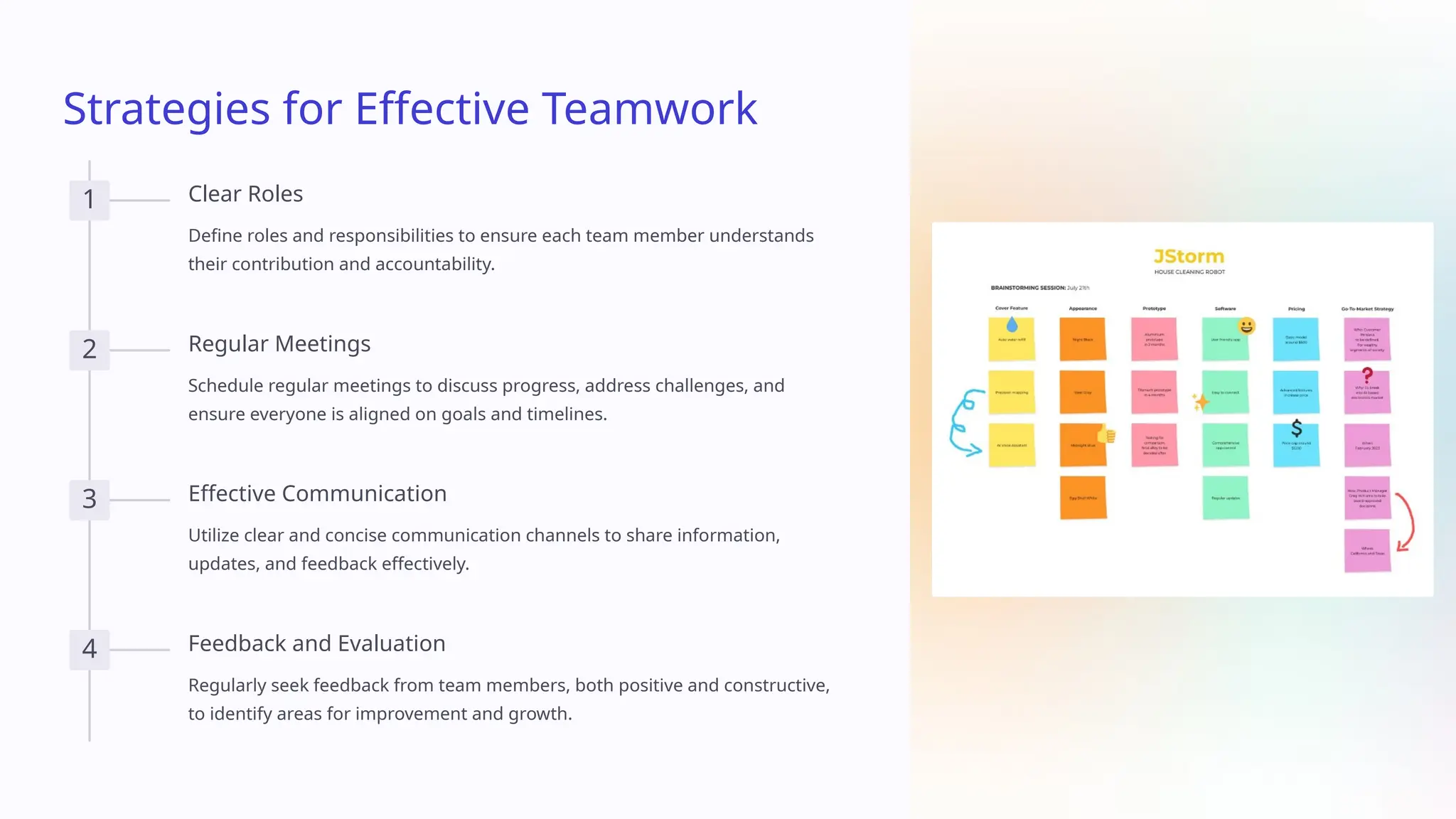
2 Regular Meetings
Schedule regular meetings to discuss progress, address challenges, and
ensure everyone is aligned on goals and timelines.
3 Effective Communication
Utilize clear and concise communication channels to share information,
updates, and feedback effectively.
4 Feedback and Evaluation
Regularly seek feedback from team members, both positive and constructive,
to identify areas for improvement and growth.
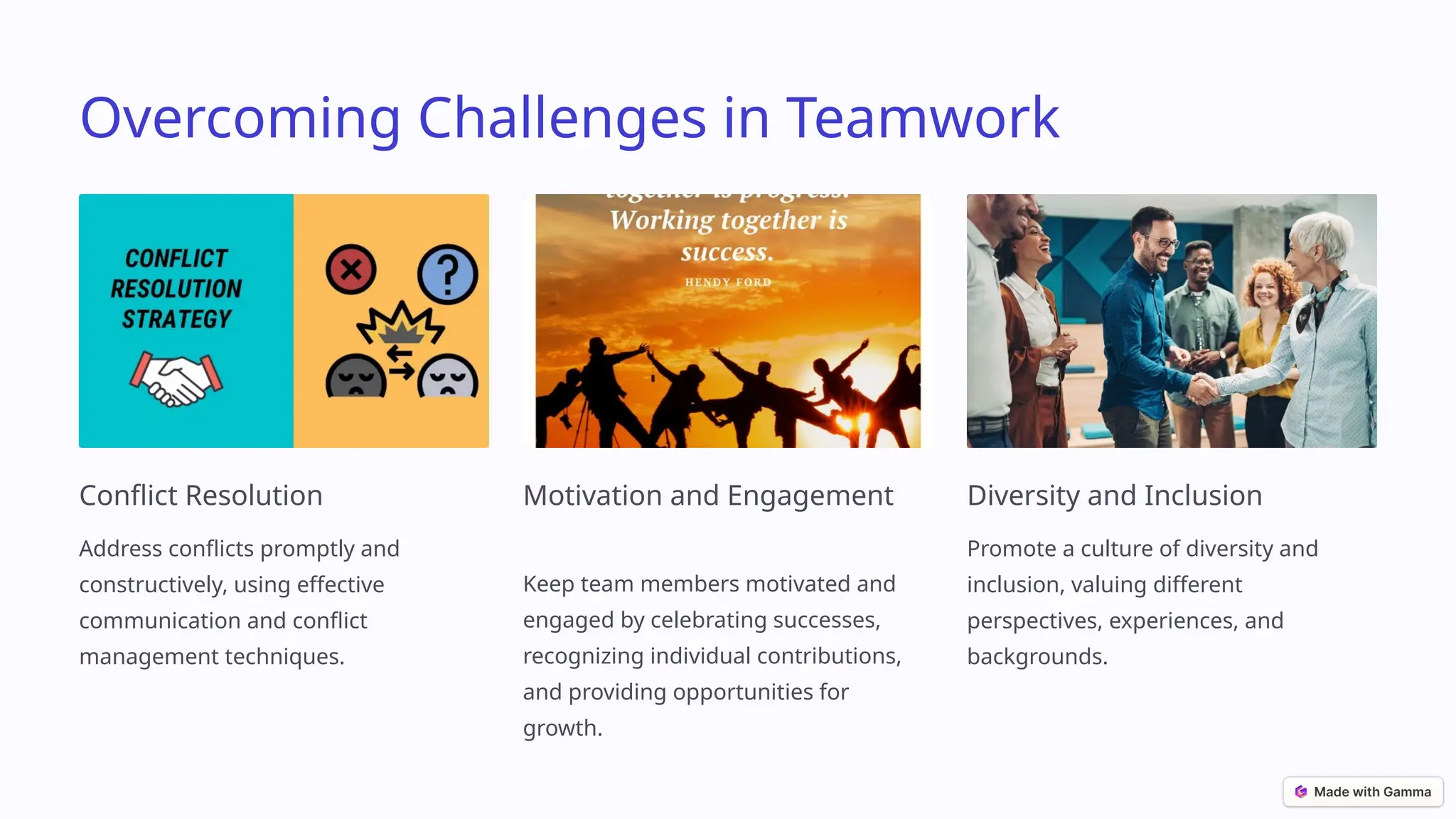
Overcoming Challenges in Teamwork
Conflict Resolution
Address conflicts promptly and
constructively, using effective
communication and conflict
management techniques.
Motivation and Engagement
Keep team members motivated and
engaged by celebrating successes,
recognizing individual contributions,
and providing opportunities for
growth.
Diversity and Inclusion
Promote a culture of diversity and
inclusion, valuing different
perspectives, experiences, and
backgrounds.
Conclusion and Key
Takeaways
Teamwork is essential for achieving success in various endeavors. By
fostering clear communication, collaboration, and trust, teams can
overcome challenges and achieve extraordinary results.

Introduction-to-Teamwork- How to built the Team

  • 1.
    Introduction to Teamwork Teamwork isthe collaborative effort of a group of individuals working together to achieve a common goal. It's a fundamental aspect of success in various fields, from business and technology to sports and the arts. by Sachin Tomar
  • 2.
    The Importance ofTeamwork Synergy Teamwork allows individuals to combine their unique skills and perspectives, creating a synergistic effect that leads to greater results than individuals could achieve alone. Innovation Collaborative environments foster creativity and innovation as team members share ideas, challenge assumptions, and build upon each other's insights. Motivation Teamwork can boost morale and motivation, as individuals feel a sense of belonging and contribute to something larger than themselves. Efficiency By dividing tasks and responsibilities, teams can accomplish projects more efficiently, maximizing productivity and minimizing wasted time and resources.
  • 3.
    Characteristics of Effective Teams 1Clear Goals Every team member understands the shared objective and how their individual contributions contribute to the overall goal. 2 Open Communication Team members feel comfortable sharing ideas, concerns, and feedback openly and respectfully, fostering transparency and collaboration. 3 Strong Leadership Effective leaders provide guidance, motivation, and support, creating a positive and productive team dynamic. 4 Mutual Respect Team members value each other's skills, perspectives, and contributions, creating an inclusive and supportive environment.
  • 4.
    Roles and Responsibilitiesin a Team Role Responsibilities Leader Guides the team, sets goals, and delegates tasks. Facilitator Manages meetings, encourages participation, and resolves conflicts. Expert Provides specialized knowledge and skills in a particular area. Team Player Contributes actively, supports others, and works collaboratively.
  • 5.
    Communication and Collaboration ActiveListening Paying full attention to understand the message and perspective of others. Clear and Concise Communicating ideas effectively, using clear language and avoiding ambiguity. Regular Feedback Providing constructive feedback to team members, offering guidance and support. Shared Resources Utilizing tools and platforms to collaborate efficiently, such as project management software or online document sharing.
  • 6.
    Conflict Resolution inTeams Identify the Issue Clearly define the source of conflict and understand the perspectives of all involved parties. Open Communication Encourage open and respectful dialogue, allowing each team member to express their concerns and ideas. Find a Solution Work collaboratively to find a solution that addresses the concerns of all parties involved, while promoting fairness and compromise.
  • 7.
    Building Trust andCohesion Openness Encourage transparency and vulnerability among team members, fostering a sense of trust and understanding. Shared Experiences Engage in team-building activities that promote collaboration, communication, and a sense of unity. Appreciation Acknowledge and celebrate individual and team successes, fostering a positive and supportive environment. Mutual Support Create a culture where team members feel comfortable supporting each other, offering help and encouragement when needed.
  • 8.
    Strategies for EffectiveTeamwork 1 Clear Roles Define roles and responsibilities to ensure each team member understands their contribution and accountability. 2 Regular Meetings Schedule regular meetings to discuss progress, address challenges, and ensure everyone is aligned on goals and timelines. 3 Effective Communication Utilize clear and concise communication channels to share information, updates, and feedback effectively. 4 Feedback and Evaluation Regularly seek feedback from team members, both positive and constructive, to identify areas for improvement and growth.
  • 9.
    Overcoming Challenges inTeamwork Conflict Resolution Address conflicts promptly and constructively, using effective communication and conflict management techniques. Motivation and Engagement Keep team members motivated and engaged by celebrating successes, recognizing individual contributions, and providing opportunities for growth. Diversity and Inclusion Promote a culture of diversity and inclusion, valuing different perspectives, experiences, and backgrounds.
  • 10.
    Conclusion and Key Takeaways Teamworkis essential for achieving success in various endeavors. By fostering clear communication, collaboration, and trust, teams can overcome challenges and achieve extraordinary results.