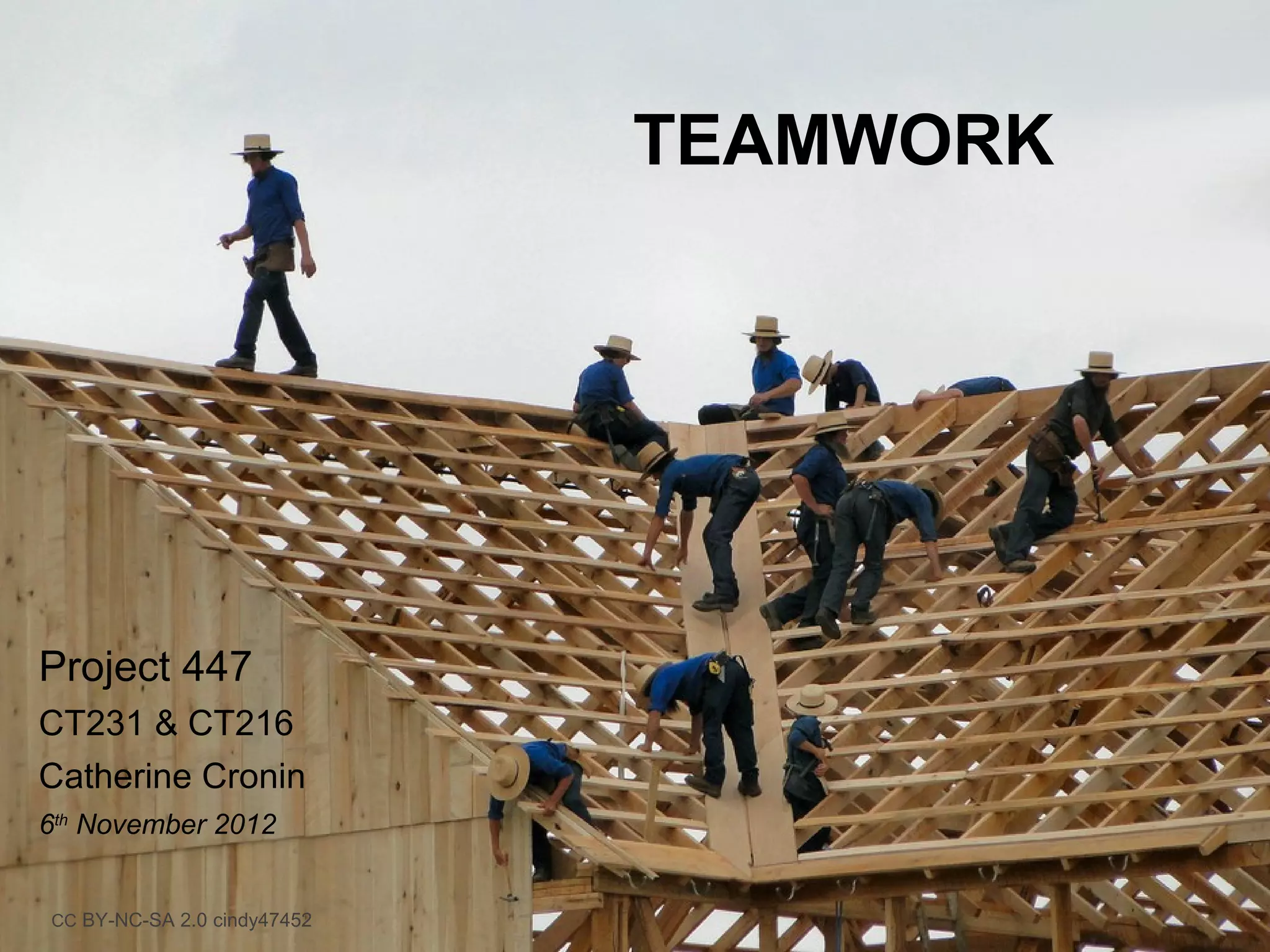
TEAMWORK
Project 447
CT231 & CT216
Catherine Cronin
6th
November 2012
CC BY-NC-SA 2.0 cindy47452
2
Team Working
Benefits Challenges
3
What is a TEAM?
4
What is a TEAM?
a group of people working
together to achieve
a common goal
5
What is TEAMWORK?
6
What is TEAMWORK?
the ability to cooperate and
communicate effectively with others
to achieve a common goal
7
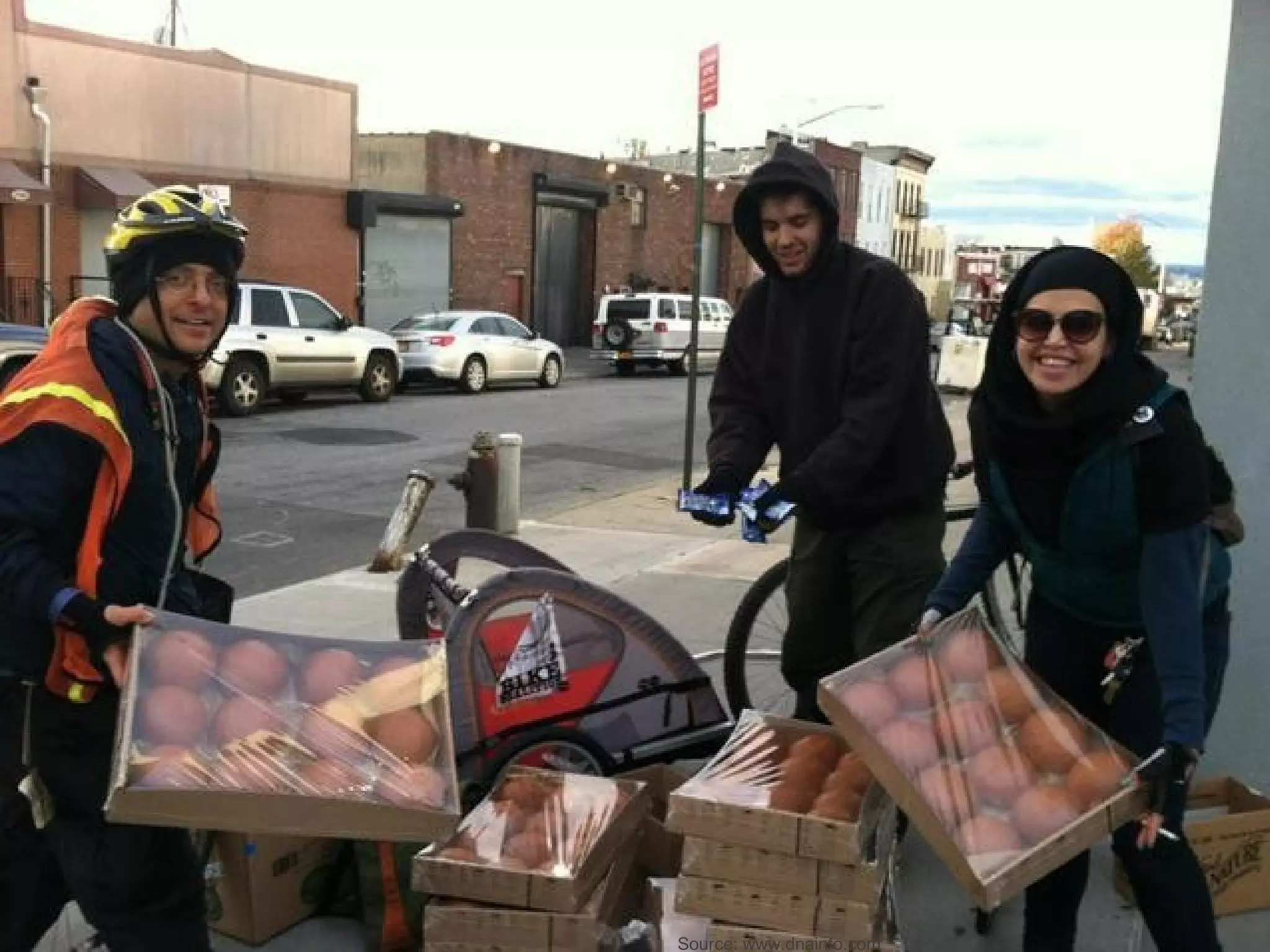
Source: www.dnainfo.com
8 facebook.com/OccupySandyReliefNyc
9
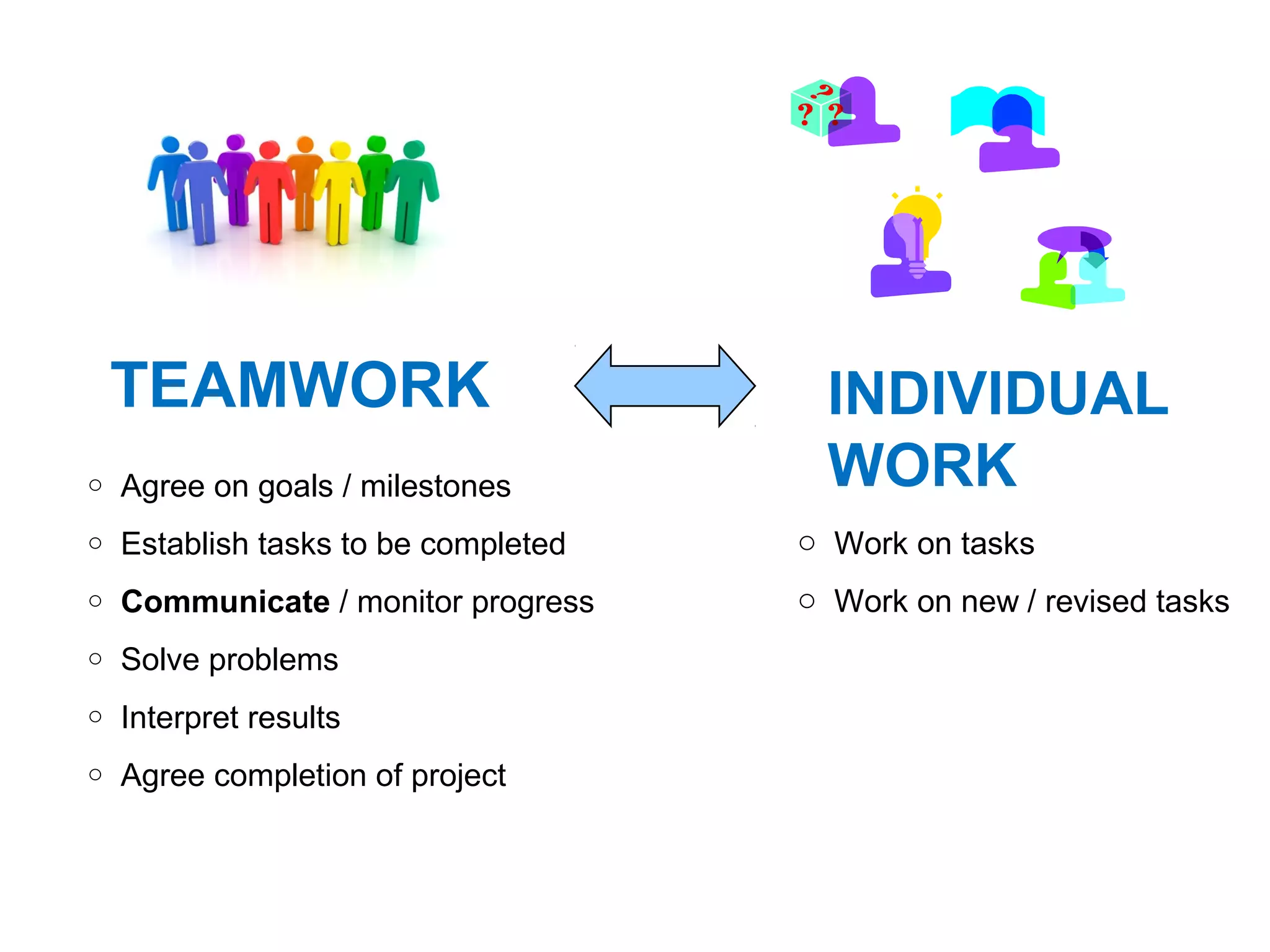
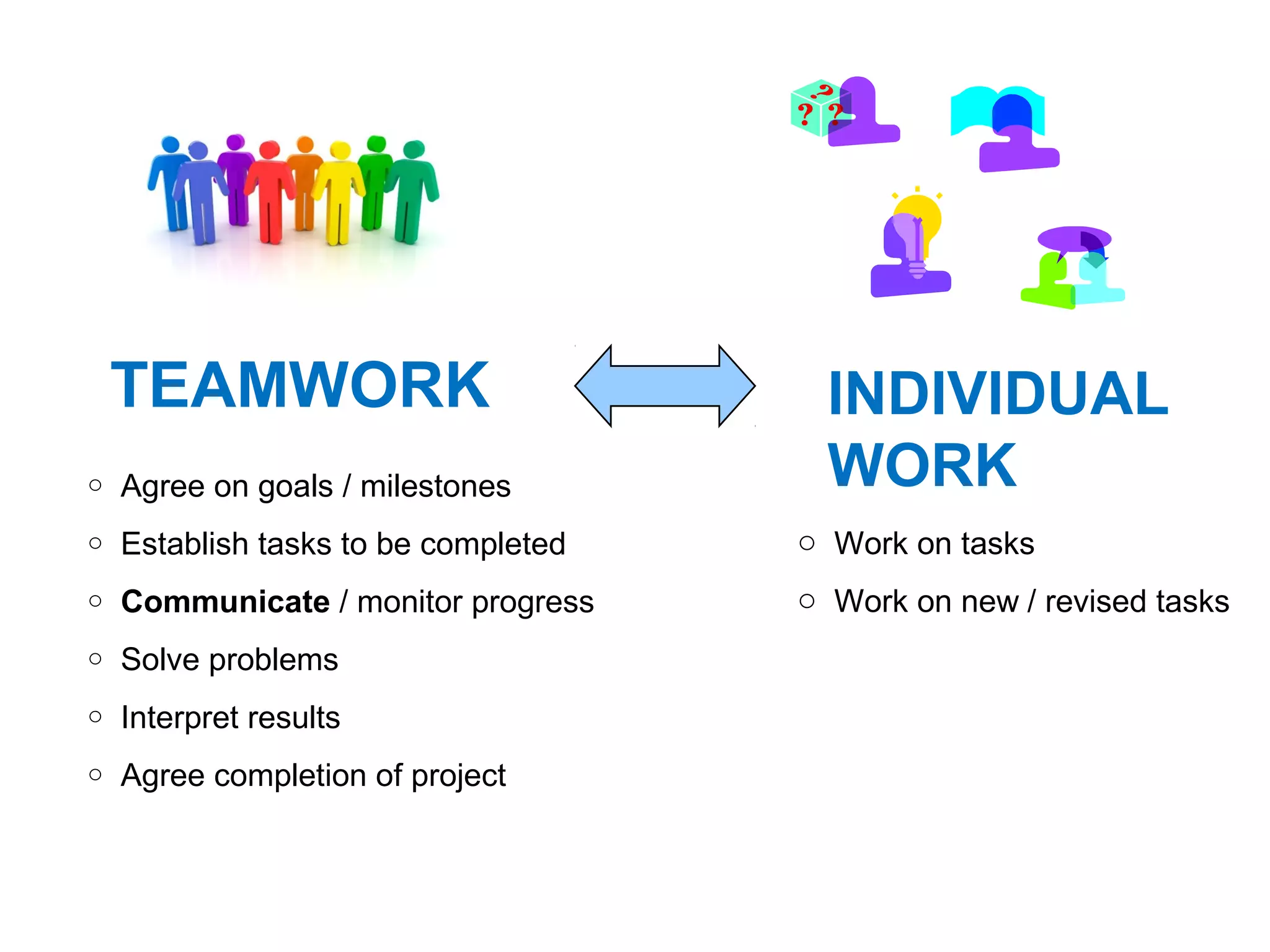
TEAMWORK INDIVIDUAL
WORK
o Agree on goals / milestones
o Establish tasks to be completed
o Communicate / monitor progress
o Solve problems
o Interpret results
o Agree completion of project
o Work on tasks
o Work on new / revised tasks
10
Stages of Team Development
Forming (assemble team; deal with ambiguity)
Source: Bruce Tuckman (1965) Small Group Development
Storming (deal with criticism; develop ideas)
Norming (procedures, cohesion)
Performing (cooperation)
[Adjourning]
11
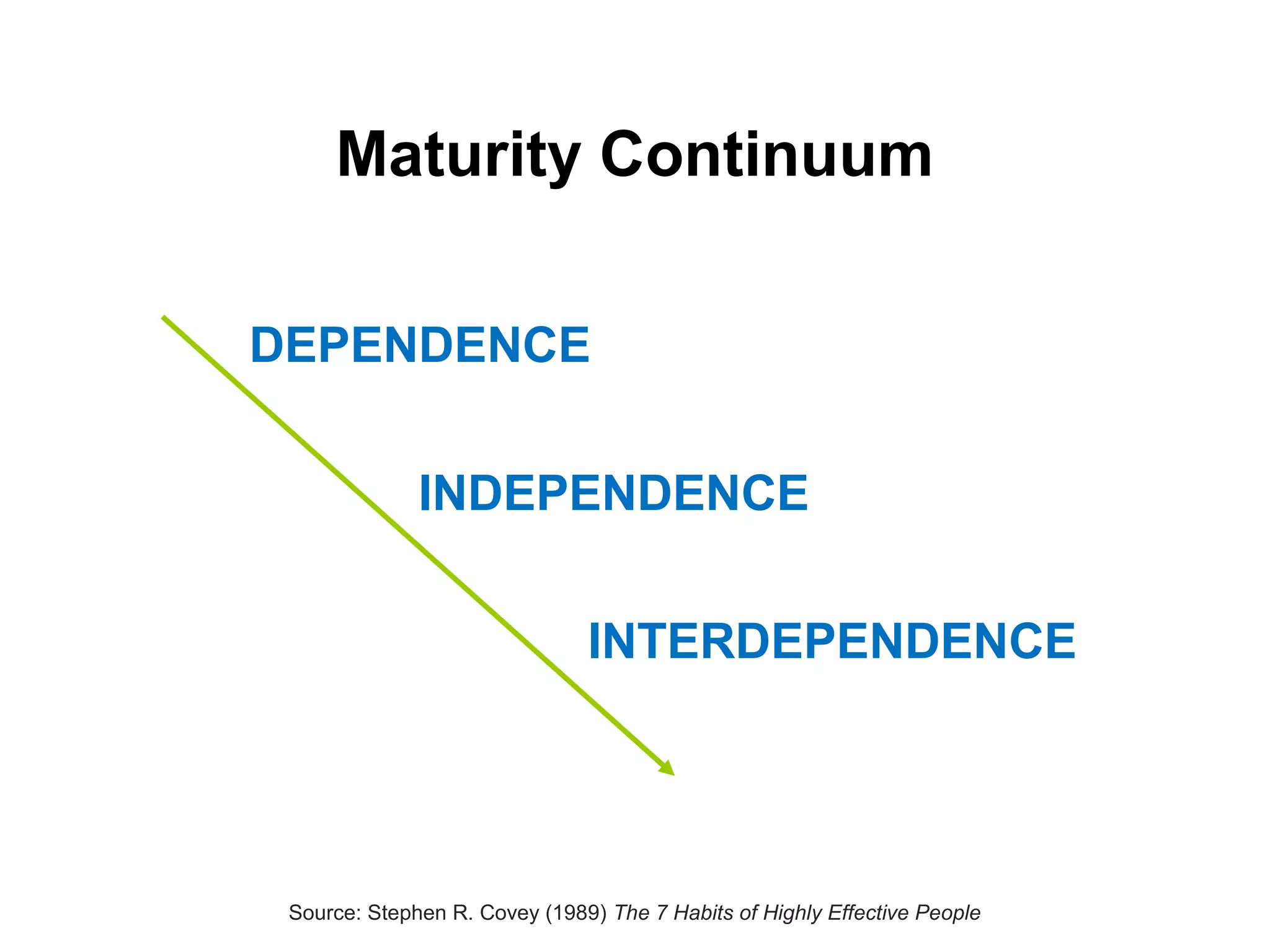
Maturity Continuum
DEPENDENCE
INDEPENDENCE
INTERDEPENDENCE
Source: Stephen R. Covey (1989) The 7 Habits of Highly Effective People
12
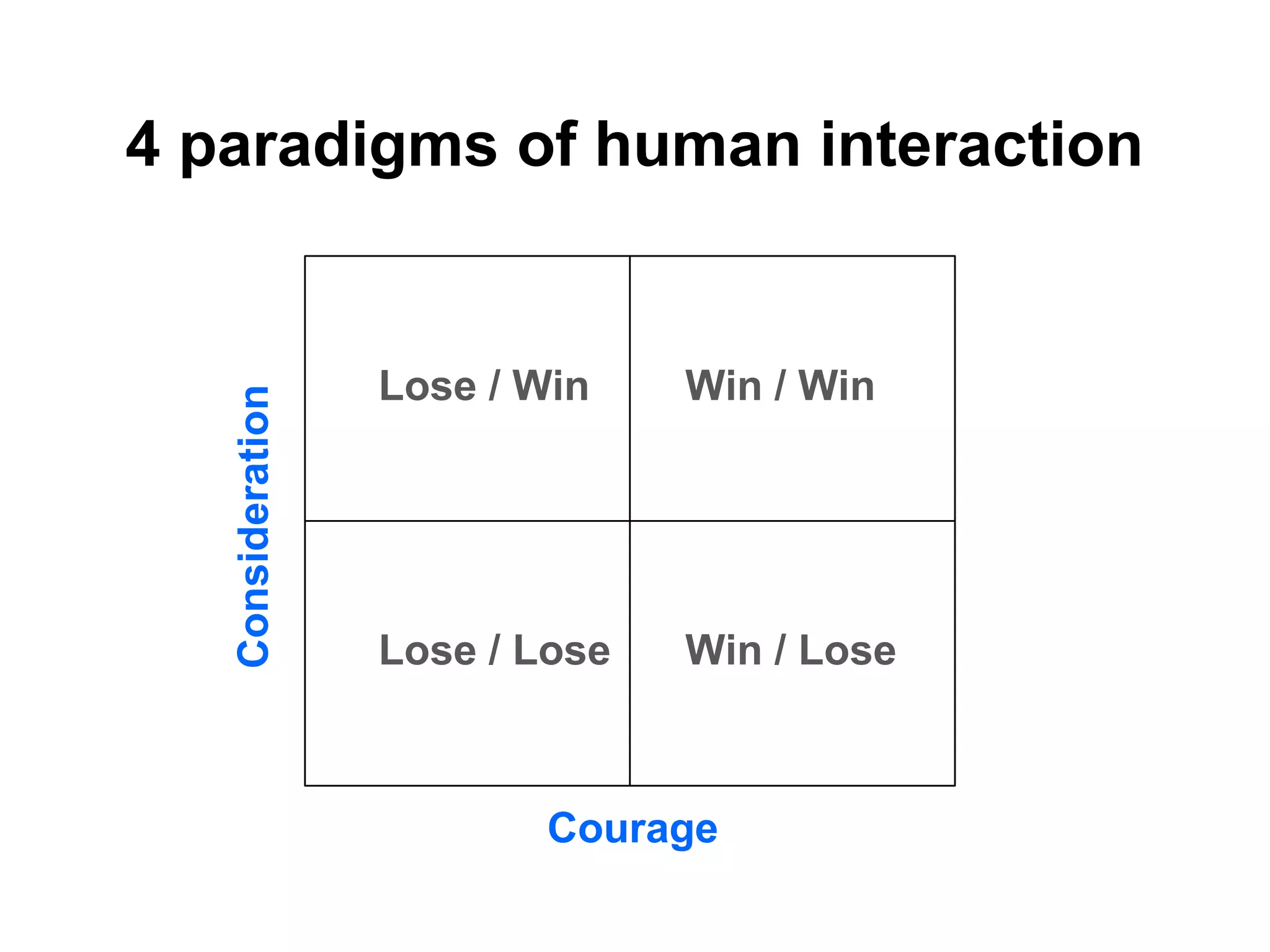
4 paradigms of human interaction
Courage
Consideration
Lose / Win Win / Win
Lose / Lose Win / Lose
13
Win/Win
If Win/Win is such an ideal, why don’t we do
it all the time?
What gets in the way?
14
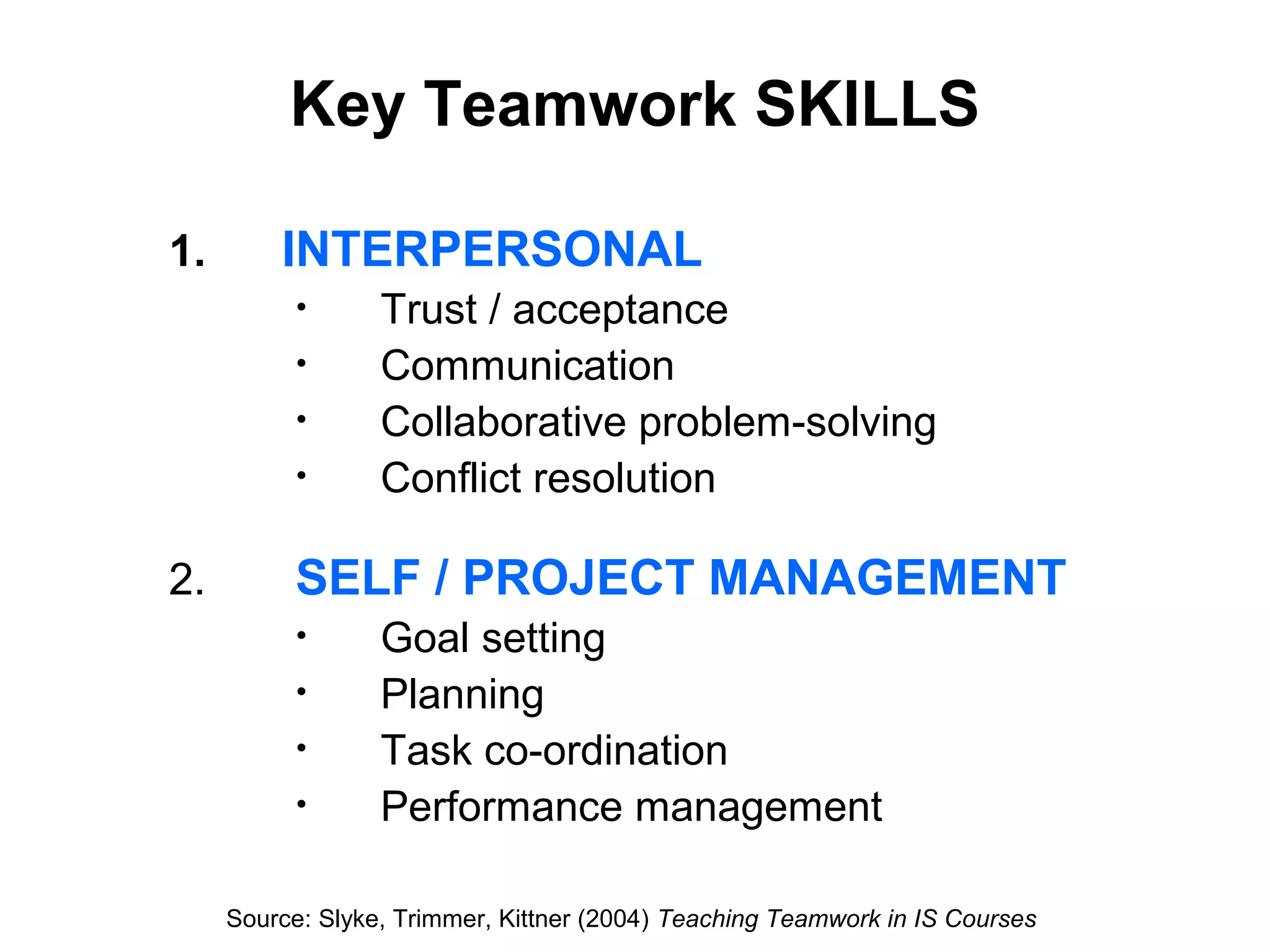
Key Teamwork SKILLS
1. INTERPERSONAL
• Trust / acceptance
• Communication
• Collaborative problem-solving
• Conflict resolution
2. SELF / PROJECT MANAGEMENT
• Goal setting
• Planning
• Task co-ordination
• Performance management
Source: Slyke, Trimmer, Kittner (2004) Teaching Teamwork in IS Courses
15
A few TEAMWORK guidelines…
1. Effective communication
2. Team Working Agreement
3. Effective meetings
4. Project management
5. Conflict management
16
1. Effective communication
 Communicate openly & supportively
 Listen openly
 Interpret nonverbal messages
 Give useful feedback
 Receive feedback effectively
17
2. Team Working Agreement
What is it?
• Expectations each team has for its members
• Designed specifically for your team
• Effectively a contract which all team members
sign up to… each team member is expected to
abide by that contract
18
Team Working Agreement
Key points:
• Tailor to meet the specific needs of your team
members
• Each team member needs to input
• The agreement is a chance for all members to
voice their opinions
• All members will be accountable for statements
in the agreement
19
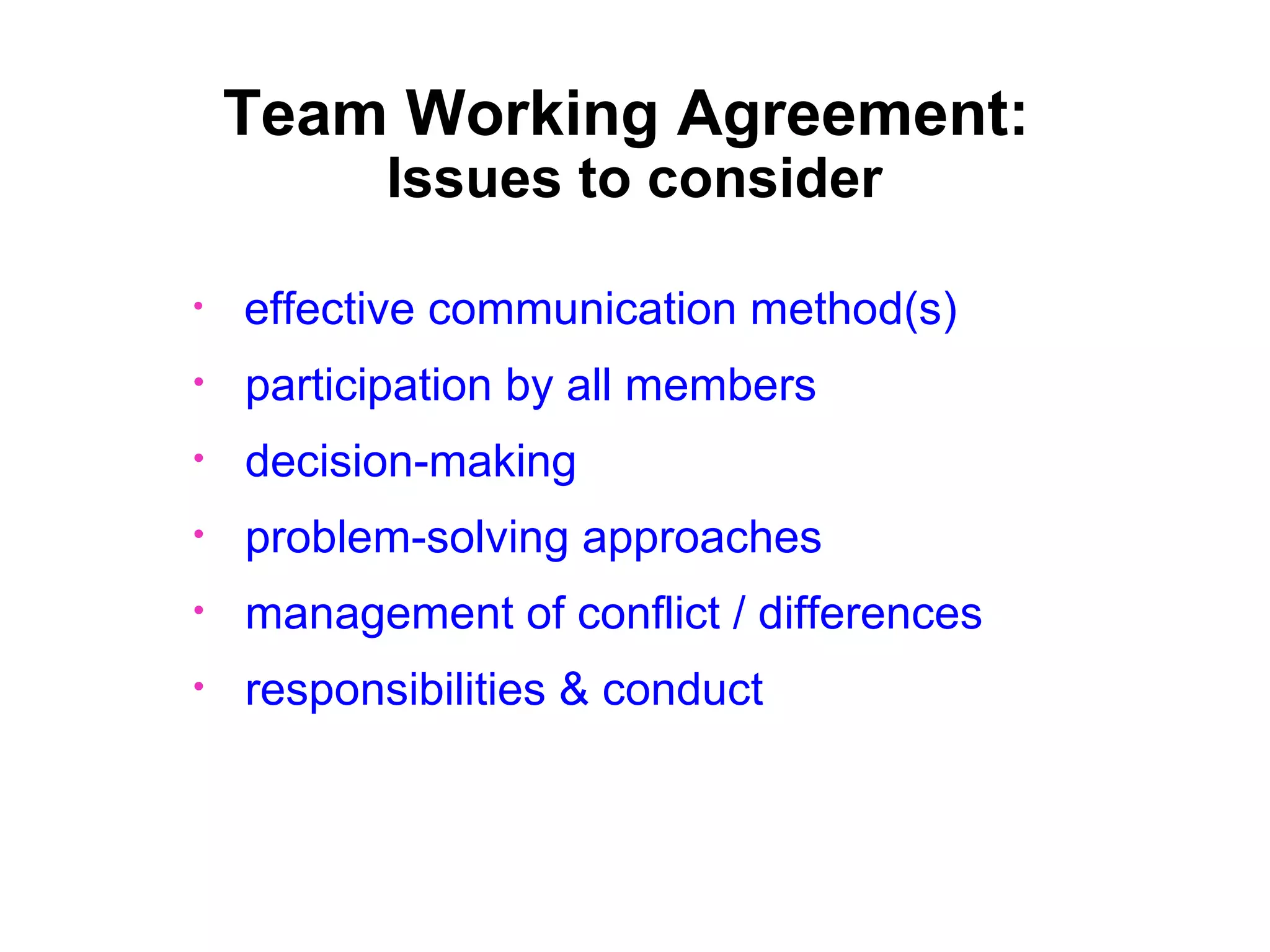
Team Working Agreement:
Issues to consider
• effective communication method(s)
• participation by all members
• decision-making
• problem-solving approaches
• management of conflict / differences
• responsibilities & conduct
20
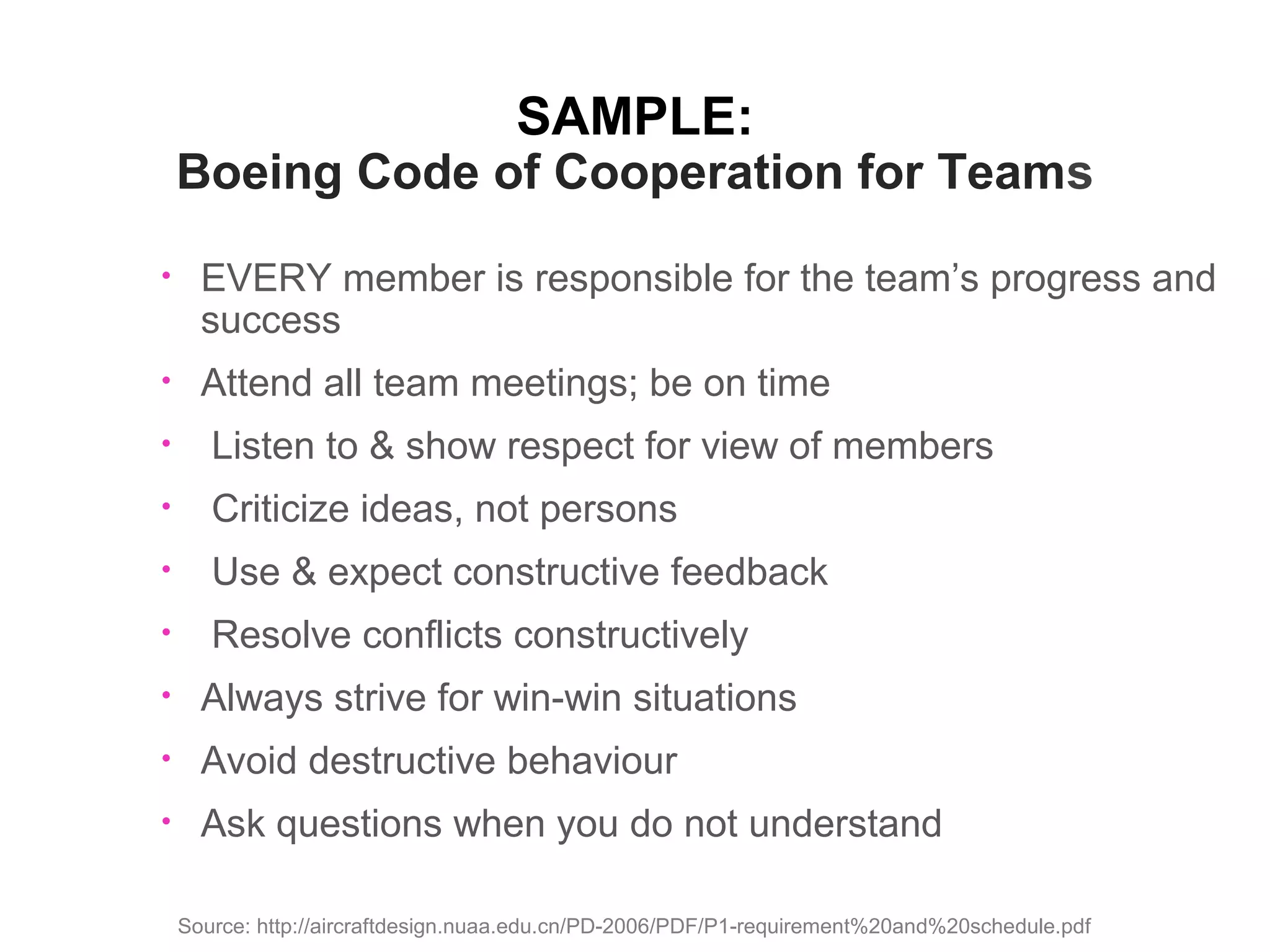
SAMPLE:
Boeing Code of Cooperation for Teams
• EVERY member is responsible for the team’s progress and
success
• Attend all team meetings; be on time
• Listen to & show respect for view of members
• Criticize ideas, not persons
• Use & expect constructive feedback
• Resolve conflicts constructively
• Always strive for win-win situations
• Avoid destructive behaviour
• Ask questions when you do not understand
Source: http://aircraftdesign.nuaa.edu.cn/PD-2006/PDF/P1-requirement%20and%20schedule.pdf
21
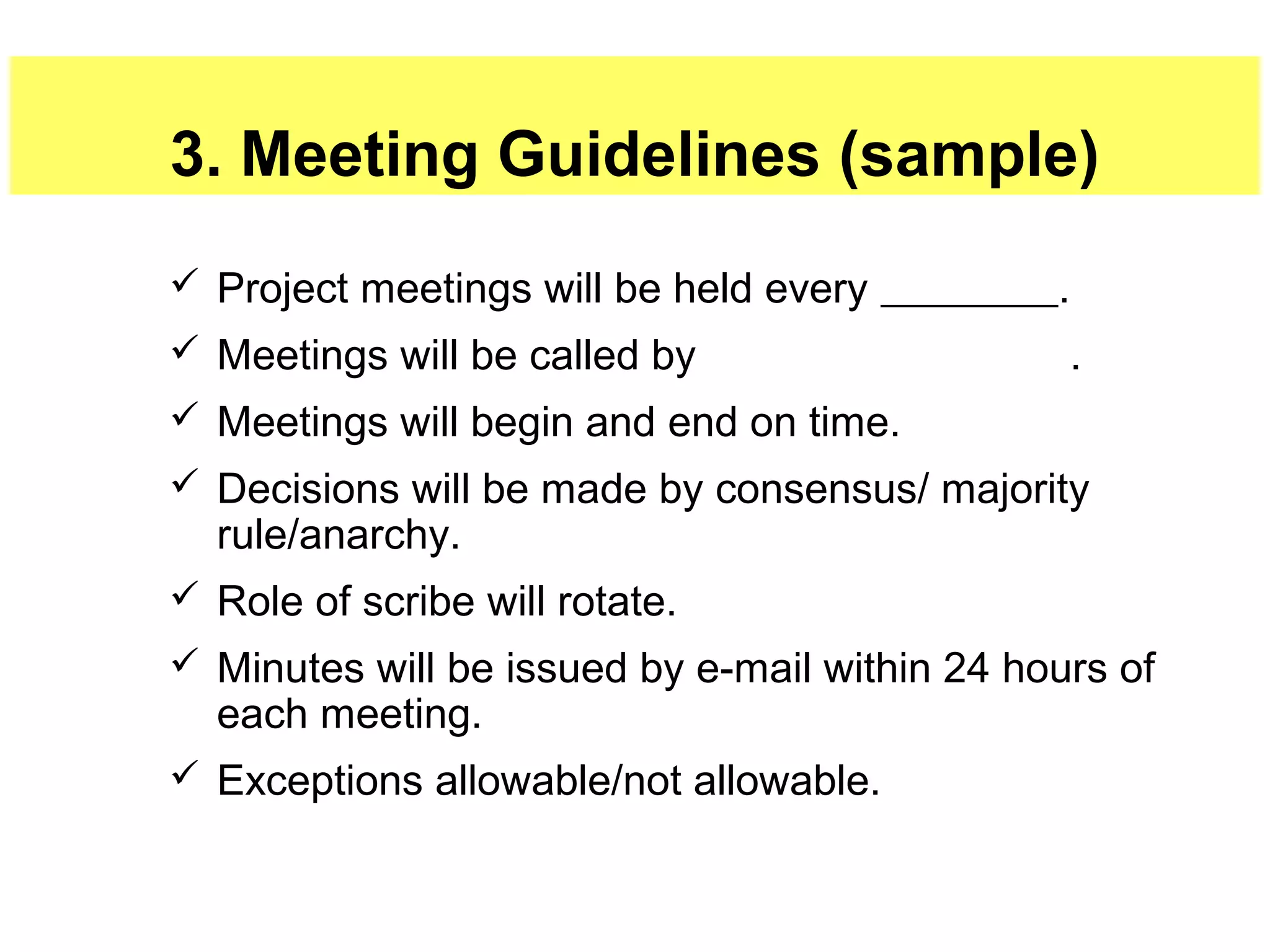
3. Meeting Guidelines (sample)
 Project meetings will be held every .
 Meetings will be called by .
 Meetings will begin and end on time.
 Decisions will be made by consensus/ majority
rule/anarchy.
 Role of scribe will rotate.
 Minutes will be issued by e-mail within 24 hours of
each meeting.
 Exceptions allowable/not allowable.
22
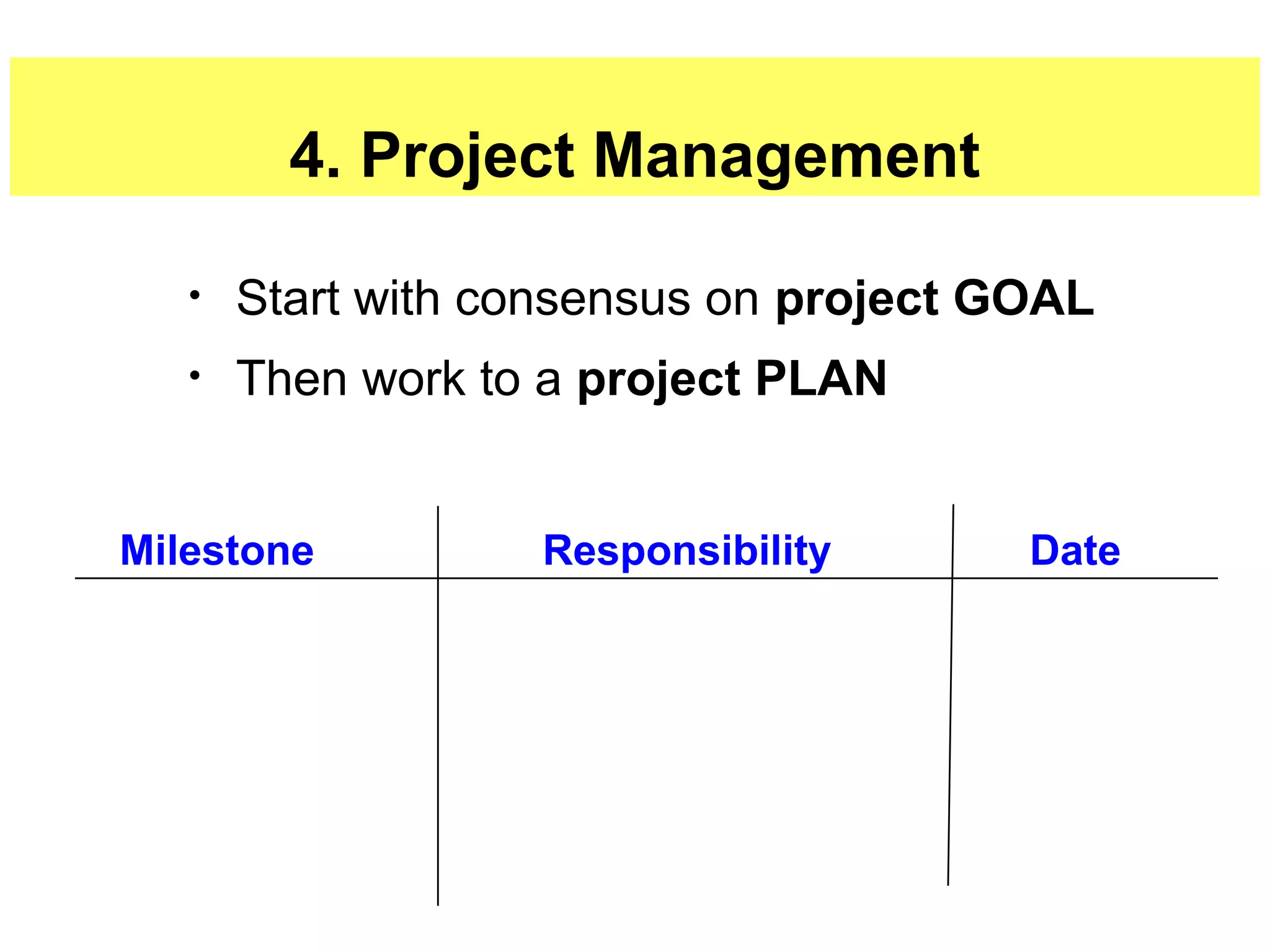
4. Project Management
• Start with consensus on project GOAL
• Then work to a project PLAN
Milestone Responsibility Date
23
5. Conflict
• People typically fear and avoid conflict
• Most people believe conflict does not belong
in the workplace
However, dynamic organizations use
conflict as a CREATIVE FORCE.
24
TEAMWORK INDIVIDUAL
WORK
o Agree on goals / milestones
o Establish tasks to be completed
o Communicate / monitor progress
o Solve problems
o Interpret results
o Agree completion of project
o Work on tasks
o Work on new / revised tasks
25
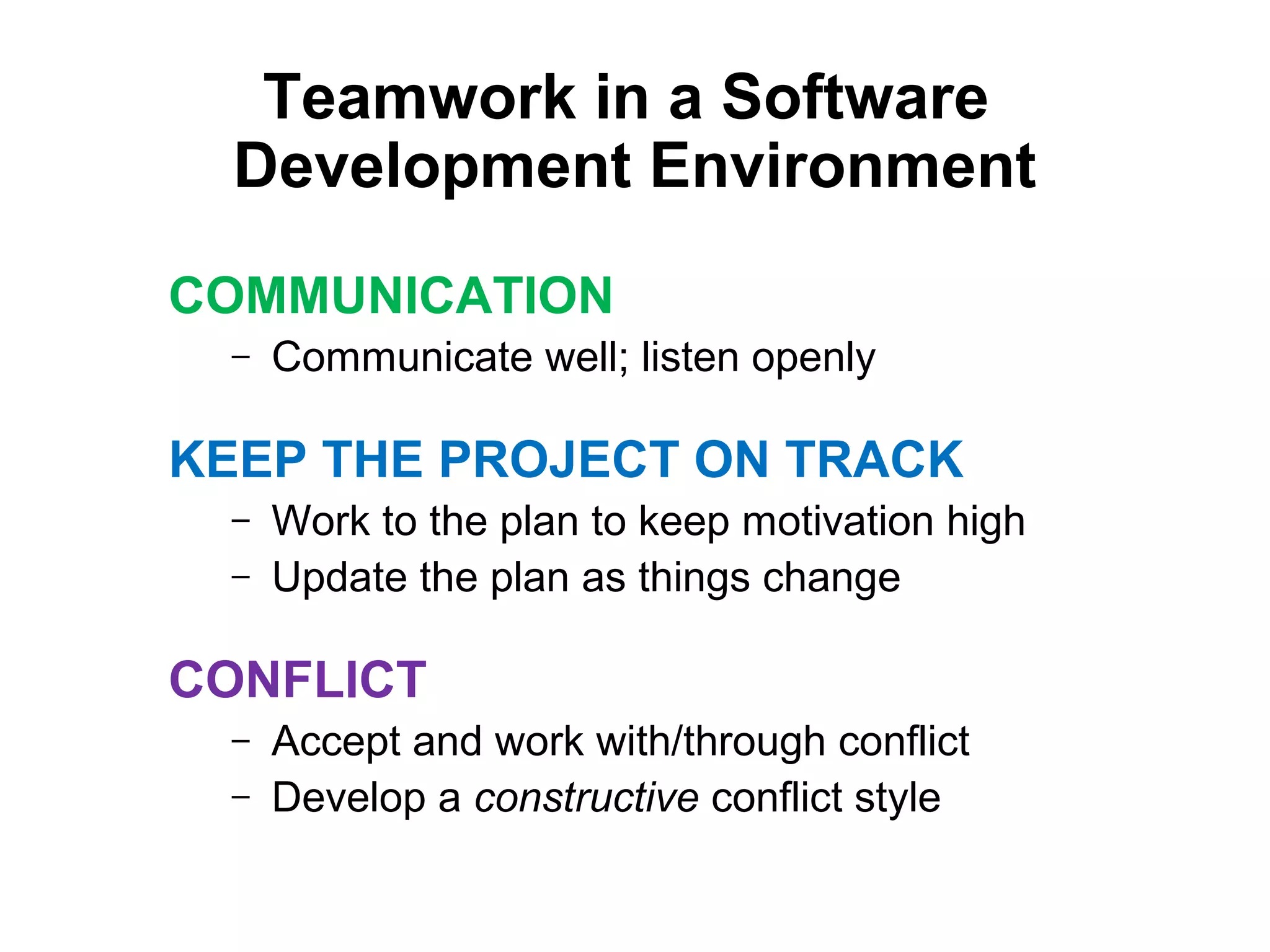
Teamwork in a Software
Development Environment
COMMUNICATION
– Communicate well; listen openly
KEEP THE PROJECT ON TRACK
– Work to the plan to keep motivation high
– Update the plan as things change
CONFLICT
– Accept and work with/through conflict
– Develop a constructive conflict style

teamworkpresentation2012-121106143622-phpapp02.pdf

  • 1.
    TEAMWORK Project 447 CT231 &CT216 Catherine Cronin 6th November 2012 CC BY-NC-SA 2.0 cindy47452
  • 2.
  • 3.
  • 4.
    4 What is aTEAM? a group of people working together to achieve a common goal
  • 5.
  • 6.
    6 What is TEAMWORK? theability to cooperate and communicate effectively with others to achieve a common goal
  • 7.
  • 8.
  • 9.
    9 TEAMWORK INDIVIDUAL WORK o Agreeon goals / milestones o Establish tasks to be completed o Communicate / monitor progress o Solve problems o Interpret results o Agree completion of project o Work on tasks o Work on new / revised tasks
  • 10.
    10 Stages of TeamDevelopment Forming (assemble team; deal with ambiguity) Source: Bruce Tuckman (1965) Small Group Development Storming (deal with criticism; develop ideas) Norming (procedures, cohesion) Performing (cooperation) [Adjourning]
  • 11.
    11 Maturity Continuum DEPENDENCE INDEPENDENCE INTERDEPENDENCE Source: StephenR. Covey (1989) The 7 Habits of Highly Effective People
  • 12.
    12 4 paradigms ofhuman interaction Courage Consideration Lose / Win Win / Win Lose / Lose Win / Lose
  • 13.
    13 Win/Win If Win/Win issuch an ideal, why don’t we do it all the time? What gets in the way?
  • 14.
    14 Key Teamwork SKILLS 1.INTERPERSONAL • Trust / acceptance • Communication • Collaborative problem-solving • Conflict resolution 2. SELF / PROJECT MANAGEMENT • Goal setting • Planning • Task co-ordination • Performance management Source: Slyke, Trimmer, Kittner (2004) Teaching Teamwork in IS Courses
  • 15.
    15 A few TEAMWORKguidelines… 1. Effective communication 2. Team Working Agreement 3. Effective meetings 4. Project management 5. Conflict management
  • 16.
    16 1. Effective communication Communicate openly & supportively  Listen openly  Interpret nonverbal messages  Give useful feedback  Receive feedback effectively
  • 17.
    17 2. Team WorkingAgreement What is it? • Expectations each team has for its members • Designed specifically for your team • Effectively a contract which all team members sign up to… each team member is expected to abide by that contract
  • 18.
    18 Team Working Agreement Keypoints: • Tailor to meet the specific needs of your team members • Each team member needs to input • The agreement is a chance for all members to voice their opinions • All members will be accountable for statements in the agreement
  • 19.
    19 Team Working Agreement: Issuesto consider • effective communication method(s) • participation by all members • decision-making • problem-solving approaches • management of conflict / differences • responsibilities & conduct
  • 20.
    20 SAMPLE: Boeing Code ofCooperation for Teams • EVERY member is responsible for the team’s progress and success • Attend all team meetings; be on time • Listen to & show respect for view of members • Criticize ideas, not persons • Use & expect constructive feedback • Resolve conflicts constructively • Always strive for win-win situations • Avoid destructive behaviour • Ask questions when you do not understand Source: http://aircraftdesign.nuaa.edu.cn/PD-2006/PDF/P1-requirement%20and%20schedule.pdf
  • 21.
    21 3. Meeting Guidelines(sample)  Project meetings will be held every .  Meetings will be called by .  Meetings will begin and end on time.  Decisions will be made by consensus/ majority rule/anarchy.  Role of scribe will rotate.  Minutes will be issued by e-mail within 24 hours of each meeting.  Exceptions allowable/not allowable.
  • 22.
    22 4. Project Management •Start with consensus on project GOAL • Then work to a project PLAN Milestone Responsibility Date
  • 23.
    23 5. Conflict • Peopletypically fear and avoid conflict • Most people believe conflict does not belong in the workplace However, dynamic organizations use conflict as a CREATIVE FORCE.
  • 24.
    24 TEAMWORK INDIVIDUAL WORK o Agreeon goals / milestones o Establish tasks to be completed o Communicate / monitor progress o Solve problems o Interpret results o Agree completion of project o Work on tasks o Work on new / revised tasks
  • 25.
    25 Teamwork in aSoftware Development Environment COMMUNICATION – Communicate well; listen openly KEEP THE PROJECT ON TRACK – Work to the plan to keep motivation high – Update the plan as things change CONFLICT – Accept and work with/through conflict – Develop a constructive conflict style