Theorist research – Fredric Jameson 
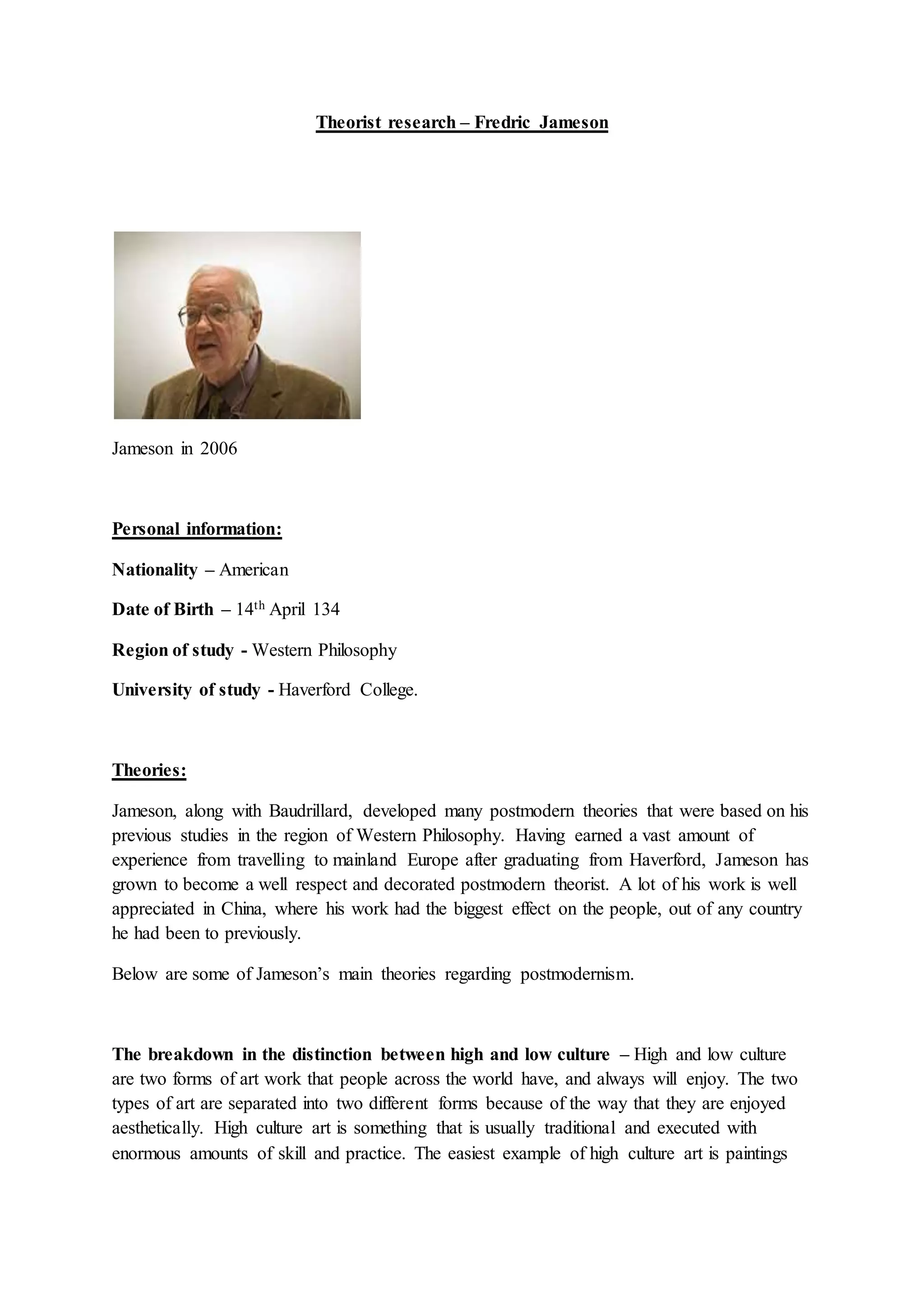
Jameson in 2006 
Personal information: 
Nationality – American 
Date of Birth – 14th April 134 
Region of study - Western Philosophy 
University of study - Haverford College. 
Theories: 
Jameson, along with Baudrillard, developed many postmodern theories that were based on his 
previous studies in the region of Western Philosophy. Having earned a vast amount of 
experience from travelling to mainland Europe after graduating from Haverford, Jameson has 
grown to become a well respect and decorated postmodern theorist. A lot of his work is well 
appreciated in China, where his work had the biggest effect on the people, out of any country 
he had been to previously. 
Below are some of Jameson’s main theories regarding postmodernism. 
The breakdown in the distinction between high and low culture – High and low culture 
are two forms of art work that people across the world have, and always will enjoy. The two 
types of art are separated into two different forms because of the way that they are enjoyed 
aesthetically. High culture art is something that is usually traditional and executed with 
enormous amounts of skill and practice. The easiest example of high culture art is paintings
that we can view in galleries across the world. Traditional paintings, ancient architecture and 
literature are all examples of high art. 
Low culture is the binary opposite of high culture. As already mentioned, high culture is 
traditional, priceless and almost irreplaceable. Low culture art is usually something that is 
sold to people on a mass basis, such as TV adverts, series and films. The standard definition 
of Low culture is; “A derogatory term for some forms of popular culture that have mass 
appeal”. The mass appeal of low culture is probably the reason as to why it is regarded as 
low instead of high. Because of mass appeal, it can almost be said that it is created without 
any real meaning, other than to please consumers. 
Jameson believed that there is now no real distinction between the two types of art. Both high 
and low culture is shown together in various media texts. An example of this distinction 
breaking down is through Pastiche. If a piece of high culture art is copied or imitated through 
Pastiche, then it may lose all of its aesthetic merits. This sees relegation from high to low and 
is commonly used throughout modern media. 
Examples of where this has occurred include music videos and film – a lot of modern day 
media revolves around copying or imitating, because of the lack of original ideas in the 
world. 
Postmodern architecture: 
Despite leaning slightly away from the stereotypical postmodern factors of music and film, 
Jameson theoretically described something that is now known as postmodern architecture. 
This idea is both applicable and metaphorical, but supports the idea of postmodern regardless. 
Jameson defines postmodern architecture as something that has been put in place without any 
real reason or focus. 
Quotes: 
“The standardization of world culture, with local popular or traditional forms driven 
out or dumbed down to make way for American television, American music, food, 
clothes and films, has been seen by many as the very heart of globalization.” 
“It is s afe st to gras p the concept of the postmodern as an attempt to think the pre sent 
historically in an age that has forgotten how to think historically in the first place. ”
Criticisms of Jameson: 
Jameson has been criticized by a few others. 
Oskar Lafotine said: “If you try to figure out what the people called Modernists today understand the 
term modernity.

Theorist research fredric jameson

  • 1.
    Theorist research –Fredric Jameson Jameson in 2006 Personal information: Nationality – American Date of Birth – 14th April 134 Region of study - Western Philosophy University of study - Haverford College. Theories: Jameson, along with Baudrillard, developed many postmodern theories that were based on his previous studies in the region of Western Philosophy. Having earned a vast amount of experience from travelling to mainland Europe after graduating from Haverford, Jameson has grown to become a well respect and decorated postmodern theorist. A lot of his work is well appreciated in China, where his work had the biggest effect on the people, out of any country he had been to previously. Below are some of Jameson’s main theories regarding postmodernism. The breakdown in the distinction between high and low culture – High and low culture are two forms of art work that people across the world have, and always will enjoy. The two types of art are separated into two different forms because of the way that they are enjoyed aesthetically. High culture art is something that is usually traditional and executed with enormous amounts of skill and practice. The easiest example of high culture art is paintings
  • 2.
    that we canview in galleries across the world. Traditional paintings, ancient architecture and literature are all examples of high art. Low culture is the binary opposite of high culture. As already mentioned, high culture is traditional, priceless and almost irreplaceable. Low culture art is usually something that is sold to people on a mass basis, such as TV adverts, series and films. The standard definition of Low culture is; “A derogatory term for some forms of popular culture that have mass appeal”. The mass appeal of low culture is probably the reason as to why it is regarded as low instead of high. Because of mass appeal, it can almost be said that it is created without any real meaning, other than to please consumers. Jameson believed that there is now no real distinction between the two types of art. Both high and low culture is shown together in various media texts. An example of this distinction breaking down is through Pastiche. If a piece of high culture art is copied or imitated through Pastiche, then it may lose all of its aesthetic merits. This sees relegation from high to low and is commonly used throughout modern media. Examples of where this has occurred include music videos and film – a lot of modern day media revolves around copying or imitating, because of the lack of original ideas in the world. Postmodern architecture: Despite leaning slightly away from the stereotypical postmodern factors of music and film, Jameson theoretically described something that is now known as postmodern architecture. This idea is both applicable and metaphorical, but supports the idea of postmodern regardless. Jameson defines postmodern architecture as something that has been put in place without any real reason or focus. Quotes: “The standardization of world culture, with local popular or traditional forms driven out or dumbed down to make way for American television, American music, food, clothes and films, has been seen by many as the very heart of globalization.” “It is s afe st to gras p the concept of the postmodern as an attempt to think the pre sent historically in an age that has forgotten how to think historically in the first place. ”
  • 3.
    Criticisms of Jameson: Jameson has been criticized by a few others. Oskar Lafotine said: “If you try to figure out what the people called Modernists today understand the term modernity.