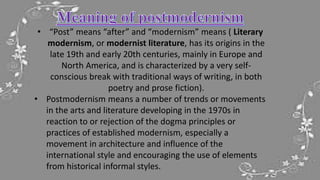
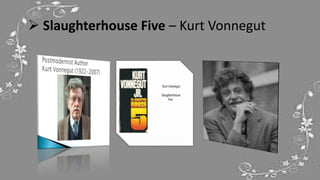
This document defines and discusses post-modernism in literature. It begins by explaining that post-modernism emerged in the 1970s as a rejection of modernism, featuring fragmentation, paradox, unreliable narrators, and unrealistic plots. It then lists some influential post-modern novels like Catch-22 and Slaughterhouse Five that display characteristics like irony, playfulness, and questioning of traditional narratives. Finally, it outlines some key themes and techniques of post-modern fiction, including intertextuality, pastiche, metafiction, and an exploration of subjectivity over external reality.