アノマー効果再訪 CH/ n  (CH/O, CH/X)  水素結合による解釈 高橋 修,山崎勝義(広大) 河野雄次,上田一義(横国大) 末澤裕子(文科省),西尾元宏( CHPI  研)
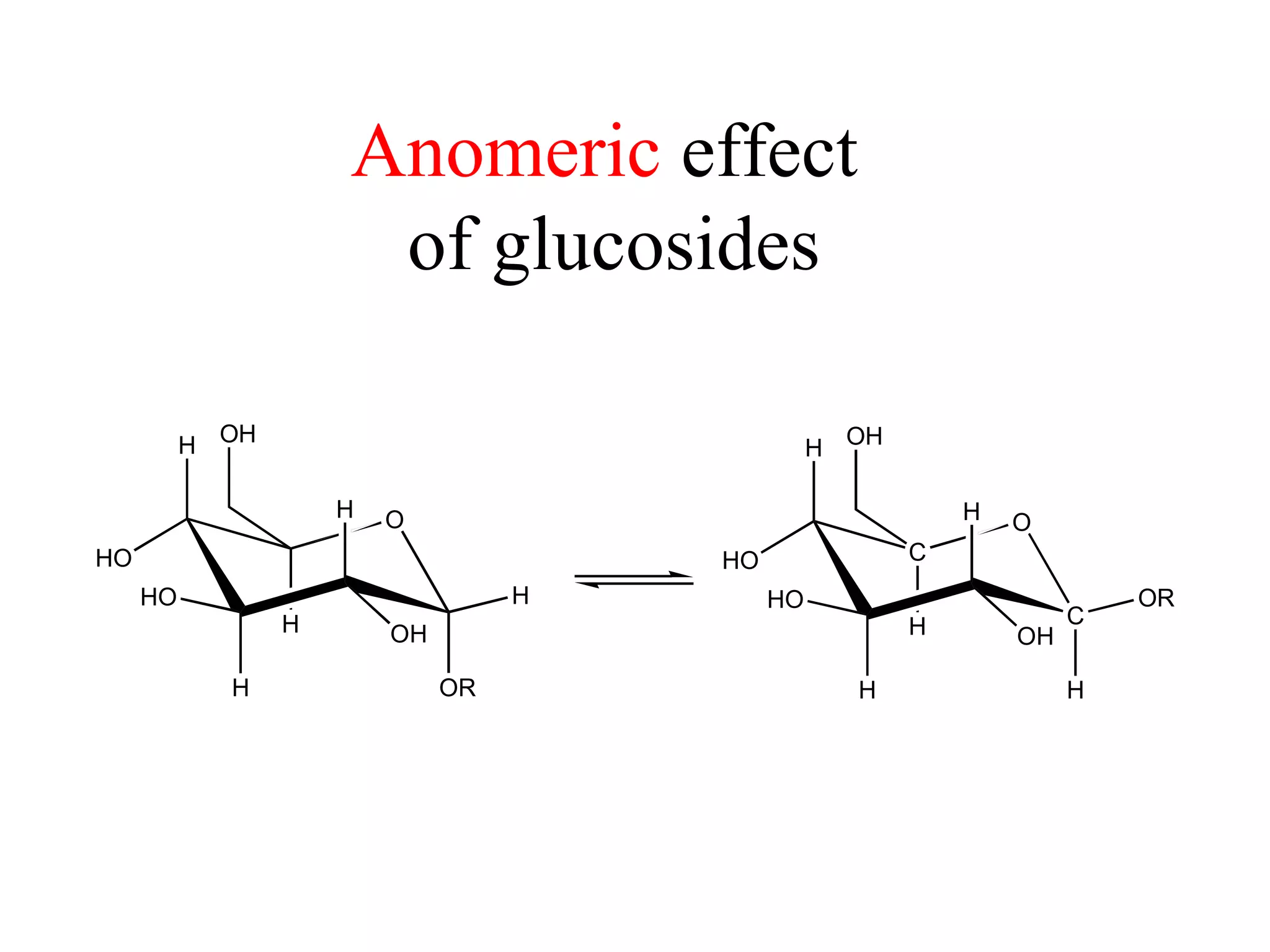
Anomeric  effect  of glucosides
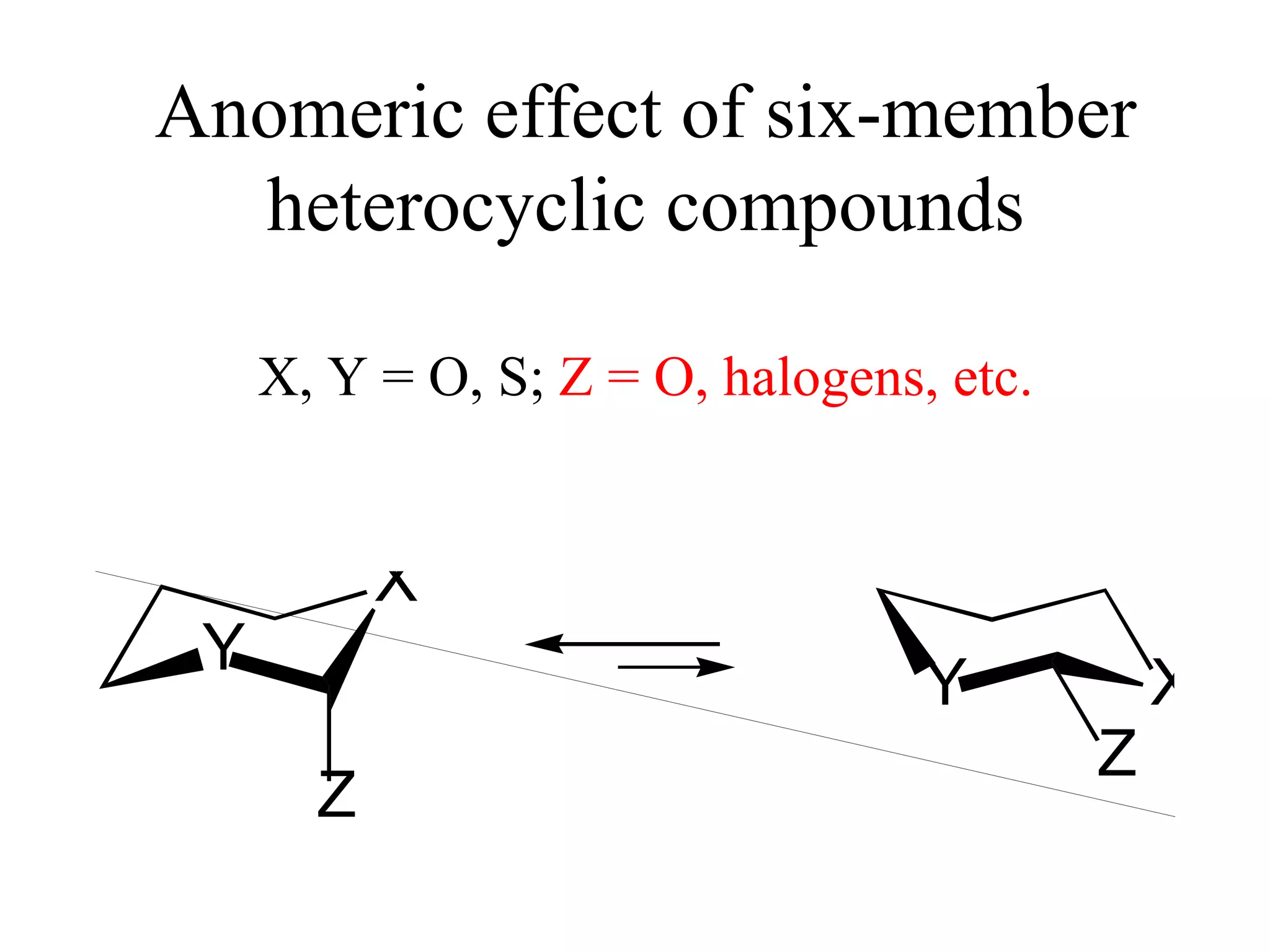
Anomeric effect of six-member heterocyclic compounds X, Y = O, S;  Z = O, halogens, etc.
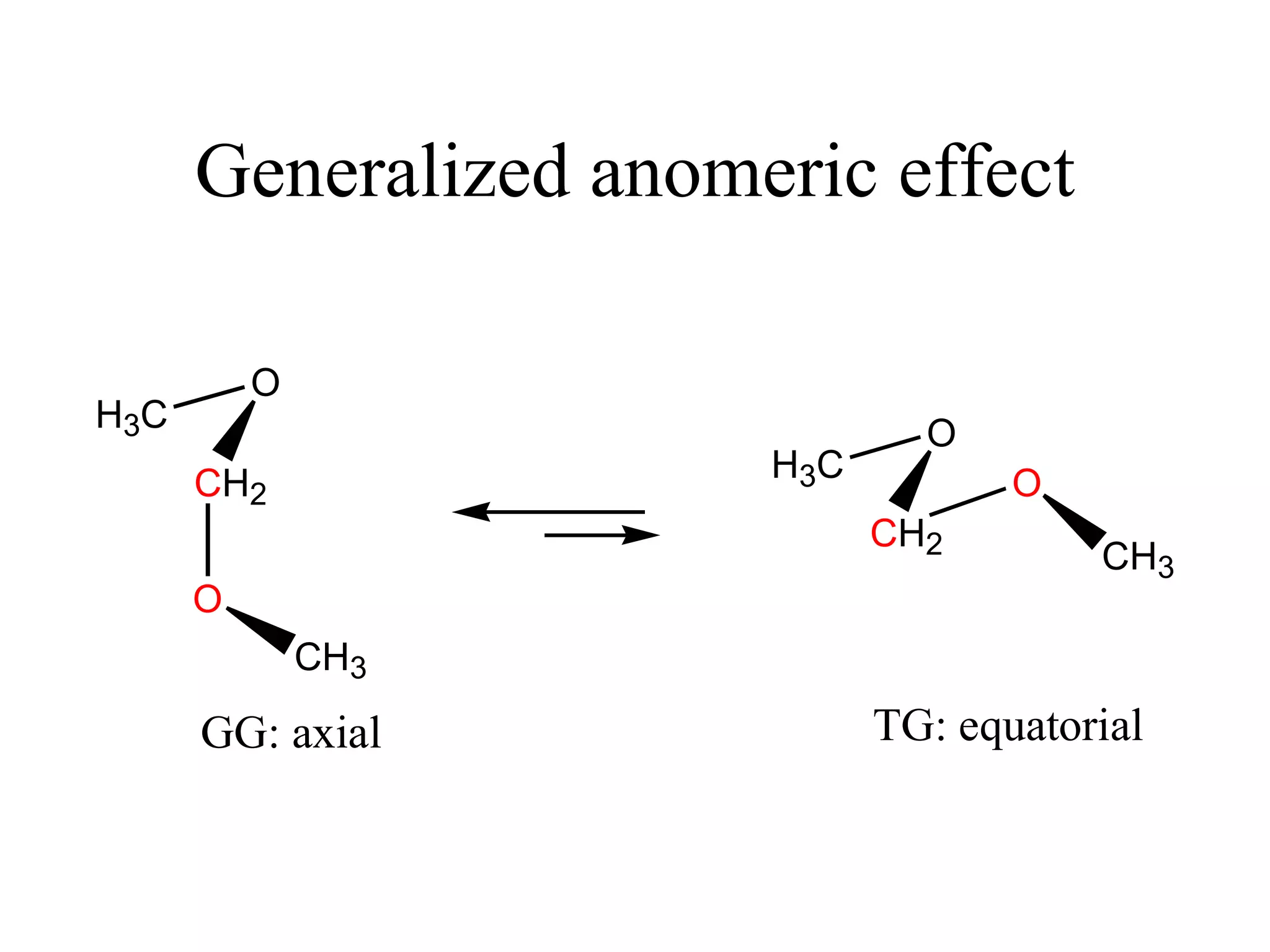
Generalized anomeric effect
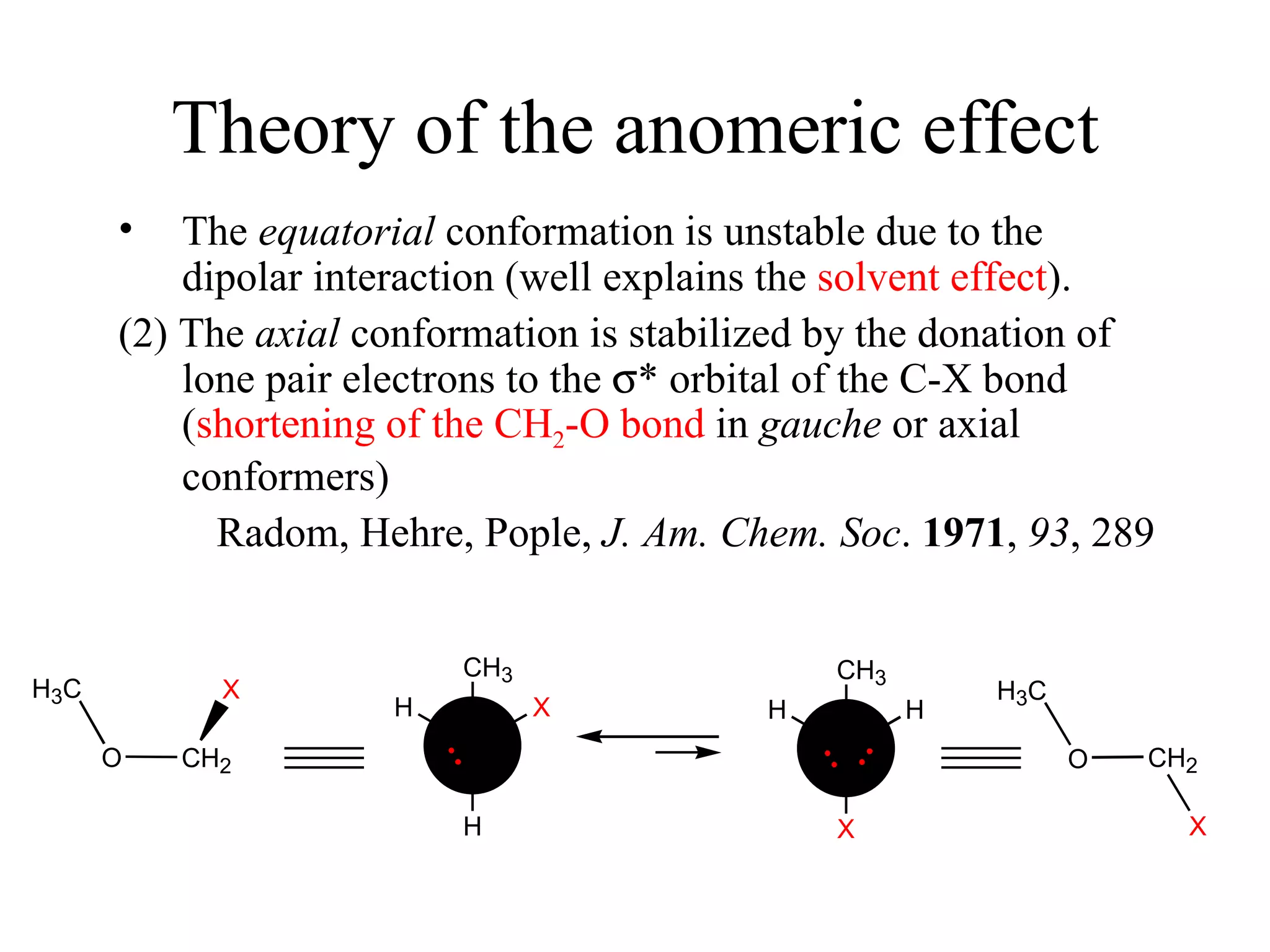
Theory of the anomeric effect The  equatorial  conformation is unstable due to the dipolar interaction (well explains the  solvent effect ). (2) The  axial  conformation is stabilized by the donation of lone pair electrons to the   * orbital of the C-X bond ( shortening of the CH 2 -O bond  in  gauche  or axial conformers)   Radom, Hehre, Pople,  J. Am. Chem. Soc .  1971 ,  93 , 289
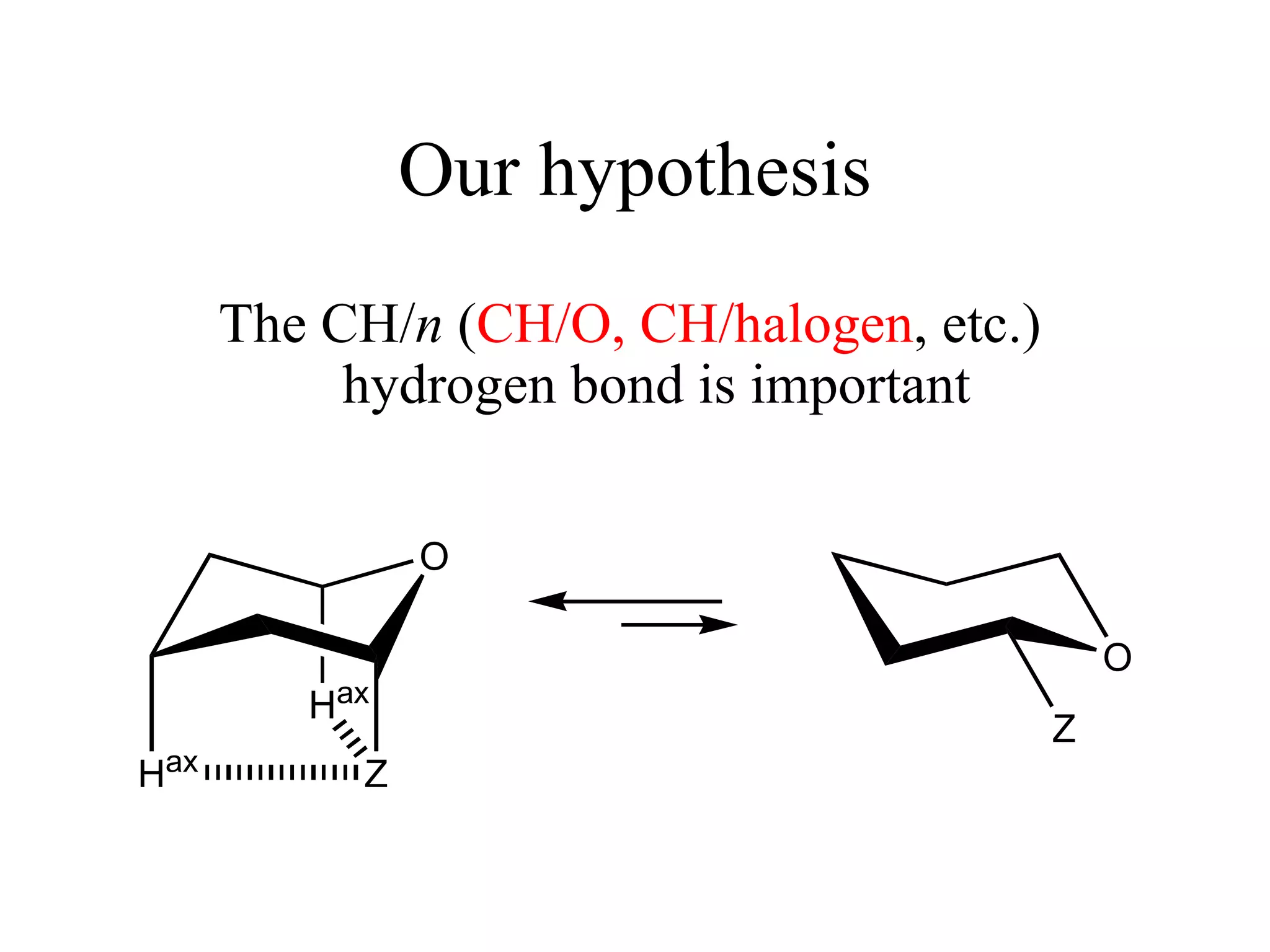
Our hypothesis The CH/ n  ( CH/O, CH/halogen , etc.) hydrogen bond is important
Computational method MP2/6-311++G(d,p)//MP2/6-31G(d) Vibrational frequencies were calculated using the analytical second derivatives at the same level of the geometry optimization for each conformer. Using these results, the thermal energy corrections were added to the total Gibbs energy at 298.15 K and 1 atmosphere of pressure.  NBO: B3LYP/3-21G* by NBO 3.1 program  13 C chemical shifts: B3LYP/6-31G*//B3LYP/6-311++G** relative to TMS
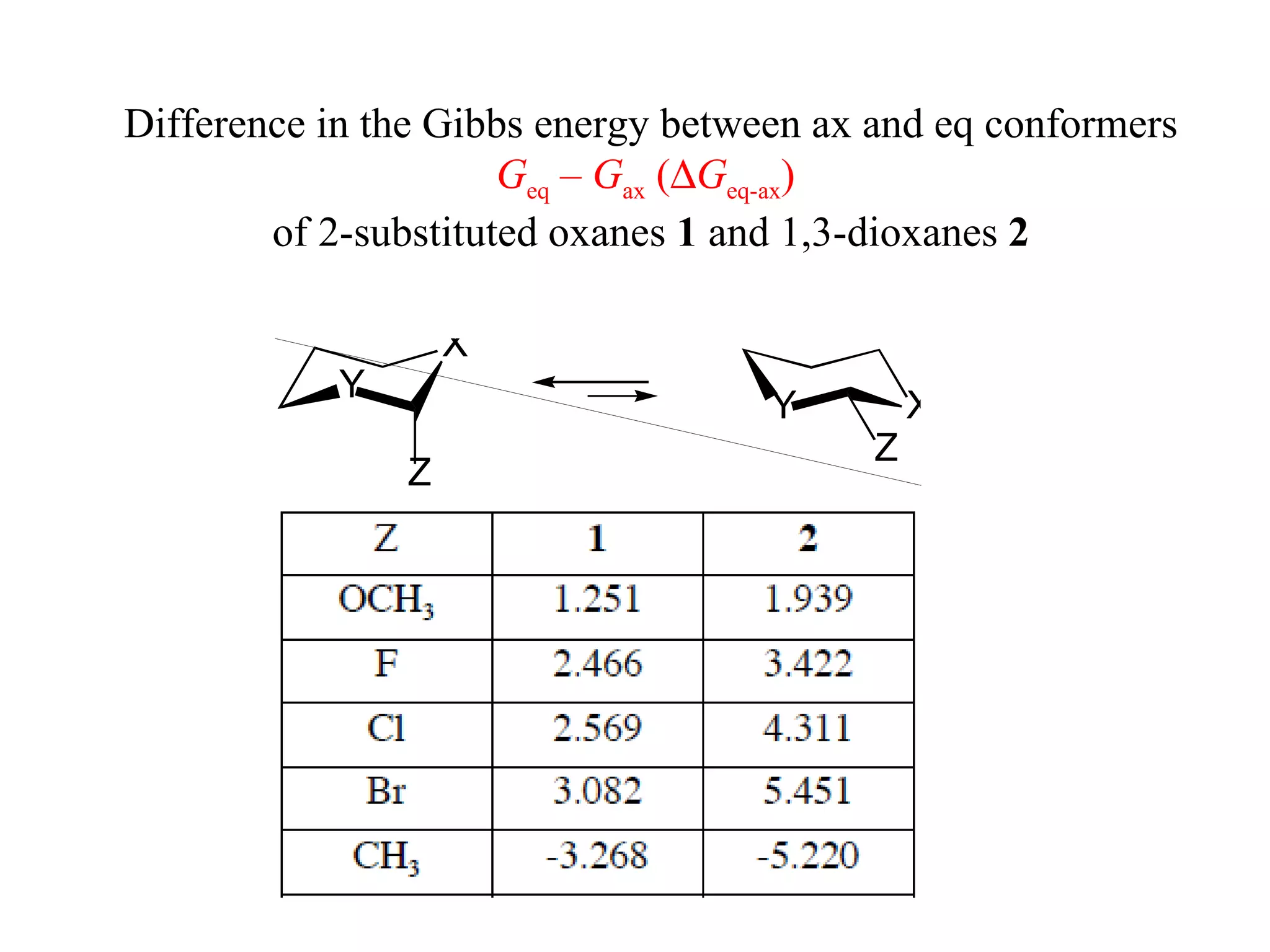
Difference in the Gibbs energy between ax and eq conformers  G eq  –  G ax  (  G eq-ax )   of 2-substituted oxanes  1  and   1,3-dioxanes  2
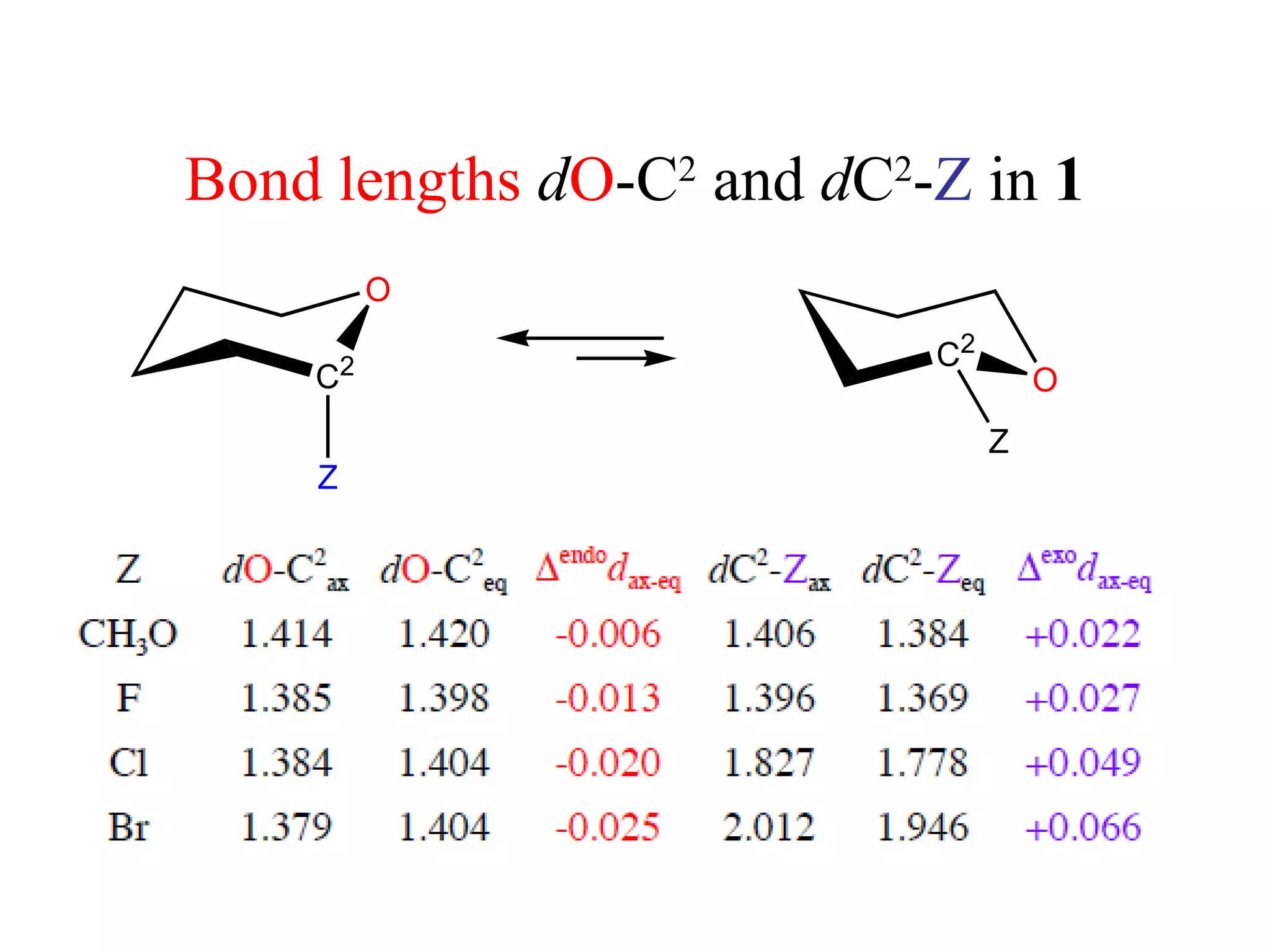
Bond lengths   d O -C 2  and  d C 2 - Z  in  1
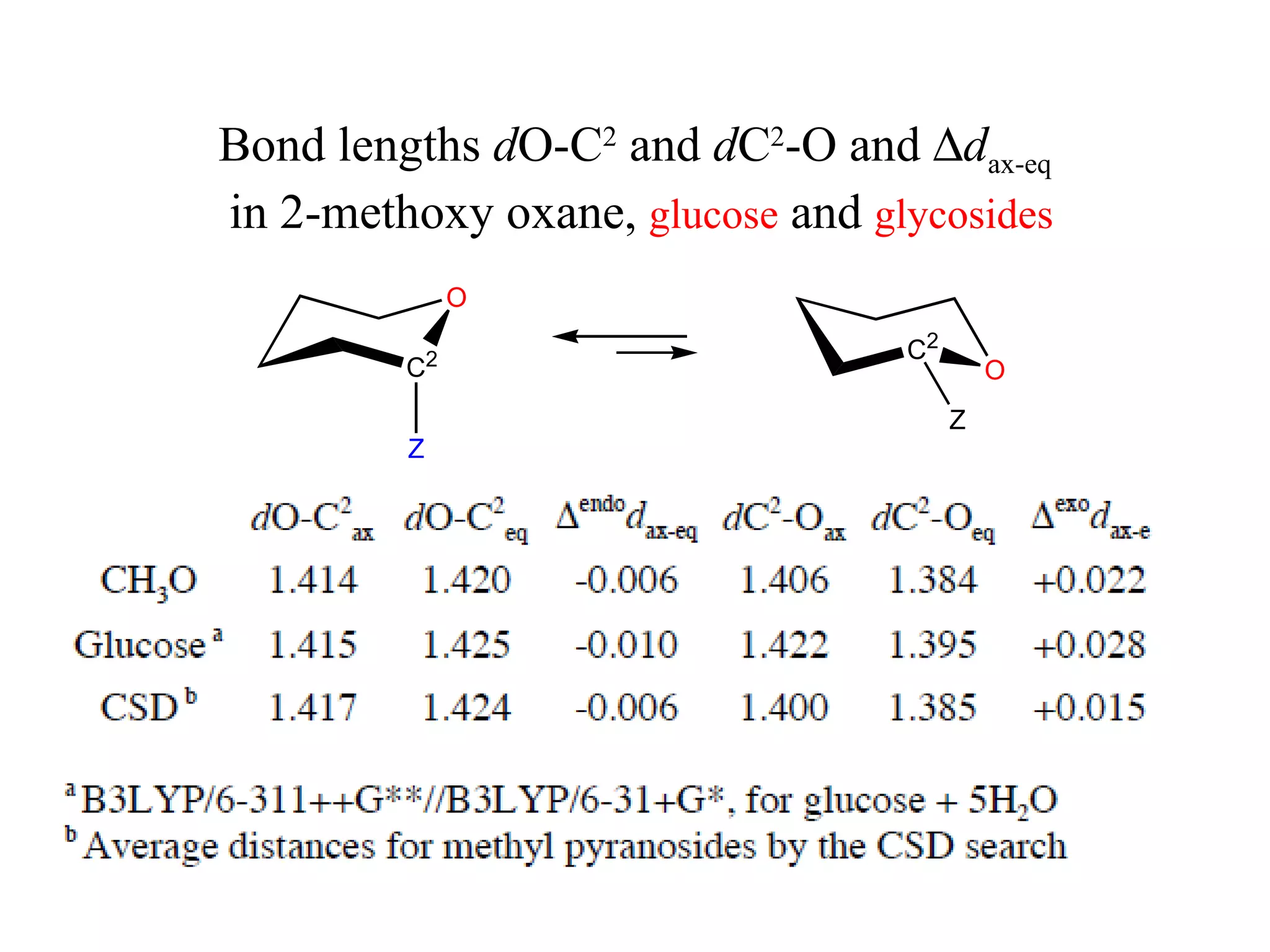
Bond lengths  d O-C 2  and  d C 2 -O and   d ax-eq  in 2-methoxy oxane,  glucose  and  glycosides
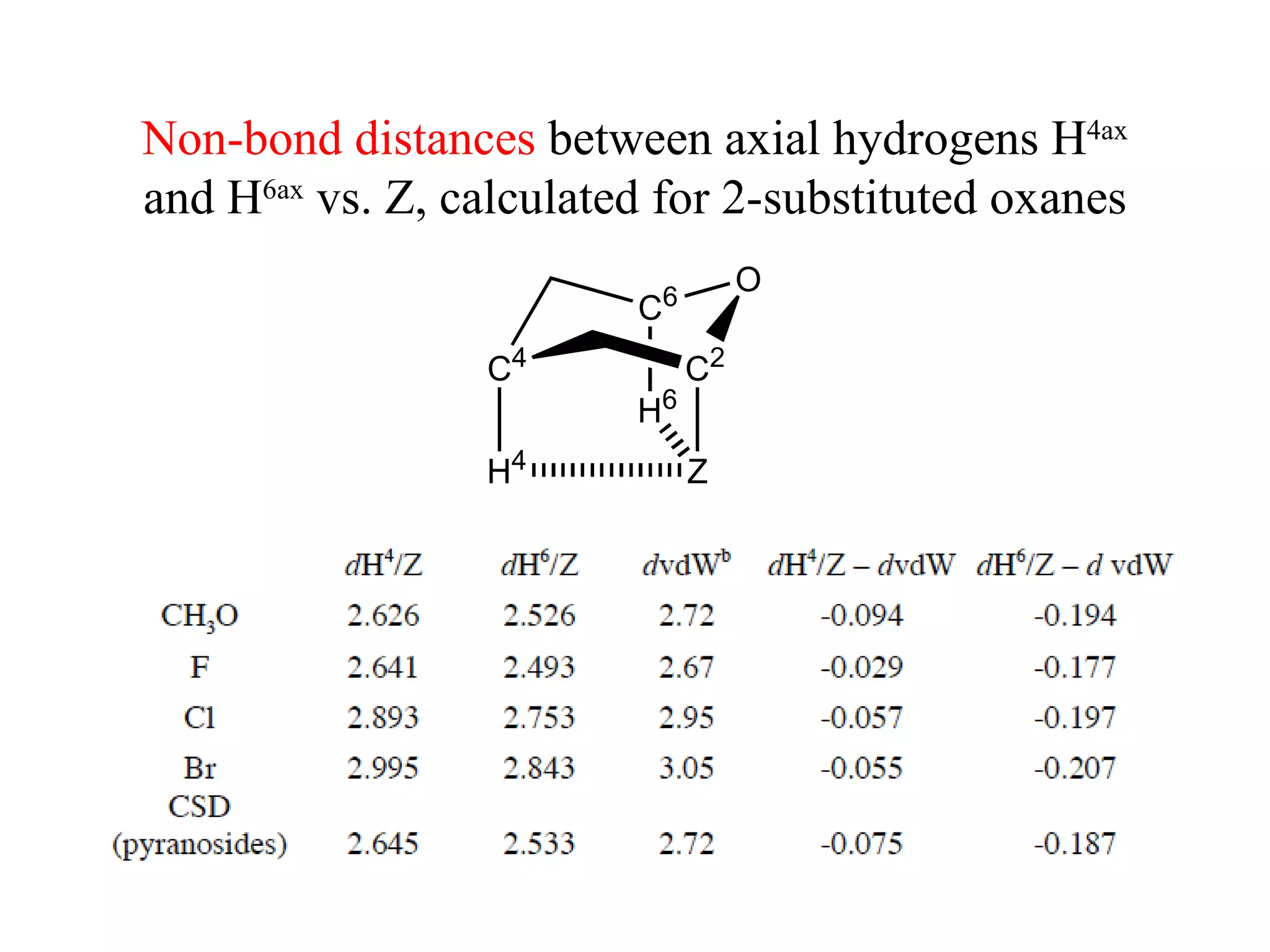
Non-bond distances  between axial hydrogens H 4ax  and H 6ax  vs. Z, calculated for 2-substituted oxanes
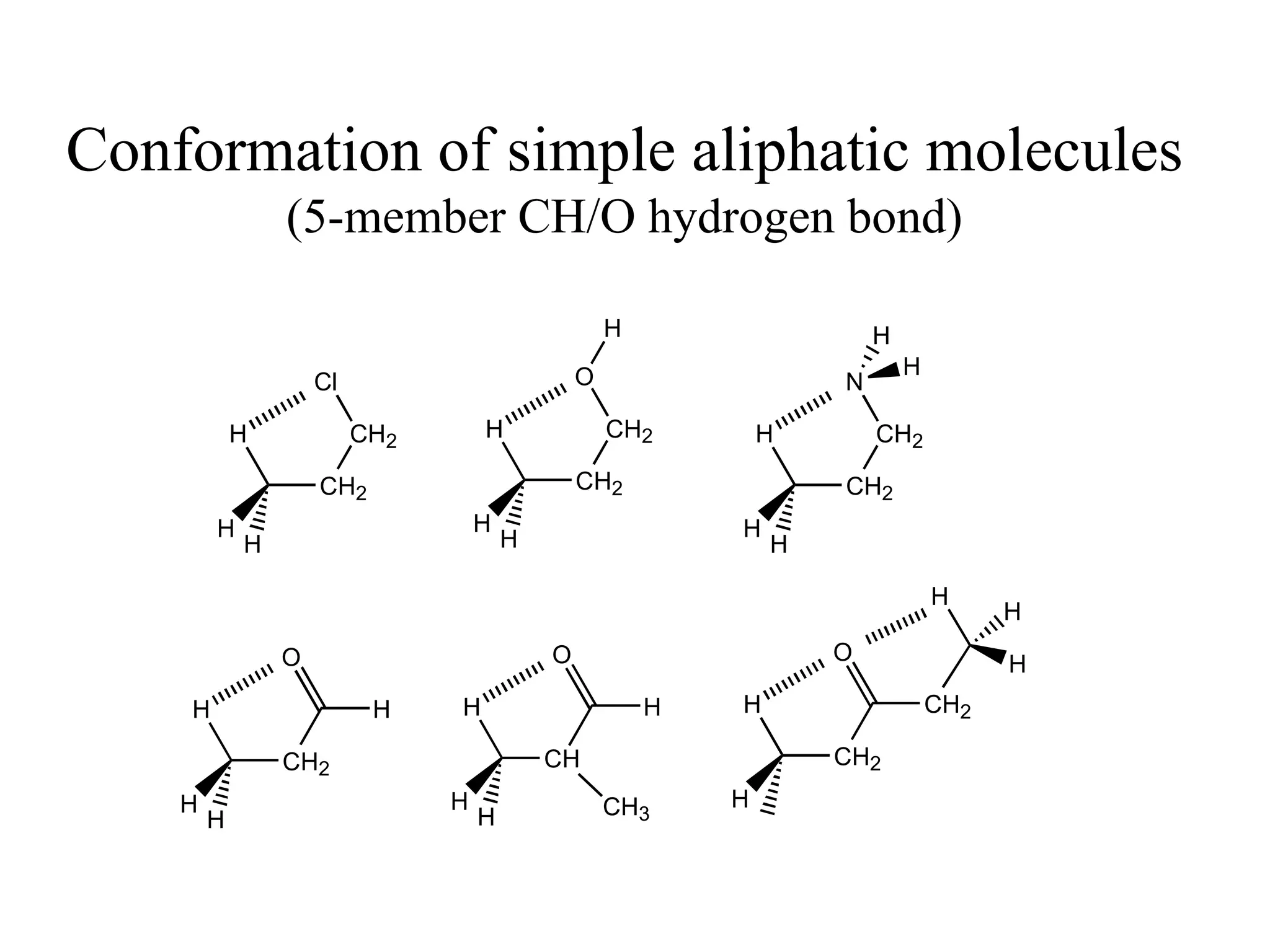
Conformation of simple aliphatic molecules (5-member CH/O hydrogen bond)
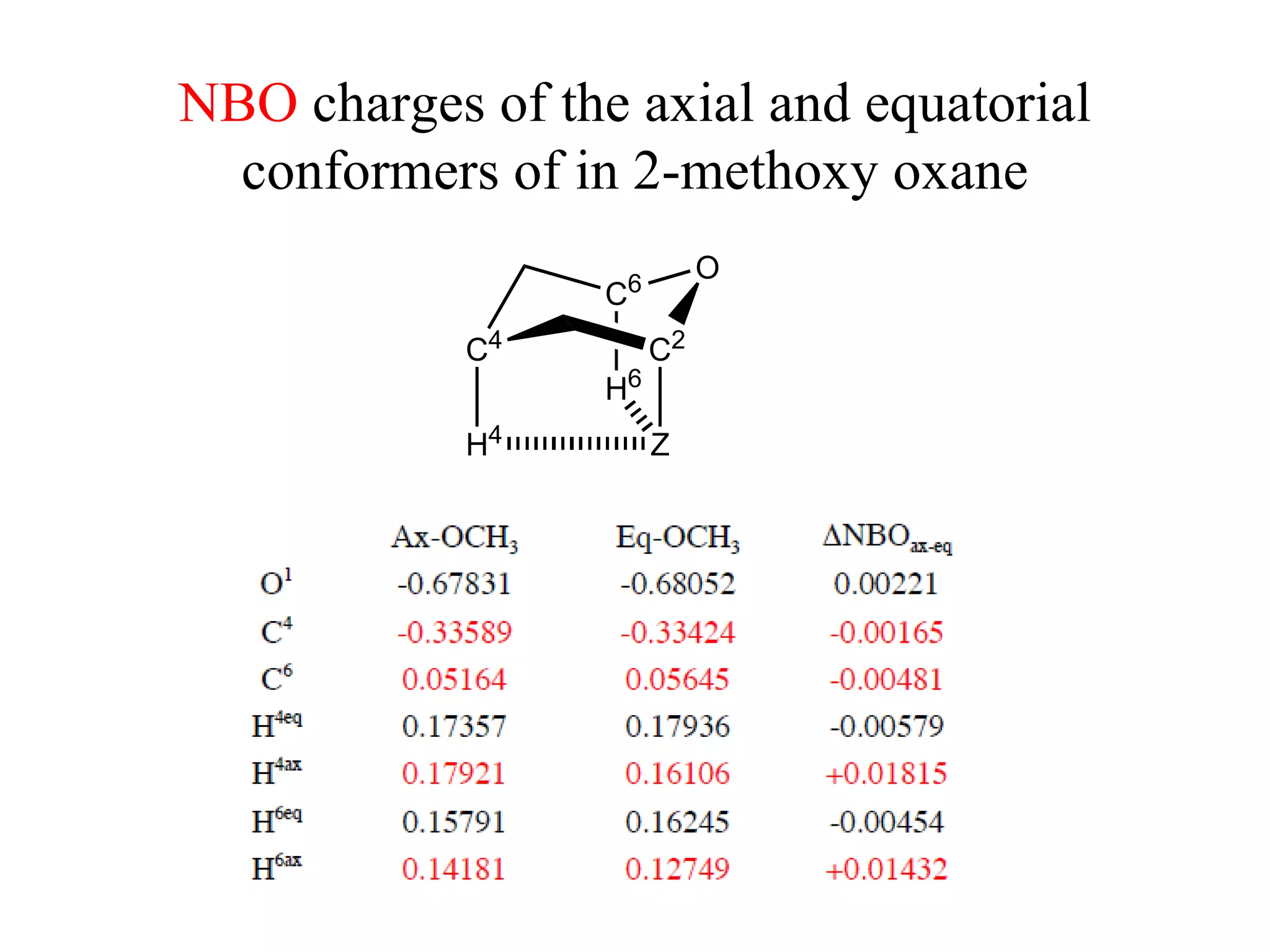
NBO  charges of the axial and equatorial conformers of in 2-methoxy oxane
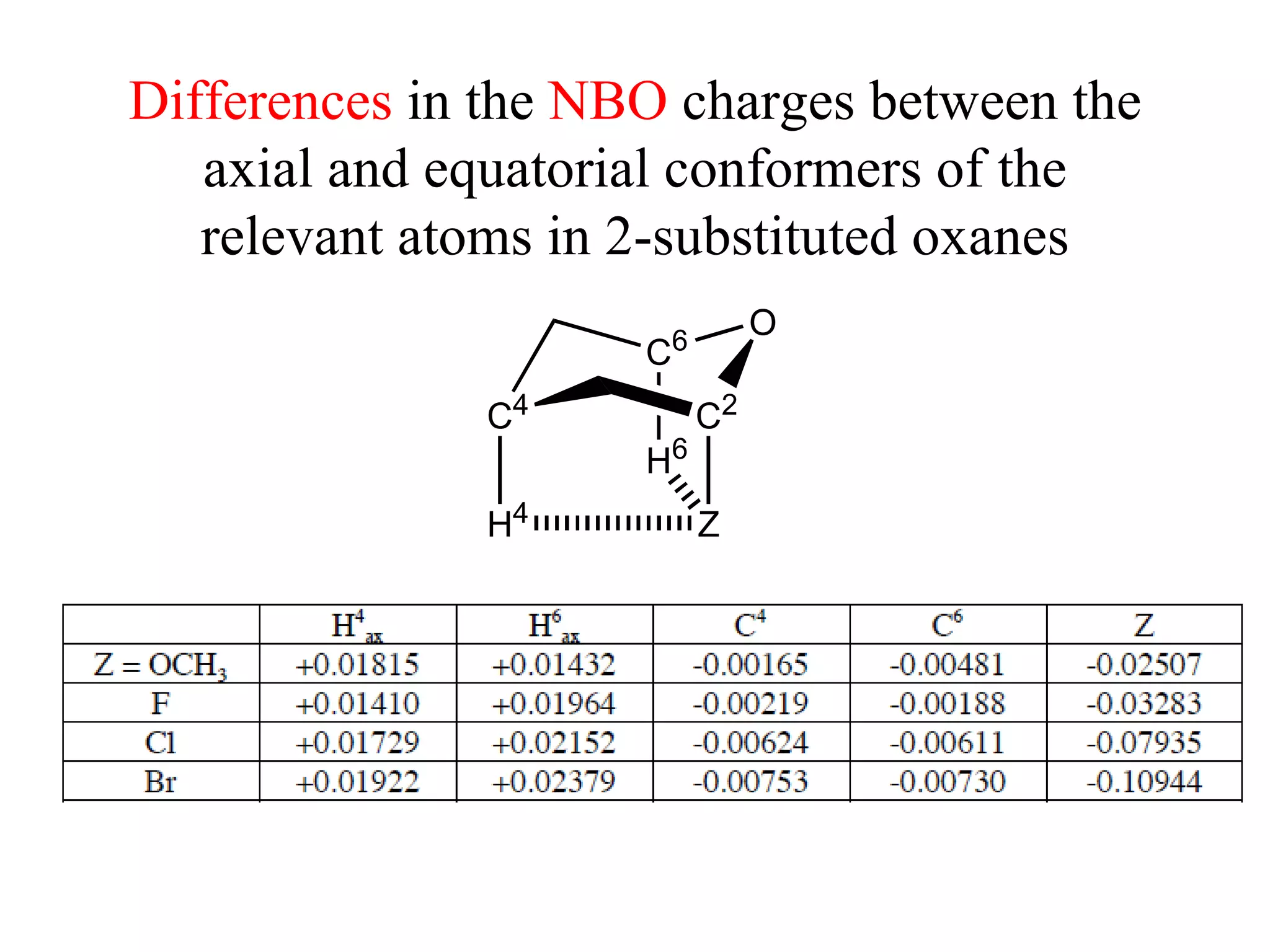
Differences  in the  NBO  charges between the axial and equatorial conformers of the relevant atoms in 2-substituted oxanes
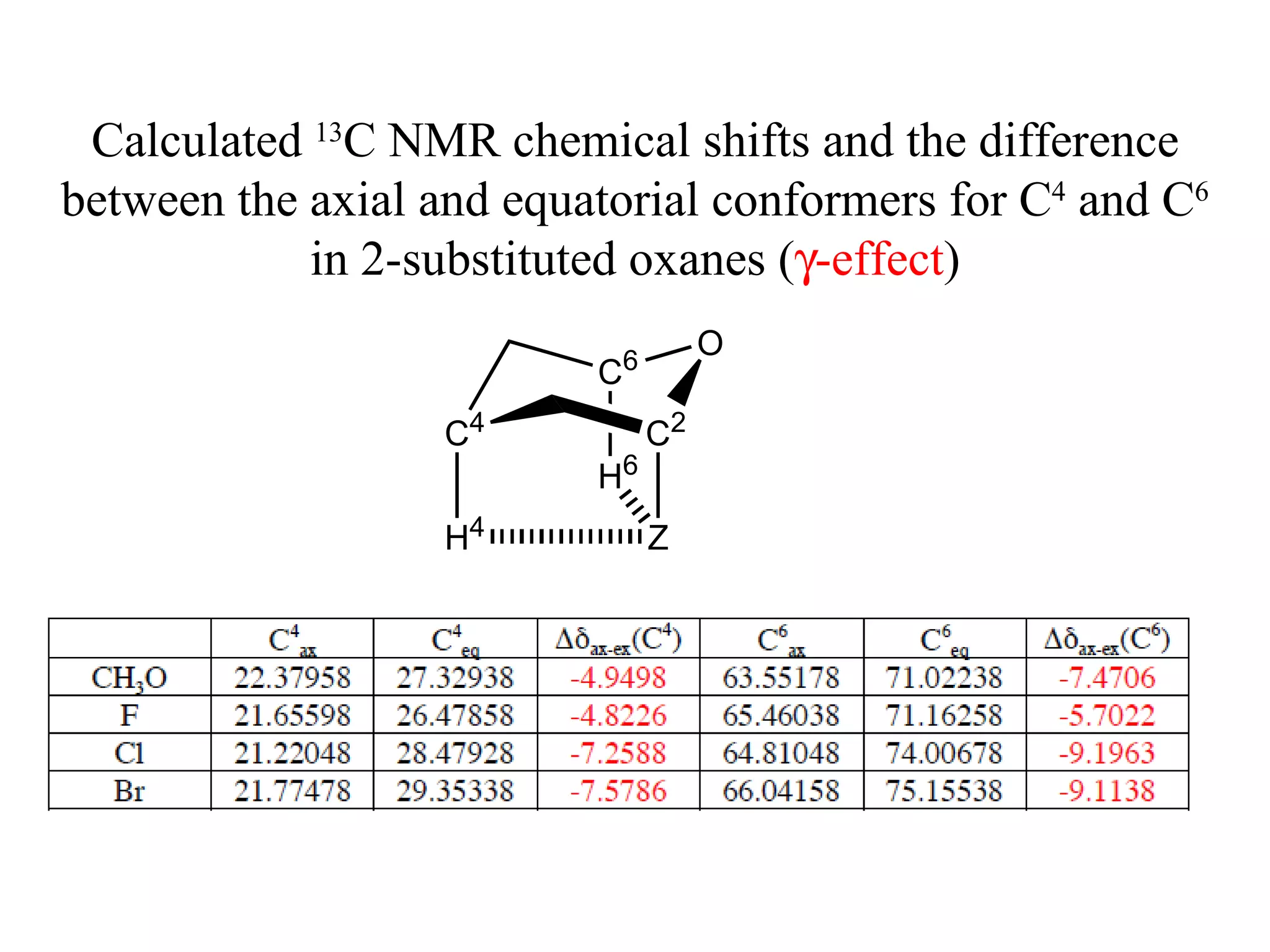
Calculated  13 C NMR chemical shifts and the difference between the axial and equatorial conformers for C 4  and C 6  in 2-substituted oxanes (  -effect )
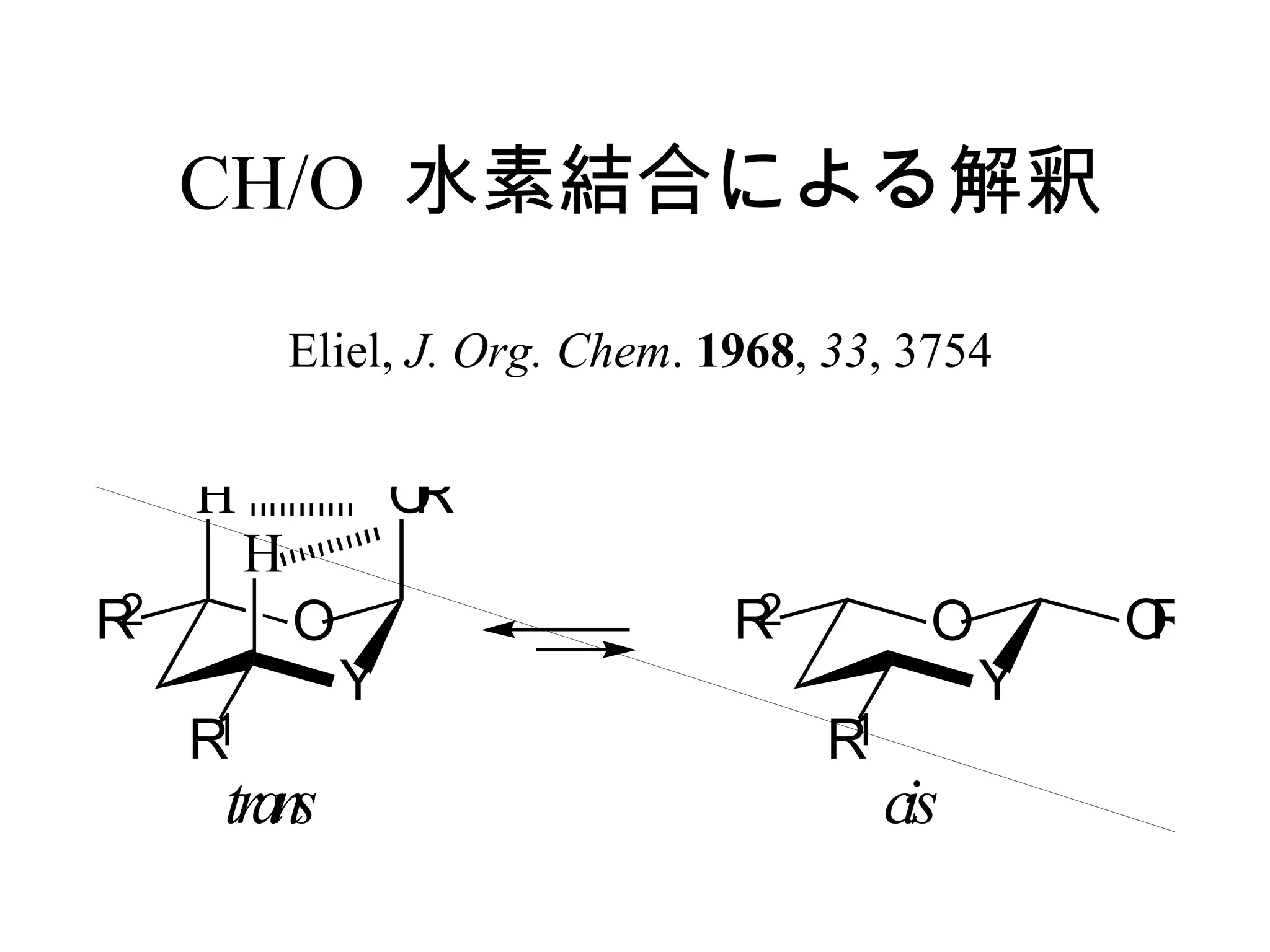
CH/O  水素結合による解釈 Eliel,  J. Org. Chem .  1968 ,  33 , 3754
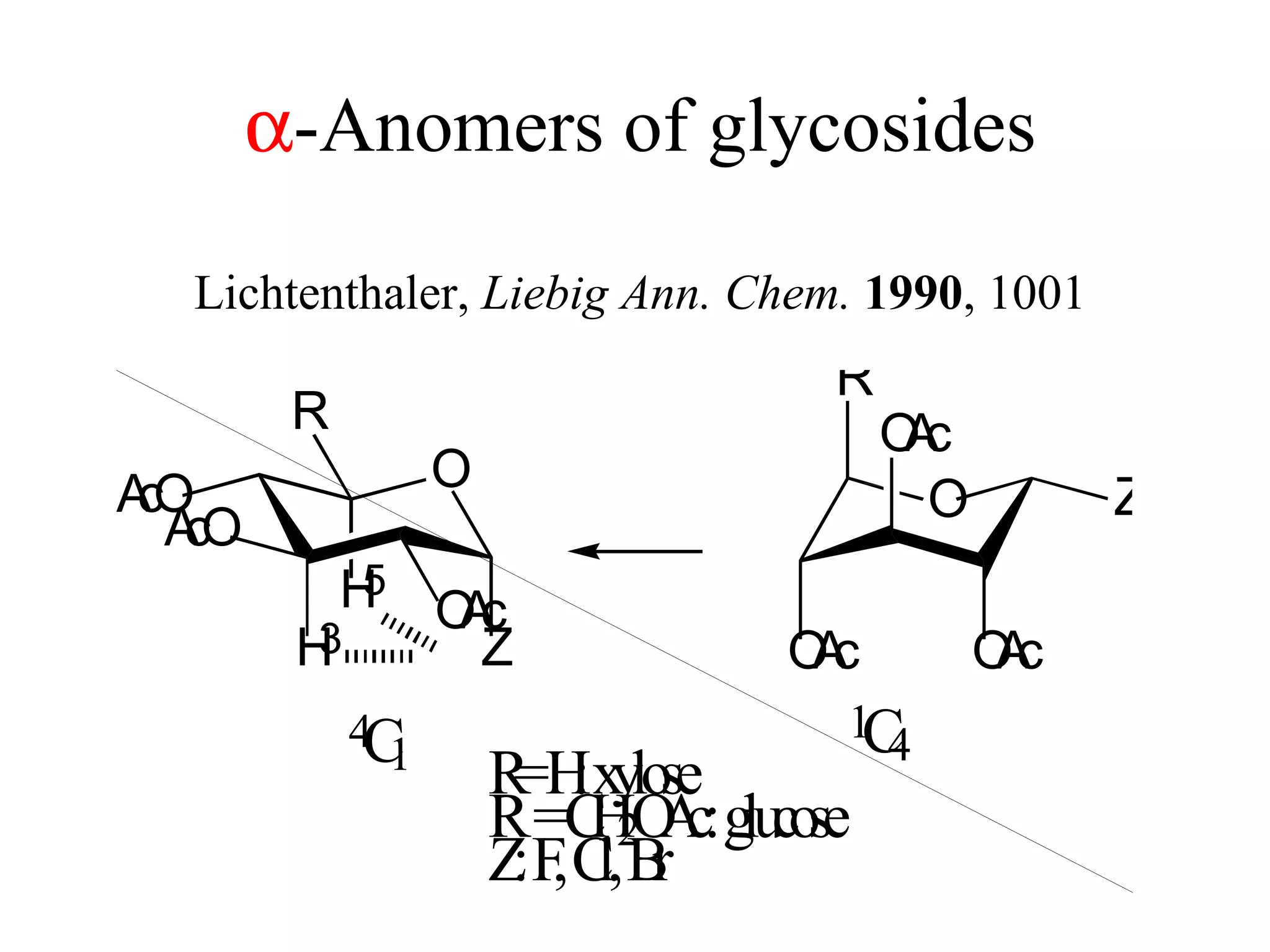
 -Anomers of glycosides Lichtenthaler,  Liebig Ann. Chem.   1990 , 1001
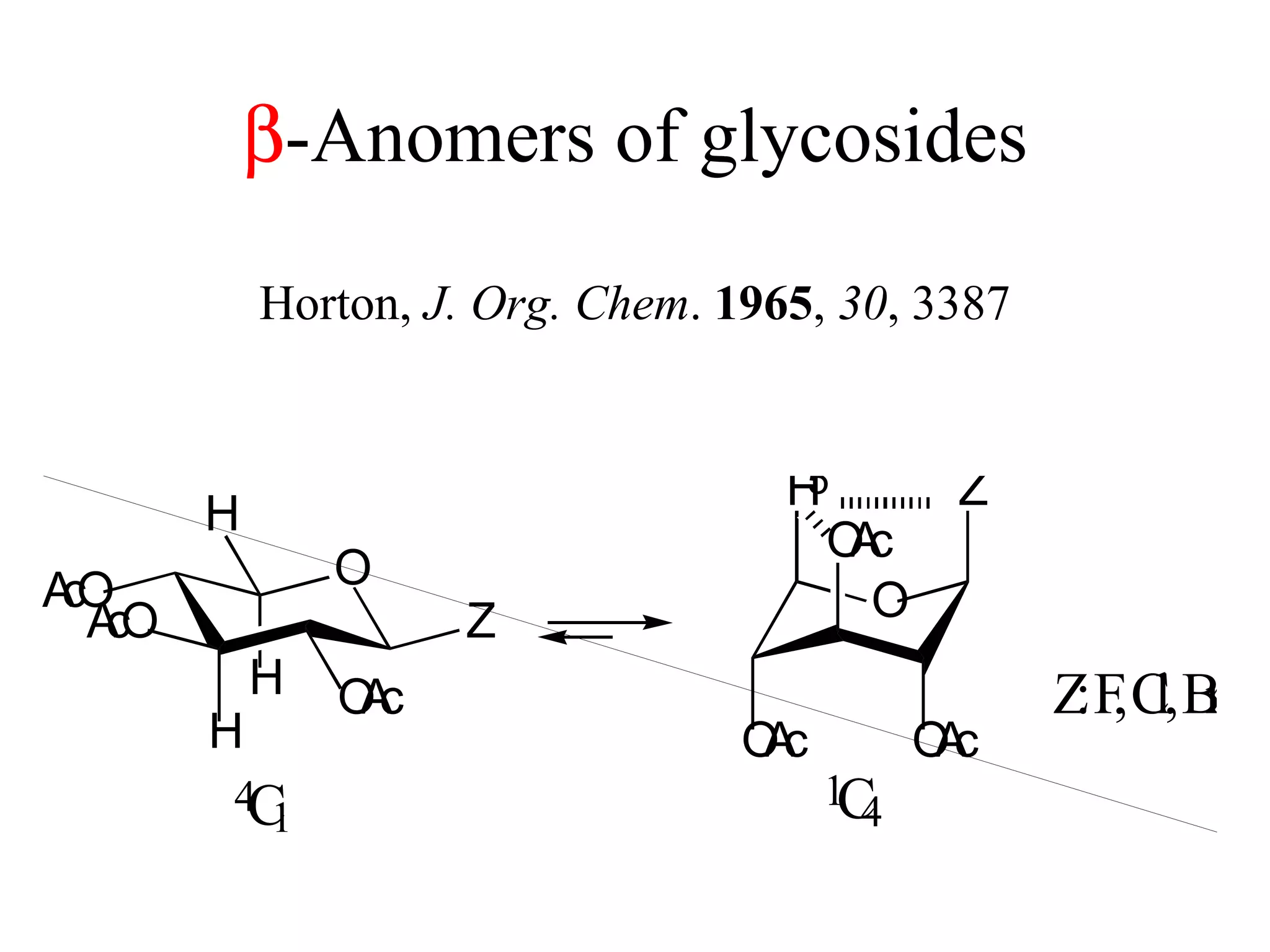
 -Anomers of glycosides Horton,  J. Org. Chem .  1965 ,  30 , 3387
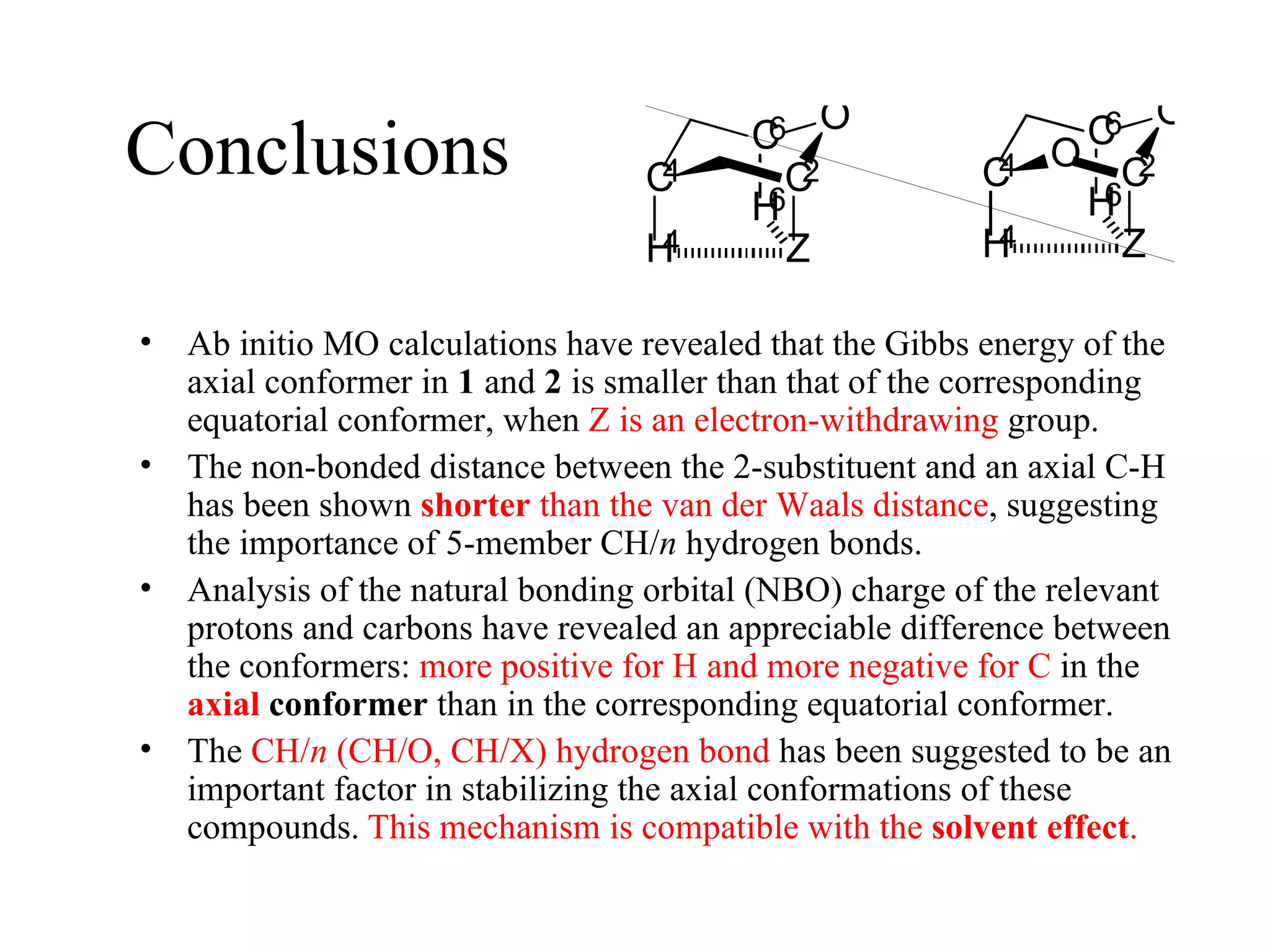
Conclusions Ab initio MO calculations have revealed that the Gibbs energy of the axial conformer in  1  and  2  is smaller than that of the corresponding equatorial conformer, when  Z is an electron-withdrawing  group.  The non-bonded distance between the 2-substituent and an axial C-H has been shown  shorter  than the van der Waals distance , suggesting the importance of 5-member CH/ n  hydrogen bonds.  Analysis of the natural bonding orbital (NBO) charge of the relevant protons and carbons have revealed an appreciable difference between the conformers:  more positive for H and more negative for C  in the  axial  conformer  than in the corresponding equatorial conformer.  The  CH/ n  (CH/O, CH/X) hydrogen bond  has been suggested to be an important factor in stabilizing the axial conformations of these compounds.   This mechanism is compatible with the  solvent effect .

Theoretical study of weak intermolecular and intramolecular interactions

  • 1.
    アノマー効果再訪 CH/ n (CH/O, CH/X) 水素結合による解釈 高橋 修,山崎勝義(広大) 河野雄次,上田一義(横国大) 末澤裕子(文科省),西尾元宏( CHPI 研)
  • 2.
    Anomeric effect of glucosides
  • 3.
    Anomeric effect ofsix-member heterocyclic compounds X, Y = O, S; Z = O, halogens, etc.
  • 4.
  • 5.
    Theory of theanomeric effect The equatorial conformation is unstable due to the dipolar interaction (well explains the solvent effect ). (2) The axial conformation is stabilized by the donation of lone pair electrons to the  * orbital of the C-X bond ( shortening of the CH 2 -O bond in gauche or axial conformers)   Radom, Hehre, Pople, J. Am. Chem. Soc . 1971 , 93 , 289
  • 6.
    Our hypothesis TheCH/ n ( CH/O, CH/halogen , etc.) hydrogen bond is important
  • 7.
    Computational method MP2/6-311++G(d,p)//MP2/6-31G(d)Vibrational frequencies were calculated using the analytical second derivatives at the same level of the geometry optimization for each conformer. Using these results, the thermal energy corrections were added to the total Gibbs energy at 298.15 K and 1 atmosphere of pressure. NBO: B3LYP/3-21G* by NBO 3.1 program 13 C chemical shifts: B3LYP/6-31G*//B3LYP/6-311++G** relative to TMS
  • 8.
    Difference in theGibbs energy between ax and eq conformers G eq – G ax (  G eq-ax ) of 2-substituted oxanes 1 and 1,3-dioxanes 2
  • 9.
    Bond lengths d O -C 2 and d C 2 - Z in 1
  • 10.
    Bond lengths d O-C 2 and d C 2 -O and  d ax-eq in 2-methoxy oxane, glucose and glycosides
  • 11.
    Non-bond distances between axial hydrogens H 4ax and H 6ax vs. Z, calculated for 2-substituted oxanes
  • 12.
    Conformation of simplealiphatic molecules (5-member CH/O hydrogen bond)
  • 13.
    NBO chargesof the axial and equatorial conformers of in 2-methoxy oxane
  • 14.
    Differences inthe NBO charges between the axial and equatorial conformers of the relevant atoms in 2-substituted oxanes
  • 15.
    Calculated 13C NMR chemical shifts and the difference between the axial and equatorial conformers for C 4 and C 6 in 2-substituted oxanes (  -effect )
  • 16.
    CH/O 水素結合による解釈Eliel, J. Org. Chem . 1968 , 33 , 3754
  • 17.
     -Anomers ofglycosides Lichtenthaler, Liebig Ann. Chem. 1990 , 1001
  • 18.
     -Anomers ofglycosides Horton, J. Org. Chem . 1965 , 30 , 3387
  • 19.
    Conclusions Ab initioMO calculations have revealed that the Gibbs energy of the axial conformer in 1 and 2 is smaller than that of the corresponding equatorial conformer, when Z is an electron-withdrawing group. The non-bonded distance between the 2-substituent and an axial C-H has been shown shorter than the van der Waals distance , suggesting the importance of 5-member CH/ n hydrogen bonds. Analysis of the natural bonding orbital (NBO) charge of the relevant protons and carbons have revealed an appreciable difference between the conformers: more positive for H and more negative for C in the axial conformer than in the corresponding equatorial conformer. The CH/ n (CH/O, CH/X) hydrogen bond has been suggested to be an important factor in stabilizing the axial conformations of these compounds. This mechanism is compatible with the solvent effect .