The Tudors and the Stuarts
(1485-1625)
The Monarchs
• Henry VII (1485-1509)
• Henry VIII (1509-1547)
• Edward VI (1547-1533)
• Mary (1553-1558)
• Elizabeth (1558-1603)
• James I (1603-1625)
TUDORS
1485-1603
STUART
1603-1714
Henry VII
• He was not only a King, but also a ruler (=
governor of a country who cures the interests
of the country)
• He improved commerce and the cloth
industry. He built the navy and sponsored
voyages to the New World.
Henry VIII
• He was a typical Renaissance Prince, with interests in arts
and music.
• He had six wives:
- Catherine of Aragon (divorced = The mother of Mary/The
Protestant Reformation followed the divorce)
- Anne Boleyn (executed = The mother of Elizabeth)
- Jean Seymour (died = The mother of Edward VI)
- Anne of Cleves (divorced)
- Kathryn Howard (executed for infidelity. She was 19, the
King was 49)
- Katherine Parr (widowed = she was a good wife and step-
mother)
http://tudorhistory.org/wives/
The Reformation (1)
• Henry VIII’s reign was signed by the Protestant
Reformation. His wife Catherine was too old to
give him a son, and he wanted to divorce her.
• He asked the help of Pope Clement VII, who
refused to annul the marriage.
• Henry’s mistress was pregnant and he wanted
to marry her. He set up the CHURCH OF
ENGLAND and was excommunicated by the
Pope.
The Reformation (2)
• Henry declared himself “Supreme Head of the
Church” and passed the Act of Supremacy (in
1534).
• The Parliament legitimised the Act by
abolishing the religious orders (monks, friars).
Monasteries were dissolved and their riches
confiscated.
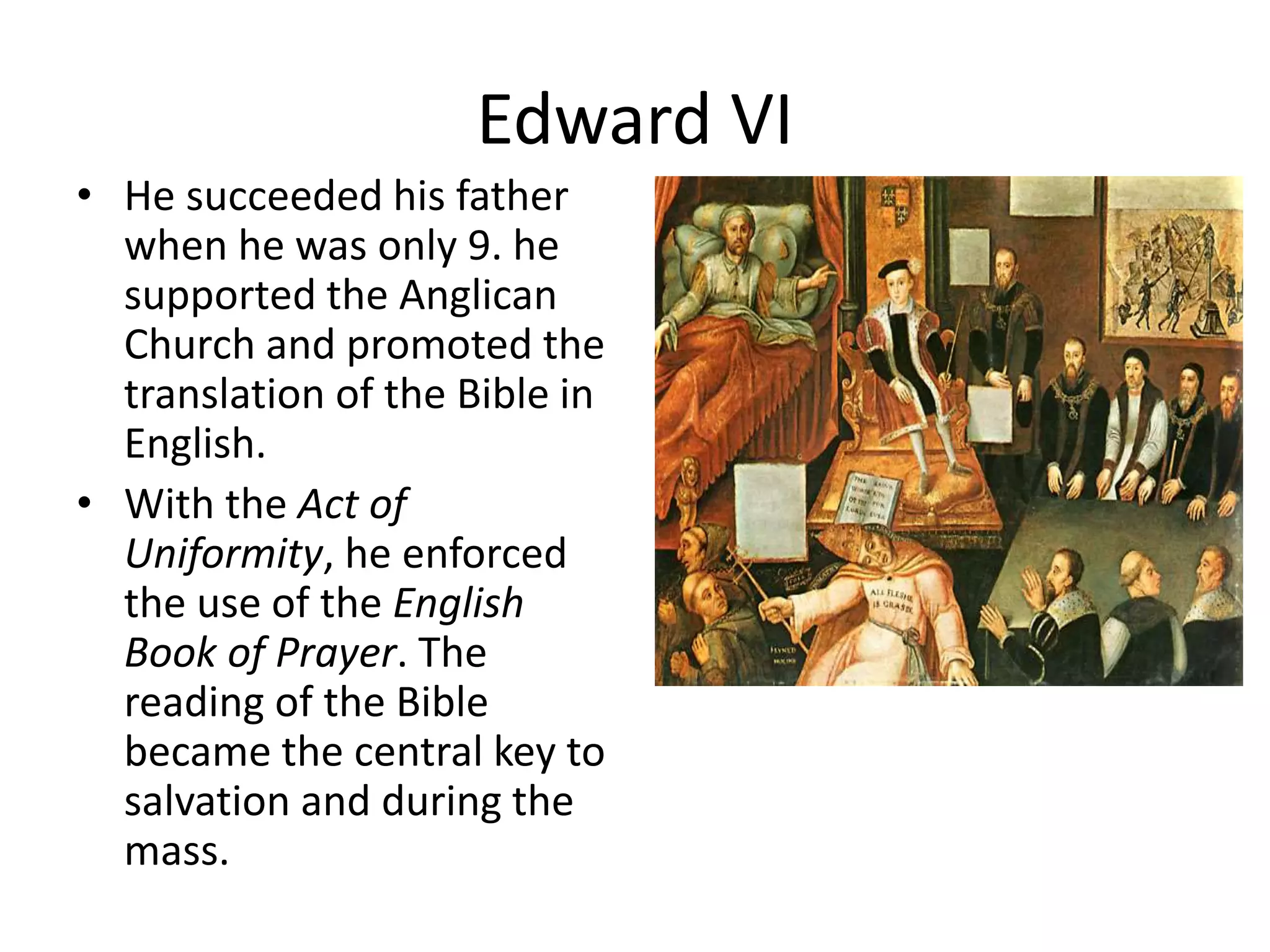
Edward VI
• He succeeded his father
when he was only 9. he
supported the Anglican
Church and promoted the
translation of the Bible in
English.
• With the Act of
Uniformity, he enforced
the use of the English
Book of Prayer. The
reading of the Bible
became the central key to
salvation and during the
mass.
Queen Mary, Bloody Mary
• She married the
Spanish King Phillip II
and tried to restore the
Catholic religion in
England.
• She earned the
nickname of Bloody
Mary because she
persecuted the
Protestants and burned
them for heresy.
• She died childless.
Elizabeth I (1)
• She became Queen in 1558. She passed the
Acts of Supremacy and Uniformity (1559) and
became supreme Governor of the Church.
• She promoted toleration among Catholics and
Protestants and encouraged the use of the
Book of Common Prayer.
• She reigned for 45 years and became the most
popular ruler.
Elizabeth I (2)
• She was brilliant, careful in diplomacy and a
shrewd ruler.
• She defeated the Spanish Armada, expanded
trade and promoted explorations (also using
pirates for her benefit)
• Most of the MP were Puritans (= extremist
Protestants) and she did not have a good
relationship with them. After the 1590s, she
avoided calling Parliament. She preferred small
councils of ministers.
James I
• James VI of Scotland
became James I of
England, Scotland and
Ireland.
• He based his government
on the “divine right” of
Kings. He preferred
working with small
councils rather than with
Parliament.
• He authorised a new
translation o the Bible,
still used today.
• Gun Powder Plot, 5th
November 1605
During James’s reign...
• Religion was still a crucial
issue/problem.
• Puritans were not happy
with James’s government,
because they desired a
simpler church.
• They preferred individual
religion and wanted a
Church not governed by
bishops.
• In 1620 a group of them,
the Pilgrim Fathers, left
for America and founded
New Plymouth.

The Tudors and the Stuarts

  • 1.
    The Tudors andthe Stuarts (1485-1625)
  • 2.
    The Monarchs • HenryVII (1485-1509) • Henry VIII (1509-1547) • Edward VI (1547-1533) • Mary (1553-1558) • Elizabeth (1558-1603) • James I (1603-1625) TUDORS 1485-1603 STUART 1603-1714
  • 3.
    Henry VII • Hewas not only a King, but also a ruler (= governor of a country who cures the interests of the country) • He improved commerce and the cloth industry. He built the navy and sponsored voyages to the New World.
  • 4.
    Henry VIII • Hewas a typical Renaissance Prince, with interests in arts and music. • He had six wives: - Catherine of Aragon (divorced = The mother of Mary/The Protestant Reformation followed the divorce) - Anne Boleyn (executed = The mother of Elizabeth) - Jean Seymour (died = The mother of Edward VI) - Anne of Cleves (divorced) - Kathryn Howard (executed for infidelity. She was 19, the King was 49) - Katherine Parr (widowed = she was a good wife and step- mother) http://tudorhistory.org/wives/
  • 5.
    The Reformation (1) •Henry VIII’s reign was signed by the Protestant Reformation. His wife Catherine was too old to give him a son, and he wanted to divorce her. • He asked the help of Pope Clement VII, who refused to annul the marriage. • Henry’s mistress was pregnant and he wanted to marry her. He set up the CHURCH OF ENGLAND and was excommunicated by the Pope.
  • 6.
    The Reformation (2) •Henry declared himself “Supreme Head of the Church” and passed the Act of Supremacy (in 1534). • The Parliament legitimised the Act by abolishing the religious orders (monks, friars). Monasteries were dissolved and their riches confiscated.
  • 7.
    Edward VI • Hesucceeded his father when he was only 9. he supported the Anglican Church and promoted the translation of the Bible in English. • With the Act of Uniformity, he enforced the use of the English Book of Prayer. The reading of the Bible became the central key to salvation and during the mass.
  • 8.
    Queen Mary, BloodyMary • She married the Spanish King Phillip II and tried to restore the Catholic religion in England. • She earned the nickname of Bloody Mary because she persecuted the Protestants and burned them for heresy. • She died childless.
  • 9.
    Elizabeth I (1) •She became Queen in 1558. She passed the Acts of Supremacy and Uniformity (1559) and became supreme Governor of the Church. • She promoted toleration among Catholics and Protestants and encouraged the use of the Book of Common Prayer. • She reigned for 45 years and became the most popular ruler.
  • 10.
    Elizabeth I (2) •She was brilliant, careful in diplomacy and a shrewd ruler. • She defeated the Spanish Armada, expanded trade and promoted explorations (also using pirates for her benefit) • Most of the MP were Puritans (= extremist Protestants) and she did not have a good relationship with them. After the 1590s, she avoided calling Parliament. She preferred small councils of ministers.
  • 11.
    James I • JamesVI of Scotland became James I of England, Scotland and Ireland. • He based his government on the “divine right” of Kings. He preferred working with small councils rather than with Parliament. • He authorised a new translation o the Bible, still used today. • Gun Powder Plot, 5th November 1605
  • 12.
    During James’s reign... •Religion was still a crucial issue/problem. • Puritans were not happy with James’s government, because they desired a simpler church. • They preferred individual religion and wanted a Church not governed by bishops. • In 1620 a group of them, the Pilgrim Fathers, left for America and founded New Plymouth.