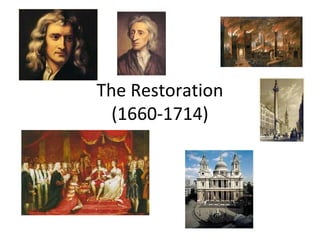
The Restoration
(1660-1714)
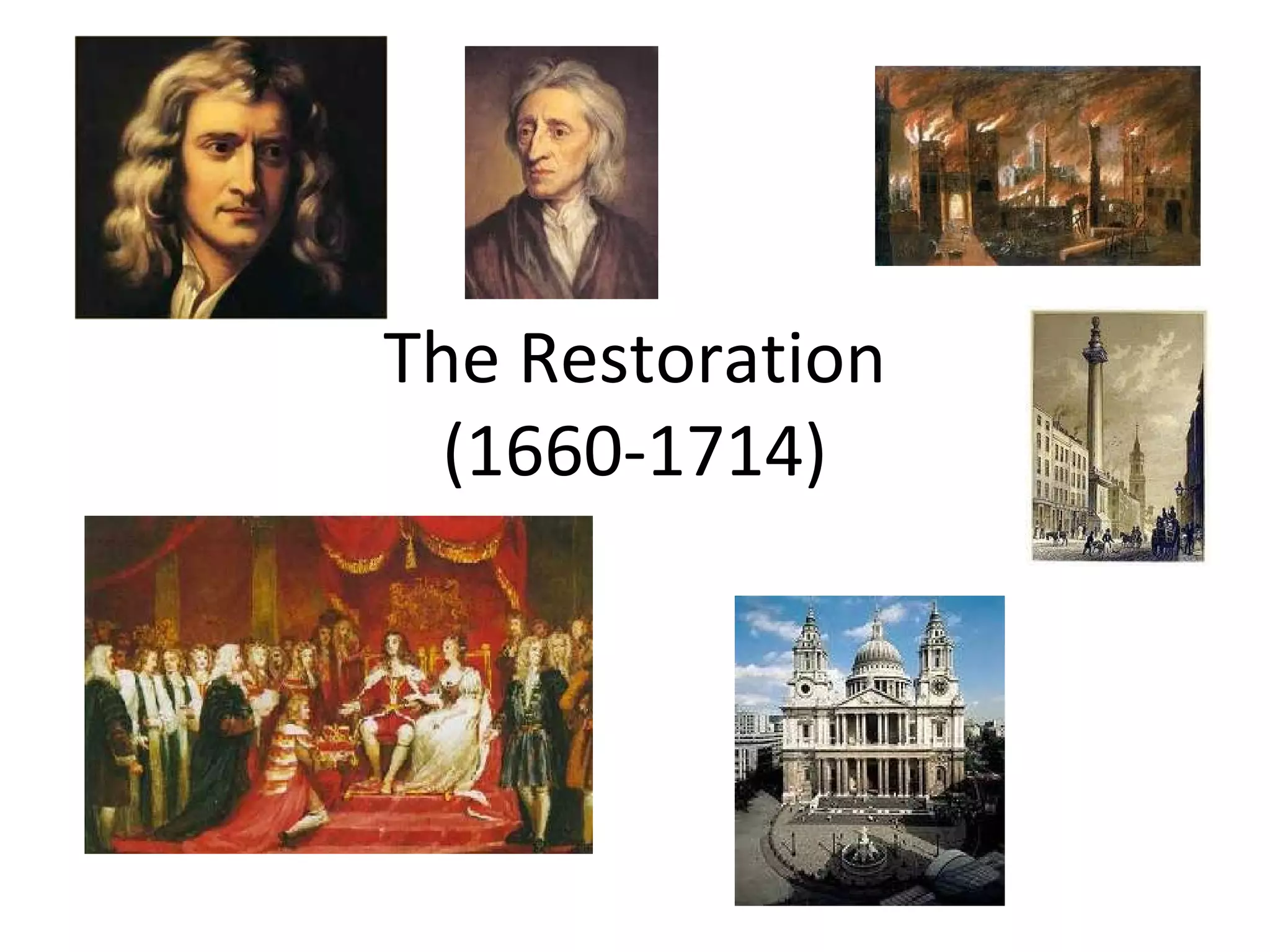
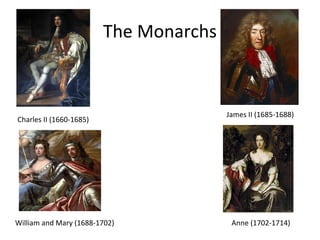
The Monarchs
Charles II (1660-1685)
James II (1685-1688)
William and Mary (1688-1702) Anne (1702-1714)
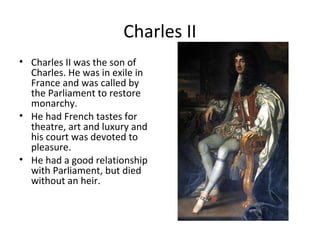
Charles II
• Charles II was the son of
Charles. He was in exile in
France and was called by
the Parliament to restore
monarchy.
• He had French tastes for
theatre, art and luxury and
his court was devoted to
pleasure.
• He had a good relationship
with Parliament, but died
without an heir.
During Charles II’s reign…
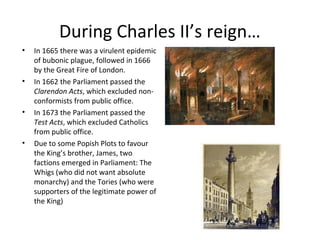
• In 1665 there was a virulent epidemic
of bubonic plague, followed in 1666
by the Great Fire of London.
• In 1662 the Parliament passed the
Clarendon Acts, which excluded non-
conformists from public office.
• In 1673 the Parliament passed the
Test Acts, which excluded Catholics
from public office.
• Due to some Popish Plots to favour
the King’s brother, James, two
factions emerged in Parliament: The
Whigs (who did not want absolute
monarchy) and the Tories (who were
supporters of the legitimate power of
the King)
James II and the Glorious Revolution
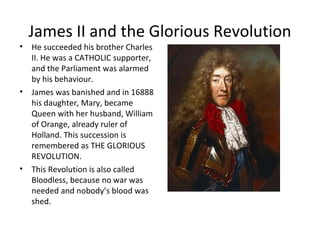
• He succeeded his brother Charles
II. He was a CATHOLIC supporter,
and the Parliament was alarmed
by his behaviour.
• James was banished and in 16888
his daughter, Mary, became
Queen with her husband, William
of Orange, already ruler of
Holland. This succession is
remembered as THE GLORIOUS
REVOLUTION.
• This Revolution is also called
Bloodless, because no war was
needed and nobody’s blood was
shed.
William and Mary
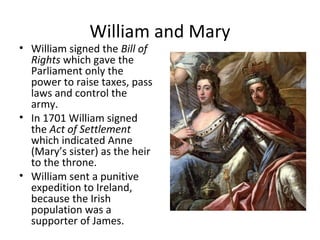
• William signed the Bill of
Rights which gave the
Parliament only the
power to raise taxes, pass
laws and control the
army.
• In 1701 William signed
the Act of Settlement
which indicated Anne
(Mary’s sister) as the heir
to the throne.
• William sent a punitive
expedition to Ireland,
because the Irish
population was a
supporter of James.
Queen Anne
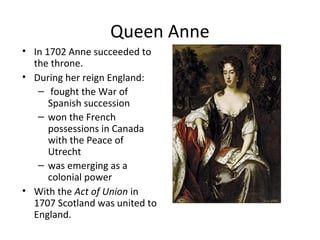
• In 1702 Anne succeeded to
the throne.
• During her reign England:
– fought the War of
Spanish succession
– won the French
possessions in Canada
with the Peace of
Utrecht
– was emerging as a
colonial power
• With the Act of Union in
1707 Scotland was united to
England.
Scientific Rigour and intellectual clarity
• In 1662 the Royal Society was founded for the
development of the new science.
• Natural Philosophy started to study the universe
and its mysteries. It helped to study the order
and the harmony given by God to his universe
(this philosophy was not against religion).
• John Locke, Isaac Newton and Thomas Hobbes
were the most influential philosophers of the
age.
In literature...
• In literature, social events became the main object of
interest, with their ethics, rules and ideals.
• Neo-classicism flourished. Poetry was mainly satirical
and translations of the Classics were promoted.
• Natural philosophy encouraged self-confidence and
belief in human progress; it freed the mind from
superstition. The diary became one of the most
popular writing forms.
• In art, the useful and simple replaced the ornate and
rich.
To conclude...
• The Restoration period is important in the
history of the English culture because in this
period some of the typical traits of the English
character emerged:
– A materialistic and practical mind
– Tolerance
– Reasonableness
– Common sense

The restoration 4 ls

  • 1.
  • 2.
    The Monarchs Charles II(1660-1685) James II (1685-1688) William and Mary (1688-1702) Anne (1702-1714)
  • 3.
    Charles II • CharlesII was the son of Charles. He was in exile in France and was called by the Parliament to restore monarchy. • He had French tastes for theatre, art and luxury and his court was devoted to pleasure. • He had a good relationship with Parliament, but died without an heir.
  • 4.
    During Charles II’sreign… • In 1665 there was a virulent epidemic of bubonic plague, followed in 1666 by the Great Fire of London. • In 1662 the Parliament passed the Clarendon Acts, which excluded non- conformists from public office. • In 1673 the Parliament passed the Test Acts, which excluded Catholics from public office. • Due to some Popish Plots to favour the King’s brother, James, two factions emerged in Parliament: The Whigs (who did not want absolute monarchy) and the Tories (who were supporters of the legitimate power of the King)
  • 5.
    James II andthe Glorious Revolution • He succeeded his brother Charles II. He was a CATHOLIC supporter, and the Parliament was alarmed by his behaviour. • James was banished and in 16888 his daughter, Mary, became Queen with her husband, William of Orange, already ruler of Holland. This succession is remembered as THE GLORIOUS REVOLUTION. • This Revolution is also called Bloodless, because no war was needed and nobody’s blood was shed.
  • 6.
    William and Mary •William signed the Bill of Rights which gave the Parliament only the power to raise taxes, pass laws and control the army. • In 1701 William signed the Act of Settlement which indicated Anne (Mary’s sister) as the heir to the throne. • William sent a punitive expedition to Ireland, because the Irish population was a supporter of James.
  • 7.
    Queen Anne • In1702 Anne succeeded to the throne. • During her reign England: – fought the War of Spanish succession – won the French possessions in Canada with the Peace of Utrecht – was emerging as a colonial power • With the Act of Union in 1707 Scotland was united to England.
  • 8.
    Scientific Rigour andintellectual clarity • In 1662 the Royal Society was founded for the development of the new science. • Natural Philosophy started to study the universe and its mysteries. It helped to study the order and the harmony given by God to his universe (this philosophy was not against religion). • John Locke, Isaac Newton and Thomas Hobbes were the most influential philosophers of the age.
  • 9.
    In literature... • Inliterature, social events became the main object of interest, with their ethics, rules and ideals. • Neo-classicism flourished. Poetry was mainly satirical and translations of the Classics were promoted. • Natural philosophy encouraged self-confidence and belief in human progress; it freed the mind from superstition. The diary became one of the most popular writing forms. • In art, the useful and simple replaced the ornate and rich.
  • 10.
    To conclude... • TheRestoration period is important in the history of the English culture because in this period some of the typical traits of the English character emerged: – A materialistic and practical mind – Tolerance – Reasonableness – Common sense