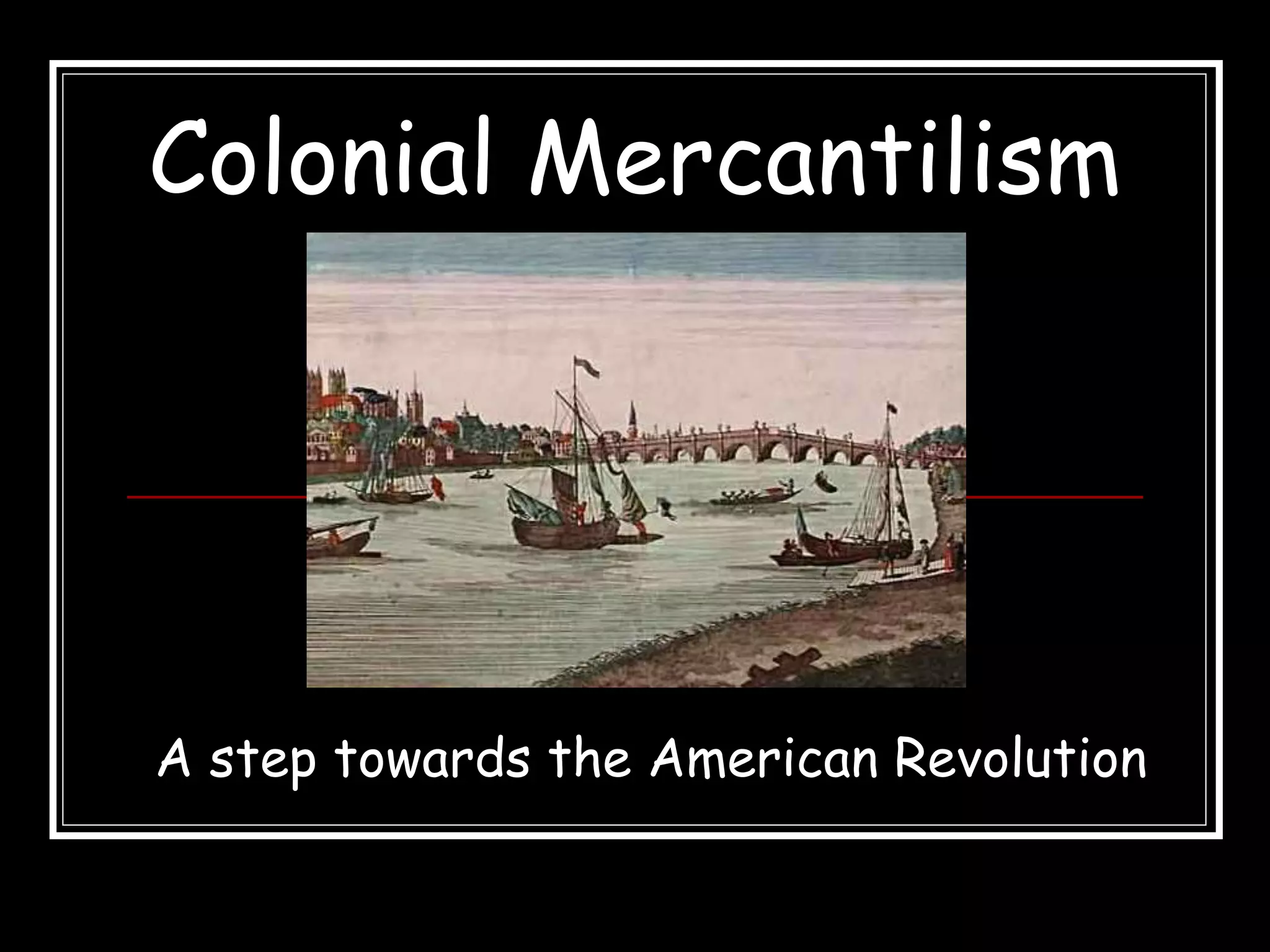
Colonial Mercantilism
A step towards the American Revolution
Objective: Students will
examine the economic policy of
mercantilism in order to
understand the impact on
England and England’s colonies.
Think about
1. Why did England, France, and Spain
establish colonies in North America?
2. What resources did these European
Nations hope to find in North
America?
Mercantilism
What is mercantilism?
Beginning around 1650, the British pursued a
policy of mercantilism in international trade.
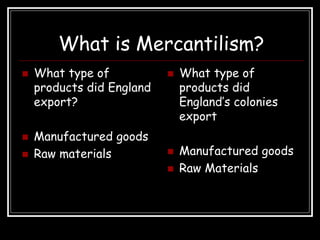
 What type of
products did England
export?
 Manufactured goods
 Raw materials
 What type of
products did
England’s colonies
export
 Manufactured goods
 Raw Materials
What is Mercantilism?
 Mercantilism is a system of trade
where colonies sold raw materials to
England who used those resources to
produce manufactured goods that
were sold to colonies.
What is Mercantilism?
 Mercantilism is an economic theory that
states a nation becomes stronger by
keeping strict control over its trade.
 It also states that a nation should have
more exports than imports.
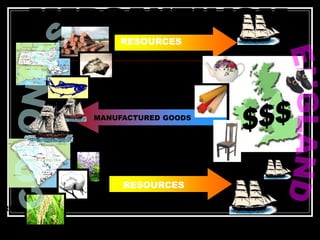
TIMBER
FISH
IRON
INDIGO
RICE COTTON
RESOURCES
RESOURCES
MANUFACTURED GOODS
Mercantilism
 To achieve this balance of trade, the
English passed laws exclusively
benefitting the British economy. These
laws created a trade system whereby
Americans provided raw goods to Britain,
and Britain used the raw goods to
produce manufactured goods that were
sold in European markets and back to the
colonies.
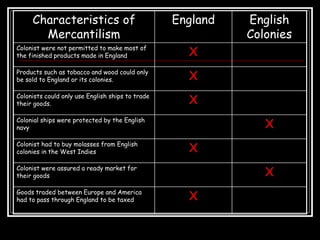
Characteristics of
Mercantilism
England English
Colonies
Colonist were not permitted to make most of
the finished products made in England X
Products such as tobacco and wood could only
be sold to England or its colonies. X
Colonists could only use English ships to trade
their goods. X
Colonial ships were protected by the English
navy X
Colonist had to buy molasses from English
colonies in the West Indies X
Colonist were assured a ready market for
their goods X
Goods traded between Europe and America
had to pass through England to be taxed X
Who Benefits from
Mercantilism?
 For every $4 of timber the colonists sold to England, England manufactures
were able to make a table that sold for $24. Under mercantilism, colonist
had to buy their furniture from England because England always wanted to
maintain a favorable balance of trade.
2 £ ( British Pounds) = $4
12 £ ( British Pounds) = $24
Solve this Math
 The colonies sell four bundles of timber to
England. They make $_______
 English manufactures sell two tables to the
colonies. They make $ ______
 In total England makes $______
 In total colonist make $ ______
 Who earned more from the sale of goods,
England’s colonies or England? Explain.
 Who benefits most from mercantilism?
Explain
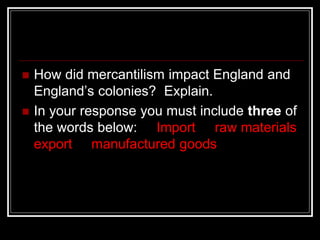
 How did mercantilism impact England and
England’s colonies? Explain.
 In your response you must include three of
the words below: Import raw materials
export manufactured goods

Colonial Mercantilism.ppt

  • 1.
    Colonial Mercantilism A steptowards the American Revolution
  • 2.
    Objective: Students will examinethe economic policy of mercantilism in order to understand the impact on England and England’s colonies.
  • 3.
    Think about 1. Whydid England, France, and Spain establish colonies in North America? 2. What resources did these European Nations hope to find in North America?
  • 4.
    Mercantilism What is mercantilism? Beginningaround 1650, the British pursued a policy of mercantilism in international trade.
  • 5.
     What typeof products did England export?  Manufactured goods  Raw materials  What type of products did England’s colonies export  Manufactured goods  Raw Materials What is Mercantilism?
  • 6.
     Mercantilism isa system of trade where colonies sold raw materials to England who used those resources to produce manufactured goods that were sold to colonies.
  • 7.
    What is Mercantilism? Mercantilism is an economic theory that states a nation becomes stronger by keeping strict control over its trade.  It also states that a nation should have more exports than imports.
  • 8.
  • 9.
    Mercantilism  To achievethis balance of trade, the English passed laws exclusively benefitting the British economy. These laws created a trade system whereby Americans provided raw goods to Britain, and Britain used the raw goods to produce manufactured goods that were sold in European markets and back to the colonies.
  • 10.
    Characteristics of Mercantilism England English Colonies Colonistwere not permitted to make most of the finished products made in England X Products such as tobacco and wood could only be sold to England or its colonies. X Colonists could only use English ships to trade their goods. X Colonial ships were protected by the English navy X Colonist had to buy molasses from English colonies in the West Indies X Colonist were assured a ready market for their goods X Goods traded between Europe and America had to pass through England to be taxed X
  • 11.
    Who Benefits from Mercantilism? For every $4 of timber the colonists sold to England, England manufactures were able to make a table that sold for $24. Under mercantilism, colonist had to buy their furniture from England because England always wanted to maintain a favorable balance of trade. 2 £ ( British Pounds) = $4 12 £ ( British Pounds) = $24
  • 12.
    Solve this Math The colonies sell four bundles of timber to England. They make $_______  English manufactures sell two tables to the colonies. They make $ ______  In total England makes $______  In total colonist make $ ______  Who earned more from the sale of goods, England’s colonies or England? Explain.  Who benefits most from mercantilism? Explain
  • 13.
     How didmercantilism impact England and England’s colonies? Explain.  In your response you must include three of the words below: Import raw materials export manufactured goods