THE TAPE STRIPPING TECHNIQUE TO QUANTIFY DRUGS THROUGH OUT THE SKIN José Juan Escobar-Chávez, Miriam López-Cervantes, Luz María Melgoza-Contreras, David Quintanar Guerrero, Adriana Ganem-Quintanar
INTRODUCTION Tape stripping of human stratum corneum (SC) is widely used as a method for studying the kinetics and penetration depth of drugs. This paper shows the applications of the tape stripping technique to quantify drug penetration through the skin, underlining its versatile application in the area of topical and transdermal drugs.
THE SKIN Essentially, the skin consists of four layers: The SC, that is the outer layer of the skin (non-viable epidermis), and forms the rate-controlling barrier for diffusion for almost all compounds .
THE SKIN The other layers are: the remaining layers of   the epidermis (viable epidermis), the dermis,   and   the subcutaneous tissues  (Fig .  1). There   are   also several associated appendages: hair   follicles,   sweat ducts, apocrine glands and nails.
Fig. 1 Layers of human skin
STRATUM CORNEUM It is composed of dead   flattened, keratin-rich cells, the corneocytes.   These dense cells are surrounded by a complex   mixture of intercellular lipids, namely, ceramides,   free fatty acids, cholesterol, and cholesterol   sulphate. Their most important feature is that they   are structured as ordered bilayer arrays.
The main interest in   dermal absorption assessment is related to: a)   Local effects in dermatology (e.g., corticosteroids); b) transport through the skin   seeking a systemic effect (e.g., nicotine  and  hormonal drug patches); c) surface effects   (e.g., sunscreens, cosmetics, and anti-infectives); d) targeting of deeper tissues (e.g.,   nonsteroidal anti-inflammatory agents);   and e) unwanted absorption (e.g., solvents in the   workplace, pesticides or allergens). DERMAL ABSORTION
Fi g.  2 Processes of   percutaneous absorption and   transdermal delivery
TAPE STRIPPING TECHNIQUE The simplest method for reducing the barrier   imposed by the SC is to remove it.  A n adhesive tape removes a layer of corneocytes.   In vivo,  removal of the SC by TS is performed by   the repeated application of adhesive tapes to the   skin’s surface.   It has been found that on the flexor surface of the   forearm, about 30 tape strips are needed to strip   off most of the horny layer.   Usually, the amount of SC   removed by TS is not linearly proportional to the   number of tapes removed .
Fig .  3  D etailed procedure of the tape  tripping technique
TAPE STRIPPING TECHNIQUE D ifferent parameters that can influence   the quantity of SC removed by a piece of tape, these include TS mode, skin   hydration, cohesion between cells (which   increases with SC’s depth), the body site and   inter-individual differences .  various brands of tape differ in   shape, surface area, composition and adhesive   properties, the influence of the tape brand on the   outcome seems apparent .
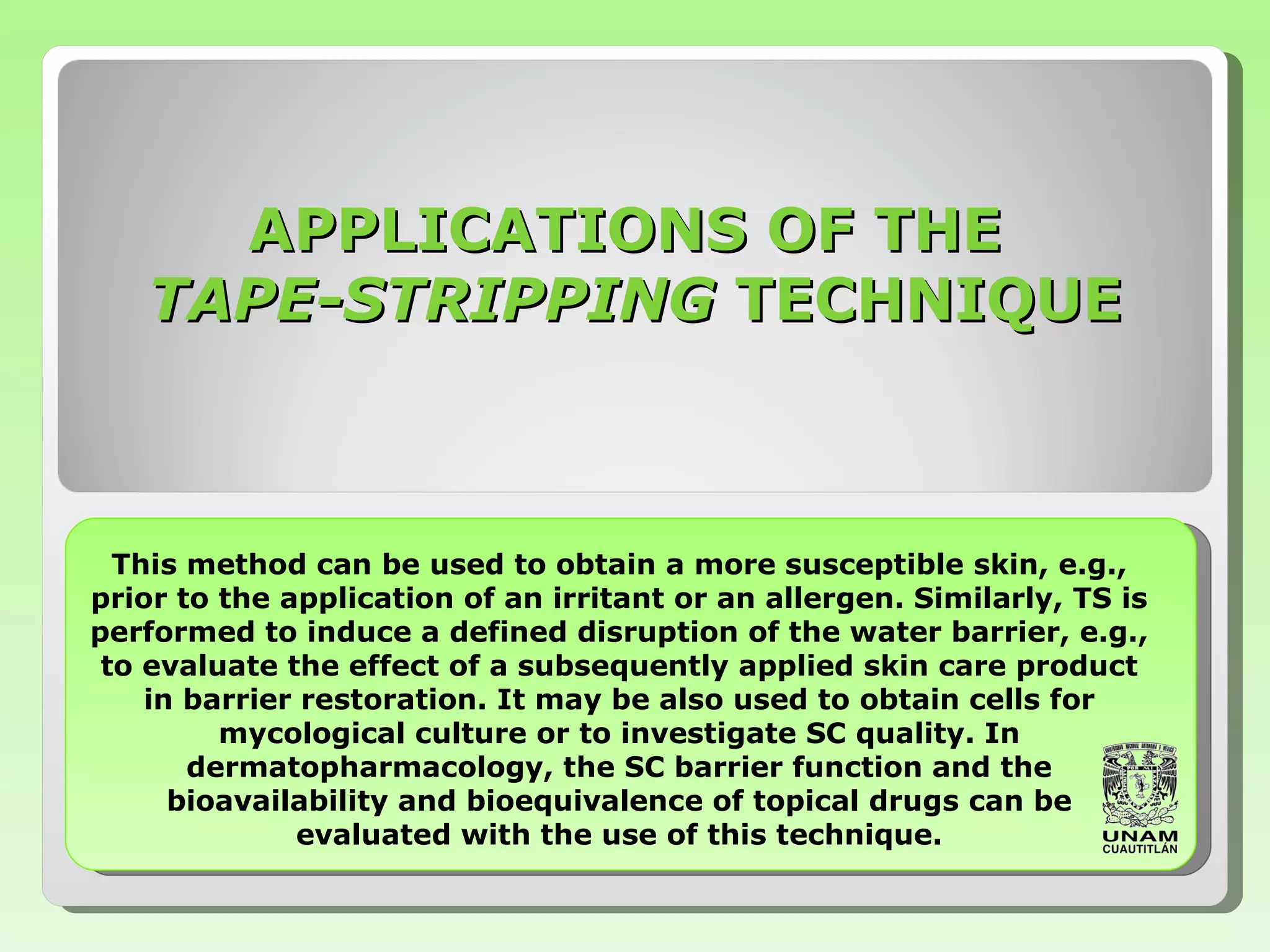
This method can be used to obtain a more   susceptible skin, e.g., prior to the application of   an irritant   or an allergen. Similarly,   TS is performed to induce a defined disruption of   the water barrier, e.g., to evaluate the effect of a   subsequently applied skin care product in barrier   restoration. It may be also used to obtain   cells for mycological culture or to   investigate SC quality. In   dermatopharmacology, the SC barrier function   and the   bioavailability and bioequivalence   of topical drugs   can be evaluated with   the use of this technique. APPLICATIONS OF THE  TAPE-STRIPPING  TECHNIQUE
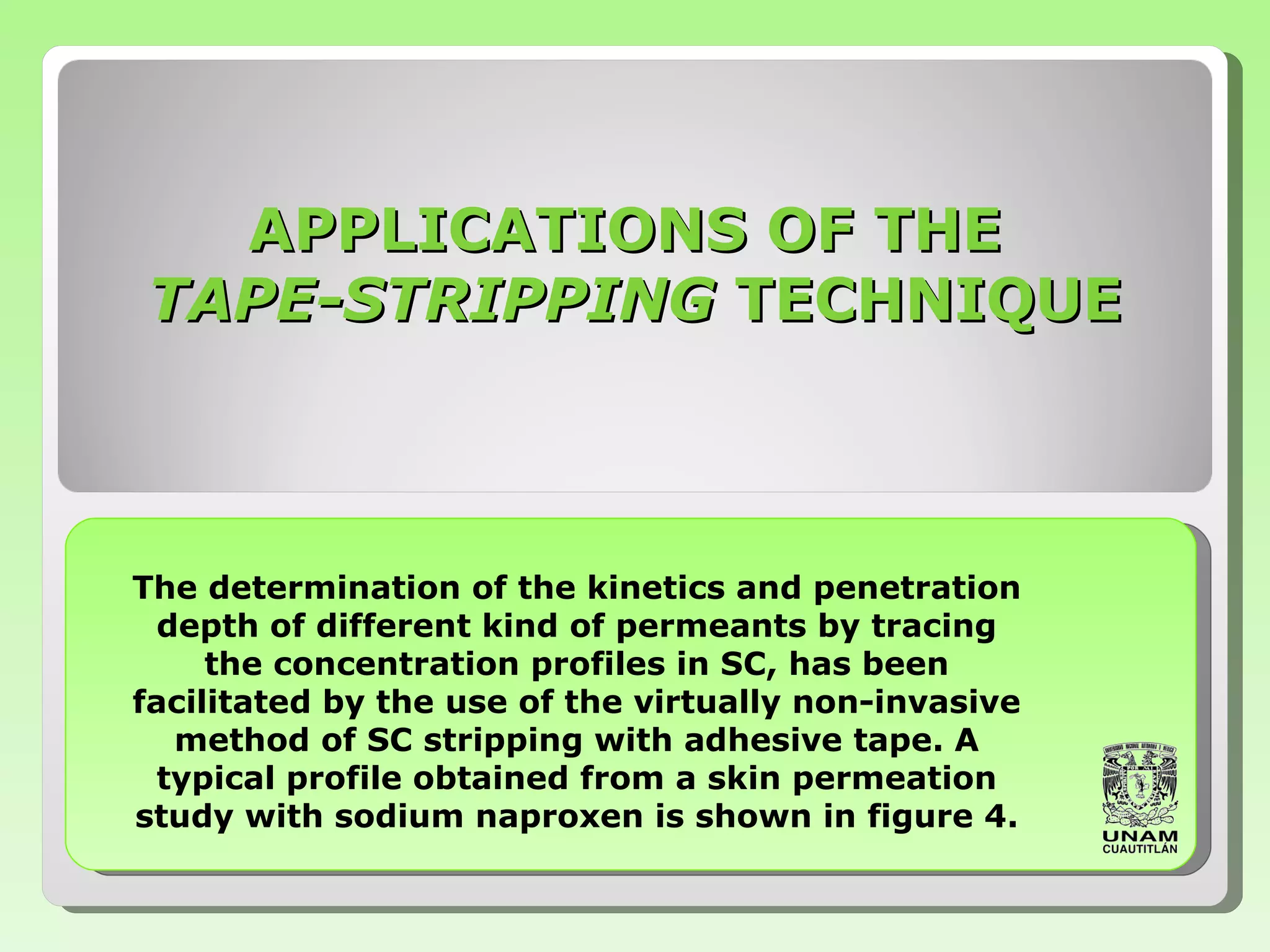
The determination of the kinetics   and penetration depth of   different kind of   permeants by tracing the concentration   profiles in   SC, has been facilitated by the use of the virtually   non-invasive method of SC stripping with   adhesive tape .  A typical profile obtained from a skin   permeation study with   sodium naproxen is shown   in figure 4. APPLICATIONS OF THE  TAPE-STRIPPING  TECHNIQUE
Fi g.  4 Penetration profiles across human SC of Sodium naproxen formulated in PF-127 gels with different   penetration enhancers [Azone ® -Transcutol ®  mixture   ,   Transcutol ®   applying an infinite dose   , and a film with   Azone ® -Transcutol ®   mixture   , Transcutol ®   ] (Mean± SD; n = 6)  (1).
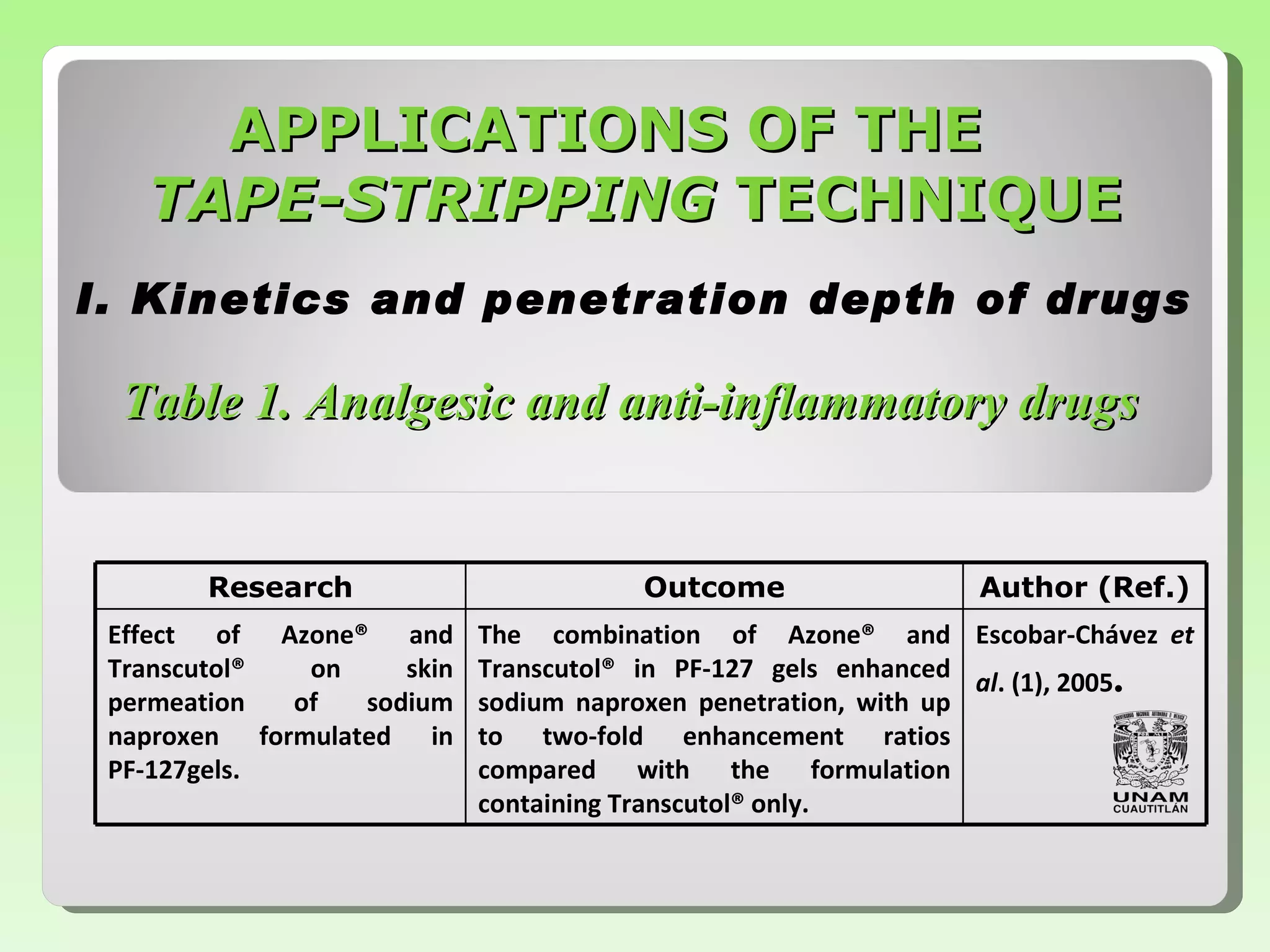
APPLICATIONS OF THE  TAPE-STRIPPING  TECHNIQUE I.  Kinetics and penetration depth of drugs Table 1.  Analgesic and anti-inflammatory drugs Research Outcome Author (Ref.) Effect of Azone® and  T ranscutol®   on skin   permeation of sodium   naproxen formulated in PF- 1 27gels. The combination of Azone® and   Transcutol® in PF-127 gels enhanced   sodium naproxen   penetration, with up   to two-fold enhancement ratios   compared with the formulation   containing Transcutol® only. Escobar-Chávez  et   al . ( 1 ),   2005 .
Table 1.  Analgesic and anti-inflammatory drugs Research Outcome Author (Ref.) Administration of piroxicam from   a commercially   vailable gel to   human volunteers, both passively   and under the   application of an   iontophoretic current. The total amount of drug recovered in   the SC post-iontophoresis by TS was   significantly higher than that found   following passive diffusion for each   application time. Curdy  et al . ( 2 ), 2001 Effect of hydroxypropyl-Pcyclodextrin   (HP-P-CD) on the   cutaneous  p enetration and   activation of ethyl 4-biphenylyl   acetate (EBA), a prodrug of nonsteroidal   anti-inflammatory drug 4-biphenylylacetic acid (BPAA),   from hydrophilic   ointment, usinghairless mouse skin in vitro. The enhancing effect of HP-P-CD on   the cutaneous penetration of EBA   would be largely attributable to an   increase in the effective concentration   of EBA in the ointment. Arima  et al . ( 3 ), 1998 Production and characterization of   monoleine (MO) dispersions as   drug delivery systems for   indomethacin. Reflectance spectroscopy   demonstrated   that indomethacin incorporated into   MO dispersions can be released in a   prolonged fashion.  With  TS  was   corroborated Esposito  et al .   (4),   2005
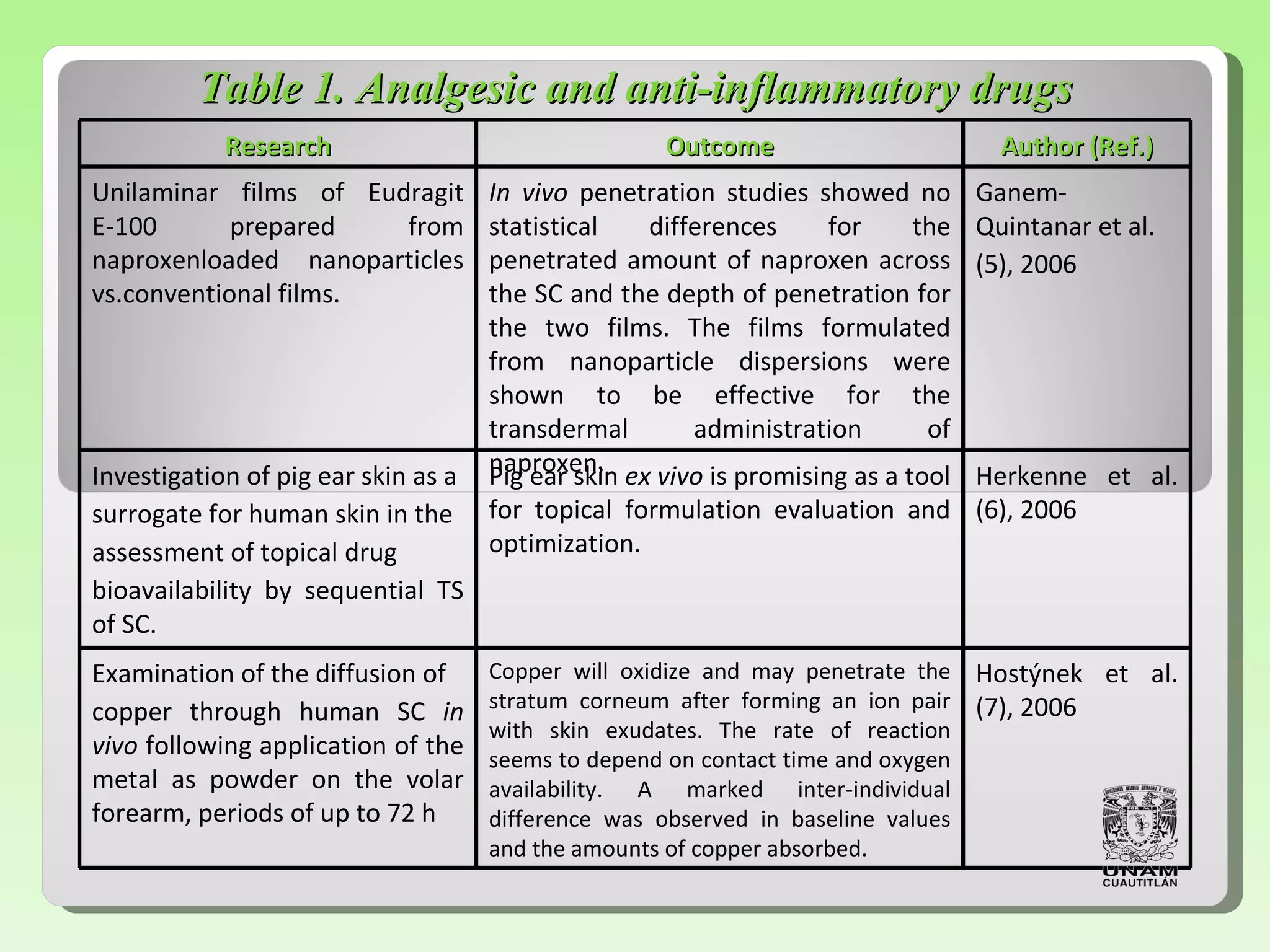
Table 1.  Analgesic and anti-inflammatory drugs Research Outcome Author (Ref.) Unilaminar films of Eudragit E-100 prepared from naproxenloaded   nanoparticles vs.conventional films. In vivo  penetration studies showed no   statistical differences for the   penetrated   amount of naproxen across the SC and   the depth of penetration for the two   films. The films formulated from   nanoparticle dispersions were shown to   be effective for the transdermal   administration of naproxen. Ganem-Quintanar et al. (5), 2006 Investigation of pig ear skin as a surrogate for human skin in the assessment of topical drug bioavailability by sequential TS of SC. Pig ear skin  ex vivo  is promising as a   tool for topical formulation evaluation   and optimization. Herkenne et al. (6), 2006 Examination of the diffusion of copper through human SC  in vivo   following application of the metal   as powder on the volar forearm ,  periods of up to 72 h Copper will oxidize and may penetrate   the stratum corneum after forming an   ion pair with skin exudates. The rate of   reaction seems to depend on contact   time and oxygen availability. A marked   inter-individual difference was   observed in baseline values and the   amounts of copper absorbed. Hostýnek et al. (7), 2006
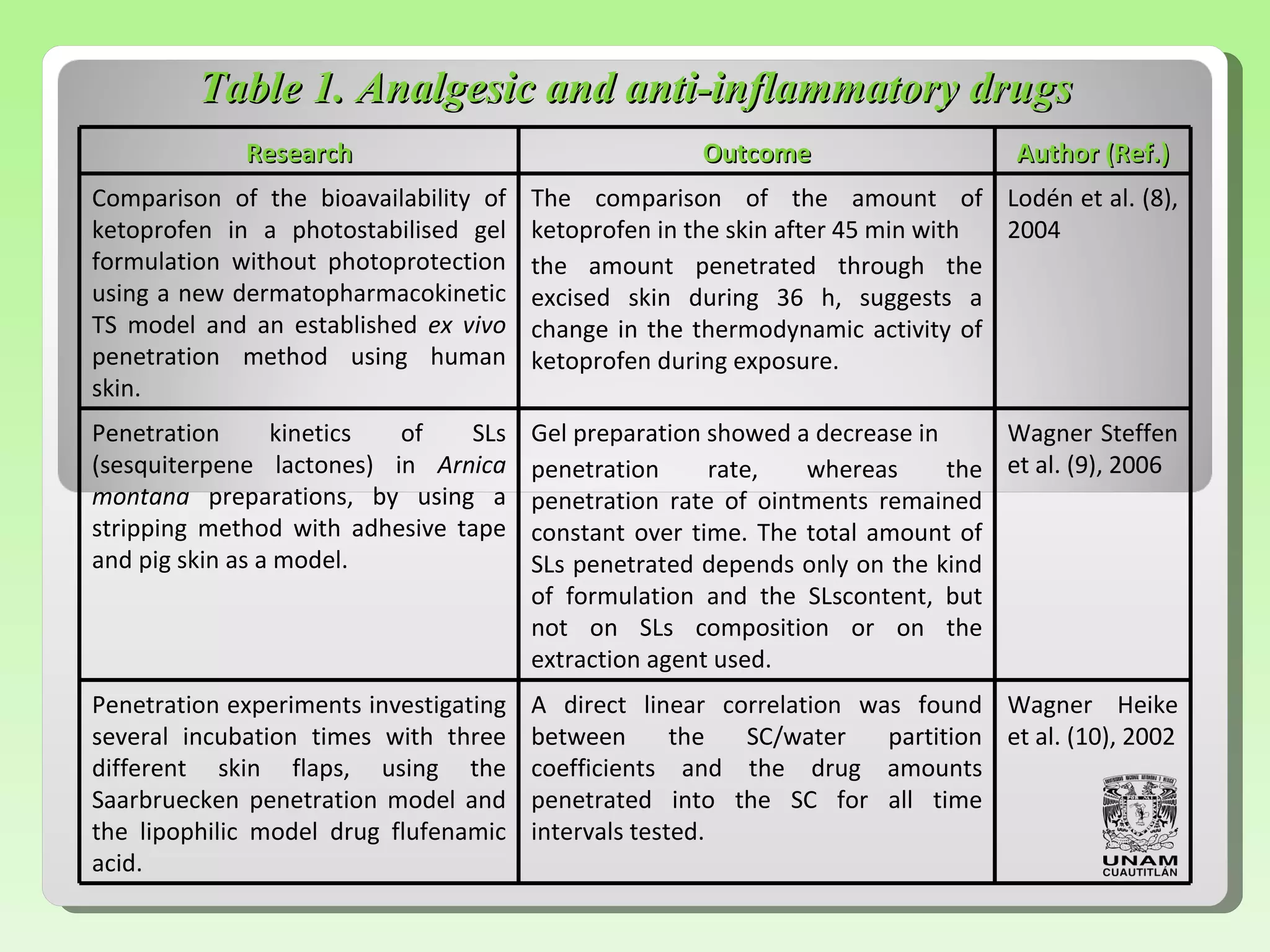
Table 1.  Analgesic and anti-inflammatory drugs Research Outcome Author (Ref.) Comparison of the   bioavailability   of ketoprofen in a photostabilised   gel  f ormulation without   photoprotection using a new   dermatopharmacokinetic TS model   and an established  ex vivo   penetration method using human   skin . The comparison of the amount of  k etoprofen in the skin after 45 min with the amount penetrated through the   excised skin during 36 h, suggests a   change in the thermodynamic activity   of ketoprofen during exposure. Lodén et al. (8), 2004 Penetration kinetics of SLs   (sesquiterpene lactones) in  Arnica   montana  preparations, by using a   stripping method with adhesive   tape and pig skin as a model. Gel preparation showed a decrease in penetration rate, whereas the   penetration rate of ointments remained   constant over time. The total amount of   SLs penetrated depends only on the   kind of formulation and the SLscontent,   but not on SLs composition or   on the extraction agent used. Wagner Steffen et al. (9),   2006 Penetration experiments   investigating several incubation   times with three different skin   flaps, using the Saarbruecken   penetration model and the   lipophilic model drug   flufenamic  a cid . A direct linear correlation was found   between the SC/water partition   coefficients and the drug amounts   penetrated into the SC for all time   intervals tested. Wagner Heike et al. ( 1 0),   2002
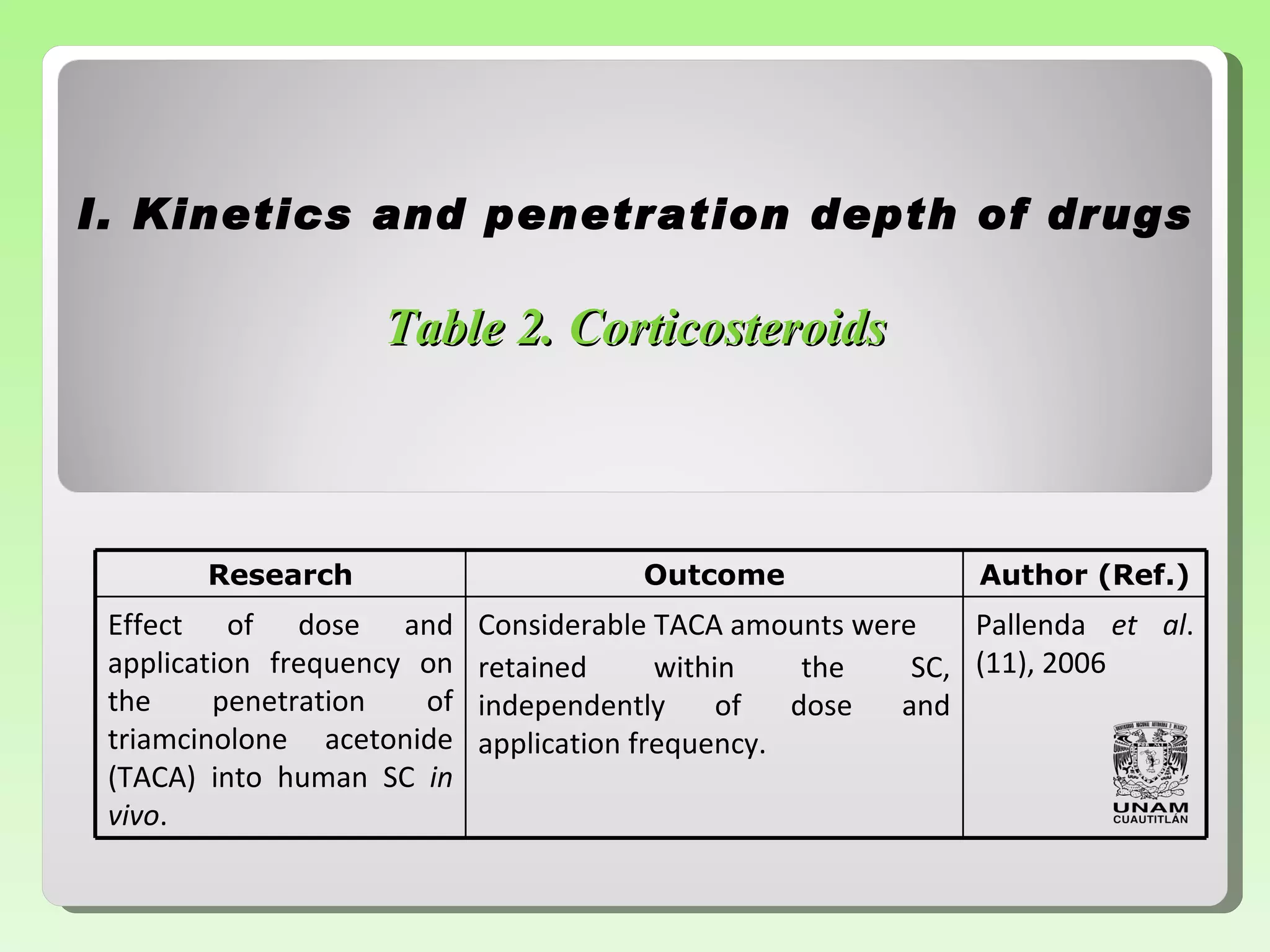
I.  Kinetics and penetration depth of drugs Table 2.  Corticosteroids Research Outcome Author (Ref.) Effect of dose and application   frequency on the penetration of   triamcinolone acetonide (TACA)   into human SC  in vivo . Considerable TACA amounts were retained within the SC, independently   of dose and application frequency. Pallenda  et al . ( 1 1), 2006
I.  Kinetics and penetration depth of drugs Table 3. Disinfectants Research Outcome Author (Ref.) Sustained bactericidal activity of   chlorhexidine base loaded poly   (Є-caprolactone)  n anocapsules against   Staphylococcus   epidermidis   inoculated   onto porcine ear skin. Topical application of chlorhexidine   base-loaded positively charged   nanocapsules in an aqueous gel   achieved a sustained release of   bactericide against  Staphylococcus   epidermidis  for at least 8 h. Lboutounne  et al.  ( 1 2),   2002
I.  Kinetics and penetration depth of drugs Table 4.  Drugs for keratinization disorders Research Outcome Author (Ref.) Design of an all- trans  retinoic acid   (RA) topical release system that   modifies drug diffusion parameters   in the vehicle and the skin, in order to reduce the systemic   absorption   and side-effects   associated with the   topical application of the drug to   the skin. RA encapsulation not only prolongs   drug release, but also promotes drug   retention in viable skin. Fresno-Contreras  et al . ( 1 3), 2005
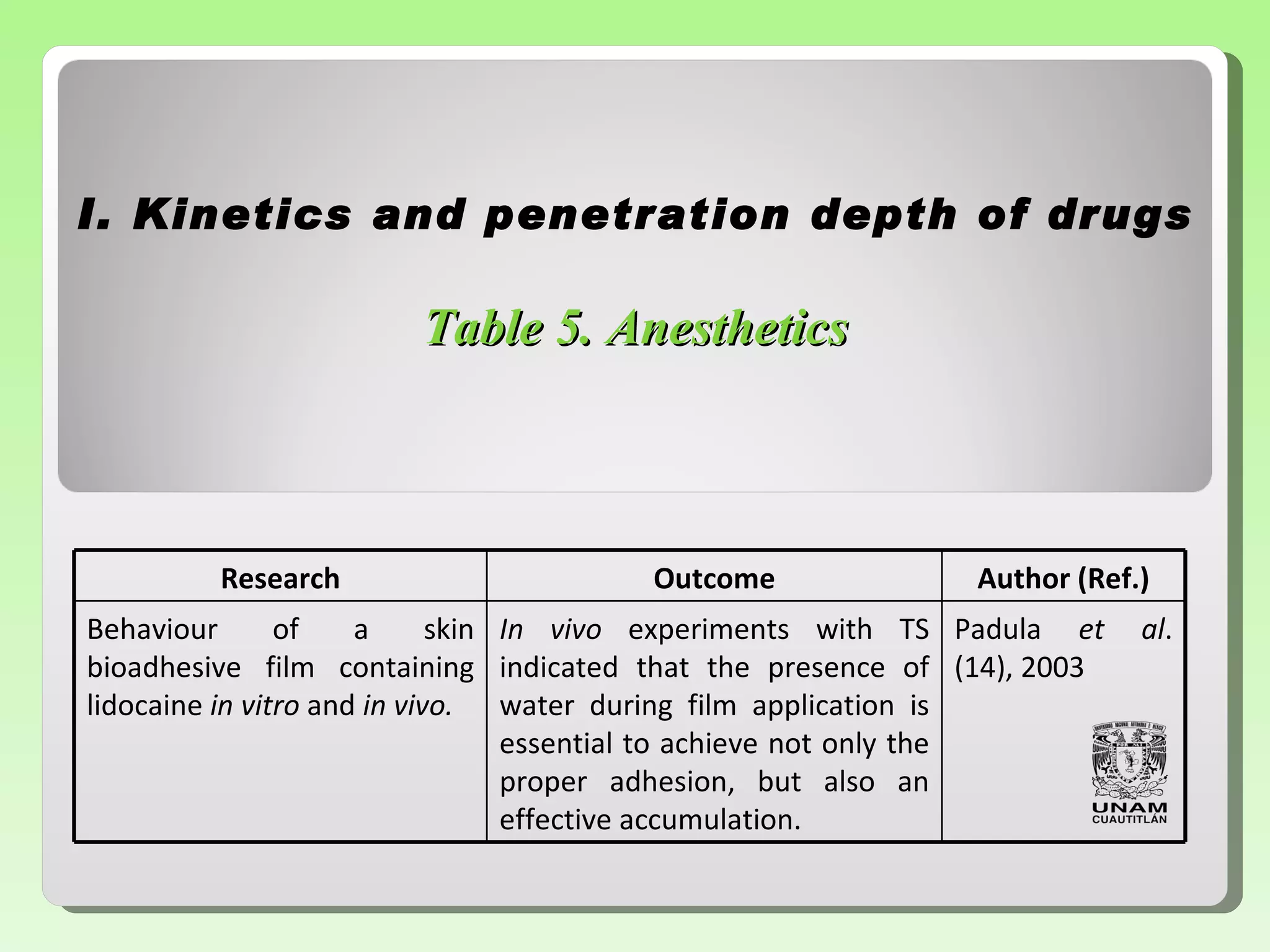
I.  Kinetics and penetration depth of drugs Table 5.  Anesthetics Research Outcome Author (Ref.) Behaviour of a skin  b ioadhesive   film containing lidocaine  in vitro   and  in vivo. In vivo  experiments with TS   indicated   that the presence of water during film   application is essential to achieve not   only the proper adhesion, but also an   effective accumulation. Padula  et al .   ( 1 4),   2003
I.  Kinetics and penetration depth of drugs Table 6.  Keratolytics Research Outcome Author (Ref.) Keratolytic efficacy of topical preparations containing  s alicylic   acid in humans by TS, and   quantification of SC removal by   protein analysis. TS combined with protein analysis was   sensitive in detecting the keratolytic   effect of salicylic acid within hours of   application. Bashir  et al . ( 1 5), 2005
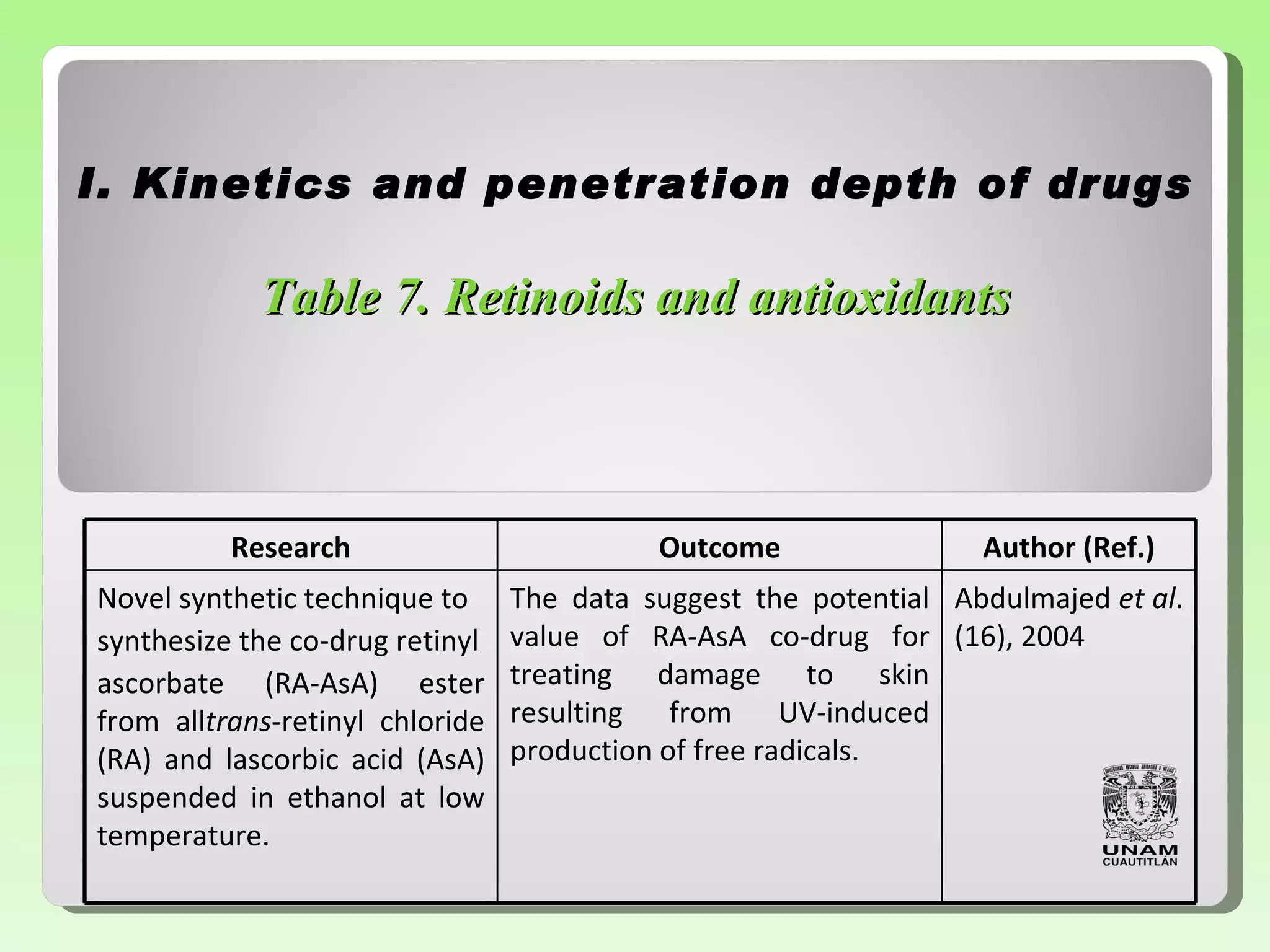
I.  Kinetics and penetration depth of drugs Table 7.  Retinoids and antioxidants Research Outcome Author (Ref.) Novel synthetic technique to synthesize the co-drug retinyl ascorbate (RA-AsA) ester from all trans -retinyl chloride (RA) and lascorbic   acid (AsA) suspended in   ethanol at low temperature. The data suggest the potential value of   RA-AsA co-drug for treating damage   to skin resulting from UV-induced   production of free radicals. Abdulmajed  et al . ( 1 6),   2004
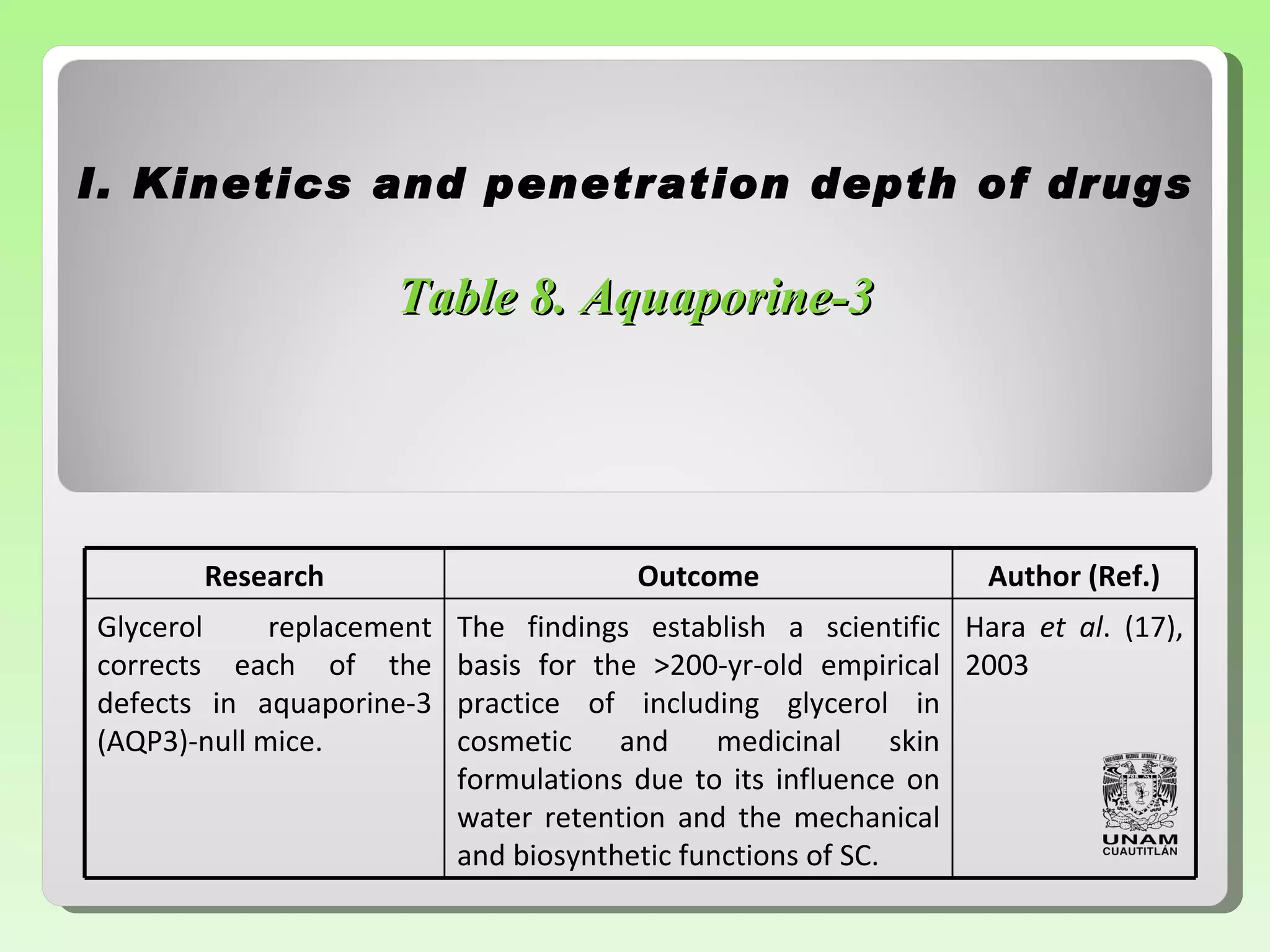
I.  Kinetics and penetration depth of drugs Table 8.  Aquaporine-3 Research Outcome Author (Ref.) Glycerol replacement corrects each   of the defects in aquaporine-3   (AQP3)-null mice. The findings establish a scientific basis   for the >200-yr-old   empirical practice   of including glycerol in cosmetic and   medicinal skin formulations due to its   influence on water retention and the   mechanical and   biosynthetic functions   of SC. Hara  et al . ( 1 7), 2003
I.  Kinetics and penetration depth of drugs Table 9.  Antiviral drugs Research Outcome Author (Ref.) Contribution of SC   barrier and   microvascular perfusion in   determining dermal tissue levels of   hydrophilic drugs   (aciclovir and   penciclovir)  in vivo . There was no relationship between   fibre depth and the amount of drug   dialysed, which suggests free   movement of antiviral drug on reaching   the aqueous environment of the dermis. Morgan  et al . ( 1 8), 2003
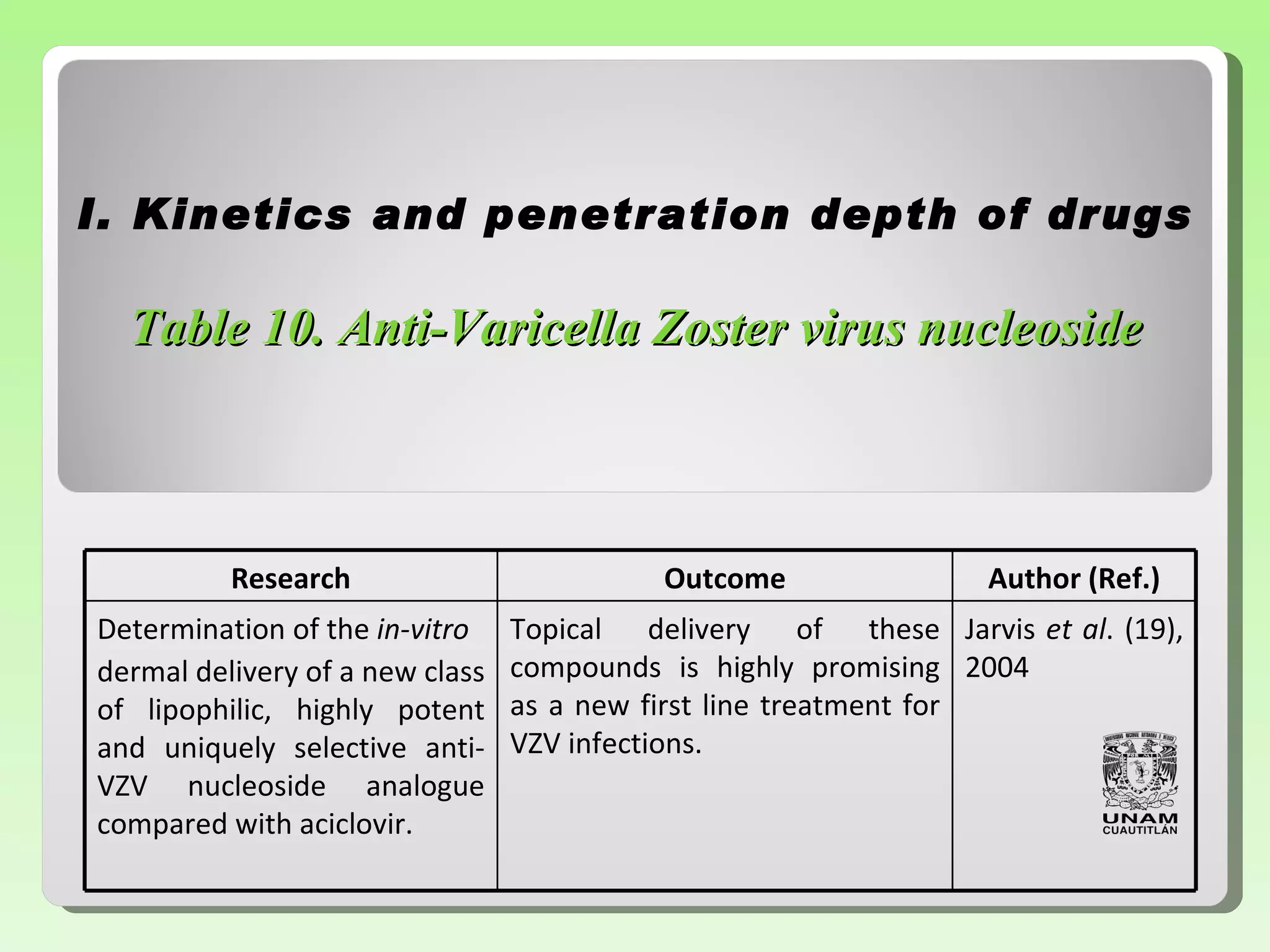
I.  Kinetics and penetration depth of drugs Table 10.  Anti-Varicella Zoster virus nucleoside Research Outcome Author (Ref.) Determination of the  in-vitro dermal delivery of a new class of   lipophilic, highly potent and   uniquely selective anti-VZV   nucleoside analogue compared   with aciclovir. Topical delivery of these   compounds is   highly promising as a new first line   treatment for VZV infections. Jarvis  et al . ( 1 9), 2004
I.  Kinetics and penetration depth of drugs Table 11.  Vaccines Research Outcome Author (Ref.) Effect of CpG   oligodeoxynucleotide (CpG-ODN)   on the immune response to an   antigen applied to tape-stripped   mouse skin by evaluating the   production of cytokines and Ig   isotypes. Administration of CpG ODN   through   skin is a simple strategy for patients   with diseases like atopic dermatitits,   which is characterized by Th2-dominated inflammation. Inoue  et al .,  (20, 21)  2005,   2006
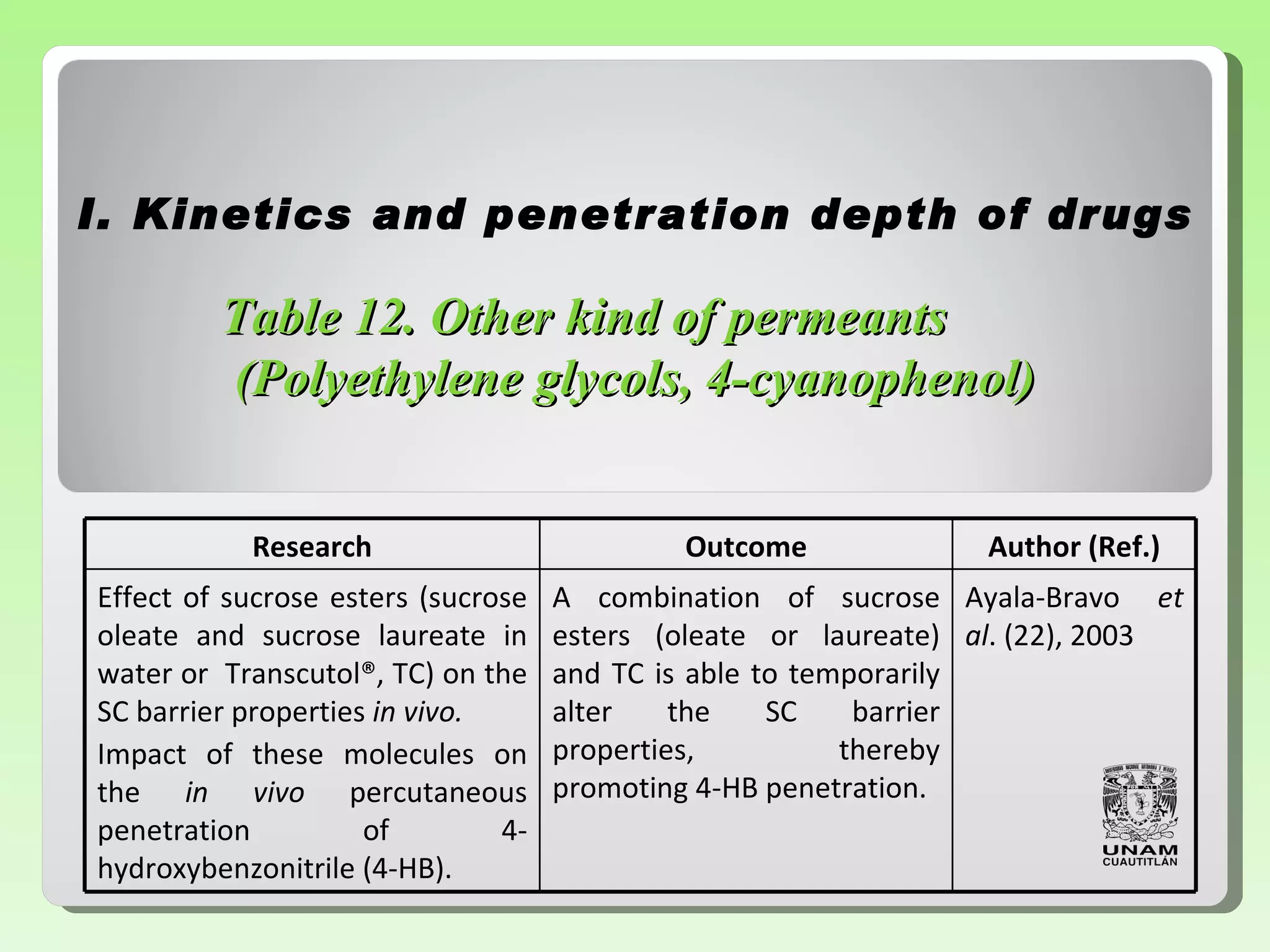
I.  Kinetics and penetration depth of drugs Table 12.  Other kind of permeants  (Polyethylene   glycols, 4-cyanophenol) Research Outcome Author (Ref.) Effect of sucrose esters (sucrose   oleate and sucrose laureate in   water or   Transcutol®, TC) on the   SC barrier properties  in vivo. Impact of these molecules on the  in   vivo  percutaneous penetration of 4-hydroxybenzonitrile (4-HB). A combination of sucrose esters (oleate   or laureate) and TC is able to   temporarily alter the SC barrier  p roperties, thereby   promoting 4-HB   penetration. Ayala-Bravo  et al . ( 22 ),   2003
Table 12.  Other kind of permeants   (Polyethylene   glycols, 4-cyanophenol Research Outcome Author (Ref.) Absorption of 4-cyanophenol (4CP) in humans using TS experiments to assess the conditions under which diffusion   alters tape stripping results. Chemical concentrations in TSs can be affected by diffusion during tape stripping, but with tTS < 0.2 tlag and an exposure time > 0.3 tlag, TS concentrations are not significantly affected by tTS. Reddy et al. ( 23 ), 2002 Development of a sensitive method   for the determination of   polyethylene glycols with different   molecular weights (MW) in the   human SC obtained by TS. The method showed to be suitable for studying permeability in normal and impaired skin with respect to MW in the range of 150–600 Da. Jakasa et al. ( 24 ,  25 ), 2004,   2007 Dependence of permeability on molecular weight with different forms of barrier disruption. Irrespectively of the form of barrier   disruption, not only higher amounts, but also more varieties of chemicals (larger molecules) may penetrate into the skin in the presence of a compromised barrier, compared with normal skin. Tsai et al. ( 26 ), 2003
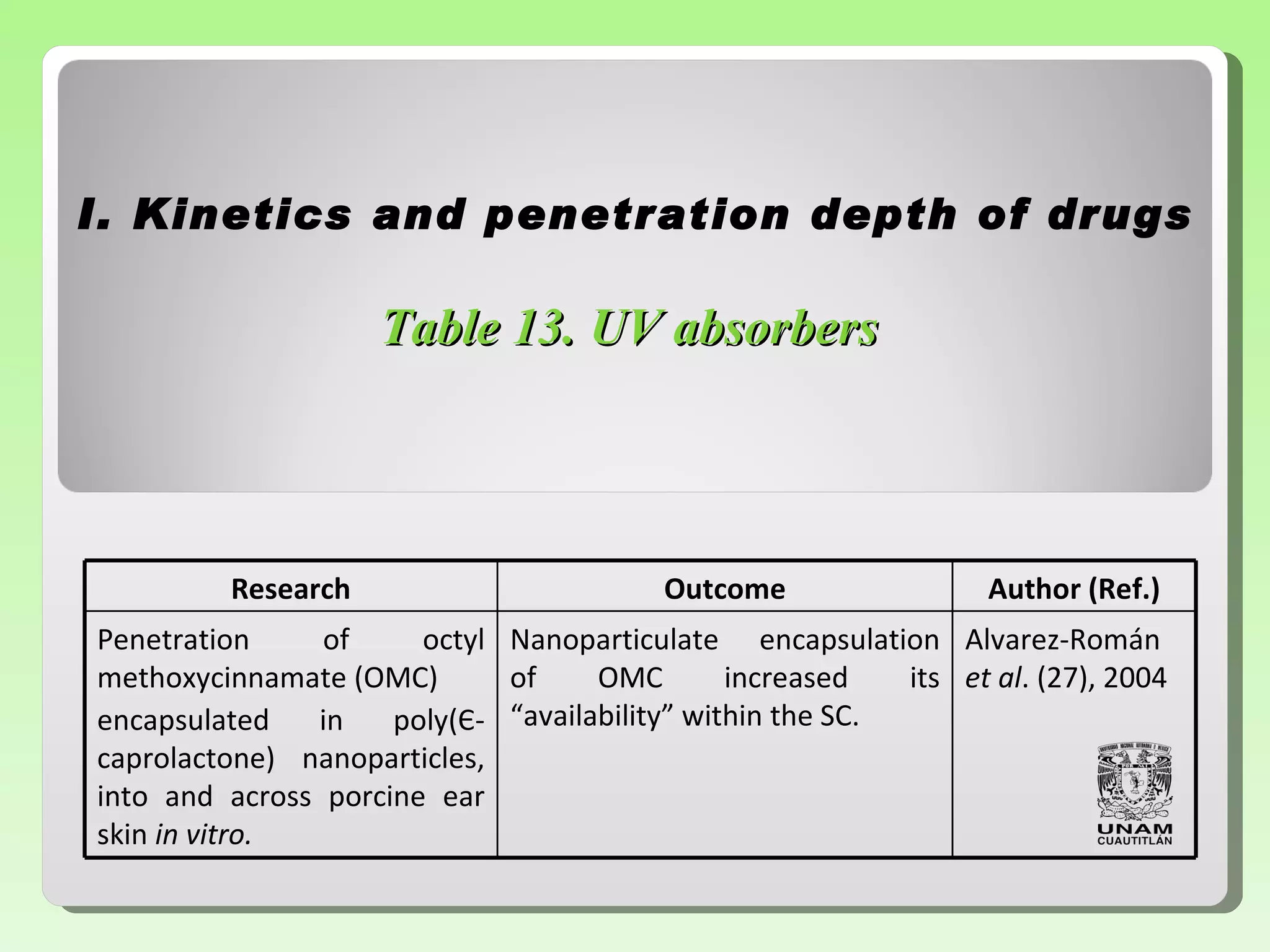
I.  Kinetics and penetration depth of drugs Table 13.  UV absorbers   Research Outcome Author (Ref.) Penetration of octyl   methoxycinnamate (OMC) encapsulated in poly(Є-caprolactone) nanoparticles, into   and across porcine ear skin  in   vitro. Nanoparticulate encapsulation of OMC   increased its “availability” within the   SC. A lvarez-Román  et al .   ( 27 ), 2004
Table 13.  UV absorbers   Research Outcome Author (Ref.) In vivo  distribution profile of OMC   contained in   nanocapsules (NCs)   through the SC. Comparison with a nanoemulsion (NE) and a  c onventional o/w emulsion  ( EM). NE increased the extent of OMC   penetration relative to the  p enetration   achieved by NCs or EM. Olvera-Martínez  et al  (2 8 ),   2005 Amount of sunscreen present on   the skin of people at the beach. The best protected areas were the upper   arm and décolleté, but even in these   areas, most volunteers had applied only   10% of the COLIPA standard amount. Lademann  et al .  ( 29 ), 2004 Penetration of titanium dioxide   (TiO 2 ) and methylene   bisbenzotriazoyltetramethylbutylphenol (MBBT), included in a   broad-spectrum sunscreen   formulation, into human skin in   vivo, using the TS method, and  in   vitro , using a compartmental   approach. In vivo  and  in vitro  penetration studies   showed an absence of TiO 2  penetration   into viable skin layers through either   ranscorneal or transfollicular   pathways, and a negligible   transcutaneous  a bsorption of MBBT. Mavon  et al . ( 30 ), 2007
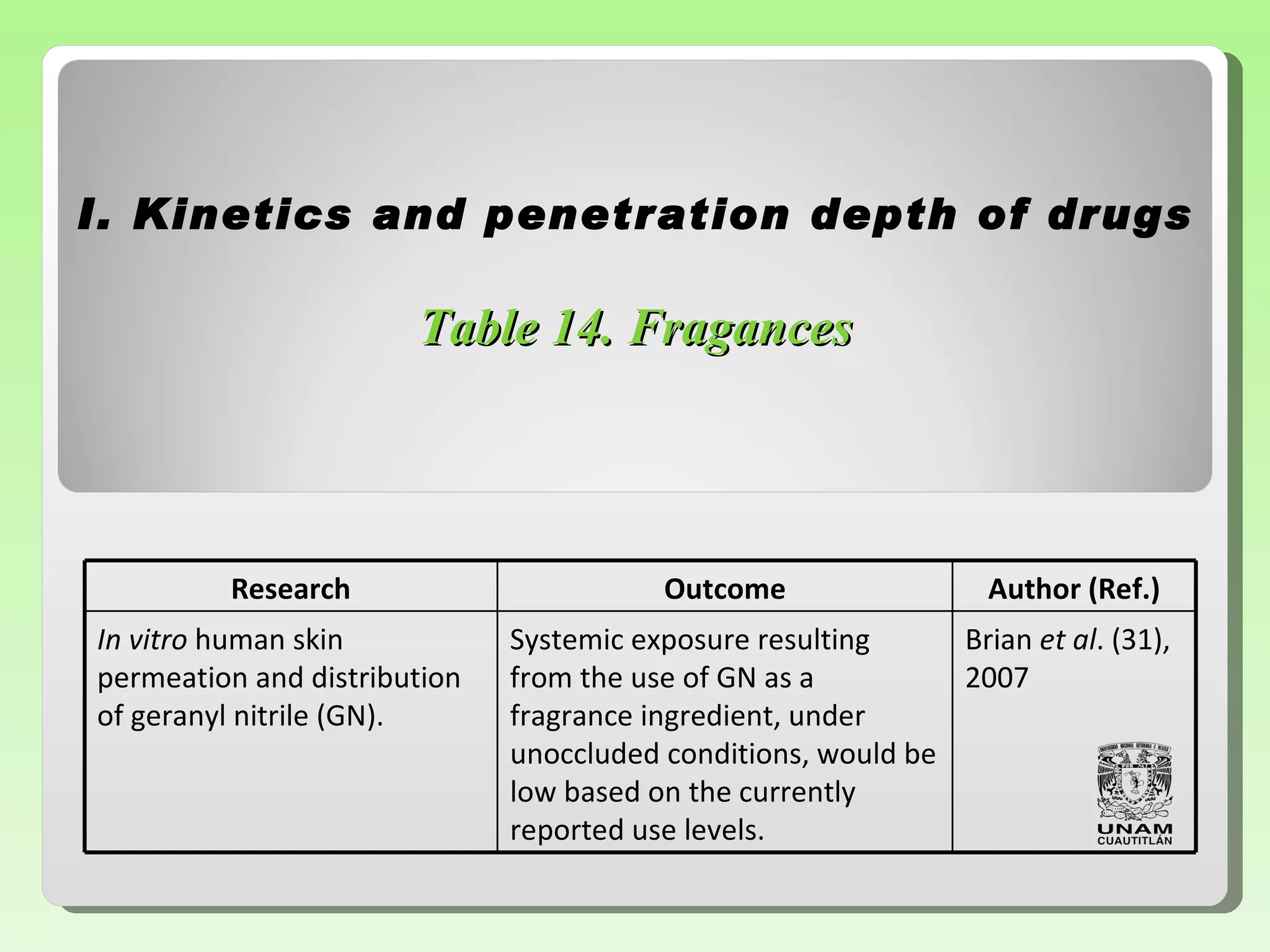
I.  Kinetics and penetration depth of drugs Table 14.  Fragances Research Outcome Author (Ref.) In vitro  human skin  p ermeation   and distribution of geranyl nitrile   (GN) . Systemic exposure resulting from the   use of GN as a fragrance ingredient,   under unoccluded conditions, would be   low based on the currently reported use   levels. Brian  et al . ( 31 ), 2007
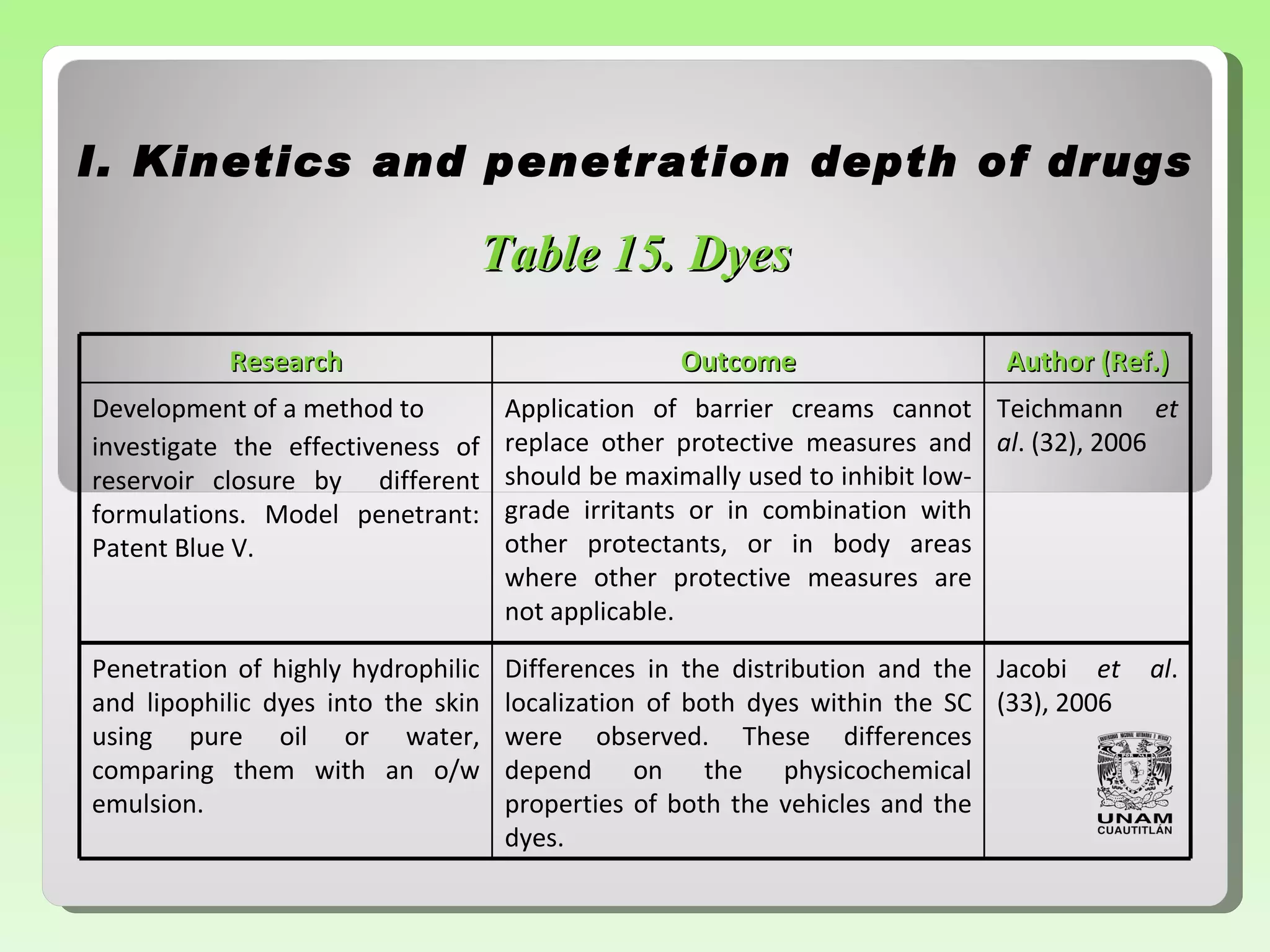
Table 15.  Dyes I.  Kinetics and penetration depth of drugs Research Outcome Author (Ref.) Development of a method to investigate the effectiveness of   reservoir closure by   different   formulations. Model penetrant:   Patent Blue V. Application of barrier creams   cannot   replace other protective measures and   should be   maximally used to inhibit   low-grade irritants or in combination   with other protectants, or in body areas   where other protective   measures are   not applicable. Teichmann  et al . ( 32 ),   2006 Penetration of highly   hydrophilic   and lipophilic dyes into the skin   using pure oil or water, comparing   them   with an o/w emulsion. Differences in the distribution   and the   localization of both dyes within the SC   were observed.   These differences   depend on the physicochemical   properties of both the vehicles and the   dyes. Jacobi  et al . ( 33 ), 2006
II.  Dermal absorption of toxic or irritant chemicals Research Outcome Author (Ref.) Development and testing of a   simple, non-invasive dermal   sampling technique on human   volunteers under laboratory   conditions to estimate acute   dermal   exposure to jet fuel (JP-8). Naphthalene has a short retention   time in the human SC and the tape   stripping method, if used within 20   min of the initial exposure, can be   employed to measure the amount of   naphthalene in the SC due to a single   exposure to jet fuel. Mattorano  et al . (3 4 ), 2004 Description of a physiologically   based pharmacokinetic (PBPK)   model developed to simulate the absorption of organophosphate   pesticides, such as parathion,   fenthion, and methyl parathion,   through porcine skin with flowthrough   Cells . The study demonstrated the utility of   PBPK models for studying dermal   absorption, which can be useful as   explanatory and predictive tools. Van der Merwe  et al . ( 3 5), 2006
II.  Dermal absorption of toxic or irritant chemicals Research Outcome Author (Ref.) Normalization of extracted   concentrations of naphthalene (as a   marker for jet fuel exposure) from   human volunteers, before and after   exposure to jet fuel (JP-8).   Removal and quantification of   keratin by stratum corneum TS The amount of keratin removed with   tape strips was not affected by an   exposure of up to 25 min to JP-8, and   there was a substantial decrease in the   amount of keratin removed with   consecutive tape strippings from the   same site; thus, adjusting the amount   of naphthalene to the amount of   keratin measured in a tape-strip   sample should improve the   interpretation of the amount of this   analyte by using this sampling   approach. Chao  et al . (3 6 ), 2004 Study of whether the sodium lauryl   sulphate (SLS) penetration rate   into the SC is related to an   impairment of skin’s water barrier   function and inflammation. Variation in barrier impairment and   inflammation of human skin depends on SLS penetration rate, which was   mainly determined by SC thickness. Jongh et al ( 37 ), 2006 Modification and testing of a   vacuuming sampler for removing   particles from the skin. Agreement between the vacuuming   sampler and the TS technique. Lundgren et al.( 38 ), 2006
III.  Evaluation of factors that influence the  physiology of the stratum corneum Research Outcome Author (Ref.) Effect of gender on the physiology   of the SC. The skin of women was characterized   by a significantly higher pH value   (5.6±0.4) than that of men (4.3±0.4).   Protein absorption was the only other   parameter significantly dependent on   gender. J acobi  et al . ( 39 ), 2005 Influence of procedures inherent to   each stripping protocol on changes   in skin physiology. Skin hydration was not influenced by   the variables tested. Löffler  et al . (4 0 ), 2004 Efficacy of TS in removing   complete cell layers from the   superficial part of human SC. Furrows in the skin can present   difficulties when performing depth   penetration studies. Although the   largest part of the skin surface will be   stripped properly, it has to be realized that small areas, represented by   furrows, may still contain high   concentrations of the substance   applied. Van der Molen  et al.  (4 1 ),   1997 Local changes in the ultrastructure   of human skin after iontophoresis   in human skin  in vitro  and  in vivo . No drastic changes in the   ultrastructure of the SC were   observed. Fatouros  et al . ( 42 ), 2006
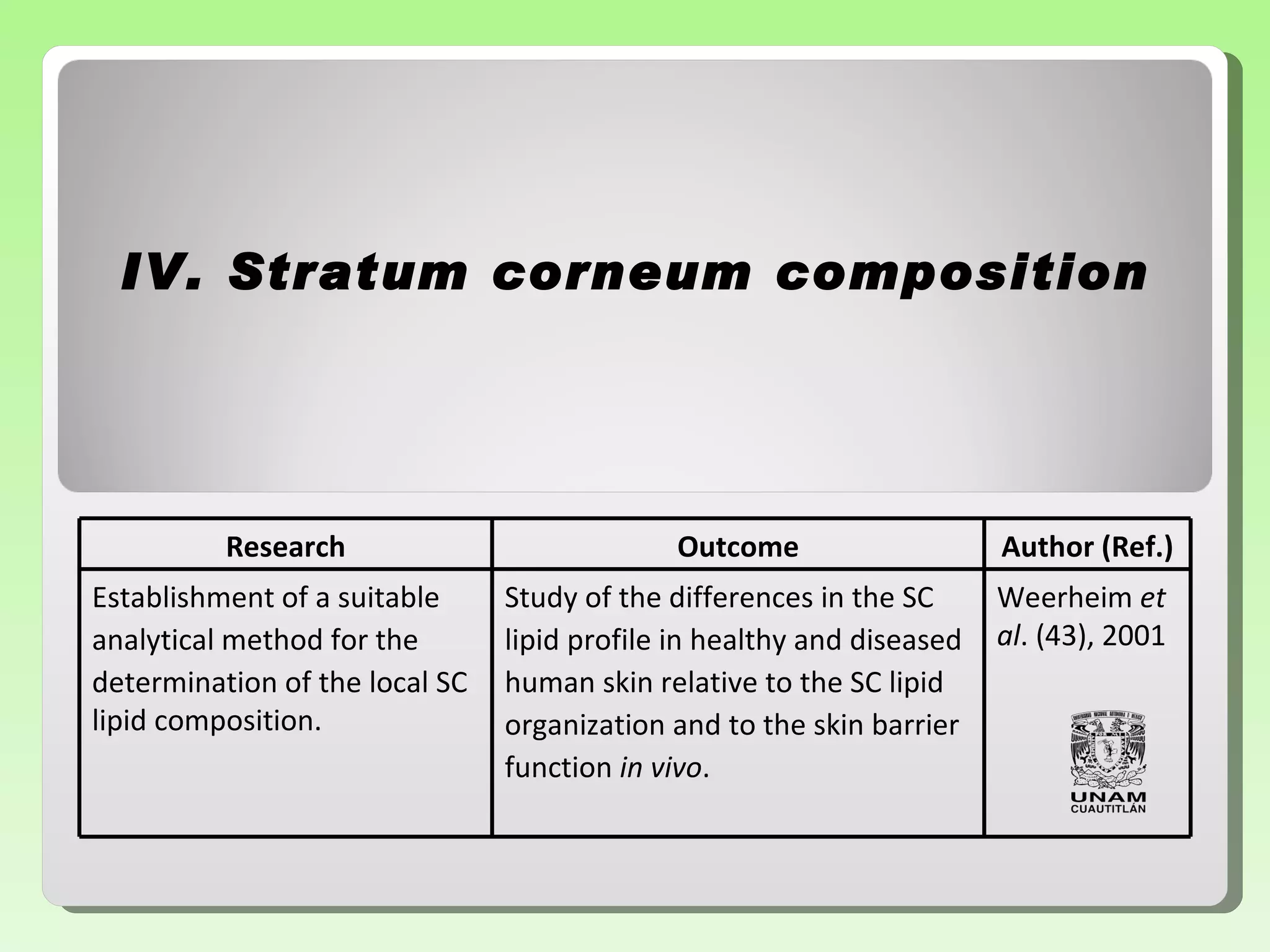
IV.  Stratum corneum composition Research Outcome Author (Ref.) Establishment of a suitable analytical method for the determination of the local SC lipid   composition. Study of the differences in the SC lipid profile in healthy and diseased human skin relative to the SC lipid organization and to the skin barrier function  in vivo . Weerheim  et al . ( 43 ),   2001
V.  Stratum corneum thickness Research Outcome Author (Ref.) Evaluated, using attenuated total reflectance Fourier transform   infrared spectroscopy, the SC   bioavailability of terbinafine (TBF)   following topical treatment with   four different formulations, based   on a vehicle consisting of 50%   ethanol and 50% isopropyl   myristate. It was found that the formulation   containing 5% oleic acid significantly   enhanced the SC availability of TBF. Alberti  et al . ( 44 ),   2001 Determined whether a structurally   heterogeneous biomembrane,   human SC, behaved as a   homogeneous barrier to water   transport. The variation of TEWL as a function   of SC removal behaved in a manner   entirely consistent with a   homogeneous barrier, thereby   permitting the apparent SC diffusivity   of water to be found. Kalia  et al . ( 45 ), 1996
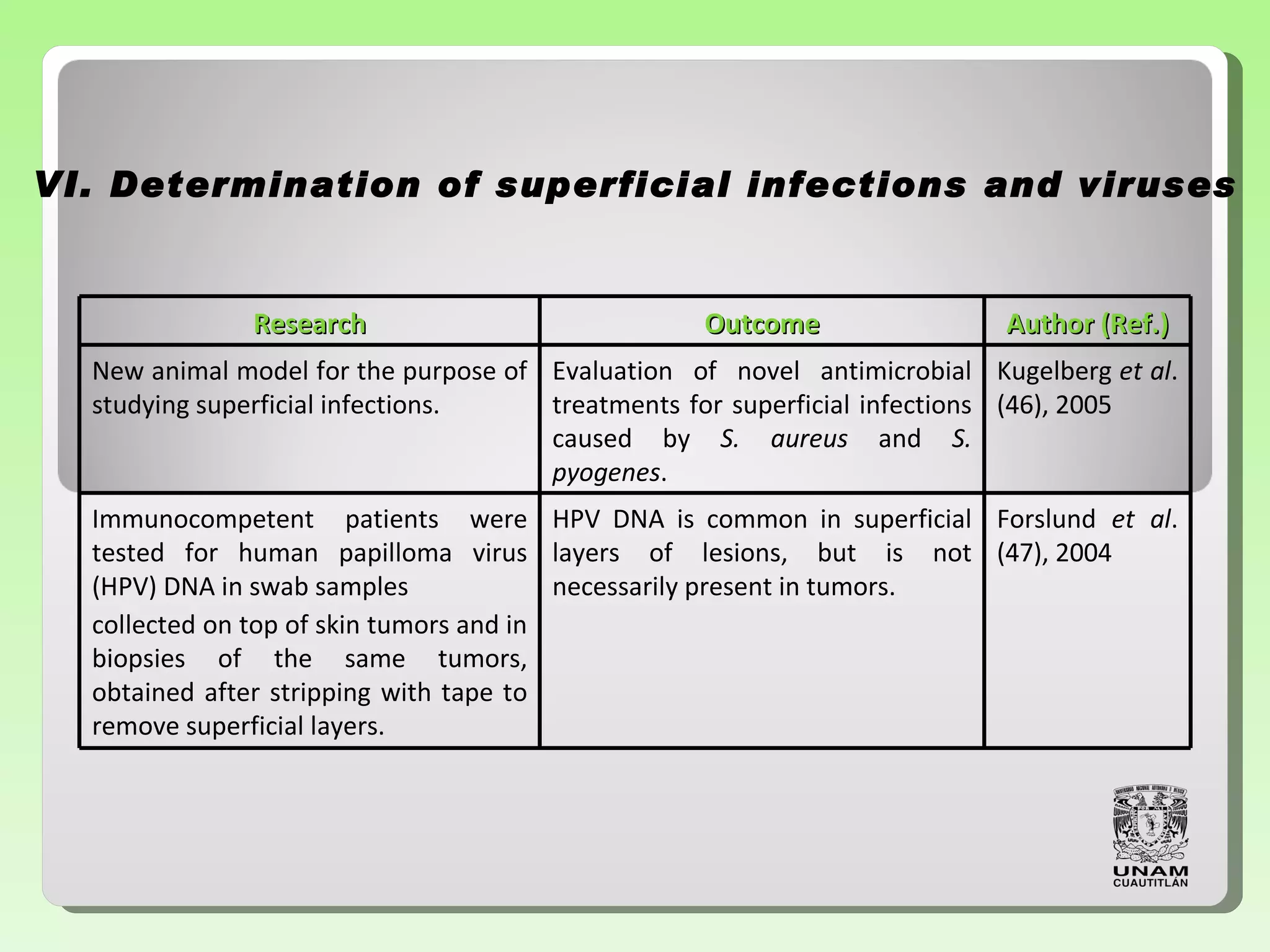
VI.  Determination of superficial infections and viruses Research Outcome Author (Ref.) New animal model for the   purpose   of studying superficial infections. Evaluation of novel antimicrobial   treatments for superficial infections   caused by  S. aureus  and  S.   pyogenes . Kugelberg  et al . ( 46 ), 2005 Immunocompetent patients were   tested for human papilloma virus   (HPV) DNA in swab samples collected on top of skin tumors and   in biopsies of the same tumors,   obtained after stripping with tape   to remove superficial layers. HPV DNA is common in superficial   layers of lesions, but is not   necessarily present in tumors. Forslund  et al . ( 47 ), 2004
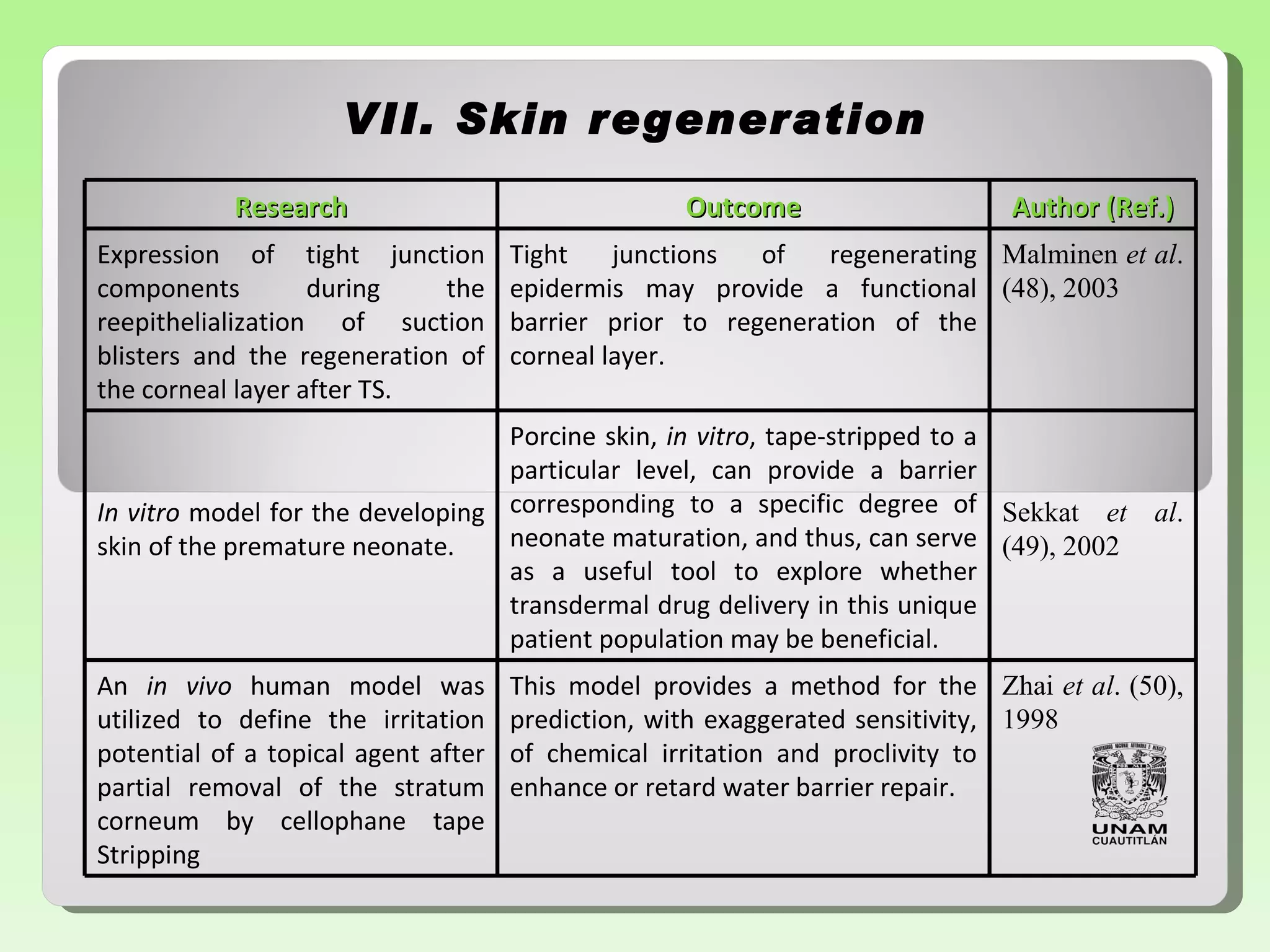
VII.  Skin regeneration Research Outcome Author (Ref.) Expression of tight junction   components during the   reepithelialization of suction   blisters and the regeneration of the   corneal layer after TS. Tight junctions of regenerating   epidermis may provide a functional   barrier prior to   regeneration of the   corneal layer. Malminen  et al . ( 48 ), 2003 In vitro  model for the developing   skin of the premature neonate. Porcine skin,  in vitro , tape-stripped to   a particular level, can provide a   barrier corresponding to a specific   degree of neonate maturation, and   thus, can serve as a useful tool to   explore whether transdermal drug   delivery in this unique patient   population may be beneficial. Sekkat  et al . ( 49 ), 2002 An  in vivo  human model was   utilized to define the irritation   potential of a topical agent after   partial removal of the stratum   corneum by cellophane tape   Stripping This model provides a method for the   prediction, with exaggerated   sensitivity, of chemical irritation and   proclivity to enhance or retard water   barrier repair. Zhai  et al . ( 50 ), 1998
CONCLUSION The quantification of drugs within the skin is   essential for topical and transdermal delivery   research. Over the last two decades, horizontal   sectioning, consisting of TS, has been the   traditional investigative technique.  TS of the  outermost skin layer, the SC, is a fast and   relatively non-invasive technique for measuring   the rate and extent of dermal absorption. Tape   stripping data have been used to estimate   permeability coefficients and partition   coefficients, SC mass, barrier function, drug   reservoir from  in vivo  dermal exposures, and even   to explain the SC physiology. TS has also been   proposed as a method for   evaluating the   bioequivalence of topical dermatological dosage   forms.
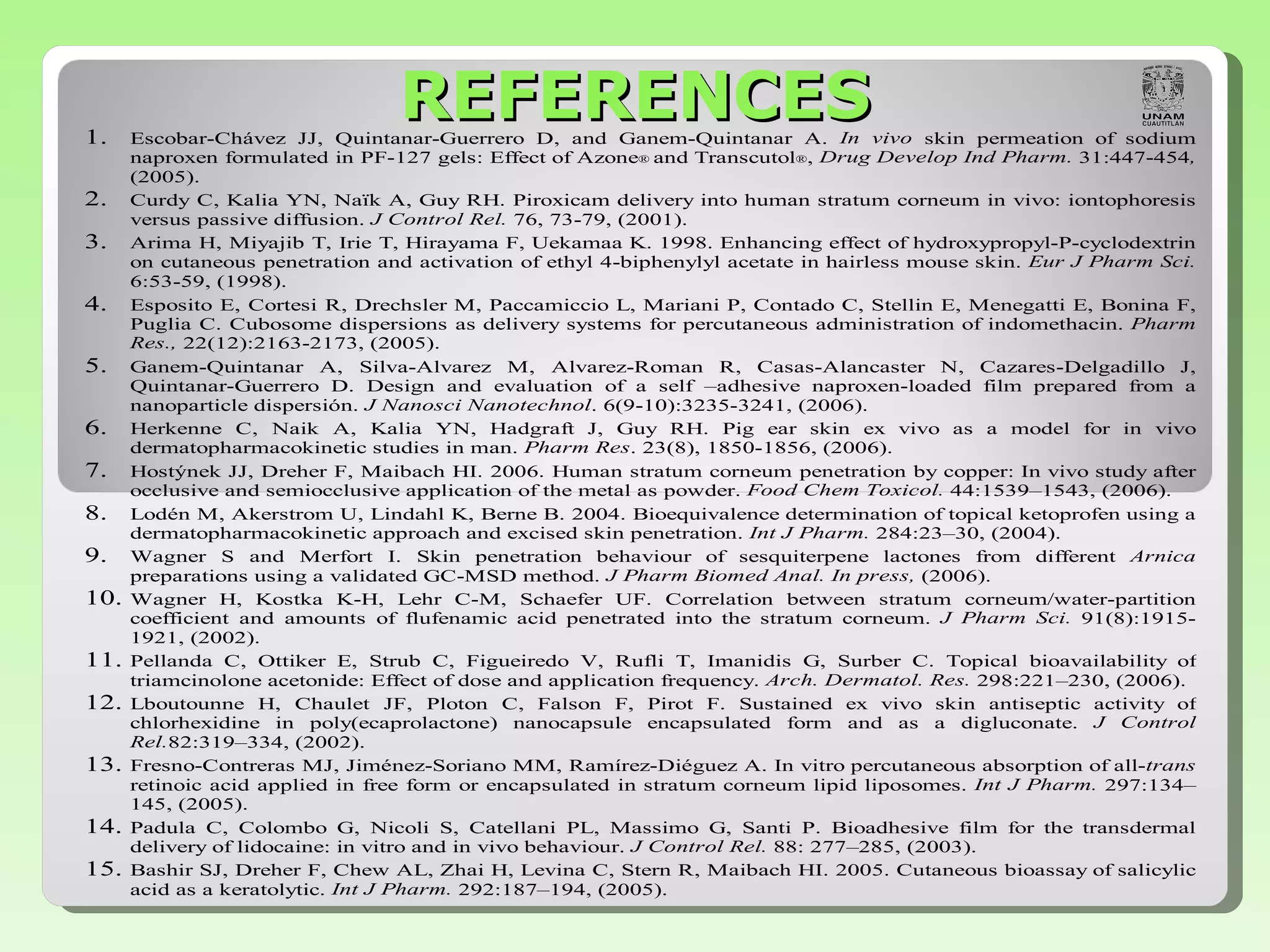
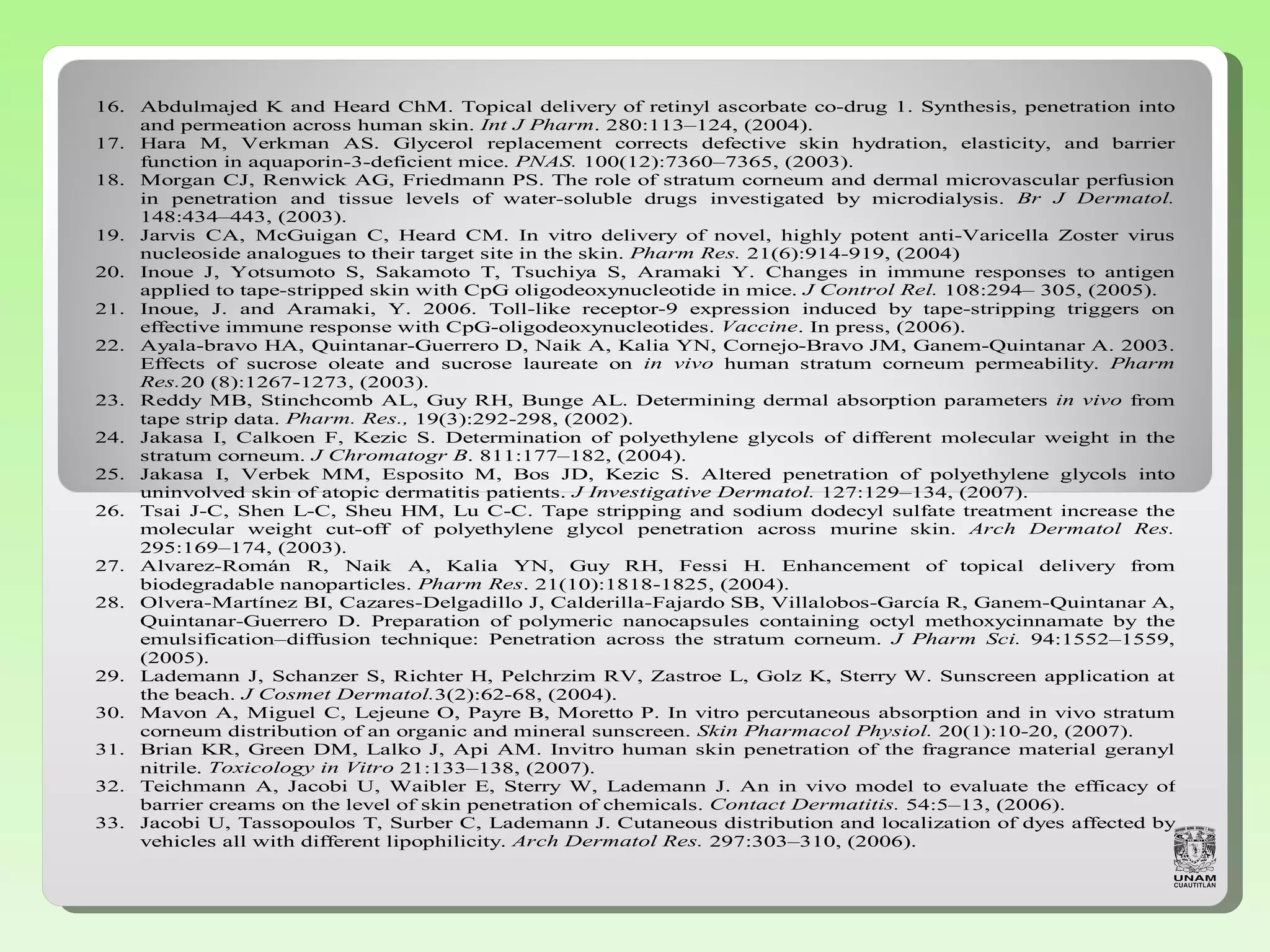
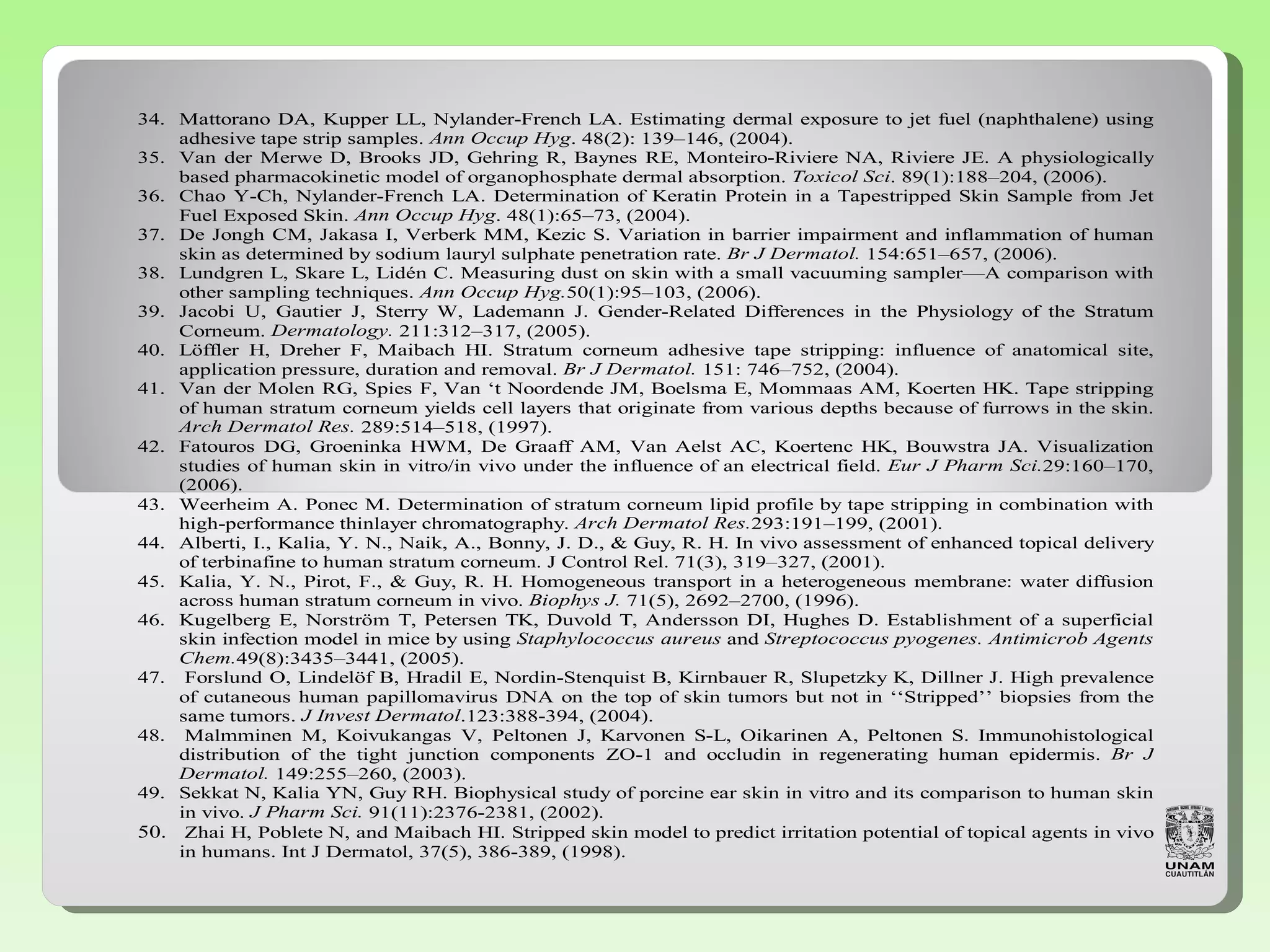
REFERENCES
 
 
ACKNOWLEDGMENTS José Juan Escobar-Chávez wishes to acknowledge   the PROFIP/UNAM grant. The authors also thank   the financial support from PAPIIT/UNAM   (Reference IN213205).

THE TAPE STRIPPING TECHNIQUE TO QUANTIFY DRUGS THROUGH OUT THE SKIN THE TAPE STRIPPING TECHNIQUE TO QUANTIFY DRUGS THROUGH OUT THE SKIN

  • 1.
    THE TAPE STRIPPINGTECHNIQUE TO QUANTIFY DRUGS THROUGH OUT THE SKIN José Juan Escobar-Chávez, Miriam López-Cervantes, Luz María Melgoza-Contreras, David Quintanar Guerrero, Adriana Ganem-Quintanar
  • 2.
    INTRODUCTION Tape strippingof human stratum corneum (SC) is widely used as a method for studying the kinetics and penetration depth of drugs. This paper shows the applications of the tape stripping technique to quantify drug penetration through the skin, underlining its versatile application in the area of topical and transdermal drugs.
  • 3.
    THE SKIN Essentially,the skin consists of four layers: The SC, that is the outer layer of the skin (non-viable epidermis), and forms the rate-controlling barrier for diffusion for almost all compounds .
  • 4.
    THE SKIN Theother layers are: the remaining layers of the epidermis (viable epidermis), the dermis, and the subcutaneous tissues (Fig . 1). There are also several associated appendages: hair follicles, sweat ducts, apocrine glands and nails.
  • 5.
    Fig. 1 Layersof human skin
  • 6.
    STRATUM CORNEUM Itis composed of dead flattened, keratin-rich cells, the corneocytes. These dense cells are surrounded by a complex mixture of intercellular lipids, namely, ceramides, free fatty acids, cholesterol, and cholesterol sulphate. Their most important feature is that they are structured as ordered bilayer arrays.
  • 7.
    The main interestin dermal absorption assessment is related to: a) Local effects in dermatology (e.g., corticosteroids); b) transport through the skin seeking a systemic effect (e.g., nicotine and hormonal drug patches); c) surface effects (e.g., sunscreens, cosmetics, and anti-infectives); d) targeting of deeper tissues (e.g., nonsteroidal anti-inflammatory agents); and e) unwanted absorption (e.g., solvents in the workplace, pesticides or allergens). DERMAL ABSORTION
  • 8.
    Fi g. 2 Processes of percutaneous absorption and transdermal delivery
  • 9.
    TAPE STRIPPING TECHNIQUEThe simplest method for reducing the barrier imposed by the SC is to remove it. A n adhesive tape removes a layer of corneocytes. In vivo, removal of the SC by TS is performed by the repeated application of adhesive tapes to the skin’s surface. It has been found that on the flexor surface of the forearm, about 30 tape strips are needed to strip off most of the horny layer. Usually, the amount of SC removed by TS is not linearly proportional to the number of tapes removed .
  • 10.
    Fig . 3 D etailed procedure of the tape tripping technique
  • 11.
    TAPE STRIPPING TECHNIQUED ifferent parameters that can influence the quantity of SC removed by a piece of tape, these include TS mode, skin hydration, cohesion between cells (which increases with SC’s depth), the body site and inter-individual differences . various brands of tape differ in shape, surface area, composition and adhesive properties, the influence of the tape brand on the outcome seems apparent .
  • 12.
    This method canbe used to obtain a more susceptible skin, e.g., prior to the application of an irritant or an allergen. Similarly, TS is performed to induce a defined disruption of the water barrier, e.g., to evaluate the effect of a subsequently applied skin care product in barrier restoration. It may be also used to obtain cells for mycological culture or to investigate SC quality. In dermatopharmacology, the SC barrier function and the bioavailability and bioequivalence of topical drugs can be evaluated with the use of this technique. APPLICATIONS OF THE TAPE-STRIPPING TECHNIQUE
  • 13.
    The determination ofthe kinetics and penetration depth of different kind of permeants by tracing the concentration profiles in SC, has been facilitated by the use of the virtually non-invasive method of SC stripping with adhesive tape . A typical profile obtained from a skin permeation study with sodium naproxen is shown in figure 4. APPLICATIONS OF THE TAPE-STRIPPING TECHNIQUE
  • 14.
    Fi g. 4 Penetration profiles across human SC of Sodium naproxen formulated in PF-127 gels with different penetration enhancers [Azone ® -Transcutol ® mixture , Transcutol ® applying an infinite dose , and a film with Azone ® -Transcutol ® mixture , Transcutol ® ] (Mean± SD; n = 6) (1).
  • 15.
    APPLICATIONS OF THE TAPE-STRIPPING TECHNIQUE I. Kinetics and penetration depth of drugs Table 1. Analgesic and anti-inflammatory drugs Research Outcome Author (Ref.) Effect of Azone® and T ranscutol® on skin permeation of sodium naproxen formulated in PF- 1 27gels. The combination of Azone® and Transcutol® in PF-127 gels enhanced sodium naproxen penetration, with up to two-fold enhancement ratios compared with the formulation containing Transcutol® only. Escobar-Chávez et al . ( 1 ), 2005 .
  • 16.
    Table 1. Analgesic and anti-inflammatory drugs Research Outcome Author (Ref.) Administration of piroxicam from a commercially vailable gel to human volunteers, both passively and under the application of an iontophoretic current. The total amount of drug recovered in the SC post-iontophoresis by TS was significantly higher than that found following passive diffusion for each application time. Curdy et al . ( 2 ), 2001 Effect of hydroxypropyl-Pcyclodextrin (HP-P-CD) on the cutaneous p enetration and activation of ethyl 4-biphenylyl acetate (EBA), a prodrug of nonsteroidal anti-inflammatory drug 4-biphenylylacetic acid (BPAA), from hydrophilic ointment, usinghairless mouse skin in vitro. The enhancing effect of HP-P-CD on the cutaneous penetration of EBA would be largely attributable to an increase in the effective concentration of EBA in the ointment. Arima et al . ( 3 ), 1998 Production and characterization of monoleine (MO) dispersions as drug delivery systems for indomethacin. Reflectance spectroscopy demonstrated that indomethacin incorporated into MO dispersions can be released in a prolonged fashion. With TS was corroborated Esposito et al . (4), 2005
  • 17.
    Table 1. Analgesic and anti-inflammatory drugs Research Outcome Author (Ref.) Unilaminar films of Eudragit E-100 prepared from naproxenloaded nanoparticles vs.conventional films. In vivo penetration studies showed no statistical differences for the penetrated amount of naproxen across the SC and the depth of penetration for the two films. The films formulated from nanoparticle dispersions were shown to be effective for the transdermal administration of naproxen. Ganem-Quintanar et al. (5), 2006 Investigation of pig ear skin as a surrogate for human skin in the assessment of topical drug bioavailability by sequential TS of SC. Pig ear skin ex vivo is promising as a tool for topical formulation evaluation and optimization. Herkenne et al. (6), 2006 Examination of the diffusion of copper through human SC in vivo following application of the metal as powder on the volar forearm , periods of up to 72 h Copper will oxidize and may penetrate the stratum corneum after forming an ion pair with skin exudates. The rate of reaction seems to depend on contact time and oxygen availability. A marked inter-individual difference was observed in baseline values and the amounts of copper absorbed. Hostýnek et al. (7), 2006
  • 18.
    Table 1. Analgesic and anti-inflammatory drugs Research Outcome Author (Ref.) Comparison of the bioavailability of ketoprofen in a photostabilised gel f ormulation without photoprotection using a new dermatopharmacokinetic TS model and an established ex vivo penetration method using human skin . The comparison of the amount of k etoprofen in the skin after 45 min with the amount penetrated through the excised skin during 36 h, suggests a change in the thermodynamic activity of ketoprofen during exposure. Lodén et al. (8), 2004 Penetration kinetics of SLs (sesquiterpene lactones) in Arnica montana preparations, by using a stripping method with adhesive tape and pig skin as a model. Gel preparation showed a decrease in penetration rate, whereas the penetration rate of ointments remained constant over time. The total amount of SLs penetrated depends only on the kind of formulation and the SLscontent, but not on SLs composition or on the extraction agent used. Wagner Steffen et al. (9), 2006 Penetration experiments investigating several incubation times with three different skin flaps, using the Saarbruecken penetration model and the lipophilic model drug flufenamic a cid . A direct linear correlation was found between the SC/water partition coefficients and the drug amounts penetrated into the SC for all time intervals tested. Wagner Heike et al. ( 1 0), 2002
  • 19.
    I. Kineticsand penetration depth of drugs Table 2. Corticosteroids Research Outcome Author (Ref.) Effect of dose and application frequency on the penetration of triamcinolone acetonide (TACA) into human SC in vivo . Considerable TACA amounts were retained within the SC, independently of dose and application frequency. Pallenda et al . ( 1 1), 2006
  • 20.
    I. Kineticsand penetration depth of drugs Table 3. Disinfectants Research Outcome Author (Ref.) Sustained bactericidal activity of chlorhexidine base loaded poly (Є-caprolactone) n anocapsules against Staphylococcus epidermidis inoculated onto porcine ear skin. Topical application of chlorhexidine base-loaded positively charged nanocapsules in an aqueous gel achieved a sustained release of bactericide against Staphylococcus epidermidis for at least 8 h. Lboutounne et al. ( 1 2), 2002
  • 21.
    I. Kineticsand penetration depth of drugs Table 4. Drugs for keratinization disorders Research Outcome Author (Ref.) Design of an all- trans retinoic acid (RA) topical release system that modifies drug diffusion parameters in the vehicle and the skin, in order to reduce the systemic absorption and side-effects associated with the topical application of the drug to the skin. RA encapsulation not only prolongs drug release, but also promotes drug retention in viable skin. Fresno-Contreras et al . ( 1 3), 2005
  • 22.
    I. Kineticsand penetration depth of drugs Table 5. Anesthetics Research Outcome Author (Ref.) Behaviour of a skin b ioadhesive film containing lidocaine in vitro and in vivo. In vivo experiments with TS indicated that the presence of water during film application is essential to achieve not only the proper adhesion, but also an effective accumulation. Padula et al . ( 1 4), 2003
  • 23.
    I. Kineticsand penetration depth of drugs Table 6. Keratolytics Research Outcome Author (Ref.) Keratolytic efficacy of topical preparations containing s alicylic acid in humans by TS, and quantification of SC removal by protein analysis. TS combined with protein analysis was sensitive in detecting the keratolytic effect of salicylic acid within hours of application. Bashir et al . ( 1 5), 2005
  • 24.
    I. Kineticsand penetration depth of drugs Table 7. Retinoids and antioxidants Research Outcome Author (Ref.) Novel synthetic technique to synthesize the co-drug retinyl ascorbate (RA-AsA) ester from all trans -retinyl chloride (RA) and lascorbic acid (AsA) suspended in ethanol at low temperature. The data suggest the potential value of RA-AsA co-drug for treating damage to skin resulting from UV-induced production of free radicals. Abdulmajed et al . ( 1 6), 2004
  • 25.
    I. Kineticsand penetration depth of drugs Table 8. Aquaporine-3 Research Outcome Author (Ref.) Glycerol replacement corrects each of the defects in aquaporine-3 (AQP3)-null mice. The findings establish a scientific basis for the >200-yr-old empirical practice of including glycerol in cosmetic and medicinal skin formulations due to its influence on water retention and the mechanical and biosynthetic functions of SC. Hara et al . ( 1 7), 2003
  • 26.
    I. Kineticsand penetration depth of drugs Table 9. Antiviral drugs Research Outcome Author (Ref.) Contribution of SC barrier and microvascular perfusion in determining dermal tissue levels of hydrophilic drugs (aciclovir and penciclovir) in vivo . There was no relationship between fibre depth and the amount of drug dialysed, which suggests free movement of antiviral drug on reaching the aqueous environment of the dermis. Morgan et al . ( 1 8), 2003
  • 27.
    I. Kineticsand penetration depth of drugs Table 10. Anti-Varicella Zoster virus nucleoside Research Outcome Author (Ref.) Determination of the in-vitro dermal delivery of a new class of lipophilic, highly potent and uniquely selective anti-VZV nucleoside analogue compared with aciclovir. Topical delivery of these compounds is highly promising as a new first line treatment for VZV infections. Jarvis et al . ( 1 9), 2004
  • 28.
    I. Kineticsand penetration depth of drugs Table 11. Vaccines Research Outcome Author (Ref.) Effect of CpG oligodeoxynucleotide (CpG-ODN) on the immune response to an antigen applied to tape-stripped mouse skin by evaluating the production of cytokines and Ig isotypes. Administration of CpG ODN through skin is a simple strategy for patients with diseases like atopic dermatitits, which is characterized by Th2-dominated inflammation. Inoue et al ., (20, 21) 2005, 2006
  • 29.
    I. Kineticsand penetration depth of drugs Table 12. Other kind of permeants (Polyethylene glycols, 4-cyanophenol) Research Outcome Author (Ref.) Effect of sucrose esters (sucrose oleate and sucrose laureate in water or Transcutol®, TC) on the SC barrier properties in vivo. Impact of these molecules on the in vivo percutaneous penetration of 4-hydroxybenzonitrile (4-HB). A combination of sucrose esters (oleate or laureate) and TC is able to temporarily alter the SC barrier p roperties, thereby promoting 4-HB penetration. Ayala-Bravo et al . ( 22 ), 2003
  • 30.
    Table 12. Other kind of permeants (Polyethylene glycols, 4-cyanophenol Research Outcome Author (Ref.) Absorption of 4-cyanophenol (4CP) in humans using TS experiments to assess the conditions under which diffusion alters tape stripping results. Chemical concentrations in TSs can be affected by diffusion during tape stripping, but with tTS < 0.2 tlag and an exposure time > 0.3 tlag, TS concentrations are not significantly affected by tTS. Reddy et al. ( 23 ), 2002 Development of a sensitive method for the determination of polyethylene glycols with different molecular weights (MW) in the human SC obtained by TS. The method showed to be suitable for studying permeability in normal and impaired skin with respect to MW in the range of 150–600 Da. Jakasa et al. ( 24 , 25 ), 2004, 2007 Dependence of permeability on molecular weight with different forms of barrier disruption. Irrespectively of the form of barrier disruption, not only higher amounts, but also more varieties of chemicals (larger molecules) may penetrate into the skin in the presence of a compromised barrier, compared with normal skin. Tsai et al. ( 26 ), 2003
  • 31.
    I. Kineticsand penetration depth of drugs Table 13. UV absorbers Research Outcome Author (Ref.) Penetration of octyl methoxycinnamate (OMC) encapsulated in poly(Є-caprolactone) nanoparticles, into and across porcine ear skin in vitro. Nanoparticulate encapsulation of OMC increased its “availability” within the SC. A lvarez-Román et al . ( 27 ), 2004
  • 32.
    Table 13. UV absorbers Research Outcome Author (Ref.) In vivo distribution profile of OMC contained in nanocapsules (NCs) through the SC. Comparison with a nanoemulsion (NE) and a c onventional o/w emulsion ( EM). NE increased the extent of OMC penetration relative to the p enetration achieved by NCs or EM. Olvera-Martínez et al (2 8 ), 2005 Amount of sunscreen present on the skin of people at the beach. The best protected areas were the upper arm and décolleté, but even in these areas, most volunteers had applied only 10% of the COLIPA standard amount. Lademann et al . ( 29 ), 2004 Penetration of titanium dioxide (TiO 2 ) and methylene bisbenzotriazoyltetramethylbutylphenol (MBBT), included in a broad-spectrum sunscreen formulation, into human skin in vivo, using the TS method, and in vitro , using a compartmental approach. In vivo and in vitro penetration studies showed an absence of TiO 2 penetration into viable skin layers through either ranscorneal or transfollicular pathways, and a negligible transcutaneous a bsorption of MBBT. Mavon et al . ( 30 ), 2007
  • 33.
    I. Kineticsand penetration depth of drugs Table 14. Fragances Research Outcome Author (Ref.) In vitro human skin p ermeation and distribution of geranyl nitrile (GN) . Systemic exposure resulting from the use of GN as a fragrance ingredient, under unoccluded conditions, would be low based on the currently reported use levels. Brian et al . ( 31 ), 2007
  • 34.
    Table 15. Dyes I. Kinetics and penetration depth of drugs Research Outcome Author (Ref.) Development of a method to investigate the effectiveness of reservoir closure by different formulations. Model penetrant: Patent Blue V. Application of barrier creams cannot replace other protective measures and should be maximally used to inhibit low-grade irritants or in combination with other protectants, or in body areas where other protective measures are not applicable. Teichmann et al . ( 32 ), 2006 Penetration of highly hydrophilic and lipophilic dyes into the skin using pure oil or water, comparing them with an o/w emulsion. Differences in the distribution and the localization of both dyes within the SC were observed. These differences depend on the physicochemical properties of both the vehicles and the dyes. Jacobi et al . ( 33 ), 2006
  • 35.
    II. Dermalabsorption of toxic or irritant chemicals Research Outcome Author (Ref.) Development and testing of a simple, non-invasive dermal sampling technique on human volunteers under laboratory conditions to estimate acute dermal exposure to jet fuel (JP-8). Naphthalene has a short retention time in the human SC and the tape stripping method, if used within 20 min of the initial exposure, can be employed to measure the amount of naphthalene in the SC due to a single exposure to jet fuel. Mattorano et al . (3 4 ), 2004 Description of a physiologically based pharmacokinetic (PBPK) model developed to simulate the absorption of organophosphate pesticides, such as parathion, fenthion, and methyl parathion, through porcine skin with flowthrough Cells . The study demonstrated the utility of PBPK models for studying dermal absorption, which can be useful as explanatory and predictive tools. Van der Merwe et al . ( 3 5), 2006
  • 36.
    II. Dermalabsorption of toxic or irritant chemicals Research Outcome Author (Ref.) Normalization of extracted concentrations of naphthalene (as a marker for jet fuel exposure) from human volunteers, before and after exposure to jet fuel (JP-8). Removal and quantification of keratin by stratum corneum TS The amount of keratin removed with tape strips was not affected by an exposure of up to 25 min to JP-8, and there was a substantial decrease in the amount of keratin removed with consecutive tape strippings from the same site; thus, adjusting the amount of naphthalene to the amount of keratin measured in a tape-strip sample should improve the interpretation of the amount of this analyte by using this sampling approach. Chao et al . (3 6 ), 2004 Study of whether the sodium lauryl sulphate (SLS) penetration rate into the SC is related to an impairment of skin’s water barrier function and inflammation. Variation in barrier impairment and inflammation of human skin depends on SLS penetration rate, which was mainly determined by SC thickness. Jongh et al ( 37 ), 2006 Modification and testing of a vacuuming sampler for removing particles from the skin. Agreement between the vacuuming sampler and the TS technique. Lundgren et al.( 38 ), 2006
  • 37.
    III. Evaluationof factors that influence the physiology of the stratum corneum Research Outcome Author (Ref.) Effect of gender on the physiology of the SC. The skin of women was characterized by a significantly higher pH value (5.6±0.4) than that of men (4.3±0.4). Protein absorption was the only other parameter significantly dependent on gender. J acobi et al . ( 39 ), 2005 Influence of procedures inherent to each stripping protocol on changes in skin physiology. Skin hydration was not influenced by the variables tested. Löffler et al . (4 0 ), 2004 Efficacy of TS in removing complete cell layers from the superficial part of human SC. Furrows in the skin can present difficulties when performing depth penetration studies. Although the largest part of the skin surface will be stripped properly, it has to be realized that small areas, represented by furrows, may still contain high concentrations of the substance applied. Van der Molen et al. (4 1 ), 1997 Local changes in the ultrastructure of human skin after iontophoresis in human skin in vitro and in vivo . No drastic changes in the ultrastructure of the SC were observed. Fatouros et al . ( 42 ), 2006
  • 38.
    IV. Stratumcorneum composition Research Outcome Author (Ref.) Establishment of a suitable analytical method for the determination of the local SC lipid composition. Study of the differences in the SC lipid profile in healthy and diseased human skin relative to the SC lipid organization and to the skin barrier function in vivo . Weerheim et al . ( 43 ), 2001
  • 39.
    V. Stratumcorneum thickness Research Outcome Author (Ref.) Evaluated, using attenuated total reflectance Fourier transform infrared spectroscopy, the SC bioavailability of terbinafine (TBF) following topical treatment with four different formulations, based on a vehicle consisting of 50% ethanol and 50% isopropyl myristate. It was found that the formulation containing 5% oleic acid significantly enhanced the SC availability of TBF. Alberti et al . ( 44 ), 2001 Determined whether a structurally heterogeneous biomembrane, human SC, behaved as a homogeneous barrier to water transport. The variation of TEWL as a function of SC removal behaved in a manner entirely consistent with a homogeneous barrier, thereby permitting the apparent SC diffusivity of water to be found. Kalia et al . ( 45 ), 1996
  • 40.
    VI. Determinationof superficial infections and viruses Research Outcome Author (Ref.) New animal model for the purpose of studying superficial infections. Evaluation of novel antimicrobial treatments for superficial infections caused by S. aureus and S. pyogenes . Kugelberg et al . ( 46 ), 2005 Immunocompetent patients were tested for human papilloma virus (HPV) DNA in swab samples collected on top of skin tumors and in biopsies of the same tumors, obtained after stripping with tape to remove superficial layers. HPV DNA is common in superficial layers of lesions, but is not necessarily present in tumors. Forslund et al . ( 47 ), 2004
  • 41.
    VII. Skinregeneration Research Outcome Author (Ref.) Expression of tight junction components during the reepithelialization of suction blisters and the regeneration of the corneal layer after TS. Tight junctions of regenerating epidermis may provide a functional barrier prior to regeneration of the corneal layer. Malminen et al . ( 48 ), 2003 In vitro model for the developing skin of the premature neonate. Porcine skin, in vitro , tape-stripped to a particular level, can provide a barrier corresponding to a specific degree of neonate maturation, and thus, can serve as a useful tool to explore whether transdermal drug delivery in this unique patient population may be beneficial. Sekkat et al . ( 49 ), 2002 An in vivo human model was utilized to define the irritation potential of a topical agent after partial removal of the stratum corneum by cellophane tape Stripping This model provides a method for the prediction, with exaggerated sensitivity, of chemical irritation and proclivity to enhance or retard water barrier repair. Zhai et al . ( 50 ), 1998
  • 42.
    CONCLUSION The quantificationof drugs within the skin is essential for topical and transdermal delivery research. Over the last two decades, horizontal sectioning, consisting of TS, has been the traditional investigative technique. TS of the outermost skin layer, the SC, is a fast and relatively non-invasive technique for measuring the rate and extent of dermal absorption. Tape stripping data have been used to estimate permeability coefficients and partition coefficients, SC mass, barrier function, drug reservoir from in vivo dermal exposures, and even to explain the SC physiology. TS has also been proposed as a method for evaluating the bioequivalence of topical dermatological dosage forms.
  • 43.
  • 44.
  • 45.
  • 46.
    ACKNOWLEDGMENTS José JuanEscobar-Chávez wishes to acknowledge the PROFIP/UNAM grant. The authors also thank the financial support from PAPIIT/UNAM (Reference IN213205).