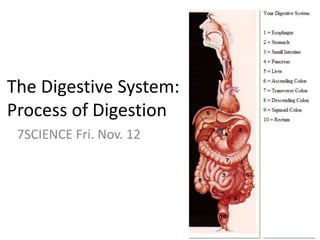
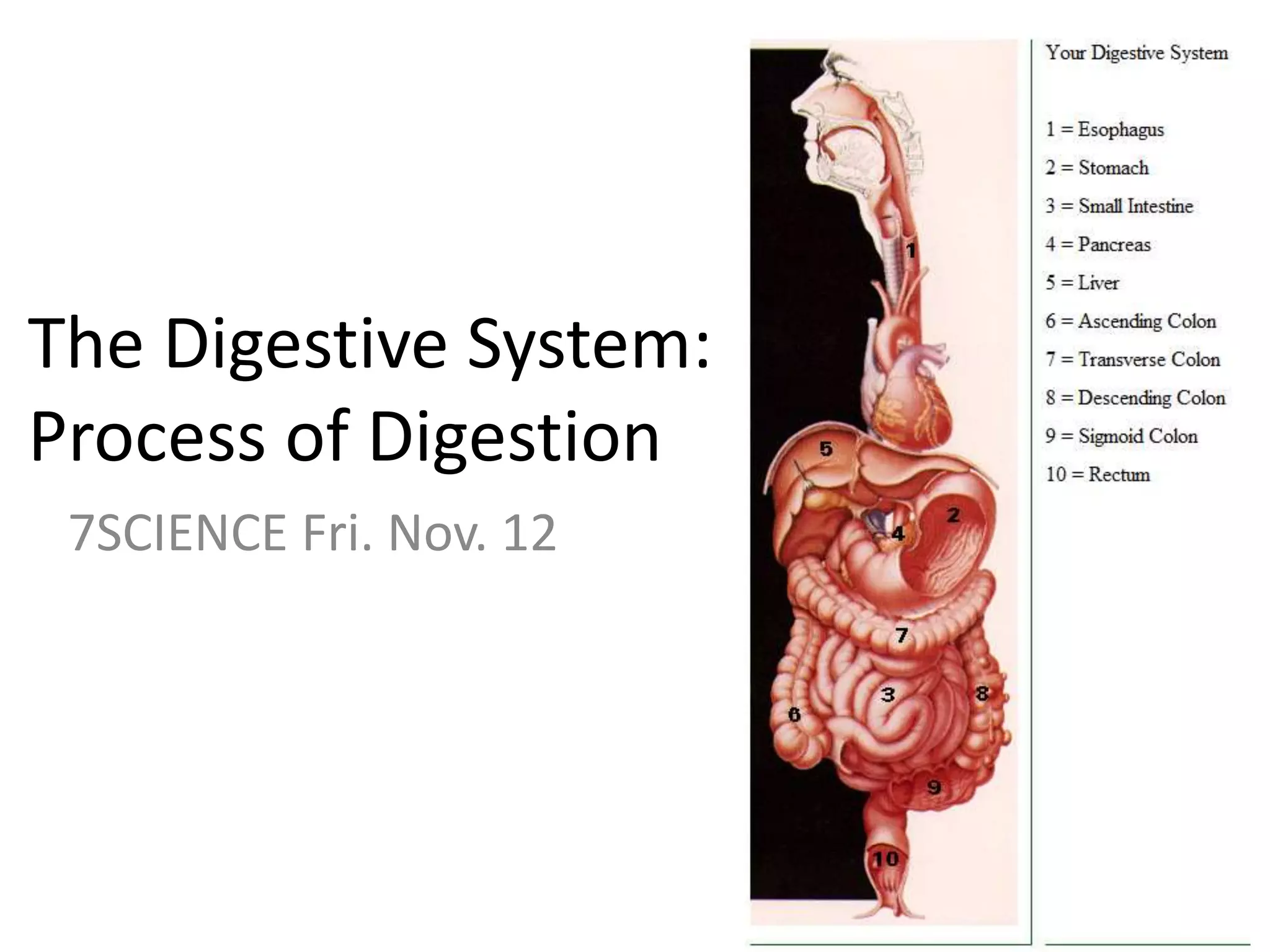
The Digestive System:
Process of Digestion
7SCIENCE Fri. Nov. 12
What happens in digestion?
• When food enters the mouth it is beginning
the process of digestion
• Two types:
– Mechanical
• Food is chewed and mixed in the mouth and mixes in
your stomach
– Chemical
• Breaks food down into many different, smaller parts so
they may be used by cells
• Takes place in the mouth, stomach and small intestine
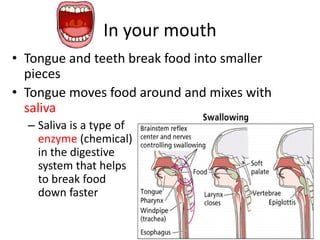
In your mouth
• Tongue and teeth break food into smaller
pieces
• Tongue moves food around and mixes with
saliva
– Saliva is a type of
enzyme (chemical)
in the digestive
system that helps
to break food
down faster
In your esophagus and stomach
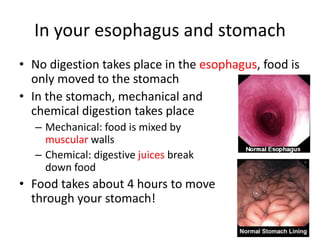
• No digestion takes place in the esophagus, food is
only moved to the stomach
• In the stomach, mechanical and
chemical digestion takes place
– Mechanical: food is mixed by
muscular walls
– Chemical: digestive juices break
down food
• Food takes about 4 hours to move
through your stomach!
In your small intestine
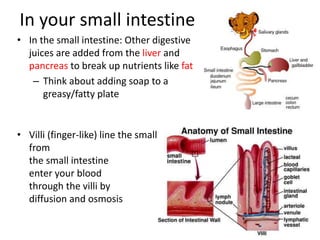
• In the small intestine: Other digestive
juices are added from the liver and
pancreas to break up nutrients like fat
– Think about adding soap to a
greasy/fatty plate
• Villi (finger-like) line the small intestine walls and nutrients
from
the small intestine
enter your blood
through the villi by
diffusion and osmosis
In your large intestine, rectum and
anus
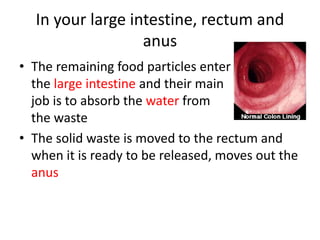
• The remaining food particles enter
the large intestine and their main
job is to absorb the water from
the waste
• The solid waste is moved to the rectum and
when it is ready to be released, moves out the
anus

The process of digestion

  • 1.
    The Digestive System: Processof Digestion 7SCIENCE Fri. Nov. 12
  • 2.
    What happens indigestion? • When food enters the mouth it is beginning the process of digestion • Two types: – Mechanical • Food is chewed and mixed in the mouth and mixes in your stomach – Chemical • Breaks food down into many different, smaller parts so they may be used by cells • Takes place in the mouth, stomach and small intestine
  • 3.
    In your mouth •Tongue and teeth break food into smaller pieces • Tongue moves food around and mixes with saliva – Saliva is a type of enzyme (chemical) in the digestive system that helps to break food down faster
  • 4.
    In your esophagusand stomach • No digestion takes place in the esophagus, food is only moved to the stomach • In the stomach, mechanical and chemical digestion takes place – Mechanical: food is mixed by muscular walls – Chemical: digestive juices break down food • Food takes about 4 hours to move through your stomach!
  • 5.
    In your smallintestine • In the small intestine: Other digestive juices are added from the liver and pancreas to break up nutrients like fat – Think about adding soap to a greasy/fatty plate • Villi (finger-like) line the small intestine walls and nutrients from the small intestine enter your blood through the villi by diffusion and osmosis
  • 6.
    In your largeintestine, rectum and anus • The remaining food particles enter the large intestine and their main job is to absorb the water from the waste • The solid waste is moved to the rectum and when it is ready to be released, moves out the anus