





Joy A. Shepard, PhD, RN-BC, CNE
Joyce Buck, PhD(c), MSN, RN-BC, CNE
1
Objectives
Describe characteristics of the preterm neonate
Describe nursing care of the preterm infant, particularly in
regards to respiration, thermoregulation, and nutrition
Discuss the pathophysiology, risk factors, and approach to
treatment for respiratory distress syndrome, retinopathy of
prematurity, bronchopulmonary dysplasia, intraventricular
hemorrhage, necrotizing enterocolitis, in the preterm infant
2
Neonatal Intensive Care Nursing
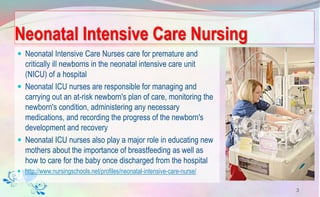
 Neonatal Intensive Care Nurses care for premature and
critically ill newborns in the neonatal intensive care unit
(NICU) of a hospital
 Neonatal ICU nurses are responsible for managing and
carrying out an at-risk newborn's plan of care, monitoring the
newborn's condition, administering any necessary
medications, and recording the progress of the newborn's
development and recovery
 Neonatal ICU nurses also play a major role in educating new
mothers about the importance of breastfeeding as well as
how to care for the baby once discharged from the hospital
 http://www.nursingschools.net/profiles/neonatal-intensive-care-nurse/
3
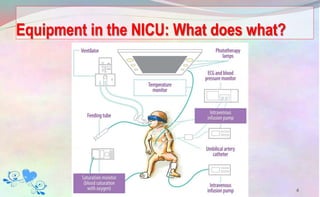
Equipment in the NICU: What does what?
4
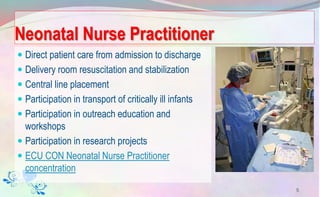
Neonatal Nurse Practitioner
 Direct patient care from admission to discharge
 Delivery room resuscitation and stabilization
 Central line placement
 Participation in transport of critically ill infants
 Participation in outreach education and
workshops
 Participation in research projects
 ECU CON Neonatal Nurse Practitioner
concentration
5
6
Gestational Classification (p. 817)
Preterm (premature)—An infant born before
completion of 37 weeks of gestation, regardless of
birth weight
Full-term—An infant born from 39-0/7 weeks through
40-6/7 weeks of gestation, regardless of birth weight
Postterm (postmature)—An infant born after 42
weeks of gestation, regardless of birth weight
7
Birth Weight Classification (p. 817)
Low-birth-weight (LBW) infant—An infant whose birth weight
is less than 2500 g (5 lb, 8 oz), regardless of gestational age
Very low–birth-weight (VLBW) infant—An infant whose birth
weight is less than 1500 g (3 lb, 5 oz), regardless of gestational
age
Extremely low–birth-weight (ELBW) infant—An infant whose
birth weight is less than 1000 g (2 lb, 3 oz), regardless of
gestational age
8
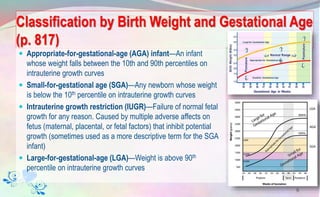
Classification by Birth Weight and Gestational Age
(p. 817)
 Appropriate-for-gestational-age (AGA) infant—An infant
whose weight falls between the 10th and 90th percentiles on
intrauterine growth curves
 Small-for-gestational age (SGA)—Any newborn whose weight
is below the 10th percentile on intrauterine growth curves
 Intrauterine growth restriction (IUGR)—Failure of normal fetal
growth for any reason. Caused by multiple adverse affects on
fetus (maternal, placental, or fetal factors) that inhibit potential
growth (sometimes used as a more descriptive term for the SGA
infant)
 Large-for-gestational-age (LGA)—Weight is above 90th
percentile on intrauterine growth curves
9
Review Question
The infant weighs 2400 grams (5 pounds, 4
ounces) at birth. The neonatal nurse correctly
classifies this infant as:
 A. Low-birth-weight (LBW) infant
 B. Very low–birth-weight (VLBW) infant
 C. Extremely low–birth-weight (ELBW) infant
 D. Small-for-gestational age (SGA) infant
10
11
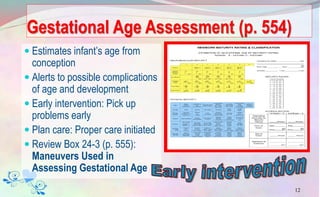
Gestational Age Assessment (p. 554)
 Estimates infant’s age from
conception
 Alerts to possible complications
of age and development
 Early intervention: Pick up
problems early
 Plan care: Proper care initiated
 Review Box 24-3 (p. 555):
Maneuvers Used in
Assessing Gestational Age
12
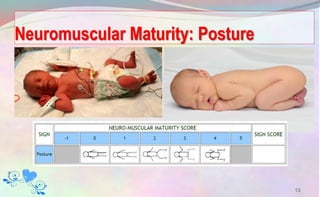
Neuromuscular Maturity: Posture
13
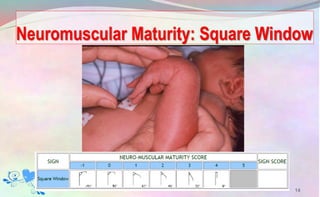
Neuromuscular Maturity: Square Window
14
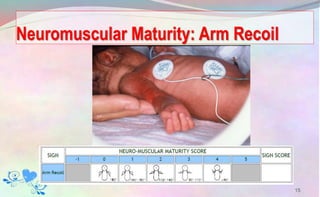
Neuromuscular Maturity: Arm Recoil
15
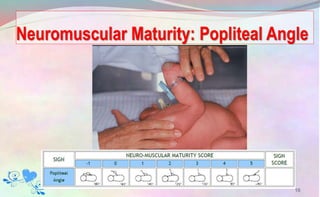
Neuromuscular Maturity: Popliteal Angle
16
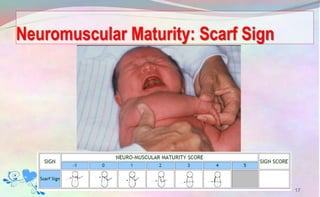
Neuromuscular Maturity: Scarf Sign
17
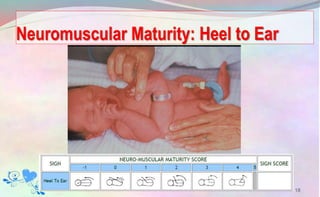
Neuromuscular Maturity: Heel to Ear
18
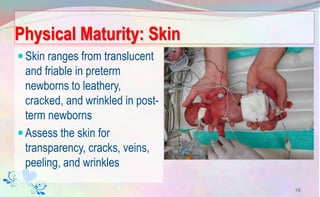
Physical Maturity: Skin
Skin ranges from translucent
and friable in preterm
newborns to leathery,
cracked, and wrinkled in post-
term newborns
Assess the skin for
transparency, cracks, veins,
peeling, and wrinkles
19
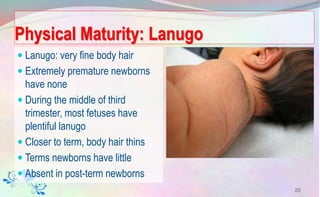
Physical Maturity: Lanugo
 Lanugo: very fine body hair
 Extremely premature newborns
have none
 During the middle of third
trimester, most fetuses have
plentiful lanugo
 Closer to term, body hair thins
 Terms newborns have little
 Absent in post-term newborns
20
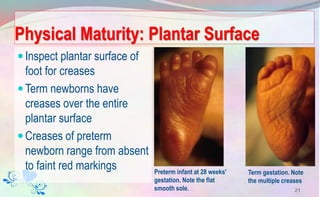
Physical Maturity: Plantar Surface
Inspect plantar surface of
foot for creases
Term newborns have
creases over the entire
plantar surface
Creases of preterm
newborn range from absent
to faint red markings
21
Preterm infant at 28 weeks'
gestation. Note the flat
smooth sole.
Term gestation. Note
the multiple creases
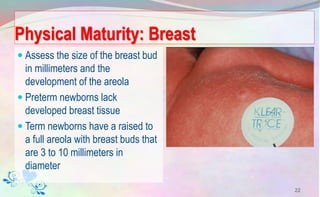
Physical Maturity: Breast
 Assess the size of the breast bud
in millimeters and the
development of the areola
 Preterm newborns lack
developed breast tissue
 Term newborns have a raised to
a full areola with breast buds that
are 3 to 10 millimeters in
diameter
22
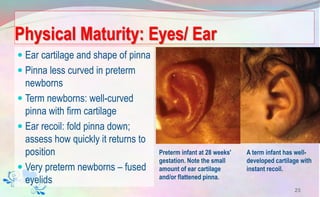
Physical Maturity: Eyes/ Ear
 Ear cartilage and shape of pinna
 Pinna less curved in preterm
newborns
 Term newborns: well-curved
pinna with firm cartilage
 Ear recoil: fold pinna down;
assess how quickly it returns to
position
 Very preterm newborns – fused
eyelids
23
A term infant has well-
developed cartilage with
instant recoil.
Preterm infant at 28 weeks'
gestation. Note the small
amount of ear cartilage
and/or flattened pinna.
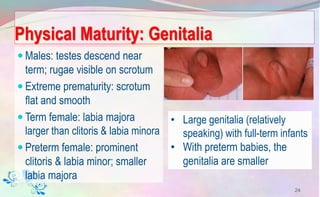
Physical Maturity: Genitalia
 Males: testes descend near
term; rugae visible on scrotum
 Extreme prematurity: scrotum
flat and smooth
 Term female: labia majora
larger than clitoris & labia minora
 Preterm female: prominent
clitoris & labia minor; smaller
labia majora
24
• Large genitalia (relatively
speaking) with full-term infants
• With preterm babies, the
genitalia are smaller
25
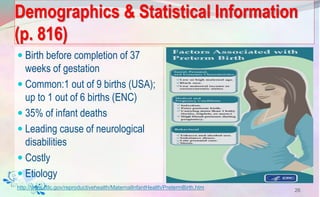
Demographics & Statistical Information
(p. 816)
 Birth before completion of 37
weeks of gestation
 Common:1 out of 9 births (USA);
up to 1 out of 6 births (ENC)
 35% of infant deaths
 Leading cause of neurological
disabilities
 Costly
 Etiology
26
http://www.cdc.gov/reproductivehealth/MaternalInfantHealth/PretermBirth.htm
27
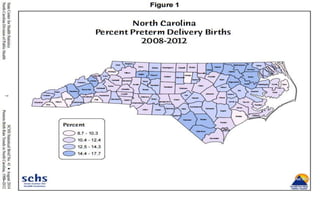
Prematurity/ Low Birth Weight –
Leading cause of infant death in North Carolina
28
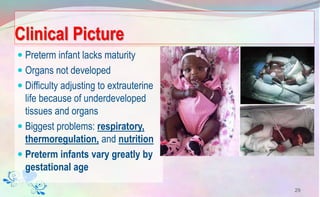
Clinical Picture
 Preterm infant lacks maturity
 Organs not developed
 Difficulty adjusting to extrauterine
life because of underdeveloped
tissues and organs
 Biggest problems: respiratory,
thermoregulation, and nutrition
 Preterm infants vary greatly by
gestational age
29
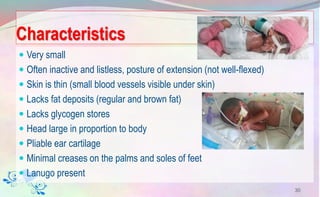
Characteristics
 Very small
 Often inactive and listless, posture of extension (not well-flexed)
 Skin is thin (small blood vessels visible under skin)
 Lacks fat deposits (regular and brown fat)
 Lacks glycogen stores
 Head large in proportion to body
 Pliable ear cartilage
 Minimal creases on the palms and soles of feet
 Lanugo present
30
Characteristics cont’d…
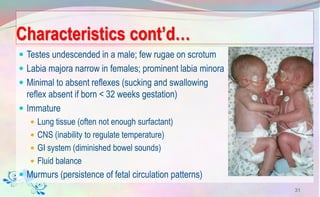
 Testes undescended in a male; few rugae on scrotum
 Labia majora narrow in females; prominent labia minora
 Minimal to absent reflexes (sucking and swallowing
reflex absent if born < 32 weeks gestation)
 Immature
 Lung tissue (often not enough surfactant)
 CNS (inability to regulate temperature)
 GI system (diminished bowel sounds)
 Fluid balance
 Murmurs (persistence of fetal circulation patterns)
31
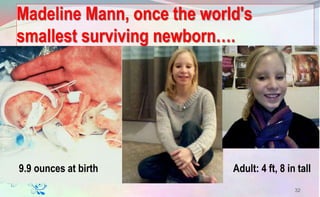
Madeline Mann, once the world's
smallest surviving newborn….
32
9.9 ounces at birth Adult: 4 ft, 8 in tall
33
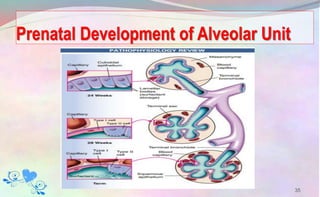
Biggest problem: Respiratory Function
 Lungs of preterm infants (more than 6 weeks early) lack adequate
surfactant
 Lungs are noncompliant (lungs don’t expand easily; hard to breathe in)
 Prone to atelectasis (collapse of alveoli)
 Increased energy required to breathe (breathing is difficult)
 Baby breathes shallowly and rapidly
 Poor cough/ gag reflex
 Narrow respiratory passages
 Weak respiratory muscles
34
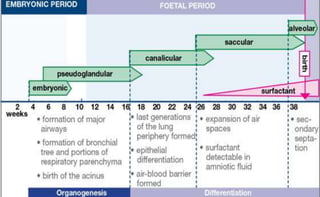
Prenatal Development of Alveolar Unit
35
Respiratory: Nursing Diagnoses
Ineffective Airway Clearance
Risk for Aspiration
Ineffective Breathing Pattern
Impaired Spontaneous Ventilation
Impaired Gas Exchange
36
Nursing Interventions:
Maintain Airway, Breathing, Oxygenation
Assess for respiratory distress (hypoxemia) (pp. 556, 567)
 Respirations greater than 60 or
less than 30
 Tachycardia (early sign)
 Bradycardia (late sign)
 Apneic episodes > 20 seconds
 Retractions, labored breathing
 Nasal flaring
 Grunting
 Crackles, rhonchi, wheezing
 Stridor
 See-saw respirations
 Central cyanosis
37
Nursing Interventions:
Maintain Patent Airway
Suction as needed
Use two-person suction technique (immediate
hyperoxygenation)
Avoid neck hyperextension (shuts off trachea)
Terminate suctioning immediately: bradycardic,
hypotensive, cyanotic, mottled, or develops pallor
Manually bag until patient stable
38
Nursing Interventions:
Maintain Patent Airway/ Breathing Pattern
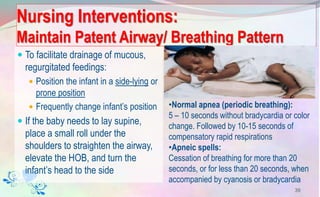
 To facilitate drainage of mucous,
regurgitated feedings:
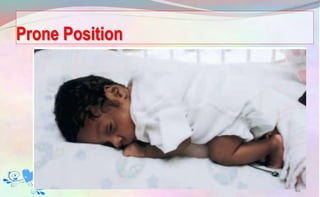
 Position the infant in a side-lying or
prone position
 Frequently change infant’s position
 If the baby needs to lay supine,
place a small roll under the
shoulders to straighten the airway,
elevate the HOB, and turn the
infant’s head to the side
39
•Normal apnea (periodic breathing):
5 – 10 seconds without bradycardia or color
change. Followed by 10-15 seconds of
compensatory rapid respirations
•Apneic spells:
Cessation of breathing for more than 20
seconds, or for less than 20 seconds, when
accompanied by cyanosis or bradycardia
Prone Position
40
Review Question
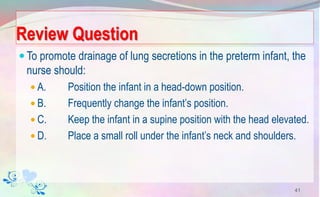
To promote drainage of lung secretions in the preterm infant, the
nurse should:
 A. Position the infant in a head-down position.
 B. Frequently change the infant’s position.
 C. Keep the infant in a supine position with the head elevated.
 D. Place a small roll under the infant’s neck and shoulders.
41
Nursing Interventions:
Maintain Oxygenation Status (pp. 824-825)
 The need for oxygen administration is determined by S/S of
respiratory distress, Pa02 (arterial oxygen pressure) of less than
60 mmHg and Sp02 (oxygen saturation) of less than 92%
 Oxygen is administered by nasal cannula, hood, positive-pressure
mask, or endotracheal tube
 Oxygen should not be free flowing in the incubator because the amount
cannot be controlled
 Oxygen needs to be warmed and humidified to prevent cold stress and
moisten airway
42
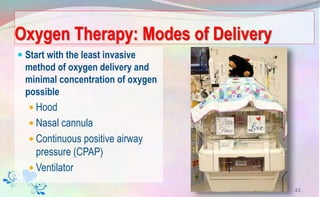
Oxygen Therapy: Modes of Delivery
 Start with the least invasive
method of oxygen delivery and
minimal concentration of oxygen
possible
 Hood
 Nasal cannula
 Continuous positive airway
pressure (CPAP)
 Ventilator
43
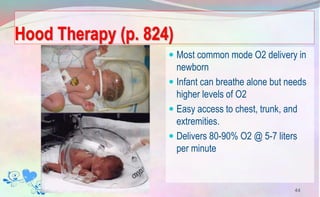
Hood Therapy (p. 824)
 Most common mode O2 delivery in
newborn
 Infant can breathe alone but needs
higher levels of O2
 Easy access to chest, trunk, and
extremities.
 Delivers 80-90% O2 @ 5-7 liters
per minute
44
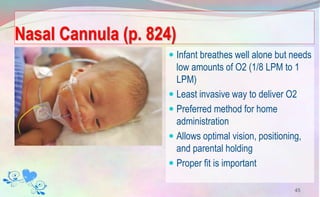
Nasal Cannula (p. 824)
 Infant breathes well alone but needs
low amounts of O2 (1/8 LPM to 1
LPM)
 Least invasive way to deliver O2
 Preferred method for home
administration
 Allows optimal vision, positioning,
and parental holding
 Proper fit is important
45
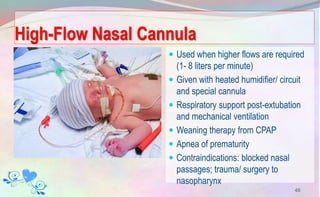
High-Flow Nasal Cannula
 Used when higher flows are required
(1- 8 liters per minute)
 Given with heated humidifier/ circuit
and special cannula
 Respiratory support post-extubation
and mechanical ventilation
 Weaning therapy from CPAP
 Apnea of prematurity
 Contraindications: blocked nasal
passages; trauma/ surgery to
nasopharynx
46
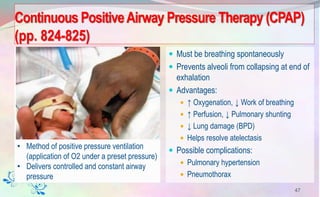
Continuous PositiveAirway Pressure Therapy (CPAP)
(pp. 824-825)
 Must be breathing spontaneously
 Prevents alveoli from collapsing at end of
exhalation
 Advantages:
 ↑ Oxygenation, ↓ Work of breathing
 ↑ Perfusion, ↓ Pulmonary shunting
 ↓ Lung damage (BPD)
 Helps resolve atelectasis
 Possible complications:
 Pulmonary hypertension
 Pneumothorax
47
• Method of positive pressure ventilation
(application of O2 under a preset pressure)
• Delivers controlled and constant airway
pressure
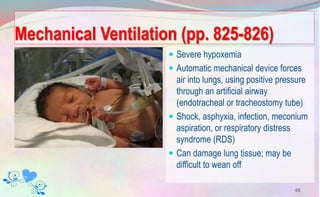
Mechanical Ventilation (pp. 825-826)
 Severe hypoxemia
 Automatic mechanical device forces
air into lungs, using positive pressure
through an artificial airway
(endotracheal or tracheostomy tube)
 Shock, asphyxia, infection, meconium
aspiration, or respiratory distress
syndrome (RDS)
 Can damage lung tissue; may be
difficult to wean off
48
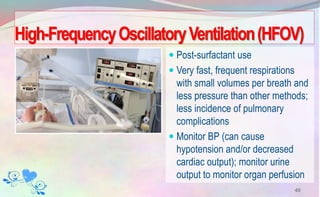
High-FrequencyOscillatoryVentilation(HFOV)
 Post-surfactant use
 Very fast, frequent respirations
with small volumes per breath and
less pressure than other methods;
less incidence of pulmonary
complications
 Monitor BP (can cause
hypotension and/or decreased
cardiac output); monitor urine
output to monitor organ perfusion
49
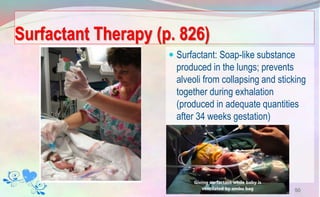
Surfactant Therapy (p. 826)
 Surfactant: Soap-like substance
produced in the lungs; prevents
alveoli from collapsing and sticking
together during exhalation
(produced in adequate quantities
after 34 weeks gestation)
50
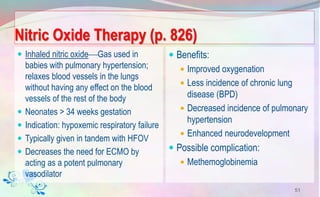
Nitric Oxide Therapy (p. 826)
 Inhaled nitric oxideGas used in
babies with pulmonary hypertension;
relaxes blood vessels in the lungs
without having any effect on the blood
vessels of the rest of the body
 Neonates > 34 weeks gestation
 Indication: hypoxemic respiratory failure
 Typically given in tandem with HFOV
 Decreases the need for ECMO by
acting as a potent pulmonary
vasodilator
 Benefits:
 Improved oxygenation
 Less incidence of chronic lung
disease (BPD)
 Decreased incidence of pulmonary
hypertension
 Enhanced neurodevelopment
 Possible complication:
 Methemoglobinemia
51
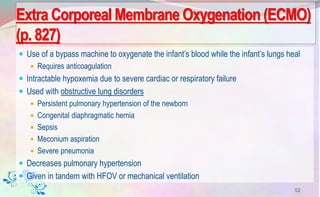
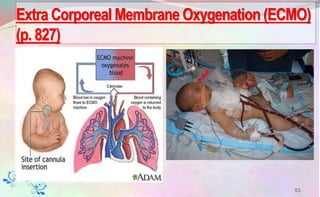
 Use of a bypass machine to oxygenate the infant’s blood while the infant’s lungs heal
 Requires anticoagulation
 Intractable hypoxemia due to severe cardiac or respiratory failure
 Used with obstructive lung disorders
 Persistent pulmonary hypertension of the newborn
 Congenital diaphragmatic hernia
 Sepsis
 Meconium aspiration
 Severe pneumonia
 Decreases pulmonary hypertension
 Given in tandem with HFOV or mechanical ventilation
52
Extra Corporeal Membrane Oxygenation (ECMO)
(p. 827)
Extra Corporeal Membrane Oxygenation (ECMO)
(p. 827)
53
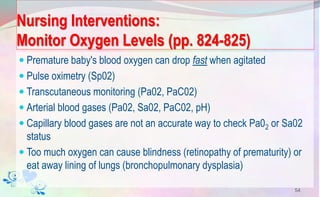
Nursing Interventions:
Monitor Oxygen Levels (pp. 824-825)
 Premature baby's blood oxygen can drop fast when agitated
 Pulse oximetry (Sp02)
 Transcutaneous monitoring (Pa02, PaC02)
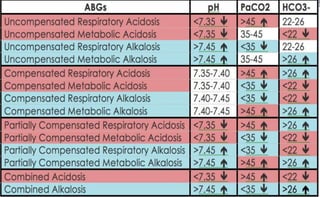
 Arterial blood gases (Pa02, Sa02, PaC02, pH)
 Capillary blood gases are not an accurate way to check Pa02 or Sa02
status
 Too much oxygen can cause blindness (retinopathy of prematurity) or
eat away lining of lungs (bronchopulmonary dysplasia)
54
Diagnostics
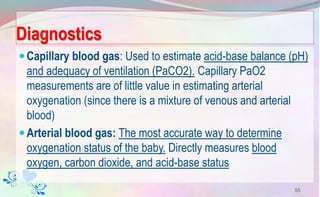
Capillary blood gas: Used to estimate acid-base balance (pH)
and adequacy of ventilation (PaCO2). Capillary PaO2
measurements are of little value in estimating arterial
oxygenation (since there is a mixture of venous and arterial
blood)
Arterial blood gas: The most accurate way to determine
oxygenation status of the baby. Directly measures blood
oxygen, carbon dioxide, and acid-base status
55
56
Diagnostics cont’d….
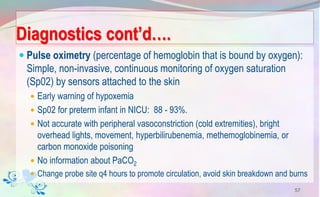
 Pulse oximetry (percentage of hemoglobin that is bound by oxygen):
Simple, non-invasive, continuous monitoring of oxygen saturation
(Sp02) by sensors attached to the skin
 Early warning of hypoxemia
 Sp02 for preterm infant in NICU: 88 - 93%.
 Not accurate with peripheral vasoconstriction (cold extremities), bright
overhead lights, movement, hyperbilirubenemia, methemoglobinemia, or
carbon monoxide poisoning
 No information about PaCO2
 Change probe site q4 hours to promote circulation, avoid skin breakdown and burns
57
Diagnostics cont’d….
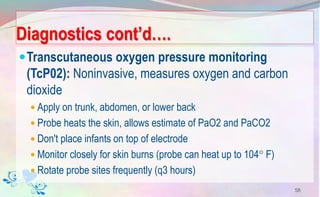
Transcutaneous oxygen pressure monitoring
(TcP02): Noninvasive, measures oxygen and carbon
dioxide
 Apply on trunk, abdomen, or lower back
 Probe heats the skin, allows estimate of PaO2 and PaCO2
 Don't place infants on top of electrode
 Monitor closely for skin burns (probe can heat up to 104 F)
 Rotate probe sites frequently (q3 hours)
58
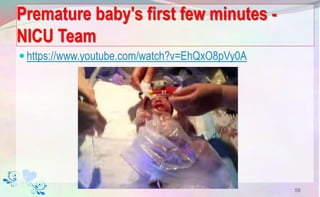
Premature baby's first few minutes -
NICU Team
https://www.youtube.com/watch?v=EhQxO8pVy0A
59
60
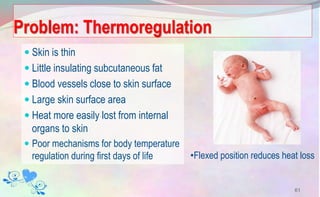
 Skin is thin
 Little insulating subcutaneous fat
 Blood vessels close to skin surface
 Large skin surface area
 Heat more easily lost from internal
organs to skin
 Poor mechanisms for body temperature
regulation during first days of life
61
Problem: Thermoregulation
•Flexed position reduces heat loss
Neutral Thermal Environment (NTE)
 One in which the infant can maintain a stable body temperature without an
increase in 02 consumption or increase in metabolic rate
 Goal: infant maintains temperatures and growth using the least amount of energy
 Infant’s temperatures maintained at 36.5° – 37.2°C axillary (97.7° – 99°F)
 Regulate isolette temperature for preterm infants using skin control with initial set
point of 36.5°C (97.7 ° F)
 Place infant in open crib/bassinet when infant’s temperature is stable for 8 hours
in isolette temperature of 26-27°C (78.8-80.6°F)
 For clothed, swaddled infants in open bassinets, need nursery to be 24° C (75° F)
62
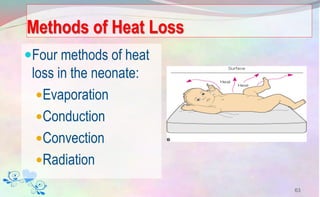
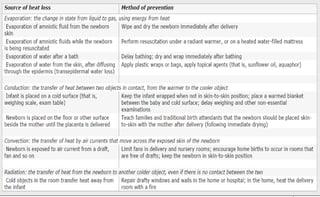
Methods of Heat Loss
Four methods of heat
loss in the neonate:
Evaporation
Conduction
Convection
Radiation
63
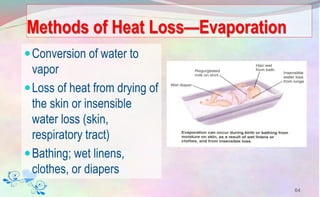
Methods of Heat Loss—Evaporation
Conversion of water to
vapor
Loss of heat from drying of
the skin or insensible
water loss (skin,
respiratory tract)
Bathing; wet linens,
clothes, or diapers
64
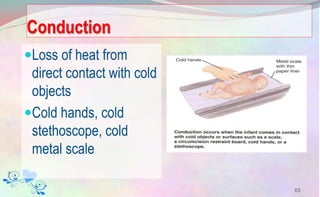
Conduction
Loss of heat from
direct contact with cold
objects
Cold hands, cold
stethoscope, cold
metal scale
65
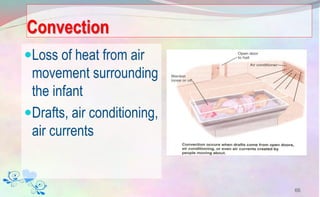
Convection
Loss of heat from air
movement surrounding
the infant
Drafts, air conditioning,
air currents
66
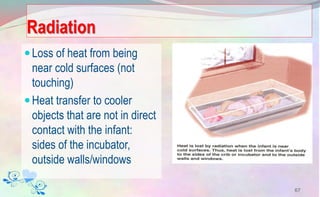
Radiation
Loss of heat from being
near cold surfaces (not
touching)
Heat transfer to cooler
objects that are not in direct
contact with the infant:
sides of the incubator,
outside walls/windows
67
68
What Type of Heat Loss Can Occur in
Each Situation?
Placing the newborn on a cold, unpadded scale
Using a cold stethoscope to listen to breath sounds
Placing the infant’s crib by a window on a snowy
day
Partially drying the infant’s hair after the bath
Placing the infant’s crib near an air conditioner vent
69
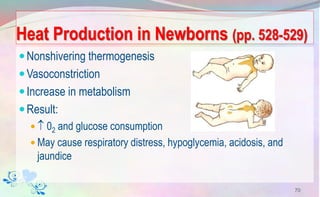
Heat Production in Newborns (pp. 528-529)
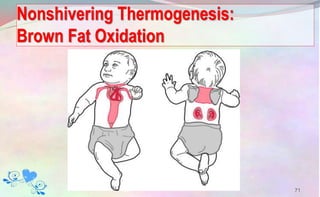
Nonshivering thermogenesis
Vasoconstriction
Increase in metabolism
Result:
  02 and glucose consumption
 May cause respiratory distress, hypoglycemia, acidosis, and
jaundice
70
Nonshivering Thermogenesis:
Brown Fat Oxidation
71
72
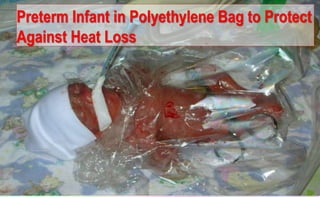
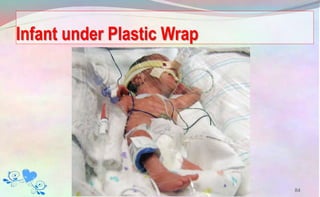
Preterm Infant in Polyethylene Bag to Protect
Against Heat Loss
Review Question
Brown fat is used to:
A. Maintain temperature
B. Facilitate digestion
C. Metabolize glucose
D. Conjugate bilirubin
73
Hypothermia: Temp below 36.5° C (97.7° F)
Cold stress (pp. 528-529)
 Definition: Excessive loss of heat that results in increased
respirations and nonshivering thermogenesis to maintain core
body temperature
 Temp: 36.0 to 36.4 °C (96.8 to 97.5 °F)
Warm the baby and seek to identify cause(s)
All newborns at risk for heat loss
Newborns at greatest risk: Preterm, postterm, LBW, VLBW,
ELBW, SGA, IUGR
74
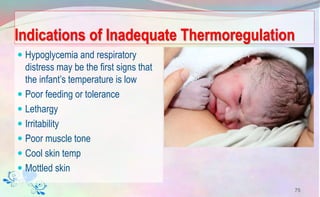
Indications of Inadequate Thermoregulation
 Hypoglycemia and respiratory
distress may be the first signs that
the infant’s temperature is low
 Poor feeding or tolerance
 Lethargy
 Irritability
 Poor muscle tone
 Cool skin temp
 Mottled skin
75
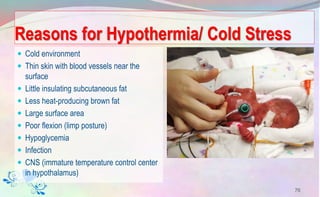
Reasons for Hypothermia/ Cold Stress
 Cold environment
 Thin skin with blood vessels near the
surface
 Little insulating subcutaneous fat
 Less heat-producing brown fat
 Large surface area
 Poor flexion (limp posture)
 Hypoglycemia
 Infection
 CNS (immature temperature control center
in hypothalamus)
76
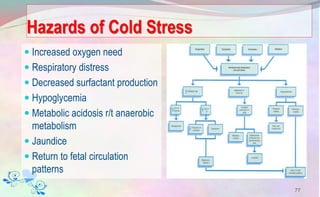
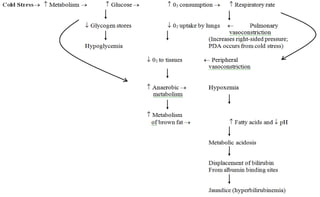
Hazards of Cold Stress
 Increased oxygen need
 Respiratory distress
 Decreased surfactant production
 Hypoglycemia
 Metabolic acidosis r/t anaerobic
metabolism
 Jaundice
 Return to fetal circulation
patterns
77
78
Identify 4 Consequences of Cold Stress….
Respiratory distress
Acidosis
Hypoglycemia
Hyperbilirubinemia
79
Cold Stress and Temperature Regulation:
Nursing Diagnoses
Hypothermia
Ineffective Thermoregulation
Risk for Injury (Cold Stress)
Risk for Imbalanced Body Temperature
Risk for Unstable Blood Glucose Level
Risk for Neonatal Jaundice
Risk for Thermal Injury
80
Nursing Interventions:
Maintain Body Temperature
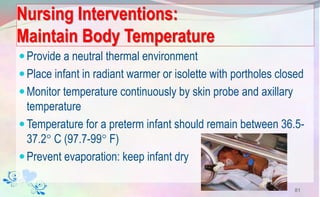
Provide a neutral thermal environment
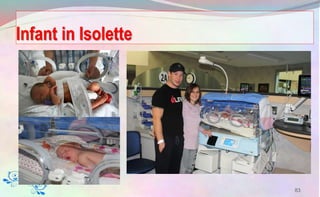
Place infant in radiant warmer or isolette with portholes closed
Monitor temperature continuously by skin probe and axillary
temperature
Temperature for a preterm infant should remain between 36.5-
37.2 C (97.7-99 F)
Prevent evaporation: keep infant dry
81
Nursing Interventions:
Maintain Body Temperature cont’d…
 Prevent drafts (convection): keep portholes closed, transparent plastic
blanket over the radiant warmer bed, blankets or hats when out of the
incubator, used warmed oxygen
 Prevent conductive heat loss: keep hands warm, warm stethoscope,
padding surfaces with warmed blankets
 Warming of a hypothermic baby is done over a period of 2-4 hours;
Increase by increments of 1 C
 When the skin temp reaches 36.5 C, ambient temperature setting is
maintained (neutral thermal)
82
Infant in Isolette
83
Infant under Plastic Wrap
84
KangarooCare:mothersorfathersprovideskin-to-skin
contactwiththeirpretermbabiesforseveralhourseachday
85
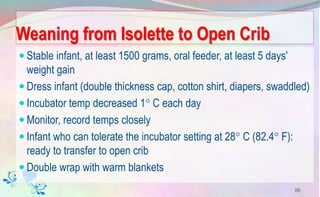
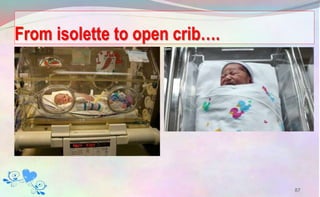
Weaning from Isolette to Open Crib
 Stable infant, at least 1500 grams, oral feeder, at least 5 days'
weight gain
 Dress infant (double thickness cap, cotton shirt, diapers, swaddled)
 Incubator temp decreased 1 C each day
 Monitor, record temps closely
 Infant who can tolerate the incubator setting at 28 C (82.4 F):
ready to transfer to open crib
 Double wrap with warm blankets
86
From isolette to open crib….
87
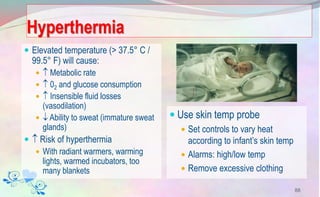
Hyperthermia
 Elevated temperature (> 37.5° C /
99.5° F) will cause:
  Metabolic rate
  02 and glucose consumption
  Insensible fluid losses
(vasodilation)
  Ability to sweat (immature sweat
glands)
  Risk of hyperthermia
 With radiant warmers, warming
lights, warmed incubators, too
many blankets
 Use skin temp probe
 Set controls to vary heat
according to infant’s skin temp
 Alarms: high/low temp
 Remove excessive clothing
88
Results of over-heating infant (radiant
warmer set too high, too hot bili lights)
Increased metabolic rate
Increased oxygen needs
Increased glucose needs
Increased insensible water loss
89
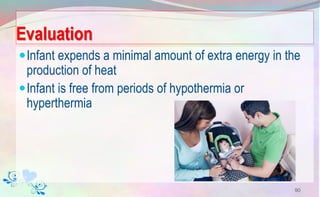
Evaluation
Infant expends a minimal amount of extra energy in the
production of heat
Infant is free from periods of hypothermia or
hyperthermia
90
Review Question
Becoming cold can lead to respiratory distress
primarily because the infant:
 A. Needs more oxygen than he or she can supply to generate heat
 B. Breathes more slowly and shallowly when hypothermic
 C. Reopens fetal shunts when the body temperature reaches 36.1°
C (97° F)
 D. Cannot supply enough glucose to provide fuel for respirations
91
92
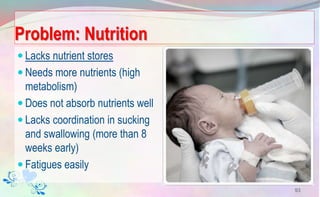
Problem: Nutrition
 Lacks nutrient stores
 Needs more nutrients (high
metabolism)
 Does not absorb nutrients well
 Lacks coordination in sucking
and swallowing (more than 8
weeks early)
 Fatigues easily
93
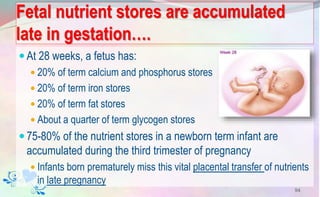
Fetal nutrient stores are accumulated
late in gestation….
At 28 weeks, a fetus has:
 20% of term calcium and phosphorus stores
 20% of term iron stores
 20% of term fat stores
 About a quarter of term glycogen stores
75-80% of the nutrient stores in a newborn term infant are
accumulated during the third trimester of pregnancy
 Infants born prematurely miss this vital placental transfer of nutrients
in late pregnancy
94
Nutrition: Nursing Diagnoses
 Imbalanced Nutrition: less than body requirements
 Fatigue
 Impaired Swallowing
 Ineffective Infant Feeding Pattern
 Ineffective Breastfeeding
 Risk for Aspiration
 Risk for Unstable Blood Glucose Level
 Risk for Electrolyte Imbalance
95
Nursing Interventions: Maintain Nutrition
Methods of feeding:
 Parenteral (intravenous) –or-
 Enteral (uses GI tract): tube feeding, bottle feeding, breast feeding
 Need specific knowledge of infant’s physiologic characteristics, the
infant’s particular needs, and methods of feeding
 At least 32 weeks' gestation for oral feeds (must be able to coordinate
sucking, swallowing, and breathing)
 Observe for signs of aspiration: coughing, gagging, vomiting,
cyanosis, changes in heart rate or respirations, apnea
96
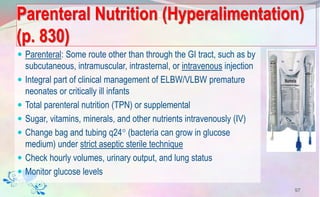
Parenteral Nutrition (Hyperalimentation)
(p. 830)
 Parenteral: Some route other than through the GI tract, such as by
subcutaneous, intramuscular, intrasternal, or intravenous injection
 Integral part of clinical management of ELBW/VLBW premature
neonates or critically ill infants
 Total parenteral nutrition (TPN) or supplemental
 Sugar, vitamins, minerals, and other nutrients intravenously (IV)
 Change bag and tubing q24 (bacteria can grow in glucose
medium) under strict aseptic sterile technique
 Check hourly volumes, urinary output, and lung status
 Monitor glucose levels
97
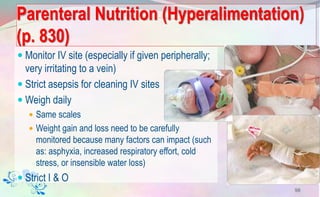
Parenteral Nutrition (Hyperalimentation)
(p. 830)
 Monitor IV site (especially if given peripherally;
very irritating to a vein)
 Strict asepsis for cleaning IV sites
 Weigh daily
 Same scales
 Weight gain and loss need to be carefully
monitored because many factors can impact (such
as: asphyxia, increased respiratory effort, cold
stress, or insensible water loss)
 Strict I & O
98
Dangers of TPN
Fluid and electrolyte imbalances
Hyperglycemia
Blood infection (since infusing through IV line, most
often central line)
Osteomalacia of the newborn (rickets)
Cholestatic jaundice and liver damage/ failure
99
Review Question
The neonatal nurse should regularly assess the premature
infant’s ability to metabolize the total parenteral nutrition (TPN)
solution adequately by monitoring the infant for which of the
following clinical manifestations:
 A. Hyperglycemia
 B. Hypoglycemia
 C. Hypertension
 D. Elevated blood urea nitrogen concentration
100
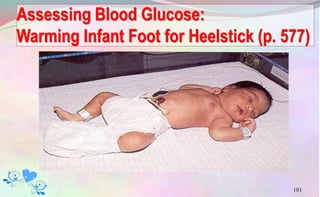
Assessing Blood Glucose:
Warming Infant Foot for Heelstick (p. 577)
101
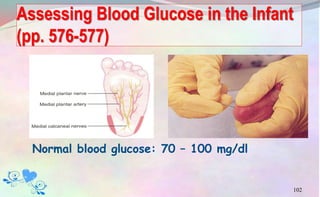
Assessing Blood Glucose in the Infant
(pp. 576-577)
Normal blood glucose: 70 – 100 mg/dl
102
Enteral Nutrition (Gavage Feeding)
(p. 829)
Enteral: Provision of nutrients or drug administration by a tube
directly into the GI tract (OG, NGT, GT, jejunostomy tube)
Infants unable to coordinate suck and swallow (usually
gestation less than 32 weeks) or too high expenditure of energy
for sucking (weight loss)
Allows infant to conserve energy to heal, grow and develop
Babies fed in this manner until 32-34 weeks' gestation
Orogastric (1st) or nasogastric tube (2nd) (#5 to #8 Fr)
103
Enteral Nutrition (Gavage Feeding)
(p. 829) cont’d…
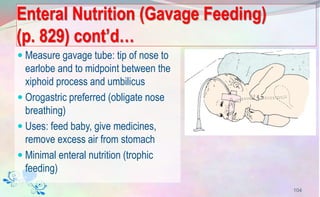
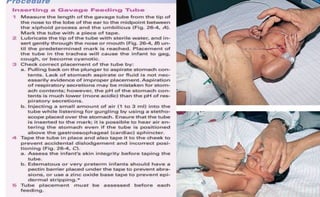
 Measure gavage tube: tip of nose to
earlobe and to midpoint between the
xiphoid process and umbilicus
 Orogastric preferred (obligate nose
breathing)
 Uses: feed baby, give medicines,
remove excess air from stomach
 Minimal enteral nutrition (trophic
feeding)
104
105
Gavage Feeding (pp. 829-830)
 Before feeding:
 Check tube placement
 Auscultate bowel sounds
 Measure abdominal girth
 Check residuals for color, amount, character, mucous.
 Return residuals to preserve electrolytes.
 Feedings are stopped if residuals are more than 50% of feeding
 Start feedings very slowly in small amounts
 Feeds: intermittent or continuous
 Position after feeding: right side for one hour with head elevated 30
106
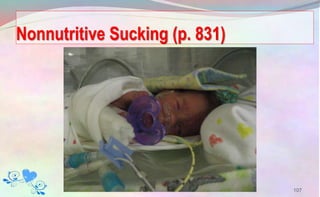
Nonnutritive Sucking (p. 831)
107
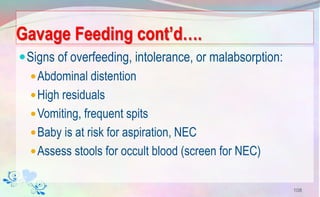
Gavage Feeding cont’d….
Signs of overfeeding, intolerance, or malabsorption:
Abdominal distention
High residuals
Vomiting, frequent spits
Baby is at risk for aspiration, NEC
Assess stools for occult blood (screen for NEC)
108
Signs of being ready to nipple feed (strong sucking,
swallowing, gag reflexes present): (p. 831)
 At least 32 weeks' gestation
 Rooting
 Sucking on a gavage tube or pacifier
 Presence of gag reflex
 Respiratory rate less than 60 breaths per minute
 In babies that are learning to nipple feed, replace the OG tube with NG (They
can't feed well working around the OG tube; NG avoids stimulating the gag
reflex)
 Start by giving infant a pacifier when gavage feeding (to associate the comfort of
fullness with sucking, and to prepare for nipple feeding)
109
Oral Feeding (pp. 828-829)
Breast milk: preferred
Bottlefeed: soft premature nipple, human milk fortifier added to
breast milk, high-calorie formulas (24 kcal/oz)
Feed slowly with frequent stops to burp and allow the infant to
rest
Place the baby on right side after feeding for one hour with head
elevated 30 to facilitate the emptying of the stomach into small
intestine
110
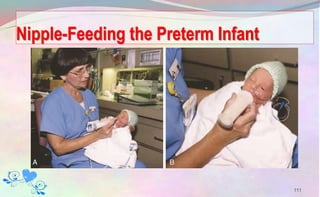
Nipple-Feeding the Preterm Infant
111
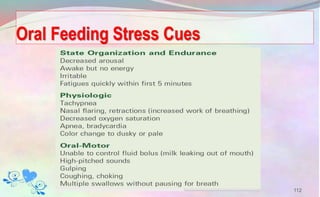
Oral Feeding Stress Cues
112
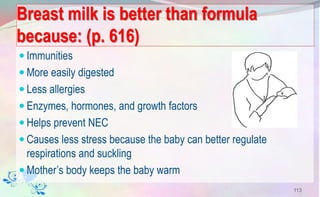
Breast milk is better than formula
because: (p. 616)
 Immunities
 More easily digested
 Less allergies
 Enzymes, hormones, and growth factors
 Helps prevent NEC
 Causes less stress because the baby can better regulate
respirations and suckling
 Mother’s body keeps the baby warm
113
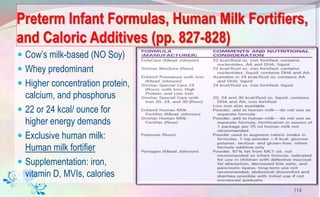
Preterm Infant Formulas, Human Milk Fortifiers,
and Caloric Additives (pp. 827-828)
 Cow’s milk-based (NO Soy)
 Whey predominant
 Higher concentration protein,
calcium, and phosphorus
 22 or 24 kcal/ ounce for
higher energy demands
 Exclusive human milk:
Human milk fortifier
 Supplementation: iron,
vitamin D, MVIs, calories
114
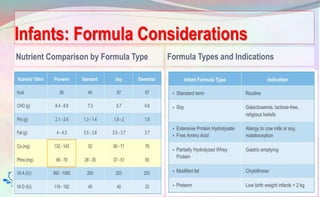
Infants: Formula Considerations
Nutrient Comparison by Formula Type Formula Types and Indications
115
Evaluation
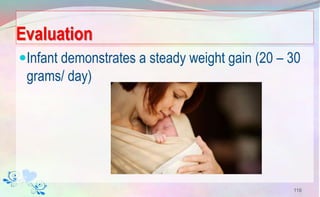
Infant demonstrates a steady weight gain (20 – 30
grams/ day)
116
117
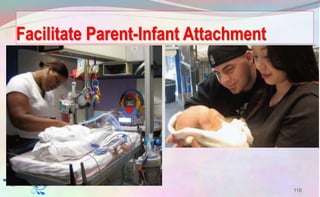
Facilitate Parent-Infant Attachment
118
119
120
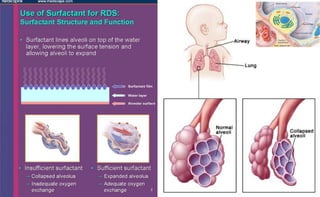
Neonatal Respiratory Distress Syndrome
(RDS) (p. 836)
 Insufficient production of surfactant; atelectasis (collapse of lung alveoli),
hypoxemia (decreased Pa02), hypercarbia (increased PaC02); acidemia
(decreased pH); and difficulty maintaining adequate respiratory function
 Manifestations: Crackles, poor air exchange, pallor, retractions, apnea,
grunting while breathing
 Incidence:
 Most before 34th week of pregnancy
 Most common problem in premature infants
 Incidence increases as gestational age decreases
121
122
Neonatal Respiratory Distress Syndrome
(RDS) (p. 836)
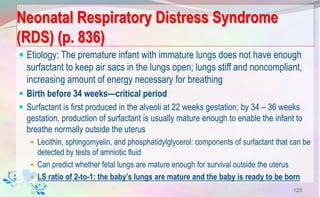
 Etiology: The premature infant with immature lungs does not have enough
surfactant to keep air sacs in the lungs open; lungs stiff and noncompliant,
increasing amount of energy necessary for breathing
 Birth before 34 weeks—critical period
 Surfactant is first produced in the alveoli at 22 weeks gestation; by 34 – 36 weeks
gestation, production of surfactant is usually mature enough to enable the infant to
breathe normally outside the uterus
 Lecithin, sphingomyelin, and phosphatidylglycerol: components of surfactant that can be
detected by tests of amniotic fluid
 Can predict whether fetal lungs are mature enough for survival outside the uterus
 LS ratio of 2-to-1: the baby’s lungs are mature and the baby is ready to be born
123
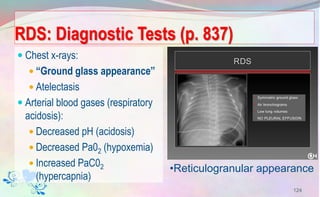
RDS: Diagnostic Tests (p. 837)
 Chest x-rays:
 “Ground glass appearance”
 Atelectasis
 Arterial blood gases (respiratory
acidosis):
 Decreased pH (acidosis)
 Decreased Pa02 (hypoxemia)
 Increased PaC02
(hypercapnia)
124
•Reticulogranular appearance
RDS: Treatment (p. 837)
Surfactant replacement therapy
Supportive treatment: mechanical ventilation, correction
of the acidosis, parenteral feedings (protein, fats)
Complications: patent ductus arteriosus,
bronchopulmonary dysplasia, sepsis
Monitor blood gases and respiratory status closely
Monitor electrolytes, urinary output, weight
125
126
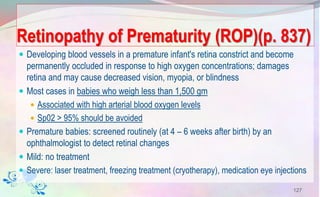
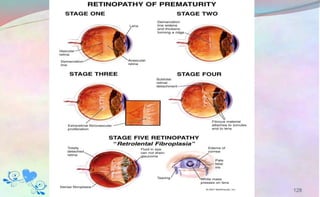
Retinopathy of Prematurity (ROP)(p. 837)
 Developing blood vessels in a premature infant's retina constrict and become
permanently occluded in response to high oxygen concentrations; damages
retina and may cause decreased vision, myopia, or blindness
 Most cases in babies who weigh less than 1,500 gm
 Associated with high arterial blood oxygen levels
 Sp02 > 95% should be avoided
 Premature babies: screened routinely (at 4 – 6 weeks after birth) by an
ophthalmologist to detect retinal changes
 Mild: no treatment
 Severe: laser treatment, freezing treatment (cryotherapy), medication eye injections
127
128
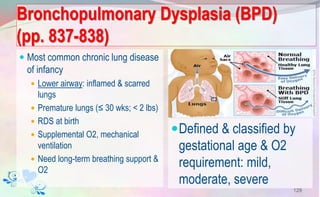
Bronchopulmonary Dysplasia (BPD)
(pp. 837-838)
 Most common chronic lung disease
of infancy
 Lower airway: inflamed & scarred
lungs
 Premature lungs (≤ 30 wks; < 2 lbs)
 RDS at birth
 Supplemental O2, mechanical
ventilation
 Need long-term breathing support &
O2
Defined & classified by
gestational age & O2
requirement: mild,
moderate, severe
129
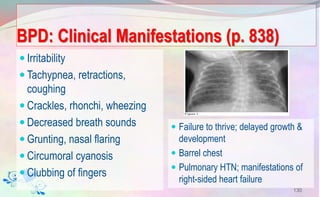
BPD: Clinical Manifestations (p. 838)
 Irritability
 Tachypnea, retractions,
coughing
 Crackles, rhonchi, wheezing
 Decreased breath sounds
 Grunting, nasal flaring
 Circumoral cyanosis
 Clubbing of fingers
 Failure to thrive; delayed growth &
development
 Barrel chest
 Pulmonary HTN; manifestations of
right-sided heart failure
130
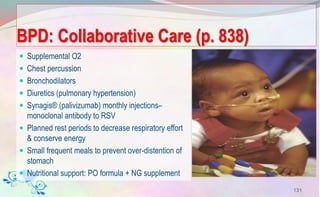
BPD: Collaborative Care (p. 838)
 Supplemental O2
 Chest percussion
 Bronchodilators
 Diuretics (pulmonary hypertension)
 Synagis® (palivizumab) monthly injections–
monoclonal antibody to RSV
 Planned rest periods to decrease respiratory effort
& conserve energy
 Small frequent meals to prevent over-distention of
stomach
 Nutritional support: PO formula + NG supplement
131
BPD: Review Question
An 11-month-old child is being discharged home for the first time
after being diagnosed with bronchopulmonary dysplasia (BPD).
She will require home oxygen therapy. Which statement by the
mother indicates that discharge teaching is incomplete?
A. “We will not allow any smoking at our home.”
B. “We have several fire extinguishers, and we know how to use them.”
C. “Her brother will blow out the birthday candles at her party.”
D. “We will return to the hospital if she seems irritable and won’t play.”
132
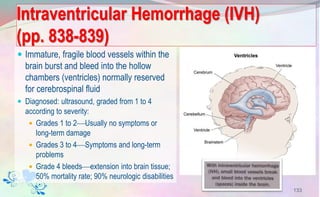
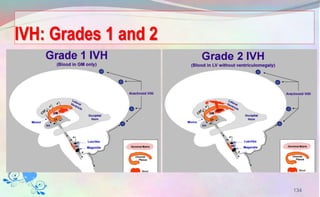
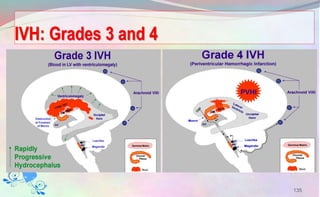
Intraventricular Hemorrhage (IVH)
(pp. 838-839)
 Immature, fragile blood vessels within the
brain burst and bleed into the hollow
chambers (ventricles) normally reserved
for cerebrospinal fluid
 Diagnosed: ultrasound, graded from 1 to 4
according to severity:
 Grades 1 to 2Usually no symptoms or
long-term damage
 Grades 3 to 4Symptoms and long-term
problems
 Grade 4 bleedsextension into brain tissue;
50% mortality rate; 90% neurologic disabilities
133
IVH: Grades 1 and 2
134
IVH: Grades 3 and 4
135
IVH: Clinical Manifestations
(pp. 838-839)
Rising intracranial pressure: lethargy, poor muscle tone,
decreased reflexes, irregular respirations (cyanosis, apnea),
bradycardia, and bulging fontanels
Developmental problems, mental disability, cerebral palsy
Seizures if the bleeding is severe
Hydrocephalus (abnormal accumulation of cerebrospinal fluid in
the ventricles of the brain) because the blood plugs up the brain's
fluid pathways (the ventricles)
136
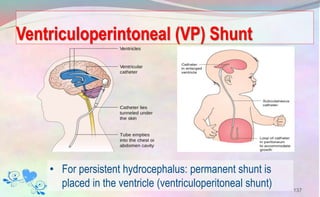
Ventriculoperintoneal (VP) Shunt
137
• For persistent hydrocephalus: permanent shunt is
placed in the ventricle (ventriculoperitoneal shunt)
To avoid increasing intracranial pressure
(ICP):
Keep infant calm (decrease crying)
Minimum stimulation: gentle handling; cluster care; no sudden
turning or jerking; dim lights; low noise
Head slightly elevated (15)
Avoid suctioning (increases blood pressure)
Avoid Trendelenburg position
Measure head circumference daily
Be alert for subtle neurologic changes
138
IVH: Review Question
Nursing care that reduces the risk for
intraventricular hemorrhage includes:
A. Assessing for abnormal heart rhythms or murmurs.
B. Minimal and gentle handling of the infant.
C. Limit the duration of parental visits.
D. Examining the eyes at 4 weeks and 8 weeks.
139
Necrotizing Enterocolitis (NEC)
(pp. 839-840)
 Life-threatening inflammatory disease of intestinal tract
 Premature infants (90% of cases)
 Intestines partially destroyed from hypoxia and bacterial infection
 First 7-14 days after birth (but can occur anytime)
 Immature bowel damaged when blood supply decreased; bacteria
then invade damaged area
 Enteral formulas
 Breast milk protective effect
140
NEC: Clinical Manifestations (p. 839)
 Nonspecific: lack of energy; unstable body temperature; signs of
infection such as lethargy (sluggishness) and apnea (cessation of
breathing); bradycardia; hypotension; low urinary output
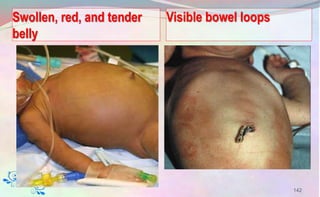
 GI symptoms: increased abdominal girth (bloated or distended
stomach); bile-colored (green) vomiting or gastric drainage;
decreased or absent bowel sounds; poor feeding; bloody stools;
loops of bowel seen through the abdominal wall
 Diagnosis: clinical findings; X-ray (free peritoneal gas, dilated
bowel loops, bowel distention)
141
Swollen, red, and tender
belly
142
Visible bowel loops
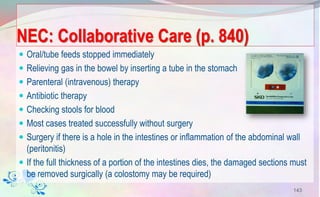
NEC: Collaborative Care (p. 840)
 Oral/tube feeds stopped immediately
 Relieving gas in the bowel by inserting a tube in the stomach
 Parenteral (intravenous) therapy
 Antibiotic therapy
 Checking stools for blood
 Most cases treated successfully without surgery
 Surgery if there is a hole in the intestines or inflammation of the abdominal wall
(peritonitis)
 If the full thickness of a portion of the intestines dies, the damaged sections must
be removed surgically (a colostomy may be required)
143
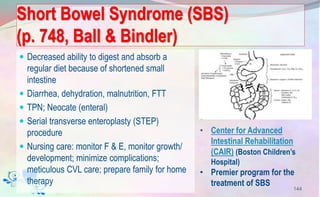
 Decreased ability to digest and absorb a
regular diet because of shortened small
intestine
 Diarrhea, dehydration, malnutrition, FTT
 TPN; Neocate (enteral)
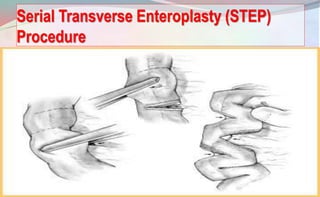
 Serial transverse enteroplasty (STEP)
procedure
 Nursing care: monitor F & E, monitor growth/
development; minimize complications;
meticulous CVL care; prepare family for home
therapy
Short Bowel Syndrome (SBS)
(p. 748, Ball & Bindler)
144
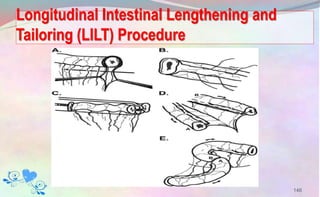
• Center for Advanced
Intestinal Rehabilitation
(CAIR) (Boston Children’s
Hospital)
• Premier program for the
treatment of SBS
Serial Transverse Enteroplasty (STEP)
Procedure
145
Longitudinal Intestinal Lengthening and
Tailoring (LILT) Procedure
146
Review Question
 The father of a premature infant asks why oxygen concentrations
are not higher to help his son breathe better. The nurse’s best
response is based on an understanding of the following conditions:
(Select all that apply)
 A. Bronchopulmonary dysplasia
 B. Intraventricular hemorrhage
 C. Necrotizing enterocolitis
 D. Retinopathy of prematurity
 E. Respiratory distress syndrome
147
Premature Son’s Miraculous First Year
148
https://youtu.be/64zBCIs5tmw
149

The preterm infant fall 2017

  • 1.
    Joy A. Shepard,PhD, RN-BC, CNE Joyce Buck, PhD(c), MSN, RN-BC, CNE 1
  • 2.
    Objectives Describe characteristics ofthe preterm neonate Describe nursing care of the preterm infant, particularly in regards to respiration, thermoregulation, and nutrition Discuss the pathophysiology, risk factors, and approach to treatment for respiratory distress syndrome, retinopathy of prematurity, bronchopulmonary dysplasia, intraventricular hemorrhage, necrotizing enterocolitis, in the preterm infant 2
  • 3.
    Neonatal Intensive CareNursing  Neonatal Intensive Care Nurses care for premature and critically ill newborns in the neonatal intensive care unit (NICU) of a hospital  Neonatal ICU nurses are responsible for managing and carrying out an at-risk newborn's plan of care, monitoring the newborn's condition, administering any necessary medications, and recording the progress of the newborn's development and recovery  Neonatal ICU nurses also play a major role in educating new mothers about the importance of breastfeeding as well as how to care for the baby once discharged from the hospital  http://www.nursingschools.net/profiles/neonatal-intensive-care-nurse/ 3
  • 4.
    Equipment in theNICU: What does what? 4
  • 5.
    Neonatal Nurse Practitioner Direct patient care from admission to discharge  Delivery room resuscitation and stabilization  Central line placement  Participation in transport of critically ill infants  Participation in outreach education and workshops  Participation in research projects  ECU CON Neonatal Nurse Practitioner concentration 5
  • 6.
  • 7.
    Gestational Classification (p.817) Preterm (premature)—An infant born before completion of 37 weeks of gestation, regardless of birth weight Full-term—An infant born from 39-0/7 weeks through 40-6/7 weeks of gestation, regardless of birth weight Postterm (postmature)—An infant born after 42 weeks of gestation, regardless of birth weight 7
  • 8.
    Birth Weight Classification(p. 817) Low-birth-weight (LBW) infant—An infant whose birth weight is less than 2500 g (5 lb, 8 oz), regardless of gestational age Very low–birth-weight (VLBW) infant—An infant whose birth weight is less than 1500 g (3 lb, 5 oz), regardless of gestational age Extremely low–birth-weight (ELBW) infant—An infant whose birth weight is less than 1000 g (2 lb, 3 oz), regardless of gestational age 8
  • 9.
    Classification by BirthWeight and Gestational Age (p. 817)  Appropriate-for-gestational-age (AGA) infant—An infant whose weight falls between the 10th and 90th percentiles on intrauterine growth curves  Small-for-gestational age (SGA)—Any newborn whose weight is below the 10th percentile on intrauterine growth curves  Intrauterine growth restriction (IUGR)—Failure of normal fetal growth for any reason. Caused by multiple adverse affects on fetus (maternal, placental, or fetal factors) that inhibit potential growth (sometimes used as a more descriptive term for the SGA infant)  Large-for-gestational-age (LGA)—Weight is above 90th percentile on intrauterine growth curves 9
  • 10.
    Review Question The infantweighs 2400 grams (5 pounds, 4 ounces) at birth. The neonatal nurse correctly classifies this infant as:  A. Low-birth-weight (LBW) infant  B. Very low–birth-weight (VLBW) infant  C. Extremely low–birth-weight (ELBW) infant  D. Small-for-gestational age (SGA) infant 10
  • 11.
  • 12.
    Gestational Age Assessment(p. 554)  Estimates infant’s age from conception  Alerts to possible complications of age and development  Early intervention: Pick up problems early  Plan care: Proper care initiated  Review Box 24-3 (p. 555): Maneuvers Used in Assessing Gestational Age 12
  • 13.
  • 14.
  • 15.
  • 16.
  • 17.
  • 18.
  • 19.
    Physical Maturity: Skin Skinranges from translucent and friable in preterm newborns to leathery, cracked, and wrinkled in post- term newborns Assess the skin for transparency, cracks, veins, peeling, and wrinkles 19
  • 20.
    Physical Maturity: Lanugo Lanugo: very fine body hair  Extremely premature newborns have none  During the middle of third trimester, most fetuses have plentiful lanugo  Closer to term, body hair thins  Terms newborns have little  Absent in post-term newborns 20
  • 21.
    Physical Maturity: PlantarSurface Inspect plantar surface of foot for creases Term newborns have creases over the entire plantar surface Creases of preterm newborn range from absent to faint red markings 21 Preterm infant at 28 weeks' gestation. Note the flat smooth sole. Term gestation. Note the multiple creases
  • 22.
    Physical Maturity: Breast Assess the size of the breast bud in millimeters and the development of the areola  Preterm newborns lack developed breast tissue  Term newborns have a raised to a full areola with breast buds that are 3 to 10 millimeters in diameter 22
  • 23.
    Physical Maturity: Eyes/Ear  Ear cartilage and shape of pinna  Pinna less curved in preterm newborns  Term newborns: well-curved pinna with firm cartilage  Ear recoil: fold pinna down; assess how quickly it returns to position  Very preterm newborns – fused eyelids 23 A term infant has well- developed cartilage with instant recoil. Preterm infant at 28 weeks' gestation. Note the small amount of ear cartilage and/or flattened pinna.
  • 24.
    Physical Maturity: Genitalia Males: testes descend near term; rugae visible on scrotum  Extreme prematurity: scrotum flat and smooth  Term female: labia majora larger than clitoris & labia minora  Preterm female: prominent clitoris & labia minor; smaller labia majora 24 • Large genitalia (relatively speaking) with full-term infants • With preterm babies, the genitalia are smaller
  • 25.
  • 26.
    Demographics & StatisticalInformation (p. 816)  Birth before completion of 37 weeks of gestation  Common:1 out of 9 births (USA); up to 1 out of 6 births (ENC)  35% of infant deaths  Leading cause of neurological disabilities  Costly  Etiology 26 http://www.cdc.gov/reproductivehealth/MaternalInfantHealth/PretermBirth.htm
  • 27.
  • 28.
    Prematurity/ Low BirthWeight – Leading cause of infant death in North Carolina 28
  • 29.
    Clinical Picture  Preterminfant lacks maturity  Organs not developed  Difficulty adjusting to extrauterine life because of underdeveloped tissues and organs  Biggest problems: respiratory, thermoregulation, and nutrition  Preterm infants vary greatly by gestational age 29
  • 30.
    Characteristics  Very small Often inactive and listless, posture of extension (not well-flexed)  Skin is thin (small blood vessels visible under skin)  Lacks fat deposits (regular and brown fat)  Lacks glycogen stores  Head large in proportion to body  Pliable ear cartilage  Minimal creases on the palms and soles of feet  Lanugo present 30
  • 31.
    Characteristics cont’d…  Testesundescended in a male; few rugae on scrotum  Labia majora narrow in females; prominent labia minora  Minimal to absent reflexes (sucking and swallowing reflex absent if born < 32 weeks gestation)  Immature  Lung tissue (often not enough surfactant)  CNS (inability to regulate temperature)  GI system (diminished bowel sounds)  Fluid balance  Murmurs (persistence of fetal circulation patterns) 31
  • 32.
    Madeline Mann, oncethe world's smallest surviving newborn…. 32 9.9 ounces at birth Adult: 4 ft, 8 in tall
  • 33.
  • 34.
    Biggest problem: RespiratoryFunction  Lungs of preterm infants (more than 6 weeks early) lack adequate surfactant  Lungs are noncompliant (lungs don’t expand easily; hard to breathe in)  Prone to atelectasis (collapse of alveoli)  Increased energy required to breathe (breathing is difficult)  Baby breathes shallowly and rapidly  Poor cough/ gag reflex  Narrow respiratory passages  Weak respiratory muscles 34
  • 35.
    Prenatal Development ofAlveolar Unit 35
  • 36.
    Respiratory: Nursing Diagnoses IneffectiveAirway Clearance Risk for Aspiration Ineffective Breathing Pattern Impaired Spontaneous Ventilation Impaired Gas Exchange 36
  • 37.
    Nursing Interventions: Maintain Airway,Breathing, Oxygenation Assess for respiratory distress (hypoxemia) (pp. 556, 567)  Respirations greater than 60 or less than 30  Tachycardia (early sign)  Bradycardia (late sign)  Apneic episodes > 20 seconds  Retractions, labored breathing  Nasal flaring  Grunting  Crackles, rhonchi, wheezing  Stridor  See-saw respirations  Central cyanosis 37
  • 38.
    Nursing Interventions: Maintain PatentAirway Suction as needed Use two-person suction technique (immediate hyperoxygenation) Avoid neck hyperextension (shuts off trachea) Terminate suctioning immediately: bradycardic, hypotensive, cyanotic, mottled, or develops pallor Manually bag until patient stable 38
  • 39.
    Nursing Interventions: Maintain PatentAirway/ Breathing Pattern  To facilitate drainage of mucous, regurgitated feedings:  Position the infant in a side-lying or prone position  Frequently change infant’s position  If the baby needs to lay supine, place a small roll under the shoulders to straighten the airway, elevate the HOB, and turn the infant’s head to the side 39 •Normal apnea (periodic breathing): 5 – 10 seconds without bradycardia or color change. Followed by 10-15 seconds of compensatory rapid respirations •Apneic spells: Cessation of breathing for more than 20 seconds, or for less than 20 seconds, when accompanied by cyanosis or bradycardia
  • 40.
  • 41.
    Review Question To promotedrainage of lung secretions in the preterm infant, the nurse should:  A. Position the infant in a head-down position.  B. Frequently change the infant’s position.  C. Keep the infant in a supine position with the head elevated.  D. Place a small roll under the infant’s neck and shoulders. 41
  • 42.
    Nursing Interventions: Maintain OxygenationStatus (pp. 824-825)  The need for oxygen administration is determined by S/S of respiratory distress, Pa02 (arterial oxygen pressure) of less than 60 mmHg and Sp02 (oxygen saturation) of less than 92%  Oxygen is administered by nasal cannula, hood, positive-pressure mask, or endotracheal tube  Oxygen should not be free flowing in the incubator because the amount cannot be controlled  Oxygen needs to be warmed and humidified to prevent cold stress and moisten airway 42
  • 43.
    Oxygen Therapy: Modesof Delivery  Start with the least invasive method of oxygen delivery and minimal concentration of oxygen possible  Hood  Nasal cannula  Continuous positive airway pressure (CPAP)  Ventilator 43
  • 44.
    Hood Therapy (p.824)  Most common mode O2 delivery in newborn  Infant can breathe alone but needs higher levels of O2  Easy access to chest, trunk, and extremities.  Delivers 80-90% O2 @ 5-7 liters per minute 44
  • 45.
    Nasal Cannula (p.824)  Infant breathes well alone but needs low amounts of O2 (1/8 LPM to 1 LPM)  Least invasive way to deliver O2  Preferred method for home administration  Allows optimal vision, positioning, and parental holding  Proper fit is important 45
  • 46.
    High-Flow Nasal Cannula Used when higher flows are required (1- 8 liters per minute)  Given with heated humidifier/ circuit and special cannula  Respiratory support post-extubation and mechanical ventilation  Weaning therapy from CPAP  Apnea of prematurity  Contraindications: blocked nasal passages; trauma/ surgery to nasopharynx 46
  • 47.
    Continuous PositiveAirway PressureTherapy (CPAP) (pp. 824-825)  Must be breathing spontaneously  Prevents alveoli from collapsing at end of exhalation  Advantages:  ↑ Oxygenation, ↓ Work of breathing  ↑ Perfusion, ↓ Pulmonary shunting  ↓ Lung damage (BPD)  Helps resolve atelectasis  Possible complications:  Pulmonary hypertension  Pneumothorax 47 • Method of positive pressure ventilation (application of O2 under a preset pressure) • Delivers controlled and constant airway pressure
  • 48.
    Mechanical Ventilation (pp.825-826)  Severe hypoxemia  Automatic mechanical device forces air into lungs, using positive pressure through an artificial airway (endotracheal or tracheostomy tube)  Shock, asphyxia, infection, meconium aspiration, or respiratory distress syndrome (RDS)  Can damage lung tissue; may be difficult to wean off 48
  • 49.
    High-FrequencyOscillatoryVentilation(HFOV)  Post-surfactant use Very fast, frequent respirations with small volumes per breath and less pressure than other methods; less incidence of pulmonary complications  Monitor BP (can cause hypotension and/or decreased cardiac output); monitor urine output to monitor organ perfusion 49
  • 50.
    Surfactant Therapy (p.826)  Surfactant: Soap-like substance produced in the lungs; prevents alveoli from collapsing and sticking together during exhalation (produced in adequate quantities after 34 weeks gestation) 50
  • 51.
    Nitric Oxide Therapy(p. 826)  Inhaled nitric oxideGas used in babies with pulmonary hypertension; relaxes blood vessels in the lungs without having any effect on the blood vessels of the rest of the body  Neonates > 34 weeks gestation  Indication: hypoxemic respiratory failure  Typically given in tandem with HFOV  Decreases the need for ECMO by acting as a potent pulmonary vasodilator  Benefits:  Improved oxygenation  Less incidence of chronic lung disease (BPD)  Decreased incidence of pulmonary hypertension  Enhanced neurodevelopment  Possible complication:  Methemoglobinemia 51
  • 52.
     Use ofa bypass machine to oxygenate the infant’s blood while the infant’s lungs heal  Requires anticoagulation  Intractable hypoxemia due to severe cardiac or respiratory failure  Used with obstructive lung disorders  Persistent pulmonary hypertension of the newborn  Congenital diaphragmatic hernia  Sepsis  Meconium aspiration  Severe pneumonia  Decreases pulmonary hypertension  Given in tandem with HFOV or mechanical ventilation 52 Extra Corporeal Membrane Oxygenation (ECMO) (p. 827)
  • 53.
    Extra Corporeal MembraneOxygenation (ECMO) (p. 827) 53
  • 54.
    Nursing Interventions: Monitor OxygenLevels (pp. 824-825)  Premature baby's blood oxygen can drop fast when agitated  Pulse oximetry (Sp02)  Transcutaneous monitoring (Pa02, PaC02)  Arterial blood gases (Pa02, Sa02, PaC02, pH)  Capillary blood gases are not an accurate way to check Pa02 or Sa02 status  Too much oxygen can cause blindness (retinopathy of prematurity) or eat away lining of lungs (bronchopulmonary dysplasia) 54
  • 55.
    Diagnostics Capillary blood gas:Used to estimate acid-base balance (pH) and adequacy of ventilation (PaCO2). Capillary PaO2 measurements are of little value in estimating arterial oxygenation (since there is a mixture of venous and arterial blood) Arterial blood gas: The most accurate way to determine oxygenation status of the baby. Directly measures blood oxygen, carbon dioxide, and acid-base status 55
  • 56.
  • 57.
    Diagnostics cont’d….  Pulseoximetry (percentage of hemoglobin that is bound by oxygen): Simple, non-invasive, continuous monitoring of oxygen saturation (Sp02) by sensors attached to the skin  Early warning of hypoxemia  Sp02 for preterm infant in NICU: 88 - 93%.  Not accurate with peripheral vasoconstriction (cold extremities), bright overhead lights, movement, hyperbilirubenemia, methemoglobinemia, or carbon monoxide poisoning  No information about PaCO2  Change probe site q4 hours to promote circulation, avoid skin breakdown and burns 57
  • 58.
    Diagnostics cont’d…. Transcutaneous oxygenpressure monitoring (TcP02): Noninvasive, measures oxygen and carbon dioxide  Apply on trunk, abdomen, or lower back  Probe heats the skin, allows estimate of PaO2 and PaCO2  Don't place infants on top of electrode  Monitor closely for skin burns (probe can heat up to 104 F)  Rotate probe sites frequently (q3 hours) 58
  • 59.
    Premature baby's firstfew minutes - NICU Team https://www.youtube.com/watch?v=EhQxO8pVy0A 59
  • 60.
  • 61.
     Skin isthin  Little insulating subcutaneous fat  Blood vessels close to skin surface  Large skin surface area  Heat more easily lost from internal organs to skin  Poor mechanisms for body temperature regulation during first days of life 61 Problem: Thermoregulation •Flexed position reduces heat loss
  • 62.
    Neutral Thermal Environment(NTE)  One in which the infant can maintain a stable body temperature without an increase in 02 consumption or increase in metabolic rate  Goal: infant maintains temperatures and growth using the least amount of energy  Infant’s temperatures maintained at 36.5° – 37.2°C axillary (97.7° – 99°F)  Regulate isolette temperature for preterm infants using skin control with initial set point of 36.5°C (97.7 ° F)  Place infant in open crib/bassinet when infant’s temperature is stable for 8 hours in isolette temperature of 26-27°C (78.8-80.6°F)  For clothed, swaddled infants in open bassinets, need nursery to be 24° C (75° F) 62
  • 63.
    Methods of HeatLoss Four methods of heat loss in the neonate: Evaporation Conduction Convection Radiation 63
  • 64.
    Methods of HeatLoss—Evaporation Conversion of water to vapor Loss of heat from drying of the skin or insensible water loss (skin, respiratory tract) Bathing; wet linens, clothes, or diapers 64
  • 65.
    Conduction Loss of heatfrom direct contact with cold objects Cold hands, cold stethoscope, cold metal scale 65
  • 66.
    Convection Loss of heatfrom air movement surrounding the infant Drafts, air conditioning, air currents 66
  • 67.
    Radiation Loss of heatfrom being near cold surfaces (not touching) Heat transfer to cooler objects that are not in direct contact with the infant: sides of the incubator, outside walls/windows 67
  • 68.
  • 69.
    What Type ofHeat Loss Can Occur in Each Situation? Placing the newborn on a cold, unpadded scale Using a cold stethoscope to listen to breath sounds Placing the infant’s crib by a window on a snowy day Partially drying the infant’s hair after the bath Placing the infant’s crib near an air conditioner vent 69
  • 70.
    Heat Production inNewborns (pp. 528-529) Nonshivering thermogenesis Vasoconstriction Increase in metabolism Result:   02 and glucose consumption  May cause respiratory distress, hypoglycemia, acidosis, and jaundice 70
  • 71.
  • 72.
    72 Preterm Infant inPolyethylene Bag to Protect Against Heat Loss
  • 73.
    Review Question Brown fatis used to: A. Maintain temperature B. Facilitate digestion C. Metabolize glucose D. Conjugate bilirubin 73
  • 74.
    Hypothermia: Temp below36.5° C (97.7° F) Cold stress (pp. 528-529)  Definition: Excessive loss of heat that results in increased respirations and nonshivering thermogenesis to maintain core body temperature  Temp: 36.0 to 36.4 °C (96.8 to 97.5 °F) Warm the baby and seek to identify cause(s) All newborns at risk for heat loss Newborns at greatest risk: Preterm, postterm, LBW, VLBW, ELBW, SGA, IUGR 74
  • 75.
    Indications of InadequateThermoregulation  Hypoglycemia and respiratory distress may be the first signs that the infant’s temperature is low  Poor feeding or tolerance  Lethargy  Irritability  Poor muscle tone  Cool skin temp  Mottled skin 75
  • 76.
    Reasons for Hypothermia/Cold Stress  Cold environment  Thin skin with blood vessels near the surface  Little insulating subcutaneous fat  Less heat-producing brown fat  Large surface area  Poor flexion (limp posture)  Hypoglycemia  Infection  CNS (immature temperature control center in hypothalamus) 76
  • 77.
    Hazards of ColdStress  Increased oxygen need  Respiratory distress  Decreased surfactant production  Hypoglycemia  Metabolic acidosis r/t anaerobic metabolism  Jaundice  Return to fetal circulation patterns 77
  • 78.
  • 79.
    Identify 4 Consequencesof Cold Stress…. Respiratory distress Acidosis Hypoglycemia Hyperbilirubinemia 79
  • 80.
    Cold Stress andTemperature Regulation: Nursing Diagnoses Hypothermia Ineffective Thermoregulation Risk for Injury (Cold Stress) Risk for Imbalanced Body Temperature Risk for Unstable Blood Glucose Level Risk for Neonatal Jaundice Risk for Thermal Injury 80
  • 81.
    Nursing Interventions: Maintain BodyTemperature Provide a neutral thermal environment Place infant in radiant warmer or isolette with portholes closed Monitor temperature continuously by skin probe and axillary temperature Temperature for a preterm infant should remain between 36.5- 37.2 C (97.7-99 F) Prevent evaporation: keep infant dry 81
  • 82.
    Nursing Interventions: Maintain BodyTemperature cont’d…  Prevent drafts (convection): keep portholes closed, transparent plastic blanket over the radiant warmer bed, blankets or hats when out of the incubator, used warmed oxygen  Prevent conductive heat loss: keep hands warm, warm stethoscope, padding surfaces with warmed blankets  Warming of a hypothermic baby is done over a period of 2-4 hours; Increase by increments of 1 C  When the skin temp reaches 36.5 C, ambient temperature setting is maintained (neutral thermal) 82
  • 83.
  • 84.
  • 85.
  • 86.
    Weaning from Isoletteto Open Crib  Stable infant, at least 1500 grams, oral feeder, at least 5 days' weight gain  Dress infant (double thickness cap, cotton shirt, diapers, swaddled)  Incubator temp decreased 1 C each day  Monitor, record temps closely  Infant who can tolerate the incubator setting at 28 C (82.4 F): ready to transfer to open crib  Double wrap with warm blankets 86
  • 87.
    From isolette toopen crib…. 87
  • 88.
    Hyperthermia  Elevated temperature(> 37.5° C / 99.5° F) will cause:   Metabolic rate   02 and glucose consumption   Insensible fluid losses (vasodilation)   Ability to sweat (immature sweat glands)   Risk of hyperthermia  With radiant warmers, warming lights, warmed incubators, too many blankets  Use skin temp probe  Set controls to vary heat according to infant’s skin temp  Alarms: high/low temp  Remove excessive clothing 88
  • 89.
    Results of over-heatinginfant (radiant warmer set too high, too hot bili lights) Increased metabolic rate Increased oxygen needs Increased glucose needs Increased insensible water loss 89
  • 90.
    Evaluation Infant expends aminimal amount of extra energy in the production of heat Infant is free from periods of hypothermia or hyperthermia 90
  • 91.
    Review Question Becoming coldcan lead to respiratory distress primarily because the infant:  A. Needs more oxygen than he or she can supply to generate heat  B. Breathes more slowly and shallowly when hypothermic  C. Reopens fetal shunts when the body temperature reaches 36.1° C (97° F)  D. Cannot supply enough glucose to provide fuel for respirations 91
  • 92.
  • 93.
    Problem: Nutrition  Lacksnutrient stores  Needs more nutrients (high metabolism)  Does not absorb nutrients well  Lacks coordination in sucking and swallowing (more than 8 weeks early)  Fatigues easily 93
  • 94.
    Fetal nutrient storesare accumulated late in gestation…. At 28 weeks, a fetus has:  20% of term calcium and phosphorus stores  20% of term iron stores  20% of term fat stores  About a quarter of term glycogen stores 75-80% of the nutrient stores in a newborn term infant are accumulated during the third trimester of pregnancy  Infants born prematurely miss this vital placental transfer of nutrients in late pregnancy 94
  • 95.
    Nutrition: Nursing Diagnoses Imbalanced Nutrition: less than body requirements  Fatigue  Impaired Swallowing  Ineffective Infant Feeding Pattern  Ineffective Breastfeeding  Risk for Aspiration  Risk for Unstable Blood Glucose Level  Risk for Electrolyte Imbalance 95
  • 96.
    Nursing Interventions: MaintainNutrition Methods of feeding:  Parenteral (intravenous) –or-  Enteral (uses GI tract): tube feeding, bottle feeding, breast feeding  Need specific knowledge of infant’s physiologic characteristics, the infant’s particular needs, and methods of feeding  At least 32 weeks' gestation for oral feeds (must be able to coordinate sucking, swallowing, and breathing)  Observe for signs of aspiration: coughing, gagging, vomiting, cyanosis, changes in heart rate or respirations, apnea 96
  • 97.
    Parenteral Nutrition (Hyperalimentation) (p.830)  Parenteral: Some route other than through the GI tract, such as by subcutaneous, intramuscular, intrasternal, or intravenous injection  Integral part of clinical management of ELBW/VLBW premature neonates or critically ill infants  Total parenteral nutrition (TPN) or supplemental  Sugar, vitamins, minerals, and other nutrients intravenously (IV)  Change bag and tubing q24 (bacteria can grow in glucose medium) under strict aseptic sterile technique  Check hourly volumes, urinary output, and lung status  Monitor glucose levels 97
  • 98.
    Parenteral Nutrition (Hyperalimentation) (p.830)  Monitor IV site (especially if given peripherally; very irritating to a vein)  Strict asepsis for cleaning IV sites  Weigh daily  Same scales  Weight gain and loss need to be carefully monitored because many factors can impact (such as: asphyxia, increased respiratory effort, cold stress, or insensible water loss)  Strict I & O 98
  • 99.
    Dangers of TPN Fluidand electrolyte imbalances Hyperglycemia Blood infection (since infusing through IV line, most often central line) Osteomalacia of the newborn (rickets) Cholestatic jaundice and liver damage/ failure 99
  • 100.
    Review Question The neonatalnurse should regularly assess the premature infant’s ability to metabolize the total parenteral nutrition (TPN) solution adequately by monitoring the infant for which of the following clinical manifestations:  A. Hyperglycemia  B. Hypoglycemia  C. Hypertension  D. Elevated blood urea nitrogen concentration 100
  • 101.
    Assessing Blood Glucose: WarmingInfant Foot for Heelstick (p. 577) 101
  • 102.
    Assessing Blood Glucosein the Infant (pp. 576-577) Normal blood glucose: 70 – 100 mg/dl 102
  • 103.
    Enteral Nutrition (GavageFeeding) (p. 829) Enteral: Provision of nutrients or drug administration by a tube directly into the GI tract (OG, NGT, GT, jejunostomy tube) Infants unable to coordinate suck and swallow (usually gestation less than 32 weeks) or too high expenditure of energy for sucking (weight loss) Allows infant to conserve energy to heal, grow and develop Babies fed in this manner until 32-34 weeks' gestation Orogastric (1st) or nasogastric tube (2nd) (#5 to #8 Fr) 103
  • 104.
    Enteral Nutrition (GavageFeeding) (p. 829) cont’d…  Measure gavage tube: tip of nose to earlobe and to midpoint between the xiphoid process and umbilicus  Orogastric preferred (obligate nose breathing)  Uses: feed baby, give medicines, remove excess air from stomach  Minimal enteral nutrition (trophic feeding) 104
  • 105.
  • 106.
    Gavage Feeding (pp.829-830)  Before feeding:  Check tube placement  Auscultate bowel sounds  Measure abdominal girth  Check residuals for color, amount, character, mucous.  Return residuals to preserve electrolytes.  Feedings are stopped if residuals are more than 50% of feeding  Start feedings very slowly in small amounts  Feeds: intermittent or continuous  Position after feeding: right side for one hour with head elevated 30 106
  • 107.
  • 108.
    Gavage Feeding cont’d…. Signsof overfeeding, intolerance, or malabsorption: Abdominal distention High residuals Vomiting, frequent spits Baby is at risk for aspiration, NEC Assess stools for occult blood (screen for NEC) 108
  • 109.
    Signs of beingready to nipple feed (strong sucking, swallowing, gag reflexes present): (p. 831)  At least 32 weeks' gestation  Rooting  Sucking on a gavage tube or pacifier  Presence of gag reflex  Respiratory rate less than 60 breaths per minute  In babies that are learning to nipple feed, replace the OG tube with NG (They can't feed well working around the OG tube; NG avoids stimulating the gag reflex)  Start by giving infant a pacifier when gavage feeding (to associate the comfort of fullness with sucking, and to prepare for nipple feeding) 109
  • 110.
    Oral Feeding (pp.828-829) Breast milk: preferred Bottlefeed: soft premature nipple, human milk fortifier added to breast milk, high-calorie formulas (24 kcal/oz) Feed slowly with frequent stops to burp and allow the infant to rest Place the baby on right side after feeding for one hour with head elevated 30 to facilitate the emptying of the stomach into small intestine 110
  • 111.
  • 112.
  • 113.
    Breast milk isbetter than formula because: (p. 616)  Immunities  More easily digested  Less allergies  Enzymes, hormones, and growth factors  Helps prevent NEC  Causes less stress because the baby can better regulate respirations and suckling  Mother’s body keeps the baby warm 113
  • 114.
    Preterm Infant Formulas,Human Milk Fortifiers, and Caloric Additives (pp. 827-828)  Cow’s milk-based (NO Soy)  Whey predominant  Higher concentration protein, calcium, and phosphorus  22 or 24 kcal/ ounce for higher energy demands  Exclusive human milk: Human milk fortifier  Supplementation: iron, vitamin D, MVIs, calories 114
  • 115.
    Infants: Formula Considerations NutrientComparison by Formula Type Formula Types and Indications 115
  • 116.
    Evaluation Infant demonstrates asteady weight gain (20 – 30 grams/ day) 116
  • 117.
  • 118.
  • 119.
  • 120.
  • 121.
    Neonatal Respiratory DistressSyndrome (RDS) (p. 836)  Insufficient production of surfactant; atelectasis (collapse of lung alveoli), hypoxemia (decreased Pa02), hypercarbia (increased PaC02); acidemia (decreased pH); and difficulty maintaining adequate respiratory function  Manifestations: Crackles, poor air exchange, pallor, retractions, apnea, grunting while breathing  Incidence:  Most before 34th week of pregnancy  Most common problem in premature infants  Incidence increases as gestational age decreases 121
  • 122.
  • 123.
    Neonatal Respiratory DistressSyndrome (RDS) (p. 836)  Etiology: The premature infant with immature lungs does not have enough surfactant to keep air sacs in the lungs open; lungs stiff and noncompliant, increasing amount of energy necessary for breathing  Birth before 34 weeks—critical period  Surfactant is first produced in the alveoli at 22 weeks gestation; by 34 – 36 weeks gestation, production of surfactant is usually mature enough to enable the infant to breathe normally outside the uterus  Lecithin, sphingomyelin, and phosphatidylglycerol: components of surfactant that can be detected by tests of amniotic fluid  Can predict whether fetal lungs are mature enough for survival outside the uterus  LS ratio of 2-to-1: the baby’s lungs are mature and the baby is ready to be born 123
  • 124.
    RDS: Diagnostic Tests(p. 837)  Chest x-rays:  “Ground glass appearance”  Atelectasis  Arterial blood gases (respiratory acidosis):  Decreased pH (acidosis)  Decreased Pa02 (hypoxemia)  Increased PaC02 (hypercapnia) 124 •Reticulogranular appearance
  • 125.
    RDS: Treatment (p.837) Surfactant replacement therapy Supportive treatment: mechanical ventilation, correction of the acidosis, parenteral feedings (protein, fats) Complications: patent ductus arteriosus, bronchopulmonary dysplasia, sepsis Monitor blood gases and respiratory status closely Monitor electrolytes, urinary output, weight 125
  • 126.
  • 127.
    Retinopathy of Prematurity(ROP)(p. 837)  Developing blood vessels in a premature infant's retina constrict and become permanently occluded in response to high oxygen concentrations; damages retina and may cause decreased vision, myopia, or blindness  Most cases in babies who weigh less than 1,500 gm  Associated with high arterial blood oxygen levels  Sp02 > 95% should be avoided  Premature babies: screened routinely (at 4 – 6 weeks after birth) by an ophthalmologist to detect retinal changes  Mild: no treatment  Severe: laser treatment, freezing treatment (cryotherapy), medication eye injections 127
  • 128.
  • 129.
    Bronchopulmonary Dysplasia (BPD) (pp.837-838)  Most common chronic lung disease of infancy  Lower airway: inflamed & scarred lungs  Premature lungs (≤ 30 wks; < 2 lbs)  RDS at birth  Supplemental O2, mechanical ventilation  Need long-term breathing support & O2 Defined & classified by gestational age & O2 requirement: mild, moderate, severe 129
  • 130.
    BPD: Clinical Manifestations(p. 838)  Irritability  Tachypnea, retractions, coughing  Crackles, rhonchi, wheezing  Decreased breath sounds  Grunting, nasal flaring  Circumoral cyanosis  Clubbing of fingers  Failure to thrive; delayed growth & development  Barrel chest  Pulmonary HTN; manifestations of right-sided heart failure 130
  • 131.
    BPD: Collaborative Care(p. 838)  Supplemental O2  Chest percussion  Bronchodilators  Diuretics (pulmonary hypertension)  Synagis® (palivizumab) monthly injections– monoclonal antibody to RSV  Planned rest periods to decrease respiratory effort & conserve energy  Small frequent meals to prevent over-distention of stomach  Nutritional support: PO formula + NG supplement 131
  • 132.
    BPD: Review Question An11-month-old child is being discharged home for the first time after being diagnosed with bronchopulmonary dysplasia (BPD). She will require home oxygen therapy. Which statement by the mother indicates that discharge teaching is incomplete? A. “We will not allow any smoking at our home.” B. “We have several fire extinguishers, and we know how to use them.” C. “Her brother will blow out the birthday candles at her party.” D. “We will return to the hospital if she seems irritable and won’t play.” 132
  • 133.
    Intraventricular Hemorrhage (IVH) (pp.838-839)  Immature, fragile blood vessels within the brain burst and bleed into the hollow chambers (ventricles) normally reserved for cerebrospinal fluid  Diagnosed: ultrasound, graded from 1 to 4 according to severity:  Grades 1 to 2Usually no symptoms or long-term damage  Grades 3 to 4Symptoms and long-term problems  Grade 4 bleedsextension into brain tissue; 50% mortality rate; 90% neurologic disabilities 133
  • 134.
    IVH: Grades 1and 2 134
  • 135.
    IVH: Grades 3and 4 135
  • 136.
    IVH: Clinical Manifestations (pp.838-839) Rising intracranial pressure: lethargy, poor muscle tone, decreased reflexes, irregular respirations (cyanosis, apnea), bradycardia, and bulging fontanels Developmental problems, mental disability, cerebral palsy Seizures if the bleeding is severe Hydrocephalus (abnormal accumulation of cerebrospinal fluid in the ventricles of the brain) because the blood plugs up the brain's fluid pathways (the ventricles) 136
  • 137.
    Ventriculoperintoneal (VP) Shunt 137 •For persistent hydrocephalus: permanent shunt is placed in the ventricle (ventriculoperitoneal shunt)
  • 138.
    To avoid increasingintracranial pressure (ICP): Keep infant calm (decrease crying) Minimum stimulation: gentle handling; cluster care; no sudden turning or jerking; dim lights; low noise Head slightly elevated (15) Avoid suctioning (increases blood pressure) Avoid Trendelenburg position Measure head circumference daily Be alert for subtle neurologic changes 138
  • 139.
    IVH: Review Question Nursingcare that reduces the risk for intraventricular hemorrhage includes: A. Assessing for abnormal heart rhythms or murmurs. B. Minimal and gentle handling of the infant. C. Limit the duration of parental visits. D. Examining the eyes at 4 weeks and 8 weeks. 139
  • 140.
    Necrotizing Enterocolitis (NEC) (pp.839-840)  Life-threatening inflammatory disease of intestinal tract  Premature infants (90% of cases)  Intestines partially destroyed from hypoxia and bacterial infection  First 7-14 days after birth (but can occur anytime)  Immature bowel damaged when blood supply decreased; bacteria then invade damaged area  Enteral formulas  Breast milk protective effect 140
  • 141.
    NEC: Clinical Manifestations(p. 839)  Nonspecific: lack of energy; unstable body temperature; signs of infection such as lethargy (sluggishness) and apnea (cessation of breathing); bradycardia; hypotension; low urinary output  GI symptoms: increased abdominal girth (bloated or distended stomach); bile-colored (green) vomiting or gastric drainage; decreased or absent bowel sounds; poor feeding; bloody stools; loops of bowel seen through the abdominal wall  Diagnosis: clinical findings; X-ray (free peritoneal gas, dilated bowel loops, bowel distention) 141
  • 142.
    Swollen, red, andtender belly 142 Visible bowel loops
  • 143.
    NEC: Collaborative Care(p. 840)  Oral/tube feeds stopped immediately  Relieving gas in the bowel by inserting a tube in the stomach  Parenteral (intravenous) therapy  Antibiotic therapy  Checking stools for blood  Most cases treated successfully without surgery  Surgery if there is a hole in the intestines or inflammation of the abdominal wall (peritonitis)  If the full thickness of a portion of the intestines dies, the damaged sections must be removed surgically (a colostomy may be required) 143
  • 144.
     Decreased abilityto digest and absorb a regular diet because of shortened small intestine  Diarrhea, dehydration, malnutrition, FTT  TPN; Neocate (enteral)  Serial transverse enteroplasty (STEP) procedure  Nursing care: monitor F & E, monitor growth/ development; minimize complications; meticulous CVL care; prepare family for home therapy Short Bowel Syndrome (SBS) (p. 748, Ball & Bindler) 144 • Center for Advanced Intestinal Rehabilitation (CAIR) (Boston Children’s Hospital) • Premier program for the treatment of SBS
  • 145.
    Serial Transverse Enteroplasty(STEP) Procedure 145
  • 146.
    Longitudinal Intestinal Lengtheningand Tailoring (LILT) Procedure 146
  • 147.
    Review Question  Thefather of a premature infant asks why oxygen concentrations are not higher to help his son breathe better. The nurse’s best response is based on an understanding of the following conditions: (Select all that apply)  A. Bronchopulmonary dysplasia  B. Intraventricular hemorrhage  C. Necrotizing enterocolitis  D. Retinopathy of prematurity  E. Respiratory distress syndrome 147
  • 148.
    Premature Son’s MiraculousFirst Year 148 https://youtu.be/64zBCIs5tmw
  • 149.