Downloaded 32 times


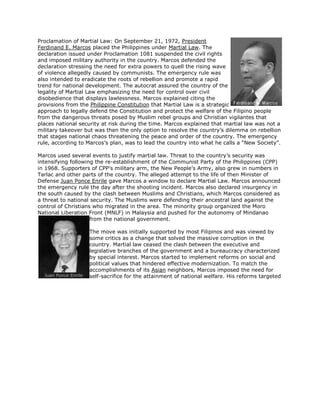
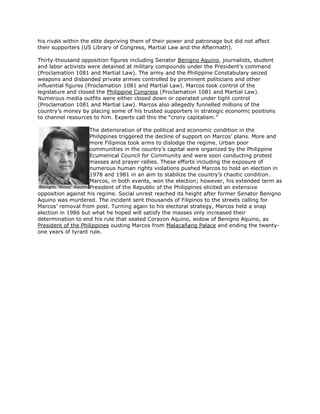

1) In 1972, President Ferdinand Marcos declared martial law in the Philippines, suspending civil rights and imposing military authority. He claimed this was necessary to quell communist uprisings and ensure national security. 2) Marcos' martial law regime detained thousands of opposition figures and seized weapons. It also took control of the legislature and restricted the media. 3) Opposition to Marcos' authoritarian rule grew over time as human rights abuses increased and the economic situation deteriorated. This led to his ousting in 1986 after a snap election installed Corazon Aquino as the new president.


