PHILIPPINE
INDEPENDENCE

      Prepared By: Aldous Niño dela
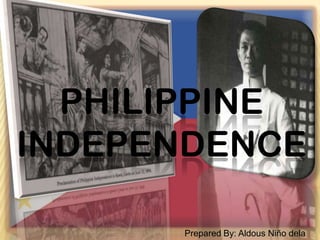
 June 12, 1898 - The Philippine
 Declaration of independence was
 proclaimed in Cavite el Viejo (present-
 day Kawit, Cavite)

 Filipinorevolutionary forces under
 General Emilio Aguinaldo proclaimed
 the sovereignty and independence of
 the Philippine Islands from the colonial
 rule of Spain.
HISTORY
 1896 - the Philippine
 Revolution began. Eventually, the
 Spanish signed an agreement with
 the revolutionaries

 Emilio
       Aguinaldo went into exile
 in Hongkong. At the outbreak of
 the Spanish-American war.
 Commodore   George Dewey - sailed
 from Hong Kong to Manila Bay leading
 a squadron of U.S. Navy ships.

 May1, 1898 - the United States
 defeated the Spanish in the Battle of
 Manila Bay.

 the
    U.S. Navy transported Aguinaldo
 back to the Philippines.
THE PROCLAMATION ON JUNE 12
 Independence  was proclaimed on June
 12, 1898 between four and five in the
 afternoon in Cavite at the ancestral
 home of General Emilio Aguinaldo.

 Theevent saw the unfurling of the
 National Flag of the Philippines, made
 in Hong Kong by Marcela Agoncillo,
 Lorenza Agoncillo, and Delfina
 and the performance of the Marcha
 Filipina Magdalo, as the national
 anthem, now known as Lupang
 Hinirang, which was composed by
 Julián Felipe and played by the San
 Francisco de Malabon marching band.

 TheAct of the Declaration of
 Independence was
 prepared, written, and read by
 Ambrosio Rianzares Bautista in
 Spanish.
 The Declaration was signed by
 ninety-eight people, among them an
 American army officer who
 witnessed the proclamation who
 attended the proceedings, Mr. L. M.
 Johnson, a Coronel of Artillery.
 Theproclamation of Philippine
 independence
 was, however, promulgated on 1
 August, when many towns had already
 been organized under the rules laid
 down by the Dictatorial Government of
 The declaration was not recognized by
 the U.S. nor Spain and Spain later sold
 the Philippines to the United States in
 the 1898 Treaty of Paris ended the
 Spanish-American War.

 Philippine-American     War - The
 Philippine Revolutionary Government
 did not recognize the treaty or American
 sovereignty, and subsequently fought
 and lost a conflict with United States.
 endedwhen Emilio Aguinaldo was
 captured by U.S. forces, and issued a
 statement acknowledging and
 accepting the sovereignty of the
 United States over the Philippines.

 FollowingWorld War II, the US
 granted independence to the
 Philippines on July 4, 1946 via
 the Treaty of Manila.
   1964 - President Diosdado
    Macapagal signed into law Republic Act No.
    4166 designating June 12 as the
    country's Independence Day.

Philippine independence

  • 1.
    PHILIPPINE INDEPENDENCE Prepared By: Aldous Niño dela
  • 2.
     June 12,1898 - The Philippine Declaration of independence was proclaimed in Cavite el Viejo (present- day Kawit, Cavite)  Filipinorevolutionary forces under General Emilio Aguinaldo proclaimed the sovereignty and independence of the Philippine Islands from the colonial rule of Spain.
  • 3.
    HISTORY  1896 -the Philippine Revolution began. Eventually, the Spanish signed an agreement with the revolutionaries  Emilio Aguinaldo went into exile in Hongkong. At the outbreak of the Spanish-American war.
  • 4.
     Commodore George Dewey - sailed from Hong Kong to Manila Bay leading a squadron of U.S. Navy ships.  May1, 1898 - the United States defeated the Spanish in the Battle of Manila Bay.  the U.S. Navy transported Aguinaldo back to the Philippines.
  • 5.
    THE PROCLAMATION ONJUNE 12  Independence was proclaimed on June 12, 1898 between four and five in the afternoon in Cavite at the ancestral home of General Emilio Aguinaldo.  Theevent saw the unfurling of the National Flag of the Philippines, made in Hong Kong by Marcela Agoncillo, Lorenza Agoncillo, and Delfina
  • 6.
     and theperformance of the Marcha Filipina Magdalo, as the national anthem, now known as Lupang Hinirang, which was composed by Julián Felipe and played by the San Francisco de Malabon marching band.  TheAct of the Declaration of Independence was prepared, written, and read by Ambrosio Rianzares Bautista in Spanish.
  • 7.
     The Declarationwas signed by ninety-eight people, among them an American army officer who witnessed the proclamation who attended the proceedings, Mr. L. M. Johnson, a Coronel of Artillery.  Theproclamation of Philippine independence was, however, promulgated on 1 August, when many towns had already been organized under the rules laid down by the Dictatorial Government of
  • 8.
     The declarationwas not recognized by the U.S. nor Spain and Spain later sold the Philippines to the United States in the 1898 Treaty of Paris ended the Spanish-American War.  Philippine-American War - The Philippine Revolutionary Government did not recognize the treaty or American sovereignty, and subsequently fought and lost a conflict with United States.
  • 9.
     endedwhen EmilioAguinaldo was captured by U.S. forces, and issued a statement acknowledging and accepting the sovereignty of the United States over the Philippines.  FollowingWorld War II, the US granted independence to the Philippines on July 4, 1946 via the Treaty of Manila.
  • 10.
    1964 - President Diosdado Macapagal signed into law Republic Act No. 4166 designating June 12 as the country's Independence Day.