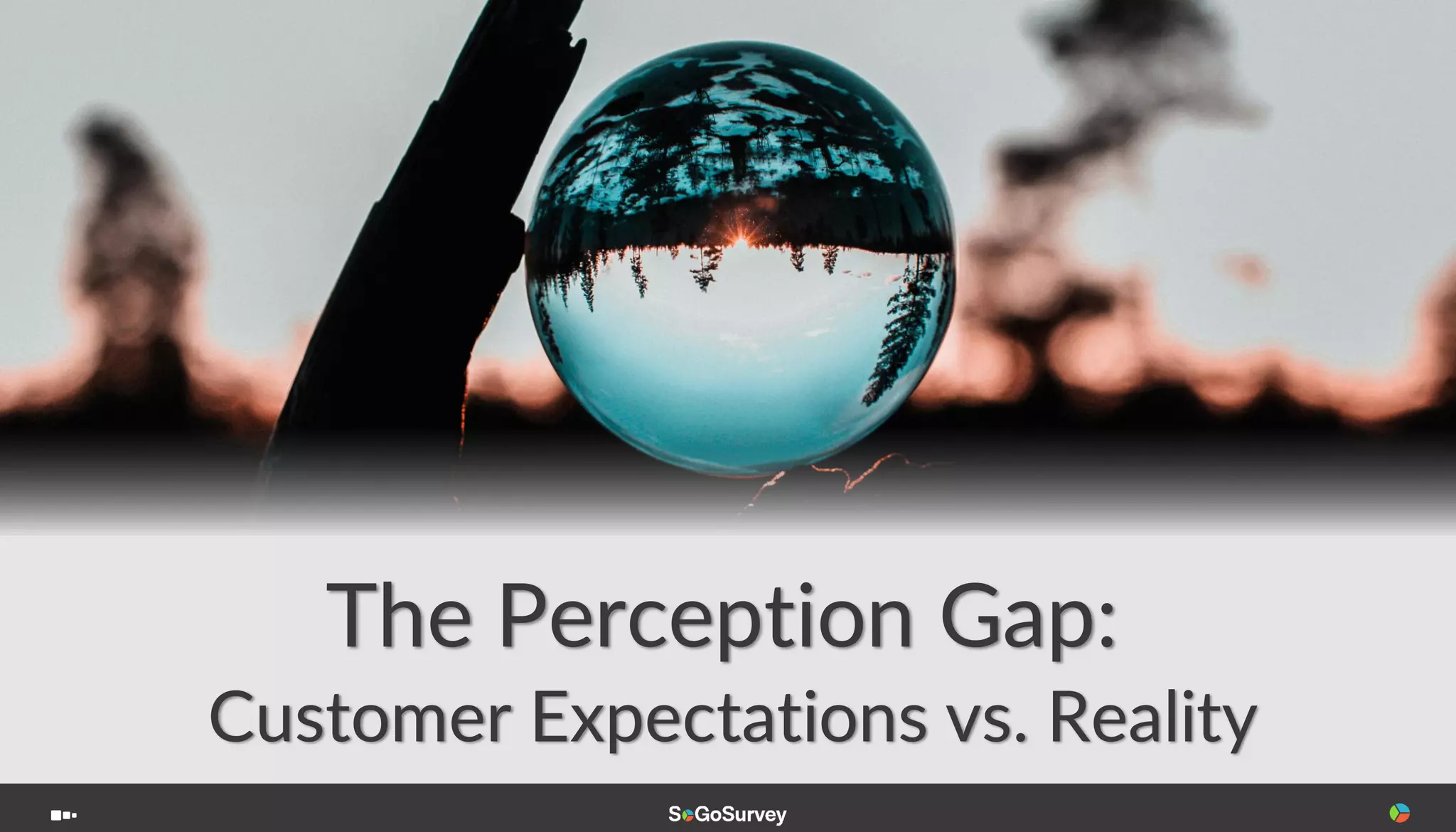
The Perception Gap:
Customer Expectations vs. Reality
• Sure, sales numbers matter, as do
those key CX metrics you’ve been
measuring.
• But...
• What factors drive those key metrics?
• Are you even measuring the
right customer experience metrics?
• Are your customers really happy, or just
passive, and why?
2
• Those businesses that have not yet
invested in customer experience are
already far behind the curve.
• Even for companies that place CX at
the core of their business strategy,
there's sometimes a disconnect.
3
4
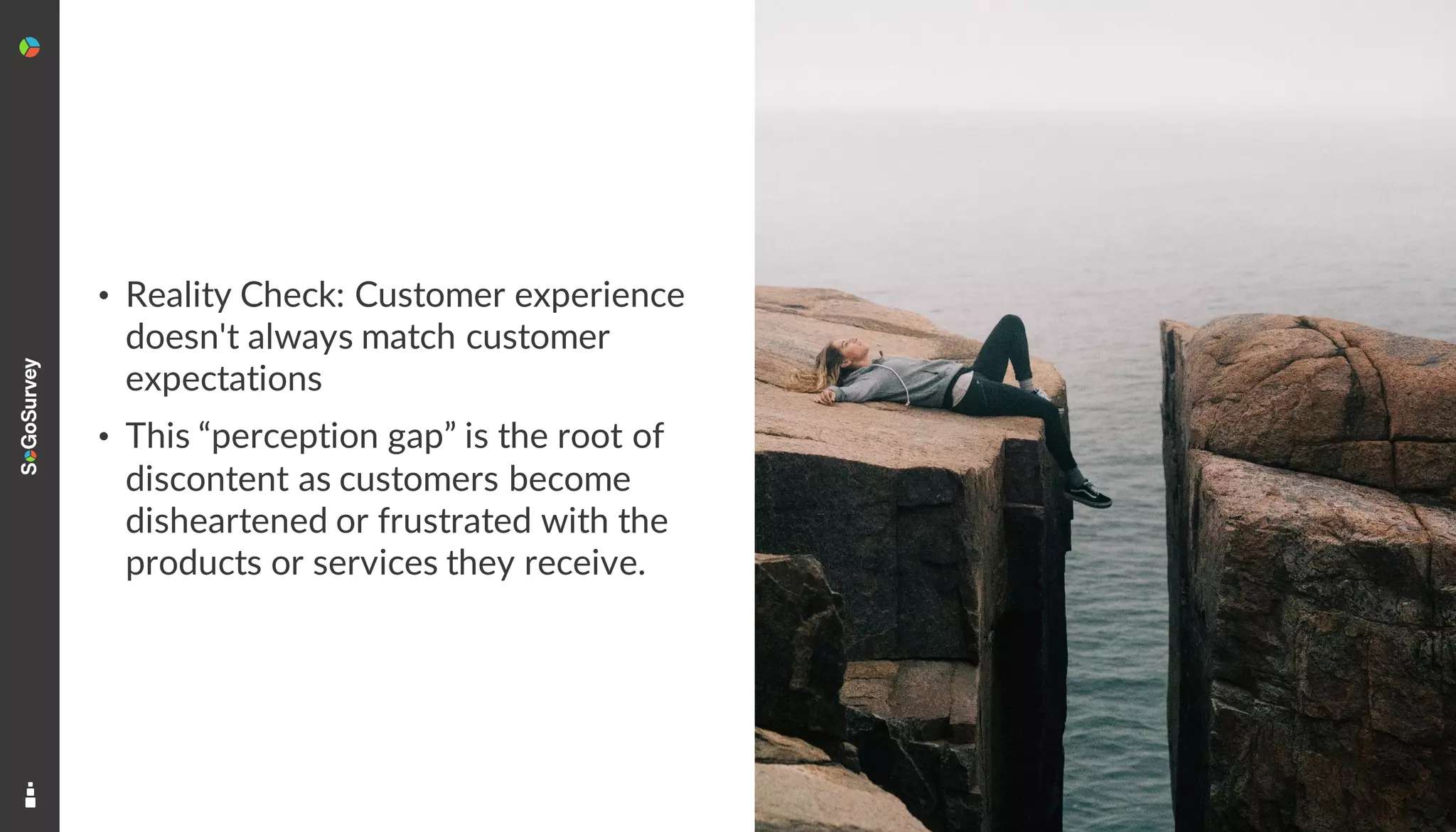
• Reality Check: Customer experience
doesn't always match customer
expectations
• This “perception gap” is the root of
discontent as customers become
disheartened or frustrated with the
products or services they receive.
Just take a simple example:
• You see an appealing product online.
• When your order arrives, it doesn't look /
work / fit quite the way you expected.
• This "perception gap" is happening to
businesses around the world, especially
with online sales.
• Valuing the detractors who tell you what
went wrong and listening to news and
media mention can help you close the
gap.
5
Bridge The Gap
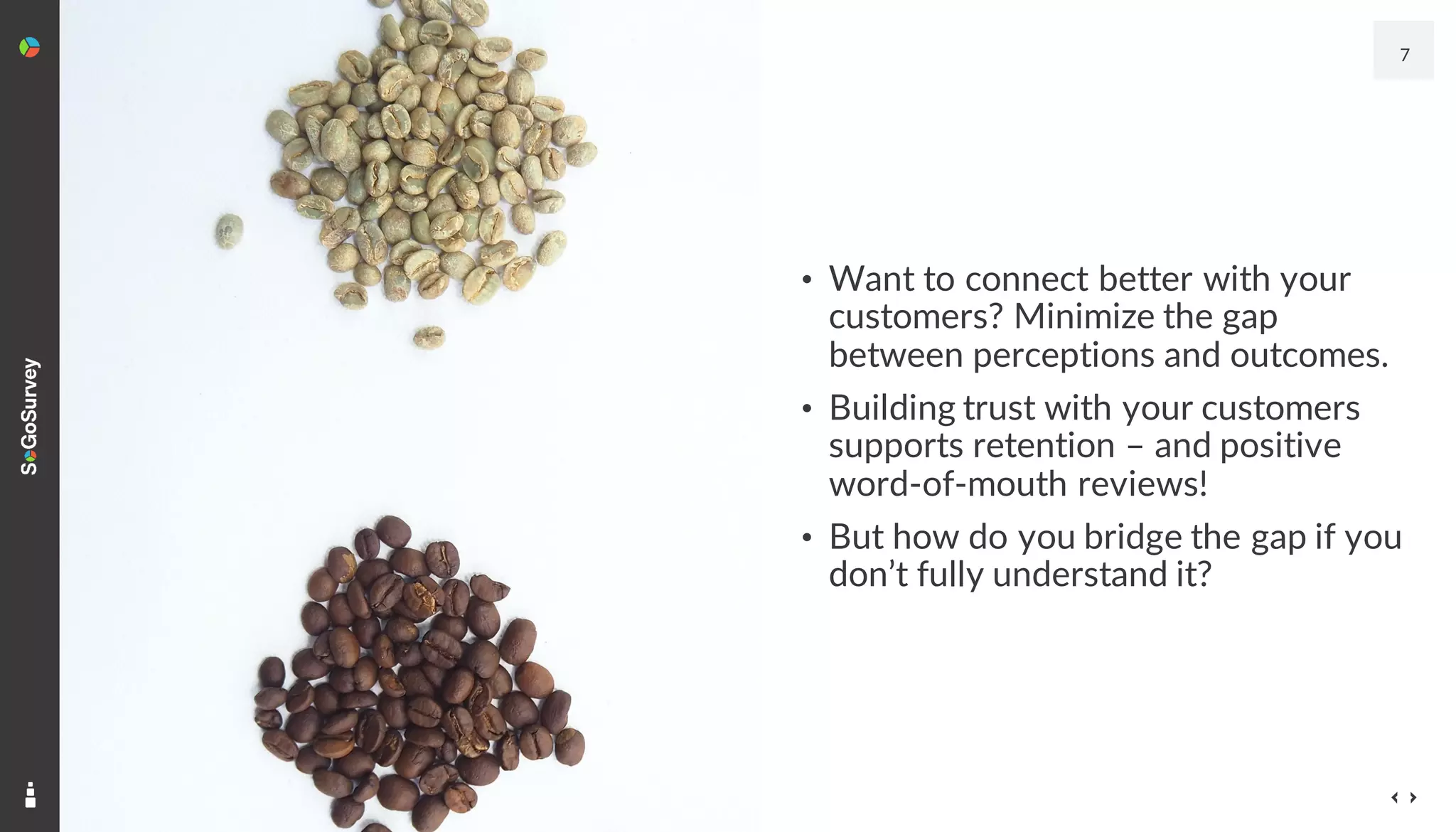
• Want to connect better with your
customers? Minimize the gap
between perceptions and outcomes.
• Building trust with your customers
supports retention – and positive
word-of-mouth reviews!
• But how do you bridge the gap if you
don’t fully understand it?
7
Get Them Talking
9
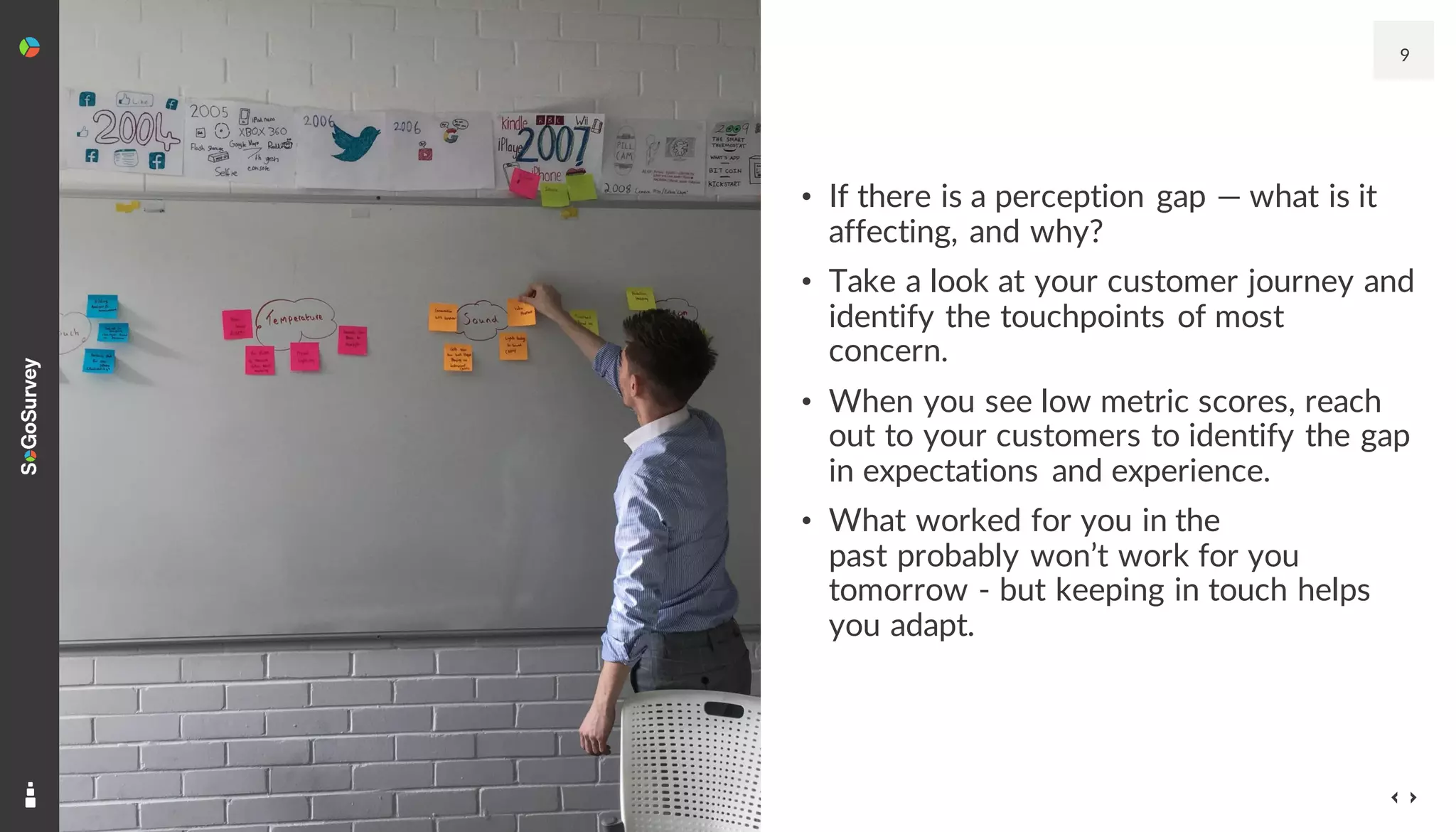
• If there is a perception gap — what is it
affecting, and why?
• Take a look at your customer journey and
identify the touchpoints of most
concern.
• When you see low metric scores, reach
out to your customers to identify the gap
in expectations and experience.
• What worked for you in the
past probably won’t work for you
tomorrow - but keeping in touch helps
you adapt.
Refocus Your Attention
11
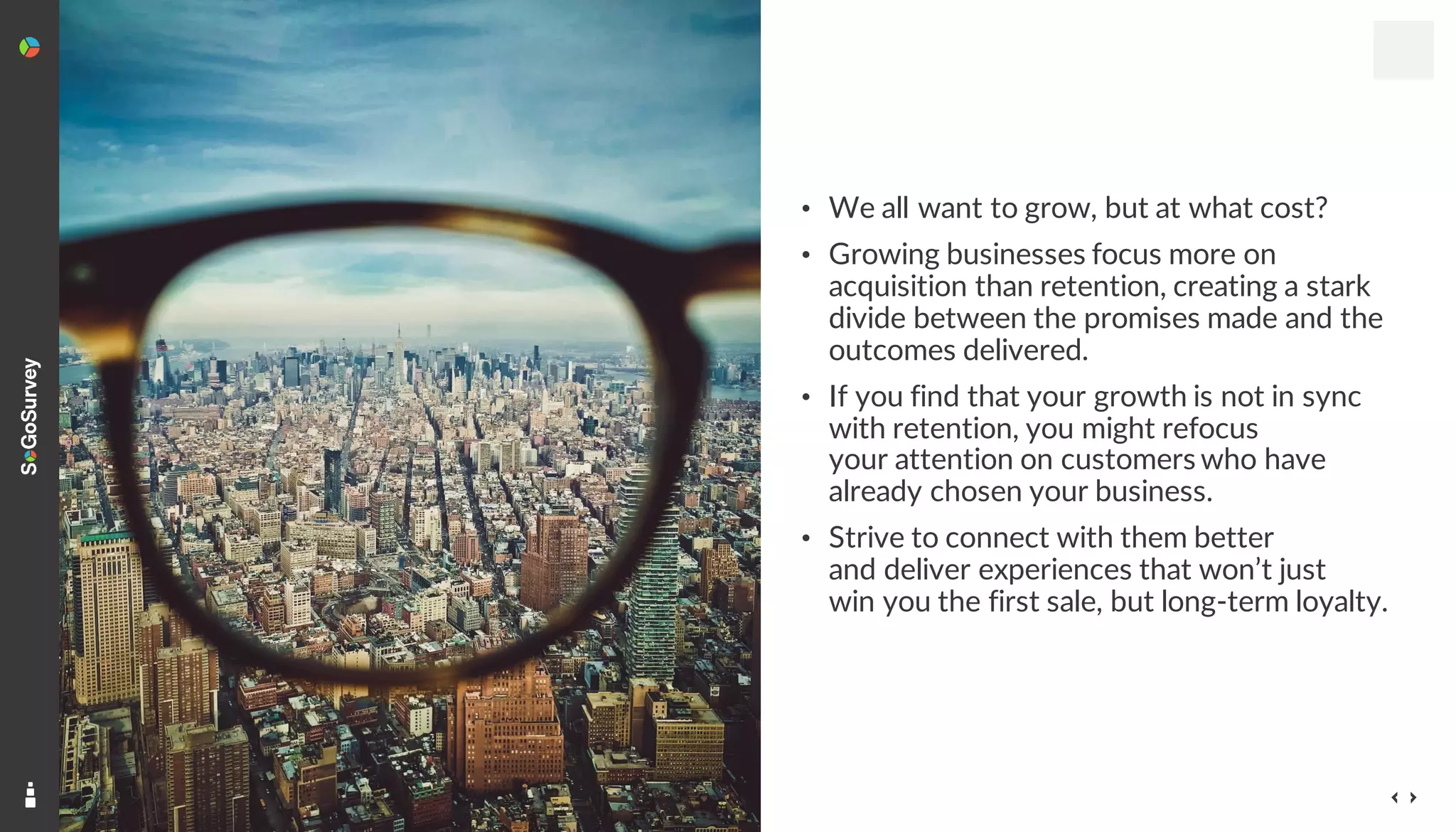
• We all want to grow, but at what cost?
• Growing businesses focus more on
acquisition than retention, creating a stark
divide between the promises made and the
outcomes delivered.
• If you find that your growth is not in sync
with retention, you might refocus
your attention on customers who have
already chosen your business.
• Strive to connect with them better
and deliver experiences that won’t just
win you the first sale, but long-term loyalty.
Show Up, Every Time
13
• A single mistake doesn’t have to define
your brand, and neither does a positive
experience.
• Reliable performance and consistent
customer experience inspire trust.
• No matter what your niche, if you want
to win the loyalty of your audience,
remember to show up, every time.
14
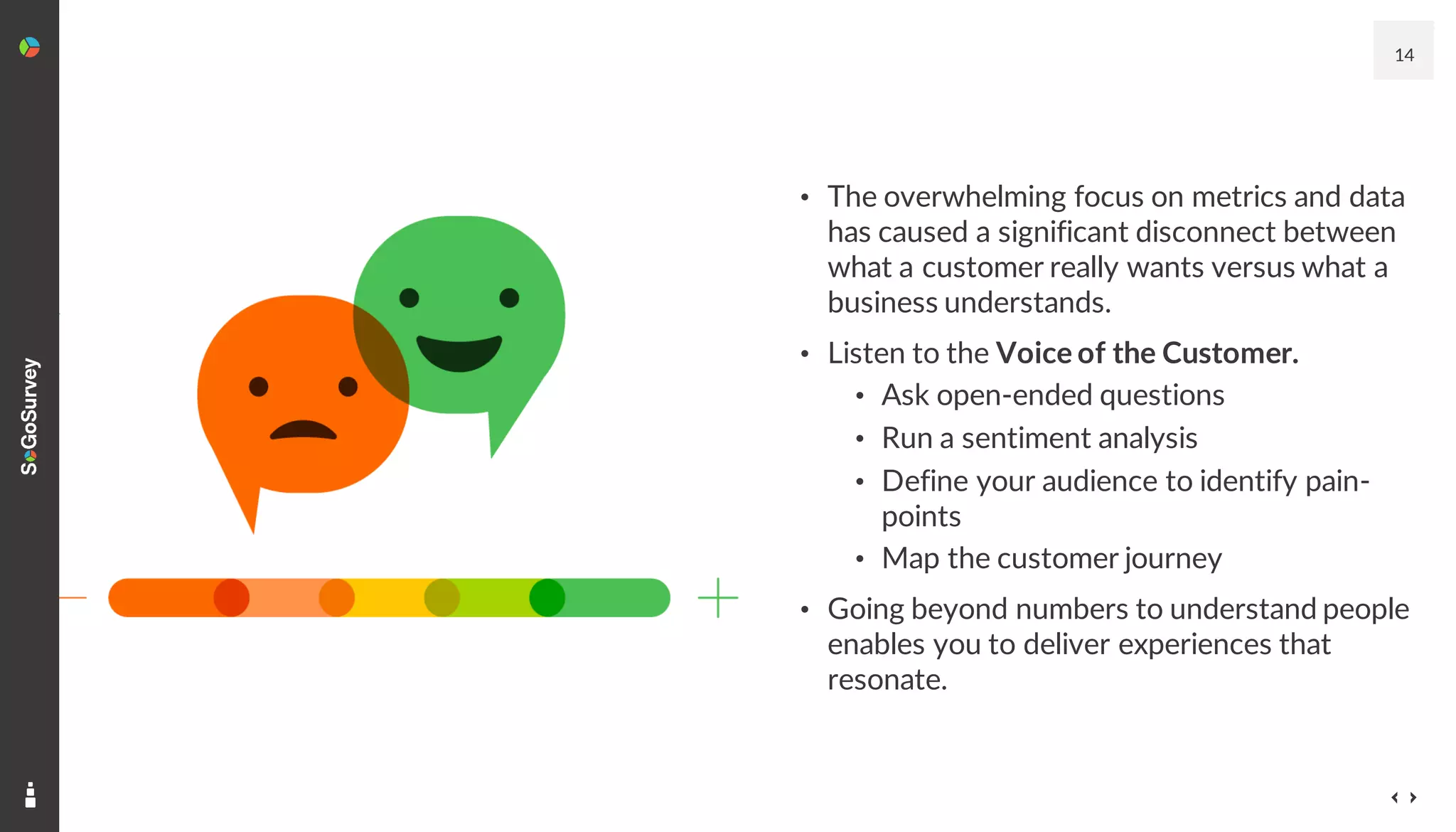
• The overwhelming focus on metrics and data
has caused a significant disconnect between
what a customer really wants versus what a
business understands.
• Listen to the Voice of the Customer.
• Ask open-ended questions
• Run a sentiment analysis
• Define your audience to identify pain-
points
• Map the customer journey
• Going beyond numbers to understand people
enables you to deliver experiences that
resonate.
15
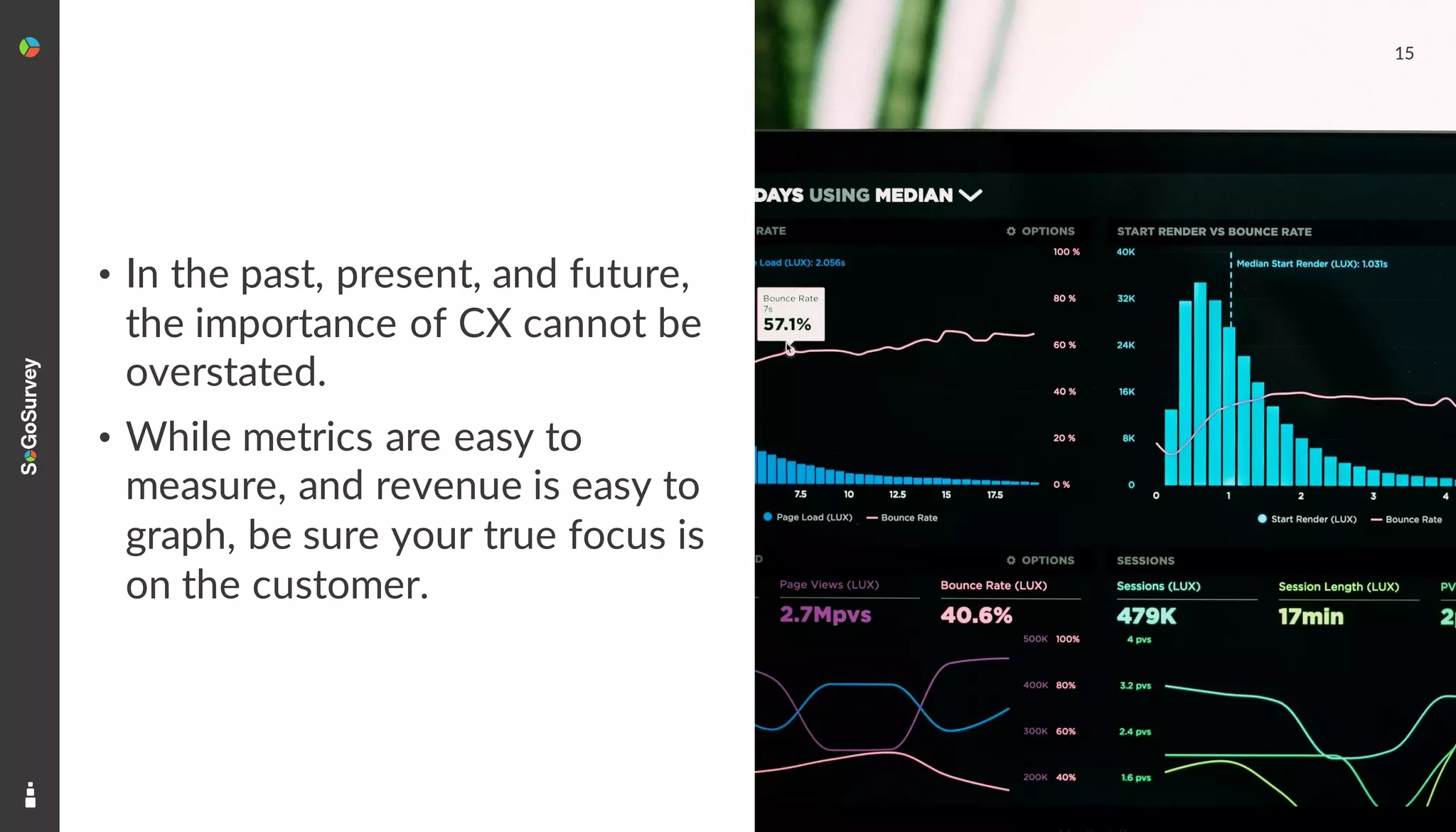
• In the past, present, and future,
the importance of CX cannot be
overstated.
• While metrics are easy to
measure, and revenue is easy to
graph, be sure your true focus is
on the customer.
Want more?
Binge watch… Read the full blog… Like some podcasts!
Have we met socially?
Thank you!

The Perception Gap: Customer Expectations vs. Reality

  • 1.
    The Perception Gap: CustomerExpectations vs. Reality
  • 2.
    • Sure, salesnumbers matter, as do those key CX metrics you’ve been measuring. • But... • What factors drive those key metrics? • Are you even measuring the right customer experience metrics? • Are your customers really happy, or just passive, and why? 2
  • 3.
    • Those businessesthat have not yet invested in customer experience are already far behind the curve. • Even for companies that place CX at the core of their business strategy, there's sometimes a disconnect. 3
  • 4.
    4 • Reality Check:Customer experience doesn't always match customer expectations • This “perception gap” is the root of discontent as customers become disheartened or frustrated with the products or services they receive.
  • 5.
    Just take asimple example: • You see an appealing product online. • When your order arrives, it doesn't look / work / fit quite the way you expected. • This "perception gap" is happening to businesses around the world, especially with online sales. • Valuing the detractors who tell you what went wrong and listening to news and media mention can help you close the gap. 5
  • 6.
  • 7.
    • Want toconnect better with your customers? Minimize the gap between perceptions and outcomes. • Building trust with your customers supports retention – and positive word-of-mouth reviews! • But how do you bridge the gap if you don’t fully understand it? 7
  • 8.
  • 9.
    9 • If thereis a perception gap — what is it affecting, and why? • Take a look at your customer journey and identify the touchpoints of most concern. • When you see low metric scores, reach out to your customers to identify the gap in expectations and experience. • What worked for you in the past probably won’t work for you tomorrow - but keeping in touch helps you adapt.
  • 10.
  • 11.
    11 • We allwant to grow, but at what cost? • Growing businesses focus more on acquisition than retention, creating a stark divide between the promises made and the outcomes delivered. • If you find that your growth is not in sync with retention, you might refocus your attention on customers who have already chosen your business. • Strive to connect with them better and deliver experiences that won’t just win you the first sale, but long-term loyalty.
  • 12.
  • 13.
    13 • A singlemistake doesn’t have to define your brand, and neither does a positive experience. • Reliable performance and consistent customer experience inspire trust. • No matter what your niche, if you want to win the loyalty of your audience, remember to show up, every time.
  • 14.
    14 • The overwhelmingfocus on metrics and data has caused a significant disconnect between what a customer really wants versus what a business understands. • Listen to the Voice of the Customer. • Ask open-ended questions • Run a sentiment analysis • Define your audience to identify pain- points • Map the customer journey • Going beyond numbers to understand people enables you to deliver experiences that resonate.
  • 15.
    15 • In thepast, present, and future, the importance of CX cannot be overstated. • While metrics are easy to measure, and revenue is easy to graph, be sure your true focus is on the customer.
  • 16.
    Want more? Binge watch…Read the full blog… Like some podcasts!
  • 17.
    Have we metsocially?
  • 18.