How Work-Anywhere Momentum
is Impacting Recruiting
• Pre-pandemic, the idea of working from
home was often met with resistance by
employers and/or employees.
• When quarantine forced millions to stay
home, people began to adapt to
working remotely, and work processes
and attitudes shifted.
2
3
• Especially among highly
skilled, highly educated workers, it
has become clear that they
can work just as effectively away from
the office three to five days a week.
• A McKinsey report suggests that
“Hybrid models of remote work are
likely to persist in the wake of the
pandemic.”
4
• What does all of this mean for
recruiting and hiring?
• During the pandemic, these efforts
had to move online.
• Zoom interviews, remote onboarding,
and bringing new hires into a fully
virtual work environment became the
norm.
Recruiting and Hiring in the Remote
Work Environment
• With recruiting and hiring moving
online, digital strategies are
essential, especially when it comes to
appealing to digital natives in the
workforce.
• Opening job opportunities to the
remote worker can lead to a pool of
potential employees with richer
experience, education, and
professional networks.
6
7
Finding the best talent for the
right role requires recruiters to:
• Target online job search advertising
• Learn which digital channels are the
best talent sources
• Make the digital budget stretch
further
8
In a Cielo survey, hiring managers
planned to:
• Interview candidates by video (82
percent)
• Onboard starters virtually (41
percent)
• Make offers without first meeting
face-to-face (32 percent)
9
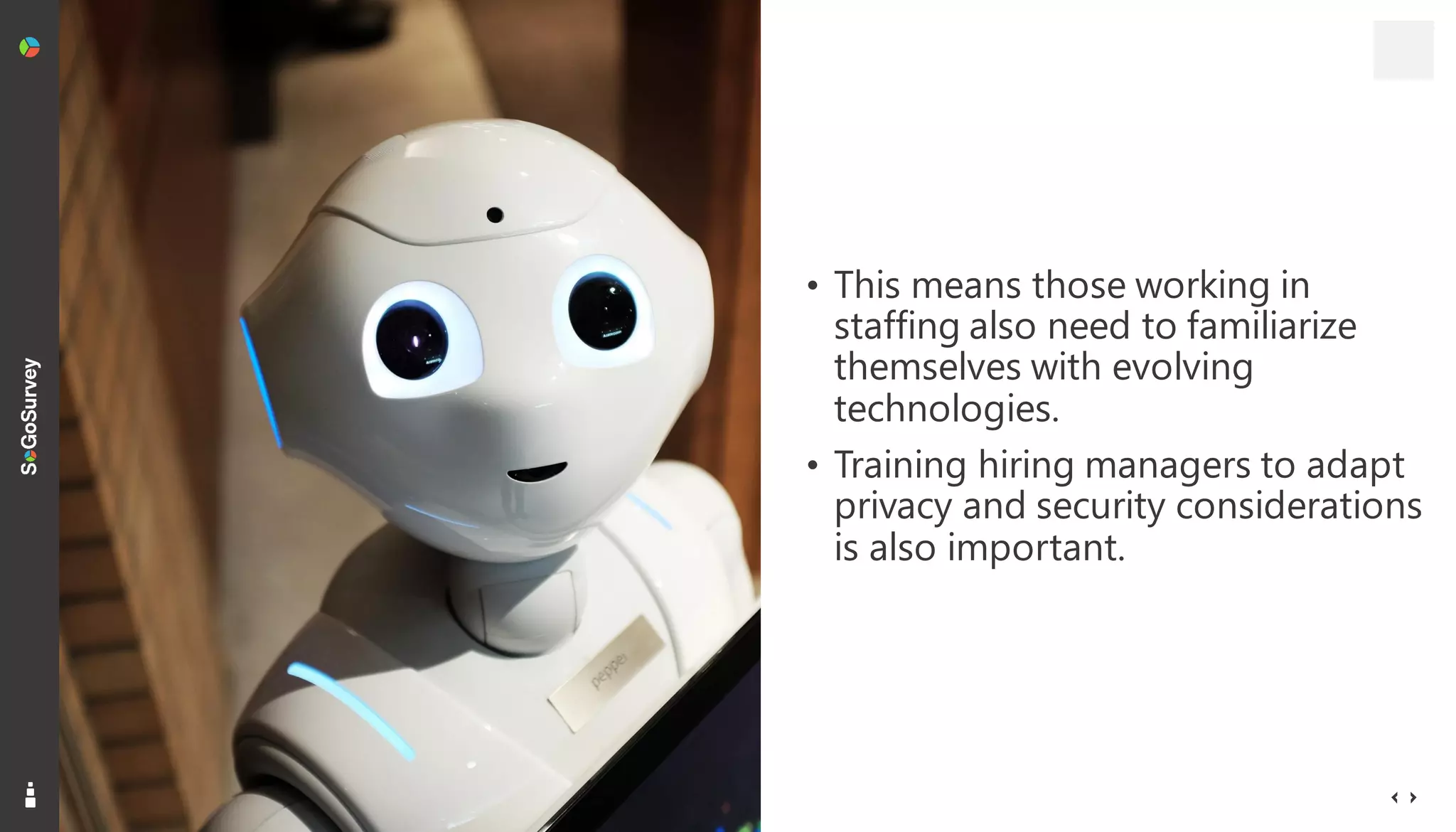
• This means those working in
staffing also need to familiarize
themselves with evolving
technologies.
• Training hiring managers to adapt
privacy and security considerations
is also important.
How Work-anywhere Is Shaping
Candidate Expectations
11
• In a Conference Board survey, 77
percent of respondents expected “an
increase in employees working
remotely (at least a few days a week)
even 12 months after the COVID-19
pandemic has ended.”
• After all, as McKinsey observed, more
employers were seeing “somewhat
better productivity from their
remote workers” nine months into
the pandemic.
12
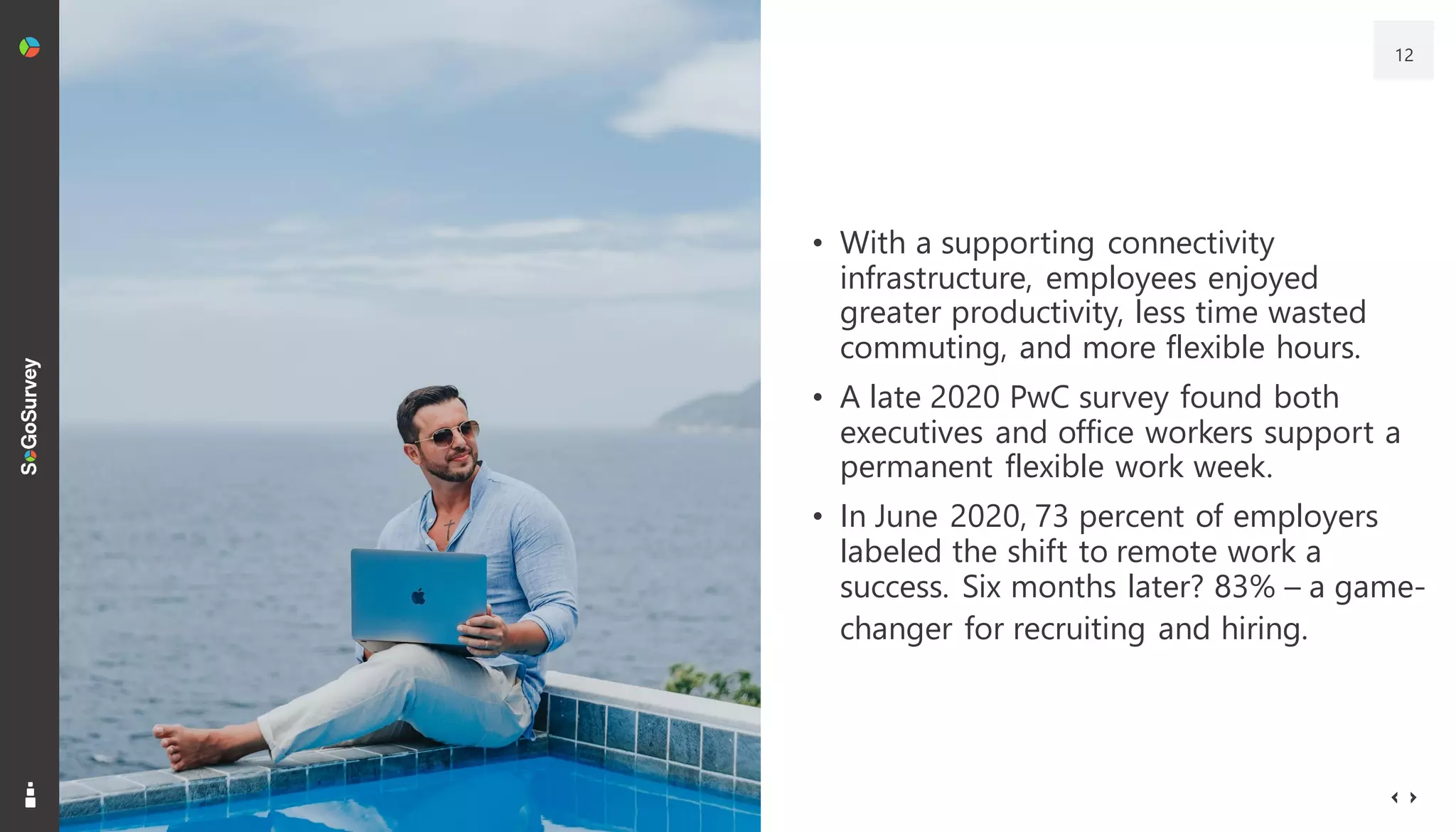
• With a supporting connectivity
infrastructure, employees enjoyed
greater productivity, less time wasted
commuting, and more flexible hours.
• A late 2020 PwC survey found both
executives and office workers support a
permanent flexible work week.
• In June 2020, 73 percent of employers
labeled the shift to remote work a
success. Six months later? 83% – a game-
changer for recruiting and hiring.
13
• One recruiter suggested, “Workers
will classify employers into one of
four categories:
• Employers that are remote-first;
• Employers that are remote-friendly;
• Employers that can’t accommodate
remote workers (but might offer a
flexible schedule);
• Employers that don’t get it.”
14
• Candidates are looking for the flexibility
and freedom of work-anywhere culture.
• As a result, they're doing more research
before taking on a new role – asking
questions, checking sources, verifying
answers, and digging deeper into
company culture.
• This is pushing recruiters to reposition
how they talk about work/life balance:
it needs to be a differentiator.
The Office Is Here To Stay
16
• Still, this isn't the end of the
office: employees do want to return
to the office to some degree.
• Some 87 percent of the employees
surveyed by PwC said, “the office is
important for collaborating with team
members and building relationships.”
• The office is also where
employees see themselves accessing
equipment, training, or documents.
• Meanwhile, employers want
employees in the office to meet
clients and build corporate culture.
17
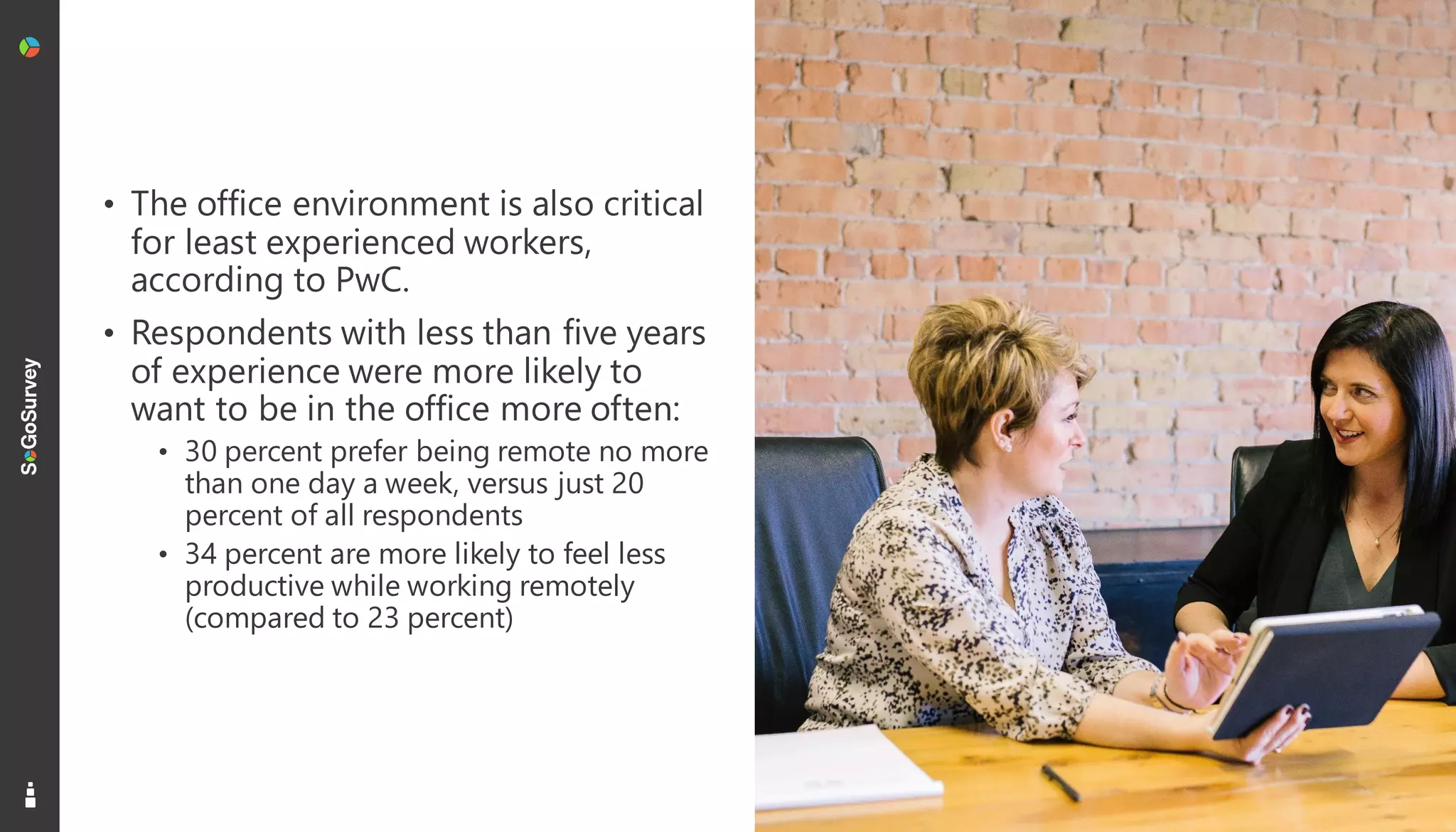
• The office environment is also critical
for least experienced workers,
according to PwC.
• Respondents with less than five years
of experience were more likely to
want to be in the office more often:
• 30 percent prefer being remote no more
than one day a week, versus just 20
percent of all respondents
• 34 percent are more likely to feel less
productive while working remotely
(compared to 23 percent)
18
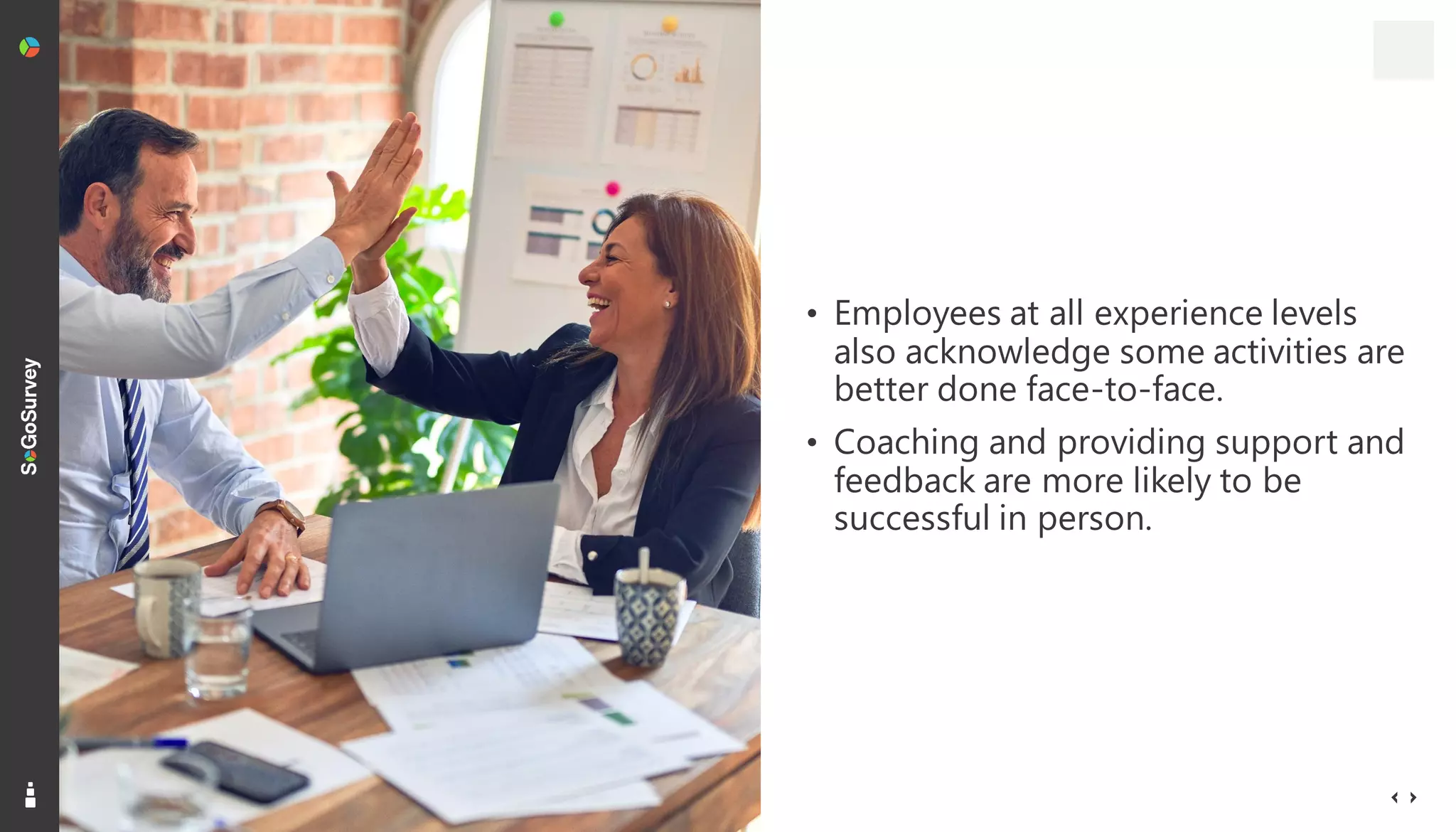
• Employees at all experience levels
also acknowledge some activities are
better done face-to-face.
• Coaching and providing support and
feedback are more likely to be
successful in person.
Ready Your Business For The Hybrid
Workforce
20
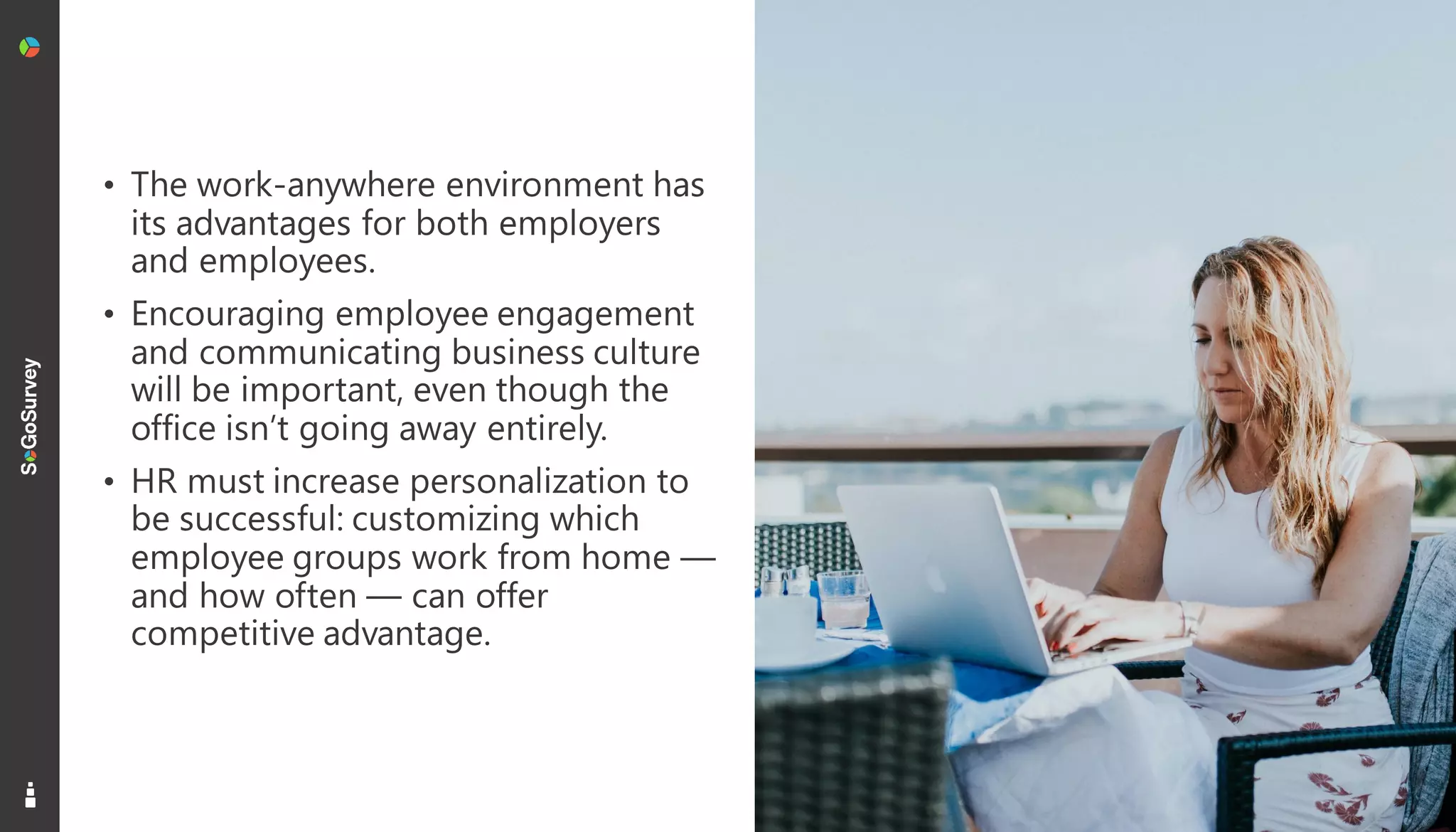
• The work-anywhere environment has
its advantages for both employers
and employees.
• Encouraging employee engagement
and communicating business culture
will be important, even though the
office isn’t going away entirely.
• HR must increase personalization to
be successful: customizing which
employee groups work from home —
and how often — can offer
competitive advantage.
Want more?
Binge watch… Read the full blog… Like some podcasts!
Have we met socially?
Thank you!

How Work-Anywhere Momentum is Impacting Recruiting

  • 1.
    How Work-Anywhere Momentum isImpacting Recruiting
  • 2.
    • Pre-pandemic, theidea of working from home was often met with resistance by employers and/or employees. • When quarantine forced millions to stay home, people began to adapt to working remotely, and work processes and attitudes shifted. 2
  • 3.
    3 • Especially amonghighly skilled, highly educated workers, it has become clear that they can work just as effectively away from the office three to five days a week. • A McKinsey report suggests that “Hybrid models of remote work are likely to persist in the wake of the pandemic.”
  • 4.
    4 • What doesall of this mean for recruiting and hiring? • During the pandemic, these efforts had to move online. • Zoom interviews, remote onboarding, and bringing new hires into a fully virtual work environment became the norm.
  • 5.
    Recruiting and Hiringin the Remote Work Environment
  • 6.
    • With recruitingand hiring moving online, digital strategies are essential, especially when it comes to appealing to digital natives in the workforce. • Opening job opportunities to the remote worker can lead to a pool of potential employees with richer experience, education, and professional networks. 6
  • 7.
    7 Finding the besttalent for the right role requires recruiters to: • Target online job search advertising • Learn which digital channels are the best talent sources • Make the digital budget stretch further
  • 8.
    8 In a Cielosurvey, hiring managers planned to: • Interview candidates by video (82 percent) • Onboard starters virtually (41 percent) • Make offers without first meeting face-to-face (32 percent)
  • 9.
    9 • This meansthose working in staffing also need to familiarize themselves with evolving technologies. • Training hiring managers to adapt privacy and security considerations is also important.
  • 10.
    How Work-anywhere IsShaping Candidate Expectations
  • 11.
    11 • In aConference Board survey, 77 percent of respondents expected “an increase in employees working remotely (at least a few days a week) even 12 months after the COVID-19 pandemic has ended.” • After all, as McKinsey observed, more employers were seeing “somewhat better productivity from their remote workers” nine months into the pandemic.
  • 12.
    12 • With asupporting connectivity infrastructure, employees enjoyed greater productivity, less time wasted commuting, and more flexible hours. • A late 2020 PwC survey found both executives and office workers support a permanent flexible work week. • In June 2020, 73 percent of employers labeled the shift to remote work a success. Six months later? 83% – a game- changer for recruiting and hiring.
  • 13.
    13 • One recruitersuggested, “Workers will classify employers into one of four categories: • Employers that are remote-first; • Employers that are remote-friendly; • Employers that can’t accommodate remote workers (but might offer a flexible schedule); • Employers that don’t get it.”
  • 14.
    14 • Candidates arelooking for the flexibility and freedom of work-anywhere culture. • As a result, they're doing more research before taking on a new role – asking questions, checking sources, verifying answers, and digging deeper into company culture. • This is pushing recruiters to reposition how they talk about work/life balance: it needs to be a differentiator.
  • 15.
    The Office IsHere To Stay
  • 16.
    16 • Still, thisisn't the end of the office: employees do want to return to the office to some degree. • Some 87 percent of the employees surveyed by PwC said, “the office is important for collaborating with team members and building relationships.” • The office is also where employees see themselves accessing equipment, training, or documents. • Meanwhile, employers want employees in the office to meet clients and build corporate culture.
  • 17.
    17 • The officeenvironment is also critical for least experienced workers, according to PwC. • Respondents with less than five years of experience were more likely to want to be in the office more often: • 30 percent prefer being remote no more than one day a week, versus just 20 percent of all respondents • 34 percent are more likely to feel less productive while working remotely (compared to 23 percent)
  • 18.
    18 • Employees atall experience levels also acknowledge some activities are better done face-to-face. • Coaching and providing support and feedback are more likely to be successful in person.
  • 19.
    Ready Your BusinessFor The Hybrid Workforce
  • 20.
    20 • The work-anywhereenvironment has its advantages for both employers and employees. • Encouraging employee engagement and communicating business culture will be important, even though the office isn’t going away entirely. • HR must increase personalization to be successful: customizing which employee groups work from home — and how often — can offer competitive advantage.
  • 21.
    Want more? Binge watch…Read the full blog… Like some podcasts!
  • 22.
    Have we metsocially?
  • 23.