International survey of
people living with chronic
conditions
© OECD |
What is PaRIS?
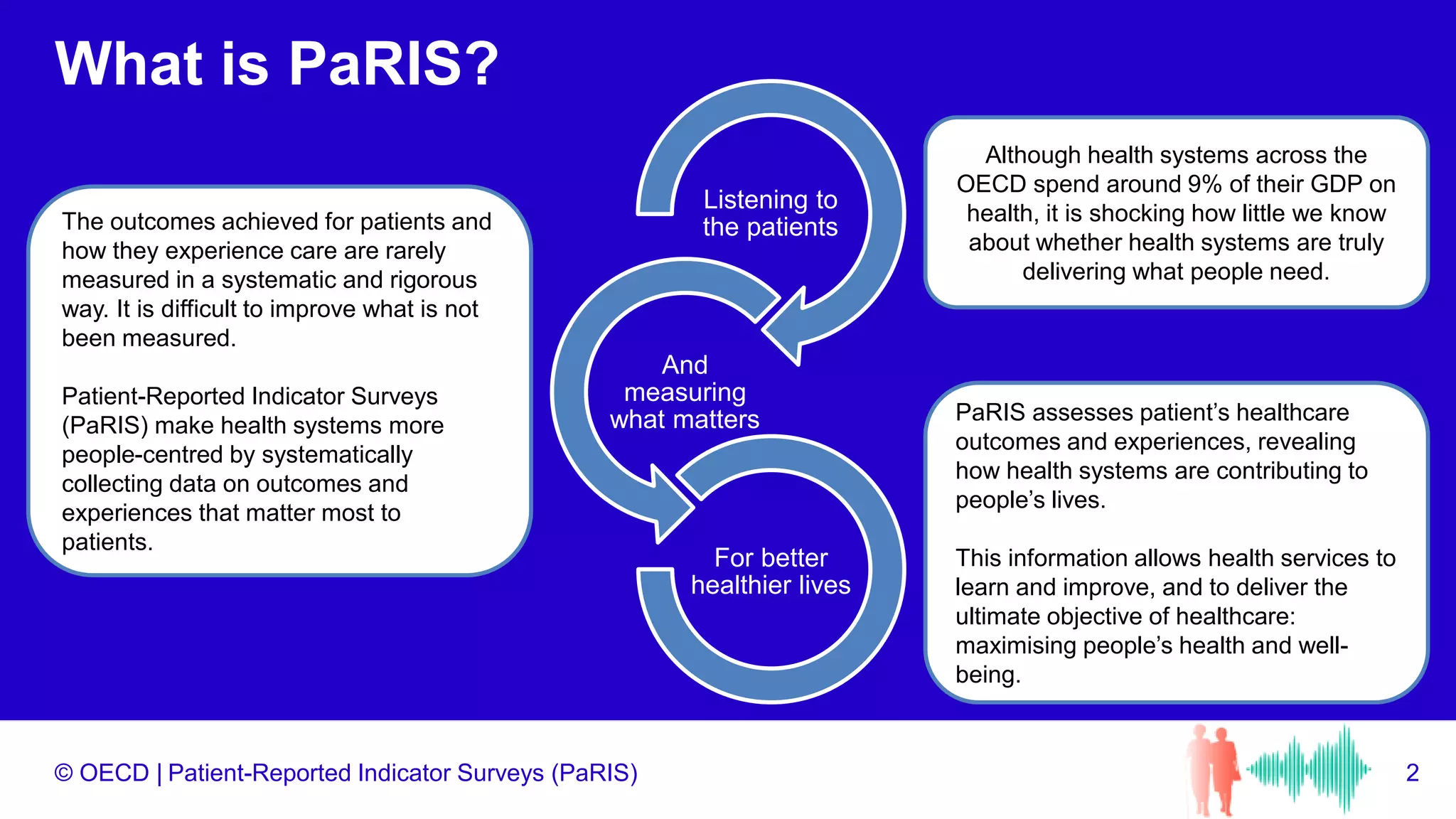
Listening to
the patients
And
measuring
what matters
For better
healthier lives
2
Patient-Reported Indicator Surveys (PaRIS)
Although health systems across the
OECD spend around 9% of their GDP on
health, it is shocking how little we know
about whether health systems are truly
delivering what people need.
The outcomes achieved for patients and
how they experience care are rarely
measured in a systematic and rigorous
way. It is difficult to improve what is not
been measured.
Patient-Reported Indicator Surveys
(PaRIS) make health systems more
people-centred by systematically
collecting data on outcomes and
experiences that matter most to
patients.
PaRIS assesses patient’s healthcare
outcomes and experiences, revealing
how health systems are contributing to
people’s lives.
This information allows health services to
learn and improve, and to deliver the
ultimate objective of healthcare:
maximising people’s health and well-
being.
© OECD |
Why does it matter?
3
Patient-Reported Indicator Surveys (PaRIS)
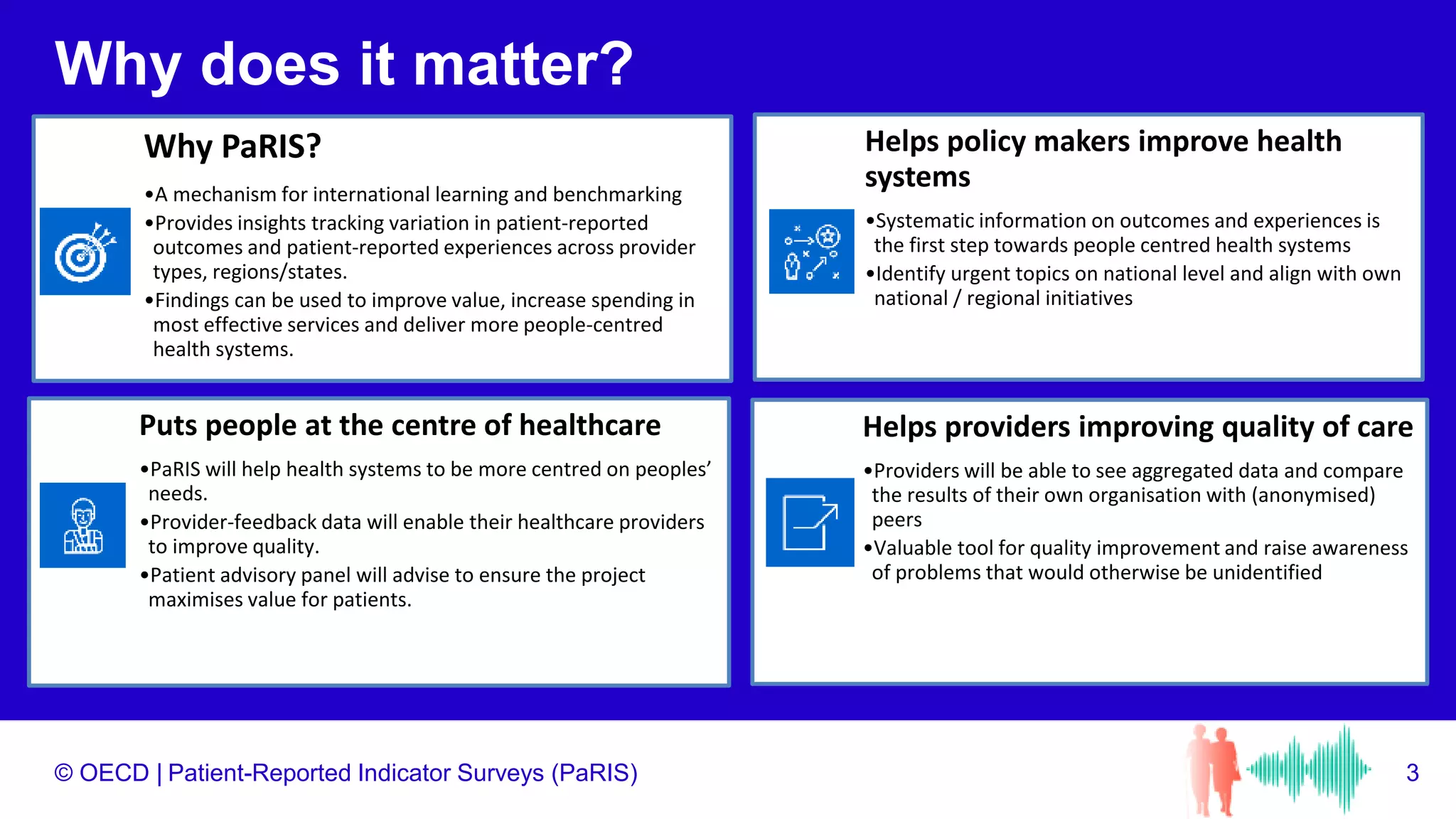
Why PaRIS?
•A mechanism for international learning and benchmarking
•Provides insights tracking variation in patient-reported
outcomes and patient-reported experiences across provider
types, regions/states.
•Findings can be used to improve value, increase spending in
most effective services and deliver more people-centred
health systems.
Helps policy makers improve health
systems
•Systematic information on outcomes and experiences is
the first step towards people centred health systems
•Identify urgent topics on national level and align with own
national / regional initiatives
Puts people at the centre of healthcare
•PaRIS will help health systems to be more centred on peoples’
needs.
•Provider-feedback data will enable their healthcare providers
to improve quality.
•Patient advisory panel will advise to ensure the project
maximises value for patients.
Helps providers improving quality of care
•Providers will be able to see aggregated data and compare
the results of their own organisation with (anonymised)
peers
•Valuable tool for quality improvement and raise awareness
of problems that would otherwise be unidentified
© OECD |
How does it work?
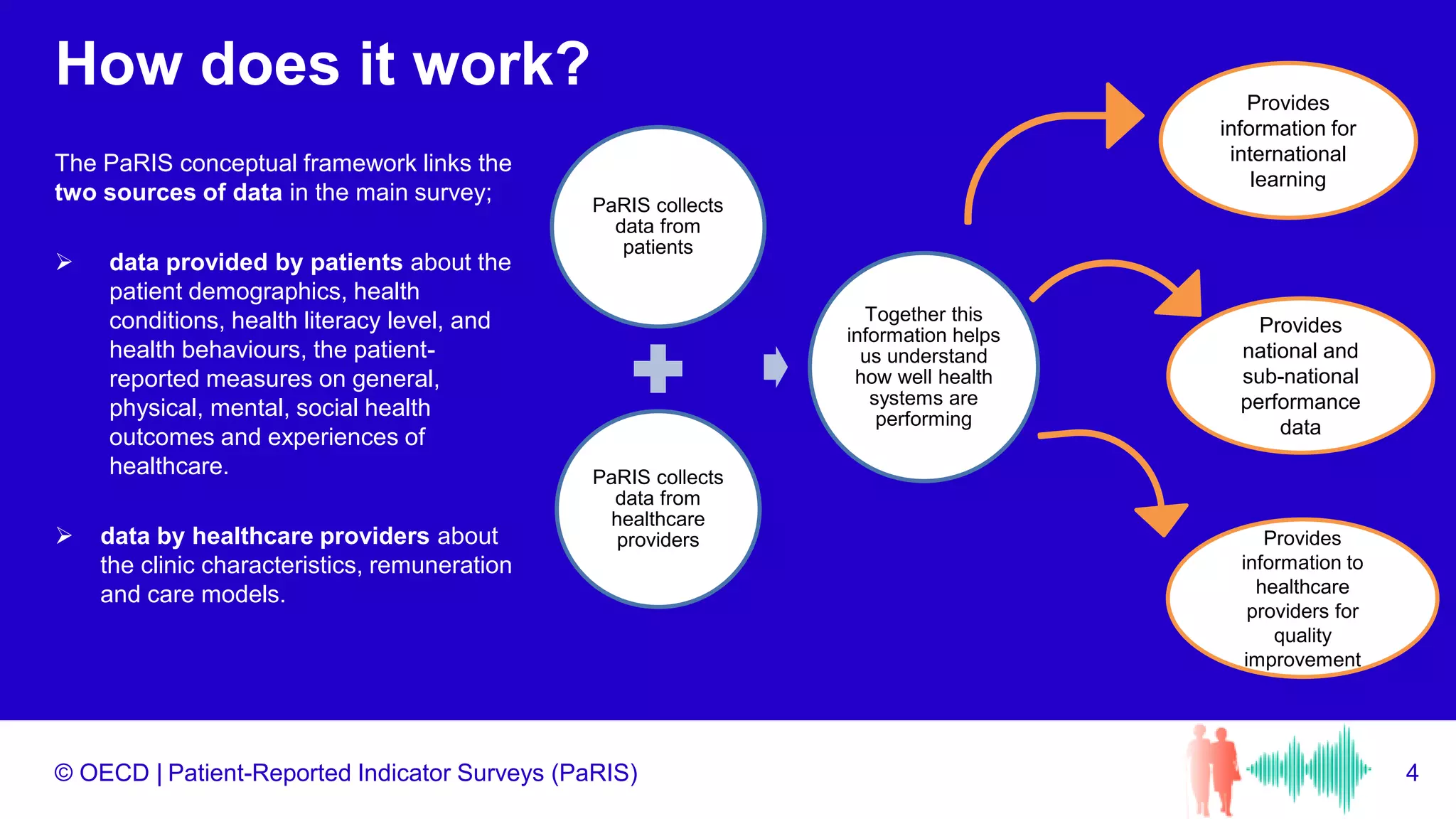
The PaRIS conceptual framework links the
two sources of data in the main survey;
 data provided by patients about the
patient demographics, health
conditions, health literacy level, and
health behaviours, the patient-
reported measures on general,
physical, mental, social health
outcomes and experiences of
healthcare.
 data by healthcare providers about
the clinic characteristics, remuneration
and care models.
4
Patient-Reported Indicator Surveys (PaRIS)
PaRIS collects
data from
patients
PaRIS collects
data from
healthcare
providers
Together this
information helps
us understand
how well health
systems are
performing
Provides
information for
international
learning
Provides
national and
sub-national
performance
data
Provides
information to
healthcare
providers for
quality
improvement
© OECD |
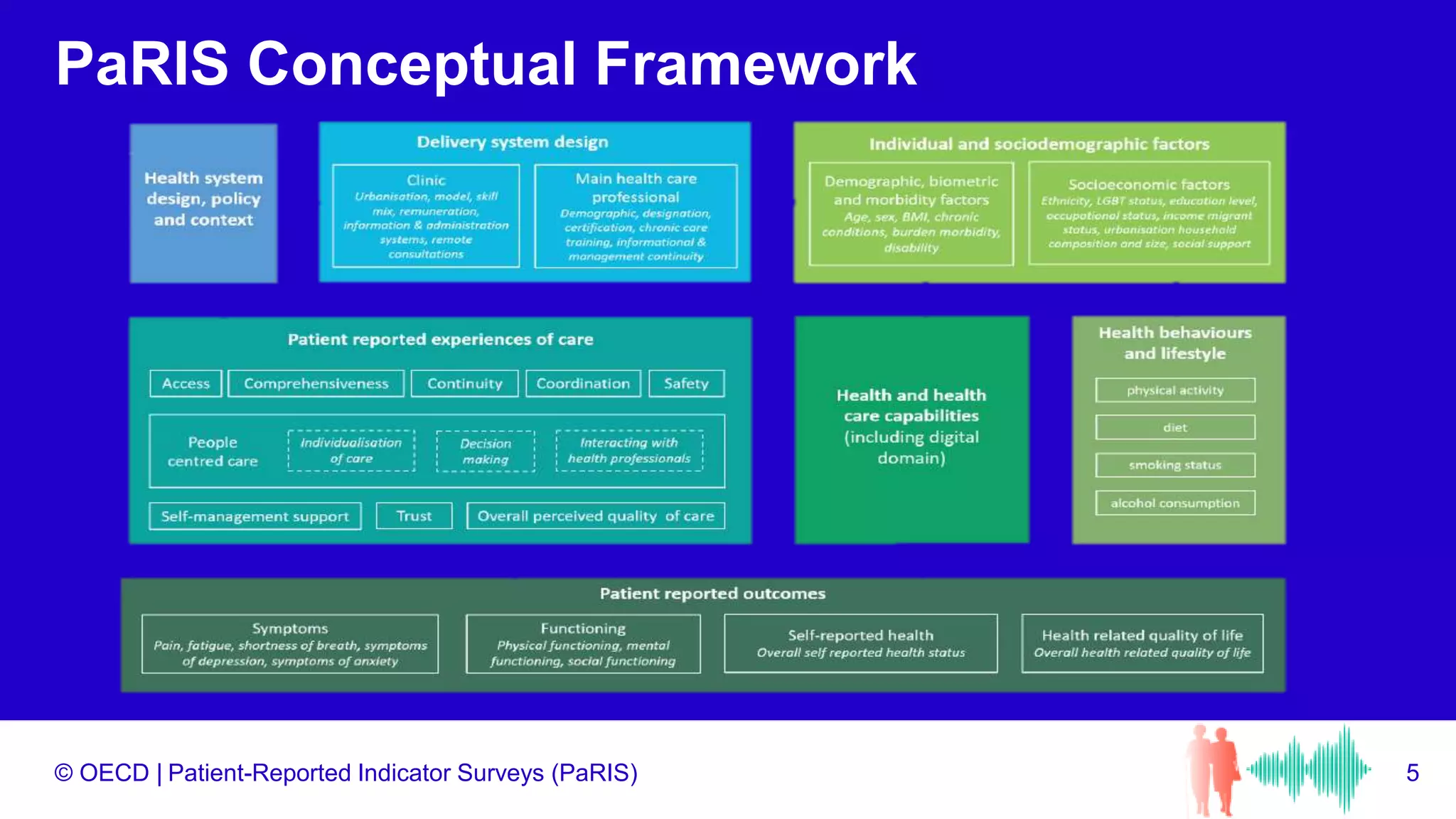
PaRIS Conceptual Framework
5
Patient-Reported Indicator Surveys (PaRIS)
© OECD |
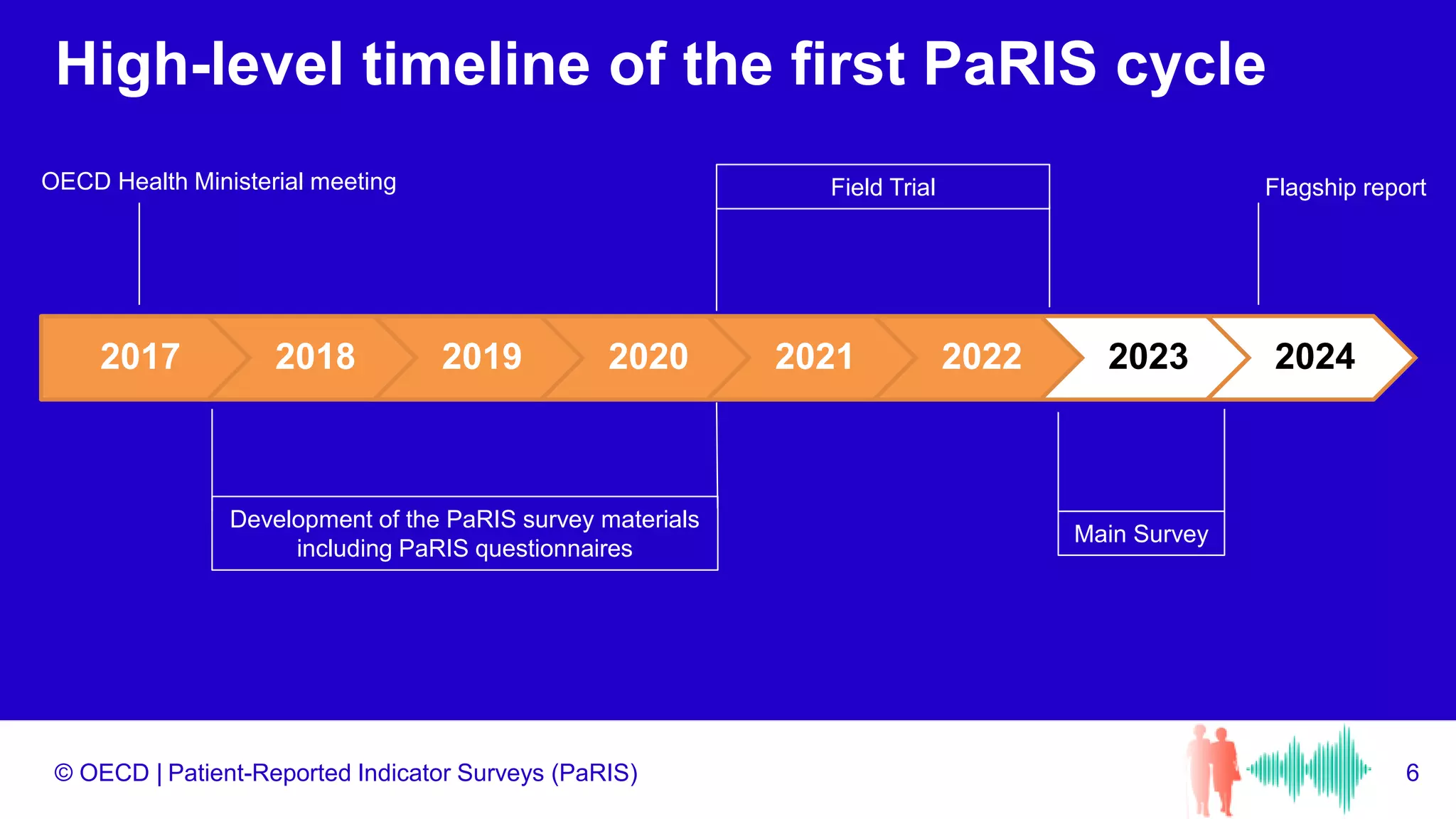
High-level timeline of the first PaRIS cycle
2017 2018 2019 2020 2021 2022 2023 2024
6
Patient-Reported Indicator Surveys (PaRIS)
OECD Health Ministerial meeting
Development of the PaRIS survey materials
including PaRIS questionnaires
Main Survey
Field Trial Flagship report
© OECD |
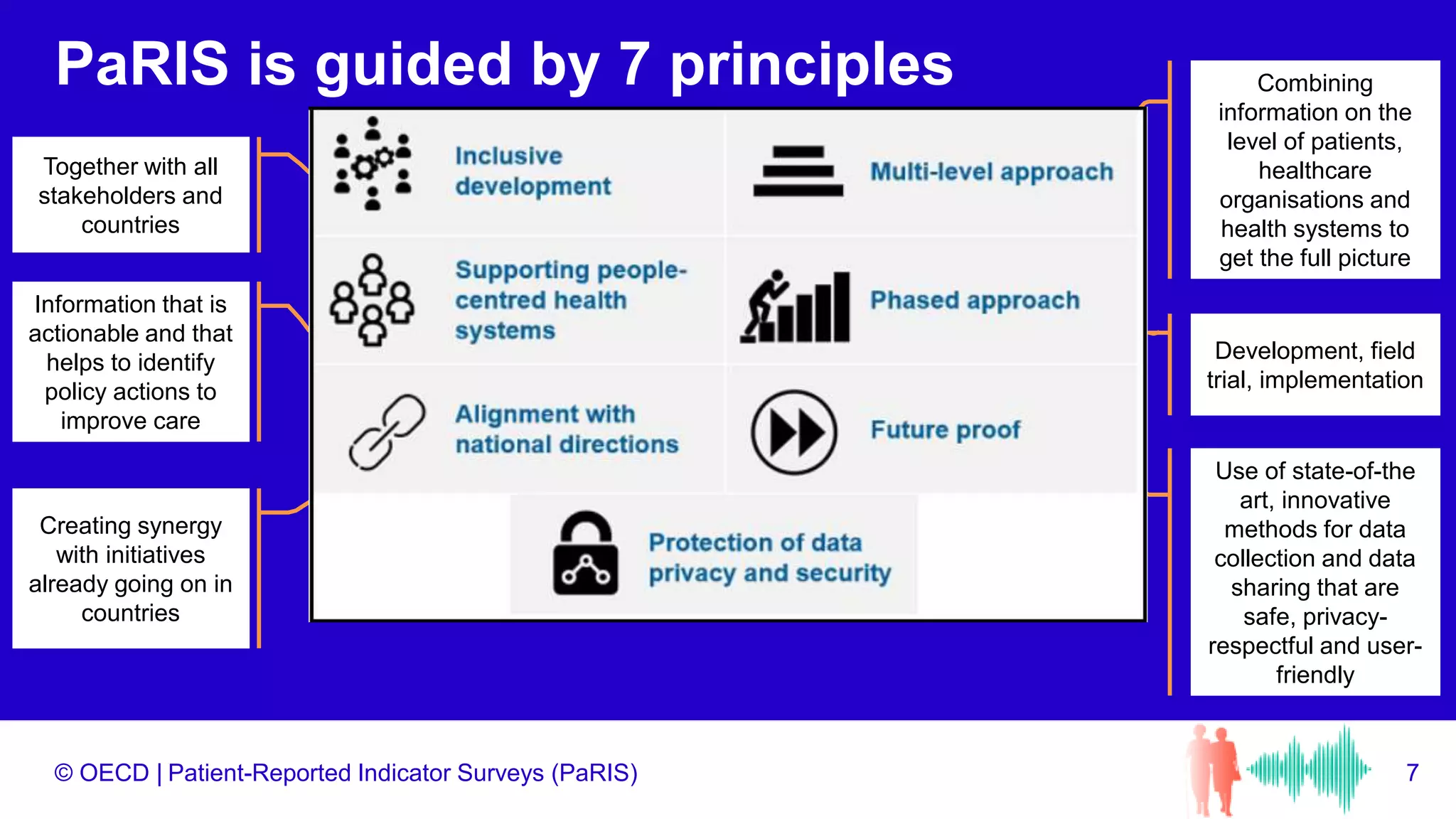
PaRIS is guided by 7 principles
7
Patient-Reported Indicator Surveys (PaRIS)
Together with all
stakeholders and
countries
Information that is
actionable and that
helps to identify
policy actions to
improve care
Creating synergy
with initiatives
already going on in
countries
Combining
information on the
level of patients,
healthcare
organisations and
health systems to
get the full picture
Development, field
trial, implementation
Use of state-of-the
art, innovative
methods for data
collection and data
sharing that are
safe, privacy-
respectful and user-
friendly
© OECD |
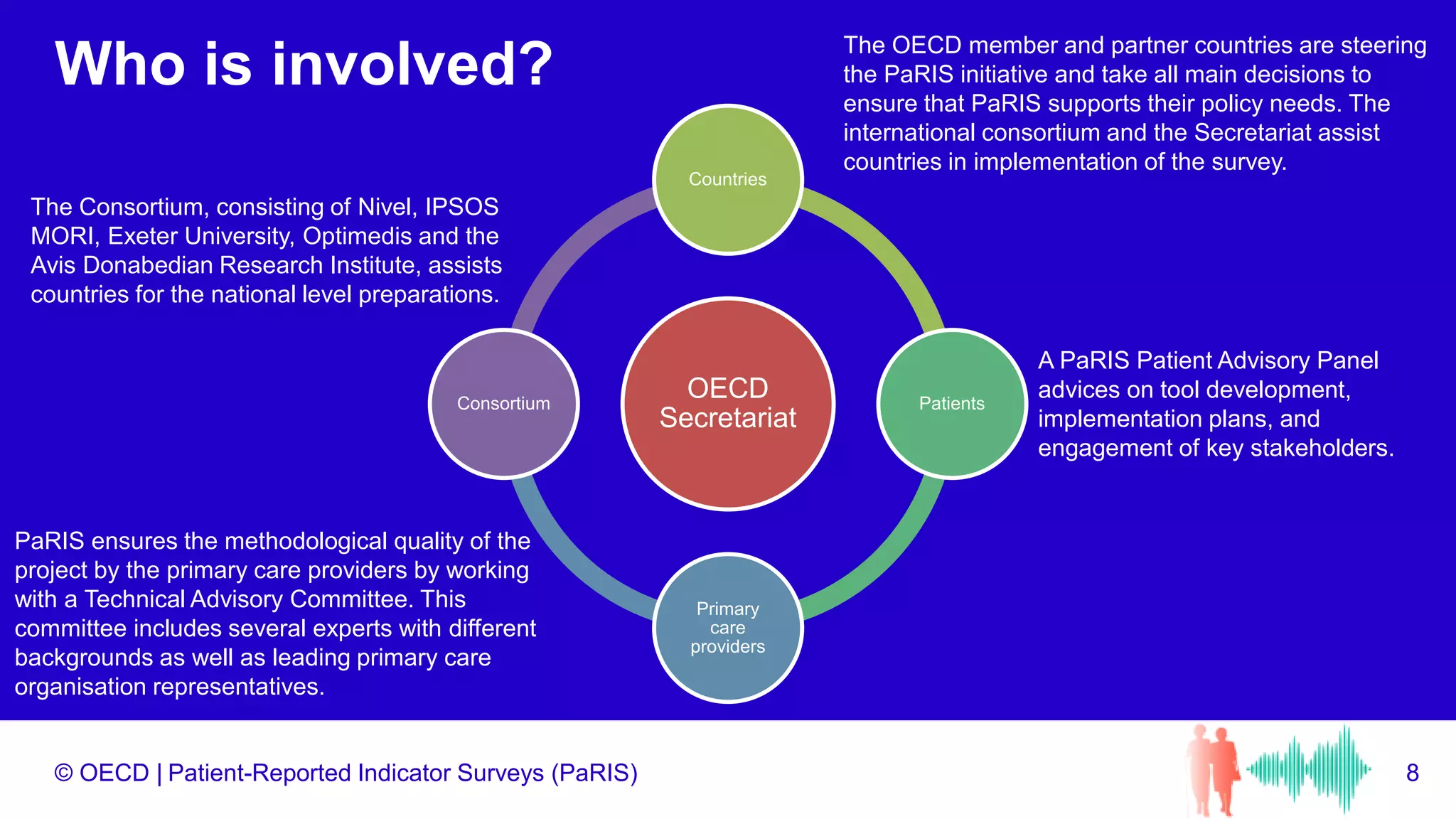
Who is involved?
8
Patient-Reported Indicator Surveys (PaRIS)
OECD
Secretariat
Countries
Patients
Primary
care
providers
Consortium
The OECD member and partner countries are steering
the PaRIS initiative and take all main decisions to
ensure that PaRIS supports their policy needs. The
international consortium and the Secretariat assist
countries in implementation of the survey.
A PaRIS Patient Advisory Panel
advices on tool development,
implementation plans, and
engagement of key stakeholders.
The Consortium, consisting of Nivel, IPSOS
MORI, Exeter University, Optimedis and the
Avis Donabedian Research Institute, assists
countries for the national level preparations.
PaRIS ensures the methodological quality of the
project by the primary care providers by working
with a Technical Advisory Committee. This
committee includes several experts with different
backgrounds as well as leading primary care
organisation representatives.
Keep in touch!
For more information
https://www.oecd.org/health/paris/
paris_survey@oecd.org

The Patient-Reported Indicator Surveys (PaRIS): An Introduction (update)

  • 1.
    International survey of peopleliving with chronic conditions
  • 2.
    © OECD | Whatis PaRIS? Listening to the patients And measuring what matters For better healthier lives 2 Patient-Reported Indicator Surveys (PaRIS) Although health systems across the OECD spend around 9% of their GDP on health, it is shocking how little we know about whether health systems are truly delivering what people need. The outcomes achieved for patients and how they experience care are rarely measured in a systematic and rigorous way. It is difficult to improve what is not been measured. Patient-Reported Indicator Surveys (PaRIS) make health systems more people-centred by systematically collecting data on outcomes and experiences that matter most to patients. PaRIS assesses patient’s healthcare outcomes and experiences, revealing how health systems are contributing to people’s lives. This information allows health services to learn and improve, and to deliver the ultimate objective of healthcare: maximising people’s health and well- being.
  • 3.
    © OECD | Whydoes it matter? 3 Patient-Reported Indicator Surveys (PaRIS) Why PaRIS? •A mechanism for international learning and benchmarking •Provides insights tracking variation in patient-reported outcomes and patient-reported experiences across provider types, regions/states. •Findings can be used to improve value, increase spending in most effective services and deliver more people-centred health systems. Helps policy makers improve health systems •Systematic information on outcomes and experiences is the first step towards people centred health systems •Identify urgent topics on national level and align with own national / regional initiatives Puts people at the centre of healthcare •PaRIS will help health systems to be more centred on peoples’ needs. •Provider-feedback data will enable their healthcare providers to improve quality. •Patient advisory panel will advise to ensure the project maximises value for patients. Helps providers improving quality of care •Providers will be able to see aggregated data and compare the results of their own organisation with (anonymised) peers •Valuable tool for quality improvement and raise awareness of problems that would otherwise be unidentified
  • 4.
    © OECD | Howdoes it work? The PaRIS conceptual framework links the two sources of data in the main survey;  data provided by patients about the patient demographics, health conditions, health literacy level, and health behaviours, the patient- reported measures on general, physical, mental, social health outcomes and experiences of healthcare.  data by healthcare providers about the clinic characteristics, remuneration and care models. 4 Patient-Reported Indicator Surveys (PaRIS) PaRIS collects data from patients PaRIS collects data from healthcare providers Together this information helps us understand how well health systems are performing Provides information for international learning Provides national and sub-national performance data Provides information to healthcare providers for quality improvement
  • 5.
    © OECD | PaRISConceptual Framework 5 Patient-Reported Indicator Surveys (PaRIS)
  • 6.
    © OECD | High-leveltimeline of the first PaRIS cycle 2017 2018 2019 2020 2021 2022 2023 2024 6 Patient-Reported Indicator Surveys (PaRIS) OECD Health Ministerial meeting Development of the PaRIS survey materials including PaRIS questionnaires Main Survey Field Trial Flagship report
  • 7.
    © OECD | PaRISis guided by 7 principles 7 Patient-Reported Indicator Surveys (PaRIS) Together with all stakeholders and countries Information that is actionable and that helps to identify policy actions to improve care Creating synergy with initiatives already going on in countries Combining information on the level of patients, healthcare organisations and health systems to get the full picture Development, field trial, implementation Use of state-of-the art, innovative methods for data collection and data sharing that are safe, privacy- respectful and user- friendly
  • 8.
    © OECD | Whois involved? 8 Patient-Reported Indicator Surveys (PaRIS) OECD Secretariat Countries Patients Primary care providers Consortium The OECD member and partner countries are steering the PaRIS initiative and take all main decisions to ensure that PaRIS supports their policy needs. The international consortium and the Secretariat assist countries in implementation of the survey. A PaRIS Patient Advisory Panel advices on tool development, implementation plans, and engagement of key stakeholders. The Consortium, consisting of Nivel, IPSOS MORI, Exeter University, Optimedis and the Avis Donabedian Research Institute, assists countries for the national level preparations. PaRIS ensures the methodological quality of the project by the primary care providers by working with a Technical Advisory Committee. This committee includes several experts with different backgrounds as well as leading primary care organisation representatives.
  • 9.
    Keep in touch! Formore information https://www.oecd.org/health/paris/ paris_survey@oecd.org