ONE ocean
What	
  is	
  your	
  rela.onship	
  with	
  the	
  ocean?	


WHY SHOULD WE CARE?
  Oceans	
  hold	
  97%	
  of	
  the	
  planets	
  water	
  
  Provides	
  more	
  than	
  half	
  of	
  the	
  oxygen	
  we	
  breath	
  
  Regulates	
  climate	
  
  Provides	
  seafood	
  that	
  fuels	
  the	
  economy	
  
  Space	
  for	
  recrea.onal	
  ac.vi.es	


  “It’s	
  our	
  life	
  support	
  system”	


  -­‐Sylvia	
  Earle	
  
Changes	
  that	
  humans	
  are	
  causing	
  to	
  
the	
  ocean	
  could	
  affect	
  us	
  forever.	
  	
  
Its	
  important	
  to	
  know	
  HOW	
  we	
  are	
  causing	
  this	
  change,	
  so	
  we	
  can	
  fix	
  it!	
  
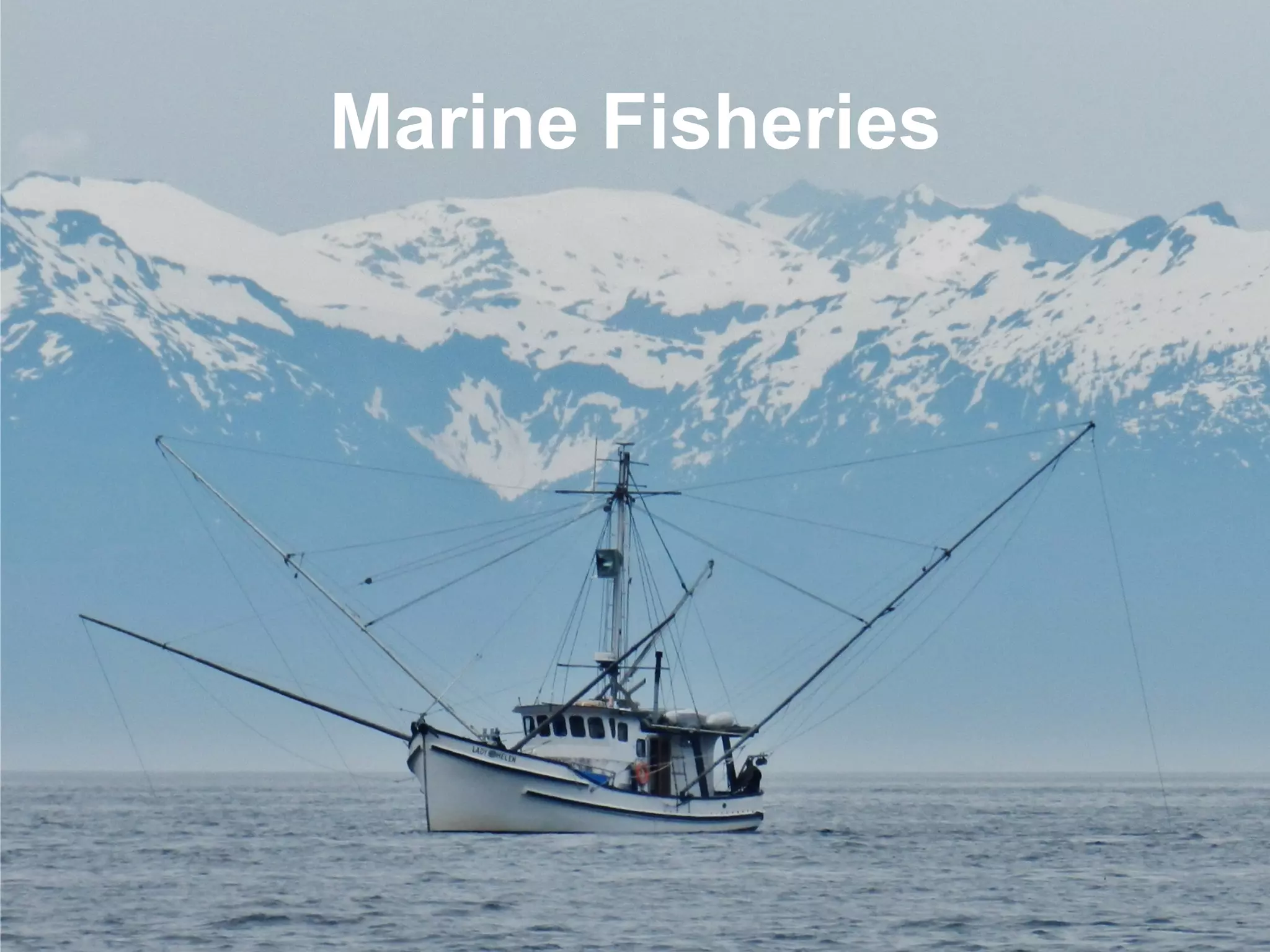
Marine Fisheries
MARINE FISHERIES
  Many	
  of	
  the	
  world’s	
  fish	
  stocks	
  are	
  being	
  depleted	
  
  By-­‐catch:	
  the	
  unwanted	
  fish	
  and	
  other	
  marine	
  creatures	
  caught	
  during	
  commercial	
  
fishing	
  for	
  a	
  different	
  species.	
  
  ½-­‐	
  2/3	
  of	
  the	
  species	
  caught	
  aren't	
  being	
  fished	
  for	
  
  Unreported	
  and	
  unregulated	
  fishing	
  are	
  harming	
  the	
  ecology	
  of	
  the	
  ocean	
  
  Affects	
  sea	
  turtles	
  and	
  other	
  mammals	
  
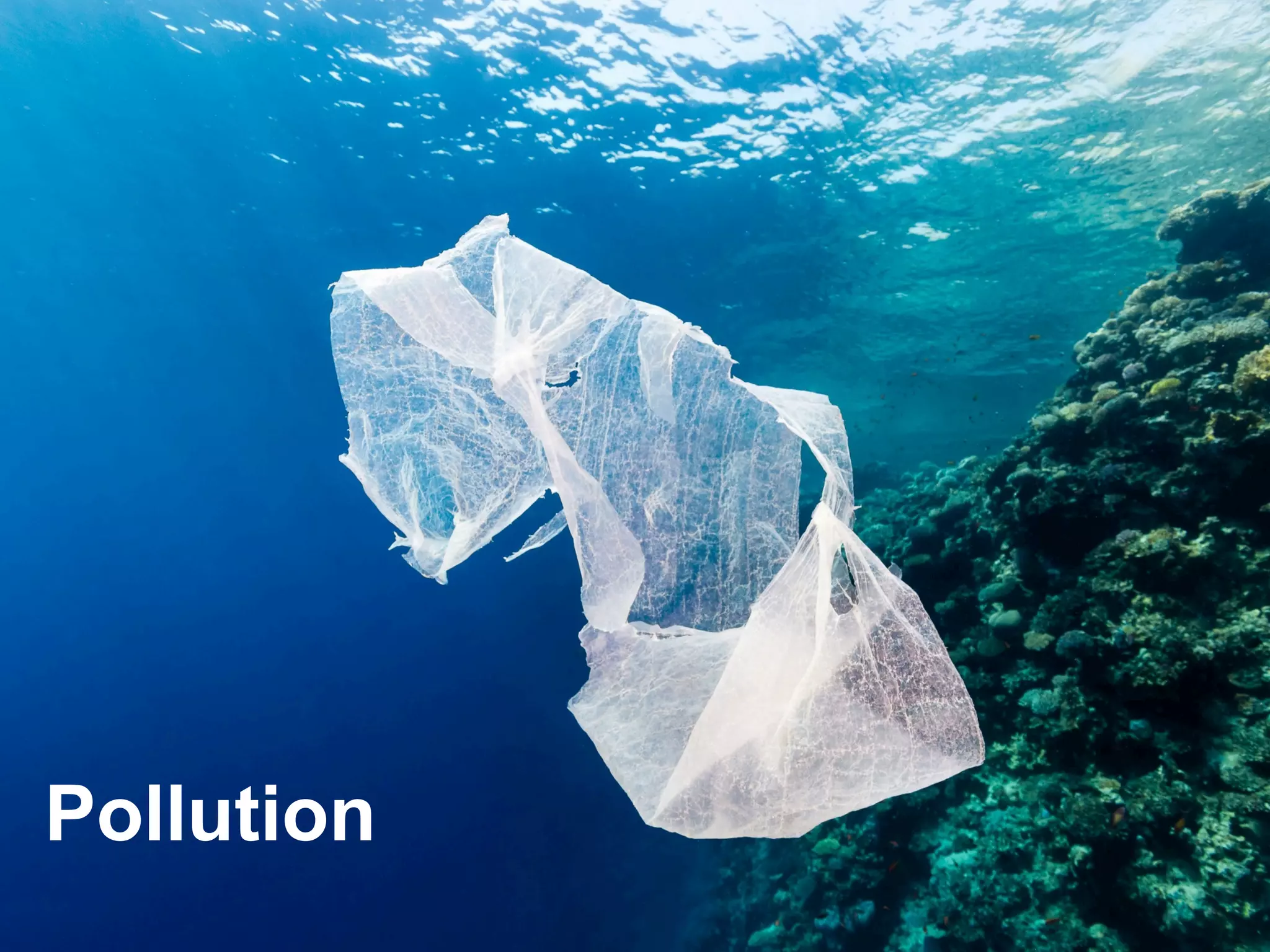
Pollution
POLLUTION
 It	
  is	
  es.mated	
  that	
  80%	
  of	
  marine	
  pollu.on	
  
originates	
  on	
  land	
  
 Nutrient	
  run-­‐off	
  from	
  agriculture,	
  sewage	
  and	
  
wastewater	
  discharge	
  create	
  “dead	
  zones”	
  
 There	
  are	
  over	
  500	
  dead	
  zones	
  in	
  the	
  ocean	
  
 They	
  add	
  up	
  to	
  the	
  size	
  of	
  Michigan	
  
	
   Marine	
  debris	
  is	
  comprised	
  mostly	
  of	
  plas.c	
  
 There	
  is	
  one	
  ton	
  of	
  plas.c	
  for	
  every	
  2	
  tons	
  of	
  
fish	
  in	
  the	
  ocean	
  
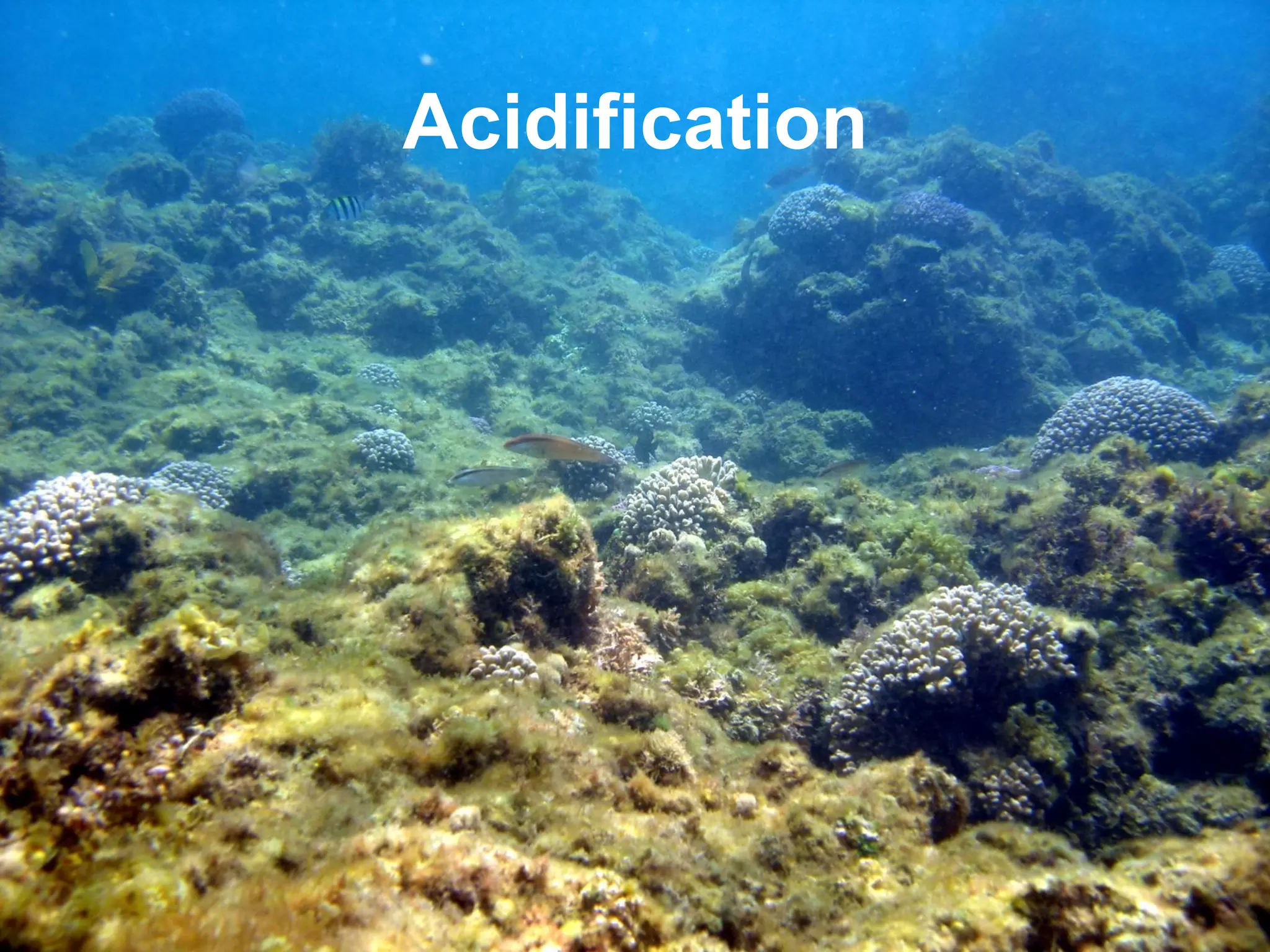
Acidification
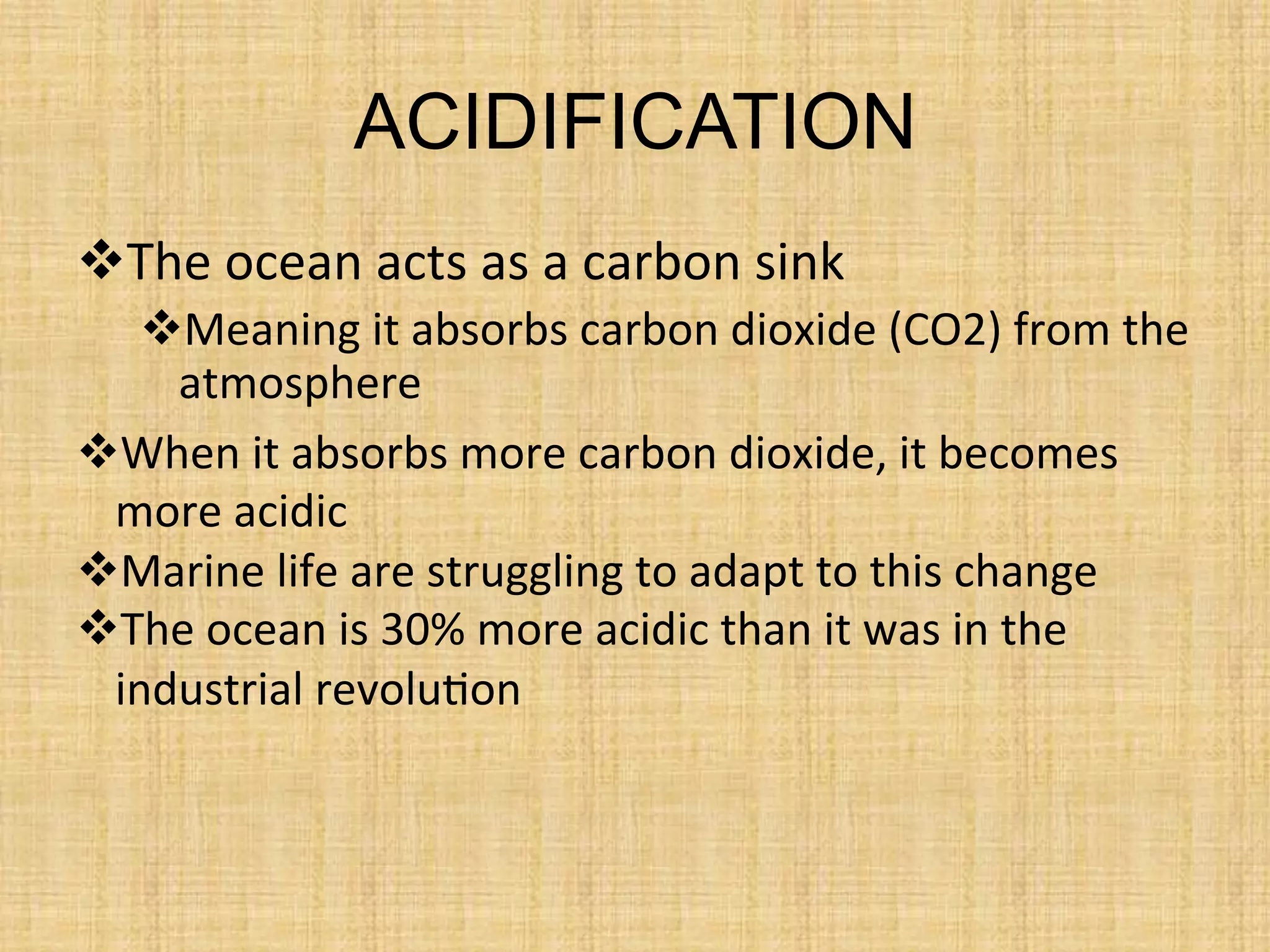
ACIDIFICATION
 The	
  ocean	
  acts	
  as	
  a	
  carbon	
  sink	
  
 Meaning	
  it	
  absorbs	
  carbon	
  dioxide	
  (CO2)	
  from	
  the	
  
atmosphere	
  
 When	
  it	
  absorbs	
  more	
  carbon	
  dioxide,	
  it	
  becomes	
  
more	
  acidic	
  
 Marine	
  life	
  are	
  struggling	
  to	
  adapt	
  to	
  this	
  change	
  
 The	
  ocean	
  is	
  30%	
  more	
  acidic	
  than	
  it	
  was	
  in	
  the	
  
industrial	
  revolu.on	


SUCCESS STORIES
SUCCESS STORIES
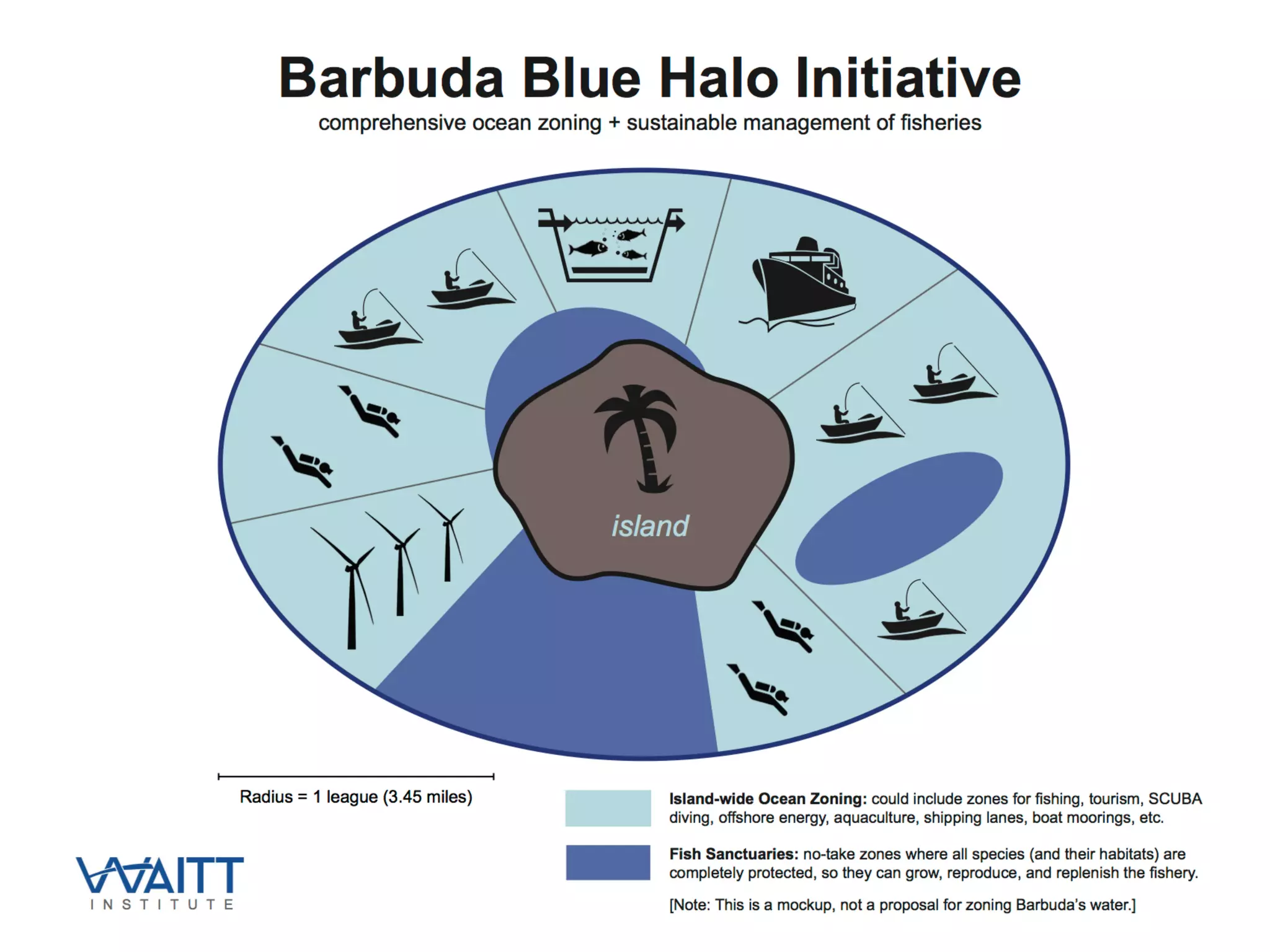
Barbuda	
  Blue	
  Halo	
  Sustainable	
  Fisheries	
  Ini.a.ve	
  
•  Mission	
  involves	
  “empowering	
  communi.es	
  to	
  restore	
  their	
  ocean.”	
  
California	
  Academy	
  of	
  Sciences	
  Marine	
  
Expedi.on	
  Highlights	
  Marine	
  Protected	
  Areas	
  
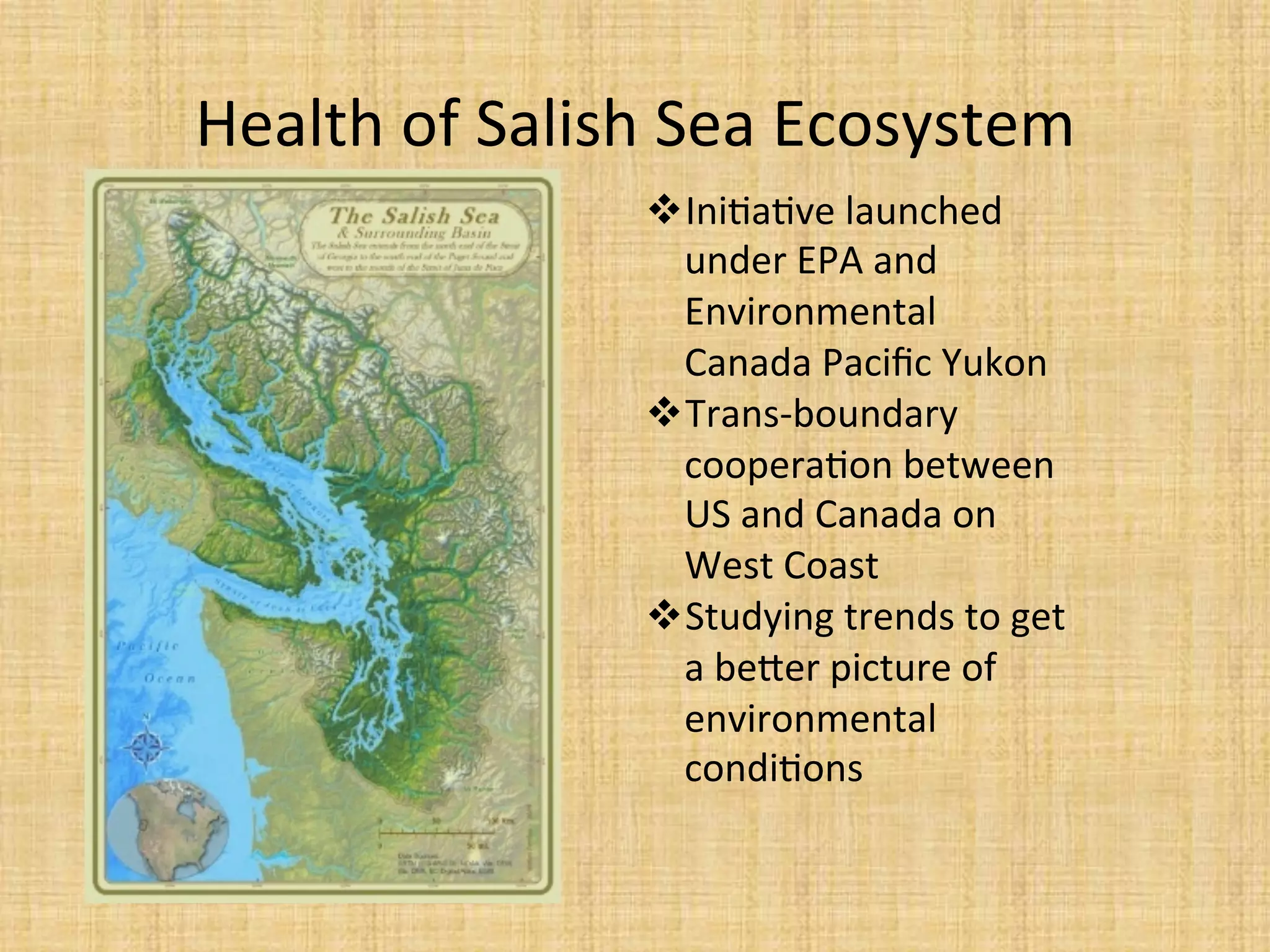
Health	
  of	
  Salish	
  Sea	
  Ecosystem	
  
 Ini.a.ve	
  launched	
  
under	
  EPA	
  and	
  
Environmental	
  
Canada	
  Pacific	
  Yukon	
  
 Trans-­‐boundary	
  
coopera.on	
  between	
  
US	
  and	
  Canada	
  on	
  
West	
  Coast	
  
 Studying	
  trends	
  to	
  get	
  
a	
  beder	
  picture	
  of	
  
environmental	
  
condi.ons	
  
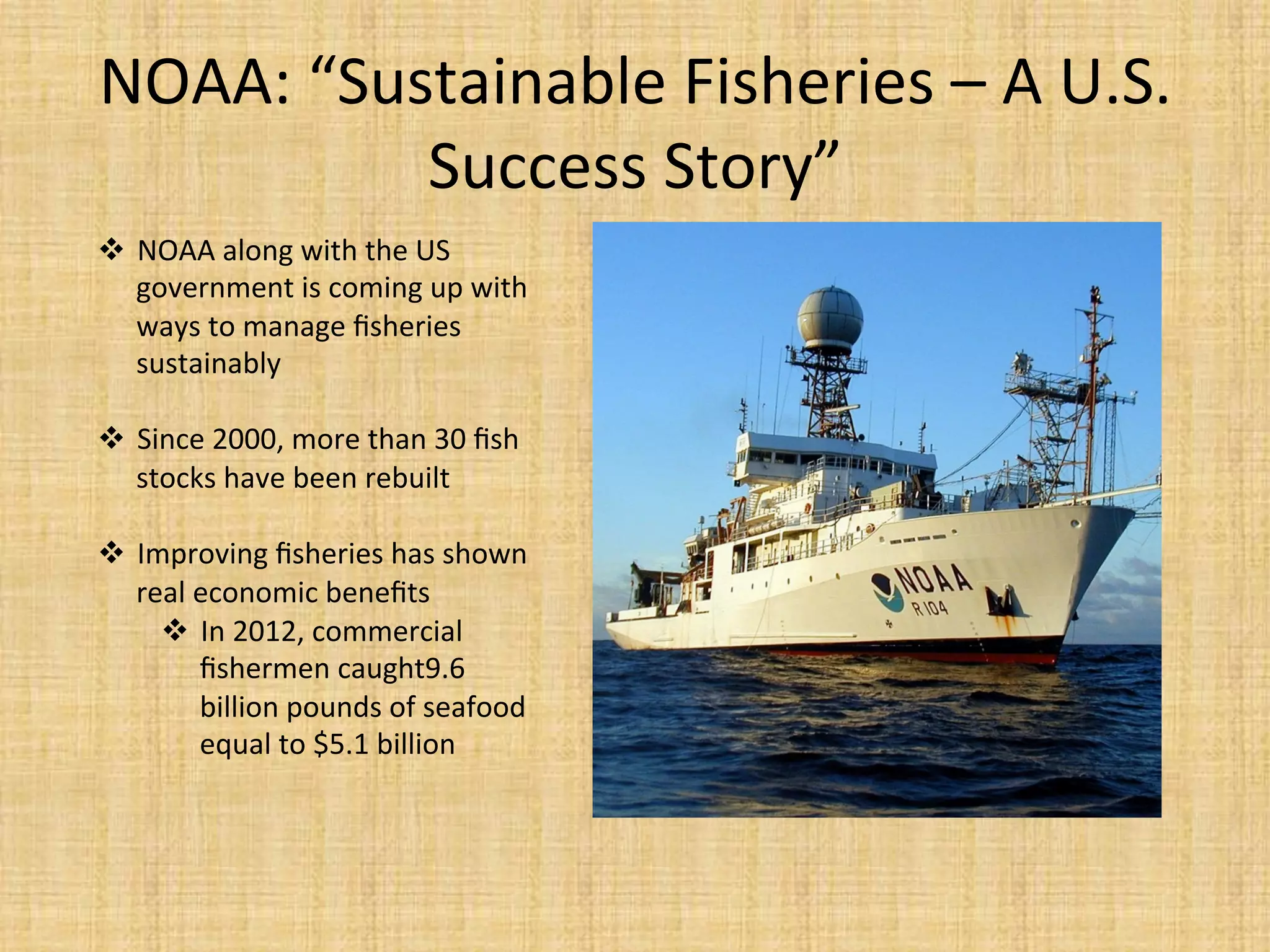
NOAA:	
  “Sustainable	
  Fisheries	
  –	
  A	
  U.S.	
  
Success	
  Story”	
  
  NOAA	
  along	
  with	
  the	
  US	
  
government	
  is	
  coming	
  up	
  with	
  
ways	
  to	
  manage	
  fisheries	
  
sustainably	


  Since	
  2000,	
  more	
  than	
  30	
  fish	
  
stocks	
  have	
  been	
  rebuilt	


  Improving	
  fisheries	
  has	
  shown	
  
real	
  economic	
  benefits	
  
  In	
  2012,	
  commercial	
  
fishermen	
  caught9.6	
  
billion	
  pounds	
  of	
  seafood	
  
equal	
  to	
  $5.1	
  billion	
  
Project	
  Catalyst	
  
 Partnership	
  between	
  
governments,	
  non-­‐profit	
  and	
  over	
  
70	
  sugar-­‐cane	
  growers	
  in	
  
Queensland,	
  Australia	


 Pioneering	
  innova.ve	
  farming	
  
prac.ces	
  to	
  improve	
  water	
  quality	
  
by	
  reducing	
  pollu.on	


 Reduced	
  nutrient	
  pollu.on	
  in	
  
Great	
  Barrier	
  Reef	
  by	
  60%	
  	
  
Continuing Initiatives
•  Guanabara	
  Bay	
  -­‐	
  Chesapeake	
  Bay	
  Partnership	
  
•  Glacier	
  Bay	
  Na.onal	
  Park	
  in	
  Alaska	
  and	
  
Francisco	
  Coloane	
  Marine	
  Protected	
  Area	
  in	
  
Chile	
  
•  El	
  Salvador	
  and	
  Turtle	
  Excluder	
  Device	
  (TED)	
  
Sea	
  Turtle	
  Protec.on	
  
•  Coiba	
  Island	
  Marine	
  Reserve	
  and	
  Na.onal	
  
Park	
  in	
  Panama	
  
IT’S UP TO YOU
  Mind	
  your	
  carbon	
  footprint	


  Use	
  fewer	
  plas.c	
  products	


  Eat	
  sustainably	


  Beach	
  cleanup	


  Support	
  protec.on	
  of	
  the	
  ocean	


  Influence	
  change	
  in	
  your	
  community	


  Prac.ce	
  responsible	
  boa.ng	


  LEARN,	
  LEARN	
  &	
  LEARN	
  

UNSDG #14 - Life Below Water Success Stories for a Changing Ocean

  • 1.
  • 2.
    What  is  your  rela.onship  with  the  ocean?    
  • 3.
    WHY SHOULD WECARE?   Oceans  hold  97%  of  the  planets  water     Provides  more  than  half  of  the  oxygen  we  breath     Regulates  climate     Provides  seafood  that  fuels  the  economy     Space  for  recrea.onal  ac.vi.es          “It’s  our  life  support  system”                                  -­‐Sylvia  Earle  
  • 4.
    Changes  that  humans  are  causing  to   the  ocean  could  affect  us  forever.     Its  important  to  know  HOW  we  are  causing  this  change,  so  we  can  fix  it!  
  • 5.
  • 6.
    MARINE FISHERIES   Many  of  the  world’s  fish  stocks  are  being  depleted     By-­‐catch:  the  unwanted  fish  and  other  marine  creatures  caught  during  commercial   fishing  for  a  different  species.     ½-­‐  2/3  of  the  species  caught  aren't  being  fished  for     Unreported  and  unregulated  fishing  are  harming  the  ecology  of  the  ocean     Affects  sea  turtles  and  other  mammals  
  • 7.
  • 8.
    POLLUTION  It  is  es.mated  that  80%  of  marine  pollu.on   originates  on  land    Nutrient  run-­‐off  from  agriculture,  sewage  and   wastewater  discharge  create  “dead  zones”    There  are  over  500  dead  zones  in  the  ocean    They  add  up  to  the  size  of  Michigan     Marine  debris  is  comprised  mostly  of  plas.c    There  is  one  ton  of  plas.c  for  every  2  tons  of   fish  in  the  ocean  
  • 9.
  • 10.
    ACIDIFICATION  The  ocean  acts  as  a  carbon  sink    Meaning  it  absorbs  carbon  dioxide  (CO2)  from  the   atmosphere    When  it  absorbs  more  carbon  dioxide,  it  becomes   more  acidic    Marine  life  are  struggling  to  adapt  to  this  change    The  ocean  is  30%  more  acidic  than  it  was  in  the   industrial  revolu.on    
  • 11.
  • 12.
    SUCCESS STORIES Barbuda  Blue  Halo  Sustainable  Fisheries  Ini.a.ve   •  Mission  involves  “empowering  communi.es  to  restore  their  ocean.”  
  • 13.
    California  Academy  of  Sciences  Marine   Expedi.on  Highlights  Marine  Protected  Areas  
  • 14.
    Health  of  Salish  Sea  Ecosystem    Ini.a.ve  launched   under  EPA  and   Environmental   Canada  Pacific  Yukon    Trans-­‐boundary   coopera.on  between   US  and  Canada  on   West  Coast    Studying  trends  to  get   a  beder  picture  of   environmental   condi.ons  
  • 15.
    NOAA:  “Sustainable  Fisheries  –  A  U.S.   Success  Story”     NOAA  along  with  the  US   government  is  coming  up  with   ways  to  manage  fisheries   sustainably       Since  2000,  more  than  30  fish   stocks  have  been  rebuilt       Improving  fisheries  has  shown   real  economic  benefits     In  2012,  commercial   fishermen  caught9.6   billion  pounds  of  seafood   equal  to  $5.1  billion  
  • 16.
    Project  Catalyst    Partnership  between   governments,  non-­‐profit  and  over   70  sugar-­‐cane  growers  in   Queensland,  Australia      Pioneering  innova.ve  farming   prac.ces  to  improve  water  quality   by  reducing  pollu.on      Reduced  nutrient  pollu.on  in   Great  Barrier  Reef  by  60%    
  • 17.
    Continuing Initiatives •  Guanabara  Bay  -­‐  Chesapeake  Bay  Partnership   •  Glacier  Bay  Na.onal  Park  in  Alaska  and   Francisco  Coloane  Marine  Protected  Area  in   Chile   •  El  Salvador  and  Turtle  Excluder  Device  (TED)   Sea  Turtle  Protec.on   •  Coiba  Island  Marine  Reserve  and  Na.onal   Park  in  Panama  
  • 18.
    IT’S UP TOYOU   Mind  your  carbon  footprint       Use  fewer  plas.c  products       Eat  sustainably       Beach  cleanup       Support  protec.on  of  the  ocean       Influence  change  in  your  community       Prac.ce  responsible  boa.ng       LEARN,  LEARN  &  LEARN