The Lean Startup way
or how to design solutions
that will be adopted
Daria Nepriakhina
@epicantus
daria@ideahackers.nl
Solutioncanvas.com | Ideahackers.nl | Supporton.io
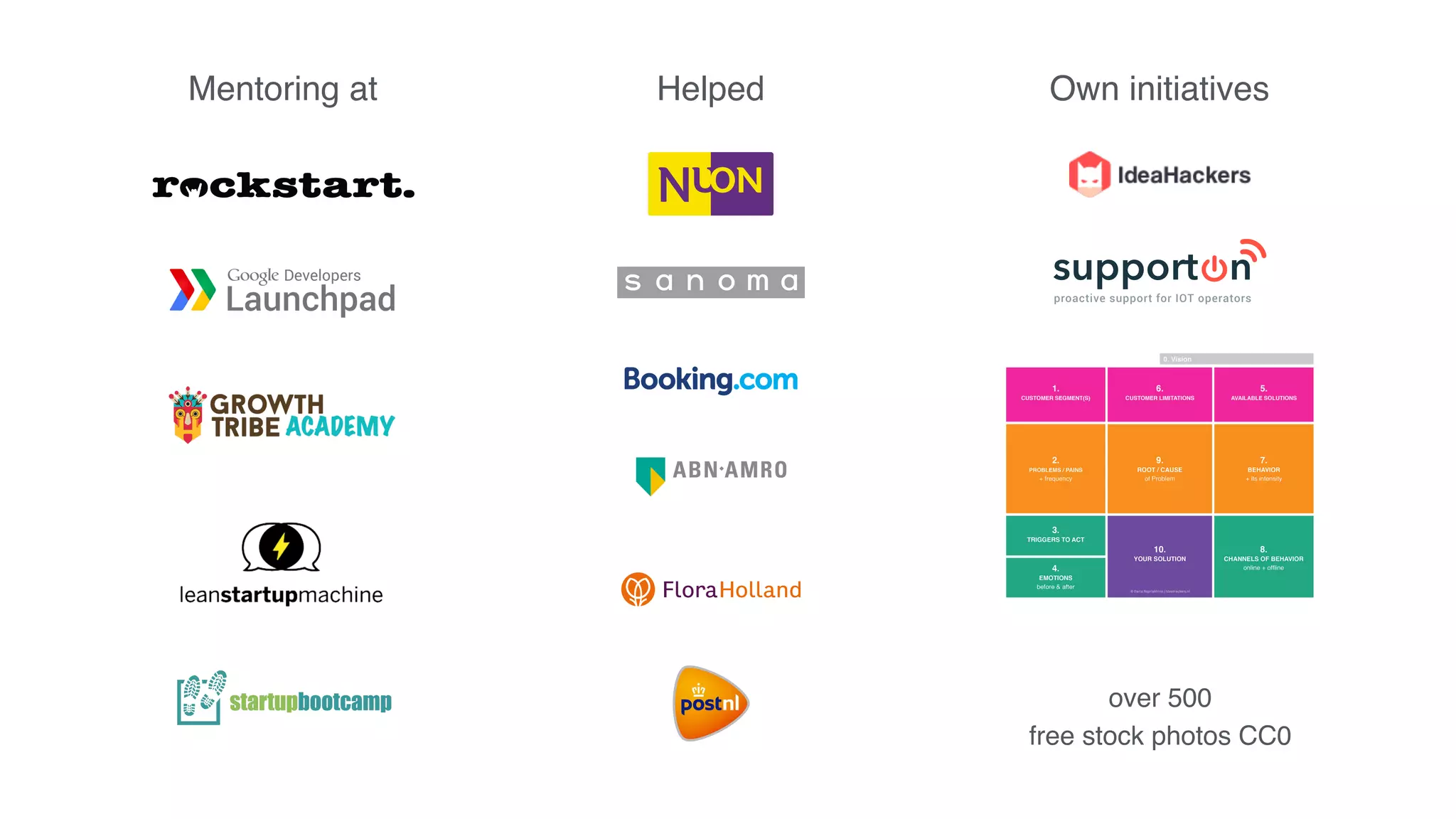
Mentoring at Helped Own initiatives
over 500
free stock photos CC0
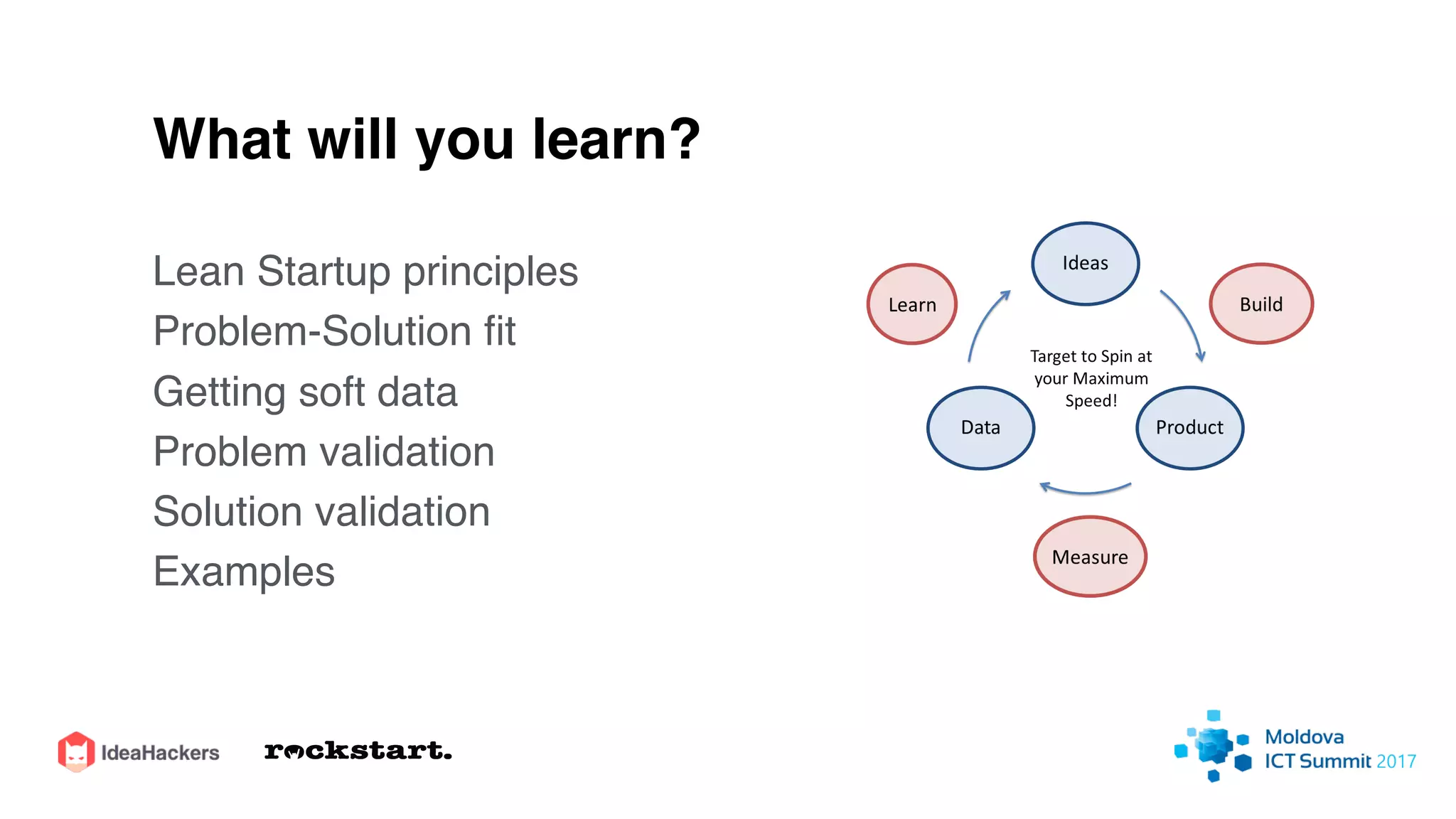
What will you learn?
Lean Startup principles
Problem-Solution fit
Getting soft data
Problem validation
Solution validation
Examples
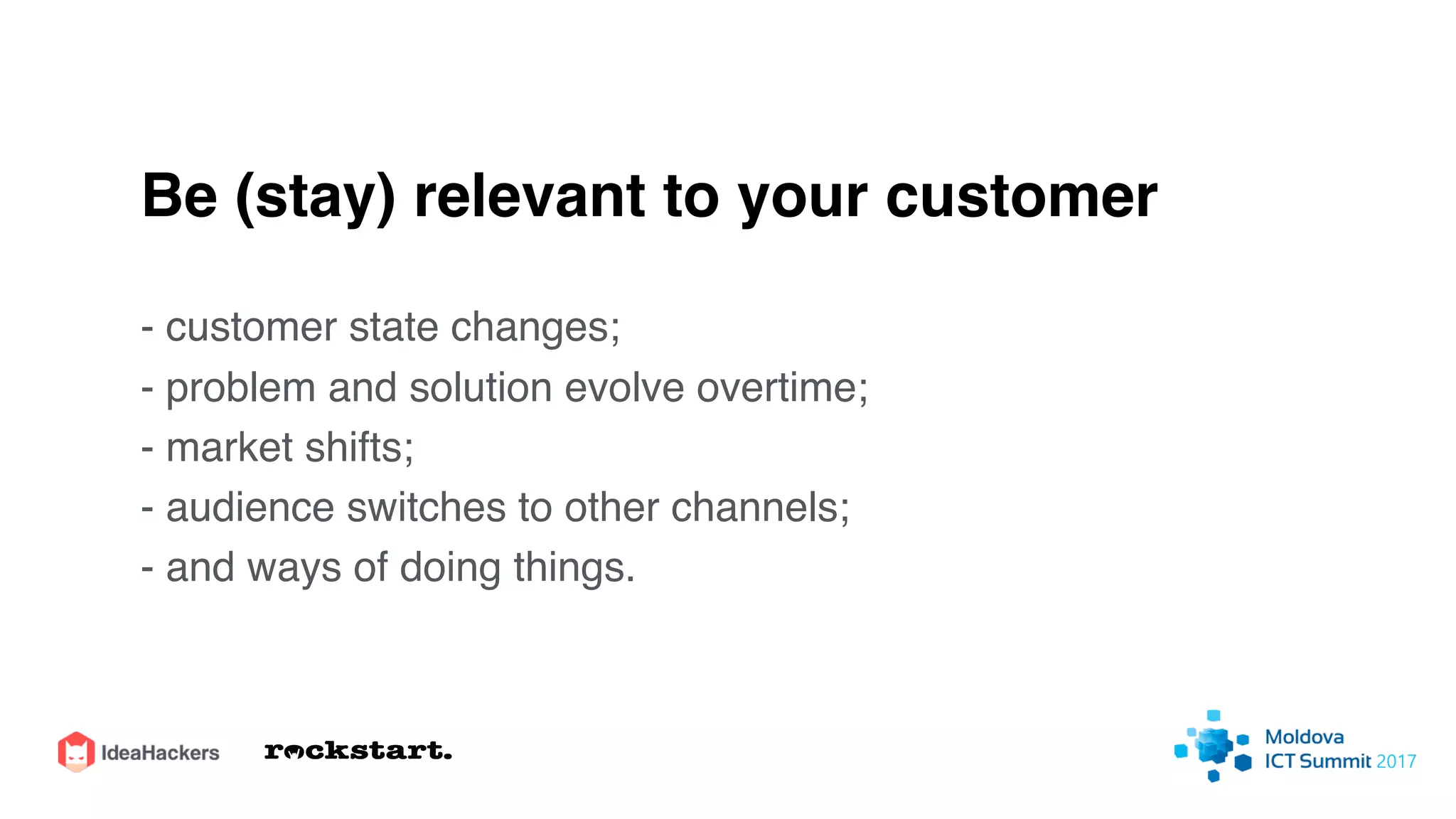
Be (stay) relevant to your customer
- customer state changes;
- problem and solution evolve overtime;
- market shifts;
- audience switches to other channels;
- and ways of doing things.
Understand the existing experience
to design
for improvement of people’s lives
If you don’t know your customer well
then 99% of your assumptions are wrong.
Sounds familiar?
“I think they need something like…”
“I think we should improve this.”
“I think they won’t like this design.”
“They will love this offering!”
Assumptions. Get the proof.
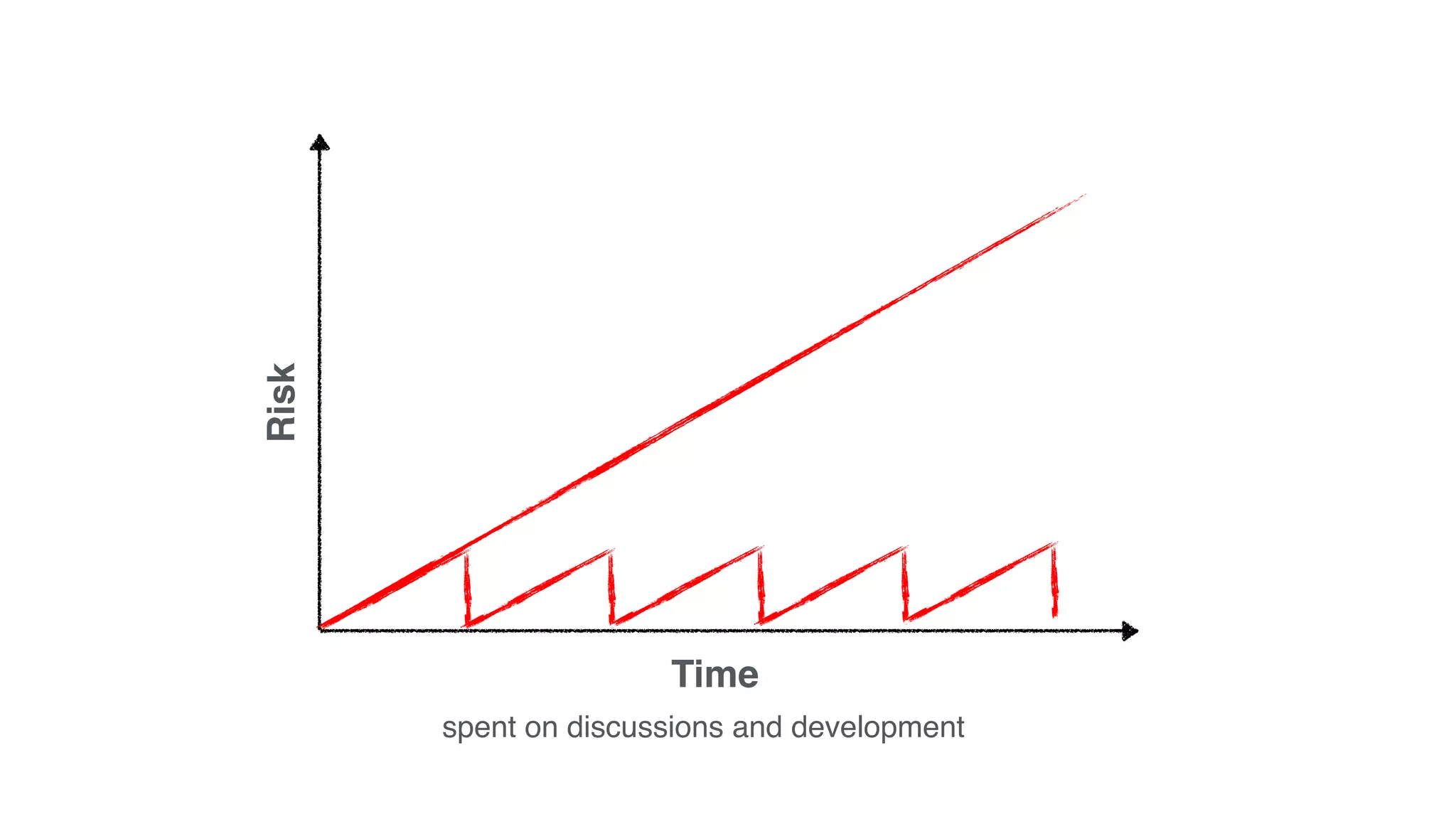
Risk
Time
spent on discussions and development
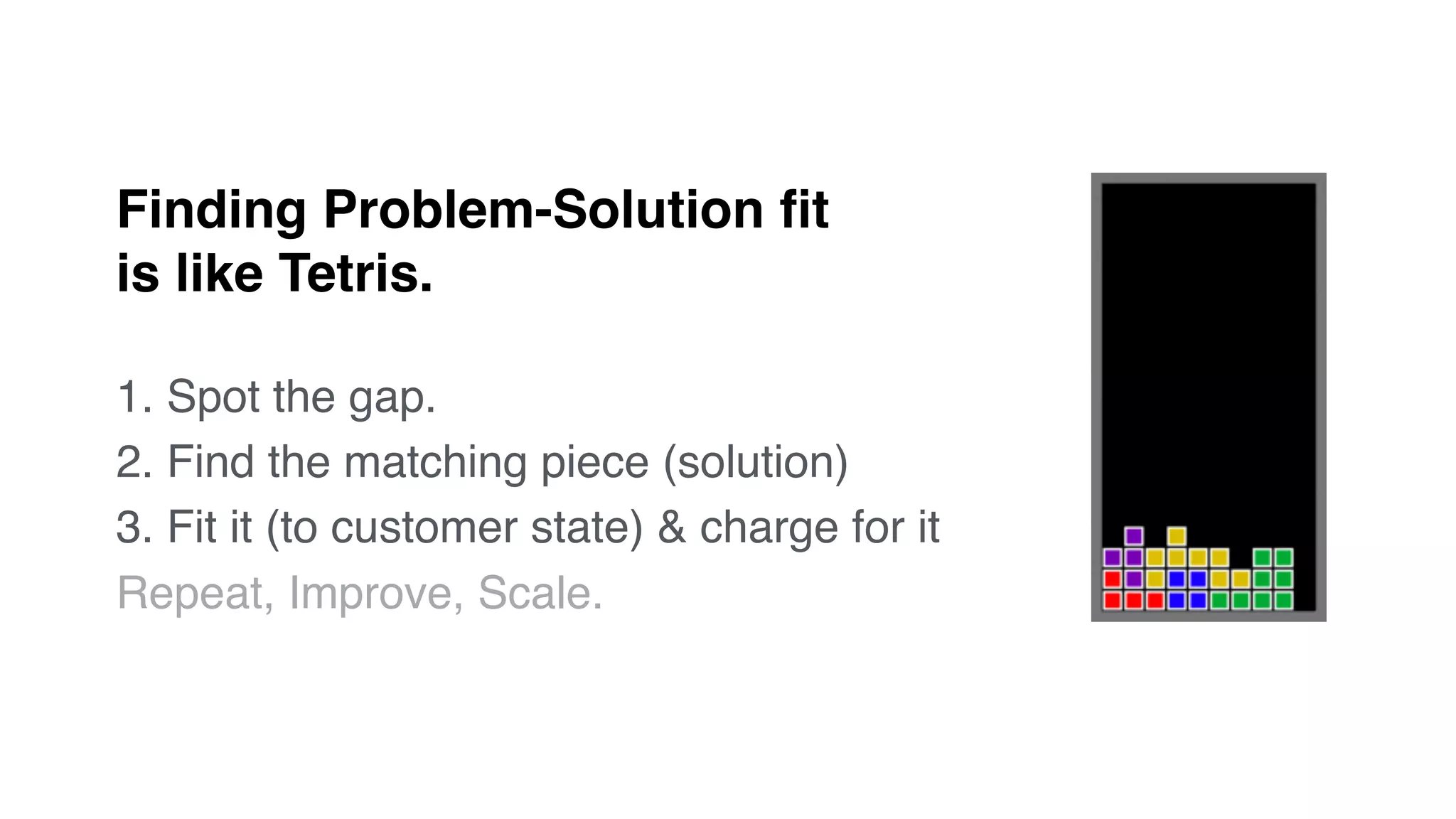
Finding Problem-Solution fit
is like Tetris.
1. Spot the gap.
2. Find the matching piece (solution)
3. Fit it (to customer state) & charge for it
Repeat, Improve, Scale.
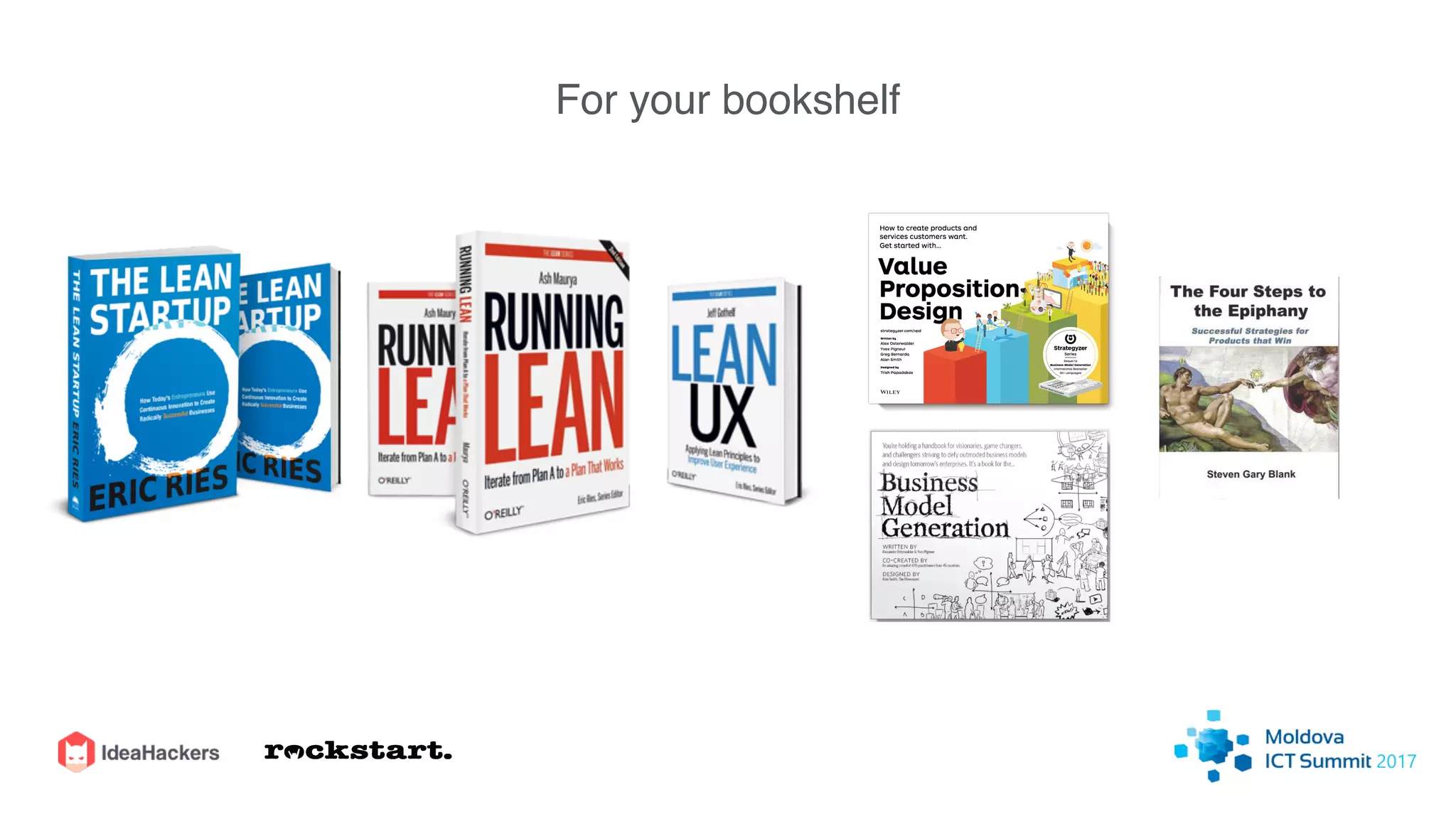
For your bookshelf
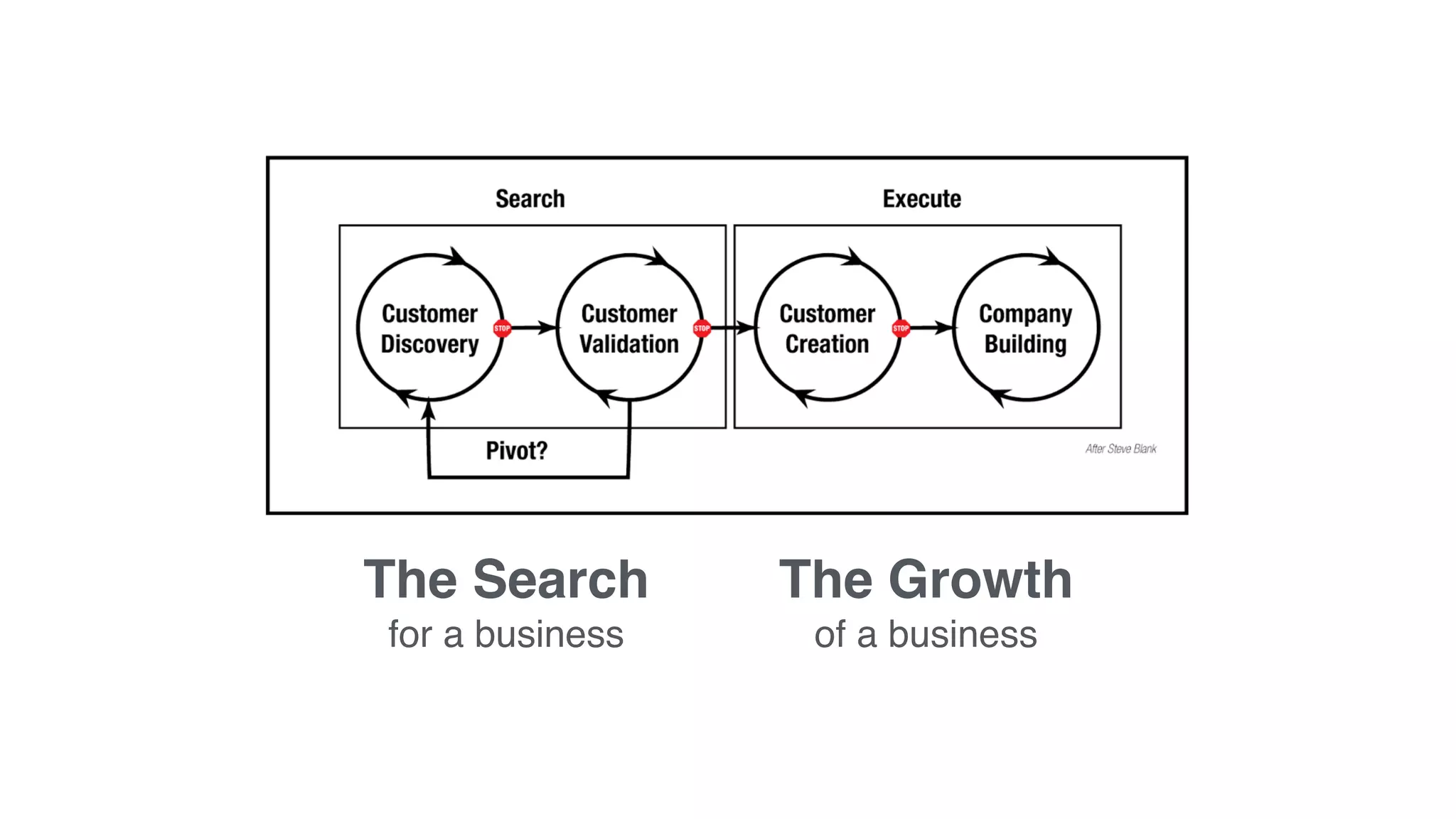
The Search
for a business
The Growth
of a business
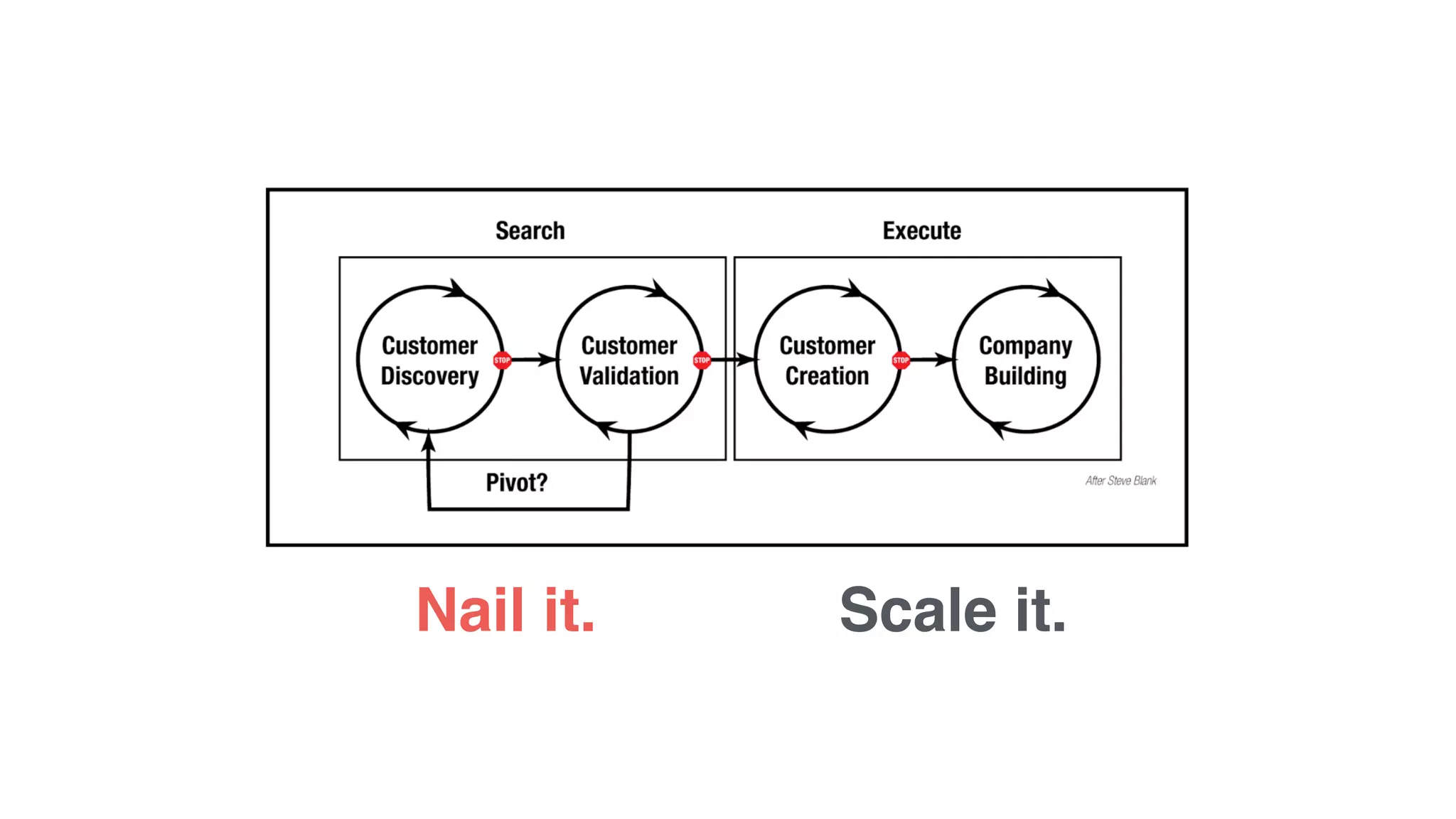
Nail it. Scale it.
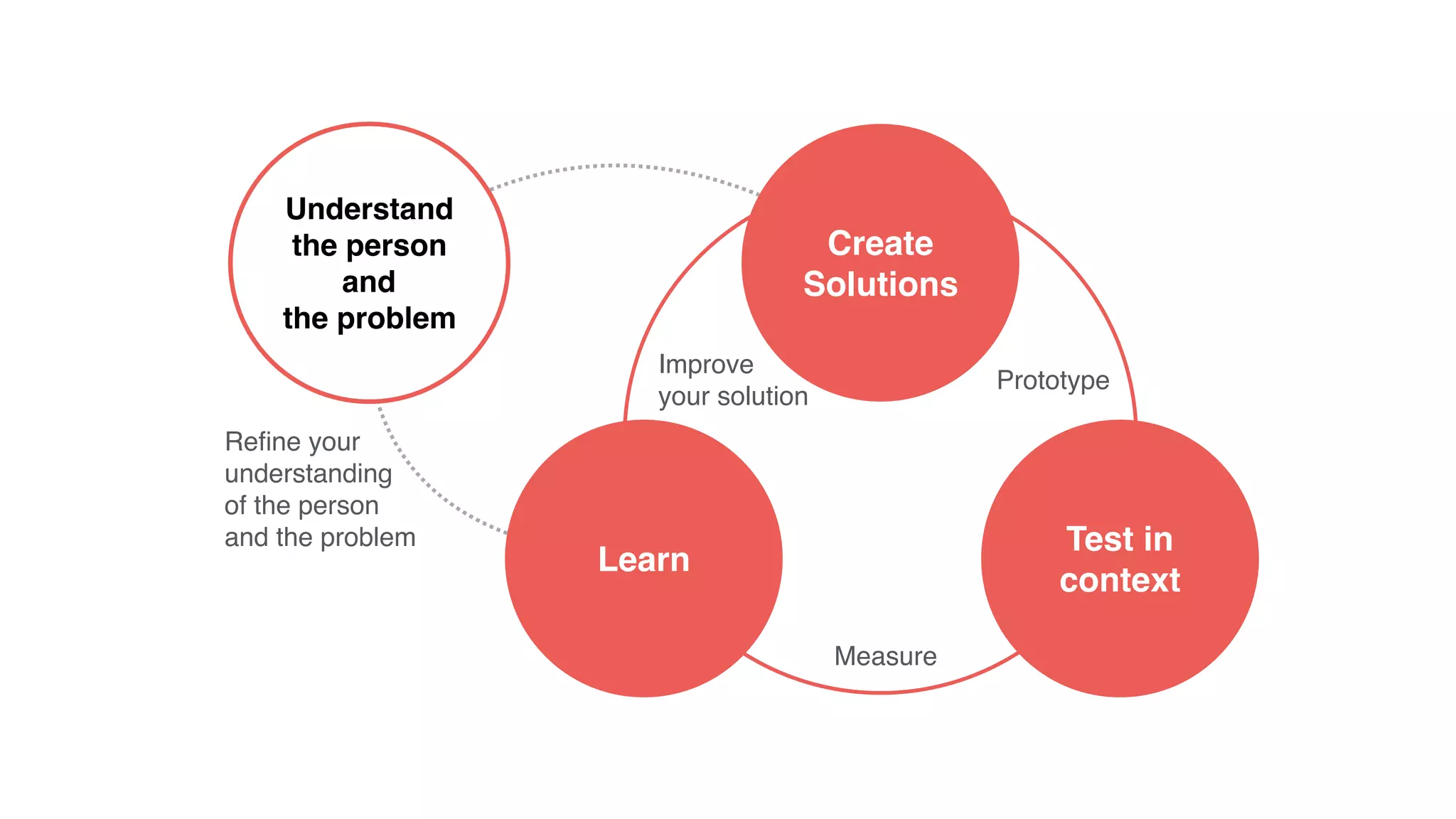
Understand
the person
and
the problem
Refine your
understanding
of the person
and the problem
Improve
your solution
Prototype
Measure
Create
Solutions
Test in
context
Learn
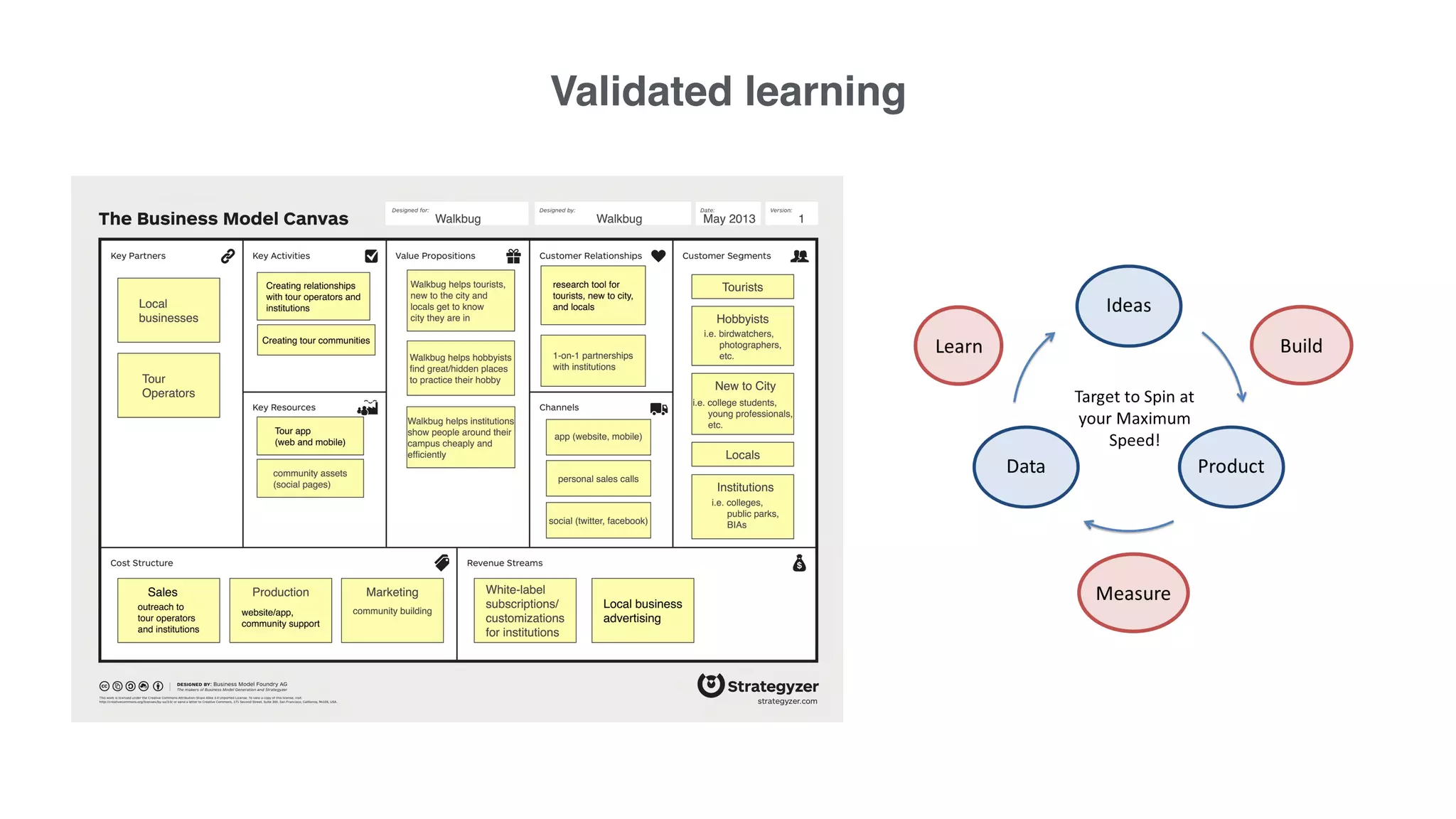
Validated learning
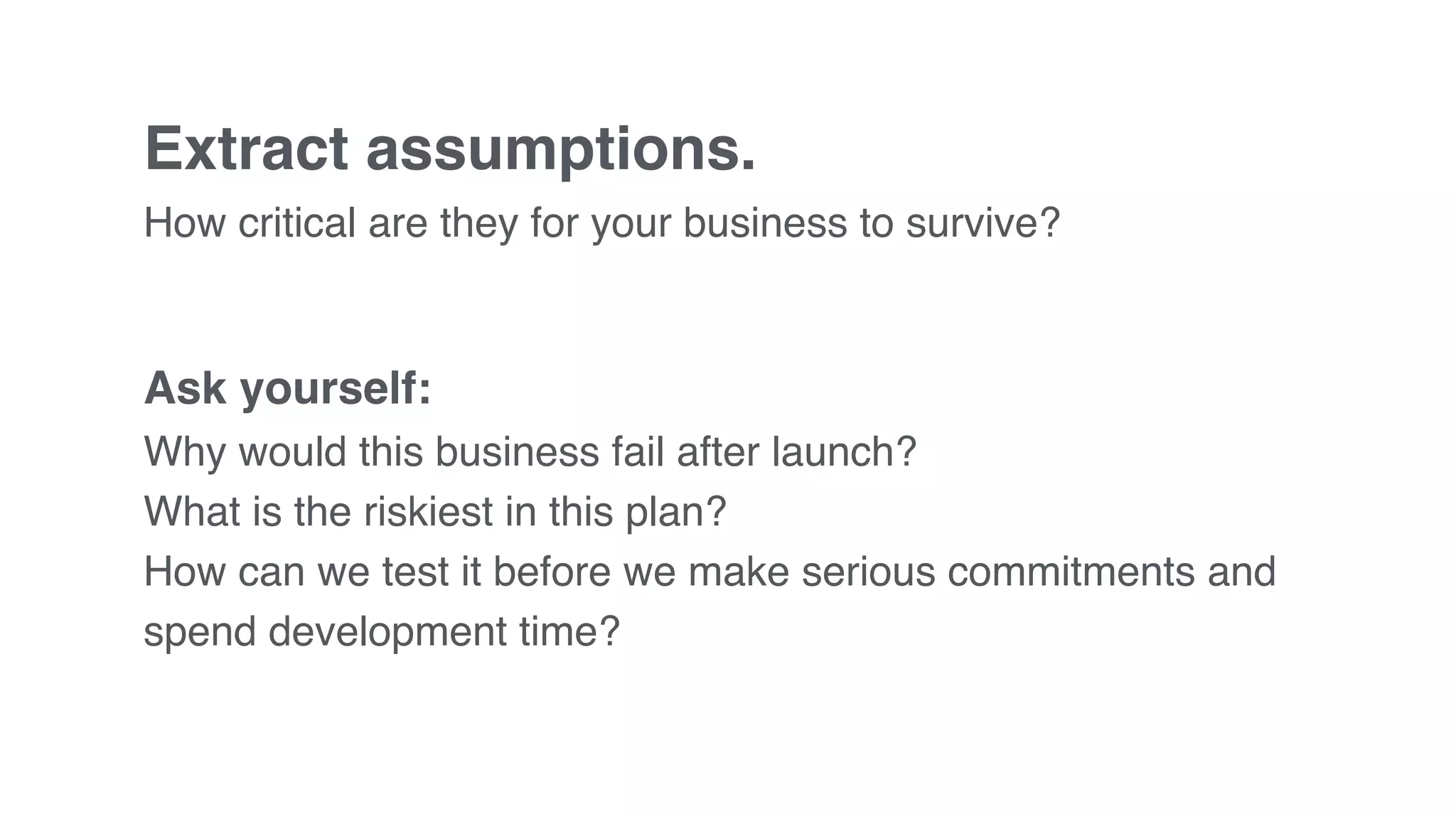
Extract assumptions.
How critical are they for your business to survive?
Ask yourself:
Why would this business fail after launch?
What is the riskiest in this plan?
How can we test it before we make serious commitments and
spend development time?
Lean Startup
Business-hypothesis driven experimentation
Continuous feedback loop
Iterative product releases
Validated Learning
+ Shared understanding
Practice
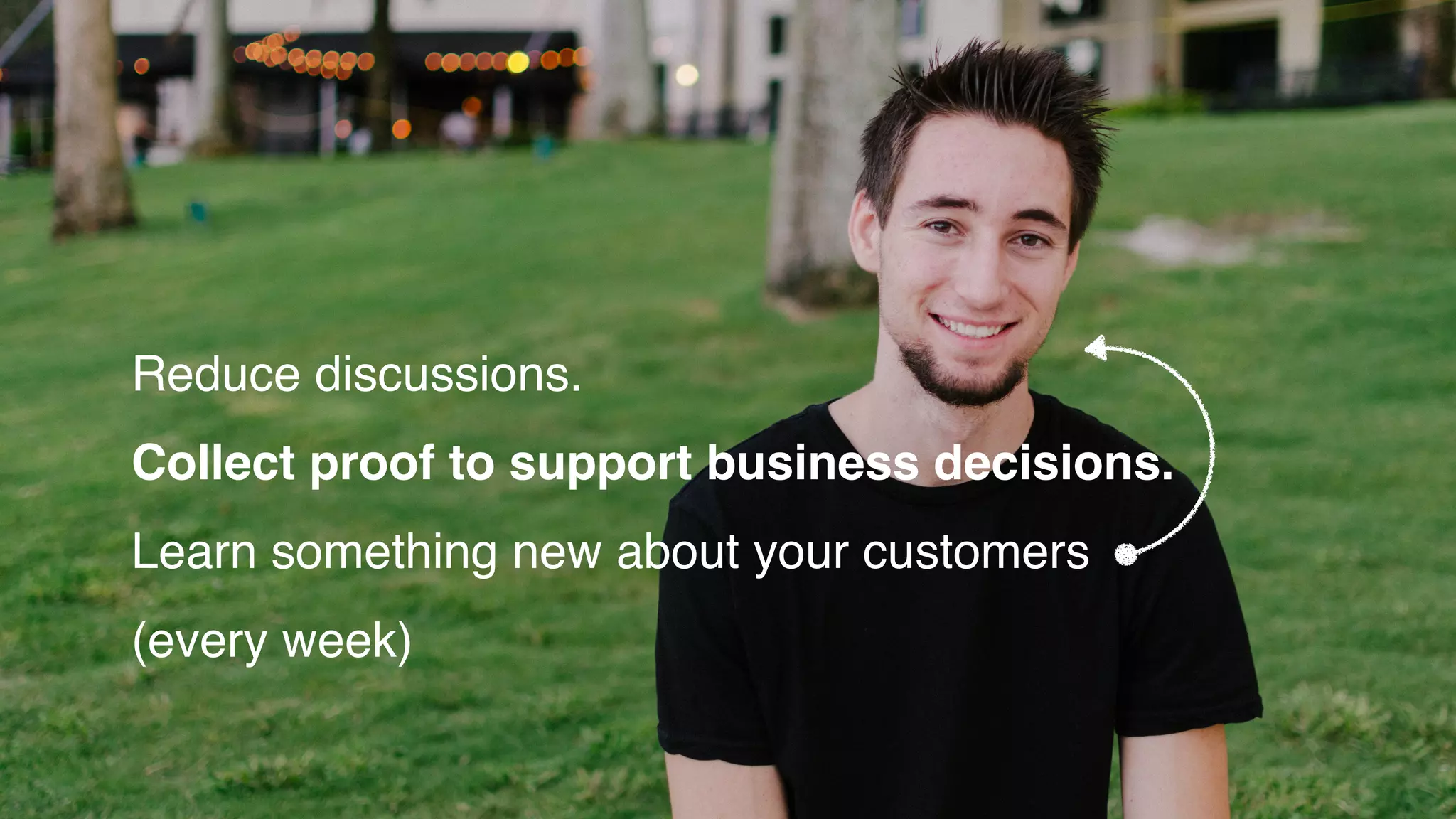
Reduce discussions.
Collect proof to support business decisions.
Learn something new about your customers
(every week)
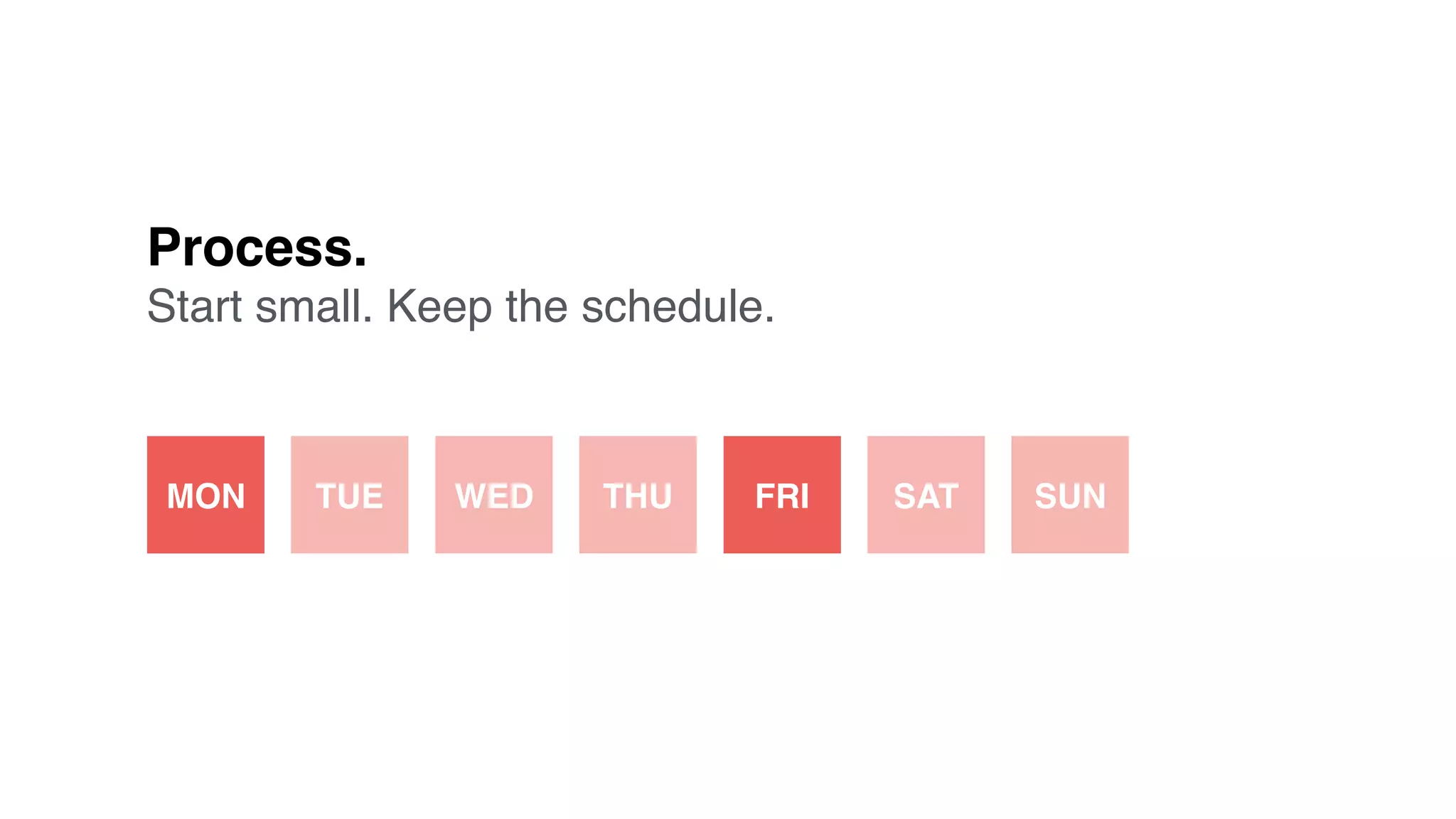
Process.
Start small. Keep the schedule.
MON TUE WED THU FRI SAT SUN
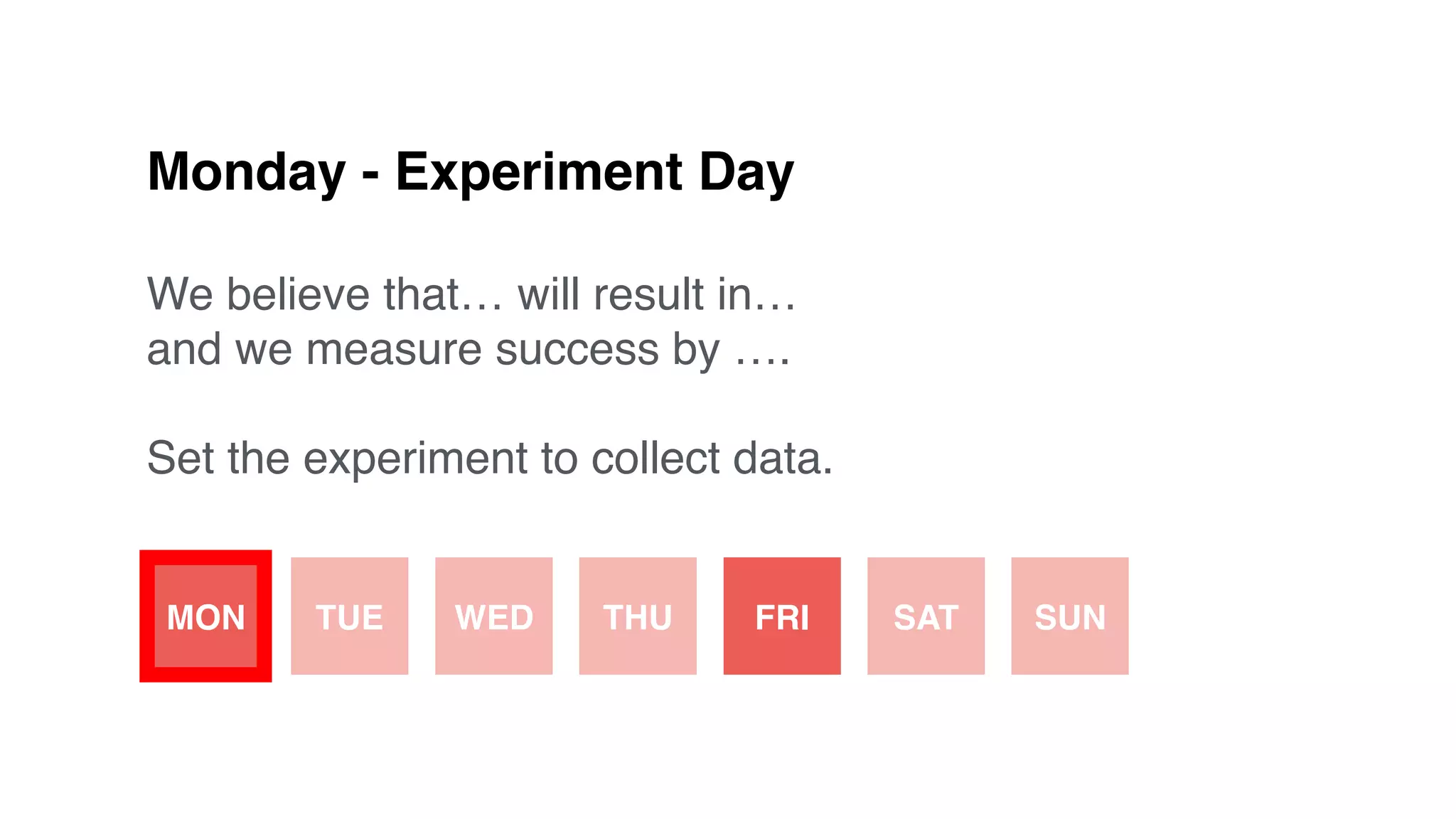
Monday - Experiment Day
We believe that… will result in…
and we measure success by ….
Set the experiment to collect data.
MON TUE WED THU FRI SAT SUN
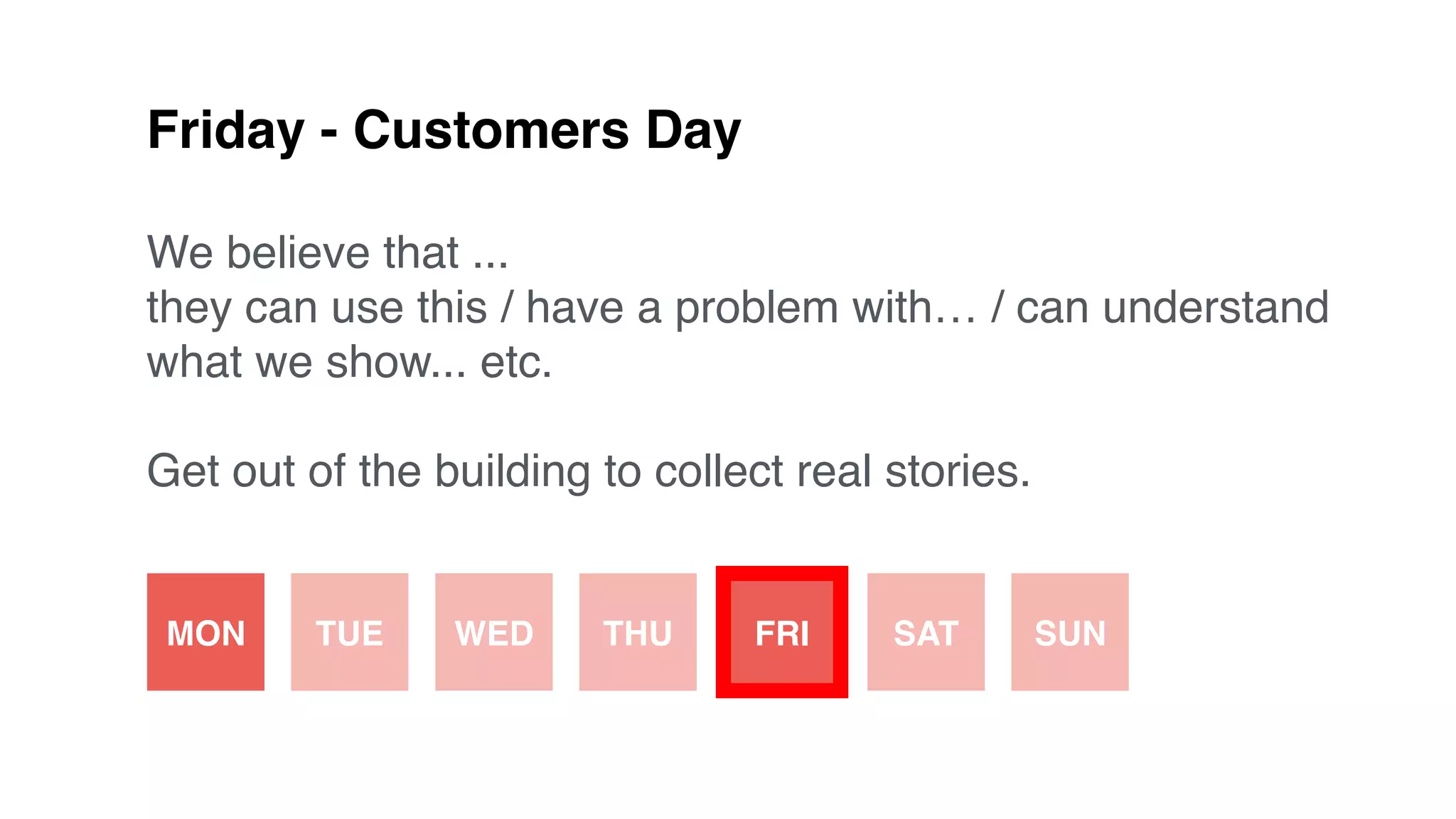
Friday - Customers Day
We believe that ...
they can use this / have a problem with… / can understand
what we show... etc.
Get out of the building to collect real stories.
MON TUE WED THU FRI SAT SUN
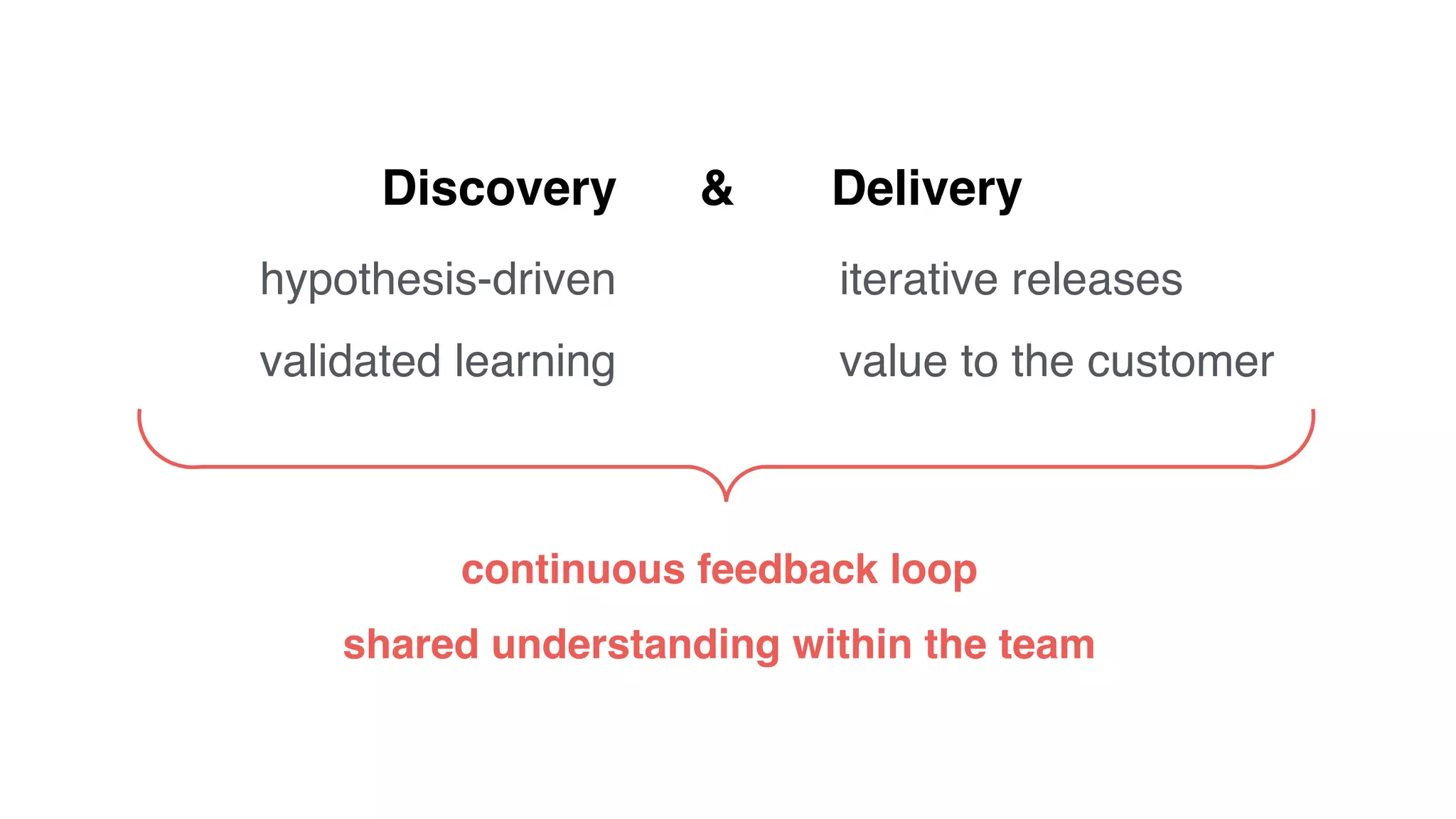
Discovery & Delivery
hypothesis-driven
validated learning
iterative releases
value to the customer
continuous feedback loop
shared understanding within the team
Lean Startup
is a process of continuous discovery
of what should be built and why.
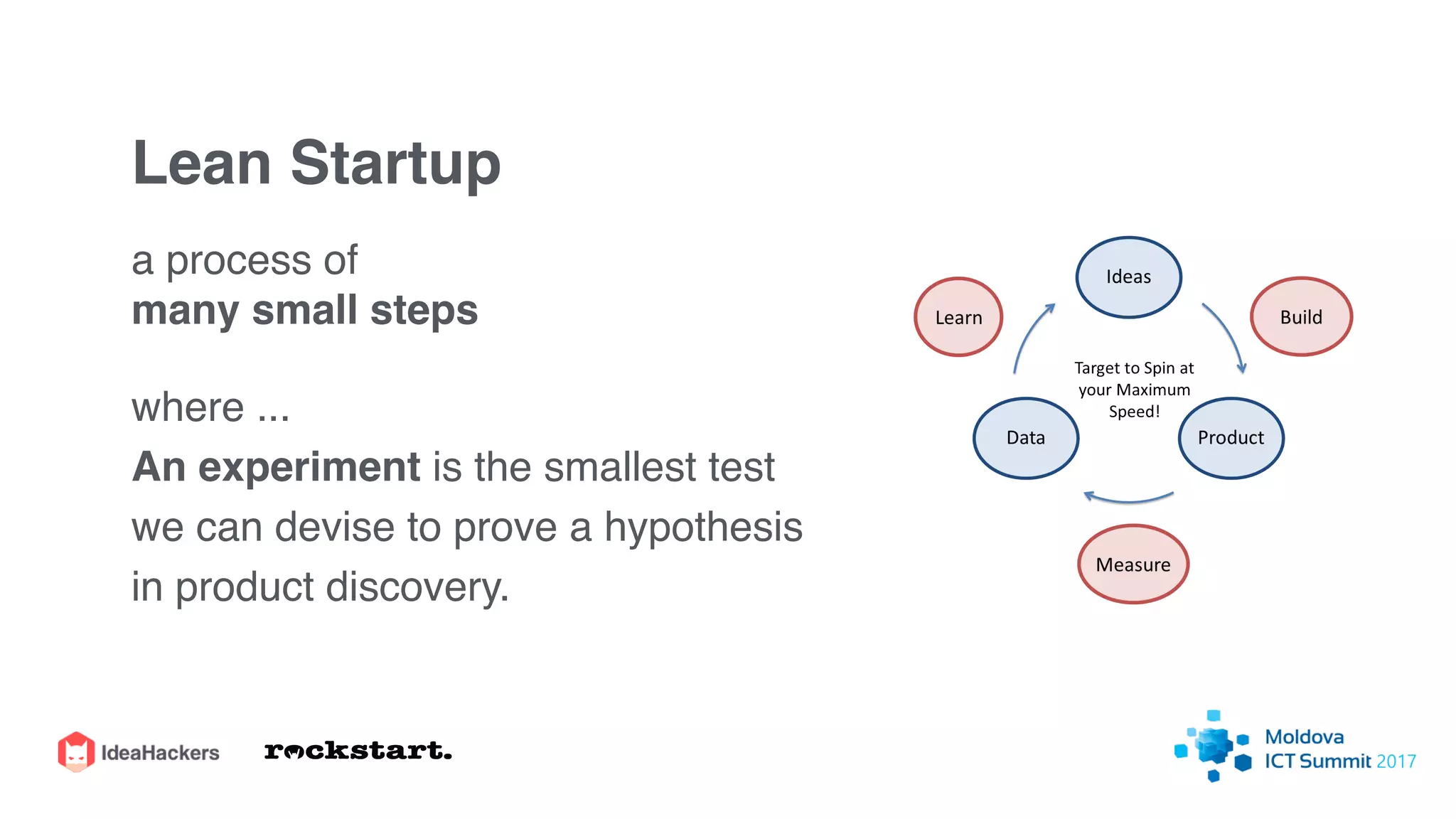
Lean Startup
a process of
many small steps
where ...
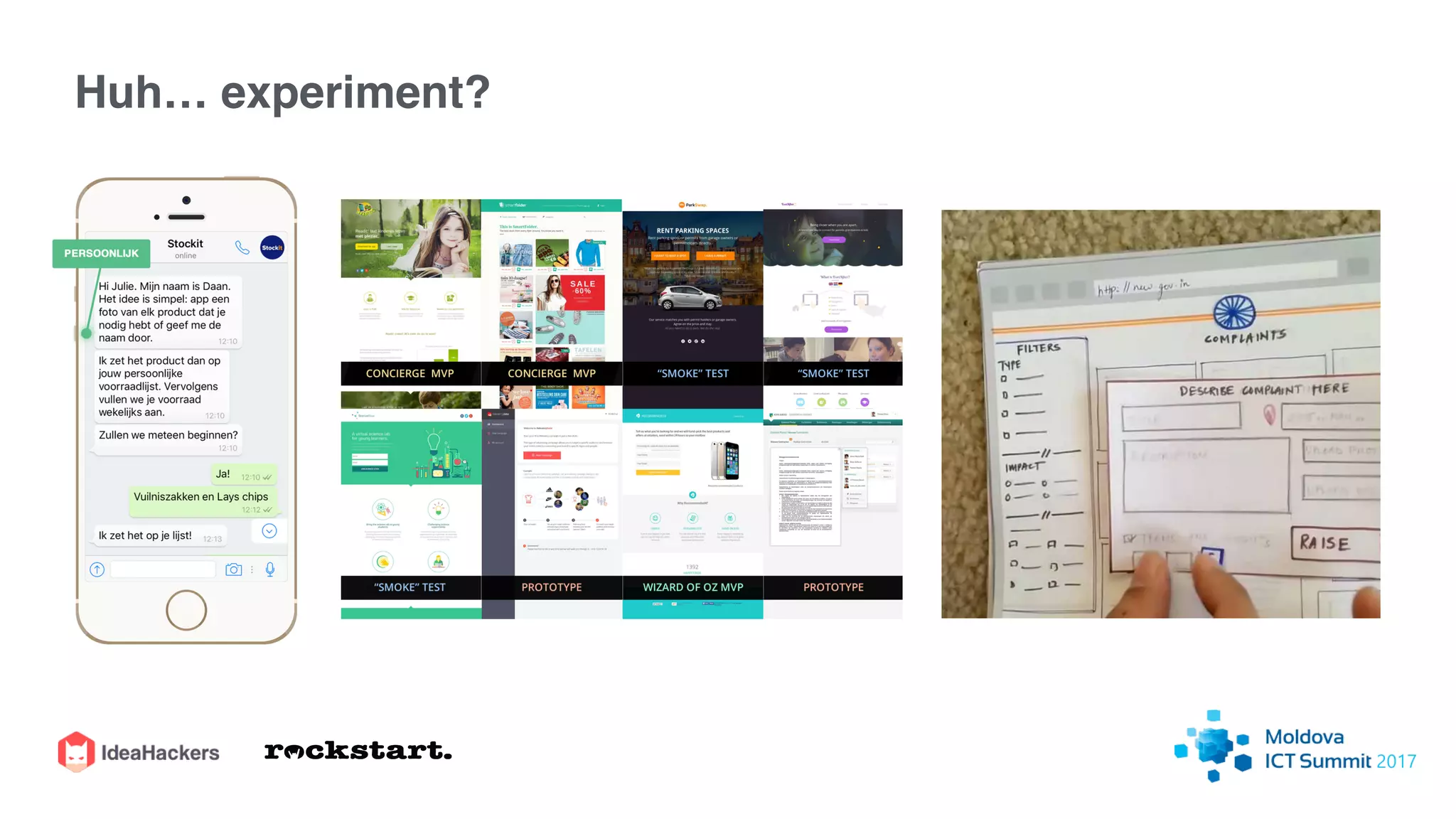
An experiment is the smallest test
we can devise to prove a hypothesis
in product discovery.
Huh… experiment?
Your goal is:
to understand customer’s problem
and find a solution to it worth paying for*,
so that you can repeat and scale this process.
How to get to Problem-Solution fit?
*productizing
Data tells you what is wrong,
customer interviews will help you
to understand why.
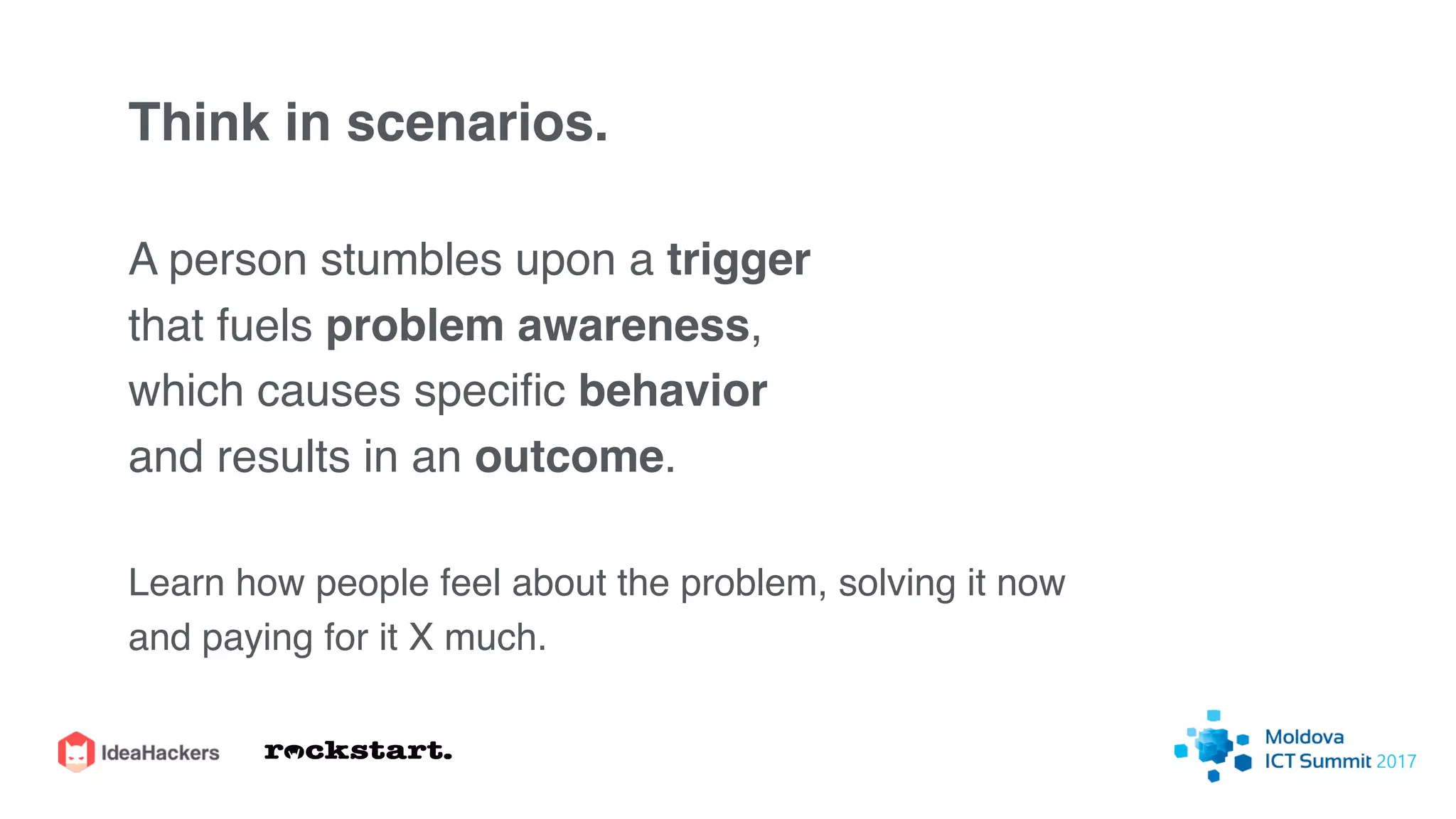
Think in scenarios.
A person stumbles upon a trigger
that fuels problem awareness,
which causes specific behavior
and results in an outcome.
Learn how people feel about the problem, solving it now
and paying for it X much.
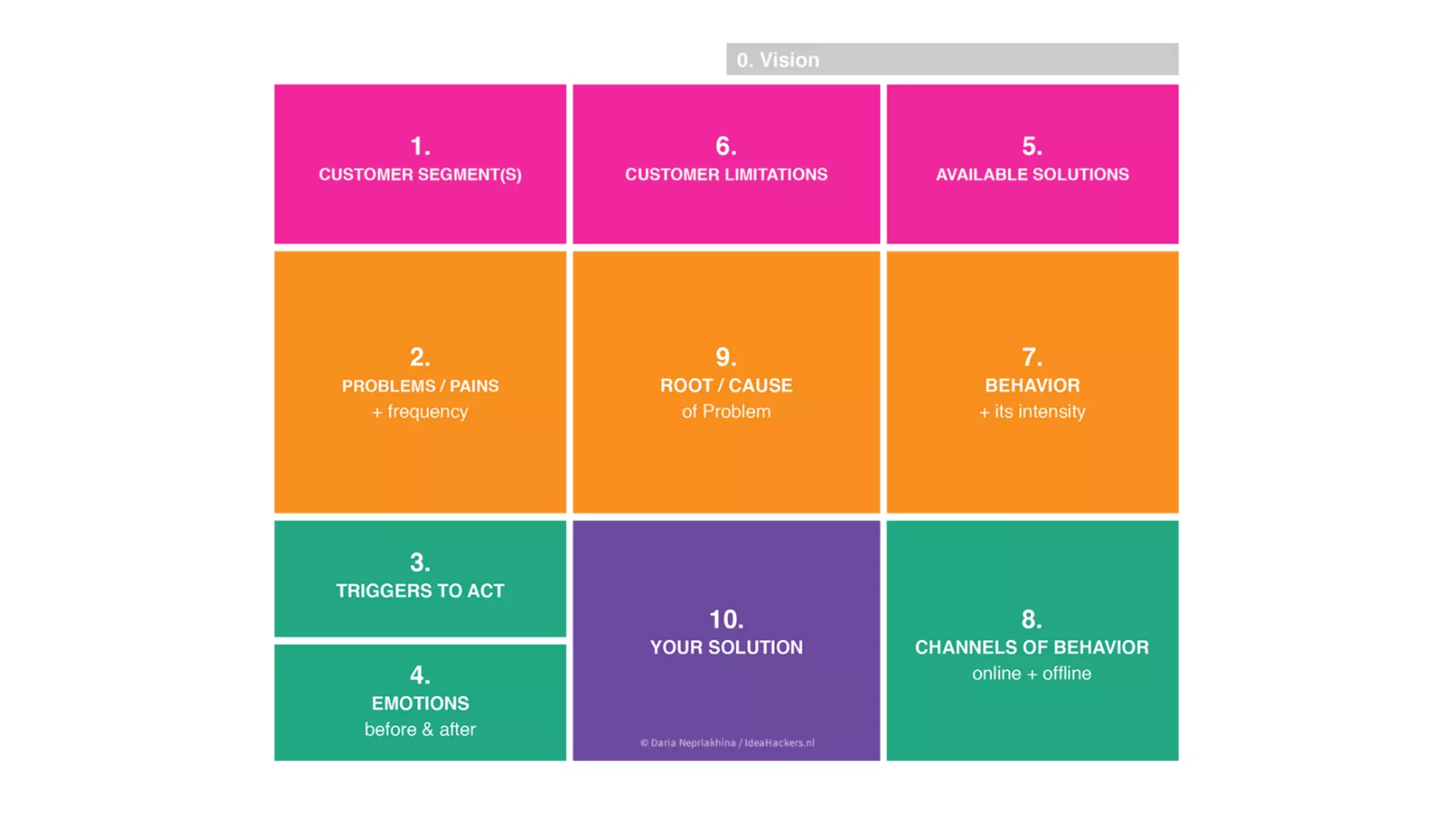
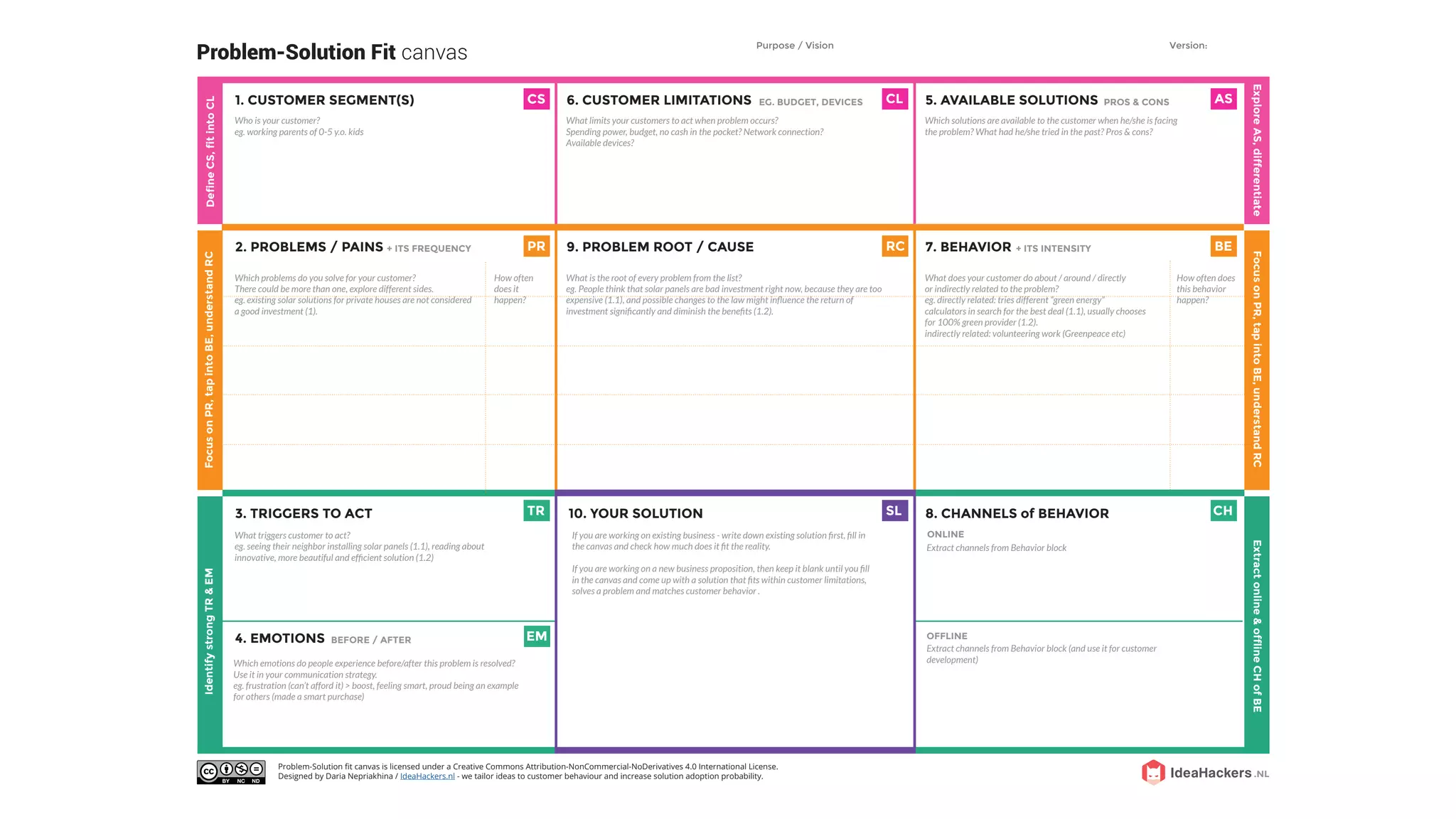
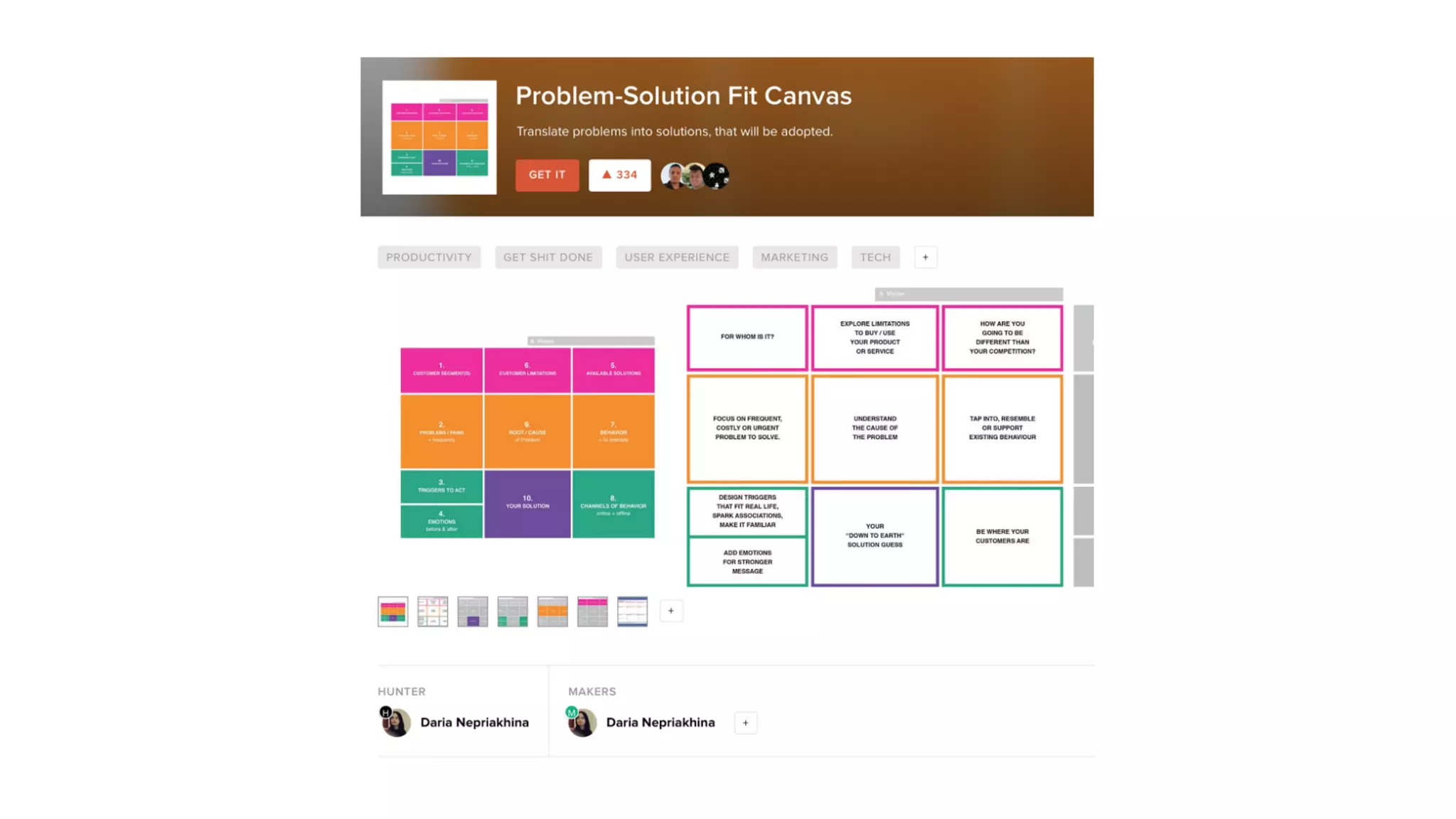
1. CUSTOMER SEGMENT(S)
+ ITS INTENSITY2. PROBLEMS / PAINS
3. TRIGGERS TO ACT
6. CUSTOMER LIMITATIONS
8. CHANNELS of BEHAVIOR
5. AVAILABLE SOLUTIONS
10. YOUR SOLUTION
7. BEHAVIOR
Problem-Solution fit canvas is licensed under a Creative Commons Attribution-NonCommercial-NoDerivatives 4.0 International License.
Designed by Daria Nepriakhina / IdeaHackers.nl - we tailor ideas to customer behaviour and increase solution adoption probability.
Problem-Solution Fit canvas
Purpose / Vision Version:
9. PROBLEM ROOT / CAUSE+ ITS FREQUENCY
ONLINE
OFFLINE4. EMOTIONS BEFORE / AFTER
CS CL AS
RC BEPR
SLTR CH
EM
EG. BUDGET, DEVICES PROS & CONS
.NL
If you are working on existing business - write down existing solution first, fill in
the canvas and check how much does it fit the reality.
If you are working on a new business proposition, then keep it blank until you fill
in the canvas and come up with a solution that fits within customer limitations,
solves a problem and matches customer behavior .
Who is your customer?
eg. working parents of 0-5 y.o. kids
What limits your customers to act when problem occurs?
Spending power, budget, no cash in the pocket? Network connection?
Available devices?
Which solutions are available to the customer when he/she is facing
the problem? What had he/she tried in the past? Pros & cons?
Which problems do you solve for your customer?
There could be more than one, explore different sides.
eg. existing solar solutions for private houses are not considered
a good investment (1).
What is the root of every problem from the list?
eg. People think that solar panels are bad investment right now, because they are too
expensive (1.1), and possible changes to the law might influence the return of
investment significantly and diminish the benefits (1.2).
What does your customer do about / around / directly
or indirectly related to the problem?
eg. directly related: tries different “green energy”
calculators in search for the best deal (1.1), usually chooses
for 100% green provider (1.2).
indirectly related: volunteering work (Greenpeace etc)
What triggers customer to act?
eg. seeing their neighbor installing solar panels (1.1), reading about
innovative, more beautiful and efficient solution (1.2)
How often
does it
happen?
How often does
this behavior
happen?
Extract channels from Behavior block
Extract channels from Behavior block (and use it for customer
development)Which emotions do people experience before/after this problem is resolved?
Use it in your communication strategy.
eg. frustration (can’t afford it) > boost, feeling smart, proud being an example
for others (made a smart purchase)
DefineCS,fitintoCLFocusonPR,tapintoBE,understandRC
ExploreAS,differentiateFocusonPR,tapintoBE,understandRC
IdentifystrongTR&EM
Extractonline&offlineCHofBE
CUSTOMER STATE FIT
find the right customer
Customer segment(s)
Who is your customer?
eg. working parents of 0-5 y.o. kids
CUSTOMER STATE FIT
find the right customer
Customer limitations & barriers
Spending power, budget?
No cash in the pocket?
Network connection?
Available devices?
CUSTOMER STATE FIT
find the right customer
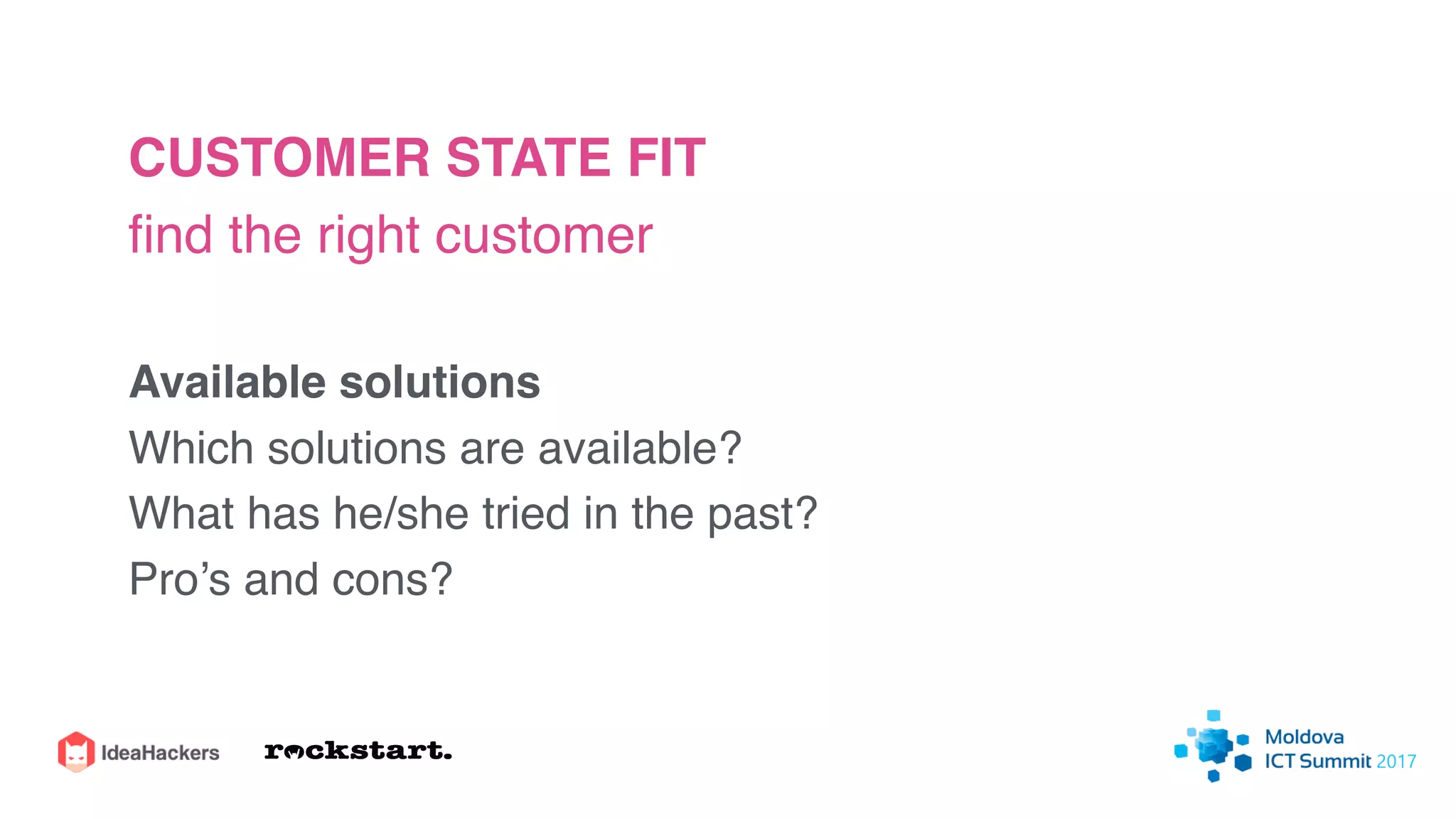
Available solutions
Which solutions are available?
What has he/she tried in the past?
Pro’s and cons?
PROBLEM-BEHAVIOR FIT
find the right problem supported by behavior
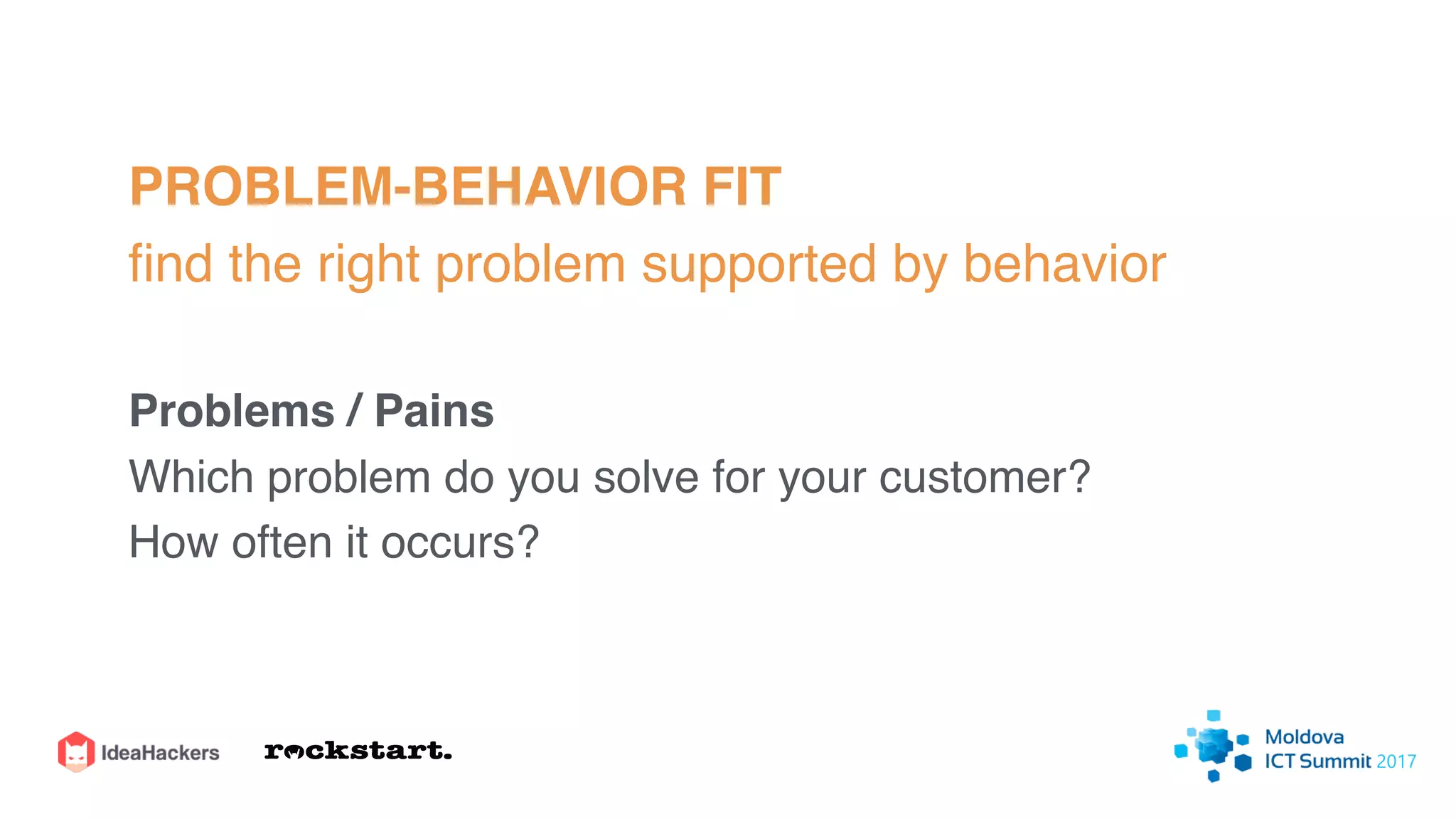
Problems / Pains
Which problem do you solve for your customer?
How often it occurs?
PROBLEM-BEHAVIOR FIT
find the right problem supported by behavior
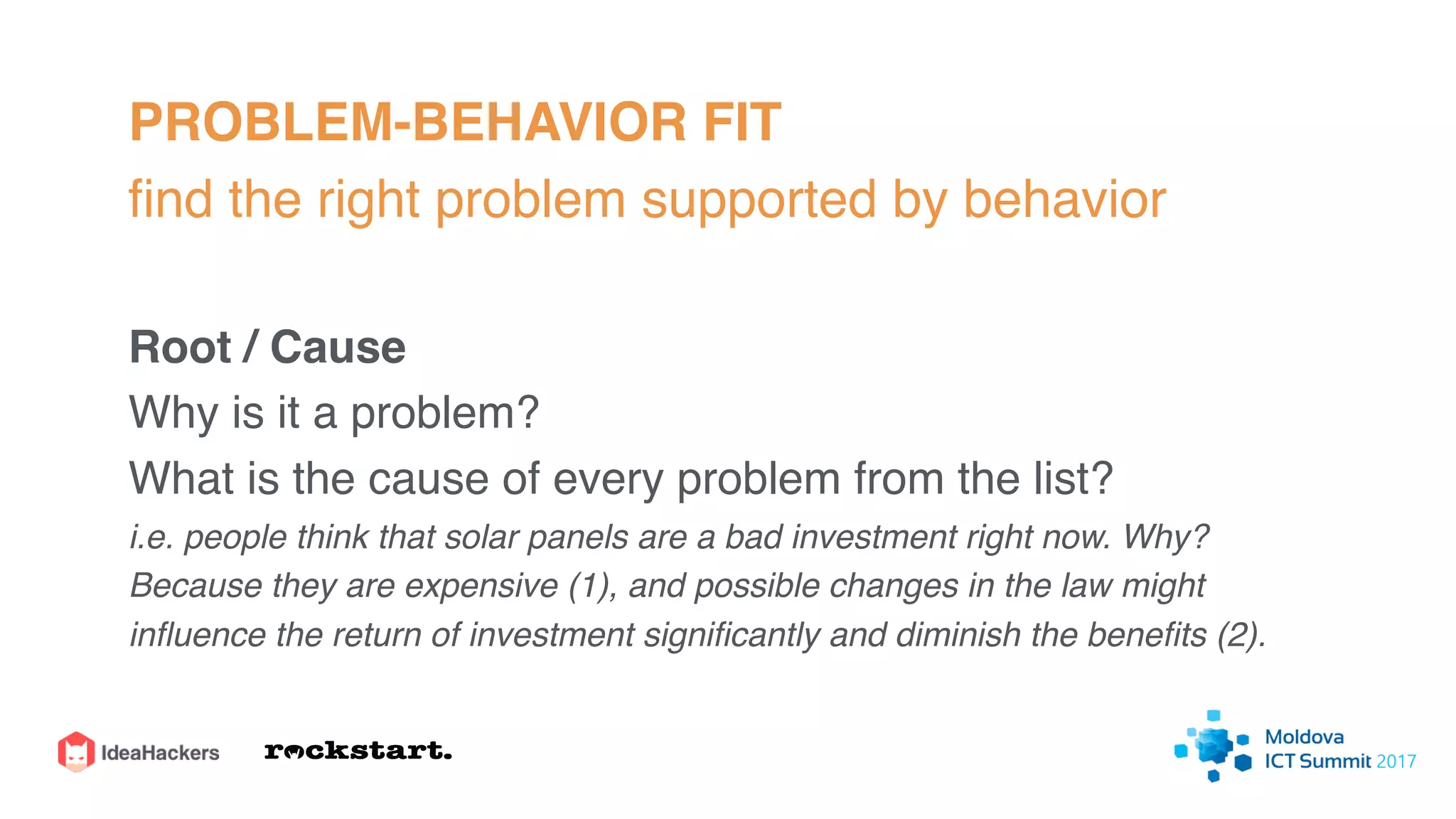
Root / Cause
Why is it a problem?
What is the cause of every problem from the list?
i.e. people think that solar panels are a bad investment right now. Why?
Because they are expensive (1), and possible changes in the law might
influence the return of investment significantly and diminish the benefits (2).
PROBLEM-BEHAVIOR FIT
find the right problem supported by behavior
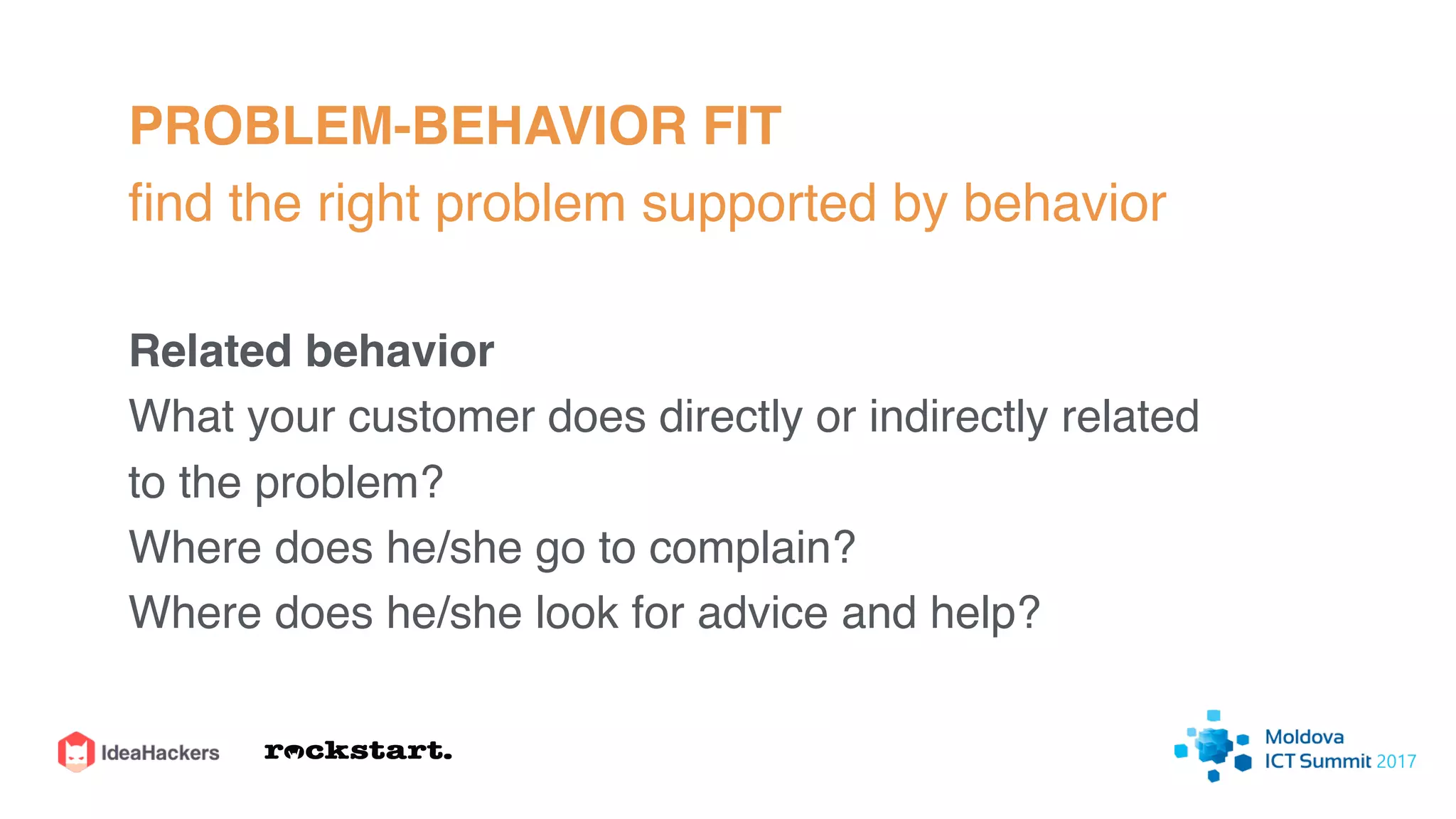
Related behavior
What your customer does directly or indirectly related
to the problem?
Where does he/she go to complain?
Where does he/she look for advice and help?
CHANNEL-COMMUNICATION FIT
find the right channel to trigger your customers
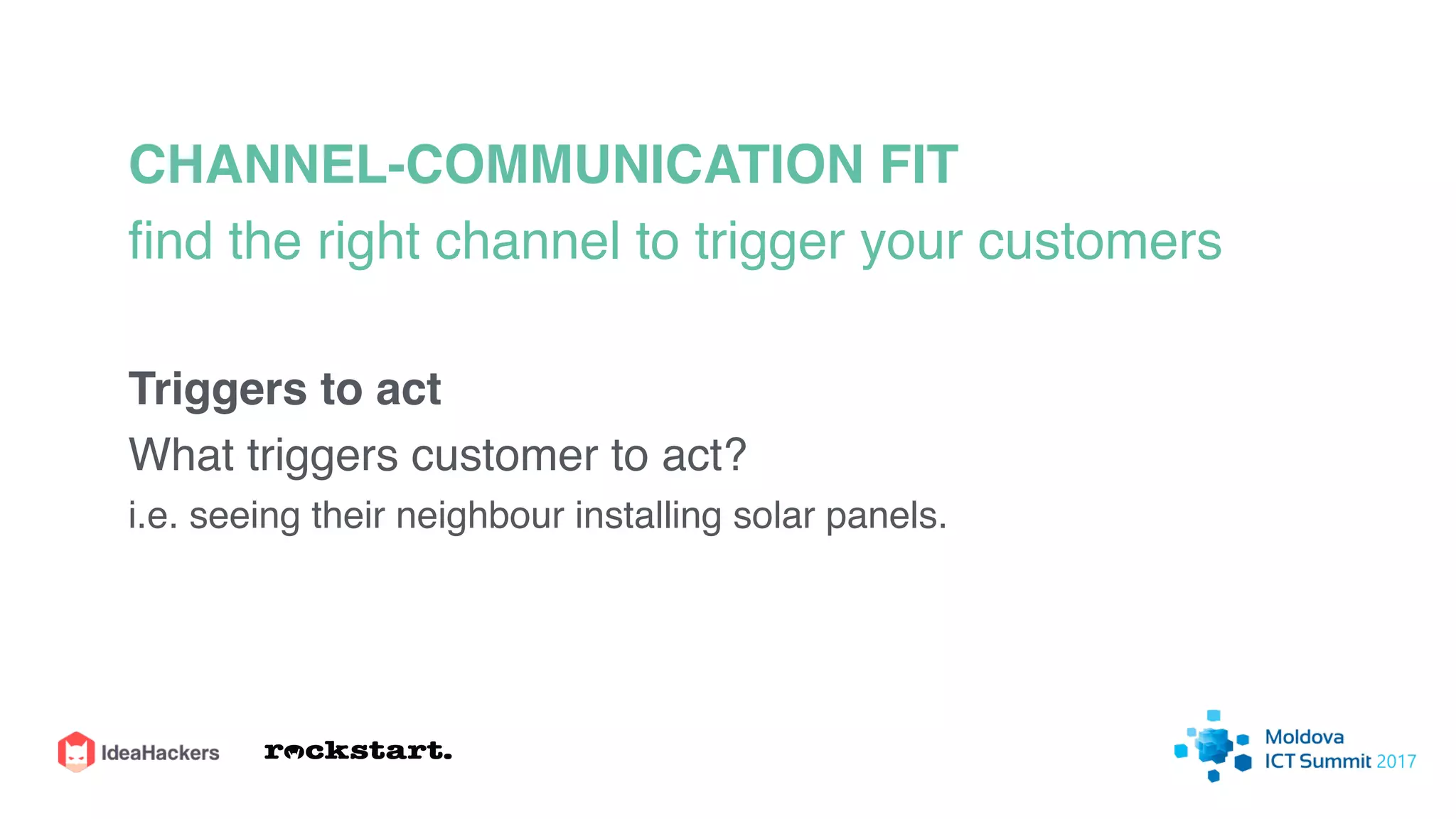
Triggers to act
What triggers customer to act?
i.e. seeing their neighbour installing solar panels.
CHANNEL-COMMUNICATION FIT
find the right channel to trigger your customers
Emotions
Which emotions do people feel before / after
this problem is resolved?
Use it in your communication strategy and visuals.
CHANNEL-COMMUNICATION FIT
find the right channel to trigger your customers
Channels of Behavior
Where online does this behavior happen?
Extract online and offline channels from Behavior block.
These are your channels to test.
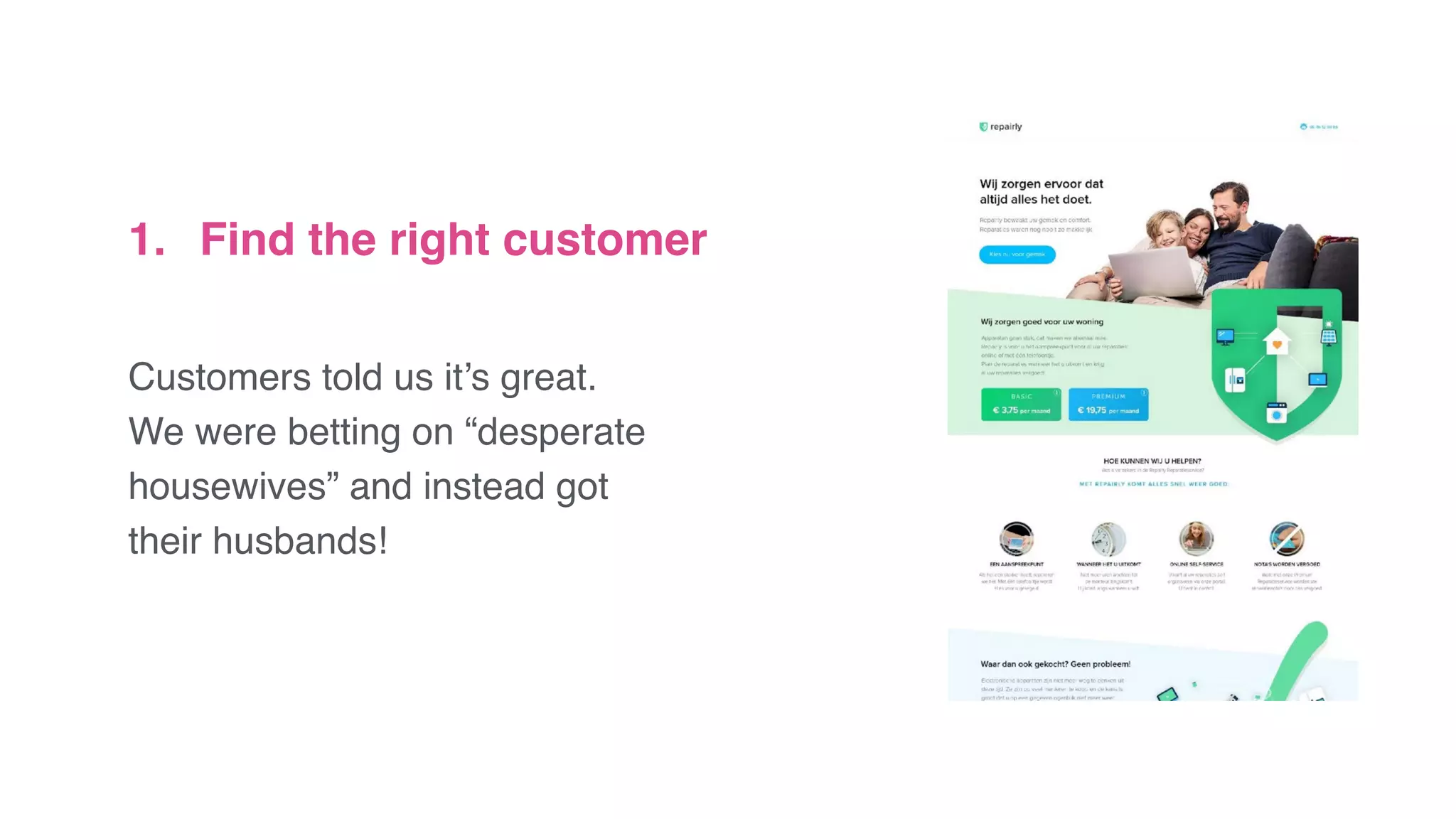
1. Find the right customer
Customers told us it’s great.
We were betting on “desperate
housewives” and instead got
their husbands!
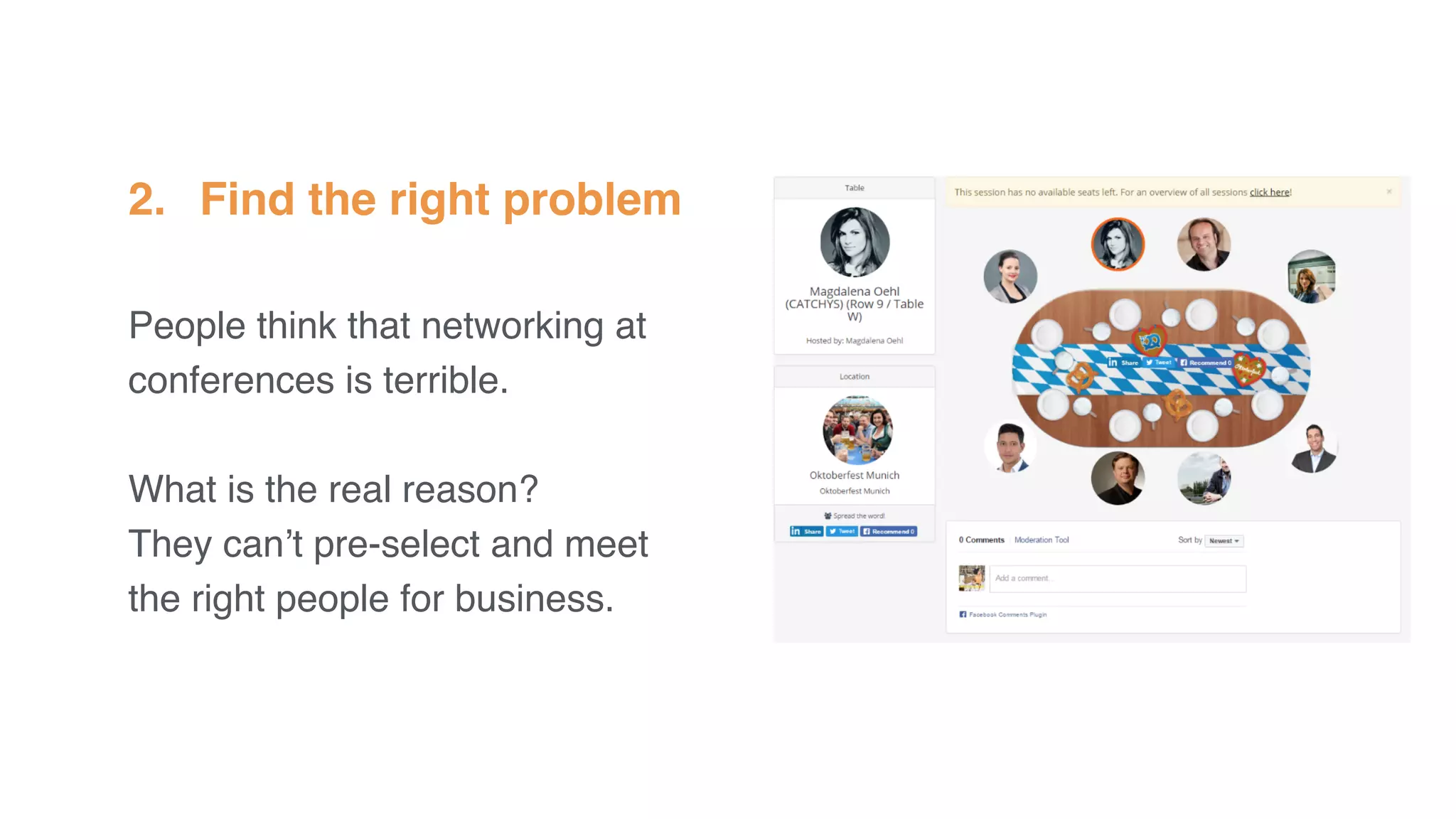
2. Find the right problem
People think that networking at
conferences is terrible.
What is the real reason?
They can’t pre-select and meet
the right people for business.
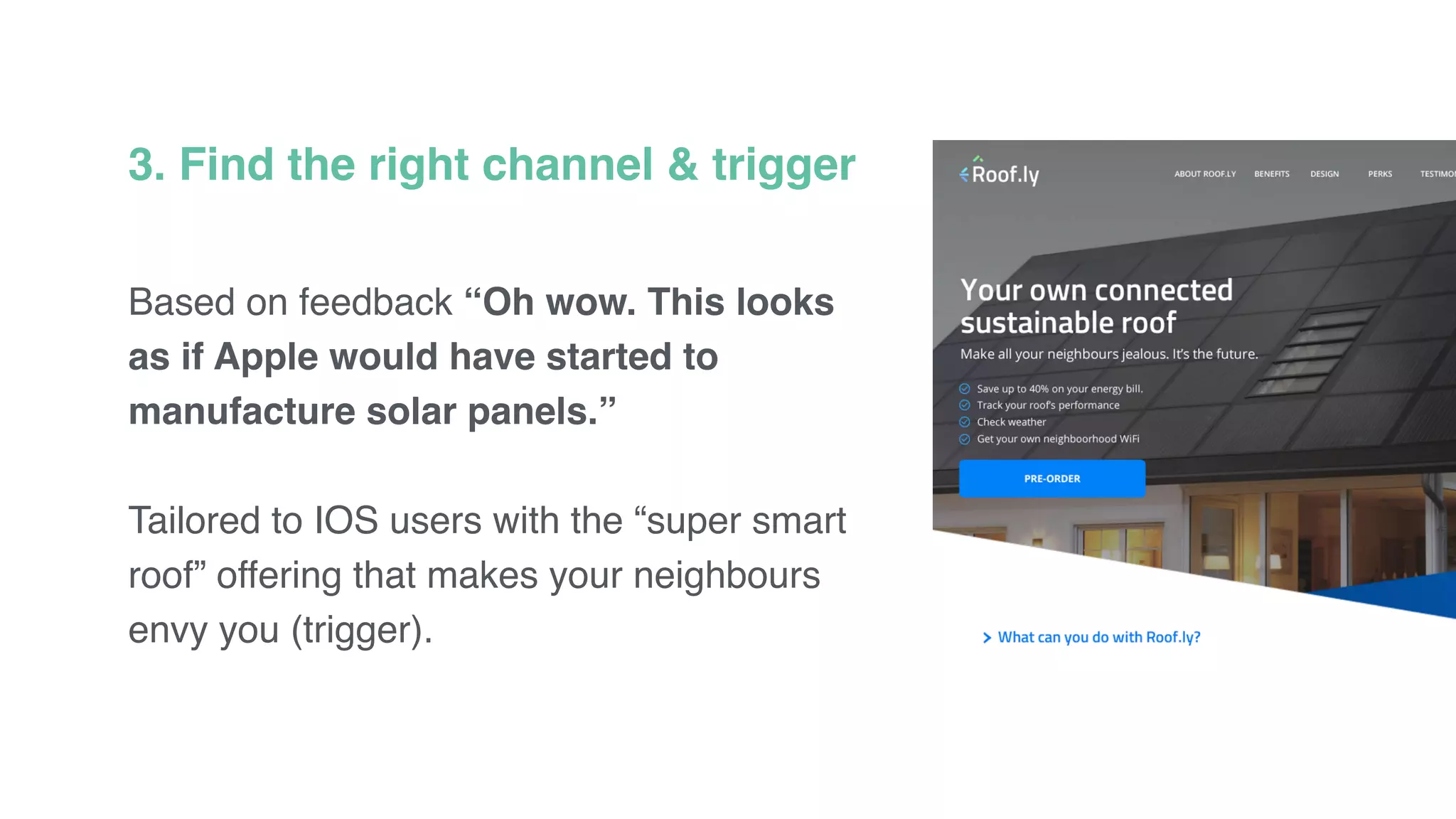
3. Find the right channel & trigger
Based on feedback “Oh wow. This looks
as if Apple would have started to
manufacture solar panels.”
Tailored to IOS users with the “super smart
roof” offering that makes your neighbours
envy you (trigger).
Customer interviews
Get out of the building because there
are no answers to be found inside.
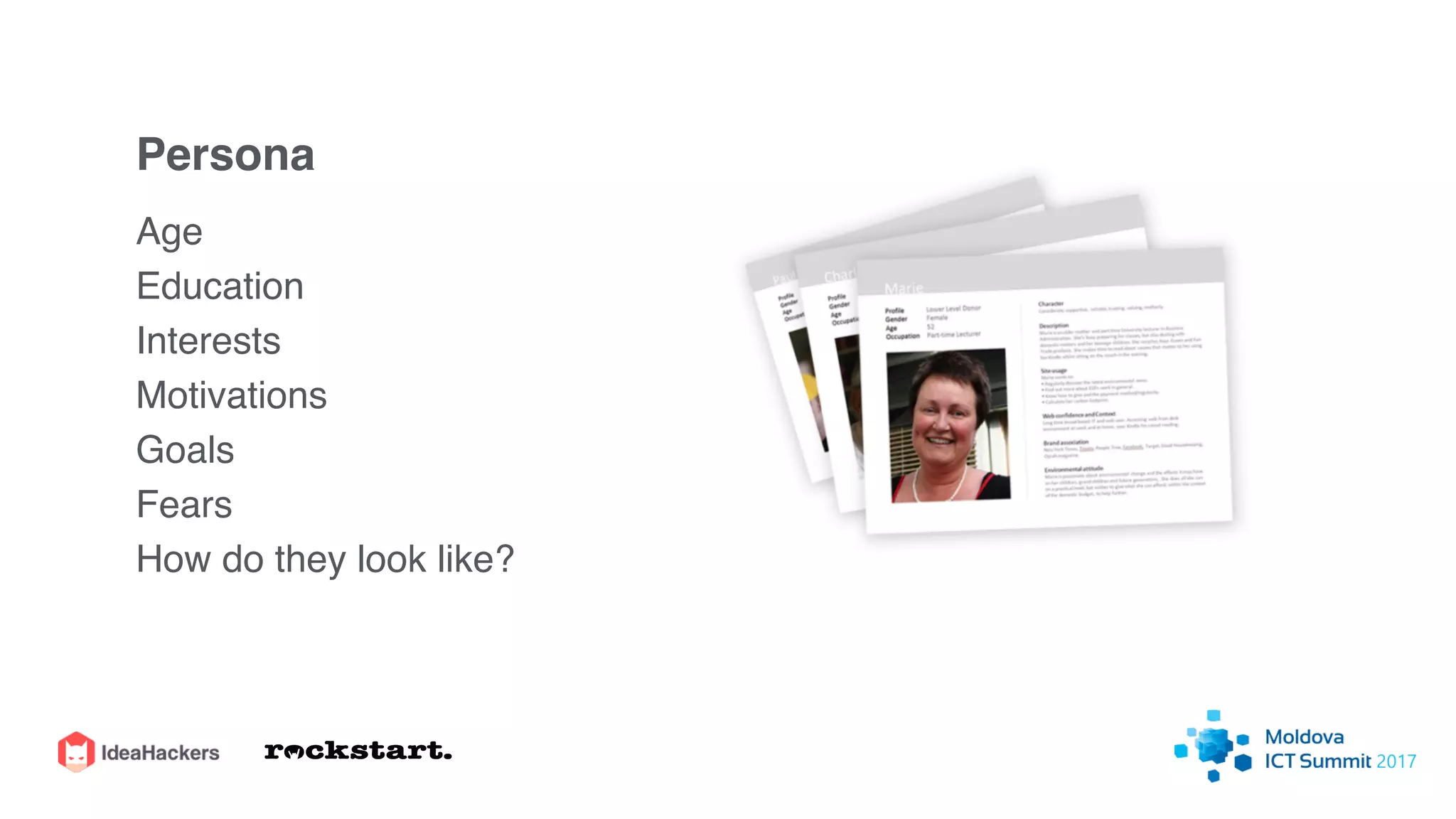
Persona
Age
Education
Interests
Motivations
Goals
Fears
How do they look like?
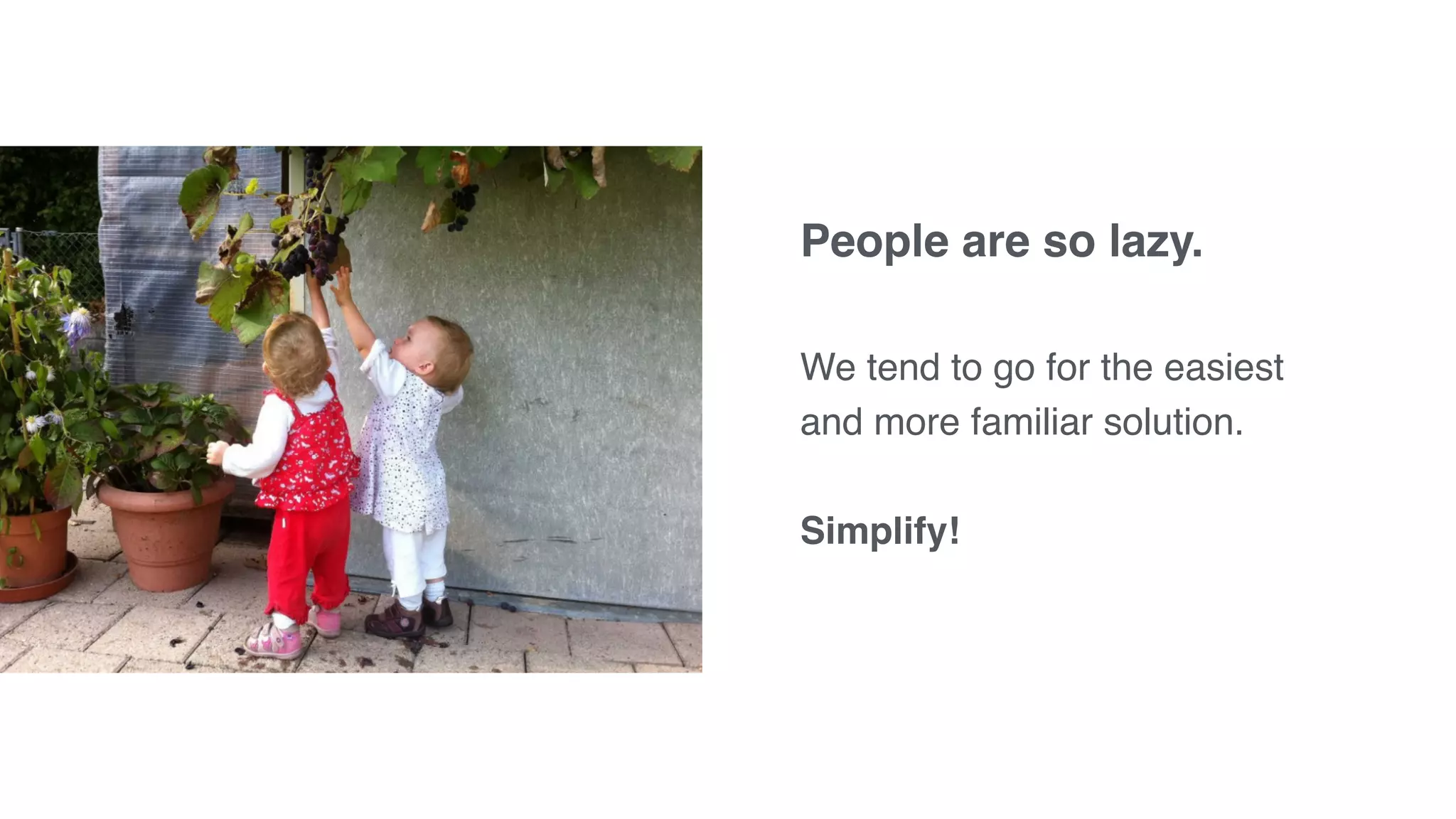
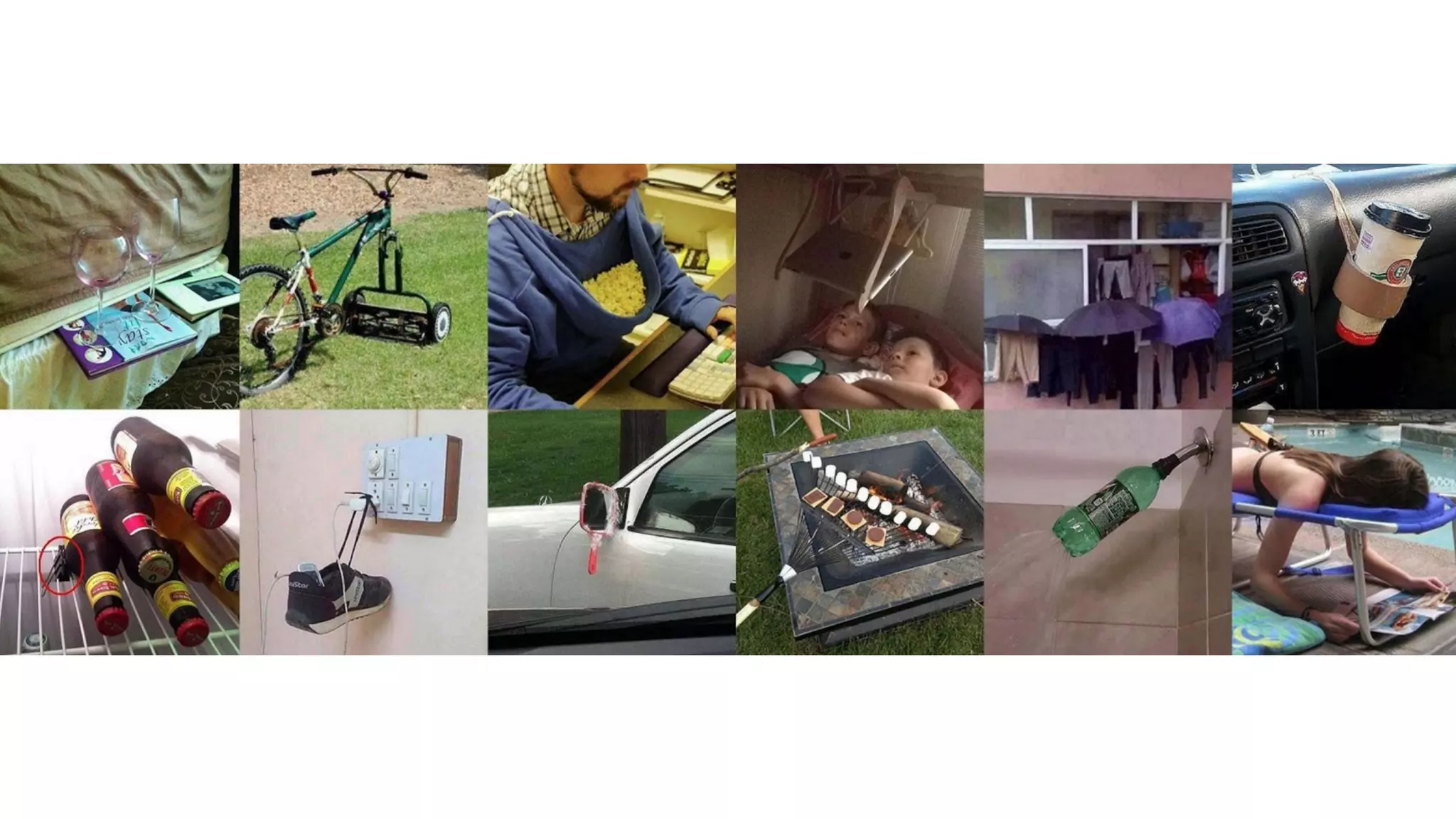
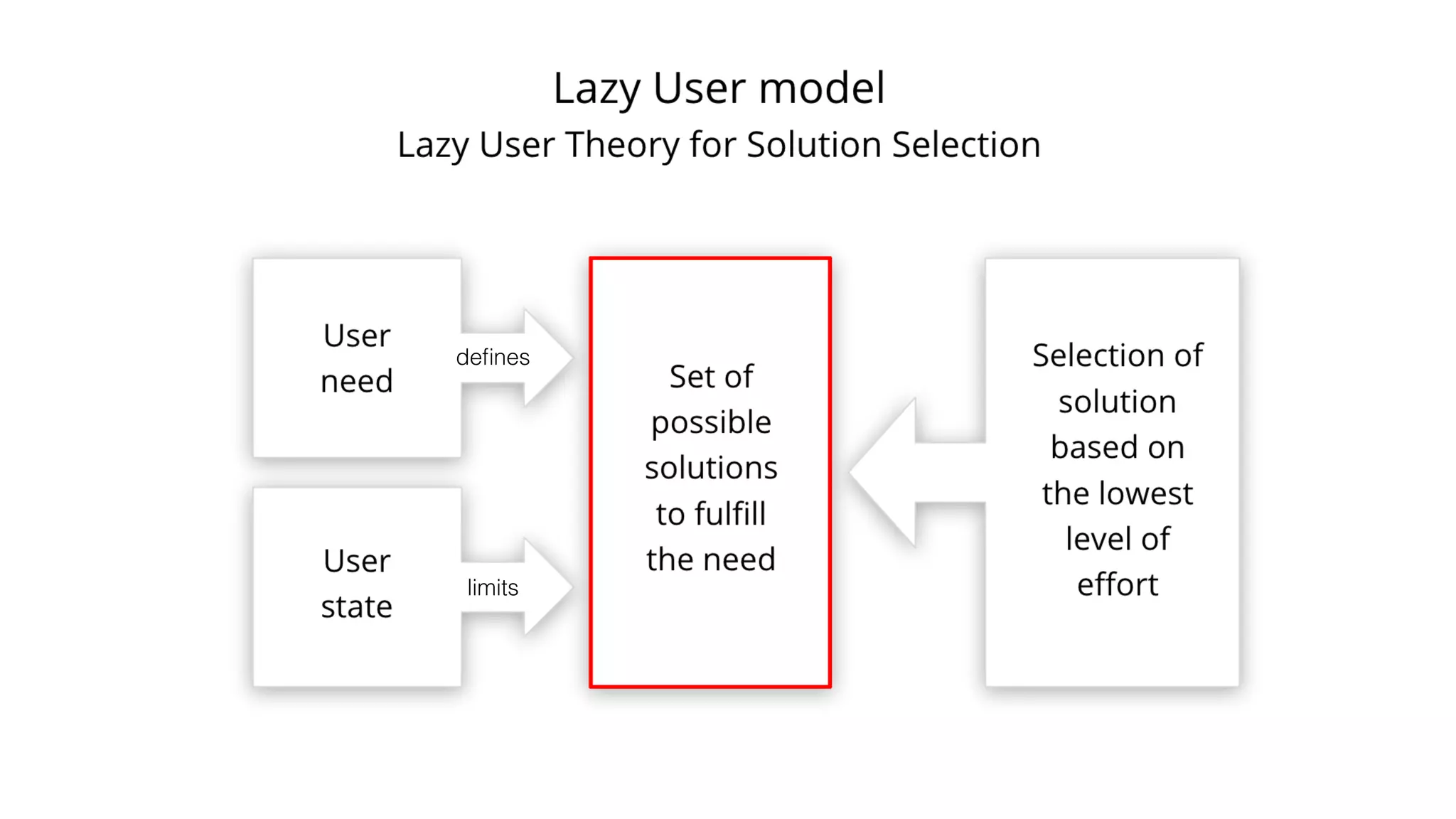
People are so lazy.
We tend to go for the easiest
and more familiar solution.
Simplify!
defines
limits
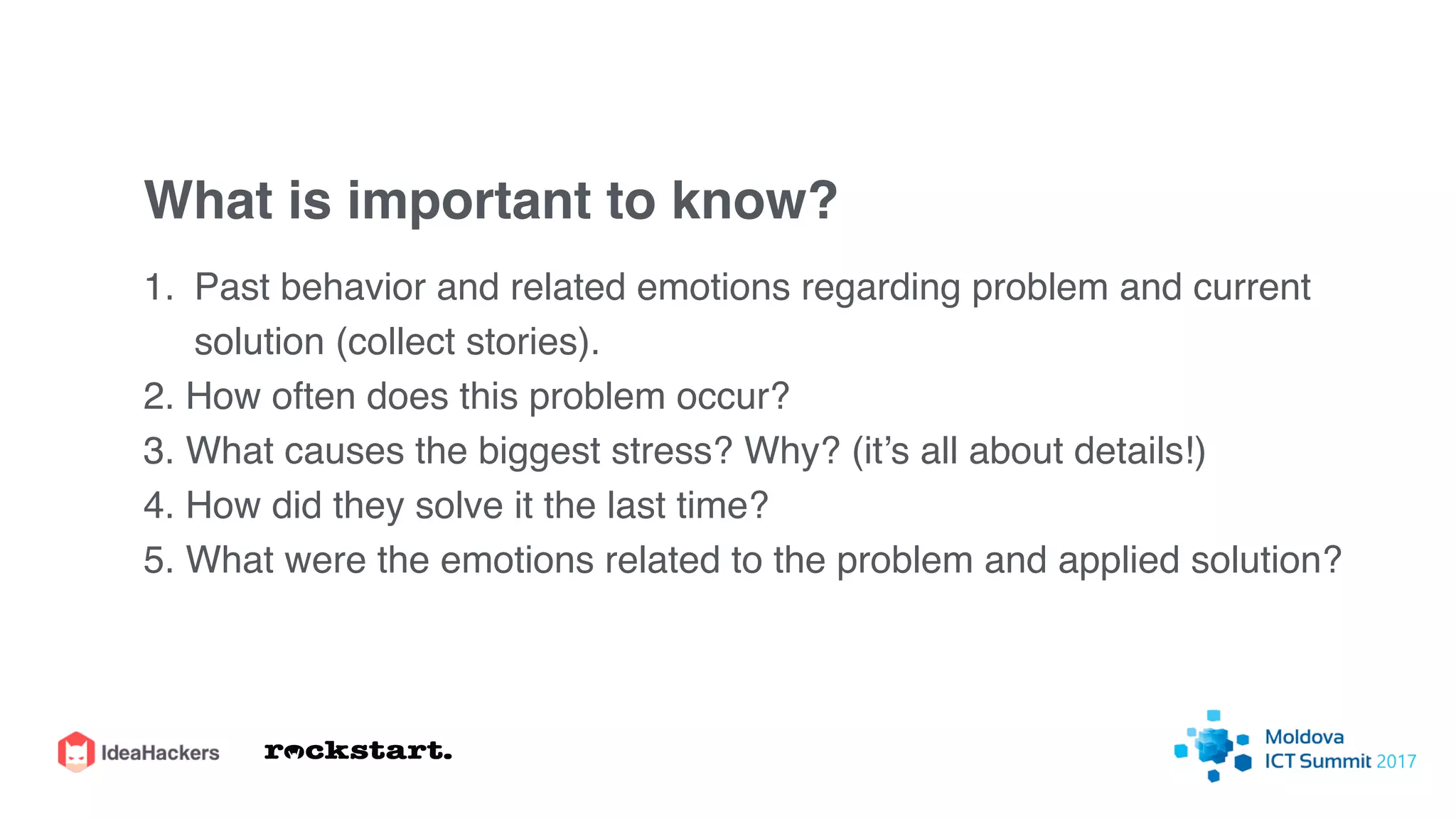
What is important to know?
1. Past behavior and related emotions regarding problem and current
solution (collect stories).
2. How often does this problem occur?
3. What causes the biggest stress? Why? (it’s all about details!)
4. How did they solve it the last time?
5. What were the emotions related to the problem and applied solution?
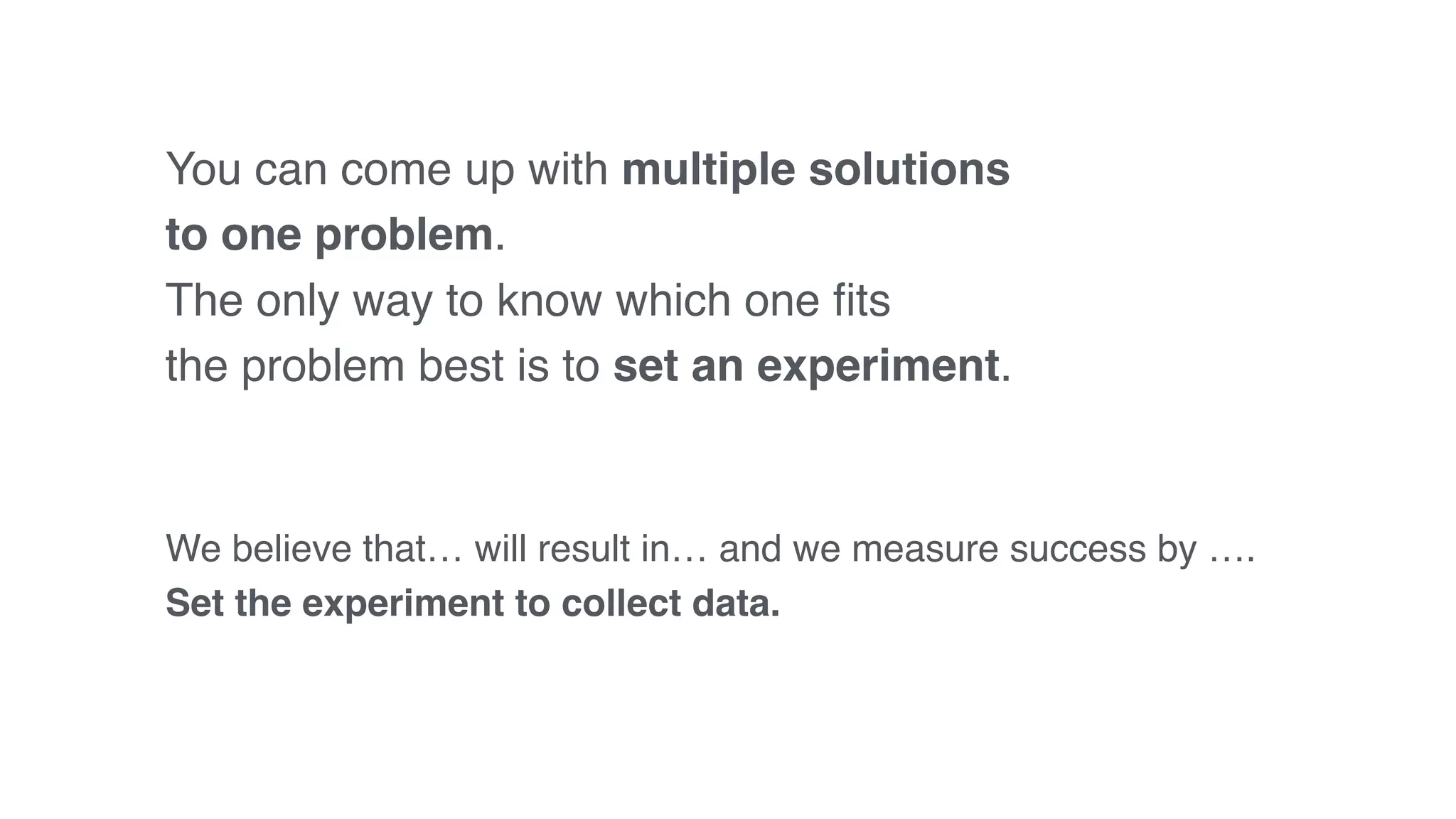
You can come up with multiple solutions
to one problem.
The only way to know which one fits
the problem best is to set an experiment.
We believe that… will result in… and we measure success by ….
Set the experiment to collect data.
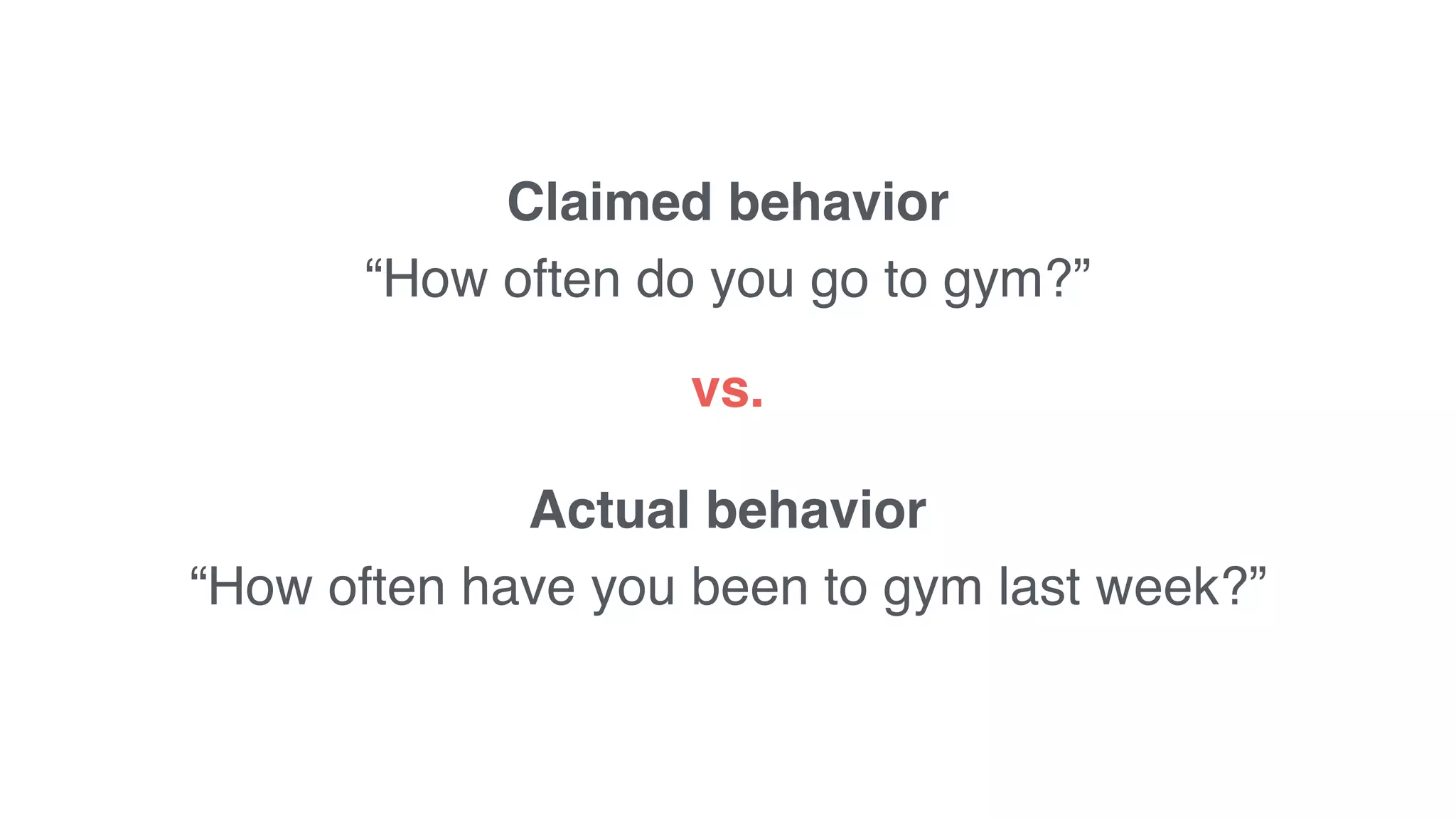
Claimed behavior
“How often do you go to gym?”
Actual behavior
“How often have you been to gym last week?”
vs.
Everybody lies.
In business..
PEOPLE are your subject
to study.
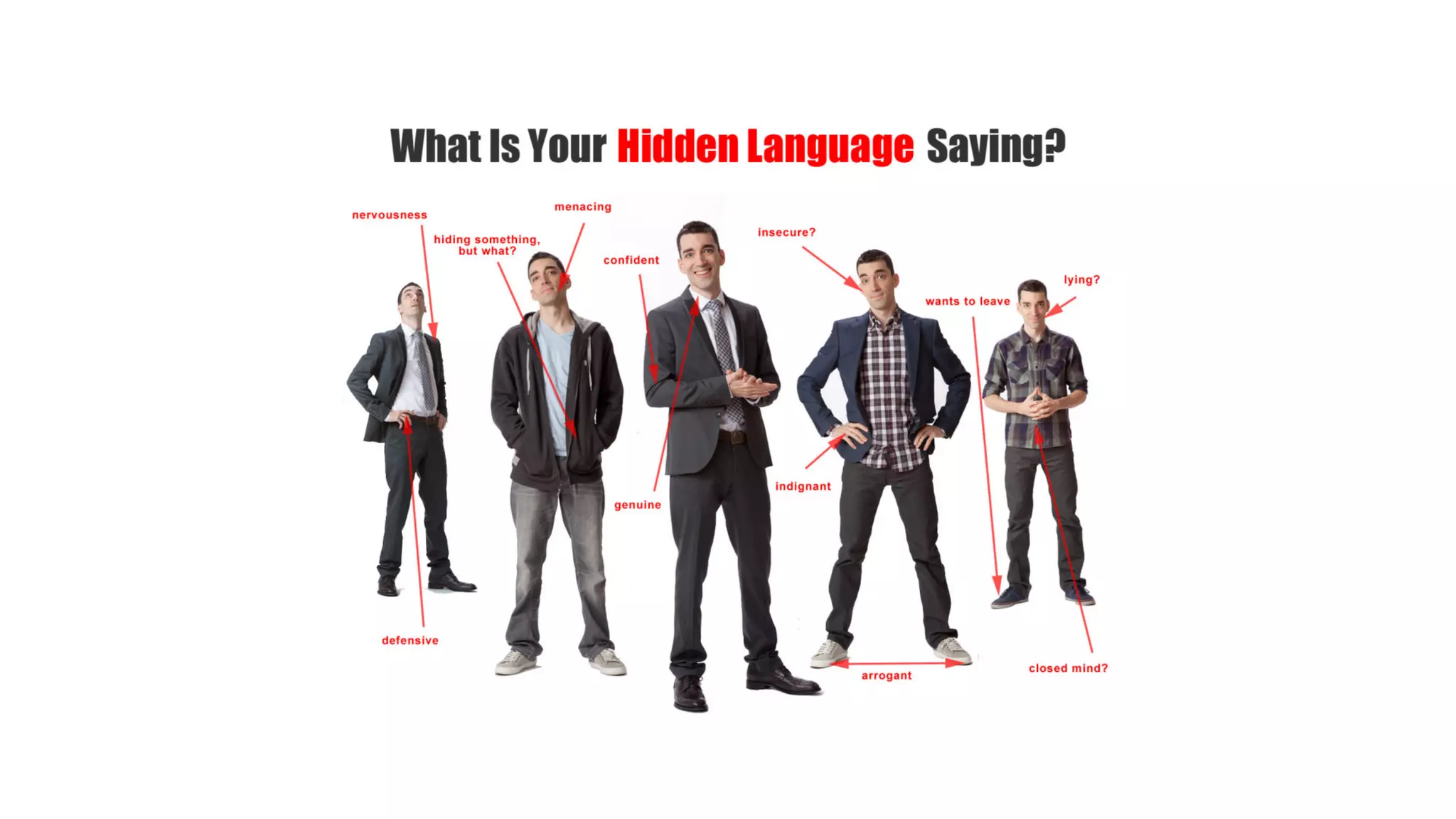
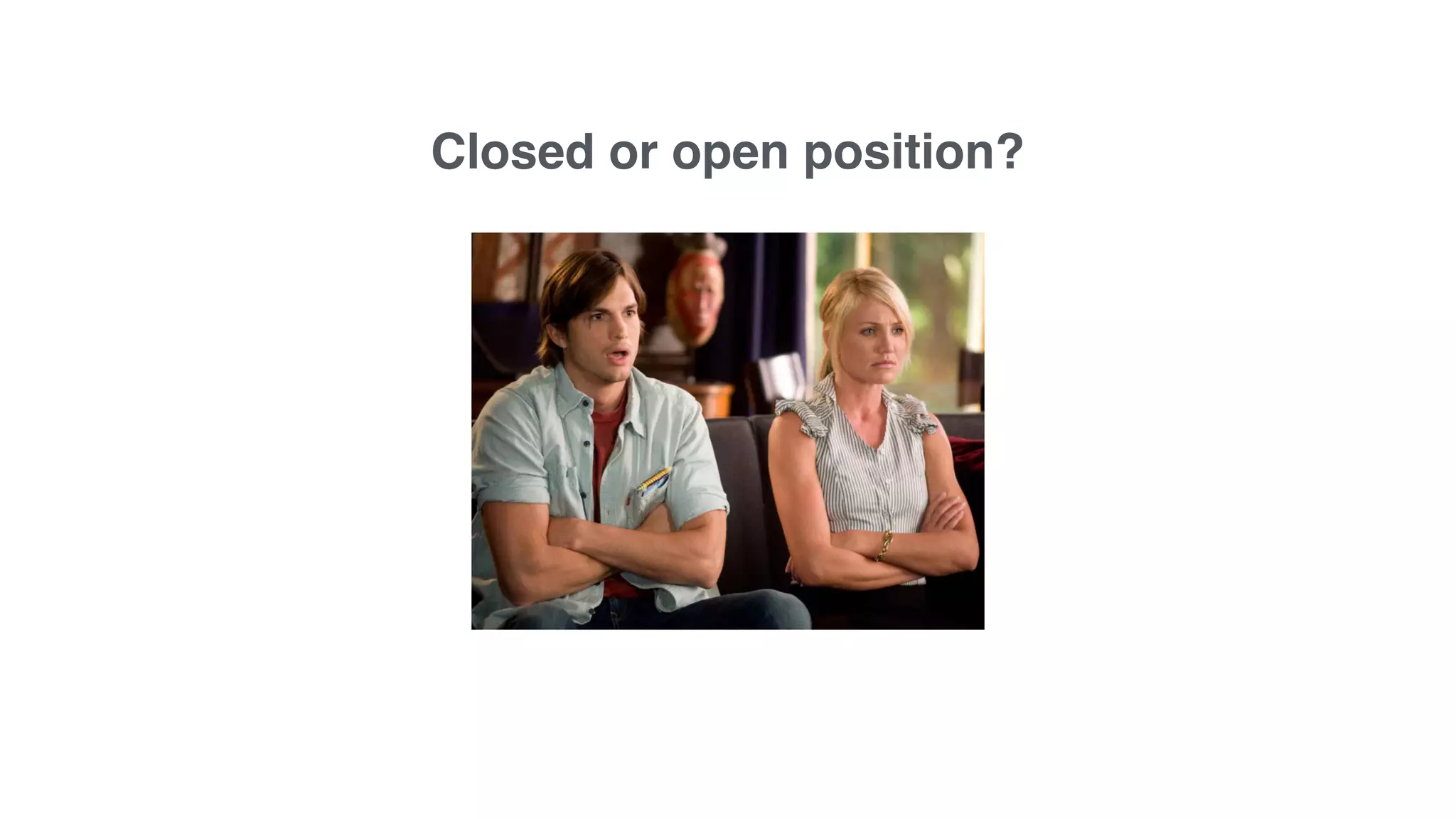
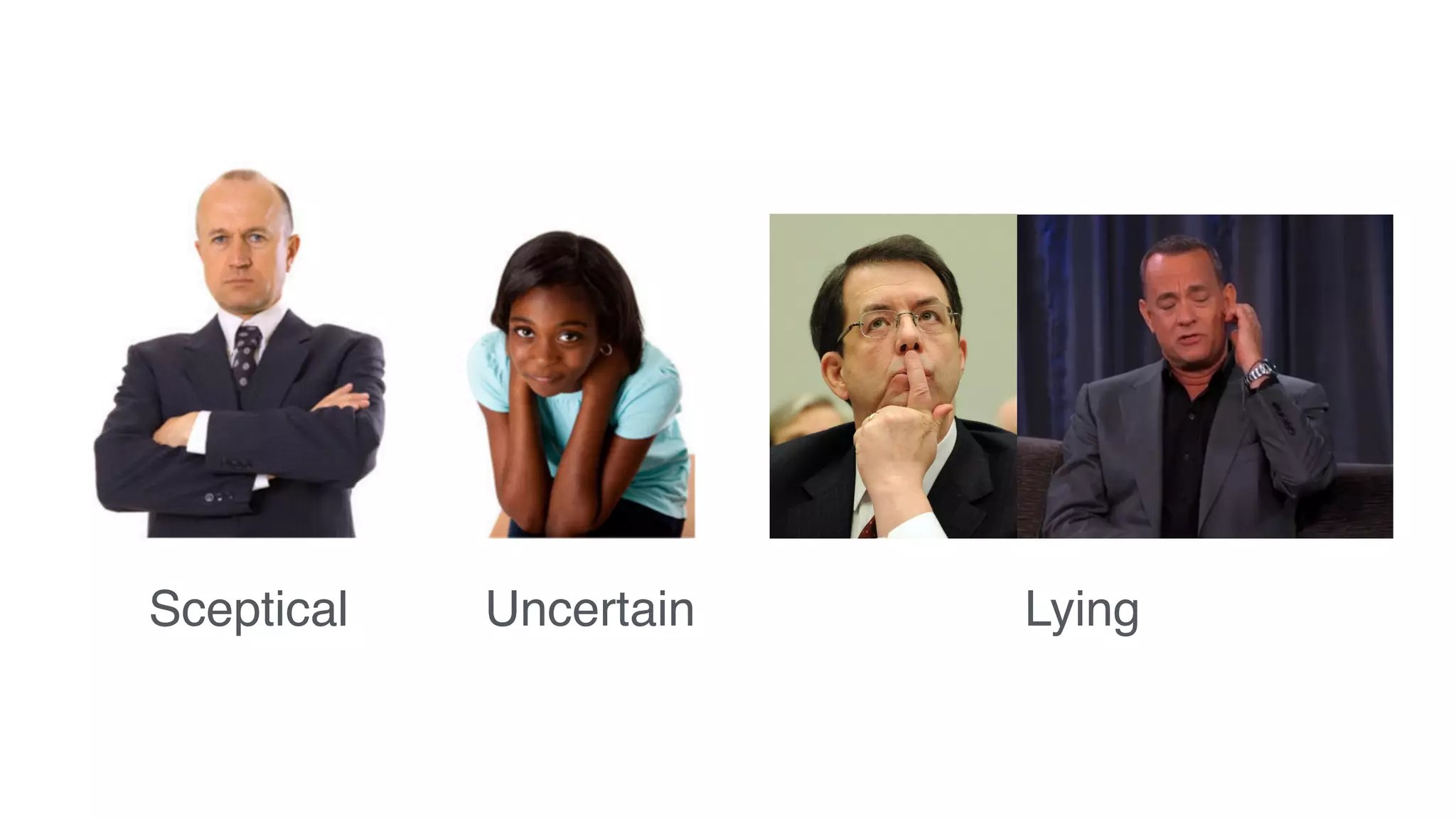
Closed or open position?
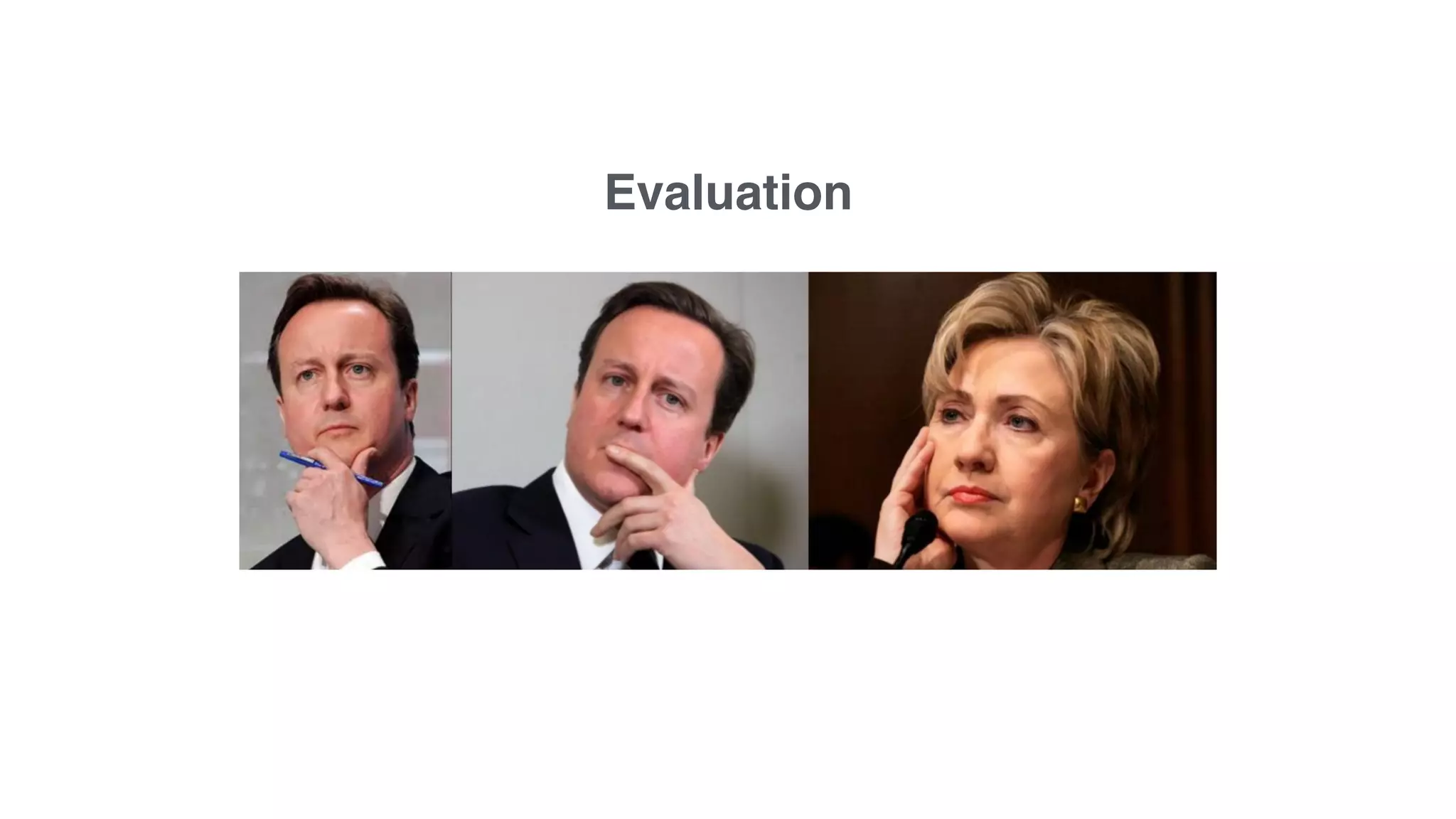
Evaluation
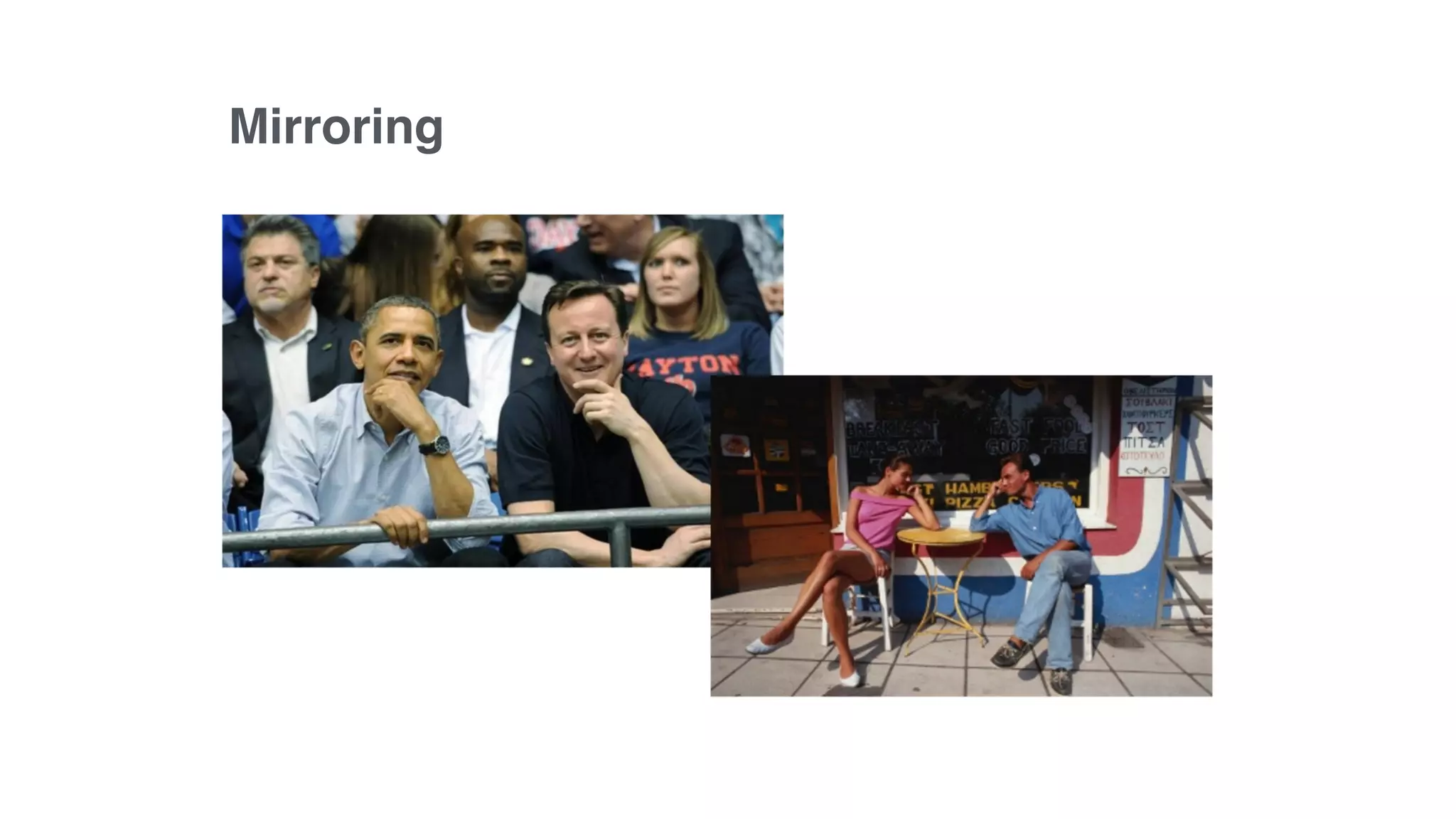
Mirroring
Sceptical Uncertain Lying
Learning by doing.
Practice.
Lean Startup is not just a process.
It’s a mindset.
Requirements = Assumptions
We know = We Believe
Let’s build it = Let’s test it!
Goal is to learn, not to prove you are right.
First nail it - then scale it.
When people spend time on something,
they care.
When the problem is not supported
by behavior, it’s not a problem
worth solving.
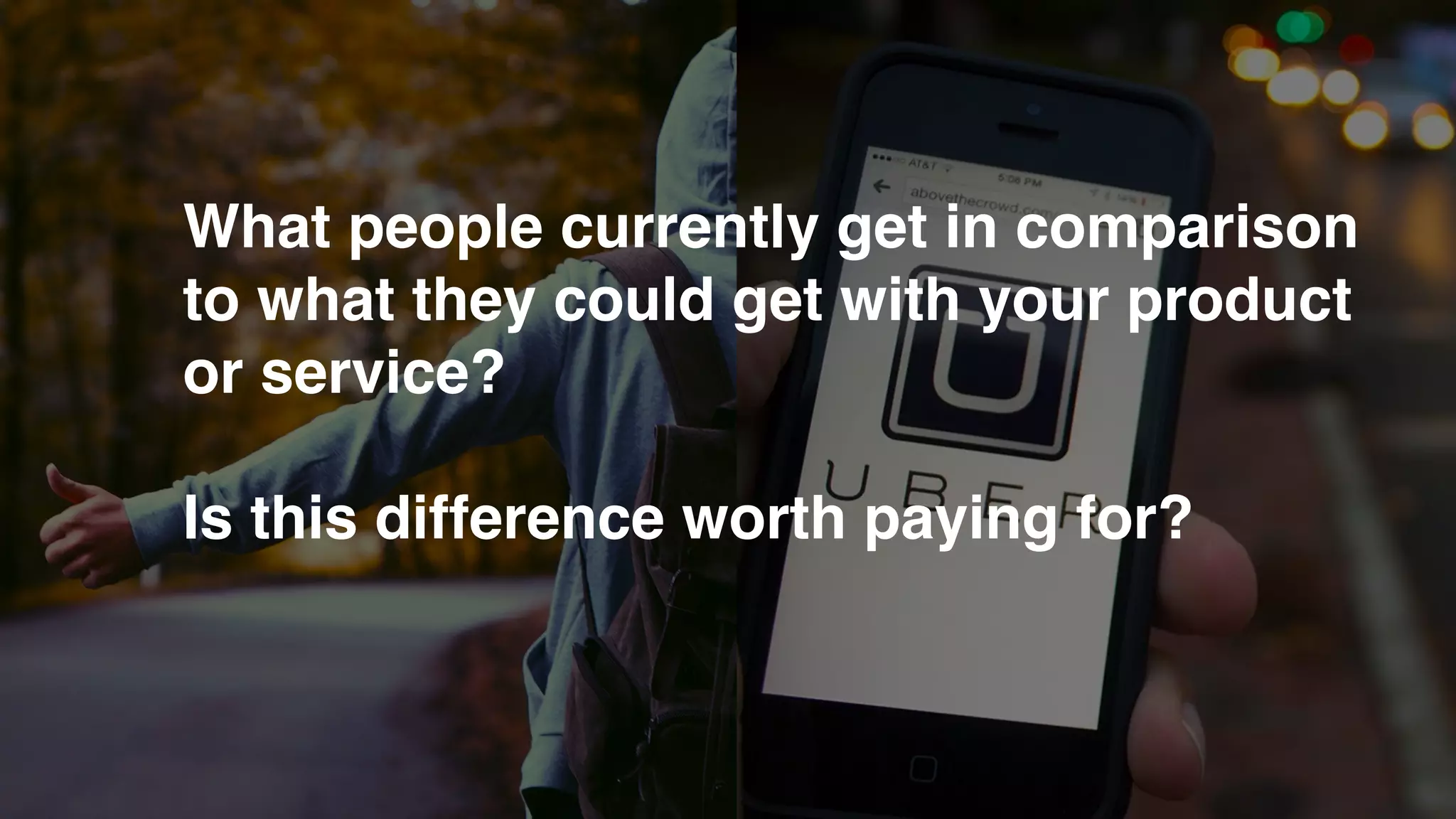
What people currently get in comparison
to what they could get with your product
or service?
Is this difference worth paying for?
They hire your product to do a job.
What are the other ways to get
this job done?
Why is your way - better?
Existing customer behavior suggests
which channels to use online, offline.
& for customer development.
Small but frequent inconvenience
turns into a big pain in your customer’s
eyes over time.
Umbrella is a perfect example.
Educate your customers on the problem
that makes them freeze in indecision.
Or “I’m always late with taxes,
because I don’t know how to do it.”
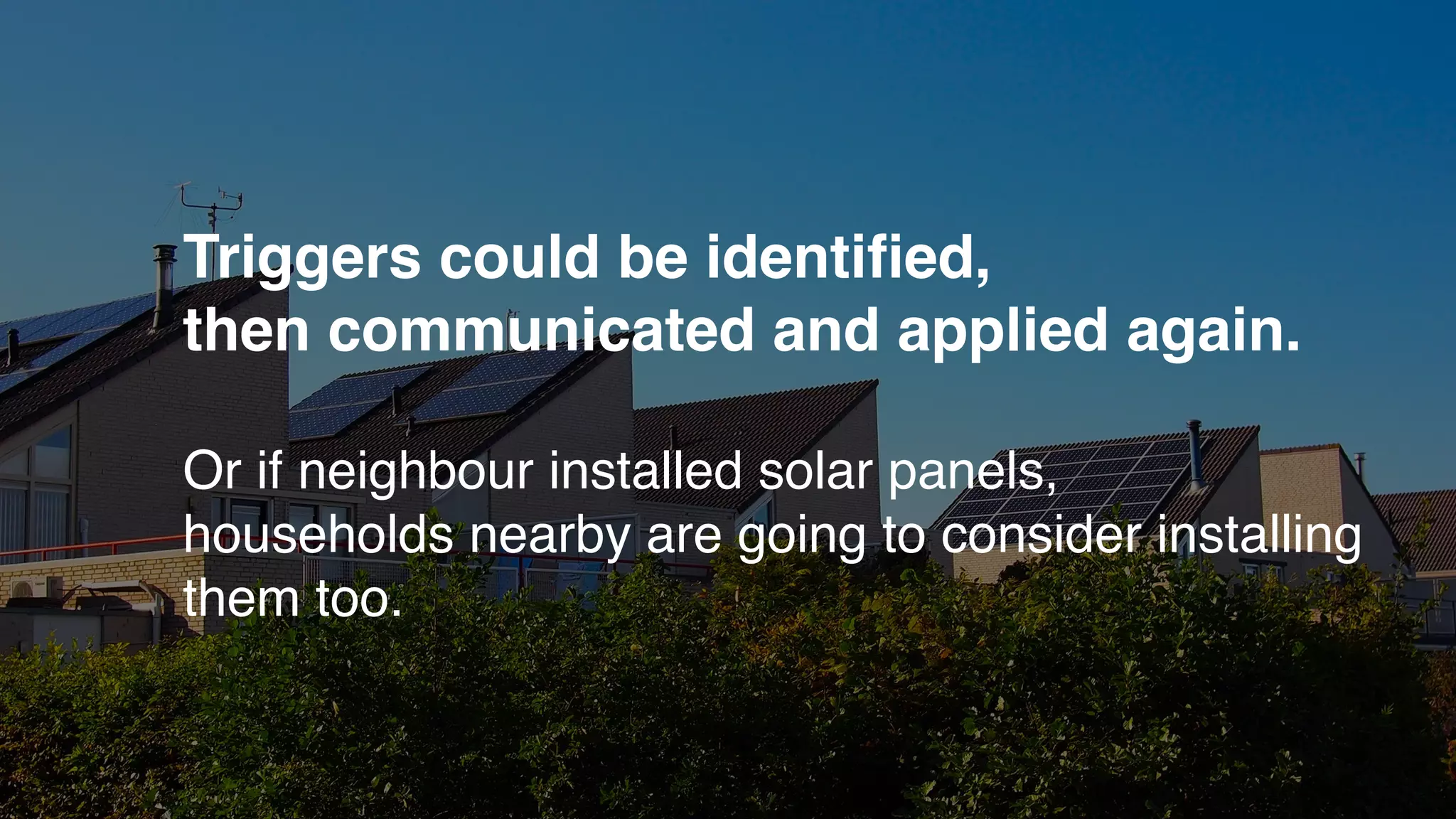
Triggers could be identified,
then communicated and applied again.
Or if neighbour installed solar panels,
households nearby are going to consider installing
them too.
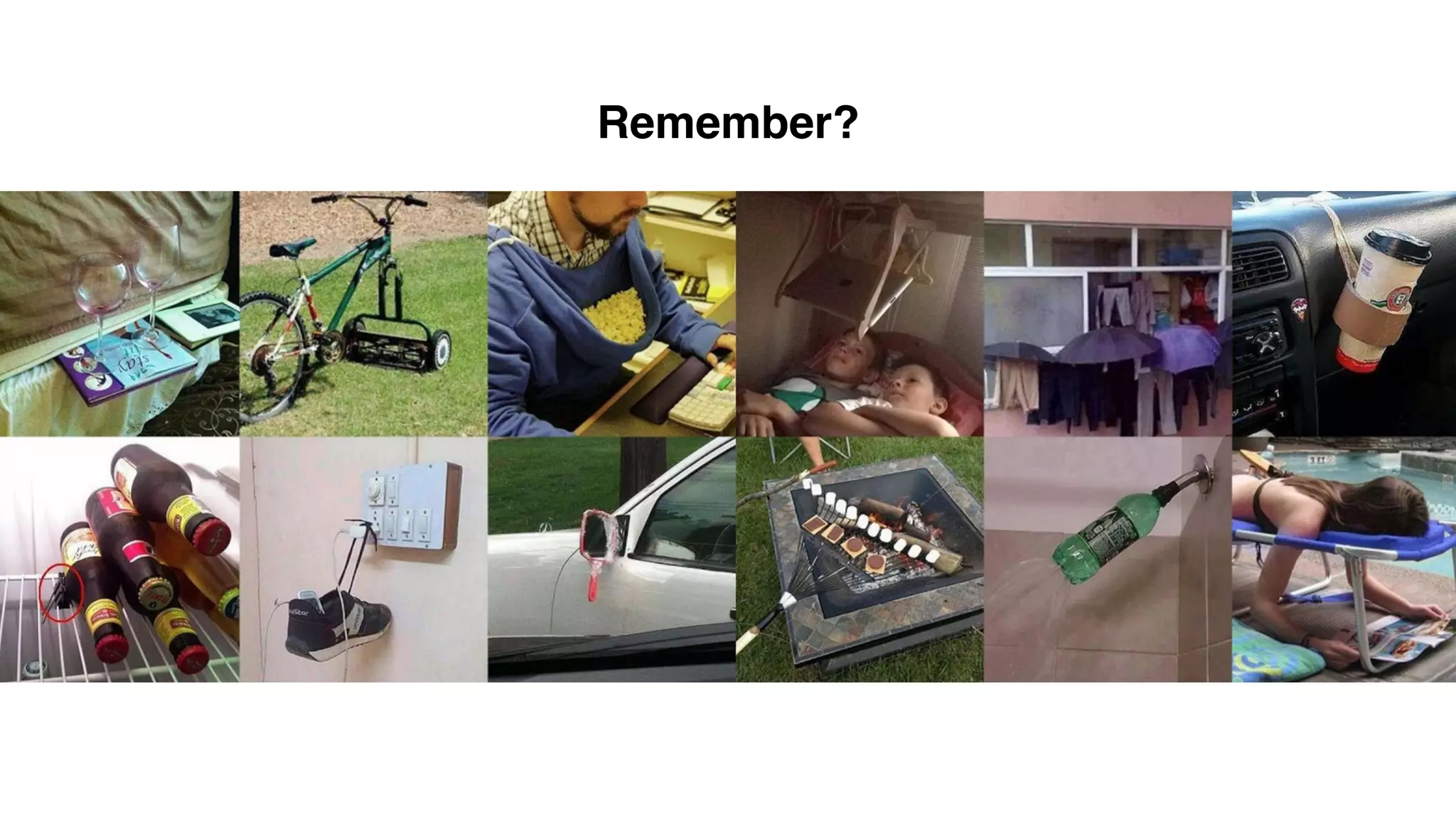
It’s usually the same done differently,
or new done in a familiar way.
Remember?
Be smarter than that.
Find a better solution that still fits them.
Design experiments to prove
that customers want your product
and it’s worth paying for.
We want to improve people’s lives...
but with a business model around it.
Less discussion, get the data.
The Lean Startup way
Fast & Scientific.
Help?
daria@ideahackers.nl
@epicantus
IdeaHackers.nl
Solutioncanvas.com
Supporton.io
+31617730294

The Lean Startup way or how to design solutions that will be adopted

  • 1.
    The Lean Startupway or how to design solutions that will be adopted Daria Nepriakhina @epicantus daria@ideahackers.nl Solutioncanvas.com | Ideahackers.nl | Supporton.io
  • 2.
    Mentoring at HelpedOwn initiatives over 500 free stock photos CC0
  • 3.
    What will youlearn? Lean Startup principles Problem-Solution fit Getting soft data Problem validation Solution validation Examples
  • 6.
    Be (stay) relevantto your customer - customer state changes; - problem and solution evolve overtime; - market shifts; - audience switches to other channels; - and ways of doing things.
  • 7.
    Understand the existingexperience to design for improvement of people’s lives
  • 8.
    If you don’tknow your customer well then 99% of your assumptions are wrong.
  • 9.
    Sounds familiar? “I thinkthey need something like…” “I think we should improve this.” “I think they won’t like this design.” “They will love this offering!” Assumptions. Get the proof.
  • 10.
  • 11.
    Finding Problem-Solution fit islike Tetris. 1. Spot the gap. 2. Find the matching piece (solution) 3. Fit it (to customer state) & charge for it Repeat, Improve, Scale.
  • 12.
  • 13.
    The Search for abusiness The Growth of a business
  • 14.
  • 15.
    Understand the person and the problem Refineyour understanding of the person and the problem Improve your solution Prototype Measure Create Solutions Test in context Learn
  • 16.
  • 17.
    Extract assumptions. How criticalare they for your business to survive? Ask yourself: Why would this business fail after launch? What is the riskiest in this plan? How can we test it before we make serious commitments and spend development time?
  • 18.
    Lean Startup Business-hypothesis drivenexperimentation Continuous feedback loop Iterative product releases Validated Learning + Shared understanding
  • 19.
  • 20.
    Reduce discussions. Collect proofto support business decisions. Learn something new about your customers (every week)
  • 21.
    Process. Start small. Keepthe schedule. MON TUE WED THU FRI SAT SUN
  • 22.
    Monday - ExperimentDay We believe that… will result in… and we measure success by …. Set the experiment to collect data. MON TUE WED THU FRI SAT SUN
  • 23.
    Friday - CustomersDay We believe that ... they can use this / have a problem with… / can understand what we show... etc. Get out of the building to collect real stories. MON TUE WED THU FRI SAT SUN
  • 24.
    Discovery & Delivery hypothesis-driven validatedlearning iterative releases value to the customer continuous feedback loop shared understanding within the team
  • 25.
    Lean Startup is aprocess of continuous discovery of what should be built and why.
  • 26.
    Lean Startup a processof many small steps where ... An experiment is the smallest test we can devise to prove a hypothesis in product discovery.
  • 27.
  • 33.
    Your goal is: tounderstand customer’s problem and find a solution to it worth paying for*, so that you can repeat and scale this process. How to get to Problem-Solution fit? *productizing
  • 34.
    Data tells youwhat is wrong, customer interviews will help you to understand why.
  • 36.
    Think in scenarios. Aperson stumbles upon a trigger that fuels problem awareness, which causes specific behavior and results in an outcome. Learn how people feel about the problem, solving it now and paying for it X much.
  • 37.
    1. CUSTOMER SEGMENT(S) +ITS INTENSITY2. PROBLEMS / PAINS 3. TRIGGERS TO ACT 6. CUSTOMER LIMITATIONS 8. CHANNELS of BEHAVIOR 5. AVAILABLE SOLUTIONS 10. YOUR SOLUTION 7. BEHAVIOR Problem-Solution fit canvas is licensed under a Creative Commons Attribution-NonCommercial-NoDerivatives 4.0 International License. Designed by Daria Nepriakhina / IdeaHackers.nl - we tailor ideas to customer behaviour and increase solution adoption probability. Problem-Solution Fit canvas Purpose / Vision Version: 9. PROBLEM ROOT / CAUSE+ ITS FREQUENCY ONLINE OFFLINE4. EMOTIONS BEFORE / AFTER CS CL AS RC BEPR SLTR CH EM EG. BUDGET, DEVICES PROS & CONS .NL If you are working on existing business - write down existing solution first, fill in the canvas and check how much does it fit the reality. If you are working on a new business proposition, then keep it blank until you fill in the canvas and come up with a solution that fits within customer limitations, solves a problem and matches customer behavior . Who is your customer? eg. working parents of 0-5 y.o. kids What limits your customers to act when problem occurs? Spending power, budget, no cash in the pocket? Network connection? Available devices? Which solutions are available to the customer when he/she is facing the problem? What had he/she tried in the past? Pros & cons? Which problems do you solve for your customer? There could be more than one, explore different sides. eg. existing solar solutions for private houses are not considered a good investment (1). What is the root of every problem from the list? eg. People think that solar panels are bad investment right now, because they are too expensive (1.1), and possible changes to the law might influence the return of investment significantly and diminish the benefits (1.2). What does your customer do about / around / directly or indirectly related to the problem? eg. directly related: tries different “green energy” calculators in search for the best deal (1.1), usually chooses for 100% green provider (1.2). indirectly related: volunteering work (Greenpeace etc) What triggers customer to act? eg. seeing their neighbor installing solar panels (1.1), reading about innovative, more beautiful and efficient solution (1.2) How often does it happen? How often does this behavior happen? Extract channels from Behavior block Extract channels from Behavior block (and use it for customer development)Which emotions do people experience before/after this problem is resolved? Use it in your communication strategy. eg. frustration (can’t afford it) > boost, feeling smart, proud being an example for others (made a smart purchase) DefineCS,fitintoCLFocusonPR,tapintoBE,understandRC ExploreAS,differentiateFocusonPR,tapintoBE,understandRC IdentifystrongTR&EM Extractonline&offlineCHofBE
  • 38.
    CUSTOMER STATE FIT findthe right customer Customer segment(s) Who is your customer? eg. working parents of 0-5 y.o. kids
  • 39.
    CUSTOMER STATE FIT findthe right customer Customer limitations & barriers Spending power, budget? No cash in the pocket? Network connection? Available devices?
  • 40.
    CUSTOMER STATE FIT findthe right customer Available solutions Which solutions are available? What has he/she tried in the past? Pro’s and cons?
  • 41.
    PROBLEM-BEHAVIOR FIT find theright problem supported by behavior Problems / Pains Which problem do you solve for your customer? How often it occurs?
  • 42.
    PROBLEM-BEHAVIOR FIT find theright problem supported by behavior Root / Cause Why is it a problem? What is the cause of every problem from the list? i.e. people think that solar panels are a bad investment right now. Why? Because they are expensive (1), and possible changes in the law might influence the return of investment significantly and diminish the benefits (2).
  • 43.
    PROBLEM-BEHAVIOR FIT find theright problem supported by behavior Related behavior What your customer does directly or indirectly related to the problem? Where does he/she go to complain? Where does he/she look for advice and help?
  • 44.
    CHANNEL-COMMUNICATION FIT find theright channel to trigger your customers Triggers to act What triggers customer to act? i.e. seeing their neighbour installing solar panels.
  • 45.
    CHANNEL-COMMUNICATION FIT find theright channel to trigger your customers Emotions Which emotions do people feel before / after this problem is resolved? Use it in your communication strategy and visuals.
  • 46.
    CHANNEL-COMMUNICATION FIT find theright channel to trigger your customers Channels of Behavior Where online does this behavior happen? Extract online and offline channels from Behavior block. These are your channels to test.
  • 47.
    1. Find theright customer Customers told us it’s great. We were betting on “desperate housewives” and instead got their husbands!
  • 48.
    2. Find theright problem People think that networking at conferences is terrible. What is the real reason? They can’t pre-select and meet the right people for business.
  • 49.
    3. Find theright channel & trigger Based on feedback “Oh wow. This looks as if Apple would have started to manufacture solar panels.” Tailored to IOS users with the “super smart roof” offering that makes your neighbours envy you (trigger).
  • 50.
    Customer interviews Get outof the building because there are no answers to be found inside.
  • 51.
  • 52.
    People are solazy. We tend to go for the easiest and more familiar solution. Simplify!
  • 54.
  • 55.
    What is importantto know? 1. Past behavior and related emotions regarding problem and current solution (collect stories). 2. How often does this problem occur? 3. What causes the biggest stress? Why? (it’s all about details!) 4. How did they solve it the last time? 5. What were the emotions related to the problem and applied solution?
  • 60.
    You can comeup with multiple solutions to one problem. The only way to know which one fits the problem best is to set an experiment. We believe that… will result in… and we measure success by …. Set the experiment to collect data.
  • 61.
    Claimed behavior “How oftendo you go to gym?” Actual behavior “How often have you been to gym last week?” vs.
  • 62.
  • 63.
    In business.. PEOPLE areyour subject to study.
  • 65.
    Closed or openposition?
  • 66.
  • 67.
  • 68.
  • 69.
  • 70.
    Lean Startup isnot just a process. It’s a mindset.
  • 71.
    Requirements = Assumptions Weknow = We Believe Let’s build it = Let’s test it! Goal is to learn, not to prove you are right. First nail it - then scale it.
  • 73.
    When people spendtime on something, they care. When the problem is not supported by behavior, it’s not a problem worth solving.
  • 74.
    What people currentlyget in comparison to what they could get with your product or service? Is this difference worth paying for?
  • 75.
    They hire yourproduct to do a job. What are the other ways to get this job done? Why is your way - better?
  • 76.
    Existing customer behaviorsuggests which channels to use online, offline. & for customer development.
  • 77.
    Small but frequentinconvenience turns into a big pain in your customer’s eyes over time. Umbrella is a perfect example.
  • 78.
    Educate your customerson the problem that makes them freeze in indecision. Or “I’m always late with taxes, because I don’t know how to do it.”
  • 79.
    Triggers could beidentified, then communicated and applied again. Or if neighbour installed solar panels, households nearby are going to consider installing them too.
  • 80.
    It’s usually thesame done differently, or new done in a familiar way.
  • 81.
  • 82.
    Be smarter thanthat. Find a better solution that still fits them. Design experiments to prove that customers want your product and it’s worth paying for.
  • 83.
    We want toimprove people’s lives... but with a business model around it.
  • 84.
    Less discussion, getthe data. The Lean Startup way Fast & Scientific.
  • 85.