stands for
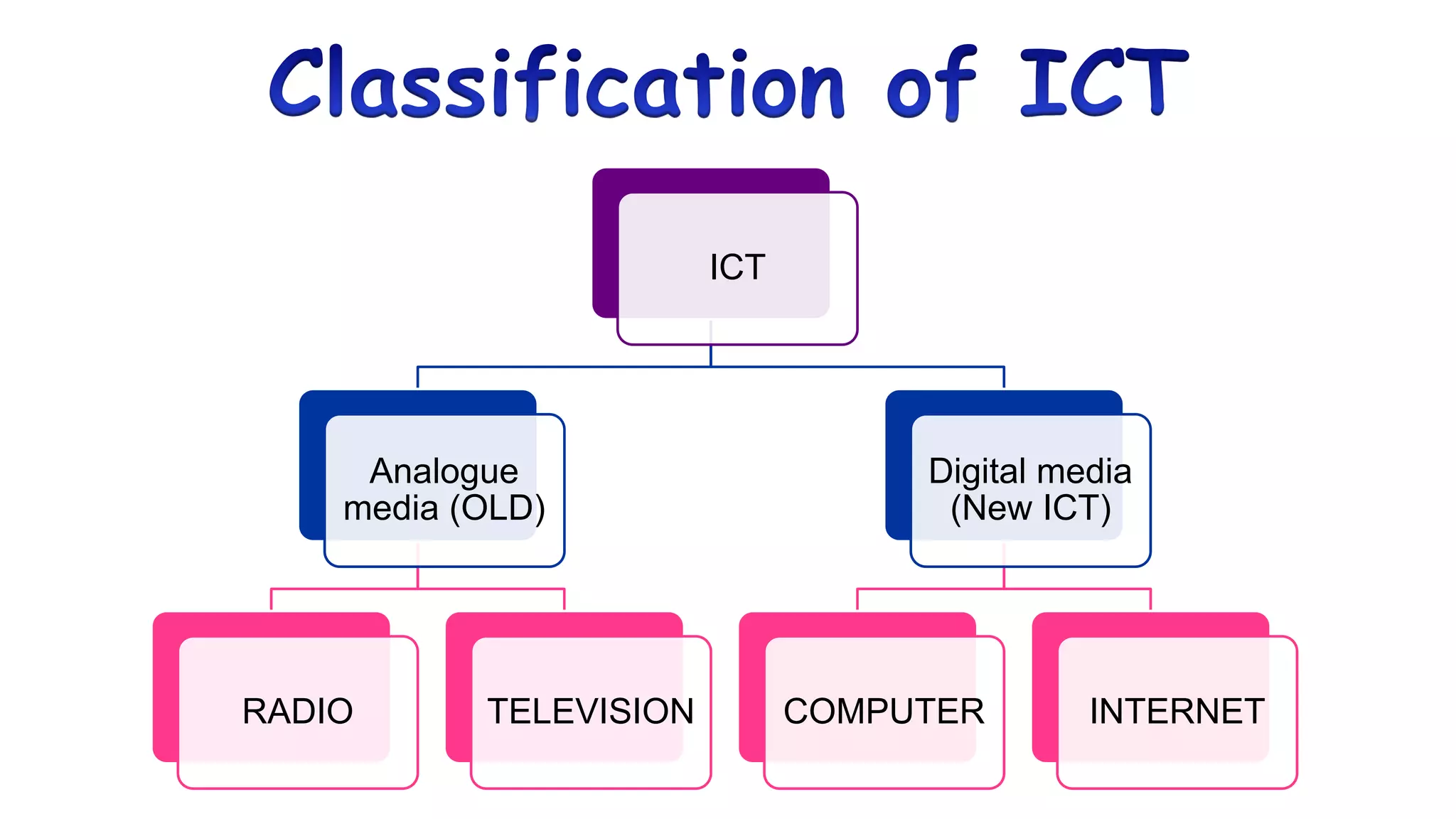
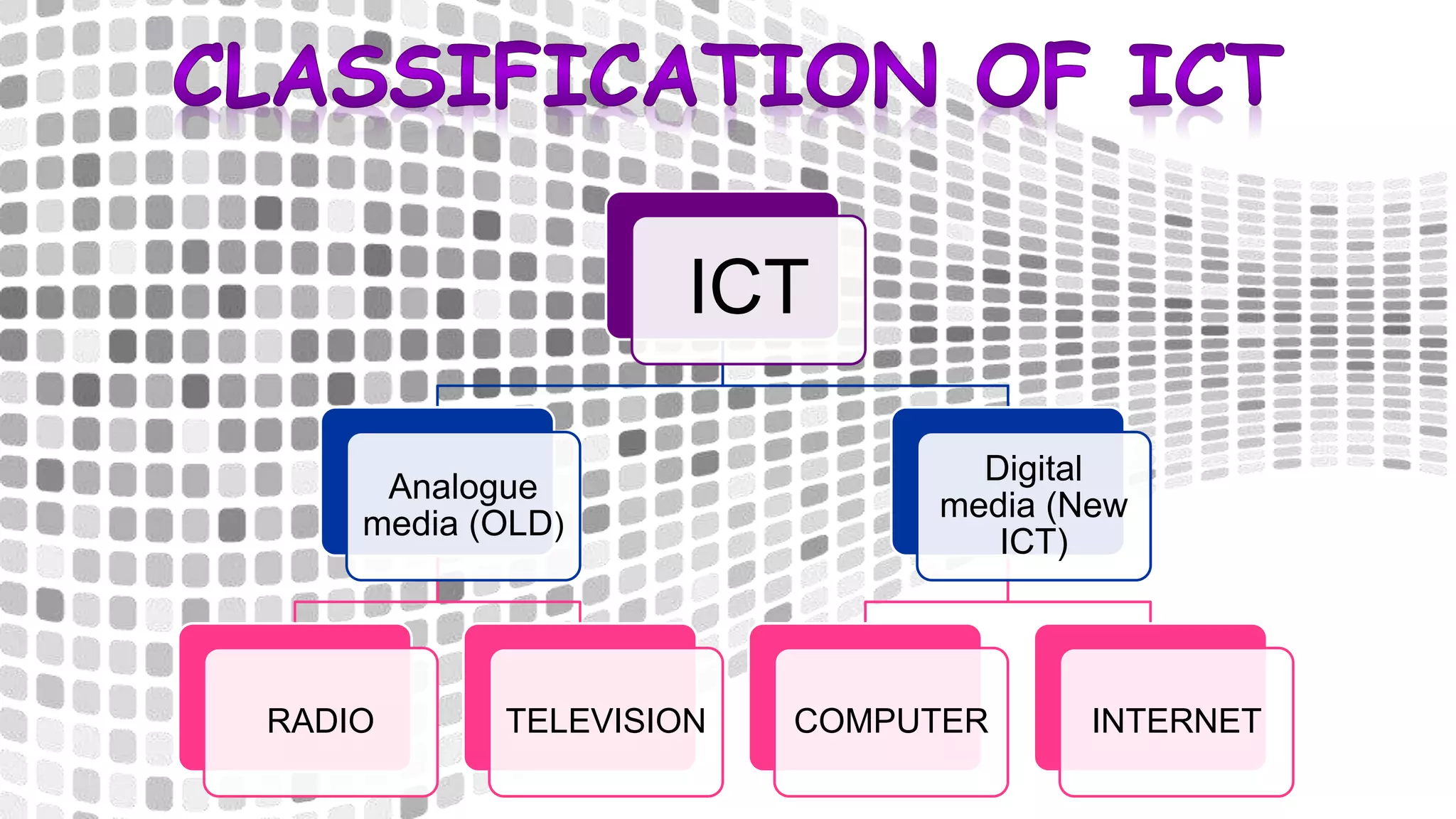
ICT
Analogue
media (OLD)
RADIO TELEVISION
Digital media
(New ICT)
COMPUTER INTERNET
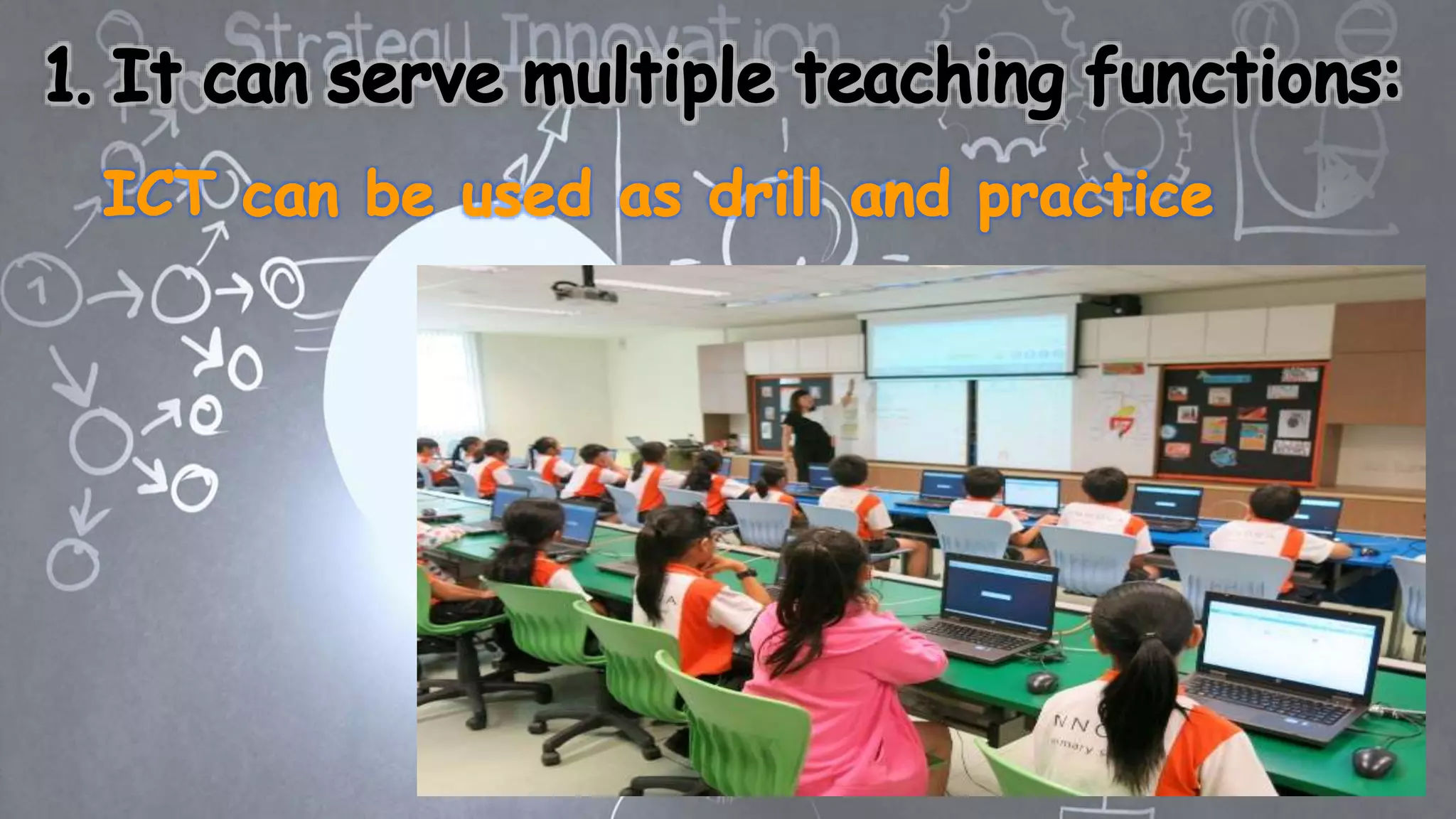
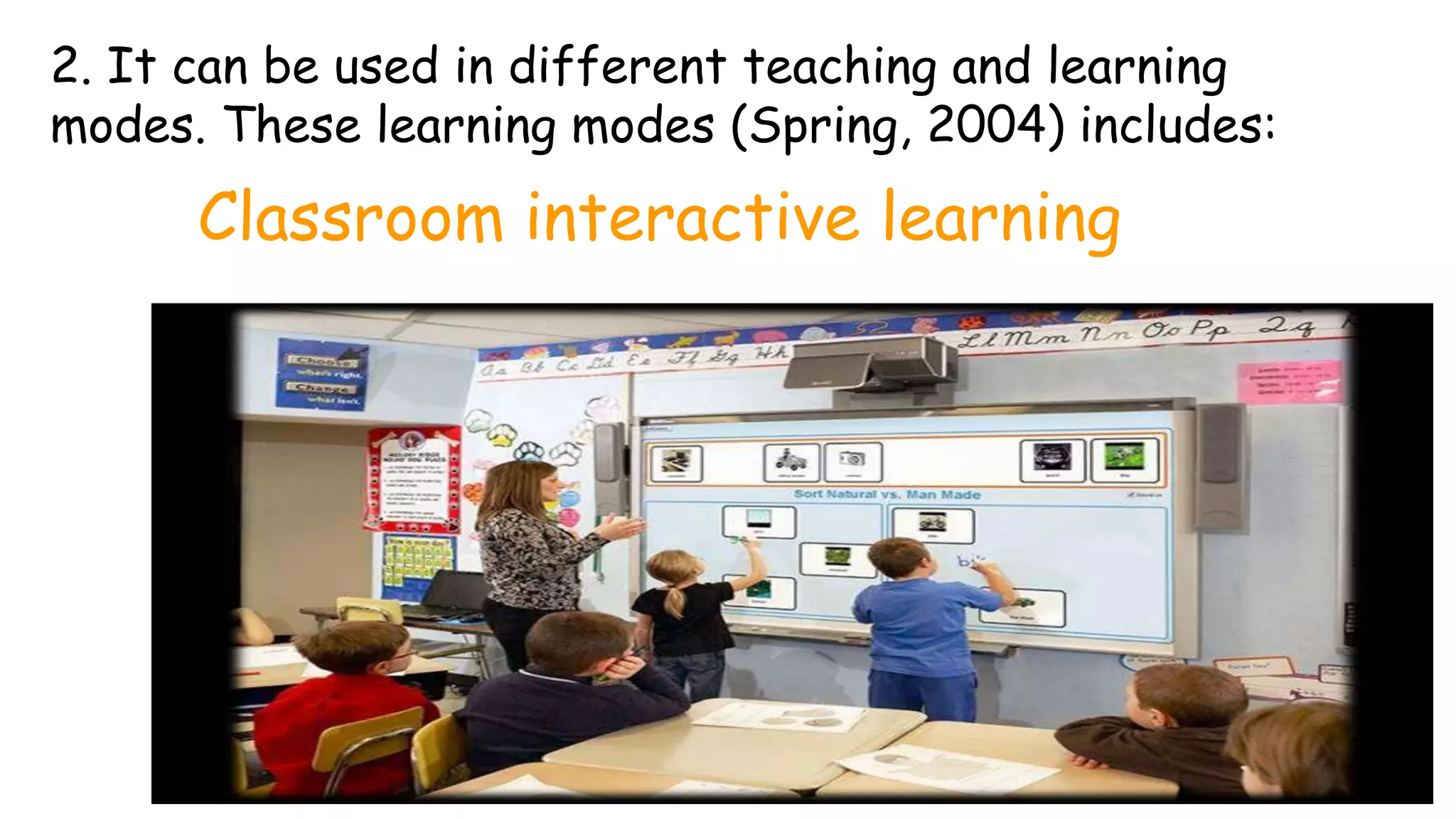
Classroom interactive learning
2. It can be used in different teaching and learning
modes. These learning modes (Spring, 2004) includes:
ICT
Analogue
media (OLD)
RADIO TELEVISION
Digital
media (New
ICT)
COMPUTER INTERNET
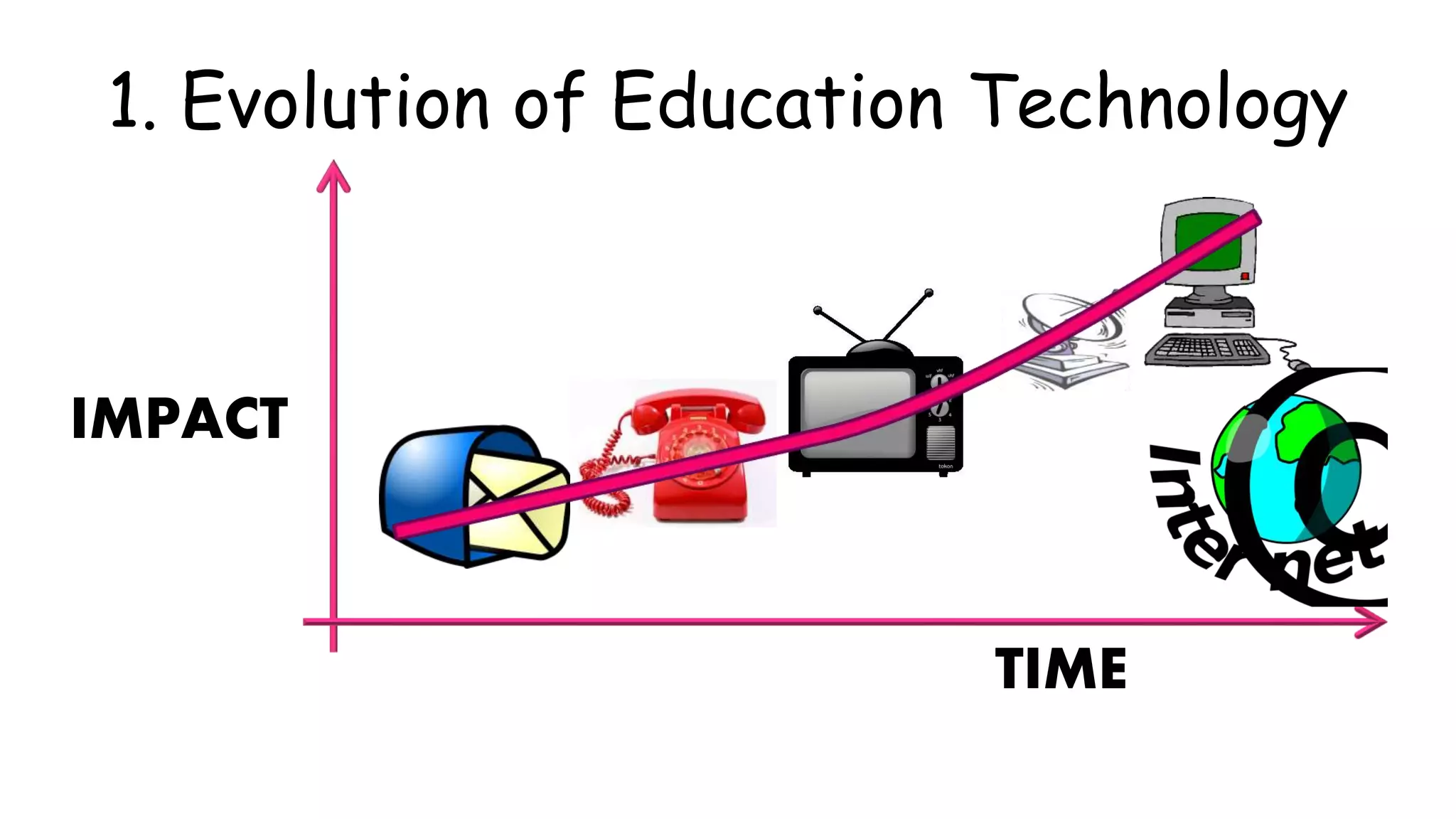
1. Evolution of Education Technology
IMPACT
TIME
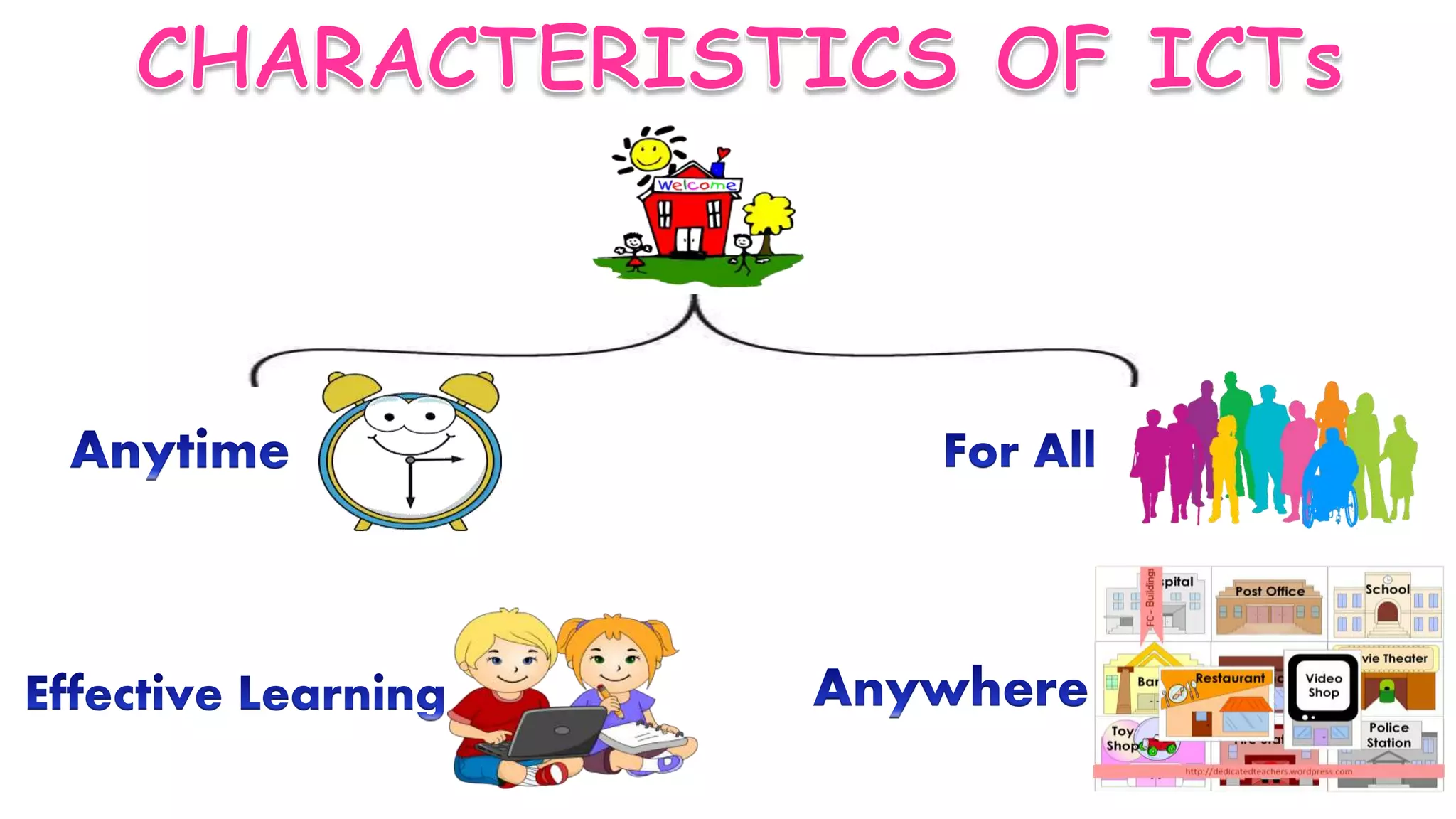
4. Enhance reach for equal educational
opportunities
—Providing equal and same education
to all irrespective of their status and
location.
—All time availability.
—Creating a mobile education system.
—Example: through distance education.
Traditional & E-Learning Approaches
Traditional Classroom E-Learning
Classroom  Physical-limited size
 Synchronous
 Unlimited
 Anytime, anywhere
Content  PowerPoint/transparenc
y/etc.
 Textbooks/Library
 Notes
 Lectures
 Multimedia/Simulation
 Digital Library
 On demand
Personalisation  One Learning path  Learning path and pace
determined by Learner.
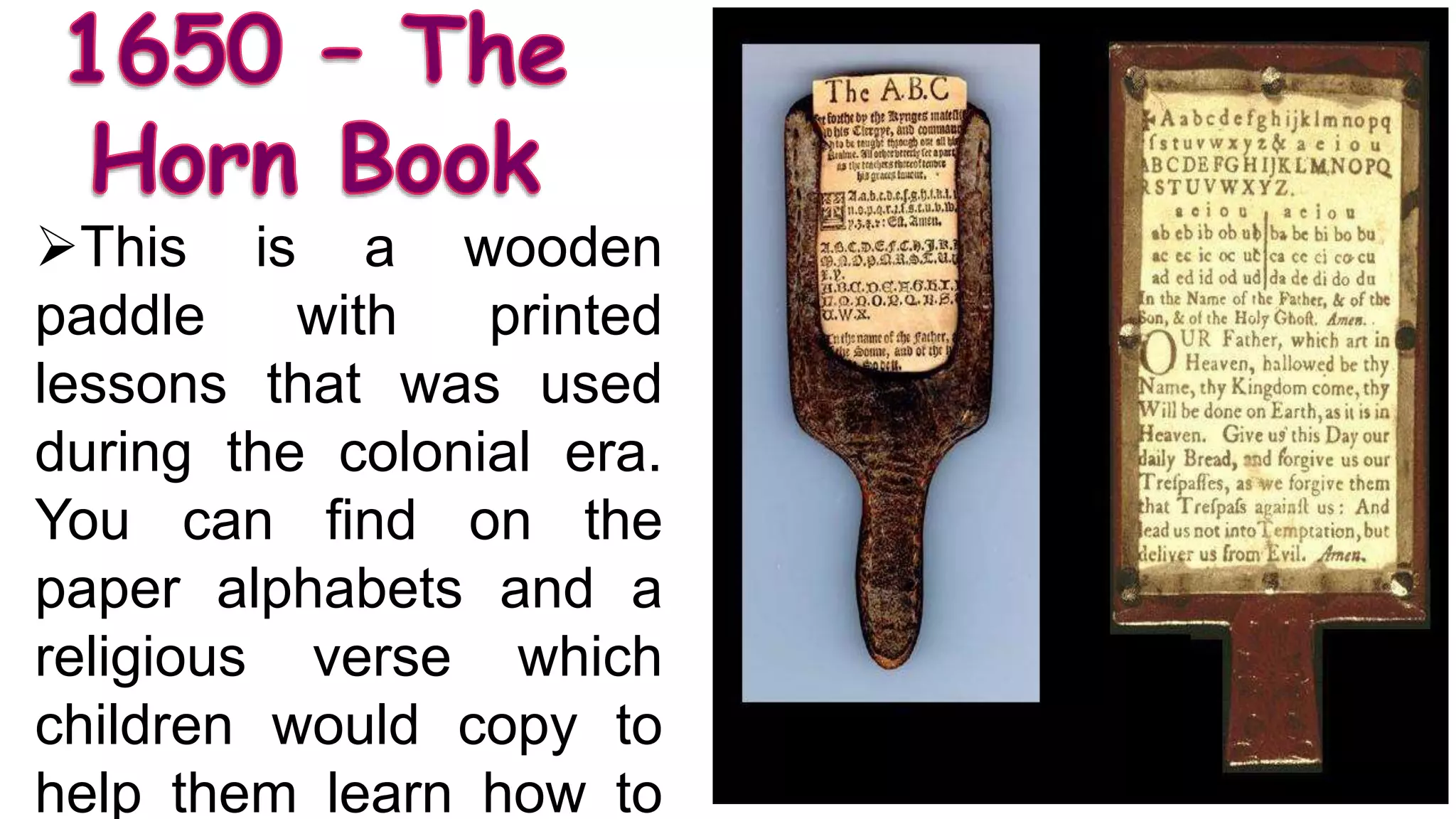
This is a wooden
paddle with printed
lessons that was used
during the colonial era.
You can find on the
paper alphabets and a
religious verse which
children would copy to
help them learn how to

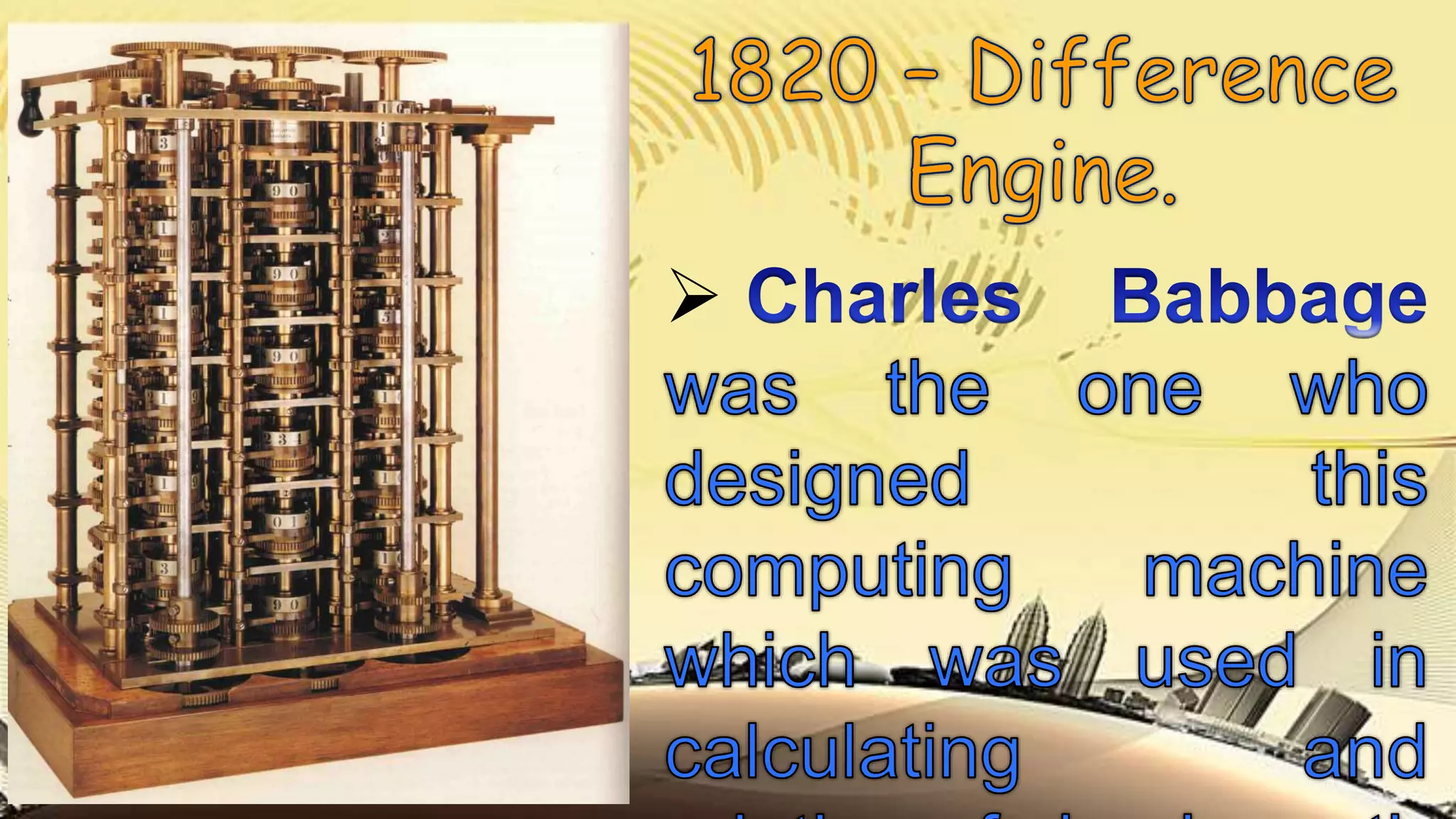
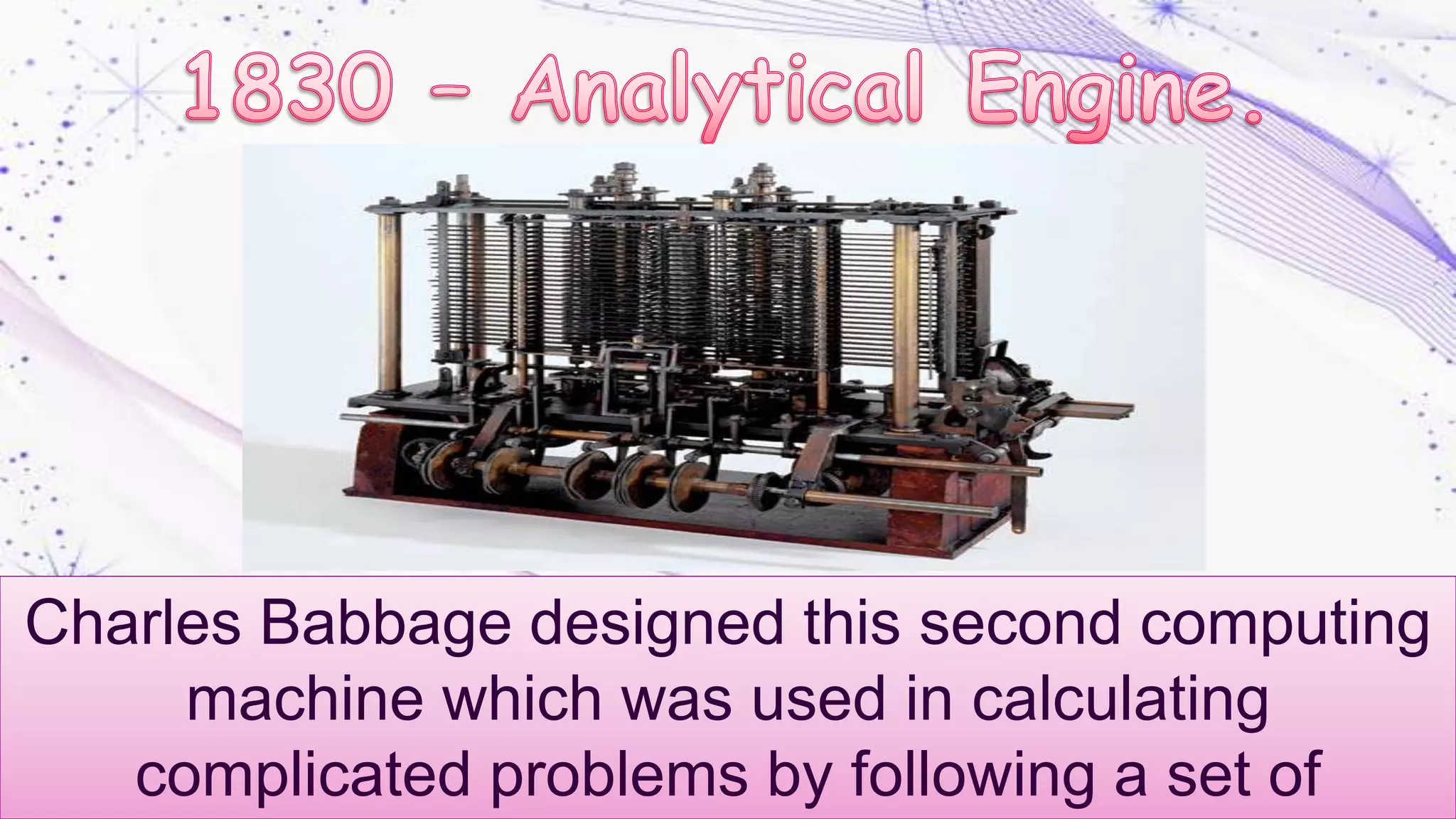
Charles Babbage designed this second computing
machine which was used in calculating
complicated problems by following a set of
Ballpoint pen writing.
Streaks of ink are
visible on the ball,
indicating the
Mimeograph machines made copies that
can be distributed.
1953 – IBM
– Reading Accelerator
The reading accelerator was a simple
device designed to help students read
more efficiently.
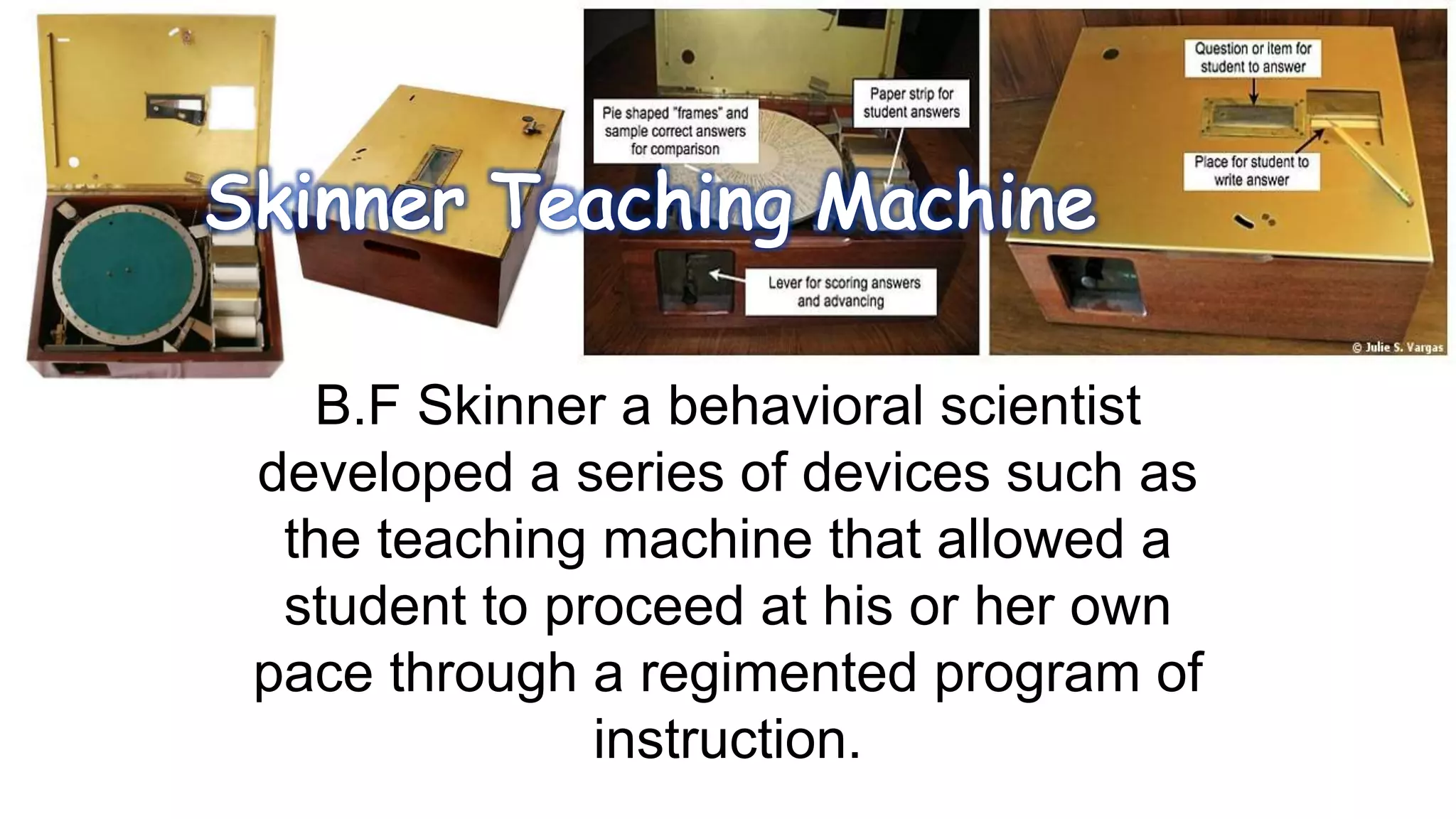
B.F Skinner a behavioral scientist
developed a series of devices such as
the teaching machine that allowed a
student to proceed at his or her own
pace through a regimented program of
instruction.
Using this, there were more than 50
channels of TV which included
educational programming that aired
across the country.
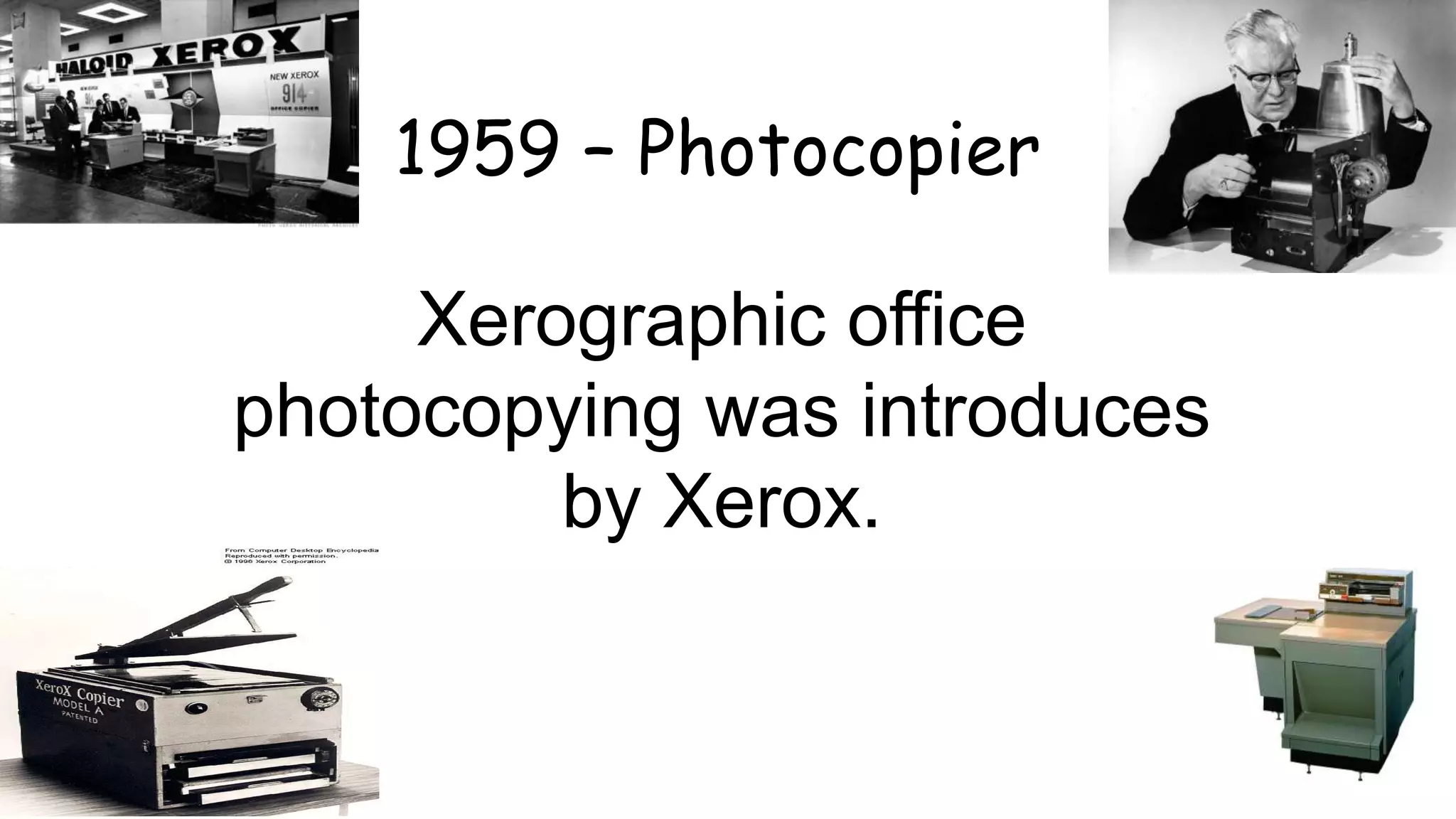
1959 – Photocopier
Xerographic office
photocopying was introduces
by Xerox.
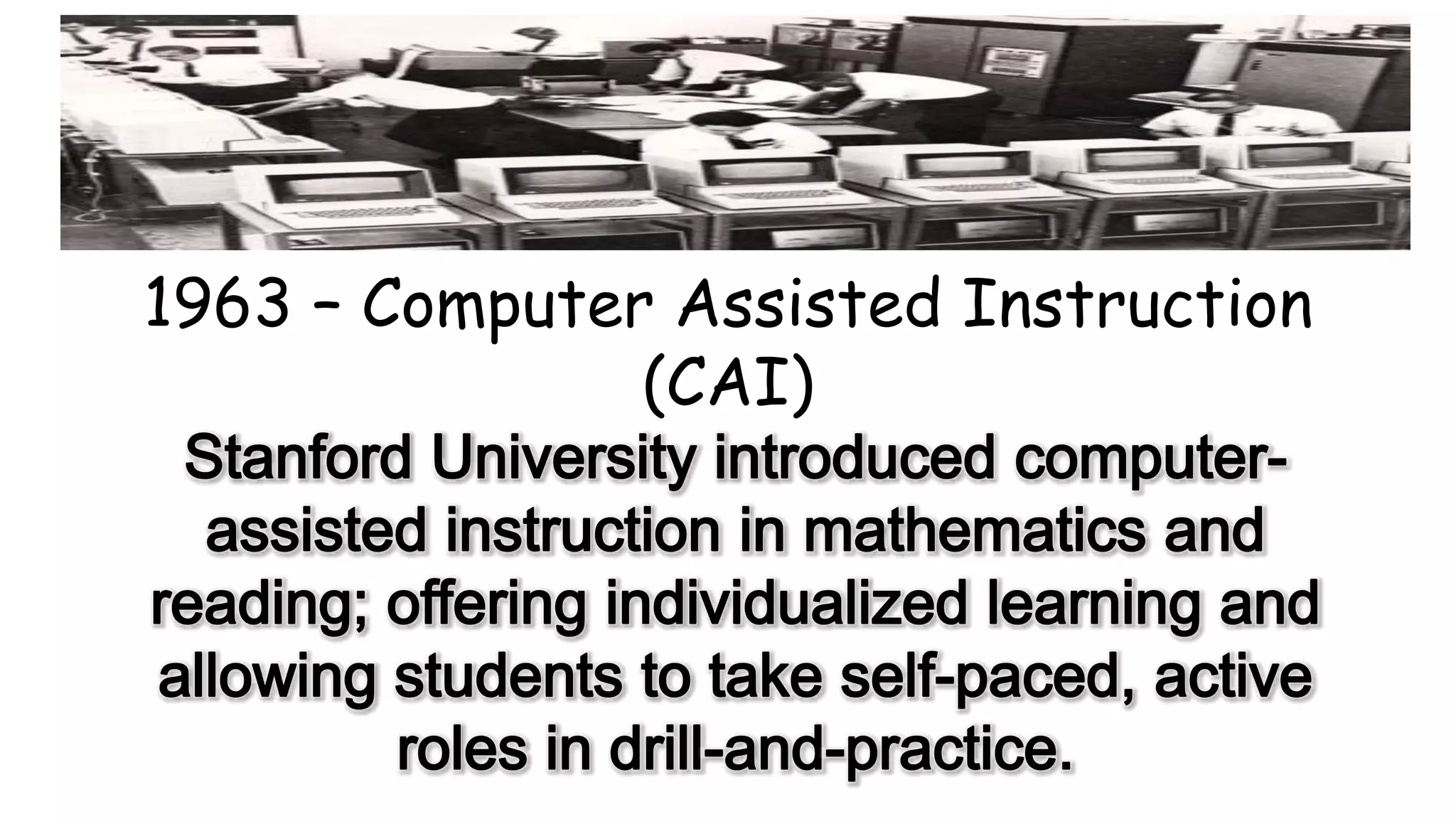
1963 – Computer Assisted Instruction
(CAI)
Mouse
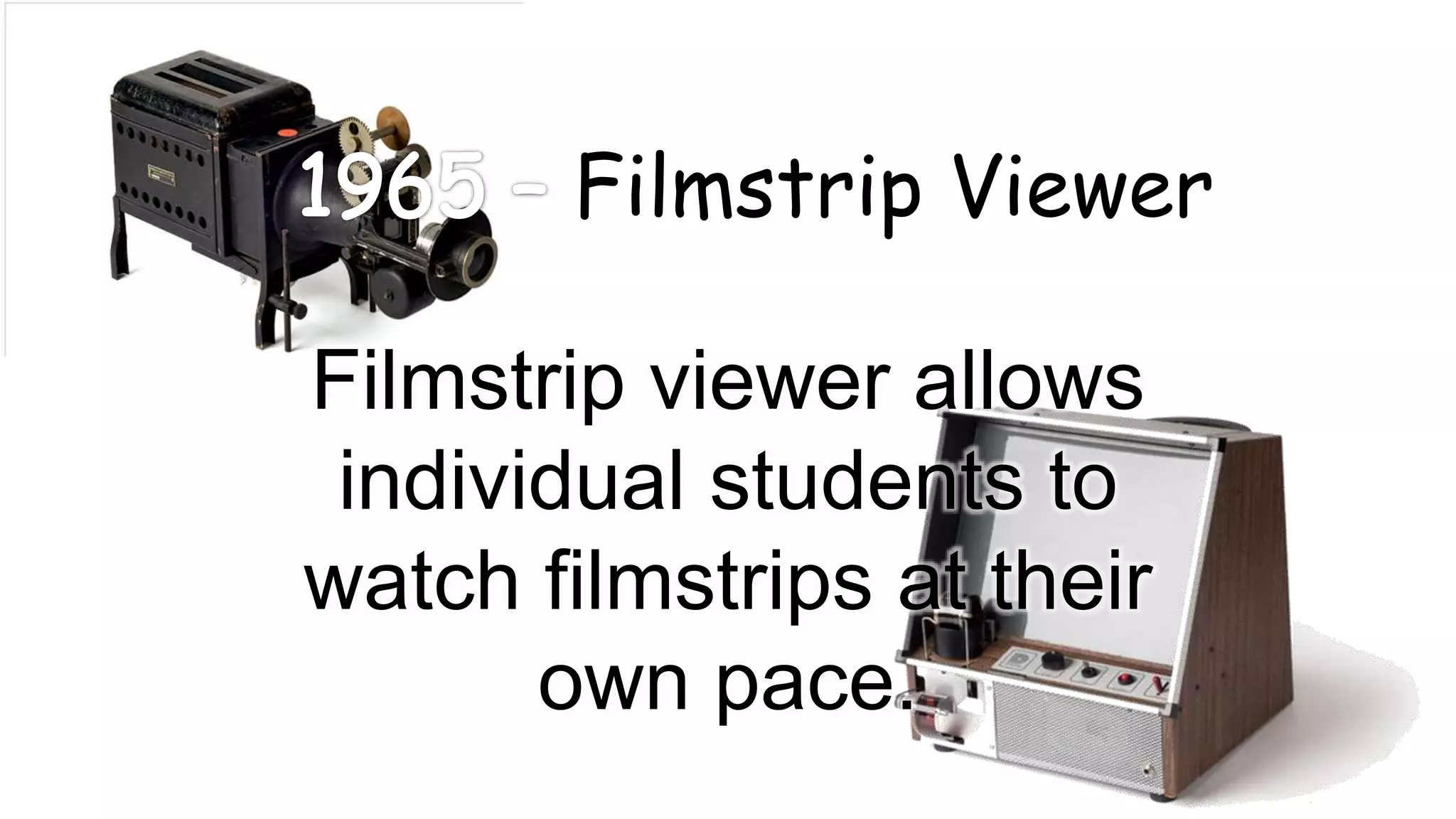
Filmstrip Viewer
Filmstrip viewer allows
individual students to
watch filmstrips at their
own pace.
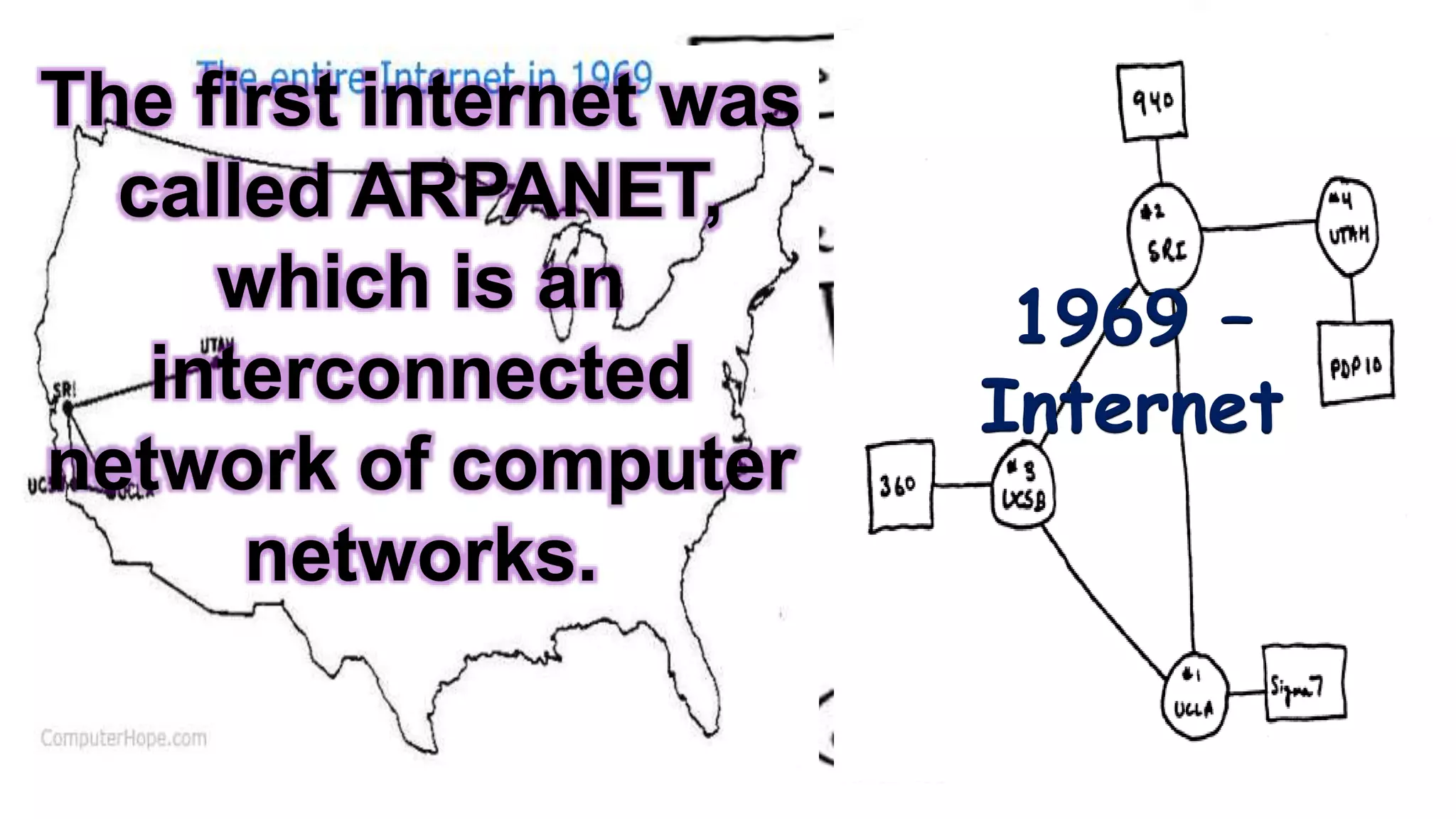
The first internet was
called ARPANET,
which is an
interconnected
network of computer
networks.
The Apple II Computer
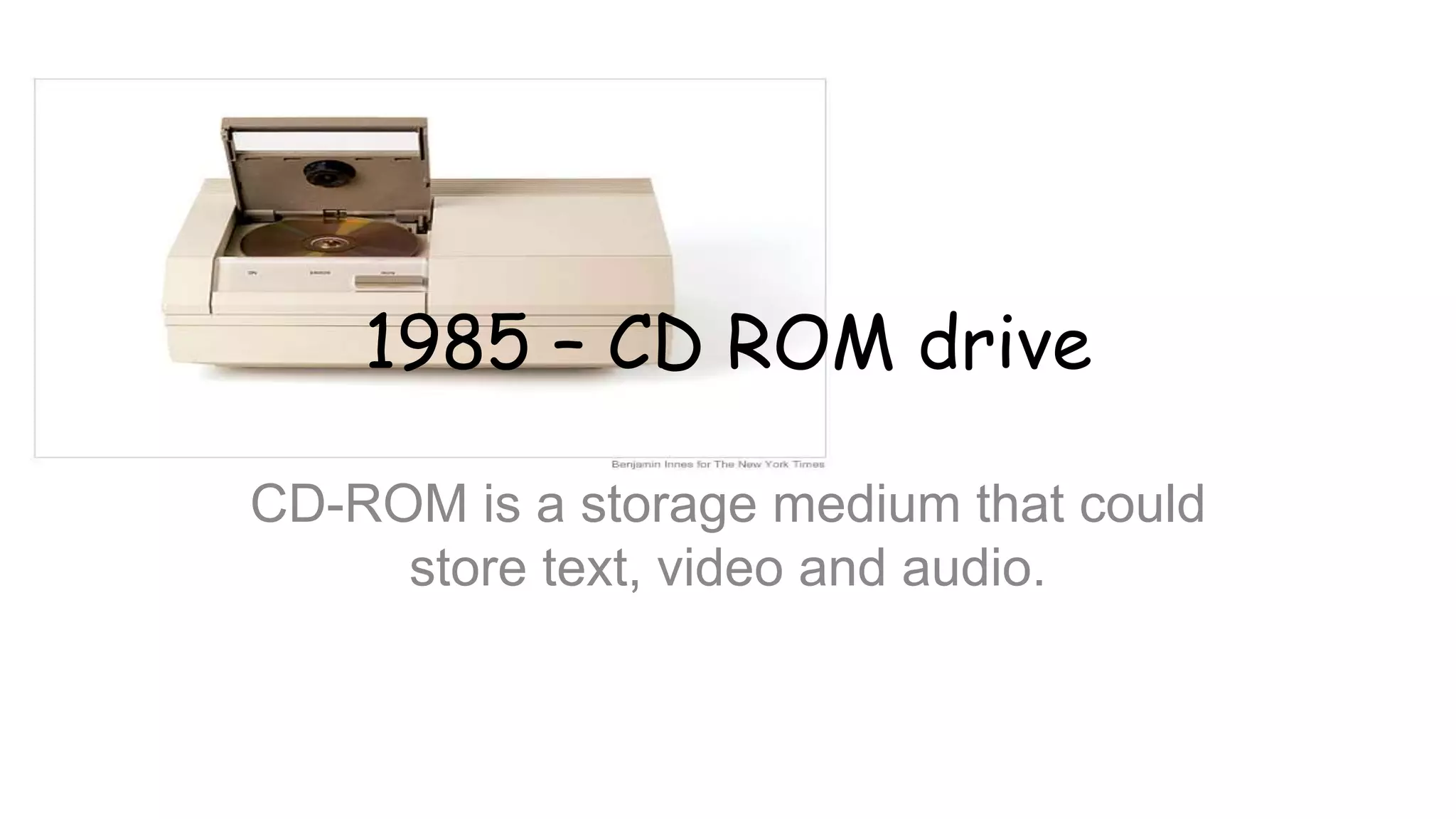
1985 – CD ROM drive
CD-ROM is a storage medium that could
store text, video and audio.
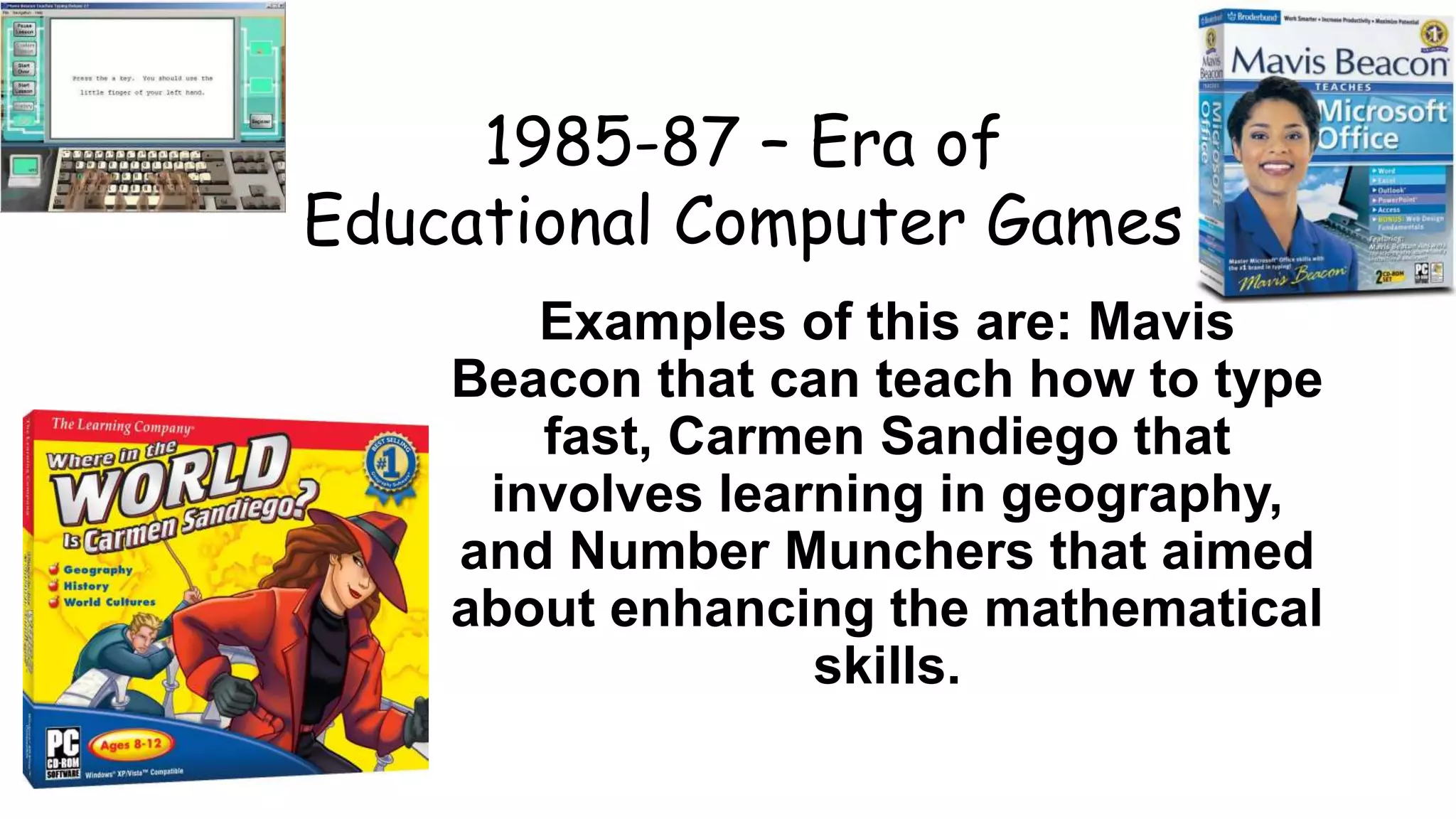
1985-87 – Era of
Educational Computer Games
Examples of this are: Mavis
Beacon that can teach how to type
fast, Carmen Sandiego that
involves learning in geography,
and Number Munchers that aimed
about enhancing the mathematical
skills.
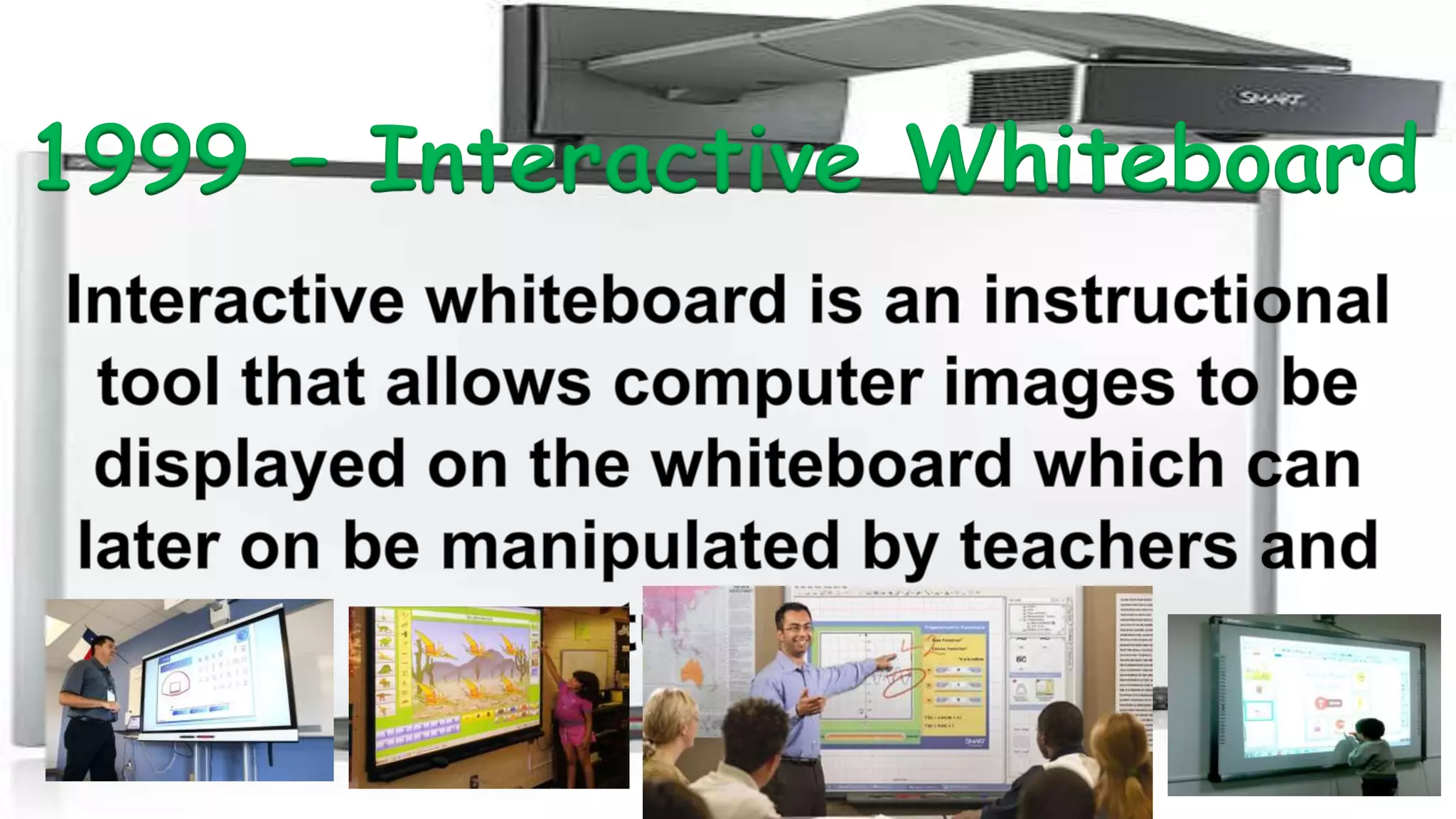
1999 – Interactive Whiteboard
The ICT and the Computers

The ICT and the Computers

  • 4.
  • 7.
    ICT Analogue media (OLD) RADIO TELEVISION Digitalmedia (New ICT) COMPUTER INTERNET
  • 12.
    Classroom interactive learning 2.It can be used in different teaching and learning modes. These learning modes (Spring, 2004) includes:
  • 18.
  • 20.
    1. Evolution ofEducation Technology IMPACT TIME
  • 23.
    4. Enhance reachfor equal educational opportunities —Providing equal and same education to all irrespective of their status and location. —All time availability. —Creating a mobile education system. —Example: through distance education.
  • 25.
    Traditional & E-LearningApproaches Traditional Classroom E-Learning Classroom  Physical-limited size  Synchronous  Unlimited  Anytime, anywhere Content  PowerPoint/transparenc y/etc.  Textbooks/Library  Notes  Lectures  Multimedia/Simulation  Digital Library  On demand Personalisation  One Learning path  Learning path and pace determined by Learner.
  • 30.
    This is awooden paddle with printed lessons that was used during the colonial era. You can find on the paper alphabets and a religious verse which children would copy to help them learn how to
  • 31.
  • 32.
    Charles Babbage designedthis second computing machine which was used in calculating complicated problems by following a set of
  • 43.
    Ballpoint pen writing. Streaksof ink are visible on the ball, indicating the
  • 44.
    Mimeograph machines madecopies that can be distributed.
  • 49.
  • 50.
    – Reading Accelerator Thereading accelerator was a simple device designed to help students read more efficiently.
  • 51.
    B.F Skinner abehavioral scientist developed a series of devices such as the teaching machine that allowed a student to proceed at his or her own pace through a regimented program of instruction.
  • 52.
    Using this, therewere more than 50 channels of TV which included educational programming that aired across the country.
  • 53.
    1959 – Photocopier Xerographicoffice photocopying was introduces by Xerox.
  • 54.
    1963 – ComputerAssisted Instruction (CAI)
  • 55.
  • 56.
    Filmstrip Viewer Filmstrip viewerallows individual students to watch filmstrips at their own pace.
  • 57.
    The first internetwas called ARPANET, which is an interconnected network of computer networks.
  • 64.
    The Apple IIComputer
  • 67.
    1985 – CDROM drive CD-ROM is a storage medium that could store text, video and audio.
  • 68.
    1985-87 – Eraof Educational Computer Games Examples of this are: Mavis Beacon that can teach how to type fast, Carmen Sandiego that involves learning in geography, and Number Munchers that aimed about enhancing the mathematical skills.
  • 76.