the eye and vision
sight

major sense

half our brain dedicated to vision

majority of computer output
the eye
what you can see
  pupil – the lens covering ‘hole’ into the eye
  iris – muscles to change lens shape


behind the scenes
  upside down image (lens inverts)
  cells to detect light (rods and cones)
  optic nerve – blind spot ... filling in
sensing light
     cones            rods
     central       peripheral
colour (3 kinds)   grey only
      detail       movement
   bright light     dim light
focus and attention
fovea
  • centre of vision
  • mainly cones
  • pretty small => need saccades

peripheral vision
  • mainly rods
  • detect movement => catch attention
onCue

intelligent ‘context sensitive’ toolbar
sits at side of the screen
watches clipboard for cut/copy
suggests useful things to do
  with copied date
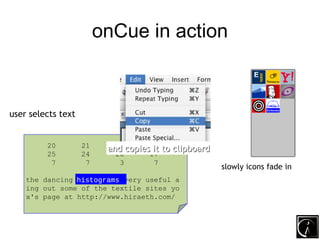
onCue in action
  • user selects text
  • and copies it to clipboard
  • slowly icons fade in


user selects text


         20         21
                          and copies23 to clipboard
                            22
                                     it
         25         24      20      17
          7          7      3        7
                                                      slowly icons fade in
    the dancing histograms very useful a
    ing out some of the textile sites yo
    x's page at http://www.hiraeth.com/
plus ...
two eyes
  – stereo vision
  – left & right visual fields ‘cross over’


two channels
  – old – rapid reactions and primitive responses
  – new – conscious vision
what we really see
sensation
  – direct impact of light on retina


perception
  – what we feel we see


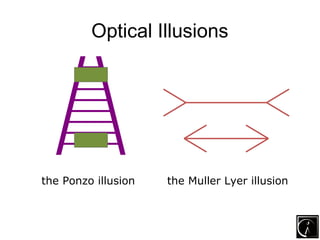
  not the same – optical illusions
Optical Illusions


the Ponzo illusion   the Muller Lyer illusion
fooled?
optical illusions
  – often odd eye positions, unusual images

perception
  – designed for the real world
  – our brain tries to ‘make sense’ of sensation

for design?

The Human: Eye and vision

  • 1.
  • 2.
    sight major sense half ourbrain dedicated to vision majority of computer output
  • 3.
    the eye what youcan see pupil – the lens covering ‘hole’ into the eye iris – muscles to change lens shape behind the scenes upside down image (lens inverts) cells to detect light (rods and cones) optic nerve – blind spot ... filling in
  • 4.
    sensing light cones rods central peripheral colour (3 kinds) grey only detail movement bright light dim light
  • 5.
    focus and attention fovea • centre of vision • mainly cones • pretty small => need saccades peripheral vision • mainly rods • detect movement => catch attention
  • 6.
    onCue intelligent ‘context sensitive’toolbar sits at side of the screen watches clipboard for cut/copy suggests useful things to do with copied date
  • 7.
    onCue in action • user selects text • and copies it to clipboard • slowly icons fade in user selects text 20 21 and copies23 to clipboard 22 it 25 24 20 17 7 7 3 7 slowly icons fade in the dancing histograms very useful a ing out some of the textile sites yo x's page at http://www.hiraeth.com/
  • 8.
    plus ... two eyes – stereo vision – left & right visual fields ‘cross over’ two channels – old – rapid reactions and primitive responses – new – conscious vision
  • 9.
    what we reallysee sensation – direct impact of light on retina perception – what we feel we see not the same – optical illusions
  • 10.
    Optical Illusions the Ponzoillusion the Muller Lyer illusion
  • 11.
    fooled? optical illusions – often odd eye positions, unusual images perception – designed for the real world – our brain tries to ‘make sense’ of sensation for design?