UNIT 1
THE HUMAN BODY
AND INTERACTION
All living things
carry out three - Nutrition
vital functions - Interaction
- Reproduction
Video: The 3 vital functions
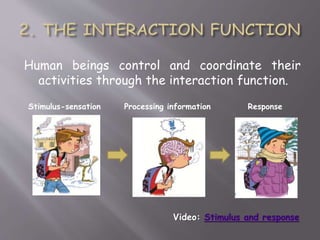
Human beings control and coordinate their
activities through the interaction function.
Stimulus-sensation Processing information Response
Video: Stimulus and response
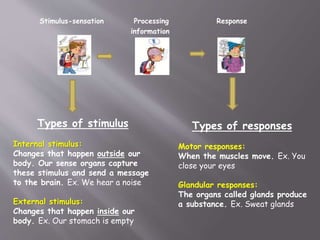
Stimulus-sensation Processing Response
information
Types of stimulus
Internal stimulus:
Changes that happen outside our
body. Our sense organs capture
these stimulus and send a message
to the brain. Ex. We hear a noise
External stimulus:
Changes that happen inside our
body. Ex. Our stomach is empty
Types of responses
Motor responses:
When the muscles move. Ex. You
close your eyes
Glandular responses:
The organs called glands produce
a substance. Ex. Sweat glands
Human beings receive information from the
environment and from our body through the
five senses:
- Smell - Sight
- Taste - Hearing
- Touch
Video: The five senses
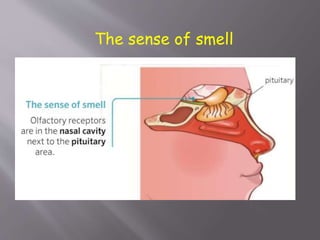
The sense of smell
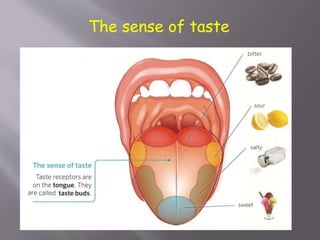
The sense of taste
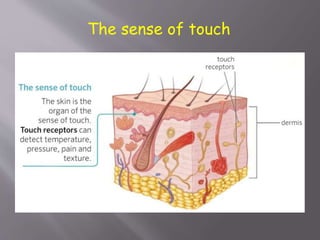
The sense of touch
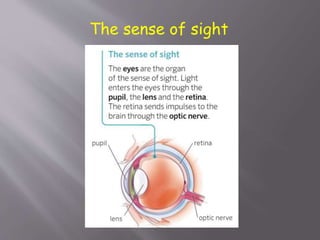
The sense of sight
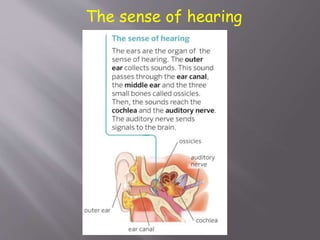
The sense of hearing
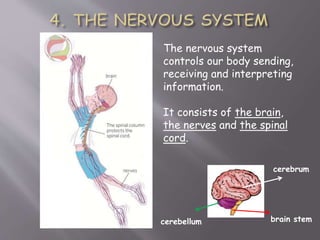
The nervous system
controls our body sending,
receiving and interpreting
information.
It consists of the brain,
the nerves and the spinal
cord.
cerebrum
cerebellum brain stem
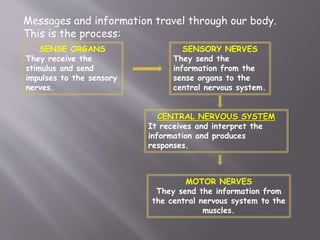
SENSE ORGANS
They receive the
stimulus and send
impulses to the sensory
nerves.
SENSORY NERVES
They send the
information from the
sense organs to the
central nervous system.
CENTRAL NERVOUS SYSTEM
It receives and interpret the
information and produces
responses.
MOTOR NERVES
They send the information from
the central nervous system to the
muscles.
Messages and information travel through our body.
This is the process:
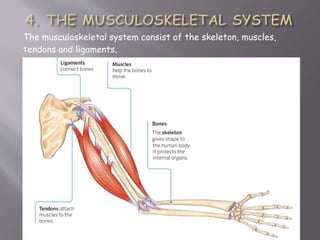
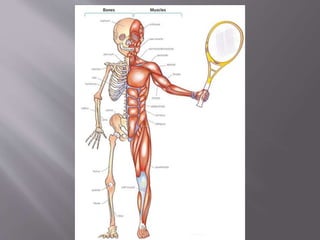
The musculoskeletal system consist of the skeleton, muscles,
tendons and ligaments.
THE HUMAN BODY AND INTERACTION

THE HUMAN BODY AND INTERACTION

  • 1.
    UNIT 1 THE HUMANBODY AND INTERACTION
  • 2.
    All living things carryout three - Nutrition vital functions - Interaction - Reproduction Video: The 3 vital functions
  • 3.
    Human beings controland coordinate their activities through the interaction function. Stimulus-sensation Processing information Response Video: Stimulus and response
  • 4.
    Stimulus-sensation Processing Response information Typesof stimulus Internal stimulus: Changes that happen outside our body. Our sense organs capture these stimulus and send a message to the brain. Ex. We hear a noise External stimulus: Changes that happen inside our body. Ex. Our stomach is empty Types of responses Motor responses: When the muscles move. Ex. You close your eyes Glandular responses: The organs called glands produce a substance. Ex. Sweat glands
  • 5.
    Human beings receiveinformation from the environment and from our body through the five senses: - Smell - Sight - Taste - Hearing - Touch Video: The five senses
  • 6.
  • 7.
  • 8.
  • 9.
  • 10.
    The sense ofhearing
  • 11.
    The nervous system controlsour body sending, receiving and interpreting information. It consists of the brain, the nerves and the spinal cord. cerebrum cerebellum brain stem
  • 12.
    SENSE ORGANS They receivethe stimulus and send impulses to the sensory nerves. SENSORY NERVES They send the information from the sense organs to the central nervous system. CENTRAL NERVOUS SYSTEM It receives and interpret the information and produces responses. MOTOR NERVES They send the information from the central nervous system to the muscles. Messages and information travel through our body. This is the process:
  • 13.
    The musculoskeletal systemconsist of the skeleton, muscles, tendons and ligaments.