Downloaded 51 times



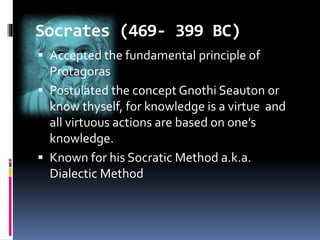


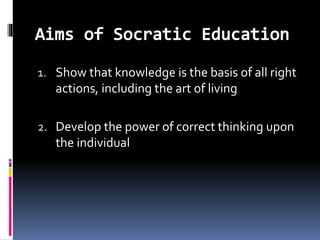
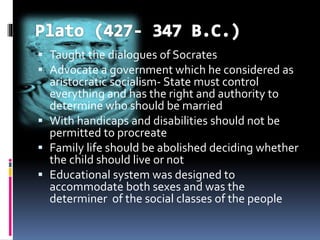
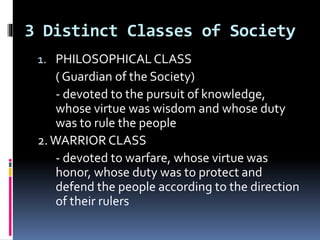


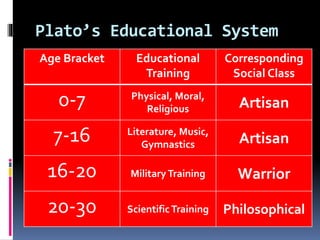

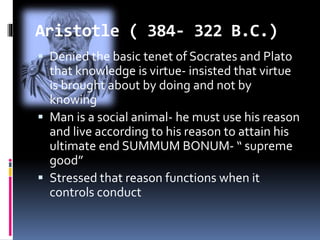




After the Persian War, Athens became the center of trade and wealth in Greece. A new class of teachers called Sophists arose who emphasized rhetoric, debate, and the idea that truth is relative. They were disliked for charging fees and threatening Athenian traditions. Socrates accepted some Sophist ideas but believed in knowing oneself through dialectic questioning. Plato advocated an aristocratic system with three classes determined by intelligence and abilities. Aristotle believed virtue comes from action, not knowledge, and the state should provide education to promote citizens' welfare.


