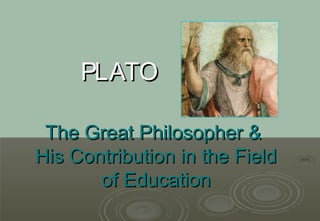
PLATO

 The Great Philosopher &
His Contribution in the Field
       of Education
PLATO- at a glance
 Full name: Plato (Πλάτων)
 Born: 428–427 BC; Athens
 Died: 348–347 BC (age approx 80); Athens
 Era: Ancient philosophy
 Region: Western Philosophy
 Notable ideas:   Platonic realism
 Influenced by:
 Socrates, Homer, Hesiod, Aristophanes,Aesop
 , Protagoras, Parmenides, Pythagoras,
 Heraclitus, Orphism
Family
 Plato's father was Ariston and mother
  was Perictione, whose family boasted of a
  relationship with the famous
  Athenian lawmaker and lyric poet Solon.
 Besides Plato himself, Ariston and Perictione
  had three other children; two sons,
  Adeimantus and Glaucon, and a
  daughter, Potone.
NAME
 Plato was named after his
  grandfather Aristocles, but
  his wrestling coach, Ariston of Argos, dubbed
  him "Platon", meaning "broad" on account of
  his robust figure.
 In the 21st century some scholars argued
  that Plato was the original name of the
  philosopher.
EDUCATION
 Plato's education, like any other Athenian
  boy's, was physical as well as mental; he was
  instructed in grammar (that is, reading and
  writing), music, painting and gymnastics by
  the most distinguished teachers of his time.
 Plato wrestled at the Isthmian games and did
  extremely well and was well known.
P AT AND SOCRAT S
         L O           E
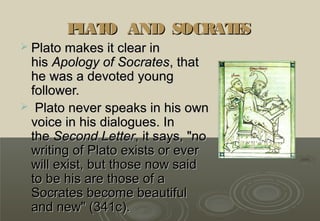
 Plato makes it clear in
 his Apology of Socrates, that
 he was a devoted young
 follower.
 Plato never speaks in his own
 voice in his dialogues. In
 the Second Letter, it says, "no
 writing of Plato exists or ever
 will exist, but those now said
 to be his are those of a
 Socrates become beautiful
 and new" (341c).
LATER LIFE
 Plato may have traveled
  in Italy, Sicily, Egypt and Cyrene.
 Said to have returned to Athens at the age of
  forty, Plato founded one of the earliest known
  organized schools in Western Civilization on a
  plot of land in the Grove of Hecademus or
  Academus.
DEATH
 One story, based on a mutilated manuscript,
  suggests Plato died in his bed, whilst a
  young Thracian girl played the flute to him.
 Another tradition suggests Plato died at a
  wedding feast.
 According to Tertullian, Plato simply died in his
  sleep
PLATO;The great philosopher &  his contribution

PLATO;The great philosopher & his contribution

  • 1.
    PLATO The GreatPhilosopher & His Contribution in the Field of Education
  • 2.
    PLATO- at aglance  Full name: Plato (Πλάτων)  Born: 428–427 BC; Athens  Died: 348–347 BC (age approx 80); Athens  Era: Ancient philosophy  Region: Western Philosophy  Notable ideas: Platonic realism  Influenced by: Socrates, Homer, Hesiod, Aristophanes,Aesop , Protagoras, Parmenides, Pythagoras, Heraclitus, Orphism
  • 3.
    Family  Plato's fatherwas Ariston and mother was Perictione, whose family boasted of a relationship with the famous Athenian lawmaker and lyric poet Solon.  Besides Plato himself, Ariston and Perictione had three other children; two sons, Adeimantus and Glaucon, and a daughter, Potone.
  • 4.
    NAME  Plato wasnamed after his grandfather Aristocles, but his wrestling coach, Ariston of Argos, dubbed him "Platon", meaning "broad" on account of his robust figure.  In the 21st century some scholars argued that Plato was the original name of the philosopher.
  • 5.
    EDUCATION  Plato's education,like any other Athenian boy's, was physical as well as mental; he was instructed in grammar (that is, reading and writing), music, painting and gymnastics by the most distinguished teachers of his time.  Plato wrestled at the Isthmian games and did extremely well and was well known.
  • 6.
    P AT ANDSOCRAT S L O E  Plato makes it clear in his Apology of Socrates, that he was a devoted young follower.  Plato never speaks in his own voice in his dialogues. In the Second Letter, it says, "no writing of Plato exists or ever will exist, but those now said to be his are those of a Socrates become beautiful and new" (341c).
  • 7.
    LATER LIFE  Platomay have traveled in Italy, Sicily, Egypt and Cyrene.  Said to have returned to Athens at the age of forty, Plato founded one of the earliest known organized schools in Western Civilization on a plot of land in the Grove of Hecademus or Academus.
  • 8.
    DEATH  One story,based on a mutilated manuscript, suggests Plato died in his bed, whilst a young Thracian girl played the flute to him.  Another tradition suggests Plato died at a wedding feast.  According to Tertullian, Plato simply died in his sleep