The Counter-reformation  The Catholic Response to the Protestant Reformation
Reformed Papacy Pope Paul III (1534-1549) Appointed reform-minded cardinals/bishops who: Improved education for the clergy Tried to enforce moral standards Tried to correct most glaring abuses
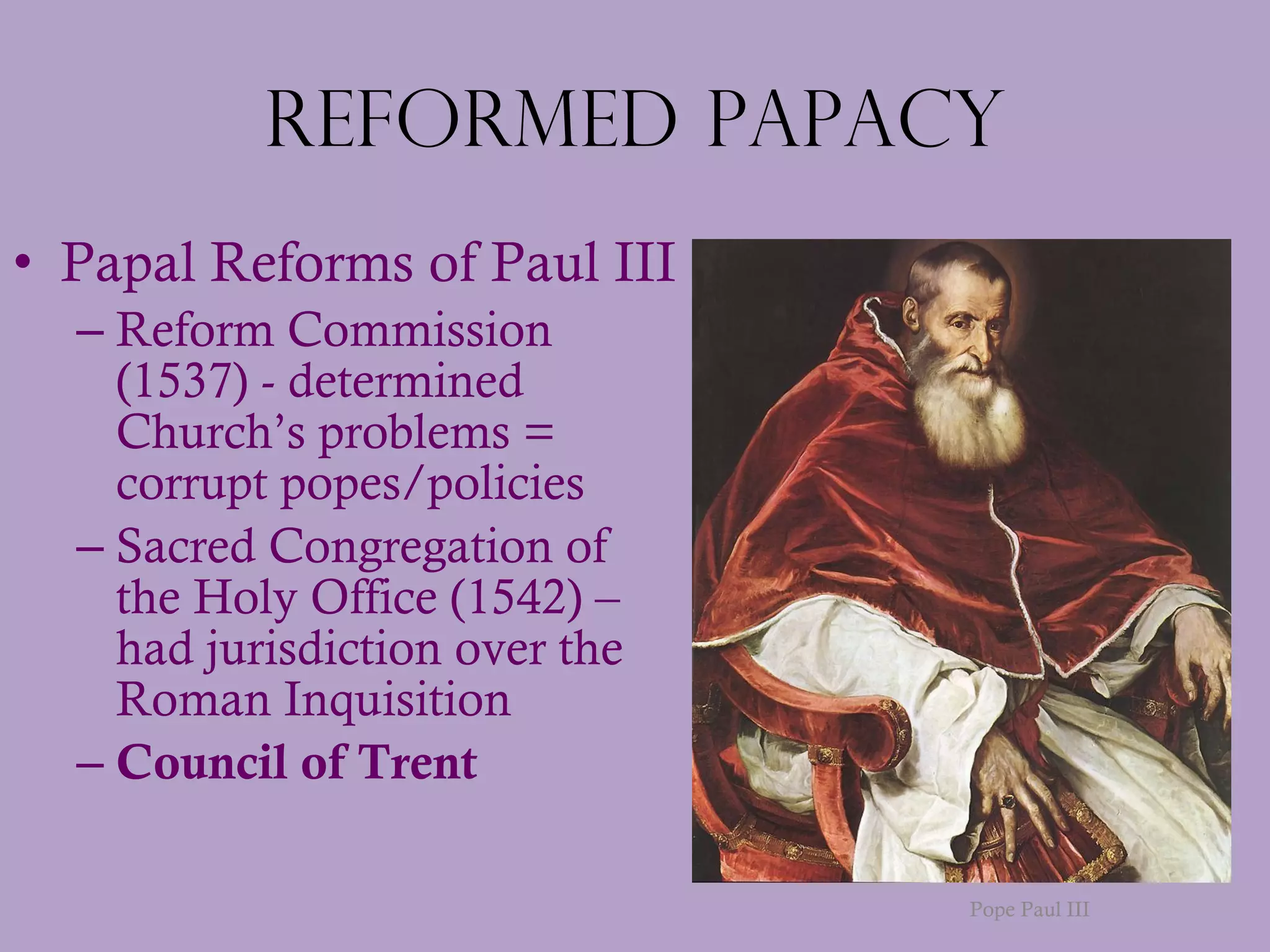
Reformed Papacy Papal Reforms of Paul III Reform Commission (1537) - determined Church’s problems = corrupt popes/policies Sacred Congregation of the Holy Office (1542) – had jurisdiction over the Roman Inquisition Council of Trent Pope Paul III
Reform Commission Est. new religious orders (preached to commoners) Ended selling of church offices & pluralism Opened seminaries (to train priests)
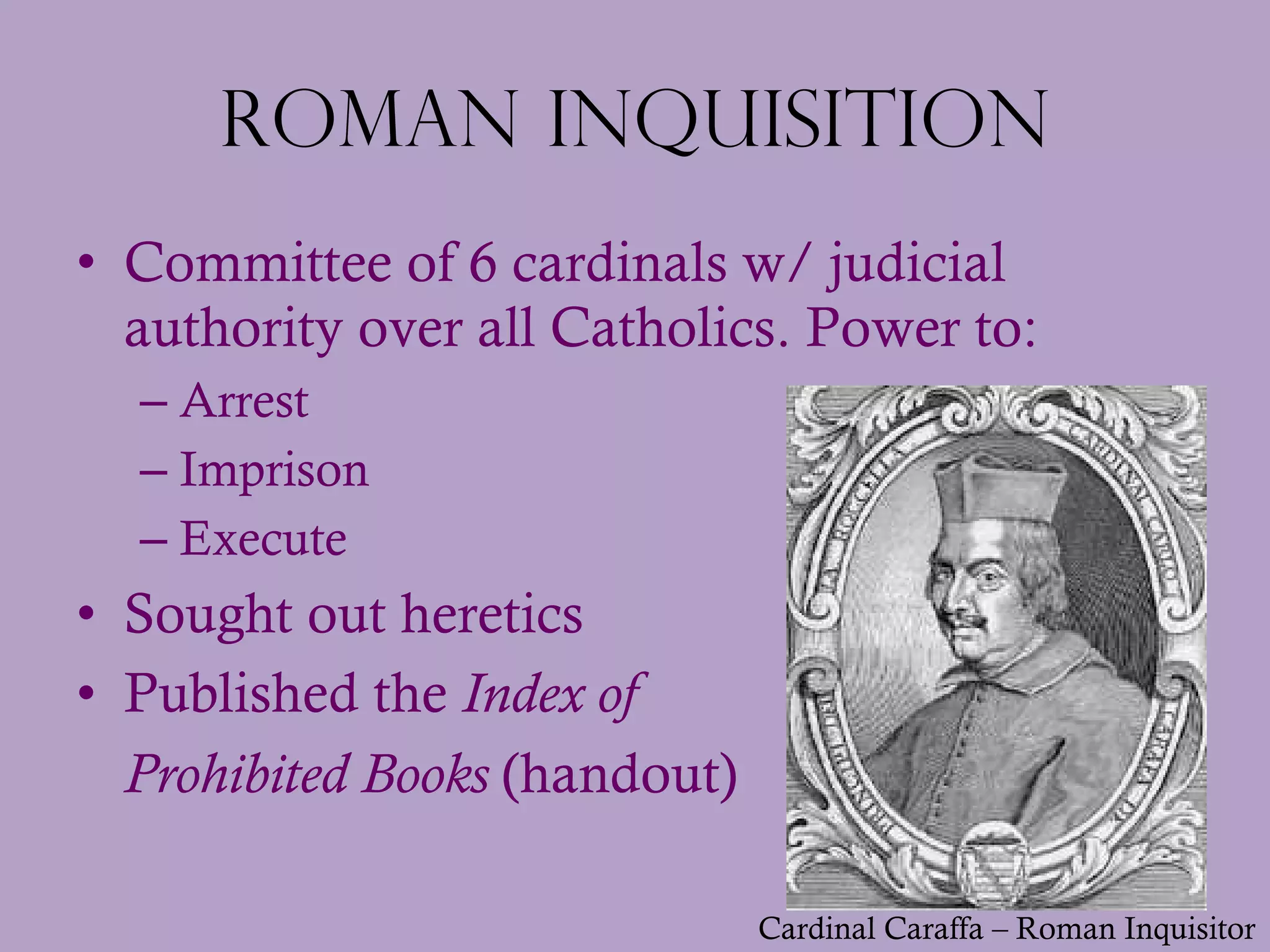
Roman Inquisition Committee of 6 cardinals w/ judicial authority over all Catholics. Power to: Arrest Imprison Execute  Sought out heretics Published the  Index of  Prohibited Books  (handout) Cardinal Caraffa – Roman Inquisitor
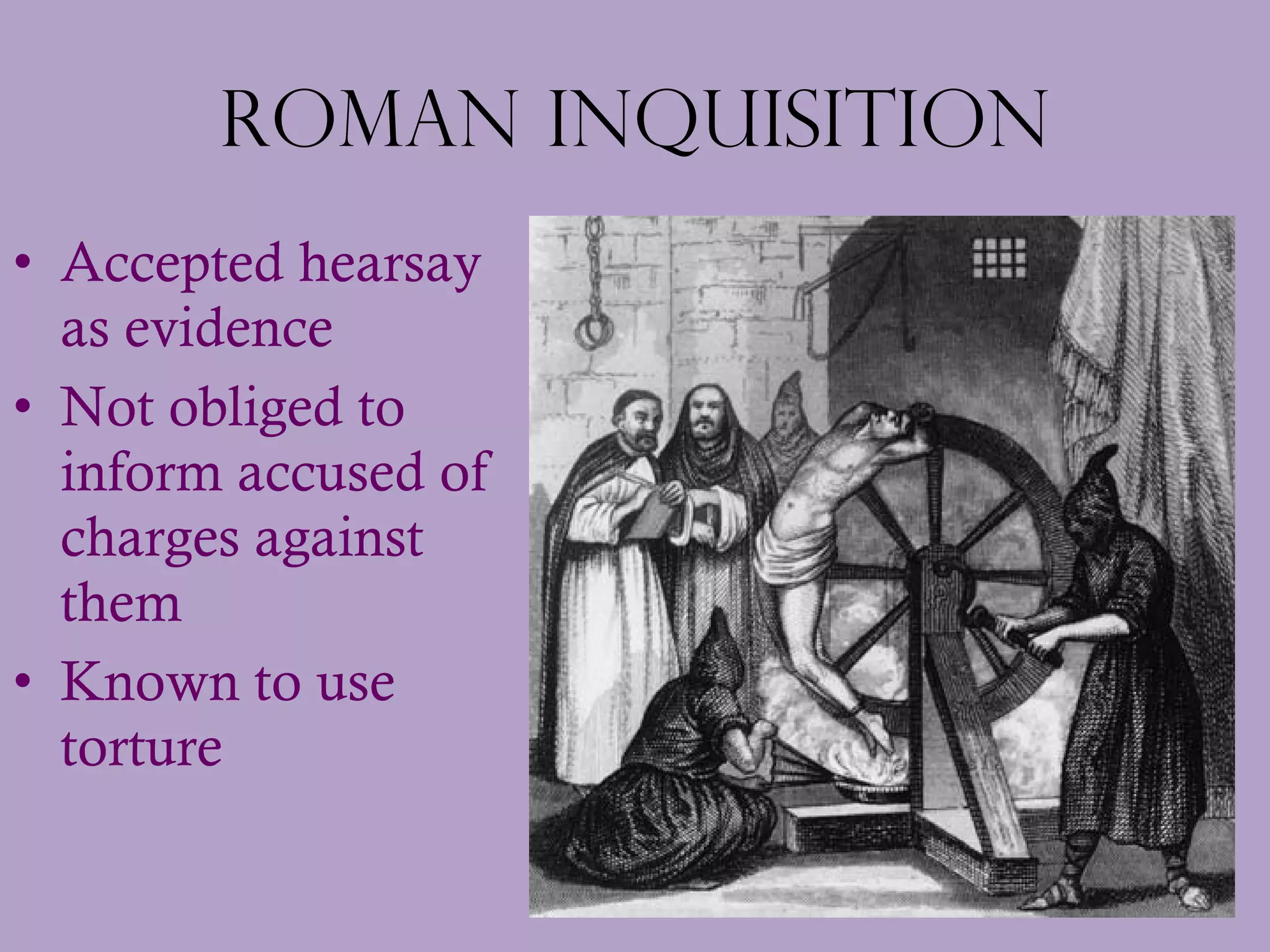
Roman Inquisition Accepted hearsay as evidence Not obliged to inform accused of charges against them Known to use torture
Council of Trent 1545-1563 (off/on) Group of various levels of clergy met  Goals: Reform church Reconcile w/ Protestants Faced many political obstacles
Council of Trent Upheld traditional Catholic teachings Faith & good works Seven sacraments Transubstantiation  Clerical celibacy  Purgatory
Council of Trent Reform measures for clergy Bishops required to reside in own dioceses Suppressed pluralism & simony Forbade sale of indulgences Clerics to give up concubines
Council of Trent Changes for laypeople Required – witnesses to marriage Did not achieve goal of reconciliation w/ Protestants
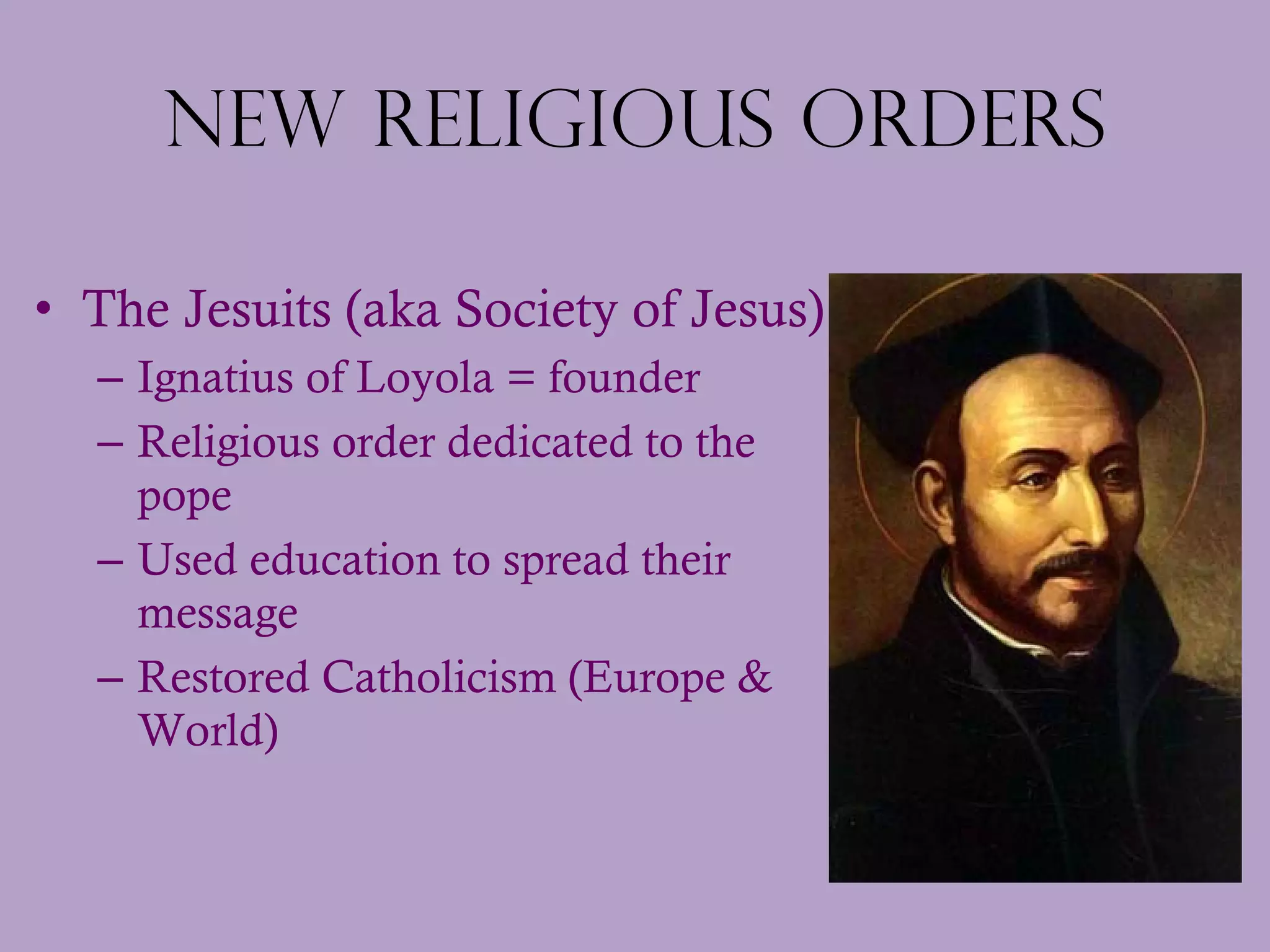
New Religious Orders The Jesuits (aka Society of Jesus) Ignatius of Loyola = founder Religious order dedicated to the pope Used education to spread their message Restored Catholicism (Europe & World)
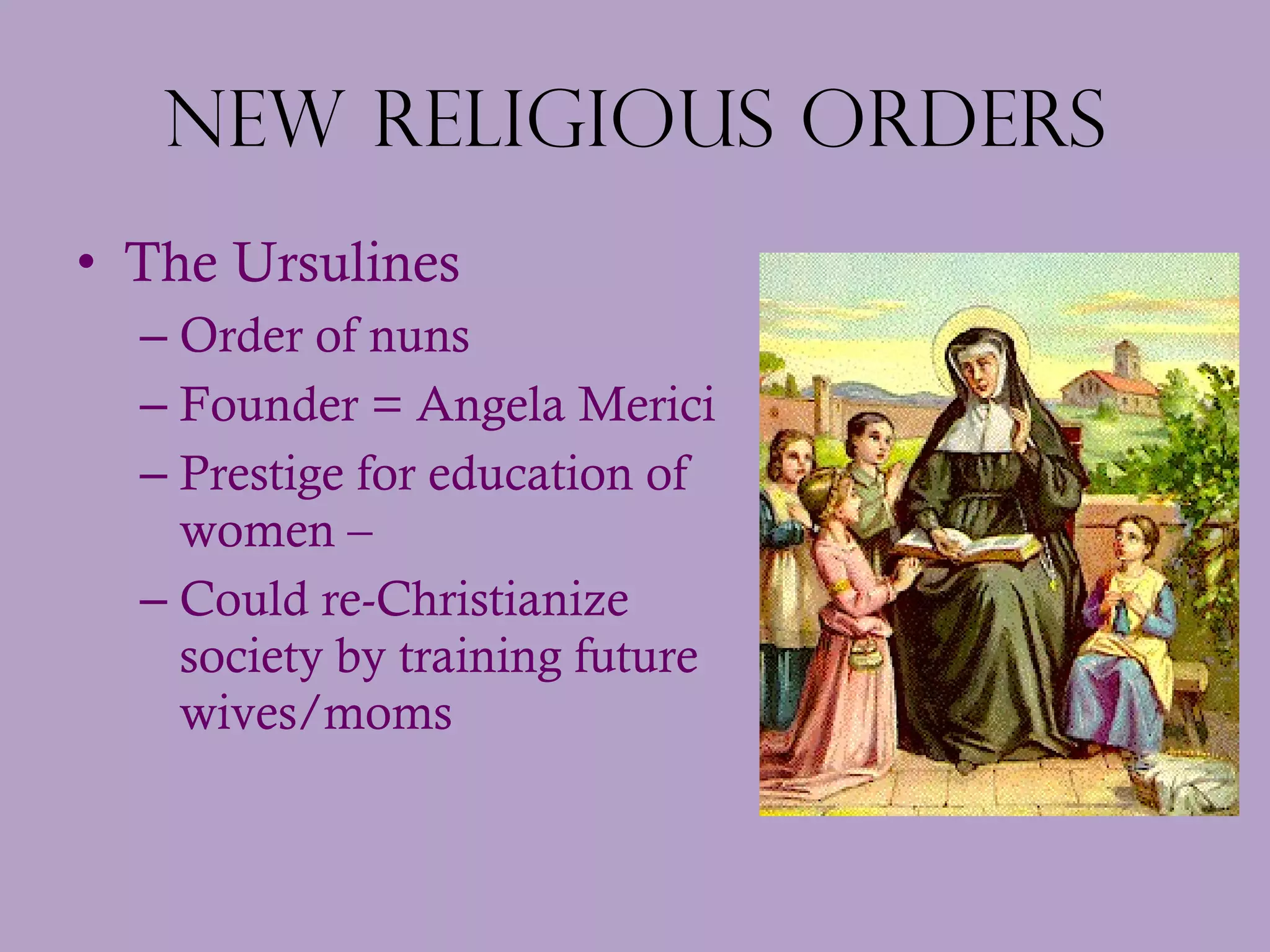
New Religious Orders The Ursulines Order of nuns Founder = Angela Merici Prestige for education of women –  Could re-Christianize society by training future wives/moms
Reformation  Society & Culture
Protestantism & Marriage Clerical celibacy = unnatural & against God’s commandments Contract, not sacrament Proper marriage upholds ideals of Spiritual equality between men & women Hierarchy of husband as authority & wife as submissive
Protestantism & Women Opposed medieval  misogyny Respected women, esp. as mothers/wives Equal right to divorce Encouraged education for women Read handout:  Women of the Reformation
Anti-Semitism Jews continued to be persecuted against during the Reformation Luther - expected Jews to convert (called for persecution when they did not) Catholic states - Jews segregated into ghettos
The Jews & Their Lies Discuss with your partner the following: Were you surprised by what you read? Why or why not? What were some of the traits Luther states that Jews possess? According to Luther how should Christians handle the Jews?  How is Luther’s writing/attitude a reflection of the 16 th  C.?
Exam Potential essay topics:  Compare and contrast the Lutheran and Catholic Reformations in the 16 th  C. regarding the reform of both religious doctrine and religious practices. Evaluate the influence of Renaissance humanism on the Protestant Reformation and Catholic reforms.

AP Counter Reformation

  • 1.
    The Counter-reformation The Catholic Response to the Protestant Reformation
  • 2.
    Reformed Papacy PopePaul III (1534-1549) Appointed reform-minded cardinals/bishops who: Improved education for the clergy Tried to enforce moral standards Tried to correct most glaring abuses
  • 3.
    Reformed Papacy PapalReforms of Paul III Reform Commission (1537) - determined Church’s problems = corrupt popes/policies Sacred Congregation of the Holy Office (1542) – had jurisdiction over the Roman Inquisition Council of Trent Pope Paul III
  • 4.
    Reform Commission Est.new religious orders (preached to commoners) Ended selling of church offices & pluralism Opened seminaries (to train priests)
  • 5.
    Roman Inquisition Committeeof 6 cardinals w/ judicial authority over all Catholics. Power to: Arrest Imprison Execute Sought out heretics Published the Index of Prohibited Books (handout) Cardinal Caraffa – Roman Inquisitor
  • 6.
    Roman Inquisition Acceptedhearsay as evidence Not obliged to inform accused of charges against them Known to use torture
  • 7.
    Council of Trent1545-1563 (off/on) Group of various levels of clergy met Goals: Reform church Reconcile w/ Protestants Faced many political obstacles
  • 8.
    Council of TrentUpheld traditional Catholic teachings Faith & good works Seven sacraments Transubstantiation Clerical celibacy Purgatory
  • 9.
    Council of TrentReform measures for clergy Bishops required to reside in own dioceses Suppressed pluralism & simony Forbade sale of indulgences Clerics to give up concubines
  • 10.
    Council of TrentChanges for laypeople Required – witnesses to marriage Did not achieve goal of reconciliation w/ Protestants
  • 11.
    New Religious OrdersThe Jesuits (aka Society of Jesus) Ignatius of Loyola = founder Religious order dedicated to the pope Used education to spread their message Restored Catholicism (Europe & World)
  • 12.
    New Religious OrdersThe Ursulines Order of nuns Founder = Angela Merici Prestige for education of women – Could re-Christianize society by training future wives/moms
  • 13.
  • 14.
    Protestantism & MarriageClerical celibacy = unnatural & against God’s commandments Contract, not sacrament Proper marriage upholds ideals of Spiritual equality between men & women Hierarchy of husband as authority & wife as submissive
  • 15.
    Protestantism & WomenOpposed medieval misogyny Respected women, esp. as mothers/wives Equal right to divorce Encouraged education for women Read handout: Women of the Reformation
  • 16.
    Anti-Semitism Jews continuedto be persecuted against during the Reformation Luther - expected Jews to convert (called for persecution when they did not) Catholic states - Jews segregated into ghettos
  • 17.
    The Jews &Their Lies Discuss with your partner the following: Were you surprised by what you read? Why or why not? What were some of the traits Luther states that Jews possess? According to Luther how should Christians handle the Jews? How is Luther’s writing/attitude a reflection of the 16 th C.?
  • 18.
    Exam Potential essaytopics: Compare and contrast the Lutheran and Catholic Reformations in the 16 th C. regarding the reform of both religious doctrine and religious practices. Evaluate the influence of Renaissance humanism on the Protestant Reformation and Catholic reforms.