Goal Setting
Goal Setting
• Setting clear targets, priorities and expectations of
themselves
• Athletes are more committed if they have specific
goals
• Goal setting has been shown to improve work-
output by 40-50%
Three types of goal setting
• Outcome goals
• Performance goals
• Process goals
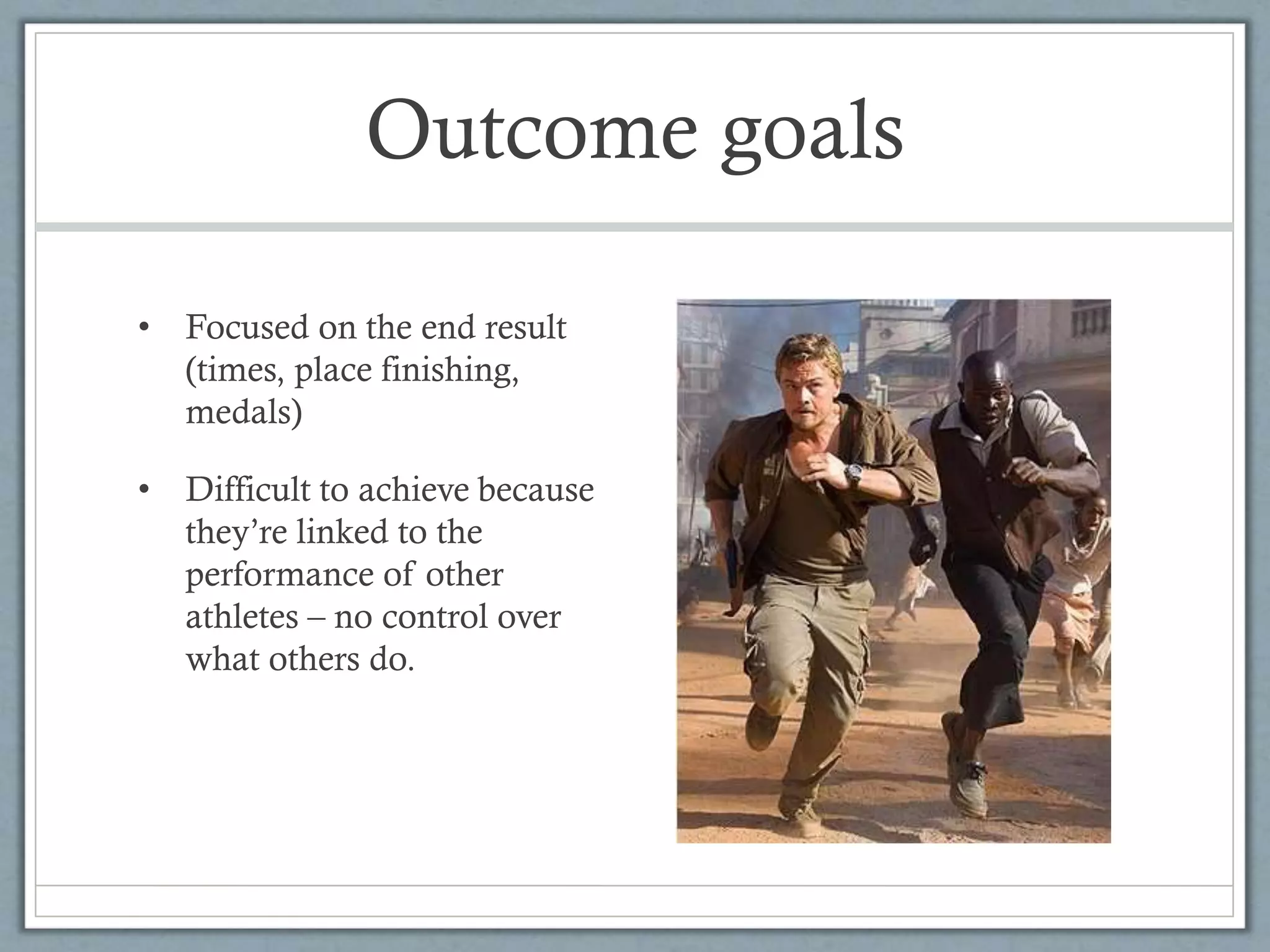
Outcome goals
• Focused on the end result
(times, place finishing,
medals)
• Difficult to achieve because
they’re linked to the
performance of other
athletes – no control over
what others do.
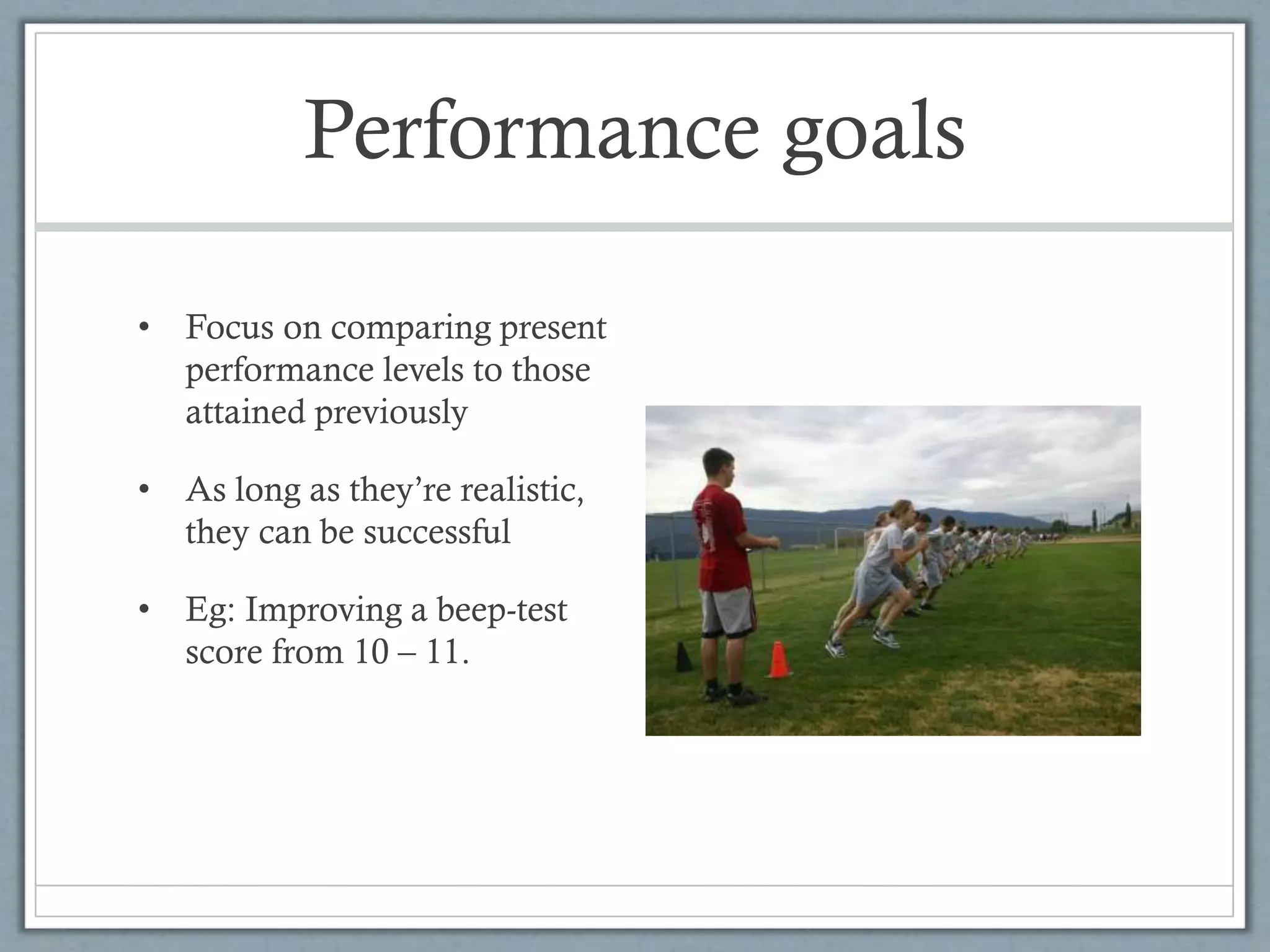
Performance goals
• Focus on comparing present
performance levels to those
attained previously
• As long as they’re realistic,
they can be successful
• Eg: Improving a beep-test
score from 10 – 11.
Process goals
• Focuses on actions such as
physical movements and
game strategies
• Eg: Executing the same
routine before swinging the
club
• Eg: Performing a set play
Achieving Goals
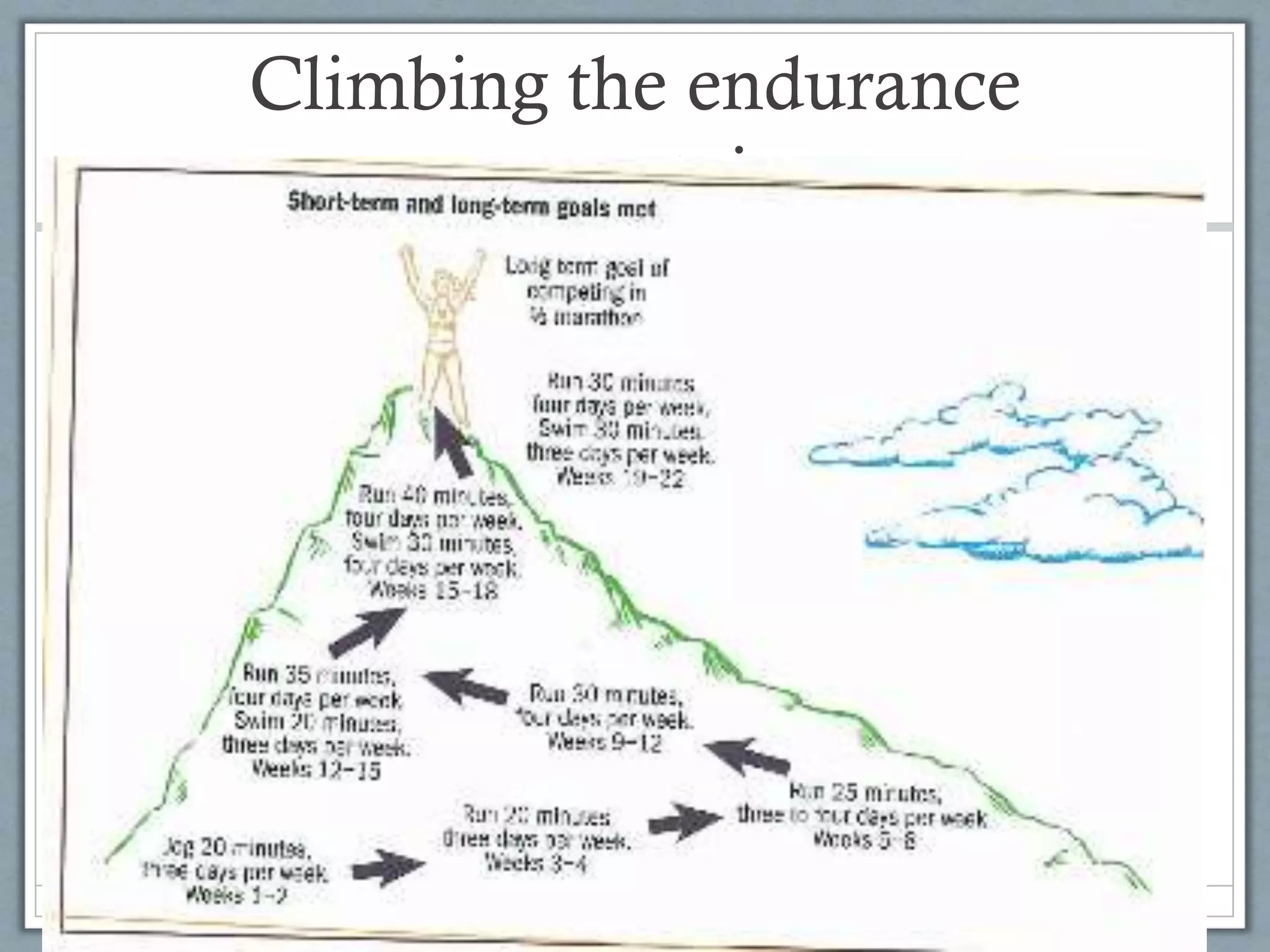
• It’s important to set shot-term (performance) goals to
help pave the way towards achieving long-term
(outcome) goals
Climbing the endurance
mountain
SMARTER
• Provides a tool to help writing down goals (developed by
the National Coaching Association)
• I want you to set a goal
• Aim to complete it by the end of term/year
• Use the example on page 313 to focus your thoughts
• Make sure you copy down what the SMARTER acronym
means.
Goals setting:
• Improves performance by:
• Focusing on attention to detail and important elements
of a skill/s being performed
• Activating and organising an athletes efforts
• Encouraging athlete perseverance
• Promoting the development of new learning strategies
• Refining movements and set plays
• Contributing towards a more positive psychological
state

The goal setting process

  • 1.
  • 2.
    Goal Setting • Settingclear targets, priorities and expectations of themselves • Athletes are more committed if they have specific goals • Goal setting has been shown to improve work- output by 40-50%
  • 3.
    Three types ofgoal setting • Outcome goals • Performance goals • Process goals
  • 4.
    Outcome goals • Focusedon the end result (times, place finishing, medals) • Difficult to achieve because they’re linked to the performance of other athletes – no control over what others do.
  • 5.
    Performance goals • Focuson comparing present performance levels to those attained previously • As long as they’re realistic, they can be successful • Eg: Improving a beep-test score from 10 – 11.
  • 6.
    Process goals • Focuseson actions such as physical movements and game strategies • Eg: Executing the same routine before swinging the club • Eg: Performing a set play
  • 7.
    Achieving Goals • It’simportant to set shot-term (performance) goals to help pave the way towards achieving long-term (outcome) goals
  • 8.
  • 9.
    SMARTER • Provides atool to help writing down goals (developed by the National Coaching Association) • I want you to set a goal • Aim to complete it by the end of term/year • Use the example on page 313 to focus your thoughts • Make sure you copy down what the SMARTER acronym means.
  • 10.
    Goals setting: • Improvesperformance by: • Focusing on attention to detail and important elements of a skill/s being performed • Activating and organising an athletes efforts • Encouraging athlete perseverance • Promoting the development of new learning strategies • Refining movements and set plays • Contributing towards a more positive psychological state