Definition:
Overtraining is a condition experienced by
athletes in most competitive sporting
environments that leads to a decrease in
performance or attitude.
Overtraining is usually brought on by excessive
training demands and effects the individuals
physical, mental and behavioural health.
When applied to children can produce long
lasting adverse physical implications.
 Lack of sufficient recovery time
 High stress levels and anxiety
 Overlapping sporting seasons
(summer/winter)
 Rapid increase in training intensity or volume
 Pressure to perform
 Heavy training schedule
Most of the symptoms experienced are either
physical or mental.
Physical:
 Decreased physical abilities
 Slower times
 Increased fatigue during training
 Muscle and joint soreness
 Changes in body weight/composition
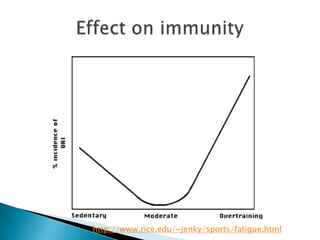
 Decreased immunity
http://www.rice.edu/~jenky/sports/fatigue.html
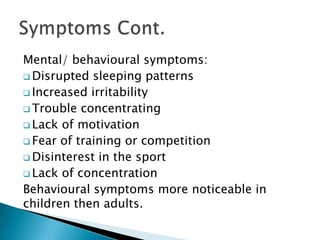
Mental/ behavioural symptoms:
 Disrupted sleeping patterns
 Increased irritability
 Trouble concentrating
 Lack of motivation
 Fear of training or competition
 Disinterest in the sport
 Lack of concentration
Behavioural symptoms more noticeable in
children then adults.
Common overtraining/Overuse injuries in
children:
 Tendonitis
 Growth plate injuries
 Stress factures
 spondylolysis (stress fracture of the spine)
 Sudden increase in training intensity and
volume
 Insufficient recovery and rest periods
 Monotonous and repetitive training
approaches
 Overloaded training schedule
 High stress and anxiety levels as a result of
training/competition pressure
 Increase volume or intensity by 10% at a time
 Allow 2-3 days rest and recovery each week
 Ensure only 1 sport/competition is played in
one season (6 month period)
 Decrease training if signs or symptoms are
present
 Ensure training is always different to prevent
monotonous training and over use injuries.
 Be aware and knowledgeable of the signs and
symptoms.
 Know the limits and personalities of you
athletes.
 Avoid stress by placing emphasis on fun
rather then winning
o Benjamin, Holly J.‘Overuse(2014) Injuries and Burnout in Youth Sports: A
Position Statement from the American Medical Society for Sports
Medicine.’ Clinical Journal of Sport Medicine Jan2014, Vol. 24 Issue 1, p3
18p.
o Capranica, Laura Millard-Stafford, Mindy L.(2011) ‘Youth Sport
Specialization: How to Manage Competition and Training?’ International
Journal of Sports Physiology & Performance Dec2011, Vol. 6 Issue 4,
p572 8p.
o Dalton SE (1992)’Overuse injuries in adolescent athletes’ Sports
Med.1992;13 :58– 70
o Grasso, Brian(2006) ‘SAFE STRENGTH TRAINING FOR YOUNG ATHLETES’
Fitness Business Canada Nov/Dec2006, Vol. 7 Issue 6, p22 2p
o Joel S. Brenner(2012)’Overuse Injuries, Overtraining, and Burnout in
Child and Adolescent Athletes’ Paediatrics 2012; 129:4 e1103
o Lemyre P.N., Hall H.K., Roberts G.C. (2008): A social cognitive
approach to burnout in elite athletes. Scandinavian Journal of
Medicine & Science in Sports. Apr; 18: 221–234.
o Lyle Micheli (2012) Children’s Hospital Boston | Division of
Sports Medicine | www.childrenshospital.org/sportsmed
o http://www.momsteam.com/safe-kids-worldwide/preventing-
overuse-injuries-overtraining-burnout-9-ways-parents-can-
help#ixzz30oyfzeHS
o Matos N.F., Winsley R.J., Williams C.A. (2011): Prevalence of non-
functional overreaching/ overtraining in young English athletes.
Medicine & Science in Sports & Exercise. 43: 1287–1294.
o Smith L.L. (2003): Overtraining, excessive exercise, and altered
immunity, Sports Medicine. 33: 347–364

Overtraining slide

  • 2.
    Definition: Overtraining is acondition experienced by athletes in most competitive sporting environments that leads to a decrease in performance or attitude. Overtraining is usually brought on by excessive training demands and effects the individuals physical, mental and behavioural health. When applied to children can produce long lasting adverse physical implications.
  • 3.
     Lack ofsufficient recovery time  High stress levels and anxiety  Overlapping sporting seasons (summer/winter)  Rapid increase in training intensity or volume  Pressure to perform  Heavy training schedule
  • 4.
    Most of thesymptoms experienced are either physical or mental. Physical:  Decreased physical abilities  Slower times  Increased fatigue during training  Muscle and joint soreness  Changes in body weight/composition  Decreased immunity
  • 5.
  • 6.
    Mental/ behavioural symptoms: Disrupted sleeping patterns  Increased irritability  Trouble concentrating  Lack of motivation  Fear of training or competition  Disinterest in the sport  Lack of concentration Behavioural symptoms more noticeable in children then adults.
  • 7.
    Common overtraining/Overuse injuriesin children:  Tendonitis  Growth plate injuries  Stress factures  spondylolysis (stress fracture of the spine)
  • 8.
     Sudden increasein training intensity and volume  Insufficient recovery and rest periods  Monotonous and repetitive training approaches  Overloaded training schedule  High stress and anxiety levels as a result of training/competition pressure
  • 9.
     Increase volumeor intensity by 10% at a time  Allow 2-3 days rest and recovery each week  Ensure only 1 sport/competition is played in one season (6 month period)  Decrease training if signs or symptoms are present
  • 10.
     Ensure trainingis always different to prevent monotonous training and over use injuries.  Be aware and knowledgeable of the signs and symptoms.  Know the limits and personalities of you athletes.  Avoid stress by placing emphasis on fun rather then winning
  • 11.
    o Benjamin, HollyJ.‘Overuse(2014) Injuries and Burnout in Youth Sports: A Position Statement from the American Medical Society for Sports Medicine.’ Clinical Journal of Sport Medicine Jan2014, Vol. 24 Issue 1, p3 18p. o Capranica, Laura Millard-Stafford, Mindy L.(2011) ‘Youth Sport Specialization: How to Manage Competition and Training?’ International Journal of Sports Physiology & Performance Dec2011, Vol. 6 Issue 4, p572 8p. o Dalton SE (1992)’Overuse injuries in adolescent athletes’ Sports Med.1992;13 :58– 70 o Grasso, Brian(2006) ‘SAFE STRENGTH TRAINING FOR YOUNG ATHLETES’ Fitness Business Canada Nov/Dec2006, Vol. 7 Issue 6, p22 2p o Joel S. Brenner(2012)’Overuse Injuries, Overtraining, and Burnout in Child and Adolescent Athletes’ Paediatrics 2012; 129:4 e1103
  • 12.
    o Lemyre P.N.,Hall H.K., Roberts G.C. (2008): A social cognitive approach to burnout in elite athletes. Scandinavian Journal of Medicine & Science in Sports. Apr; 18: 221–234. o Lyle Micheli (2012) Children’s Hospital Boston | Division of Sports Medicine | www.childrenshospital.org/sportsmed o http://www.momsteam.com/safe-kids-worldwide/preventing- overuse-injuries-overtraining-burnout-9-ways-parents-can- help#ixzz30oyfzeHS o Matos N.F., Winsley R.J., Williams C.A. (2011): Prevalence of non- functional overreaching/ overtraining in young English athletes. Medicine & Science in Sports & Exercise. 43: 1287–1294. o Smith L.L. (2003): Overtraining, excessive exercise, and altered immunity, Sports Medicine. 33: 347–364