Negotiation
NegotiationNegotiation is a process in which groups with conflicting interests meet together to make offers, counteroffers, and concessions to each other in an effort to resolve their differences.
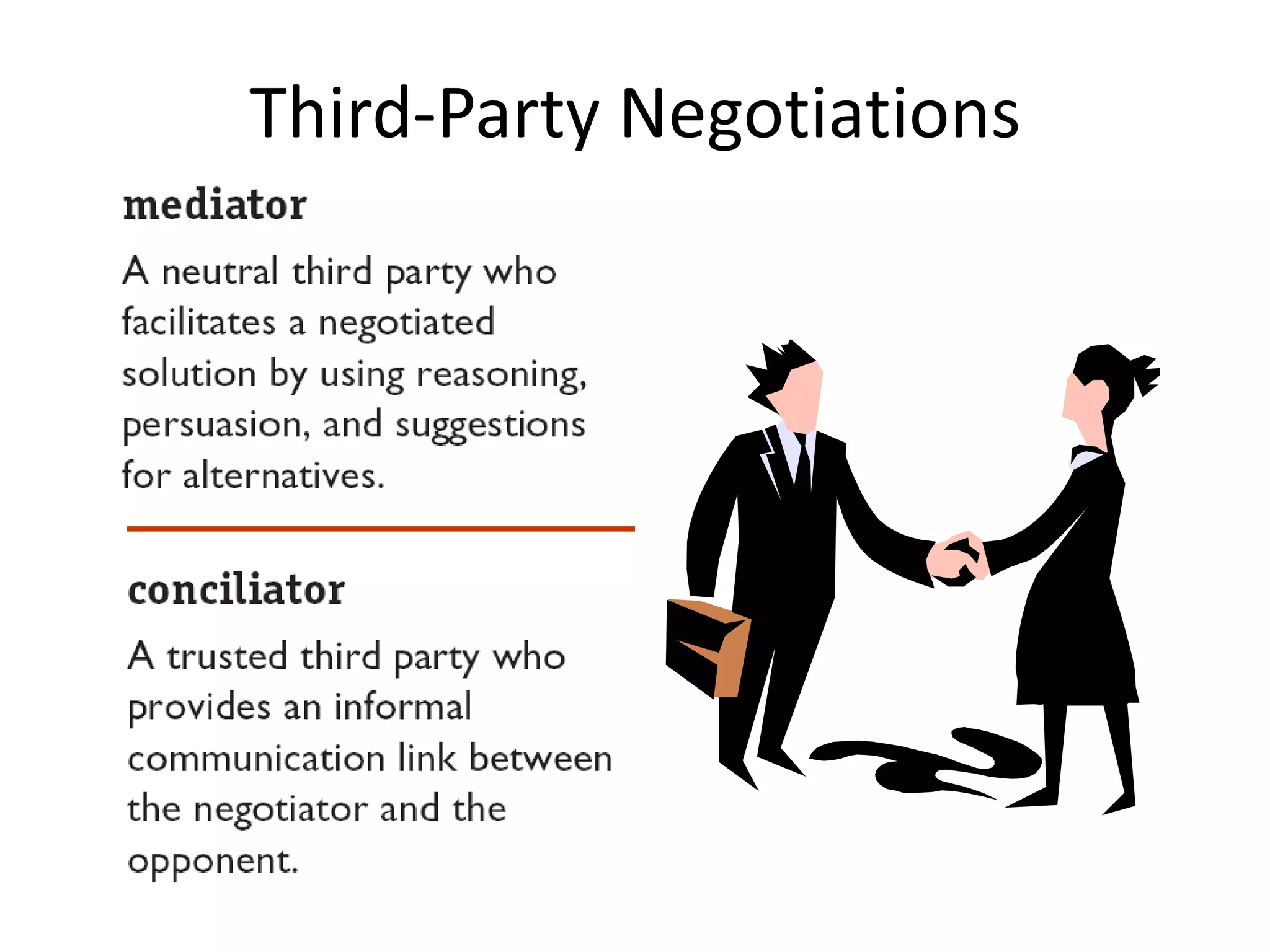
Third-party negotiator is an outsider skilled in handling bargaining and negotiation.Mediator - a neutral third party who tries to help parties in conflict reconcile their differences.Arbiter - a third party who has the authority to impose a solution to a dispute.
Characteristics of NegotiationAn explicit and deliberate eventTakes place between the representatives of the parties concernedThe process which intends to settle the disputes and differences between parties involvedOutcome of negotiation is dependent on the relative power relationship between the parties involved
Importance of NegotiationDynamic nature of businessInterdependenceCompetitionInformation ageGlobalisation
Pre-conditions for NegotiationsTwo or more parties which have either conflict or disagreementPerceived conflict of needs, positions and interestsInterdependence so that the outcome must be satisfying to all partiesAgreement must be required to be reached within reasonable time so that it becomes beneficial to both partiesThe success of negotiation depends on the facts that the issue is negotiable; the negotiators are not only taking but giving also; trust between negotiating parties; fear that failure may lead to crisis
Assumptions in NegotiationIt is a process of give and take with no room for threat and coercionPeople come for negotiation believing that the other group can be persuadedEqual status of the parties during negotiationFairness in the process of negotiationNegotiation is more beneficial for resolving differences compared to other methods
Planning for negotiation
Three stages of negotiation planPre-negotiation planningDuring negotiation behaviourPost-negotiation understanding
Pre-negotiation PlanningIt requires consideration of following factorsKnow yourselfKnow the adversarySpecify your goals and objectivesDevelop arguments and alternativesAgenda/ procedures
Behaviour during negotiationOpening moveFrequency and size of proposal (Negotiation Dance)Influence mechanisms (referent power and expert power)
Post-negotiation understandingImplementation planRole responsibilitiesReview teams
Strategies and tactics of negotiation
Bargaining Strategies
Distributive versus Integrative Bargaining
Distributive NegotiationTactics used in distributive negotiation are:BluffingDelaysSnow job (giving long list of issues for discussion)Temper tantrumsLimited authority
Staking Out the Bargaining Zone
Bargaining Zone and Negotiation DancePrinciples for slicing the pieAssess your Best Alternative to Negotiated Agreement (BATNA) and improve itDetermine your reservation point but do not reveal itReach the other party’s BATNA and estimate their reservation pointSet high aspirations but that are realisticMake the first offer if you are preparedImmediately re-anchor if the other party offers firstPlan your concessionsPattern of concessionsMagnitude of concessionsTiming of concessionsUse an objective-appearing rationale to support your offersAppeal to norms of fairness
Wise – pie - slicingQualities to live by while slicing the pieConsistencySimplicityEffectivenessJustifiabilityConsensusGeneralisability
Integrative NegotiationPitfalls in integrative negotiationNo fixed pie, can be expanded to the maximum advantage of all partiesFocus may shift from issue to position, ego and face savingOverconfidence in one’s own position may lead to neglecting the need of other people
Beliefs conducive to integrative bargainingBelief in availability of a mutually acceptable solutionBelief in cooperation rather than competitionBelief that everyone is of equal value and statusBelief in the view expressed by othersBelief that differences in opinion are helpfulBelief in the trustworthiness of the other memberBelief that other party can compete but chooses to cooperate
Steps in Integrative Negotiation ProcessIdentify and define the problemDefine the problem in the way mutually acceptable to both sidesUnderstand the problemsState problem with eye towards practicality and comprehensivenessState the problem as a goal and identify obstacles to attaining the goalDe-personalise the problemBring interests and needs to the surfaceSeparate the problem definition from the search from solutionsGenerate alternative solutions to the problemExpand the pieUse non-specific compensationCut the costs for complianceFind a bridge solutionGenerating alternative solutionsBrainstorming
Contd.Evaluate and select alternativesNarrow the range of solution optionsEvaluate solutions on the basis of quality, standards, and acceptabilityAgree to the criteria in advance for evaluating optionsUse sub groups to evaluate complex options
Win-win negotiation is not:CompromiseEven splitFeeling goodBuilding a relationship
The Negotiation Process
Common mistakes to be avoidedInadequate PreparationIgnoring the give/get principleUse of intimidating behavior.Impatience.Loss of temper.Talking too much, listening too little, and remaining indifferent to body language. Arguing instead of influencing. Ignoring conflict.
Third-Party Negotiations

Negotiation1

  • 1.
  • 2.
    NegotiationNegotiation is aprocess in which groups with conflicting interests meet together to make offers, counteroffers, and concessions to each other in an effort to resolve their differences.
  • 3.
    Third-party negotiator isan outsider skilled in handling bargaining and negotiation.Mediator - a neutral third party who tries to help parties in conflict reconcile their differences.Arbiter - a third party who has the authority to impose a solution to a dispute.
  • 4.
    Characteristics of NegotiationAnexplicit and deliberate eventTakes place between the representatives of the parties concernedThe process which intends to settle the disputes and differences between parties involvedOutcome of negotiation is dependent on the relative power relationship between the parties involved
  • 5.
    Importance of NegotiationDynamicnature of businessInterdependenceCompetitionInformation ageGlobalisation
  • 6.
    Pre-conditions for NegotiationsTwoor more parties which have either conflict or disagreementPerceived conflict of needs, positions and interestsInterdependence so that the outcome must be satisfying to all partiesAgreement must be required to be reached within reasonable time so that it becomes beneficial to both partiesThe success of negotiation depends on the facts that the issue is negotiable; the negotiators are not only taking but giving also; trust between negotiating parties; fear that failure may lead to crisis
  • 7.
    Assumptions in NegotiationItis a process of give and take with no room for threat and coercionPeople come for negotiation believing that the other group can be persuadedEqual status of the parties during negotiationFairness in the process of negotiationNegotiation is more beneficial for resolving differences compared to other methods
  • 8.
  • 9.
    Three stages ofnegotiation planPre-negotiation planningDuring negotiation behaviourPost-negotiation understanding
  • 10.
    Pre-negotiation PlanningIt requiresconsideration of following factorsKnow yourselfKnow the adversarySpecify your goals and objectivesDevelop arguments and alternativesAgenda/ procedures
  • 11.
    Behaviour during negotiationOpeningmoveFrequency and size of proposal (Negotiation Dance)Influence mechanisms (referent power and expert power)
  • 12.
  • 13.
  • 14.
  • 15.
  • 16.
    Distributive NegotiationTactics usedin distributive negotiation are:BluffingDelaysSnow job (giving long list of issues for discussion)Temper tantrumsLimited authority
  • 17.
    Staking Out theBargaining Zone
  • 18.
    Bargaining Zone andNegotiation DancePrinciples for slicing the pieAssess your Best Alternative to Negotiated Agreement (BATNA) and improve itDetermine your reservation point but do not reveal itReach the other party’s BATNA and estimate their reservation pointSet high aspirations but that are realisticMake the first offer if you are preparedImmediately re-anchor if the other party offers firstPlan your concessionsPattern of concessionsMagnitude of concessionsTiming of concessionsUse an objective-appearing rationale to support your offersAppeal to norms of fairness
  • 19.
    Wise – pie- slicingQualities to live by while slicing the pieConsistencySimplicityEffectivenessJustifiabilityConsensusGeneralisability
  • 20.
    Integrative NegotiationPitfalls inintegrative negotiationNo fixed pie, can be expanded to the maximum advantage of all partiesFocus may shift from issue to position, ego and face savingOverconfidence in one’s own position may lead to neglecting the need of other people
  • 21.
    Beliefs conducive tointegrative bargainingBelief in availability of a mutually acceptable solutionBelief in cooperation rather than competitionBelief that everyone is of equal value and statusBelief in the view expressed by othersBelief that differences in opinion are helpfulBelief in the trustworthiness of the other memberBelief that other party can compete but chooses to cooperate
  • 22.
    Steps in IntegrativeNegotiation ProcessIdentify and define the problemDefine the problem in the way mutually acceptable to both sidesUnderstand the problemsState problem with eye towards practicality and comprehensivenessState the problem as a goal and identify obstacles to attaining the goalDe-personalise the problemBring interests and needs to the surfaceSeparate the problem definition from the search from solutionsGenerate alternative solutions to the problemExpand the pieUse non-specific compensationCut the costs for complianceFind a bridge solutionGenerating alternative solutionsBrainstorming
  • 23.
    Contd.Evaluate and selectalternativesNarrow the range of solution optionsEvaluate solutions on the basis of quality, standards, and acceptabilityAgree to the criteria in advance for evaluating optionsUse sub groups to evaluate complex options
  • 24.
    Win-win negotiation isnot:CompromiseEven splitFeeling goodBuilding a relationship
  • 25.
  • 26.
    Common mistakes tobe avoidedInadequate PreparationIgnoring the give/get principleUse of intimidating behavior.Impatience.Loss of temper.Talking too much, listening too little, and remaining indifferent to body language. Arguing instead of influencing. Ignoring conflict.
  • 27.
  • 28.