Isabella, Shunsaku, Matthew
Theory Techniques Emotions Global Negotiation
 
Structure Analysis Strategic Analysis Process Analysis Integrative Analysis
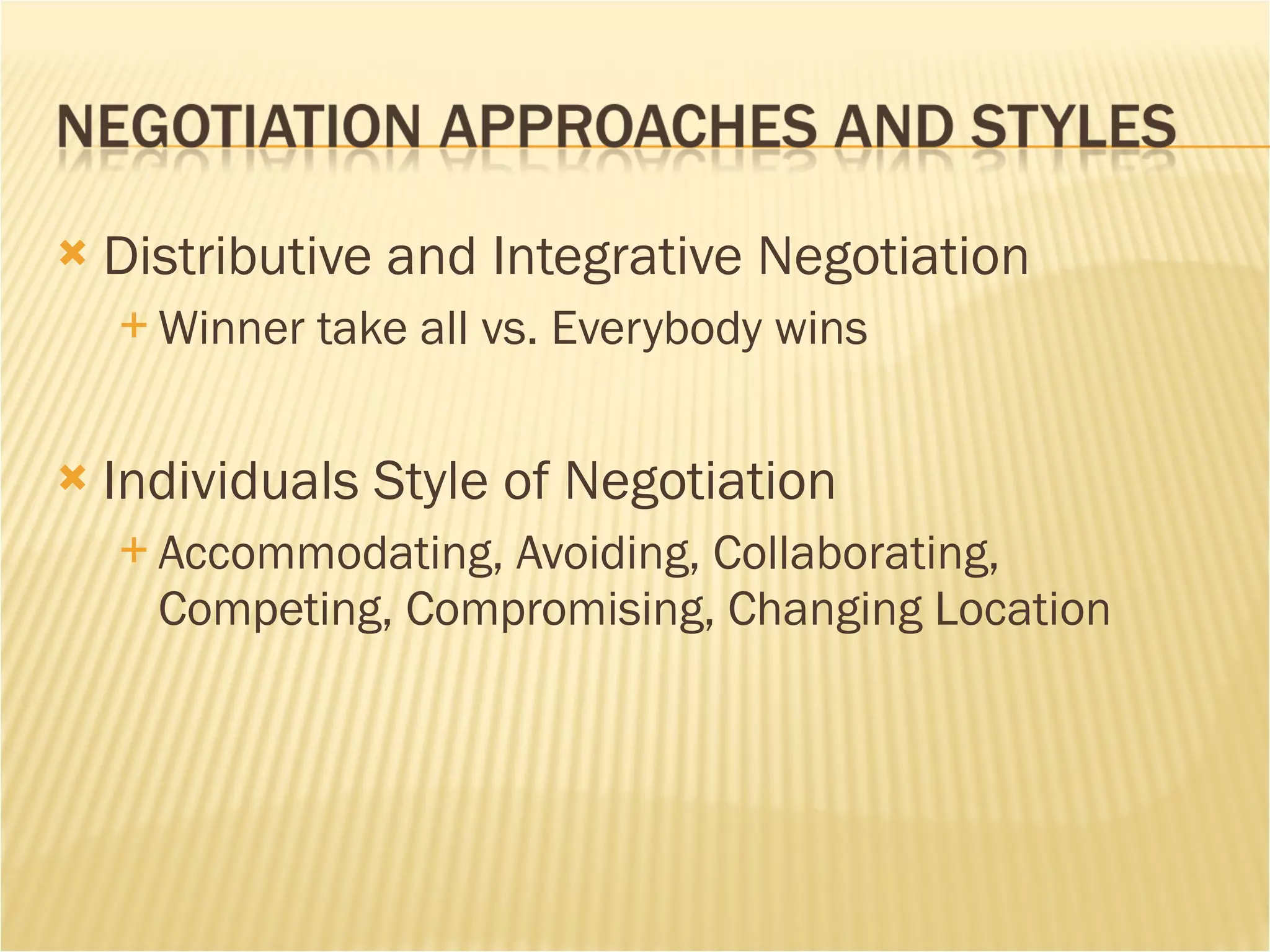
Distributive and Integrative Negotiation Winner take all vs. Everybody wins Individuals Style of Negotiation Accommodating, Avoiding, Collaborating, Competing, Compromising, Changing Location
Negotiation theory has not remained static.  Rapid changes in business  change in negotiation theory.
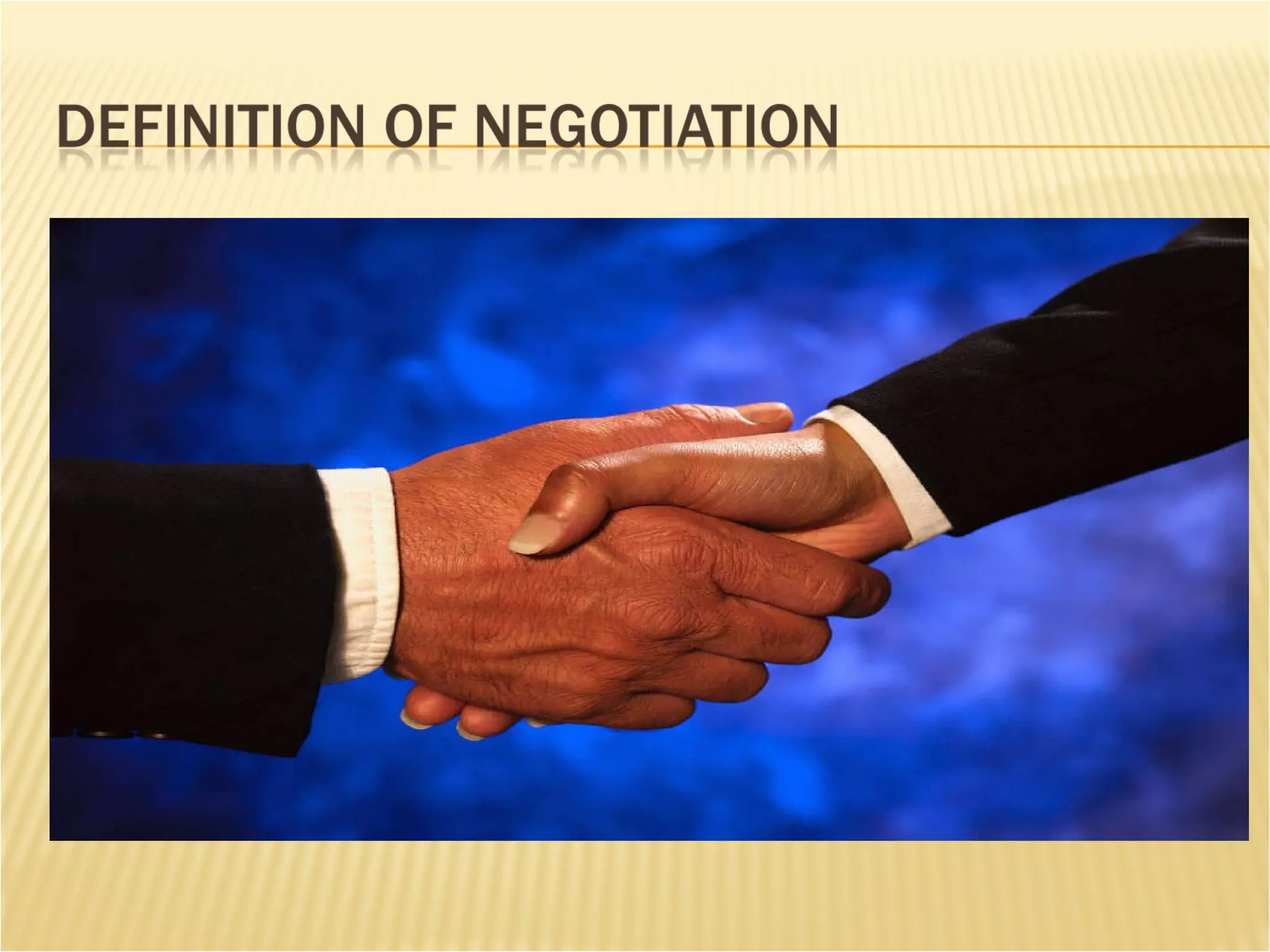
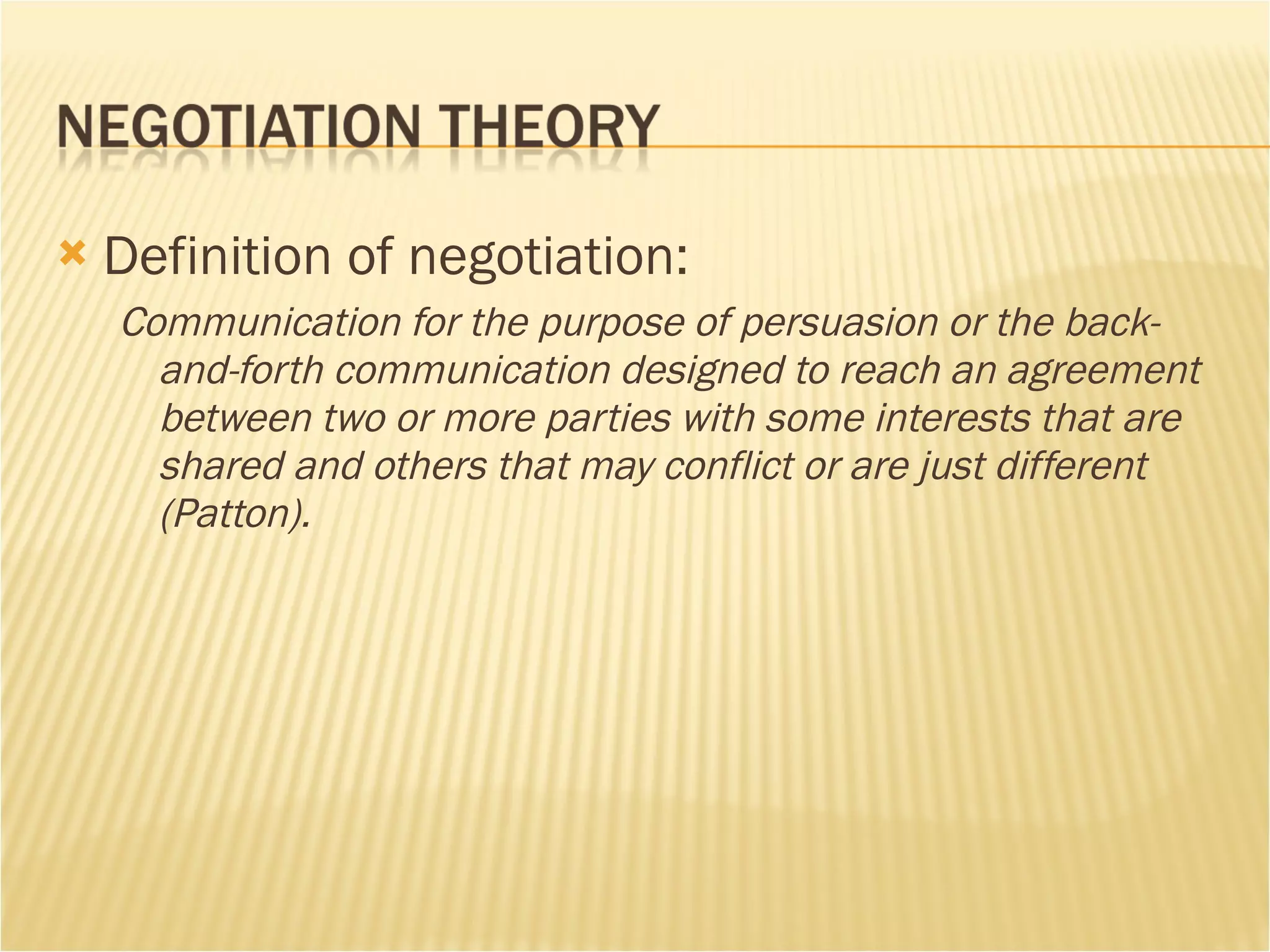
Definition of negotiation: Communication for the purpose of persuasion or the back-and-forth communication designed to reach an agreement between two or more parties with some interests that are shared and others that may conflict or are just different (Patton).
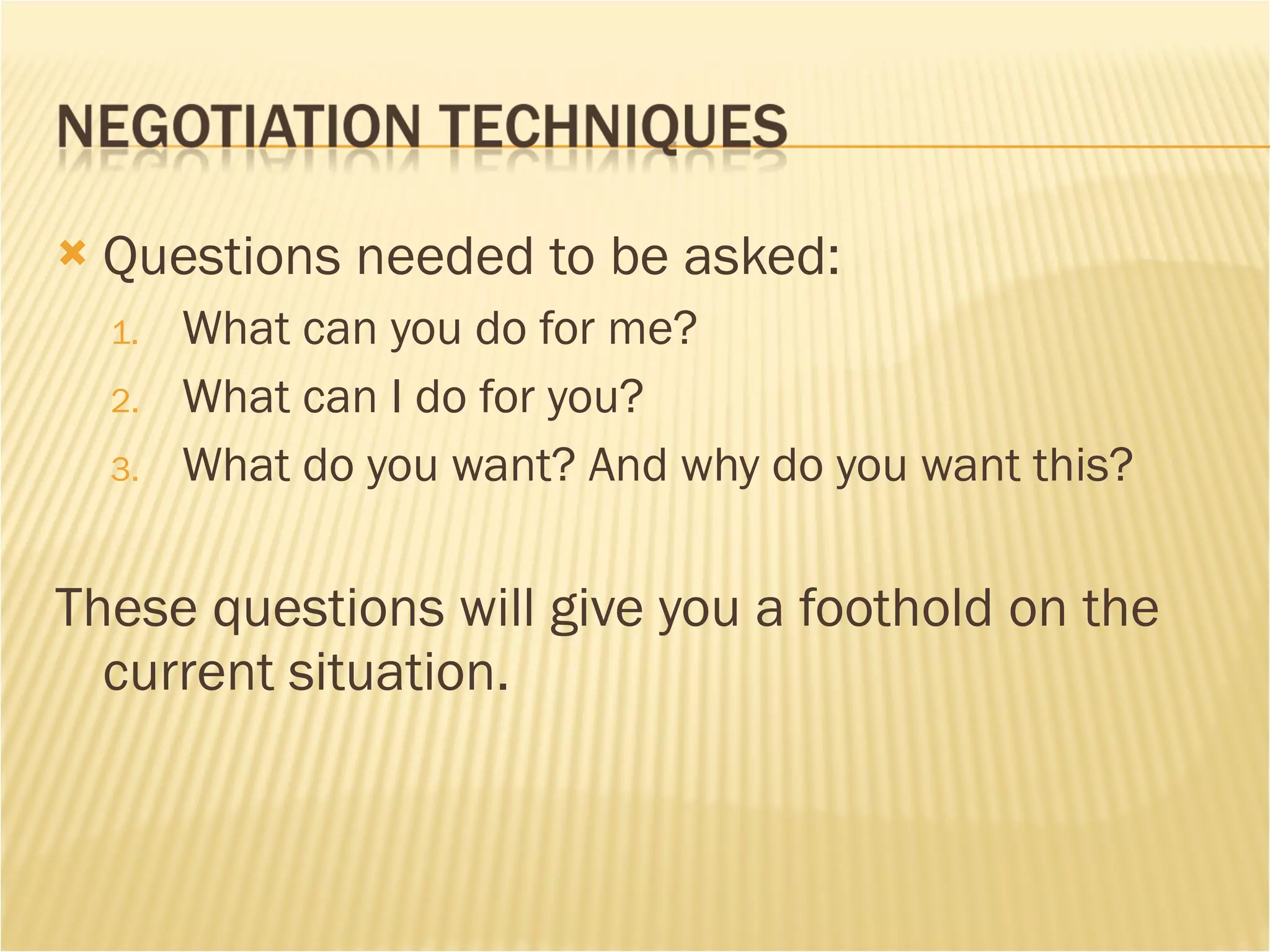
Questions needed to be asked: What can you do for me? What can I do for you? What do you want? And why do you want this? These questions will give you a foothold on the current situation.
“ Winning” is not necessarily the final goal.  Must see the bigger picture and understand the underlying reasons.  Look further than your ego.
Negotiate on the basis of using objective criteria.  Frame eash issue as a mutual search for objective criteria. Be both reasonable and open to reason as to which standards should be used and how they should be applied.  Never bend to pressure, only to principle.
Does emotions play an important role? Traditionally, emotions are something to be ignored, managed or even suppressed. Recent studies might suggest otherwise.
Positive emotions. Negative emotions.  How to manage emotions: Acknowledgement. Dealing with emotions  before  the dispute.  Use the emotions to your advantage.
The effect of emotions. Is emotions important in every situation? Two conditions for emotional effect:  Identification of the affect: High motivation, high ability or both.  Determination that the affect is relevant and important for judgment: Either motivation, the ability or both are low.
Mark Tomioka Negotiation Professional at  business field. He has negotiated in more  than 76 countries. He says there are negotiation techniques in each countries.
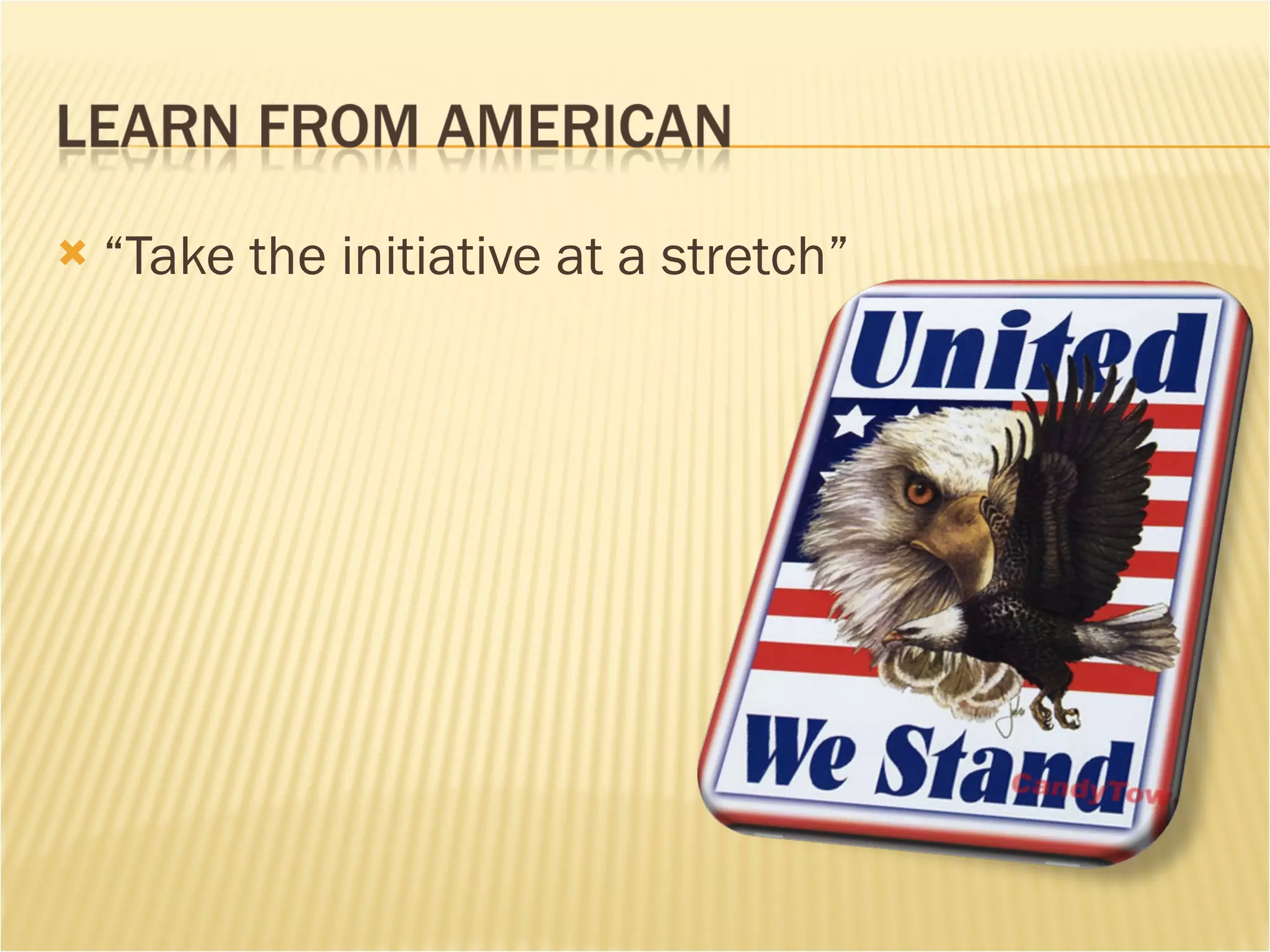
“ Take the initiative at a stretch”
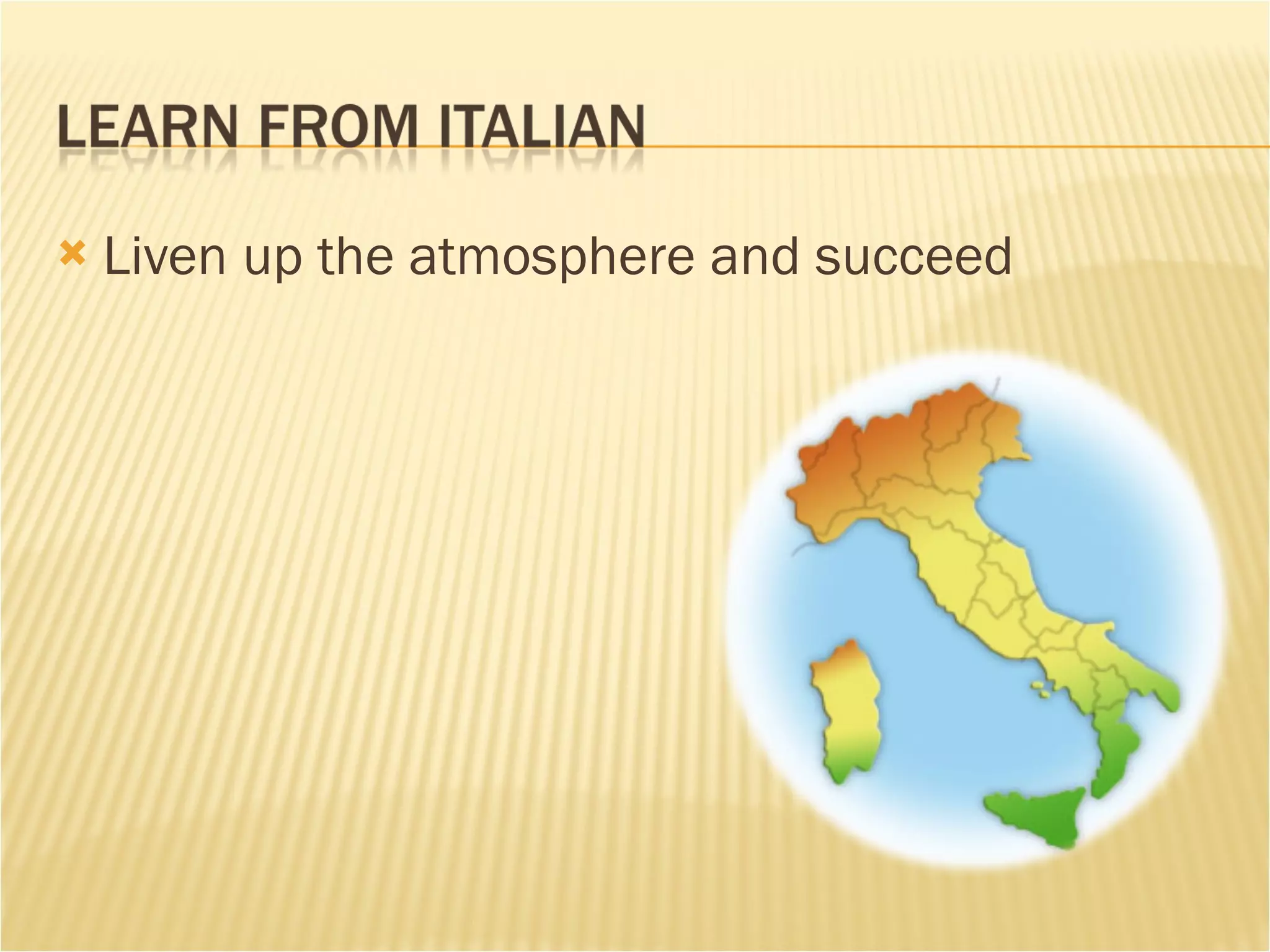
Liven up the atmosphere and succeed
Be a pet and succeed
Let person be tired from crossfire, and get a consent.
A Short Introduction into Negotiation - By Matthias Prause, LL.M. (Training Director, Harvard Negotiators, Harvard Law School) http://gilallouche.com/2008/10/tool-3-negotiations/   http://www.filife.com/stories/a-professor-explains-how-to-negotiate   http://www.beyondintractability.org/essay/emotion/   http://www.internetmediator.com/medres/pg24.cfm   http://www.allacademic.com//meta/p_mla_apa_research_citation/0/9/0/8/5/pages90859/p90859-1.php Techniques to make Jew say “yes” – by Mark Tomita[san mark syuppan]

Negotiation2

  • 1.
  • 2.
    Theory Techniques EmotionsGlobal Negotiation
  • 3.
  • 4.
    Structure Analysis StrategicAnalysis Process Analysis Integrative Analysis
  • 5.
    Distributive and IntegrativeNegotiation Winner take all vs. Everybody wins Individuals Style of Negotiation Accommodating, Avoiding, Collaborating, Competing, Compromising, Changing Location
  • 6.
    Negotiation theory hasnot remained static. Rapid changes in business change in negotiation theory.
  • 7.
    Definition of negotiation:Communication for the purpose of persuasion or the back-and-forth communication designed to reach an agreement between two or more parties with some interests that are shared and others that may conflict or are just different (Patton).
  • 8.
    Questions needed tobe asked: What can you do for me? What can I do for you? What do you want? And why do you want this? These questions will give you a foothold on the current situation.
  • 9.
    “ Winning” isnot necessarily the final goal. Must see the bigger picture and understand the underlying reasons. Look further than your ego.
  • 10.
    Negotiate on thebasis of using objective criteria. Frame eash issue as a mutual search for objective criteria. Be both reasonable and open to reason as to which standards should be used and how they should be applied. Never bend to pressure, only to principle.
  • 11.
    Does emotions playan important role? Traditionally, emotions are something to be ignored, managed or even suppressed. Recent studies might suggest otherwise.
  • 12.
    Positive emotions. Negativeemotions. How to manage emotions: Acknowledgement. Dealing with emotions before the dispute. Use the emotions to your advantage.
  • 13.
    The effect ofemotions. Is emotions important in every situation? Two conditions for emotional effect: Identification of the affect: High motivation, high ability or both. Determination that the affect is relevant and important for judgment: Either motivation, the ability or both are low.
  • 14.
    Mark Tomioka NegotiationProfessional at business field. He has negotiated in more than 76 countries. He says there are negotiation techniques in each countries.
  • 15.
    “ Take theinitiative at a stretch”
  • 16.
    Liven up theatmosphere and succeed
  • 17.
    Be a petand succeed
  • 18.
    Let person betired from crossfire, and get a consent.
  • 19.
    A Short Introductioninto Negotiation - By Matthias Prause, LL.M. (Training Director, Harvard Negotiators, Harvard Law School) http://gilallouche.com/2008/10/tool-3-negotiations/ http://www.filife.com/stories/a-professor-explains-how-to-negotiate http://www.beyondintractability.org/essay/emotion/ http://www.internetmediator.com/medres/pg24.cfm http://www.allacademic.com//meta/p_mla_apa_research_citation/0/9/0/8/5/pages90859/p90859-1.php Techniques to make Jew say “yes” – by Mark Tomita[san mark syuppan]