AUTHOR
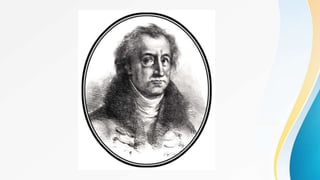
• Johann Wolfgang von Goethe, (born August 28, 1749,
Frankfurt am Main [Germany] - died March 22, 1832,
Weimar, Saxe- Weimar), German poet, playwright,
novelist, scientist, statesman, theatre director, critic, and
amateur artist, considered the greatest German literary
figure of the modern era.
• Goethe is the only German literary figure whose range
and international standing equal those of Germany’s
supreme philosophers (who have often drawn on his
works and ideas) and composers (who have often set his
works to music). In the literary culture of the German -
speaking countries, he has had so dominant a position
that, since the end of the 18th century, his writings have
been described as “classical.” In a European perspective
he appears as the central and unsurpassed
representative of the Romantic movement, broadly
understood.
• He could be said to stand in the same relation to the
culture of the era that began with the Enlightenment and
continues to the present day as William Shakespeare
does to the culture of the Renaissance and Dante to the
culture of High Middle Ages. His Faust, though eminently
stage worthy when suitably edited, is also Europe’s
greatest long poem since John Milton’s paradise Lost, if
not since Dante’s The Divine Comedy.
COUNTRY OF ORIGIN
• Germany covers 348,672
square kilometers of land
and 8,350 square
kilometers of water,
making it the 63rd largest
nation in the world with a
total area of 357,022
square kilometers. Its
capital is Berlin.
Types of Government:
democratic,
federal,parliamentary, republ
ic
Leader : Angela Merkel
Populations:81.41 million
(2015)
Religion:Christianity
Ethnic Group:Turks
SYNOPSIS
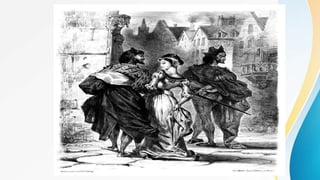
• Faust or Faustus is a scholar who sells his soul to the
Devil. Although fictional in literature, the legend is based
on an astrologer and alchemist who lived in the area of
northern Germany in the fifteenth century.
Though trained in theology, he turns to magic and makes a
perilous deal with the Devil in which he commits his soul to
eternal damnation in return for power and knowledge in this
life. But he is only human, and arrogant and reckless.
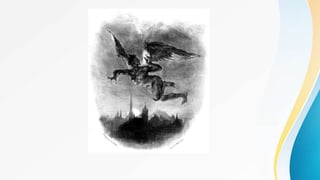
Mephistopheles or Mephisto the Devil offers to serve Faust
for a period of time, at the cost of his eternal soul.
• Mephistopheles is a difficult servant, and Faust is
challenged by his tricks, lies and temptations. Despite
their adventures, Faust accomplishes little or nothing of
substance, wasting his opportunity with frivolities and
indulgences offered up by the demon. Faust tries to
revoke his pact and damnation, but is dominated by Satan
and his doubts.
CHARACTERS
• Faust - bored scholar
• Mephistopheles - the devil
• Lord - God; also known as the Lord of Heaven
• Gretchen - innocent but alluring village girl
• Helen - most desired woman in the classical world
• Emperor - fun-loving ruler of the Holy Roman Empire
• Wagner - dedicated and ambitious student of alchemy
• Homunculus - smart and curious being created by
alchemy
MEPHISTOPHELES Since, O Lord, you near me once
again,
To ask how all below is doing now,
And usually receive me without pain,
You see me too among the vile crowd.
Forgive me: I can’t speak in noble style,
And since I’m still reviled by this whole crew,
My pathos would be sure to make you smile,
If you had not renounced all laughter too.
You’ll get no word of suns and worlds from me.
How men torment themselves is all I see.
The little god of Earth sticks to the same old way,
And is as strange as on that very first day.
He might appreciate life a little more: he might,
If you hadn’t lent him a gleam of Heavenly light:
He calls it Reason, but only uses it
To be more a beast than any beast as yet.
He seems to me, saving Your Grace,
Like a long-legged grasshopper: through space
He’s always flying: he flies and then he springs,
And in the grass the same old song he sings.
If he’d just lie there in the grass it wouldn’t hurt!
But he buries his nose in every piece of dirt.
GOD Have you nothing else to name?
Do you always come here to complain?
Does nothing ever go right on the Earth? 295
MEPHISTOPHELES No, Lord! I find, as always, it couldn’t
be worse.
I’m so involved with Man’s wretched ways,
I’ve even stopped plaguing them, myself, these days.
GOD Do you know, Faust?
MEPHISTOPHELES The Doctor?
GOD My servant, first!
LITERARY DEVICES
Rhyme
Ah, woe thy lips are chill,
And still.
How changed in fashion
Thy passion
Who has done me this ill/
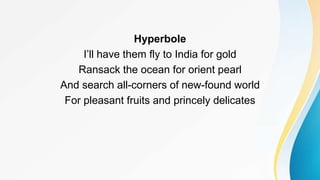
Hyperbole
I’ll have them fly to India for gold
Ransack the ocean for orient pearl
And search all-corners of new-found world
For pleasant fruits and princely delicates
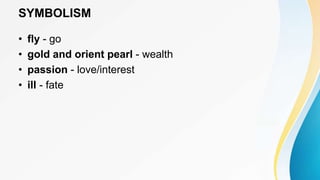
SYMBOLISM
• fly - go
• gold and orient pearl - wealth
• passion - love/interest
• ill - fate
THEMES
• Man in search of satisfaction
• Temptations in a man’s life
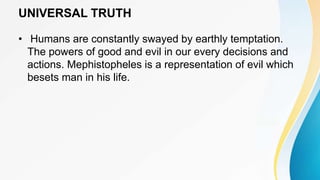
UNIVERSAL TRUTH
• Humans are constantly swayed by earthly temptation.
The powers of good and evil in our every decisions and
actions. Mephistopheles is a representation of evil which
besets man in his life.
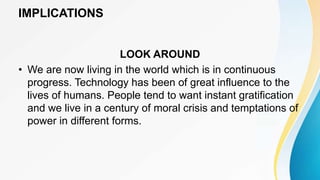
IMPLICATIONS
LOOK AROUND
• We are now living in the world which is in continuous
progress. Technology has been of great influence to the
lives of humans. People tend to want instant gratification
and we live in a century of moral crisis and temptations of
power in different forms.
REFERENCES
• www.britannica.com
• www.bbc.com
• www.faust.com
• Faust Part I and II

The Faust

  • 3.
    AUTHOR • Johann Wolfgangvon Goethe, (born August 28, 1749, Frankfurt am Main [Germany] - died March 22, 1832, Weimar, Saxe- Weimar), German poet, playwright, novelist, scientist, statesman, theatre director, critic, and amateur artist, considered the greatest German literary figure of the modern era.
  • 4.
    • Goethe isthe only German literary figure whose range and international standing equal those of Germany’s supreme philosophers (who have often drawn on his works and ideas) and composers (who have often set his works to music). In the literary culture of the German - speaking countries, he has had so dominant a position that, since the end of the 18th century, his writings have been described as “classical.” In a European perspective he appears as the central and unsurpassed representative of the Romantic movement, broadly understood.
  • 5.
    • He couldbe said to stand in the same relation to the culture of the era that began with the Enlightenment and continues to the present day as William Shakespeare does to the culture of the Renaissance and Dante to the culture of High Middle Ages. His Faust, though eminently stage worthy when suitably edited, is also Europe’s greatest long poem since John Milton’s paradise Lost, if not since Dante’s The Divine Comedy.
  • 7.
    COUNTRY OF ORIGIN •Germany covers 348,672 square kilometers of land and 8,350 square kilometers of water, making it the 63rd largest nation in the world with a total area of 357,022 square kilometers. Its capital is Berlin. Types of Government: democratic, federal,parliamentary, republ ic Leader : Angela Merkel Populations:81.41 million (2015) Religion:Christianity Ethnic Group:Turks
  • 9.
    SYNOPSIS • Faust orFaustus is a scholar who sells his soul to the Devil. Although fictional in literature, the legend is based on an astrologer and alchemist who lived in the area of northern Germany in the fifteenth century. Though trained in theology, he turns to magic and makes a perilous deal with the Devil in which he commits his soul to eternal damnation in return for power and knowledge in this life. But he is only human, and arrogant and reckless. Mephistopheles or Mephisto the Devil offers to serve Faust for a period of time, at the cost of his eternal soul.
  • 10.
    • Mephistopheles isa difficult servant, and Faust is challenged by his tricks, lies and temptations. Despite their adventures, Faust accomplishes little or nothing of substance, wasting his opportunity with frivolities and indulgences offered up by the demon. Faust tries to revoke his pact and damnation, but is dominated by Satan and his doubts.
  • 12.
    CHARACTERS • Faust -bored scholar • Mephistopheles - the devil • Lord - God; also known as the Lord of Heaven • Gretchen - innocent but alluring village girl • Helen - most desired woman in the classical world • Emperor - fun-loving ruler of the Holy Roman Empire • Wagner - dedicated and ambitious student of alchemy • Homunculus - smart and curious being created by alchemy
  • 14.
    MEPHISTOPHELES Since, OLord, you near me once again, To ask how all below is doing now, And usually receive me without pain, You see me too among the vile crowd. Forgive me: I can’t speak in noble style, And since I’m still reviled by this whole crew, My pathos would be sure to make you smile, If you had not renounced all laughter too. You’ll get no word of suns and worlds from me.
  • 15.
    How men tormentthemselves is all I see. The little god of Earth sticks to the same old way, And is as strange as on that very first day. He might appreciate life a little more: he might, If you hadn’t lent him a gleam of Heavenly light: He calls it Reason, but only uses it To be more a beast than any beast as yet.
  • 16.
    He seems tome, saving Your Grace, Like a long-legged grasshopper: through space He’s always flying: he flies and then he springs, And in the grass the same old song he sings. If he’d just lie there in the grass it wouldn’t hurt! But he buries his nose in every piece of dirt.
  • 17.
    GOD Have younothing else to name? Do you always come here to complain? Does nothing ever go right on the Earth? 295 MEPHISTOPHELES No, Lord! I find, as always, it couldn’t be worse. I’m so involved with Man’s wretched ways, I’ve even stopped plaguing them, myself, these days. GOD Do you know, Faust? MEPHISTOPHELES The Doctor? GOD My servant, first!
  • 18.
    LITERARY DEVICES Rhyme Ah, woethy lips are chill, And still. How changed in fashion Thy passion Who has done me this ill/
  • 19.
    Hyperbole I’ll have themfly to India for gold Ransack the ocean for orient pearl And search all-corners of new-found world For pleasant fruits and princely delicates
  • 20.
    SYMBOLISM • fly -go • gold and orient pearl - wealth • passion - love/interest • ill - fate
  • 21.
    THEMES • Man insearch of satisfaction • Temptations in a man’s life
  • 22.
    UNIVERSAL TRUTH • Humansare constantly swayed by earthly temptation. The powers of good and evil in our every decisions and actions. Mephistopheles is a representation of evil which besets man in his life.
  • 23.
    IMPLICATIONS LOOK AROUND • Weare now living in the world which is in continuous progress. Technology has been of great influence to the lives of humans. People tend to want instant gratification and we live in a century of moral crisis and temptations of power in different forms.
  • 24.
    REFERENCES • www.britannica.com • www.bbc.com •www.faust.com • Faust Part I and II