 Is one of the distal senses which utilizes the
physical characteristics of light.
 The eye is the receptor organ of vision, and
it is a very amazing device.
 What you know of your outside environment
comes from this important organ.
 The stimuli for seeing are light waves which
are waves of radiant energy coming from the
sun.
 They are described in terms of wave lengths
and the unit of measurement is the
millimicron (one million of a millimeter)
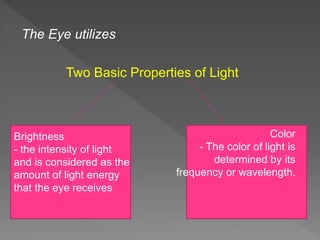
The Eye utilizes
Two Basic Properties of Light
Brightness
- the intensity of light
and is considered as the
amount of light energy
that the eye receives
Color
- The color of light is
determined by its
frequency or wavelength.
 Are very important organs and as such they
are well protected.
 The bony sockets, the eye lids. The eye
lashes and also the eye brows protect the
eyes.
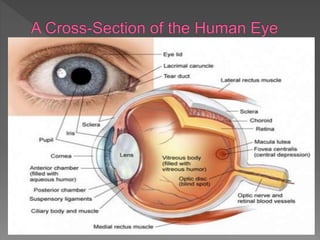
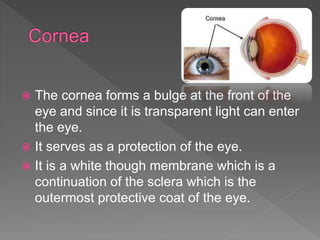
 The cornea forms a bulge at the front of the
eye and since it is transparent light can enter
the eye.
 It serves as a protection of the eye.
 It is a white though membrane which is a
continuation of the sclera which is the
outermost protective coat of the eye.
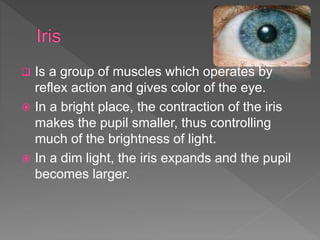
 Is a group of muscles which operates by
reflex action and gives color of the eye.
 In a bright place, the contraction of the iris
makes the pupil smaller, thus controlling
much of the brightness of light.
 In a dim light, the iris expands and the pupil
becomes larger.
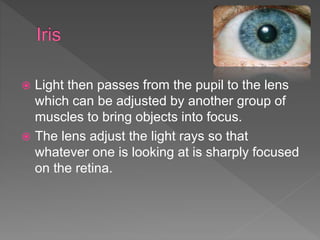
 Light then passes from the pupil to the lens
which can be adjusted by another group of
muscles to bring objects into focus.
 The lens adjust the light rays so that
whatever one is looking at is sharply focused
on the retina.
 It is the true organ of
vision.
 It is also the photo
sensitive area of the
eye.
 It has two receptor cells,
the rods and the cones,
so named for their
shapes.
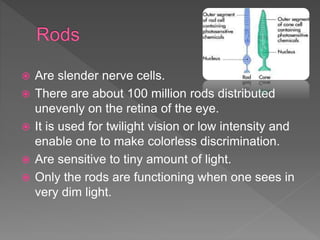
 Are slender nerve cells.
 There are about 100 million rods distributed
unevenly on the retina of the eye.
 It is used for twilight vision or low intensity and
enable one to make colorless discrimination.
 Are sensitive to tiny amount of light.
 Only the rods are functioning when one sees in
very dim light.
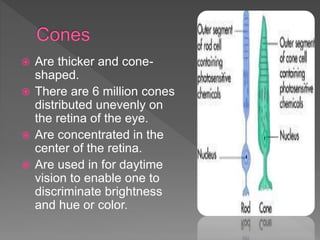
 Are thicker and cone-
shaped.
 There are 6 million cones
distributed unevenly on
the retina of the eye.
 Are concentrated in the
center of the retina.
 Are used in for daytime
vision to enable one to
discriminate brightness
and hue or color.
 Fovea – is in the central region where cones
are concentrated.
 Blind spot – is the area where the nerve
fibers from all over the eye converge to form
the optic nerve that carry impulses to the
brain.
 When a person tries to
described or make a
report or what he has
seen, he usually tells
the color by using what
we called the three
dimension of color –
hue, brightness and
saturation
 Refers to the name of
colors.
 Follows the order from
violet which has the
shortest wave length to
red which has the longest
wavelength.
 It is the energy
source of light.
 It is also associated
with intensity of the
stimulus.
 Yellow as a hue
usually appears
brighter than red and
blue.
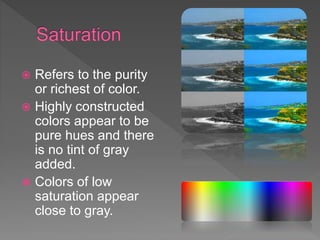
 Refers to the purity
or richest of color.
 Highly constructed
colors appear to be
pure hues and there
is no tint of gray
added.
 Colors of low
saturation appear
close to gray.

The Eye and its function

  • 2.
     Is oneof the distal senses which utilizes the physical characteristics of light.  The eye is the receptor organ of vision, and it is a very amazing device.  What you know of your outside environment comes from this important organ.
  • 3.
     The stimulifor seeing are light waves which are waves of radiant energy coming from the sun.  They are described in terms of wave lengths and the unit of measurement is the millimicron (one million of a millimeter)
  • 5.
    The Eye utilizes TwoBasic Properties of Light Brightness - the intensity of light and is considered as the amount of light energy that the eye receives Color - The color of light is determined by its frequency or wavelength.
  • 6.
     Are veryimportant organs and as such they are well protected.  The bony sockets, the eye lids. The eye lashes and also the eye brows protect the eyes.
  • 8.
     The corneaforms a bulge at the front of the eye and since it is transparent light can enter the eye.  It serves as a protection of the eye.  It is a white though membrane which is a continuation of the sclera which is the outermost protective coat of the eye.
  • 9.
     Is agroup of muscles which operates by reflex action and gives color of the eye.  In a bright place, the contraction of the iris makes the pupil smaller, thus controlling much of the brightness of light.  In a dim light, the iris expands and the pupil becomes larger.
  • 10.
     Light thenpasses from the pupil to the lens which can be adjusted by another group of muscles to bring objects into focus.  The lens adjust the light rays so that whatever one is looking at is sharply focused on the retina.
  • 11.
     It isthe true organ of vision.  It is also the photo sensitive area of the eye.  It has two receptor cells, the rods and the cones, so named for their shapes.
  • 12.
     Are slendernerve cells.  There are about 100 million rods distributed unevenly on the retina of the eye.  It is used for twilight vision or low intensity and enable one to make colorless discrimination.  Are sensitive to tiny amount of light.  Only the rods are functioning when one sees in very dim light.
  • 13.
     Are thickerand cone- shaped.  There are 6 million cones distributed unevenly on the retina of the eye.  Are concentrated in the center of the retina.  Are used in for daytime vision to enable one to discriminate brightness and hue or color.
  • 14.
     Fovea –is in the central region where cones are concentrated.
  • 15.
     Blind spot– is the area where the nerve fibers from all over the eye converge to form the optic nerve that carry impulses to the brain.
  • 16.
     When aperson tries to described or make a report or what he has seen, he usually tells the color by using what we called the three dimension of color – hue, brightness and saturation
  • 17.
     Refers tothe name of colors.  Follows the order from violet which has the shortest wave length to red which has the longest wavelength.
  • 18.
     It isthe energy source of light.  It is also associated with intensity of the stimulus.  Yellow as a hue usually appears brighter than red and blue.
  • 19.
     Refers tothe purity or richest of color.  Highly constructed colors appear to be pure hues and there is no tint of gray added.  Colors of low saturation appear close to gray.