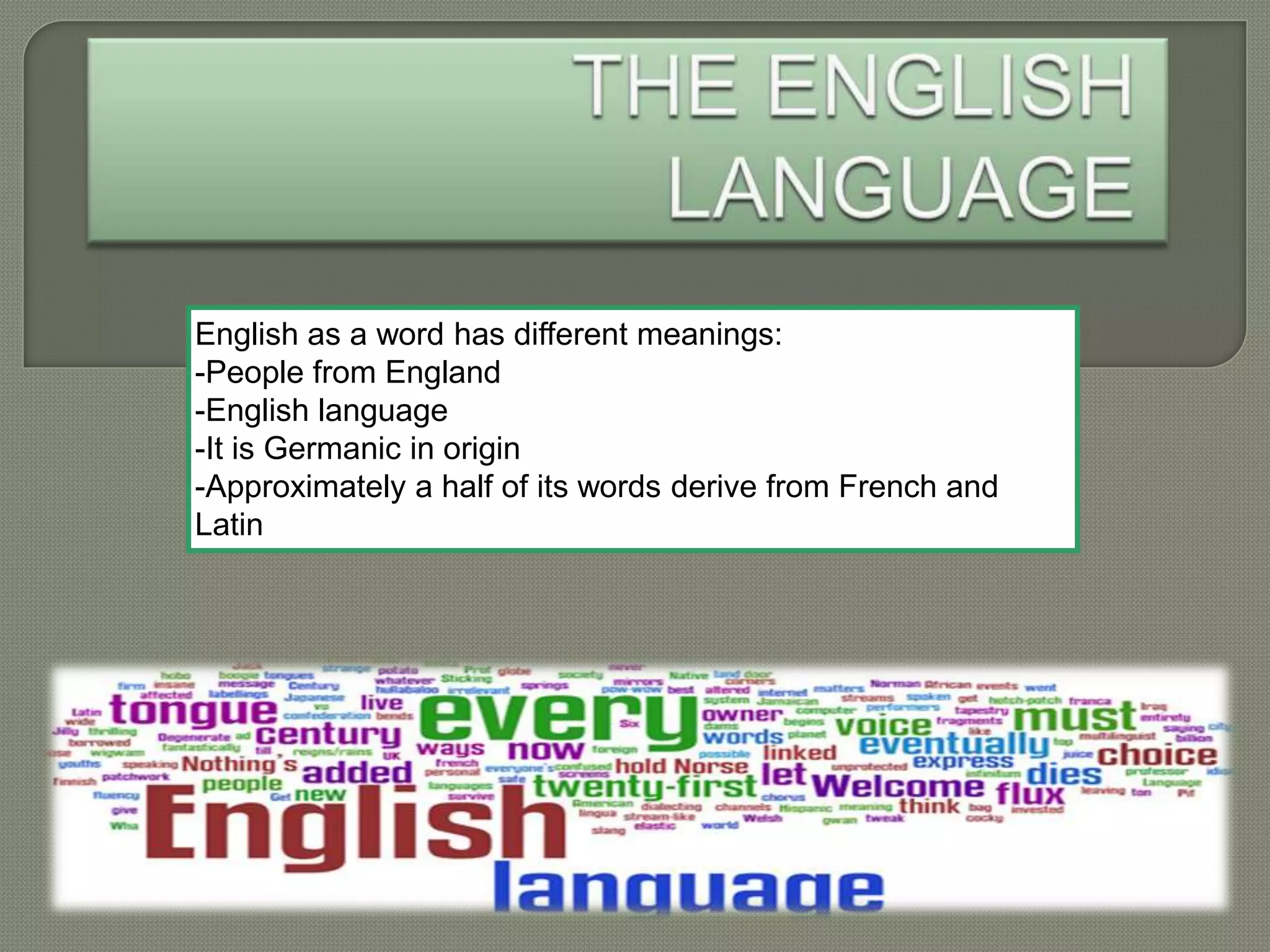
English as a word has different meanings:
-People from England
-English language
-It is Germanic in origin
-Approximately a half of its words derive from French and
Latin
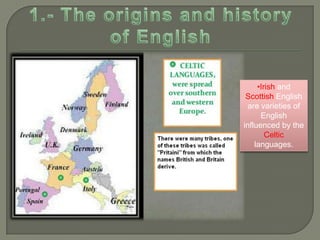
•Irish and
 Scottish English
  are varieties of
      English
influenced by the
        Celtic
    languages.
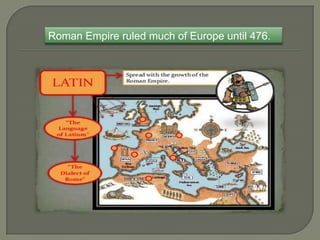
Roman Empire ruled much of Europe until 476.
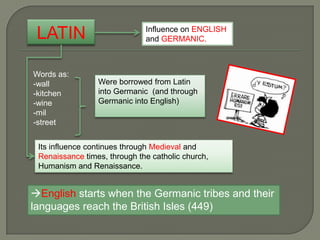
LATIN                        Influence on ENGLISH
                              and GERMANIC.


Words as:
-wall            Were borrowed from Latin
-kitchen         into Germanic (and through
-wine            Germanic into English)
-mil
-street


 Its influence continues through Medieval and
 Renaissance times, through the catholic church,
 Humanism and Renaissance.


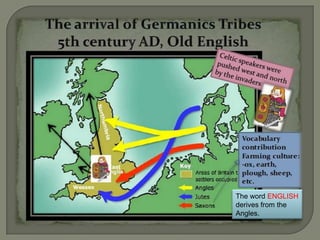
English starts when the Germanic tribes and their
languages reach the British Isles (449)
The word ENGLISH
derives from the
Angles.
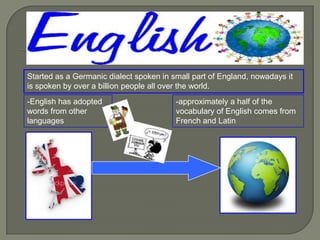
Started as a Germanic dialect spoken in small part of England, nowadays it
is spoken by over a billion people all over the world.
-English has adopted                     -approximately a half of the
words from other                         vocabulary of English comes from
languages                                French and Latin
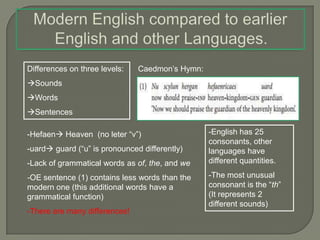
Differences on three levels:   Caedmon’s Hymn:
Sounds
Words
Sentences

-Hefaen Heaven (no leter “v”)                   -English has 25
                                                 consonants, other
-uard guard (“u” is pronounced differently)     languages have
-Lack of grammatical words as of, the, and we    different quantities.

-OE sentence (1) contains less words than the    -The most unusual
modern one (this additional words have a         consonant is the “th”
grammatical function)                            (It represents 2
                                                 different sounds)
-There are many differences!
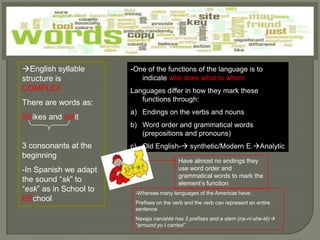
English syllable       -One of the functions of the language is to
structure is               indicate who does what to whom
COMPLEX                 Languages differ in how they mark these
There are words as:        functions through:
                        a) Endings on the verbs and nouns
Strikes and split
                        b) Word order and grammatical words
                           (prepositions and pronouns)
3 consonants at the     c) Old English- synthetic/Modern E.Analytic
beginning
                                           Have almost no endings they
-In Spanish we adapt                       use word order and
                                           grammatical words to mark the
the sound “sk” to                          element’s function
“esk” as in School to    -Whereas many languages of the Americas have:
ESchool                  Prefixes on the verb and the verb can represent an entire
                         sentence
                         Navajo nanishté has 3 prefixes and a stem (na-ni-she-té)
                         “arround yo I carried”
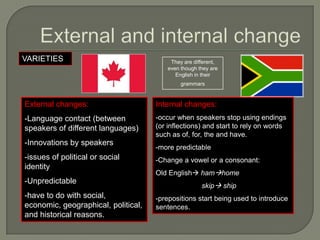
VARIETIES                                They are different,
                                        even though they are
                                           English in their
                                             grammars


External changes:                    Internal changes:
-Language contact (between           -occur when speakers stop using endings
speakers of different languages)     (or inflections) and start to rely on words
                                     such as of, for, the and have.
-Innovations by speakers
                                     -more predictable
-issues of political or social       -Change a vowel or a consonant:
identity
                                     Old English hamhome
-Unpredictable
                                                     skip ship
-have to do with social,             -prepositions start being used to introduce
economic, geographical, political,   sentences.
and historical reasons.
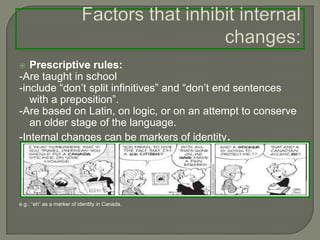
  Prescriptive rules:
-Are taught in school
-include “don’t split infinitives” and “don’t end sentences
   with a preposition”.
-Are based on Latin, on logic, or on an attempt to conserve
   an older stage of the language.
-Internal changes can be markers of identity.


e.g.: “eh” as a marker of identity in Canada.
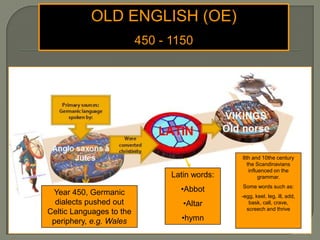
OLD ENGLISH (OE)
                          450 - 1150


                                                   H
                                               8th and 10the century
                                                 the Scandinavians
                                                   J
                                                  influenced on the
                                Latin words:           grammar.


 Year 450, Germanic               •Abbot       Some words such as:
                                               -egg, keel, leg, ill, add,
  dialects pushed out              •Altar         bask, call, crave,
                                                 screech and thrive
Celtic Languages to the
 periphery, e.g. Wales            •hymn
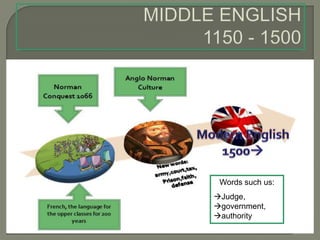
Words such us:
Judge,
government,
authority

The english language (ppt portfolio)

  • 1.
    English as aword has different meanings: -People from England -English language -It is Germanic in origin -Approximately a half of its words derive from French and Latin
  • 2.
    •Irish and ScottishEnglish are varieties of English influenced by the Celtic languages.
  • 3.
    Roman Empire ruledmuch of Europe until 476.
  • 4.
    LATIN Influence on ENGLISH and GERMANIC. Words as: -wall Were borrowed from Latin -kitchen into Germanic (and through -wine Germanic into English) -mil -street Its influence continues through Medieval and Renaissance times, through the catholic church, Humanism and Renaissance. English starts when the Germanic tribes and their languages reach the British Isles (449)
  • 6.
    The word ENGLISH derivesfrom the Angles.
  • 7.
    Started as aGermanic dialect spoken in small part of England, nowadays it is spoken by over a billion people all over the world. -English has adopted -approximately a half of the words from other vocabulary of English comes from languages French and Latin
  • 8.
    Differences on threelevels: Caedmon’s Hymn: Sounds Words Sentences -Hefaen Heaven (no leter “v”) -English has 25 consonants, other -uard guard (“u” is pronounced differently) languages have -Lack of grammatical words as of, the, and we different quantities. -OE sentence (1) contains less words than the -The most unusual modern one (this additional words have a consonant is the “th” grammatical function) (It represents 2 different sounds) -There are many differences!
  • 9.
    English syllable -One of the functions of the language is to structure is indicate who does what to whom COMPLEX Languages differ in how they mark these There are words as: functions through: a) Endings on the verbs and nouns Strikes and split b) Word order and grammatical words (prepositions and pronouns) 3 consonants at the c) Old English- synthetic/Modern E.Analytic beginning Have almost no endings they -In Spanish we adapt use word order and grammatical words to mark the the sound “sk” to element’s function “esk” as in School to -Whereas many languages of the Americas have: ESchool Prefixes on the verb and the verb can represent an entire sentence Navajo nanishté has 3 prefixes and a stem (na-ni-she-té) “arround yo I carried”
  • 10.
    VARIETIES They are different, even though they are English in their grammars External changes: Internal changes: -Language contact (between -occur when speakers stop using endings speakers of different languages) (or inflections) and start to rely on words such as of, for, the and have. -Innovations by speakers -more predictable -issues of political or social -Change a vowel or a consonant: identity Old English hamhome -Unpredictable skip ship -have to do with social, -prepositions start being used to introduce economic, geographical, political, sentences. and historical reasons.
  • 11.
     Prescriptiverules: -Are taught in school -include “don’t split infinitives” and “don’t end sentences with a preposition”. -Are based on Latin, on logic, or on an attempt to conserve an older stage of the language. -Internal changes can be markers of identity. e.g.: “eh” as a marker of identity in Canada.
  • 12.
    OLD ENGLISH (OE) 450 - 1150 H 8th and 10the century the Scandinavians J influenced on the Latin words: grammar. Year 450, Germanic •Abbot Some words such as: -egg, keel, leg, ill, add, dialects pushed out •Altar bask, call, crave, screech and thrive Celtic Languages to the periphery, e.g. Wales •hymn
  • 13.