The End of
WWI
And its lasting effects on Canada
and theWorld
Revolution in Russia!
- Russia was led by Tsar Nicholas II (Tsar –
monarch)
- He led Russia into a war that it was losing
quickly
- March Revolution 1917: Nicholas abdicates and a
Provisional Government takes over
- But they continue the war…
- October Revolution 1917: Provisional
Government is overthrown by the Bolsheviks
(Communists), led by Vladimir Lenin
- Lenin’s goal: stop the war with Germany ASAP
= Treaty of Brest-Litovsk
- Russia loses areas of land (all of Poland, the
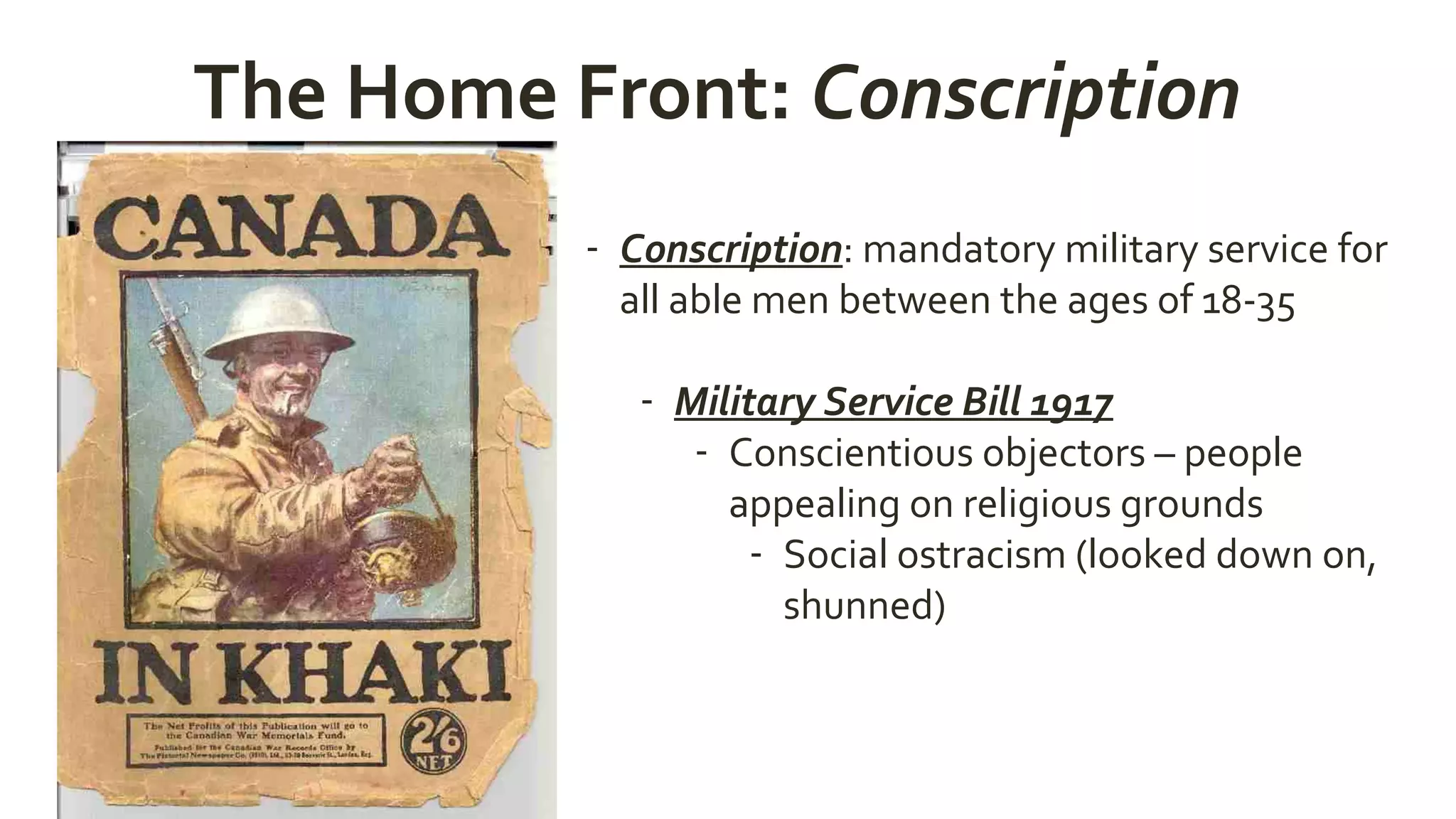
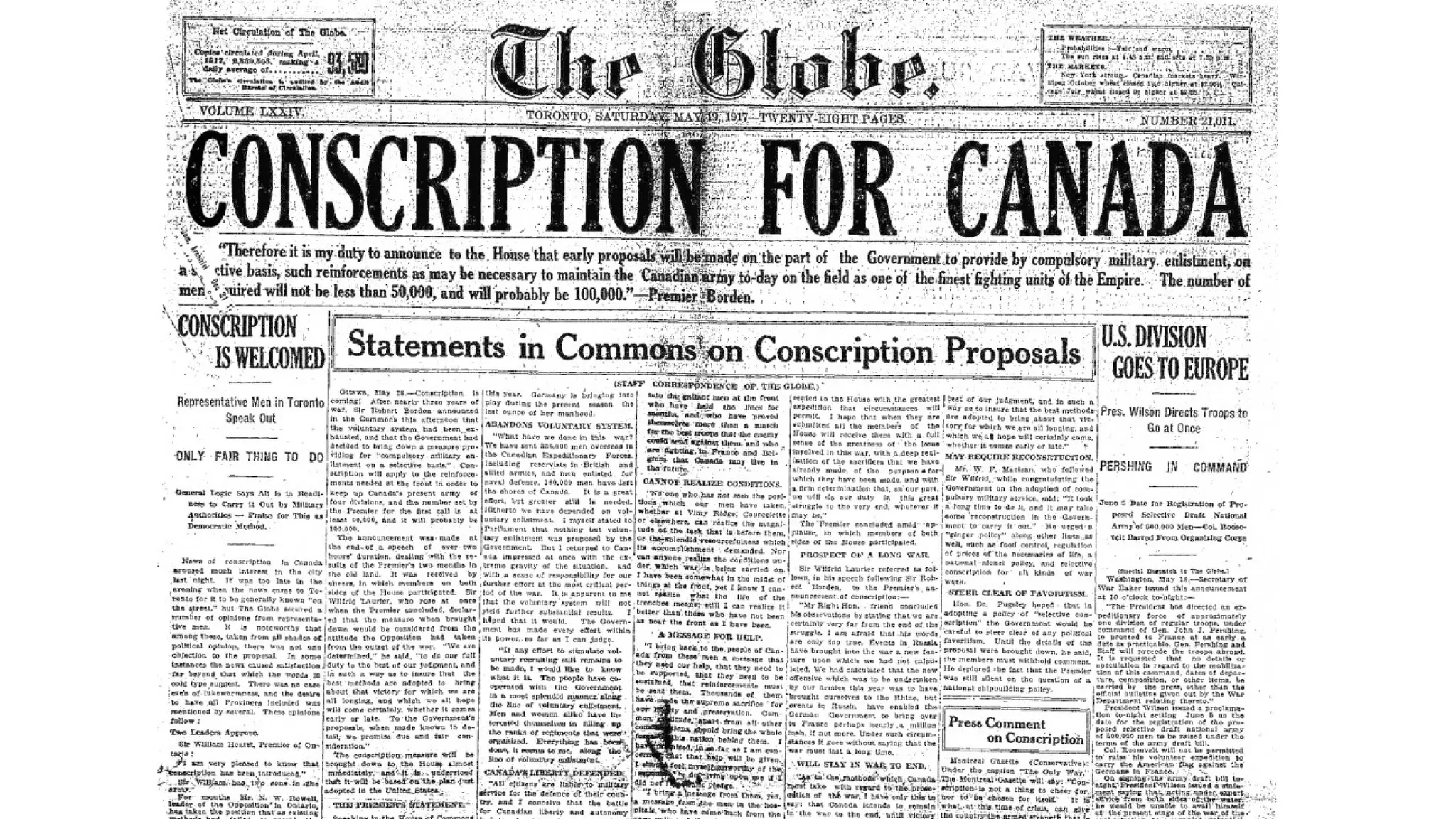
The Home Front: Conscription
- Conscription: mandatory military service for
all able men between the ages of 18-35
- Military Service Bill 1917
- Conscientious objectors – people
appealing on religious grounds
- Social ostracism (looked down on,
shunned)
- Conscription “Crisis”: French Canadiens
not happy about conscription
- No connection/loyalty to France or
Britain
- Officer in Command of Recruiting was
Protestant
- No language rights
- Riots in various cities in Quebec
- Henri Bourassa
- Borden calls an election and wins by a
slim margin
***English-French relations in Canada are
severely strained***
Henri Bourassa
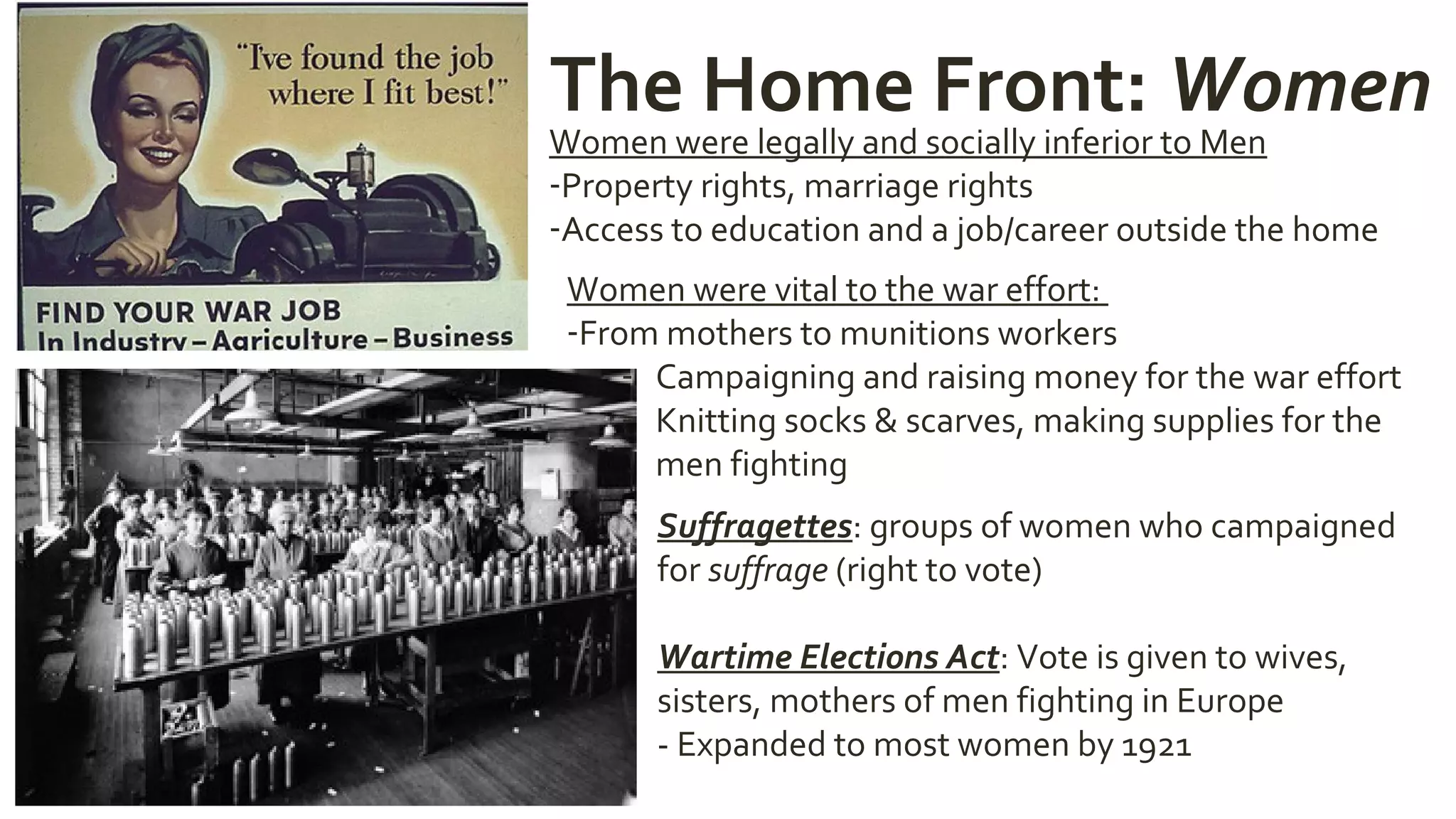
The Home Front: Women
Women were legally and socially inferior to Men
-Property rights, marriage rights
-Access to education and a job/career outside the home
Women were vital to the war effort:
-From mothers to munitions workers
- Campaigning and raising money for the war effort
- Knitting socks & scarves, making supplies for the
men fighting
Suffragettes: groups of women who campaigned
for suffrage (right to vote)
Wartime Elections Act: Vote is given to wives,
sisters, mothers of men fighting in Europe
- Expanded to most women by 1921
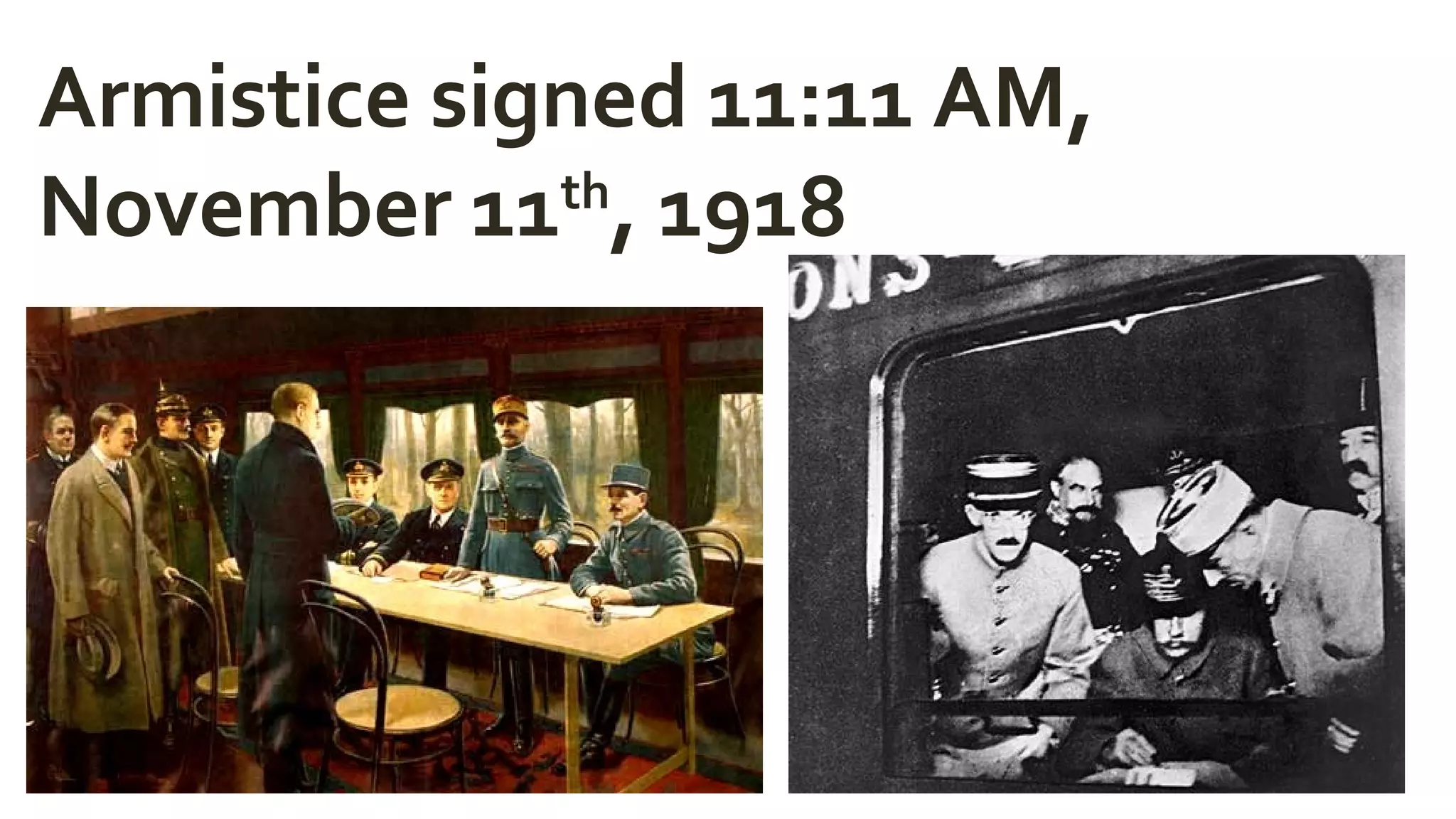
Armistice signed 11:11 AM,
November 11th
, 1918
Paris Peace Conferences
Georges Clemenceau
PM of France
David Lloyd George
PM of Great Britain
Woodrow Wilson
President of USA
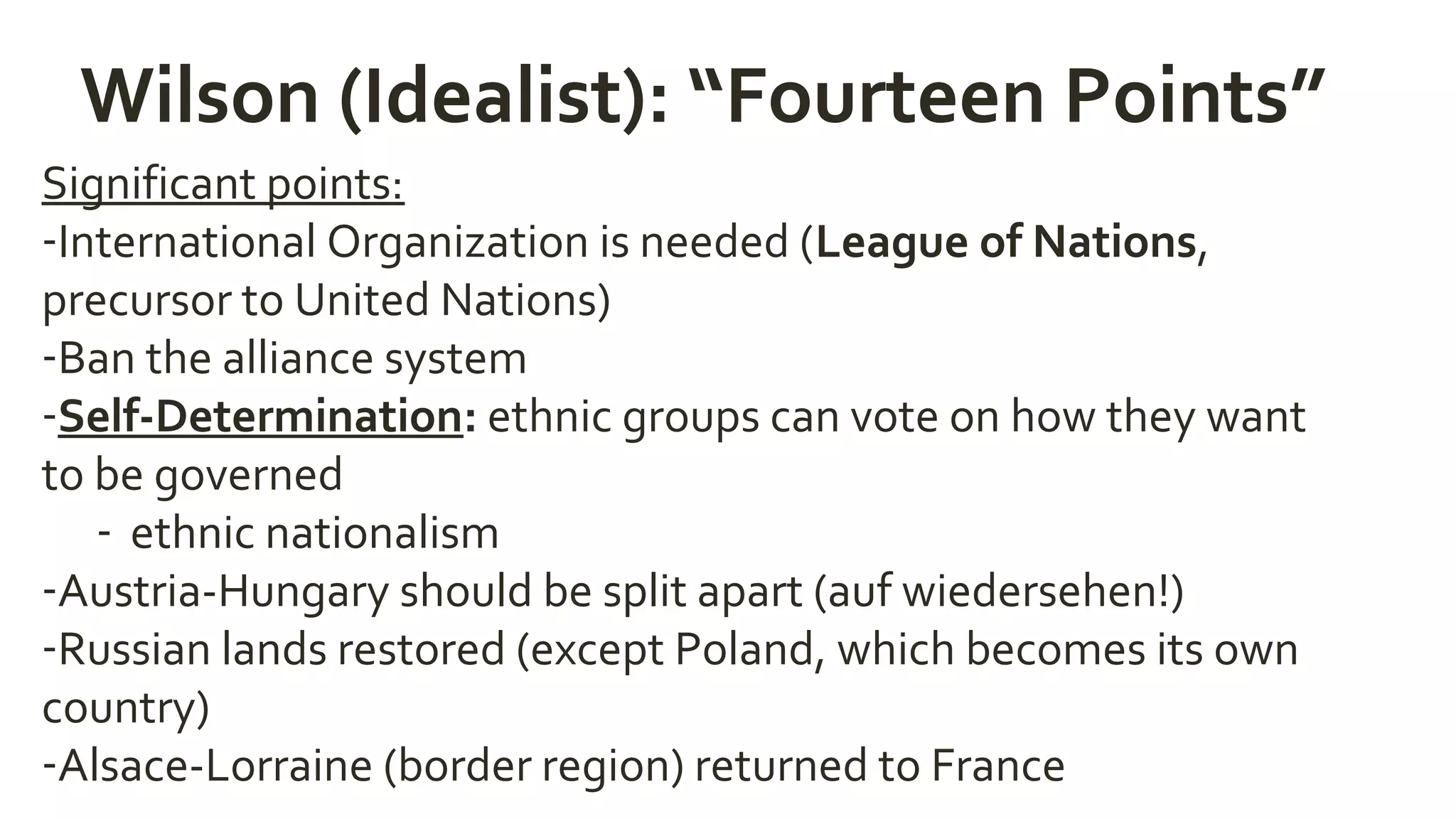
Wilson (Idealist): “Fourteen Points”
Significant points:
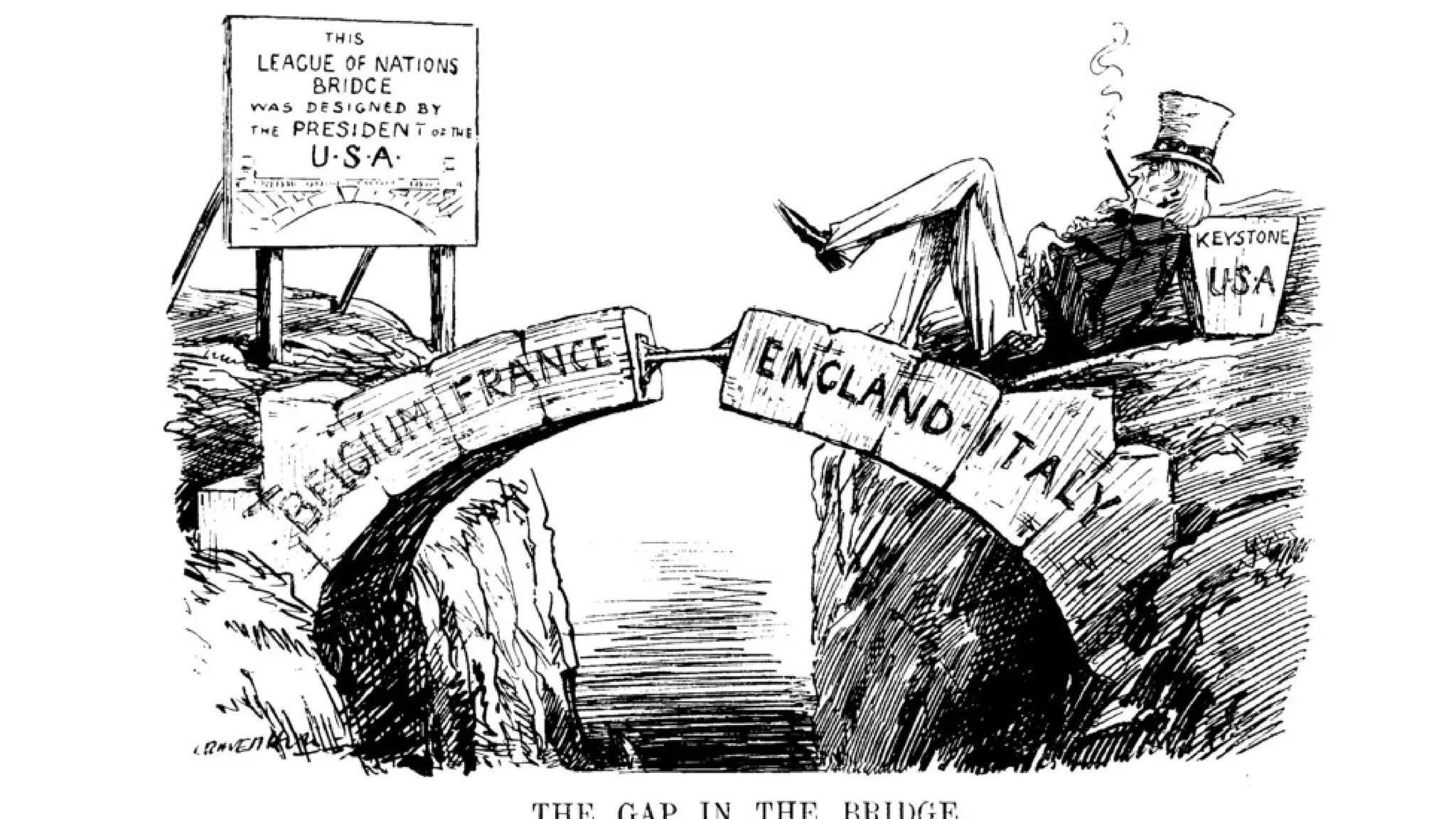
-International Organization is needed (League of Nations,
precursor to United Nations)
-Ban the alliance system
-Self-Determination: ethnic groups can vote on how they want
to be governed
- ethnic nationalism
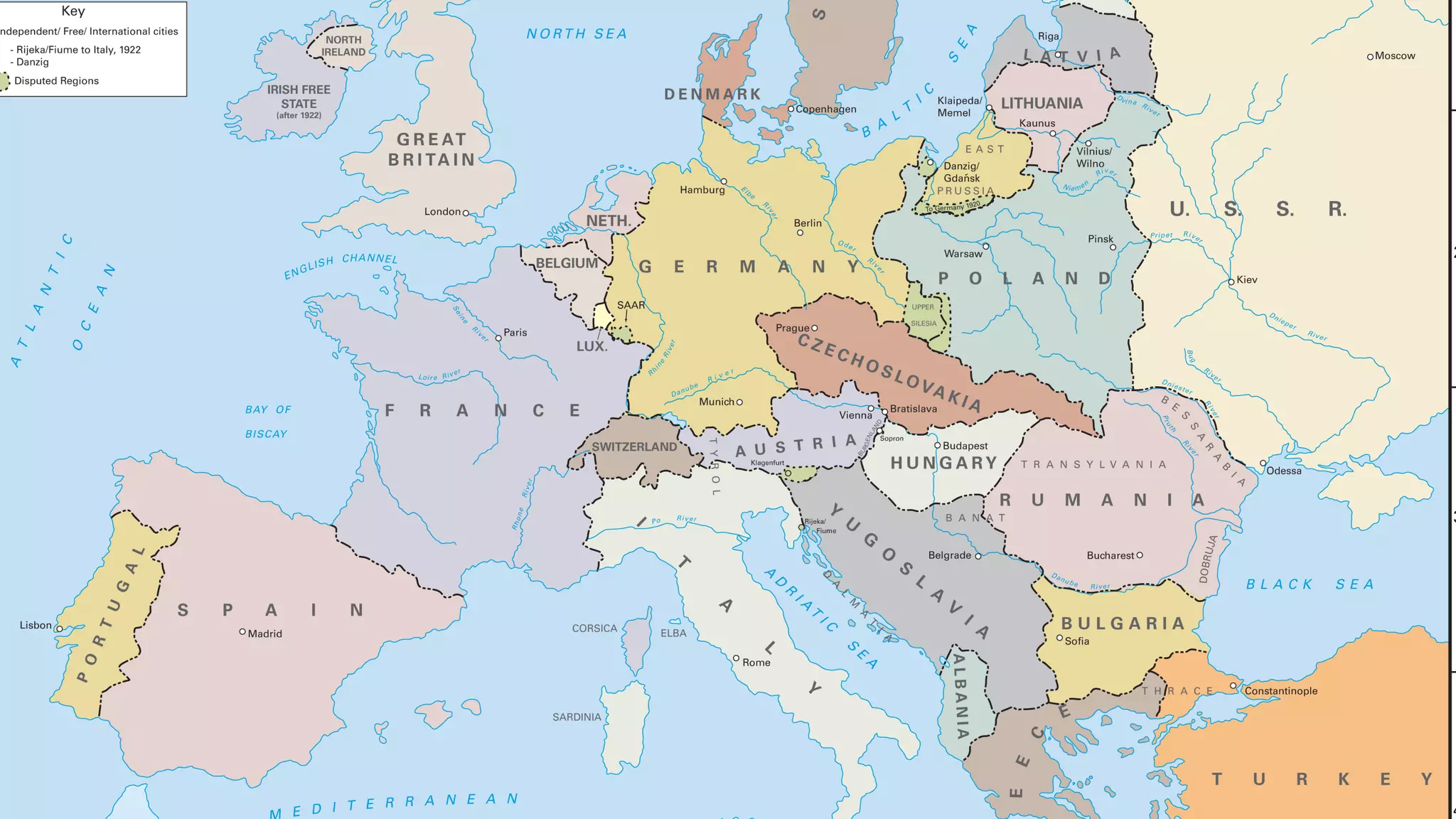
-Austria-Hungary should be split apart (auf wiedersehen!)
-Russian lands restored (except Poland, which becomes its own
country)
-Alsace-Lorraine (border region) returned to France
Clemenceau (Realist):
Revenge, s'il vous plaît
- The only allied nation to share a
border with Germany
- Heaviest casualties of the Allied
Powers
- Position: weaken Germany as
much as possible
- Wanted to dismantle Germany
into multiple smaller states
- Wanted crippling reparations
payments Modern day Verdun, France
Lloyd George: In the Middle
- Also wanted reparations
- Did not want to break up Germany
- Thought French demands were harsh, greedy, vindictive…
- Interested in Germany as a future trading partner
Treaty of Versailles
- War Guilt Clause: The war was officially Germany’s fault (brought much
shame to Germans)
- German military is severely disabled
- No air force allowed
- Navy is scuttled
- Entire merchant fleet is given to allies
- Army is capped at 100,000
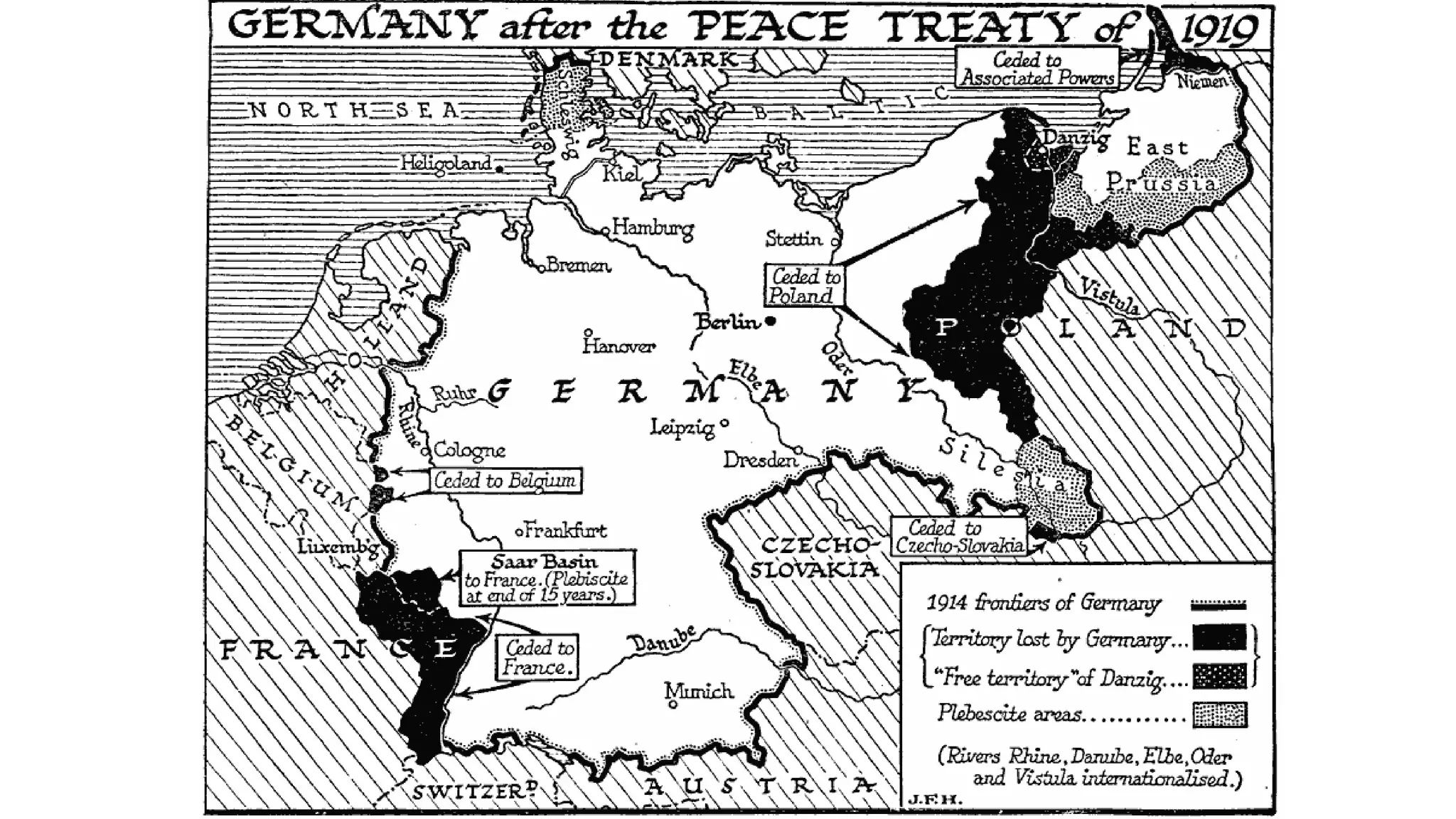
- Land changes: Alsace-Lorraine, Polish Corridor (Danzig); Rhineland (west)
is de-militarized
- Massive Reparations ($132 billion marks)
- Creation of League of Nations
- Self-Determination?
Oh, Canada
- WWI brought Canada to the world stage
- We were given our own seat at the
Paris Peace Conferences (!)
- Our military contributions were given the highest respect
- Led to our development as an autonomous nation
- Changed the lives of men: ~250,000 casualties
- Changed the lives of women:
- Gradual increase in social standing
- Gained the vote
- Anglo-French cultural-political divide

The end of the ww1

  • 1.
    The End of WWI Andits lasting effects on Canada and theWorld
  • 2.
    Revolution in Russia! -Russia was led by Tsar Nicholas II (Tsar – monarch) - He led Russia into a war that it was losing quickly - March Revolution 1917: Nicholas abdicates and a Provisional Government takes over - But they continue the war… - October Revolution 1917: Provisional Government is overthrown by the Bolsheviks (Communists), led by Vladimir Lenin - Lenin’s goal: stop the war with Germany ASAP = Treaty of Brest-Litovsk - Russia loses areas of land (all of Poland, the
  • 3.
    The Home Front:Conscription - Conscription: mandatory military service for all able men between the ages of 18-35 - Military Service Bill 1917 - Conscientious objectors – people appealing on religious grounds - Social ostracism (looked down on, shunned)
  • 5.
    - Conscription “Crisis”:French Canadiens not happy about conscription - No connection/loyalty to France or Britain - Officer in Command of Recruiting was Protestant - No language rights - Riots in various cities in Quebec - Henri Bourassa - Borden calls an election and wins by a slim margin ***English-French relations in Canada are severely strained*** Henri Bourassa
  • 6.
    The Home Front:Women Women were legally and socially inferior to Men -Property rights, marriage rights -Access to education and a job/career outside the home Women were vital to the war effort: -From mothers to munitions workers - Campaigning and raising money for the war effort - Knitting socks & scarves, making supplies for the men fighting Suffragettes: groups of women who campaigned for suffrage (right to vote) Wartime Elections Act: Vote is given to wives, sisters, mothers of men fighting in Europe - Expanded to most women by 1921
  • 7.
    Armistice signed 11:11AM, November 11th , 1918
  • 8.
    Paris Peace Conferences GeorgesClemenceau PM of France David Lloyd George PM of Great Britain Woodrow Wilson President of USA
  • 9.
    Wilson (Idealist): “FourteenPoints” Significant points: -International Organization is needed (League of Nations, precursor to United Nations) -Ban the alliance system -Self-Determination: ethnic groups can vote on how they want to be governed - ethnic nationalism -Austria-Hungary should be split apart (auf wiedersehen!) -Russian lands restored (except Poland, which becomes its own country) -Alsace-Lorraine (border region) returned to France
  • 10.
    Clemenceau (Realist): Revenge, s'ilvous plaît - The only allied nation to share a border with Germany - Heaviest casualties of the Allied Powers - Position: weaken Germany as much as possible - Wanted to dismantle Germany into multiple smaller states - Wanted crippling reparations payments Modern day Verdun, France
  • 11.
    Lloyd George: Inthe Middle - Also wanted reparations - Did not want to break up Germany - Thought French demands were harsh, greedy, vindictive… - Interested in Germany as a future trading partner
  • 12.
    Treaty of Versailles -War Guilt Clause: The war was officially Germany’s fault (brought much shame to Germans) - German military is severely disabled - No air force allowed - Navy is scuttled - Entire merchant fleet is given to allies - Army is capped at 100,000 - Land changes: Alsace-Lorraine, Polish Corridor (Danzig); Rhineland (west) is de-militarized - Massive Reparations ($132 billion marks) - Creation of League of Nations - Self-Determination?
  • 18.
    Oh, Canada - WWIbrought Canada to the world stage - We were given our own seat at the Paris Peace Conferences (!) - Our military contributions were given the highest respect - Led to our development as an autonomous nation - Changed the lives of men: ~250,000 casualties - Changed the lives of women: - Gradual increase in social standing - Gained the vote - Anglo-French cultural-political divide